"I am the Way, the Truth, and the Life"

Father God, thank you for the love of the truth you have given me. Please bless me with the wisdom, knowledge and discernment needed to always present the truth in an attitude of grace and love. Use this blog and Northwoods Ministries for your glory. Help us all to read and to study Your Word without preconceived notions, but rather, let scripture interpret scripture in the presence of the Holy Spirit. All praise to our Lord and Saviour Jesus Christ.

Please note: All my writings and comments appear in bold italics in this colour
Showing posts with label bonds. Show all posts

Monday, September 15, 2025

Economics > Fitch downgrades France's credit score to record low; Russian sanctions crippling Finnish economy


Fitch hits France with record-low credit score

The agency linked the cut to growing political instability
Fitch hits France with record-low credit score


France’s credit score has been downgraded from AA- to A+, the country’s lowest on record, with Fitch Ratings citing political instability and uncertainty over how the government will rein in mounting debt and budget deficit.

The EU’s second-largest economy has one of the bloc’s highest debt levels after Greece and Italy, at about 113% of GDP. Its deficit is projected at 5.4-5.8% this year, well above the EU’s 3% limit. The downgrade followed last week’s ouster of Prime Minister Francois Bayrou after a failed confidence vote on his €44 billion austerity plan, which sought to cut the deficit and debt by slashing public-sector jobs, curbing welfare, and scrapping two public holidays.

“The government’s defeat in a confidence vote illustrates the increased fragmentation and polarization of domestic politics,” Fitch said on Friday. “This instability weakens the political system’s capacity to deliver substantial fiscal consolidation.”

The agency said it was unlikely that France’s deficit would drop in the next several years and warned debt would rise further to 121% in 2027, citing the lack of “a clear horizon for debt stabilization” given political instability. Fitch added that high taxes and large social spending leave little room to stabilize finances, and cautioned that the 2027 presidential race will likely limit the potential for fiscal reforms.

Outgoing Finance Minister Eric Lombard said he has “taken note” of the downgrade but insisted the economy was strong. He blamed fiscal strains on interest rates that are “too high” and noted that new Prime Minister Sebastien Lecornu, the fifth in less than two years, is already consulting parliament on a budget to restore public finances.

A downgrade usually raises borrowing costs by lifting bond yields. France’s ten-year yield climbed to 3.5% on Friday, near Italy’s, one of the bloc’s weakest performers. Higher yields could increase debt-servicing costs, analysts warned, which Bayrou previously said were already at an “unbearable” level.

Some experts also warned that the downgrade could prompt similar cuts by other agencies, triggering forced selling by institutional investors barred from holding debt below AA.


Finnish PM admits economic pain from Russia sanctions

Trade has been largely scrapped and billions in investments lost, Petteri Orpo has said
Finnish PM admits economic pain from Russia sanctions


Finland’s economic growth has suffered due to sanctions on Russia linked to the Ukraine conflict, Prime Minister Petteri Orpo has admitted. He noted that Finland has lost nearly all trade with Russia and billions in investments since it closed the border with its neighbor.

Finland, which shares a 1,300km (800-mile) border with Russia, has imposed several rounds of sanctions on Moscow in line with EU policy since 2022. It has also tightened entry rules for Russian citizens and shut all but one border checkpoint with its neighbor. The moves saw trade between the two countries drop to $1.5 billion in 2024, compared with $11 billion in pre-conflict 2021.

In an interview with Yle Areena on Saturday, Orpo acknowledged that sanctions have hit Finland harder than most EU members due to its traditionally close trade ties with Russia.

“The fact that the border is closed means, for example, 10 million cubic meters of Russian timber for our industry is not coming in. Finnish companies have lost billions in investments in Russia. Nearly all border traffic and trade have stopped, Orpo said. “That brings uncertainty. All this has led to the fact that the growth of the Finnish economy has not been as desired.”

And all because you believed the lie that Russia was an imminent threat to you and the rest of Europe. Silly people! Now it is you who are a threat to Russia.

Despite this, Orpo echoed other NATO members in claiming Russia remains a “permanent threat” to Finland and the EU, vowing to increase defense spending and militarization to counter it. Finland joined NATO in 2023, a step Moscow – which views the bloc’s expansion as a trigger of the Ukraine conflict – called a “historic mistake.”

Russia has repeatedly rejected claims it poses a threat, accusing the West of fueling Russophobia to justify military buildups and divert attention from domestic problems. It has condemned Western sanctions as illegal and warned they would backfire.

The Finnish economy slipped into recession in both 2023 and 2024. According to Eurostat, its growth projections for 2025 are the lowest in the EU.

Monday, April 14, 2025

Global Economics > How badly does EU industry need Russian gas? Reuters; Something worse than recession quite likely - Dalio


EU industry bosses want Russian gas supplies restored – Reuters

German chemical companies and French utility firms have both suggested the necessity of importing cheap Russian energy
EU industry bosses want Russian gas supplies restored – Reuters


Germany’s chemical industry is in a “severe crisis” and in dire need of a return to cheap Russian gas, Reuters reported on Monday, citing executives in the sector. French energy majors Engie and Total have also told the agency that they could see a restart of imports of  hydrocarbon from Russia.

With a turnover of €225.5 billion in 2023, chemicals and pharmaceuticals are Germany’s third-largest industry, behind automotive and machinery and equipment, according to the European Chemical Industry Council.

Is automotive and machinery and equipment another name for War Industry? Does the War Industry hide it's inventories among the cars, tractors, and various types of machinery?

The EU committed to eliminating Russian gas imports by 2027, following the escalation of conflict between Kiev and Moscow three years ago. Brussels aimed  to replace them with more expensive  liquefied natural gas (LNG) from Qatar and the United States. 

And if you are looking for a reason for the proxy war in Ukraine, that is one of the major reasons. The top reason, however, is to keep that War Industry inventory moving and that filthy money rolling into War Industry Oligarchs' Swiss bank accounts.

Talks with Qatar have stalled however, and Washington’s shift away from the EU under US President Donald Trump, along with his tariff campaign, have left bloc chiefs concerned about the reliability of American supplies.

“We are in a severe crisis and can’t wait,” Christof Guenther, managing director of InfraLeuna told Reuters. InfraLeuna hosts Dow Chemical and Shell plants and is one of Germany’s biggest chemical manufacturing clusters.

“It’s a taboo topic,” Guenther added, saying that many of his colleagues have agreed on the need to go back to Russian gas.

Before 2022, Russia met up to 60% of Germany’s demand for natural gas. The loss of an affordable supply has led to increased energy costs, resulting in production cuts and job losses across the country’s industrial sector.

“We need Russian gas, we need cheap energy - no matter where it comes from,” said Klaus Paur, managing director of Leuna-Harze, a petrochemical maker at Leuna Park. 

French energy firms Engie and Total have also spoken out in favor of resuming gas purchases from Russia.

“If there is a reasonable peace in Ukraine, we could go back to flows of 60 billion cubic meters (bcm), maybe 70, annually…” Didier Holleaux, executive vice-president at Engie, told Reuters.

The EU used to import 150 bcm of pipeline gas from Russia every year, which covered 40% of its needs. After the Ukraine conflict is settled, the country could account for 20-25%, Holleaux said.

”Europe will never go back to importing 150 bcm…but I would bet maybe 70 bcm,” Total CEO Patrick Pouyanne suggested.

Russia has long reiterated that it is a reliable energy supplier, with the Kremlin saying in January that Moscow would resume gas deliveries to the EU, provided that there are buyers. 

Russian gas reached Germany and on to the wider EU via the Nord Stream undersea pipelines, which were damaged in a sabotage attack in 2022.  However, one string of Nord Stream 2, remains intact. 

The EU still receives Russian gas via the TurkStream pipeline, which runs through Turkey and the Balkans. 

A key pipeline that delivered gas to Italy, Slovakia and Hungary via Ukraine was closed after Kiev refused to extend a transit agreement in January, and blew up a gas metering station on the border.

=============================================================================================


Head of world’s largest hedge fund fears global financial system collapse

Ray Dalio warns that US President Trump’s tariff strategy could trigger something much “worse than a recession”
Head of world’s largest hedge fund fears global financial system collapse


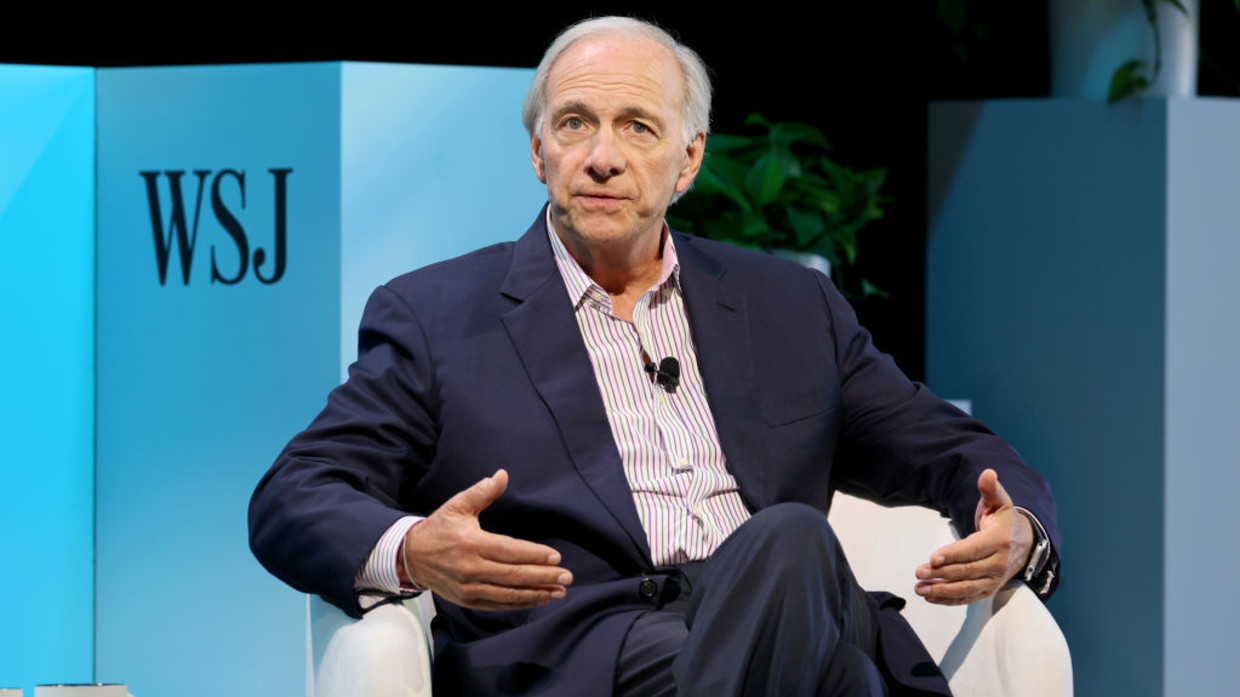
Billionaire investor Ray Dalio has warned that the United States is facing economic risks far greater than a typical recession, arguing that US President Donald Trump’s aggressive tariff policies and ballooning debt could trigger a breakdown of the global financial system.

Speaking on NBC’s Meet the Press on Sunday, the founder of Bridgewater Associates said the world is at a critical juncture, marked by profound changes in the political, economic, and geopolitical order – factors which he says have historically led to severe crises.

“I think that right now we are at a decision-making point and very close to a recession,” Dalio said“And I’m worried about something worse than a recession if this isn’t handled well.”

Dalio explained that the US economy is confronting several overlapping challenges: rising debt, internal political divisions, growing geopolitical tensions, and shifts in global power.

“Such times are very much like the 1930s,” he warned. “If you take tariffs, if you take debt, if you take the rising power challenging the existing power – those changes in the orders, the systems, are very, very disruptive.”

Asked about the worst-case scenario, Dalio pointed to a potential breakdown of the dollar’s role as a store of wealth, combined with internal conflict beyond the norms of democratic politics and escalating international tensions – potentially even military conflict.

“That could be like the breakdown of the monetary system in ‘71. It could be like 2008. It’s going to be very severe,” Dalio said. “I think it could be more severe than those if these other matters simultaneously occur.”

While acknowledging that tariffs could serve as a useful tool to bring back manufacturing and generate revenue, Dalio cautioned that the method of implementation matters deeply.

“How that’s done – whether in a practical and stable way, with quality negotiations – or whether that’s done in a chaotic and disruptive way that produces great conflict, makes all the difference in the world,” he said.

Describing Trump’s recent tariff moves as “very disruptive,” Dalio said the real test will come after the current 90-day negotiation period ends. “What was put there is like throwing rocks into the production system,” he said, warning of “enormous” impacts on global efficiency and costs.

Goldman Sachs raised the odds of a US recession within the next 12 months to 45% last week, following Trump’s April 2 announcement of a minimum 10% tariff on all imports – but before he placed a three-month hold on further “reciprocal” duties of 11% to 50% targeting dozens of nations. China, however, was still hit with a 145% import duty – and retaliated with a 125% levy of its own.

Just the other day, I was discussing the apparent madness of Trump's economic plan with a friend, and I came to the conclusion that the plan was basically sound for America, a disaster for the rest of the world, and a disaster for America if he continues to force it at a reckless pace and with the bullying attitude he has displayed so far.


==============================================================

Saturday, April 12, 2025

Global Economics > Investors dumping US gov't bonds - a disturbing sign


Investors dump US government bonds as faith in America falters


Business

Investors are dumping once-reliable US government bonds, sparking fears that major banks and traders are losing faith in America as a safe place to store their money. That could be bad news for US President Donald Trump, who had hoped his tariff pause earlier this week would restore confidence in the markets. 


The upheaval in stocks has been grabbing all the headlines, but there is a bigger problem looming in another corner of the financial markets that rarely gets headlines: Investors are dumping US government bonds.

Treasury bonds are essentially IOUs from the US government, and they’re how Washington pays its bills despite collecting less in revenue than it spends. Investors normally rush to them at any whiff of economic chaos – but now they are selling them, as not even the lure of higher interest payments on the bonds is luring buyers.

The freak development has experts worried that big banks, funds and traders are losing faith in America as a stable, predictable place to store their money.

“The fear is the US is losing its standing as the safe haven,” said George Cipolloni, a fund manager at Penn Mutual Asset Management. “Our bond market is the biggest and most stable in the world, but when you add instability, bad things can happen.”

But it is not just American bonds, most other countries have been shafted by the USA with their on-again off-again tariffs that change every three days. How can anyone invest in any economy when Damocle's Sword is hanging over that country's heads? Trump is creating a global investment disaster that will hurt everyone, including America.

That could be bad news for taxpayers paying interest on the ballooning US debt, consumers taking out mortgages or car loans – and for President Donald Trump, who had hoped his tariff pause earlier this week would restore confidence in the markets. 

A week ago, the yield on the 10-year Treasury was 4.01%. On Friday, the yield shot as high as 4.58% before sliding back to around 4.50%. That’s a major swing for the bond market, which measures moves by the hundredths of a percentage point. 

Among the possible knock-on effects is a big hit to ordinary Americans in the form of higher interest rates on mortgages, car financing and other loans.

“As yields move higher, you’ll see your borrowing rates move higher, too,” said Brian Rehling, head of fixed income strategy at Wells Fargo Investment Institute. "And every corporation uses these funding markets. If they get more expensive, they’re going to have to pass along those costs customers or cut costs by cutting jobs.”

To be sure, no one can say exactly what mix of factors is behind the developing bond bust or how long it will last, but it’s rattling Wall Street nonetheless.

Bonds are supposed to move in the opposite direction as stocks, rising when stocks are falling. In this way, they act like shock absorbers to 401(k)s and other portfolios in stock market meltdowns, compensating somewhat for the losses.

“This is Econ 101,” said Jack McIntyre, portfolio manager for Brandywine Global, adding about the bond sell-off now, “It’s left people scratching their heads.”

The latest trigger for bond yields to go up was Friday's worse-than-expected reading on sentiment among US consumers, including expectations for much higher inflation ahead. But the unusual bond yield spike this week also reflects deeper worries as Trump’s tariffs threats and erratic policy moves have made America seem hostile and unstable — fears that are not likely to go away even after the tariff turmoil ends. 

“When the issue is a broader loss of confidence in the United States, even a much fuller retreat on trade might not work” to bring yields down, wrote Sarah Bianchi and other analysts at investment bank Evercore ISI. “We’re not sure any of the tools remaining in Trump’s toolkit will be sufficient to fully staunch the bleeding.”

US Treasury Secretary Scott Bessent has said the yield spike is not unusual or worrisome, pinning the blame on professional investors who had borrowed too much and needed to sell.

“I think that it is an uncomfortable but normal deleveraging that's going on,” he told Fox News Thursday, adding that it “happens every couple of years.”

Speaking to reporters on Air Force One Friday night, Trump said "The bond market’s going good. It had a little moment, but I solved that problem very quickly. I’m very good at this.”

Trump acknowledged that the bond market played a role in his decision Wednesday to put a 90-day pause on many tariffs, saying investors “were getting a little queasy.”

If indeed it was the bond market, and not stocks, that made him change course, it wouldn't come as a surprise.

The bond market's reaction to her tax and budget policy was behind the ouster of United Kingdom’s Liz Truss in 2022, whose 49 days made her Britain’s shortest-serving prime minister. James Carville, adviser to former U.S. President Bill Clinton, also famously said he’d like to be reincarnated as the bond market because of how much power it wields.

The instinctual rush into US debt is so ingrained in investors it even happens when you’d least expect.

People poured money into US Treasury bonds during the 2009 financial crisis, for instance, even though the US was the source of the problem, specifically its housing market.

But to Wall Street pros it made sense: US Treasurys are liquid, stable in price and you can buy and sell them with ease even during a panic, so of course businesses and traders would rush into them to wait out the storm.

Yields on US bonds quickly fell during that crisis, which had a benefit beyond cushioning personal financial portfolios. It also lowered borrowing costs, which helped businesses and consumers recover.

This time that natural corrective isn’t kicking in.

Aside from sudden jitters about the US, several other things could be triggering the bond sell-off. 

Some experts speculate that China, a vast holder of US government bonds, is dumping them in retaliation. But that seems unlikely since that would hurt the country, too. Selling Treasurys, or essentially exchanging US dollars for Chinese yuan, would make China's currency strengthen and its exports more expensive.

Another explanation is that a favored strategy of some hedge funds involving US debt and lots of borrowing — called the basis trade — is going against them. That means their lenders are asking to get repaid and they need to raise cash. 

“They are selling Treasurys and that is pushing up yields — that’s part of it,” said Mike Arone, chief investment strategist at State Street Global Advisors. “But the other part is that US has become a less reliable global partner.”

Wells Fargo's Rehling said he’s worried about a hit to confidence in the US, too, but that it's way too early to be sure and that the sell-off may stop soon, anyway.

“If Treasurys are no longer the place to park your cash, where do you go?” he said. “Is there another bond out there that is more liquid? I don’t think so.”

(FRANCE 24 with AP)

=============================================================================================