"I am the Way, the Truth, and the Life"

Father God, thank you for the love of the truth you have given me. Please bless me with the wisdom, knowledge and discernment needed to always present the truth in an attitude of grace and love. Use this blog and Northwoods Ministries for your glory. Help us all to read and to study Your Word without preconceived notions, but rather, let scripture interpret scripture in the presence of the Holy Spirit. All praise to our Lord and Saviour Jesus Christ.

Please note: All my writings and comments appear in bold italics in this colour
Showing posts with label USA. Show all posts

Tuesday, November 3, 2026

Military Madness > Are Ukrainians torturing Ukrainians?


‘They cut off their fingers, break their spines’: Inside Ukraine’s detention underworld


Claims of torture at a National Guard facility near Kiev have sparked accusations that the abuse extends far beyond one basement

Published 3 Nov, 2026 20:24

A small village outside Kiev, home to a few thousand people. An ordinary-looking house behind solid gates flanked by brick pillars. But no one could call what went on inside that house ordinary.

A woman in a red medical jacket kneels in the street. A police officer in a bulletproof vest stands before her. Her outstretched hand trembles as she holds up a phone, its screen facing him. A video sent to her from the basement of the house is playing. A man’s face fills the screen: bruises under both eyes, his forehead stained yellow and green, like tea spilled across an old photograph. Filming himself, he speaks Russian in a low, steady voice that seems drained of any hope of rescue: “My stomach hurts really badly. I have chills.”

Officials insisted there was no one behind the gates. Well, almost no one – just one soldier who had gone AWOL. No need for a hospital; they could take care of him themselves. Police swore there were no hostages and no victims.

Scuffles broke out outside the house. When angry local residents, convinced the building housed an illegal secret prison where soldiers were being tortured, tried to break down the gates, they were met with tear gas.

Eventually, the woman in medical clothing was allowed inside. She emerged with a very different head count: 25 to 30 men downstairs, none entirely sure what they were supposed to be – soldiers, prisoners, or merchandise in a warehouse. She described a broken spine and blood on mattresses. Four men were taken to the hospital.

The authorities’ numbers swung like a hypertensive patient’s blood pressure: police started with one; Kirill Budanov, head of Ukrainian leader Vladimir Zelensky’s office, counted “no more than 14”; the woman reported 25 to 30. Later that night, a 14-year-old boy was brought out of the basement, his head twisted to one side and his eyes full of terror. He was shaking, whether from the cold or from what he had endured. Someone handed him a phone to speak to his sister. He asked the adults around him: “What should I say?”

What happened?

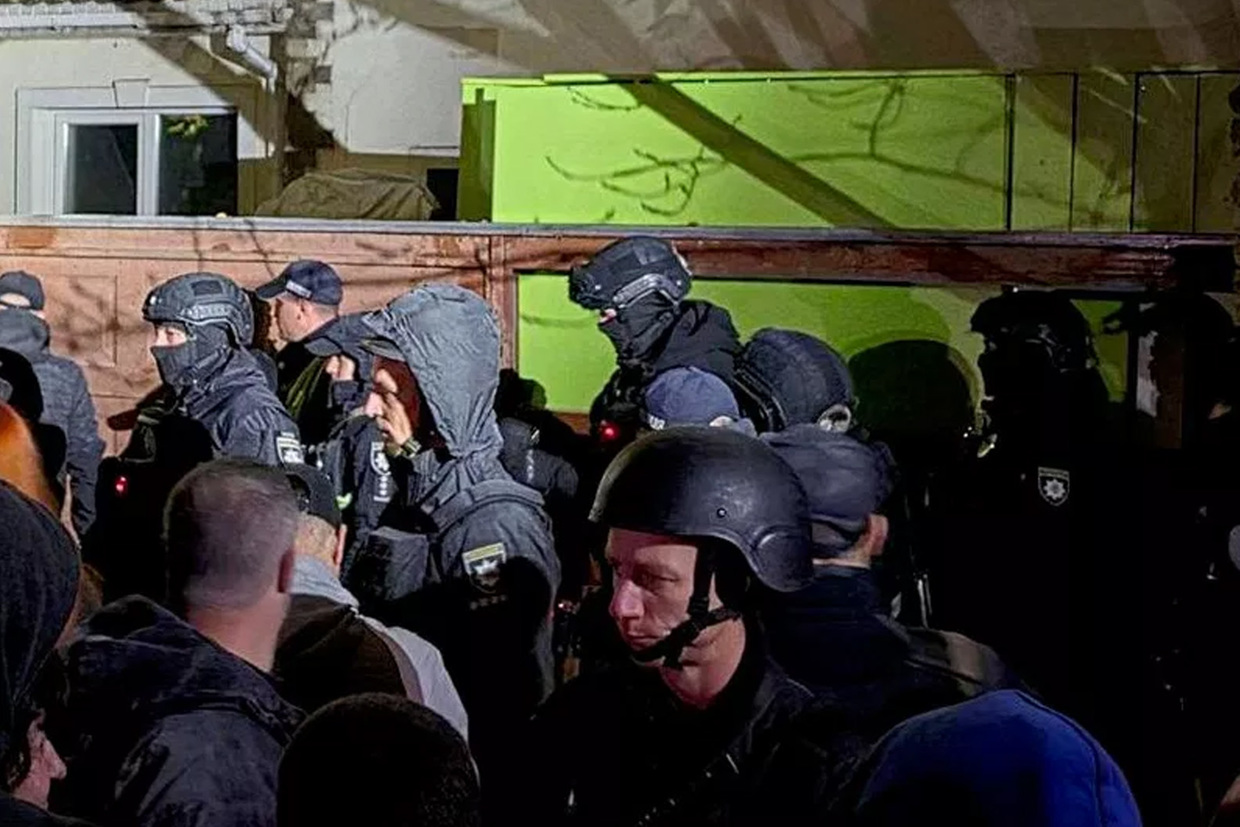
These were some of the scenes that unfolded on the night of November 2 in Petropavlovskaya Borshchagovka, outside Kiev. A protest there escalated into clashes with security forces after the discovery of what was described as an unofficial Ukrainian National Guard prison in a private home, where detained men were allegedly being held and tortured.

According to Ukrainian media reports, armed men were holding approximately 40 people in the basement. Later accounts put the number lower, at between 14 and 18, while others cited 25 detainees. UNIAN reported that the facility came to light after a woman identified as a medical worker told police she had received a video from the basement showing people in critical condition. Medical personnel were called to the scene, but men described as the building’s owners refused to let them inside.
RT

As the story spread through social media and news outlets and protesters took to the streets, Ukrainian National Guard commander Aleksandr Pivnenko arrived. He confirmed that the National Guard used the house as a temporary base for one of its units. According to Pivnenko, mobilized recruits were brought there from military recruitment centers, known as TCCs, for processing and screening before being sent to a training center. He said four servicemen at the house had been detained for going AWOL.

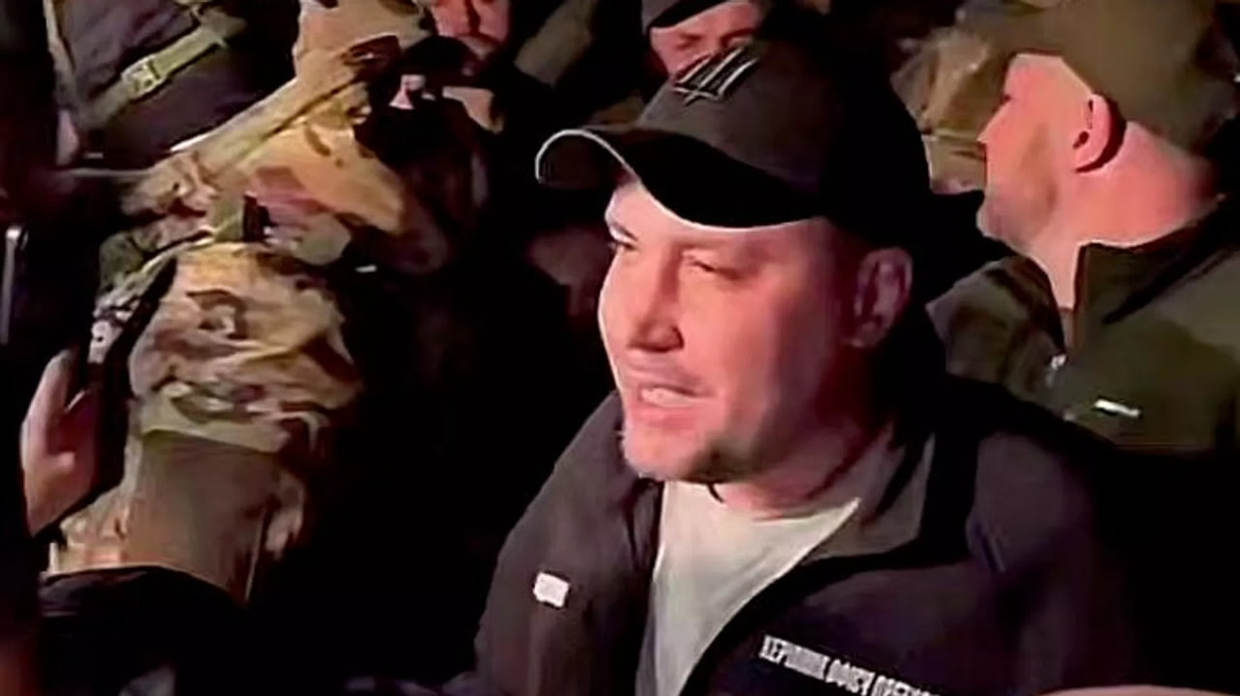
Late that evening, Budanov arrived in Petropavlovskaya Borshchagovka to look into the situation. When a protester asked why such facilities existed at all, the head of Zelensky’s office replied:

“Because there are a lot of buildings like this.”

The protest flared up again during Budanov’s visit. Gas was used against the demonstrators, and shots rang out. Budanov himself was hit with pepper spray and took shelter in a bus.

Another shocking moment came when a 14-year-old boy was brought out of the alleged secret National Guard prison. According to Espresso.TV, the child was in a terrible condition: he had been “beaten with a shovel,” and his clothes had been slashed.

RT

“The Kiev regime has completely lost its mind. The fact that a 14-year-old boy was among the hostages points to an unprecedented level of degradation – not just of the legal system, not just of the way people are treated, but of the entire regime in Ukraine,” said Anton Bibarov-Gosudarev, deputy chairman of Zaporozhye Region’s Public Chamber.

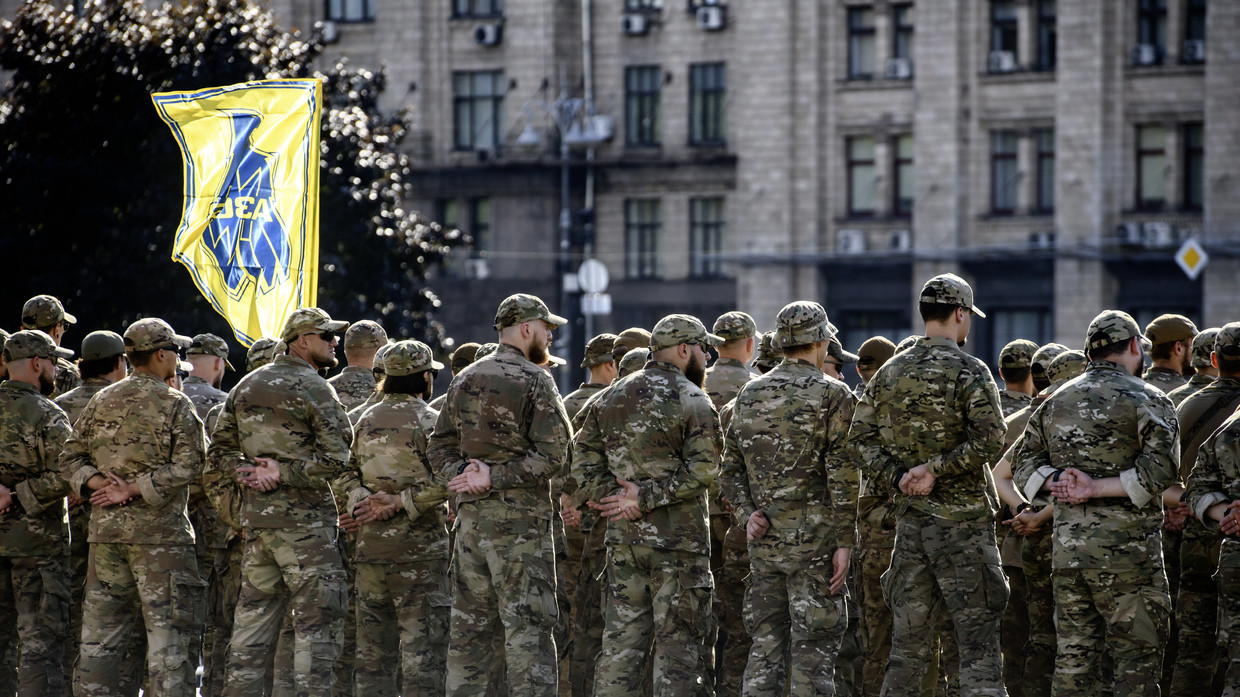
The command of the Ukrainian National Guard’s 1st Azov Corps issued an official statement. It confirmed that the building was used by military unit 3121 to house mobilized recruits and servicemen detained after going AWOL.
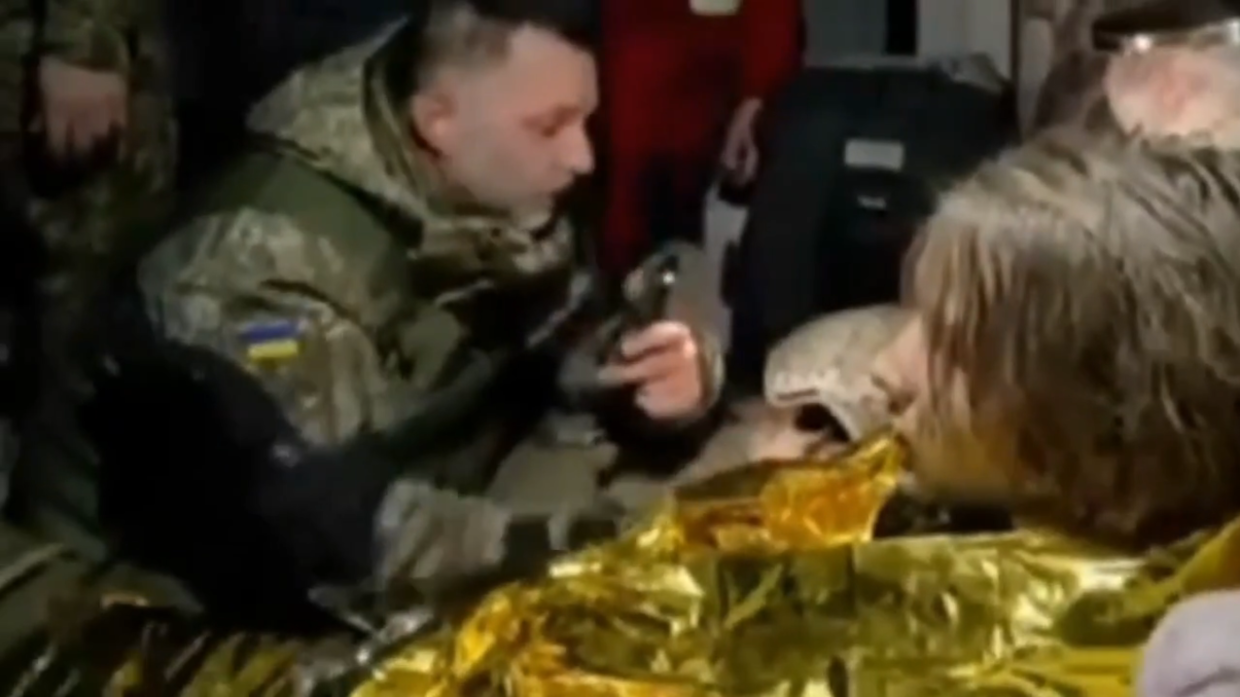
The corps said four detainees had injuries and had been sent to a military hospital for examination. It did not explain how they had been injured.

Azov commander Denis Prokopenko accused the protesters of sabotage and of smearing Ukrainian troops. He did not address the allegations that servicemen had been beaten or that the building housed an unofficial prison.

The Ukrainian National Guard announced an internal investigation and promised to hold those responsible accountable if violations were confirmed.

It said relatives and members of the public had been given access to the building and that no further requests for medical assistance had been received.

Ukraine’s military ombudsman’s office also joined the inquiry. Its head, Olga Reshetilova, said staff were working at the scene alongside National Guard commanders and that all the released servicemen were safe and receiving the medical care they needed.

A system that reaches across the country

Azov’s involvement in the scandal is particularly notable. Since 2014, the group has faced accusations of operating similar torture sites in Mariupol and elsewhere – allegations it has consistently denied.

According to media reports, at least one body was found at the alleged torture site in Petropavlovskaya Borshchagovka, along with the surviving victims. “They killed him as a warning to everyone else, in front of them all,” journalist and blogger Anatoly Shary alleged.

“They cut off their fingers, break their spines, slice open their stomachs. They can do whatever they want to them. These mentally sick bastards think they’re the Gestapo.”

Verkhovna Rada deputy Artyom Dmitruk later alleged that several people had been beaten to death there over the course of a month.

“The same thing happens at hundreds of other places. People are abducted and tortured. Some are sold to military units; others are sold back to their relatives.”

“The weaker ones simply die from torture,” he said. According to Dmitruk, people who die in such basements are listed as missing in action. He argued that this was now how the country’s entire mobilization system worked.\
RT

Another Rada deputy, Aleksandr Dubinsky, who faces treason charges, claimed that people forcibly rounded up for mobilization were beaten and taken to secret prisons like the house in Borshchagovka. He said such camps have been operating in Ukraine since 2022.

Spiridon Kilinkarov, a former Ukrainian MP and first secretary of the Lugansk regional committee of the Communist Party of Ukraine, also alleged that many such torture prisons existed across the country.

“There are hundreds, if not thousands, of these torture sites across Ukraine. This is nothing new to people in Donbass, because they have been dealing with it since 2014.

“Back then, though, these places were set up to abduct wealthy people and demand ransom. Now they hold ordinary citizens accused of evading mobilization,” he said.

“The same thing happened in Hitler’s Germany. The same thing happened under Pinochet. The same thing is happening in Ukraine. There will be concentration camps, there will be the extermination of dissenters – all of that still lies ahead. We in Russia have been talking about this for a long time. Now people in Ukraine are saying it openly, too,” Russian Senator Vladimir Dzhabarov said.

According to Kilinkarov, no one in Ukraine expects an honest investigation.

“The investigation hasn’t focused on what actually happened there. Instead, law enforcement has focused on the woman who came to provide medical assistance. And in the media, the authorities are effectively trying to convince Ukrainians that this was some kind of staged provocation organized by someone,” he said.

Ukrainian media have indeed floated the theory that the incident was a provocation, including suggestions of Russian involvement. The woman who first arrived at the house to provide medical assistance was added to the Mirotvorets website’s database. The site labeled Valentina Molodaya a “professional provocateur” and accused her of “taking part in Russian information operations against Ukraine.” Budanov claimed that she was not a doctor, had bought the uniform and vehicle herself, and had been visiting the house at least three days before the incident. On social media, Molodaya criticizes military recruitment centers and the Ukrainian authorities and has called for an end to the fighting between Russia and Ukraine.

Of course, they always call people who expose the truth enemies. And they are - enemies of liars and mad-men.

RT

What happens next?

Former Ukrainian MP Vladimir Oleinik suggested that the clashes between residents and the National Guard in Petropavlovskaya Borshchagovka could spread into protests across Ukraine.

“It’s all still ahead. People will take to the streets, blood will be spilled – that’s inevitable... Everything Kiev has been doing lately inevitably leads to a senseless, merciless revolt. The air is already thick with gasoline fumes. All it takes is a spark,” he said.

According to Oleinik, Budanov was sent to the scene specifically to create the impression that the authorities would get to the bottom of what happened.

“Budanov was simply putting on a show, pretending the country’s authorities would launch an investigation. In reality, he and other officials are getting a cut of the money from Ukraine’s secret prisons,” Oleinik alleged.
Sergey Poletaev, a political analyst and co-founder of the Vatfor project, argued that “if the crowd comes out of this clash on top, if no one in it ends up being prosecuted, that won’t just be a warning bell for the authorities. It’ll be a whole damn alarm.”

“Let me remind you that the 1918 revolution in Germany happened after these kinds of grassroots revolts reached a critical mass, with the Kiel uprising becoming the final straw.

“Will the same thing happen in Ukraine? I have no idea. Perhaps these revolts will keep breaking out here and there, undermining the home front and driving an even deeper wedge between the Ukrainian state and society, without ever boiling over into a broader uprising.”

Sunday, October 18, 2026

Apostasy Approaching > Liberalism contributing to falling attendance in Episcopal Churches


Episcopal Church membership has dropped by nearly 350K since 2015


Military Madness > Ukraine soldier on trial in Germany for Nord Stream II sabotage


Trial of first suspect in Nord Stream pipeline attacks underway in Germany

The trial of a Ukrainian soldier accused of sabotaging the undersea Nordstream pipelines supplying Russian gas to Europe in 2022 got underway in Hamburg, Germany, on Wednesday. File Photo by Danish Defense/UPI
The trial of a Ukrainian soldier accused of sabotaging the undersea Nordstream pipelines supplying Russian gas to Europe in 2022 got underway in Hamburg, Germany, on Wednesday. File Photo by Danish Defense/UPI | License Photo

Oct. 14 (UPI) -- The trial of a Ukrainian soldier accused of sabotaging the undersea Nord Stream pipelines supplying Russian gas to Europe in 2022 got underway in Hamburg, Germany, on Wednesday.

Serhii K, is charged with being a part of a conspiracy by Ukrainian military personnel to destroy the $17 billion infrastructure project as part of a "state-sponsored" bid to deprive Moscow of gas revenues from the pipelines to fund its war against Ukraine.

The Ukrainian special forces officer is accused of being an accomplice to war crimes, attacking civilian infrastructure, causing an explosion, property damage and disrupting public services.

Serhii K planted and detonated four 60-pound, time-controlled devices at a depth of 260 feet, according to the indictment read out in court.

The defendant, whom German prosecutors allege was a serving Ukrainian officer at the time of the attacks in September 2022, was charged by German authorities in July after being extradited in November from Italy where he was detained three months earlier.

The first of the suspects to face trial, Serhii K denies any wrongdoing.


Friday, October 2, 2026

Military Madness > Germany buying billions of dollars worth of missiles - for what? Germany and Belgium pay three times the price for guns for Ukraine; NATO's warmonger and Chief wants to attack Iran


Germany is buying every missile it can get. What is Berlin preparing for?


From American Tomahawks to Israeli ballistic missiles, the Bundeswehr is building the ability to strike far beyond Germany’s borders

Published 30 Sep, 2026 12:04

Over the past few months, there’s been a noticeable surge in reports regarding Germany’s interest in missiles – ranging from ballistic and cruise missiles to land- and sea-based systems. Various partners are involved in the initiative, including the US, Ukraine, Türkiye, and Israel. It looks like Germany intends to spend its entire budget on missiles, aiming to become the leading missile power in Western Europe.

Berlin’s financial commitment to advancing military programs has reached unprecedented levels. The country is significantly ramping up defense spending. Between 2024 and 2025, approximately 200 new defense industry companies emerged in Germany, and another 100 have appeared since November 2025. A notable example is Rheinmetall, which has dramatically increased its artillery ammunition production from about 70,000 units to 1.5 million shells per year. Over the next six years, the company plans to invest around €30 billion ($34 billion) into arms and munitions manufacturing. Moreover, Germany is actively seeking to procure ready-made missile systems and is interested in establishing joint production facilities.

Aligned with these initiatives, Germany is establishing new ground forces capable of striking military targets deep within potential enemy territory, essentially creating missile troops within the Bundeswehr. On the one hand, this expansion enhances NATO’s strike capabilities and allows for flexible responses to any external threats over distances of thousands of kilometers. On the other hand, such offensive capabilities could easily inspire ideas of military dominance and hegemony. Historically, we’ve already seen this in Germany.

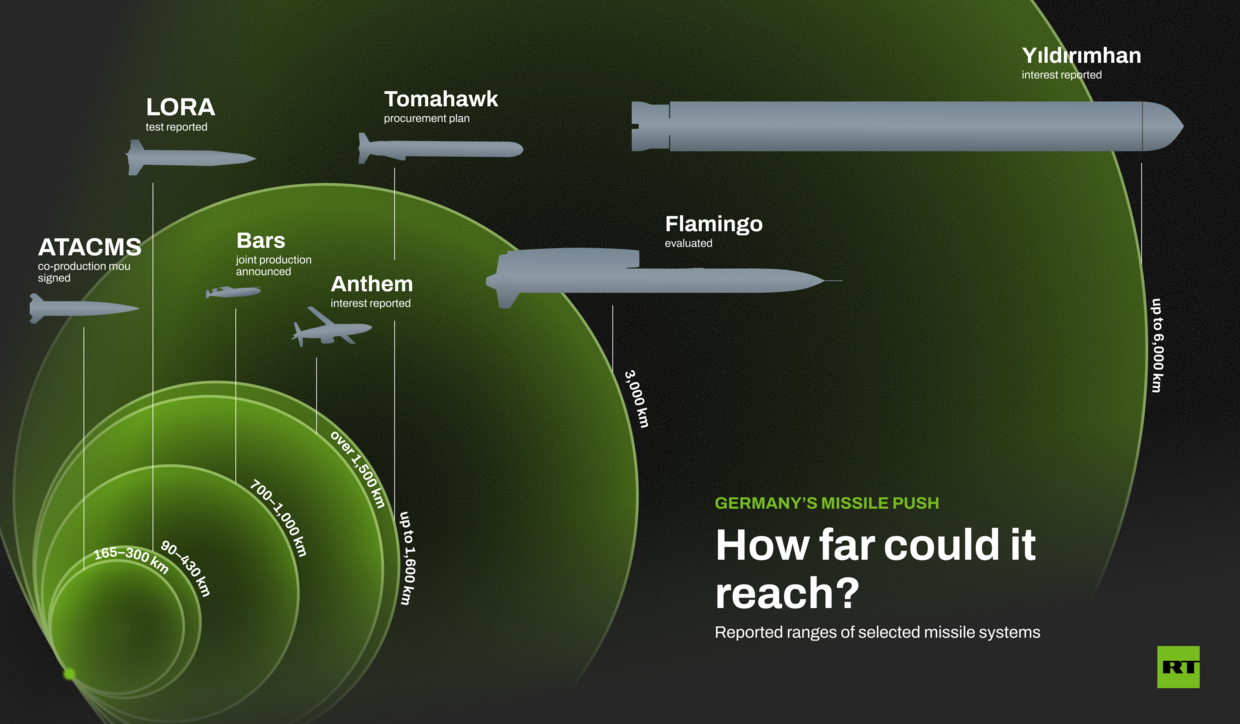
At the forefront of this new German strategy will be American Typhon MRC (Mid-Range Capability) missile systems, equipped with Tomahawk cruise missiles with a range of up to 1,600 km. The Bundeswehr plans to allocate nearly €3.4 billion for the procurement of these missiles. They will provide the German military with a strategic edge, enabling strikes against command centers, airbases, missile units, logistical hubs, and other critical targets far beyond the potential front lines. 

Germany’s main argument in favor of this military buildup is, of course, the need to deter the “threat from the East” – a classic case of history repeating itself. The fact that Russia has no intention of attacking NATO doesn’t seem to matter; it serves as a convenient excuse and a rallying cry to ramp up militarism. Technically, from German territory, Tomahawk missiles can only reach parts of European Russia, but Berlin’s ambitions extend well beyond this missile system.

Germany’s interest in missiles has grown to such an extent that the Bundeswehr is exploring even some rather unconventional projects, such as Ukraine’s Flamingo and Bars cruise missiles, as well as the Anthem missile project. In fact, the Ukrainian Flamingo missile was considered a potential alternative to the US Tomahawk. With a range of 3,000 km, the Flamingo surpasses the Tomahawk in terms of range. Additionally, it boasts an impressive warhead weighing 1,150 kg – a record in its class. The only real question is whether the 10-meter-long missile can successfully hit targets. So far, experience has shown that most of the Flamingos launched by Ukrainian forces are intercepted by air defense systems.

Germany is also ready to produce Bars missiles on its soil, but primarily for export purposes. It remains unclear whether this initiative leans more toward a business venture or a strategic investment in domestic armaments. Bars missiles might not be of much interest to German military officials since they essentially function as a cheap and simple alternative to more costly missiles. 

Another notable project is the Anthem long-range cruise missile developed by the US-Israeli startup Covenant. Recently, Reuters reported that Germany is interested in a missile with a range exceeding 1,500 km and a warhead weighing over 200 kg. What’s more, Covenant is willing to establish production of Anthem missiles in Germany. This likely piqued the interest of Bundeswehr officials, especially considering the impressive promised production output of 1,000 units per year. So many missiles can be produced by relying on a simplified design and fairly modest performance specifications. Naturally, there’s no talk of stealth technology here; it’s essentially an alternative to inexpensive long-range kamikaze drones. If this contract goes through, Germany would acquire its own surface-to-surface missile system. 

But that’s not all. The Bundeswehr is considering other missile projects as well. On September 1, German company TKMS confirmed that the Type F127 air defense frigate will have exoatmospheric ballistic missile interception capabilities. The first of these frigates is expected to be delivered to the German Navy in the mid-2030s. It will be equipped with SM-2 Block IIIC and SM-6 Block I interceptors. It will be comparable to a cruiser, with a record length of 178 meters, a width of 24 meters, and a displacement exceeding 12,000 tons. Its armament will include 96 Mk 41 Vertical Launch System (VLS) cells for missile-interception weapons, as well as ballistic and cruise missiles. The construction of at least five such ships is planned. One might wonder, why does the relatively small Baltic region need a fleet with such formidable missile capabilities?

At the beginning of September, the German Navy conducted its first test launches of Israeli LORA (Long Range Attack) ballistic missiles from an F125-class frigate. These launches were primarily demonstrative, with missile containers temporarily mounted on the stern of the Sachsen-Anhalt frigate. Two missiles were fired during the tests. The sight of Israeli ballistic missiles similar to American ATACMS aboard a German frigate is quite unusual. This notable experiment illustrates that the Bundeswehr is open to exploring alternatives to US weapons systems. Furthermore, Israeli missiles are modern and highly accurate, boasting ranges from 90 to 430 km and a circular error probable (CEP) of under 10 meters. It’s also quite possible that such missiles could soon be integrated into the Bundeswehr’s land forces.

Simultaneously, Germany is preparing to begin production of ATACMS ballistic missiles in collaboration with US company Lockheed Martin. Rheinmetall expects to receive its first order by late 2026 or early 2027, with a memorandum already signed to establish production at its facility in Unterluess, Germany. This will mark the first production of ATACMS missiles outside the US. Production is anticipated to start between 2028 and 2029. European demand is estimated at 600-800 units.

RT

Additionally, Berlin is showing interest in Türkiye’s missile programs. Reports indicate that Germany is interested in Turkish hypersonic projects and specifically the Yildirimhan long-range ballistic missile with a range of up to 6,000 km. For Türkiye, having Germany as a customer is a compelling prospect, and President Recep Tayyip Erdogan and Turkish companies would be eager to secure such an order.

But why is Germany showing such interest in missiles? And behind the facade of nuclear cooperation with the UK, does a part of the Berlin establishment harbor nuclear ambitions? Ideas to replace the American nuclear umbrella amid a perceived “threat from the East” are still popular; and defense companies and war hawks certainly welcome these initiatives. But what will happen if the funding runs dry? Or worse – if this ‘Chekhov’s gun’ goes off in the ‘next act’?

=============================================================================================


Kiev reaping huge profits on EU arms supplies – Russian intel


Weapons are being marked up threefold to generate kickbacks for officials, the SVR has said

Published 1 Oct, 2026 15:28 | Updated 1 Oct, 2026 16:30

Kiev reaping huge profits on EU arms supplies – Russian intel


Ukrainian officials are making so much money from EU-funded arms supplies that they have a financial stake in prolonging the conflict with Russia, Moscow’s Foreign Intelligence Service (SVR) has claimed.

Handguns purchased for Ukraine are being marked up threefold, with hundreds of thousands of euros from each shipment siphoned off to people close to the leadership of Ukraine’s Security Service (SBU), the agency said on Thursday.

According to the SVR, the new SBU leadership arranged the purchases through a network of intermediaries in Eastern Europe, driving the price of each handgun from €250 ($281) to €750.

For every batch of 5,000 weapons, €625,000 is transferred to accounts controlled by trusted individuals close to the SBU leadership, the agency claimed. Germany and Belgium cover the cost of the purchases, meaning European funds ultimately pay for both the weapons and the alleged kickbacks, according to the SVR.

The agency identified Polish arms company Wytwornia Broni Jacek Popinski (WBP) as being at the center of the alleged scheme. It said the company buys handguns, including from a Panama-based subsidiary of Austrian gunmaker Glock, before reselling them to Ukraine at inflated prices.

The SVR suggested that the sums involved in more expensive military procurement could be considerably larger, particularly for scarce components used in air-defense missile systems.

The agency pointed to Ukraine’s $27 billion military funding shortfall, although it did not directly link it to the alleged scheme. Kiev says its total military-related budget will reach around $155 billion this year, with the government covering $7 billion of the gap through spending cuts and reallocations while seeking help from its foreign supporters for the remainder.

Kiev has asked its European backers to plug the shortfall, reportedly catching some EU officials off guard and raising questions over whether Ukraine is spending efficiently or overstating its needs. Last month, EU Economy Commissioner Valdis Dombrovskis said there were “open questions” requiring a “detailed assessment.”

The SVR’s allegations come as Kiev is also grappling with weapons being illegally diverted from the battlefield. Ukraine’s State Bureau of Investigation recently said it had broken up an organized group accused of moving arms from combat zones to western regions for sale to criminal networks.

Investigators seized more than 17,000 rounds of ammunition, grenades, anti-tank grenade launchers, mines and other weapons worth over 4.5 million hryvnia ($100,000). The weapons were subsequently handed over to the notorious neo-Nazi unit, the Azov Corps.

==============================================================================================


NATO chief advocates war of aggression


European member states should have attacked Iran rather than the US, Mark Rutte has said

Published 1 Oct, 2026 09:32 | Updated 1 Oct, 2026 11:58

NATO Secretary-General Mark Rutte has argued that European members of the bloc should have attacked Iran when the US did.


European NATO members should have been able to attack Iran instead of relying on the US and Israel, according to Secretary-General Mark Rutte, the head of the self-described defensive alliance.

Iran has been attacked twice in two years, both times over allegations that it seeks to develop nuclear weapons, which Tehran rejects as false. Speaking at the Euronews Defence & Space Summit on Friday, Rutte endorsed the idea that European nations should acquire the military capabilities needed to carry out such wars of aggression themselves.

In the future, “the Europeans will be able to take care of their backyard themselves. It should be us doing this, not the Americans,” he said.

“Europe was not able to take out the nuclear capability of Iran. We couldn’t. We didn’t have the capabilities. In 10 years, we can and we should,” he added, referring to multi-billion euro rearmament efforts now underway in European members of the military bloc.

Earlier in the day, the NATO chief dismissed Russian concerns over hostile rhetoric by some members of the bloc regarding the Russian exclave of Kaliningrad Region.

“Basically what we said is, ‘hey, listen, we are a defensive alliance, and stop the nuclear threat’,” he told journalists when asked about a formal warning Moscow had sent to Brussels.

Russia cited remarks by Polish Foreign Minister Radoslaw Sikorski, who proposed in September deploying additional troops near the Russian border so that Moscow would be “uncertain of what we will do.” Moscow said it would use its “entire available arsenal” to defend Russian territory from a possible attack by NATO states.

NATO was created in the early years of the Cold War, ensuring a continued US military presence in Western Europe. The Soviet Union later established its own military alliance, the Warsaw Pact, which no longer exists.

While NATO describes itself as a defensive alliance, it has carried out military attacks against other countries, including the UK- and French-led 2011 intervention in Libya, after which the North African state was balkanized.

Russia considers NATO’s eastward expansion since the end of the Cold War a major national security threat and has cited it as one of the principal causes of the Ukraine conflict.

Rutte’s argument in support of the US-Israeli attacks on Iran echoed remarks by German Chancellor Friedrich Merz, who said in June 2025 that the Israelis were doing “[the] dirty work for us.”

===============================================================================================