‘Crimes against humanity’: The CIA’s sickest secret may finally be exposed
Published 5 Jul, 2026 15:44 | Updated 5 Jul, 2026 16:45

A decorated US Air Force serviceman with no history of violence suddenly abducted, raped and murdered a three-year-old girl.
When a search party found Jimmy Shaver wandering near San Antonio, Texas, he appeared to be in a trance, unable to explain where he was or how he had gotten there. After his arrest, he reportedly failed to recognize his own wife when she visited him in jail. Until the moment he was executed four years later, Shaver insisted he had no memory of committing the crime for which he had been sentenced to death.
More than seventy years later, some researchers believe his case may have been linked to one of the CIA’s darkest Cold War programs: MKULTRA, the covert project that sought to manipulate, erase and ultimately control the human mind through drugs, hypnosis and psychological experimentation.

That possibility returned to the spotlight on June 30, when the US Congressional Task Force on the Declassification of Federal Secrets reopened one of the intelligence agency’s most notorious chapters. Lawmakers pledged to uncover the truth behind MKULTRA, the illegal human experimentation program through which the CIA developed and tested psychotropic drugs and interrogation techniques designed to alter behavior, memories and perception.
Whether the hearing lived up to those promises is another question. But the testimony presented before Congress suggested that, more than sixty years after MKULTRA officially ended, many of the program’s darkest secrets may still remain hidden.
Congress promises – again
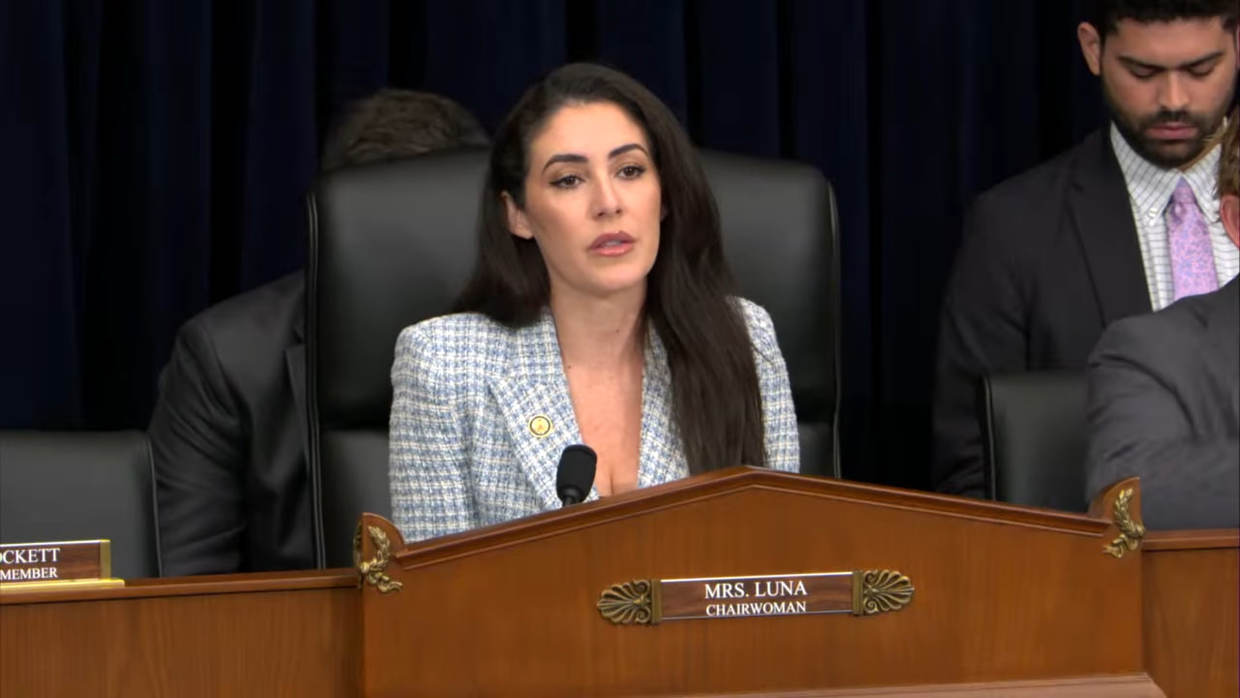
Task force chair Anna Paulina Luna left little doubt about the gravity of the allegations.
“Administering drugs to people without their consent. Subjecting humans to psychological torture. Using prisoners and hospital patients as non-consenting research subjects. These are crimes against humanity. Some of the worst, most notorious crimes of the 20th century,” she declared in her opening remarks.
“The American people deserve the complete record. The victims and their families deserve acknowledgement, accountability, and justice. No one went to prison. No one was ever compensated by the government for the harm they caused.”
The language was uncompromising. Yet it was also strikingly familiar.
Nearly half a century ago, Congress opened another investigation into MKULTRA, promising victims that the full truth would finally emerge and that those responsible would be held accountable. Those commitments quietly faded away. The victims were never fully identified, compensation never came, and many of the program’s records were presumed lost forever.
Tom O’Neill, author of CHAOS: Charles Manson, the CIA, and the Secret History of the Sixties, reminded lawmakers that they were retracing a path Congress had already walked once before.

“During those same hearings, committee members like yourselves promised the victims of MKULTRA would be identified, compensated and provided lifetime medical care,” he told the panel. “None of that ever happened.”
According to O’Neill, lawmakers in the 1970s accepted one of the CIA’s most consequential claims with remarkably little scrutiny: that after more than two decades of secret experimentation, the agency had simply failed to master mind control.
CIA officials repeatedly insisted that “their twenty-five-year effort to learn how to control the human mind had been a colossal failure.”
O’Neill believes that conclusion deserves to be revisited.
For years, he has argued that the historical record tells a very different story – one that Congress never fully examined and that may have been deliberately obscured by the destruction of key evidence. To make that case, he turned not to speculation, but to documents exchanged between two of the central figures behind the CIA’s most secretive experiments.
The blueprint for mind control
To support his argument that Congress never uncovered the full scope of MKULTRA, O’Neill pointed to a cache of correspondence that, in his view, fundamentally changes our understanding of the program.
The letters were exchanged between psychiatrist Louis Jolyon West, who “sought to control the minds of people without their knowledge, with the ultimate goal of creating programmed killers” and “Sherman Grifford” – the pseudonym used by Sidney Gottlieb, the CIA’s chief poisoner who designed and oversaw MKULTRA from its earliest days. Far from describing a failed scientific curiosity, O’Neill argued, the documents laid out an extraordinarily ambitious blueprint for manipulating the human mind.
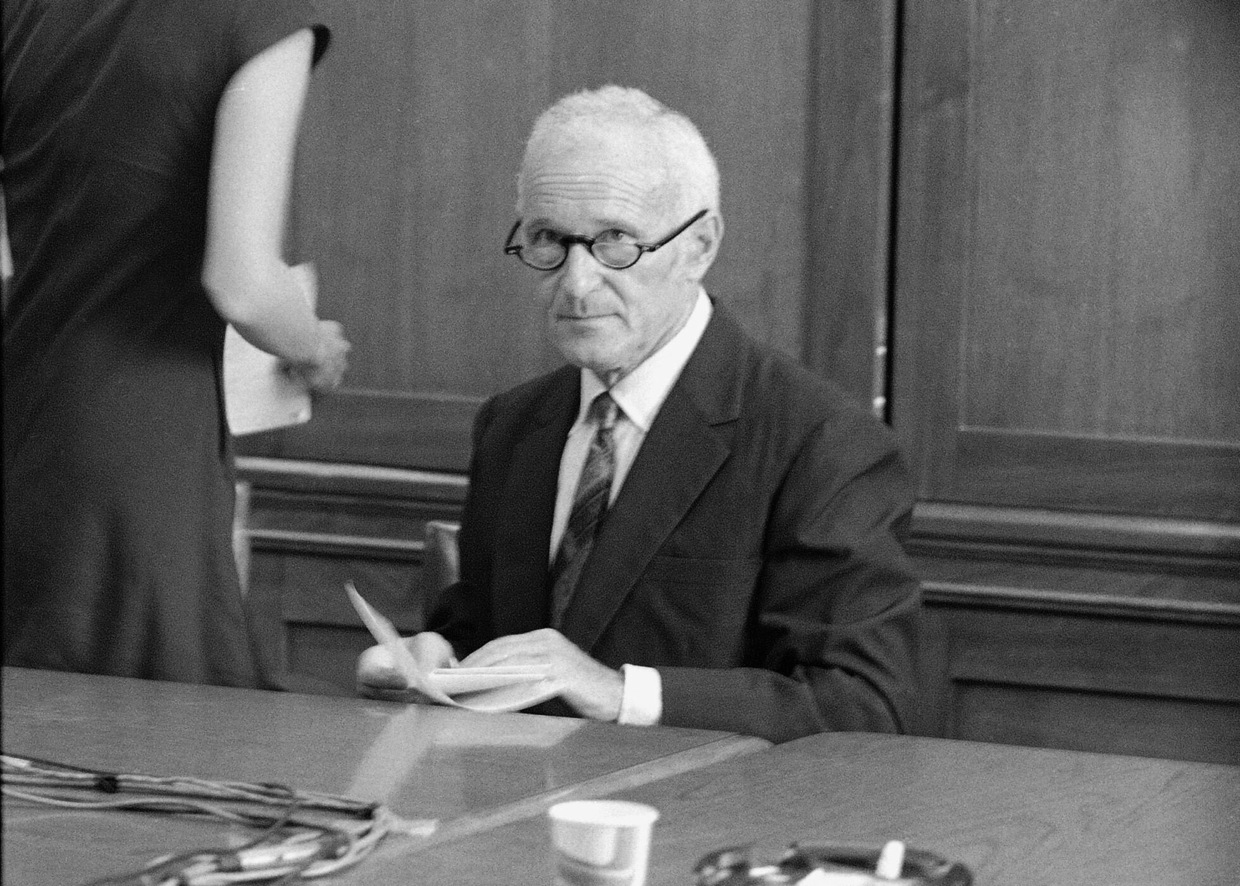
The opening letter, written by West in 1953, “outlined the objectives, methods and intended outcomes of experiments he hoped to conduct on unwitting human subjects.”
“It reads like a page torn from the research notebook of Josef Mengele,”
O’Neill told lawmakers, comparing the proposals to the infamous Nazi doctor’s experiments at Auschwitz.
According to the correspondence, West proposed conducting experiments on “unwilling subjects,” including members of the military, psychiatric patients, prisoners of civilian jails, and “special subjects” identified by the CIA.
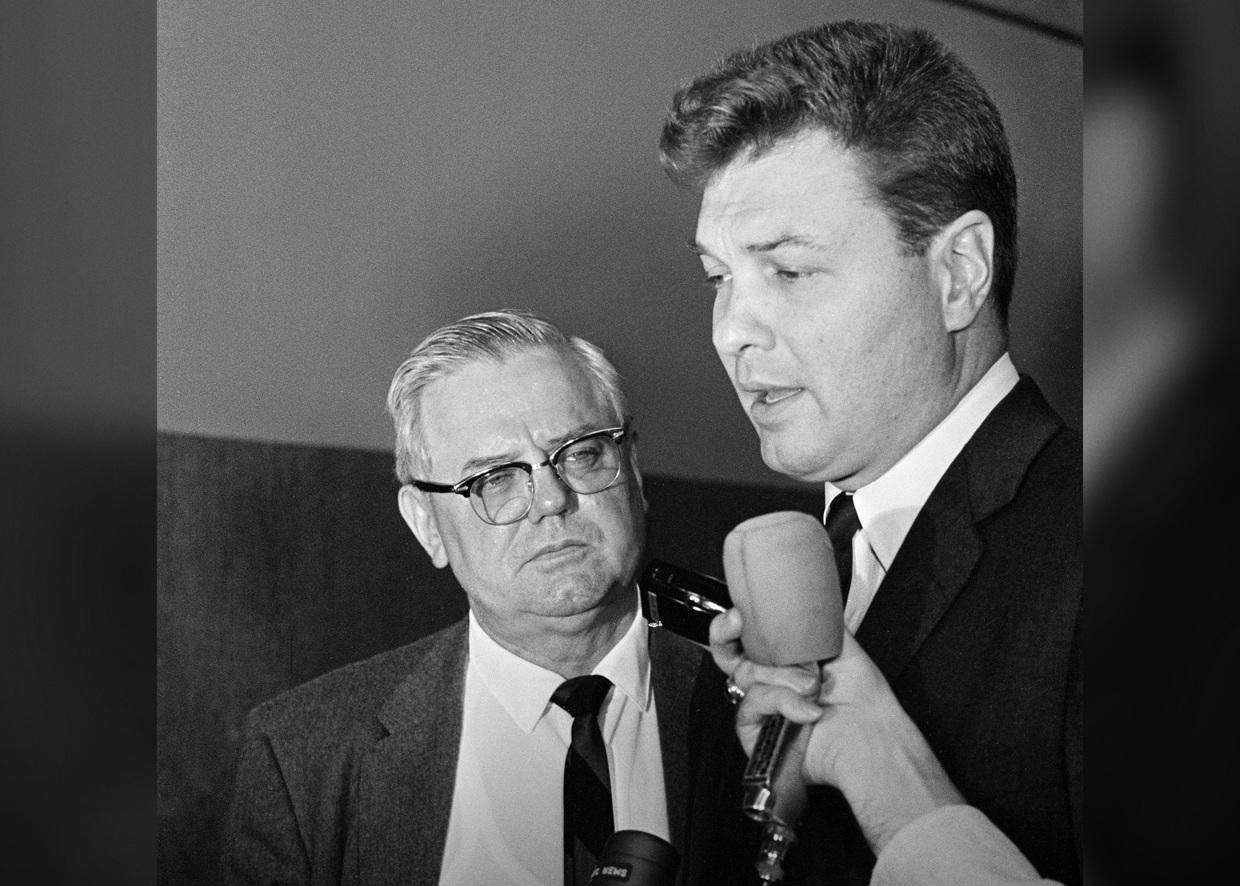
His methods ranged from administering psychedelic drugs, including LSD, to combining them with hypnosis in an effort to induce trance states, confusion, amnesia and other artificially created psychological conditions.
The ultimate objective extended far beyond studying human behavior.
West envisioned techniques that could extract information from unwilling subjects, implant false memories and alter the beliefs, attitudes and loyalties of individuals who had previously remained resistant to interrogation or manipulation.

The blueprint also revealed how carefully the operation was designed to remain invisible. Funding would be disguised, institutional links concealed and even many of West’s scientific and military colleagues kept unaware of the true nature of the research.
According to O’Neill, Gottlieb responded enthusiastically.
If the correspondence accurately reflected the CIA’s ambitions, it suggested that MKULTRA was never merely a loose collection of bizarre experiments. It was an organized effort to develop practical methods of psychological control while shielding the entire enterprise from public scrutiny.
The case that should never have happened
For O’Neill, Jimmy Shaver’s aforementioned case illustrates those ambitions more vividly than any surviving document.
An extraordinary crime unfolded just one year after Gottlieb approved West’s proposals. Before the murder, Shaver had been undergoing experimental treatment for severe migraines at the Air Force hospital where West headed psychiatric services.
West himself later appeared as the court-appointed psychiatric expert during the proceedings.
Shaver was convicted and sentenced to death. Until his execution in 1958, however, he maintained that he had absolutely no memory of committing the crime for which he had been condemned.
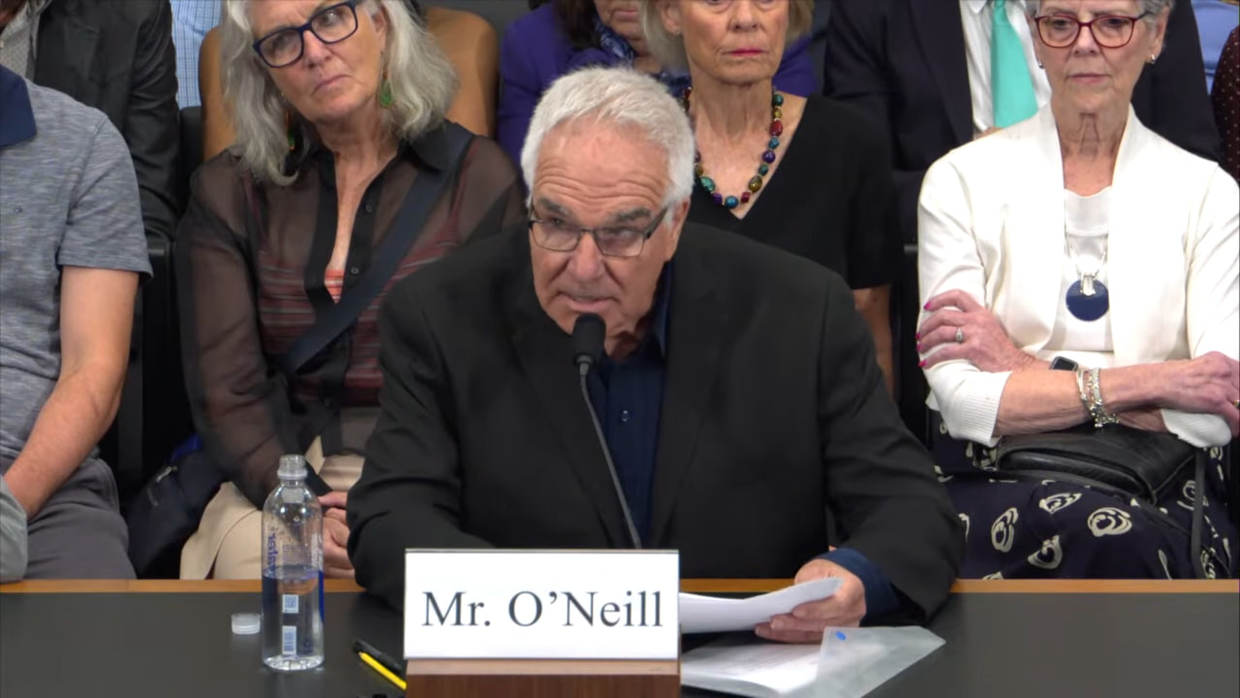
O’Neill does not present the case as definitive proof of CIA mind control. Rather, he argues that the extraordinary overlap between Shaver’s unexplained behavior, his treatment under West’s supervision and the psychiatrist’s own proposals for inducing amnesia and altered mental states demands far closer scrutiny than it has ever received.
For him, the case raises the same uncomfortable possibility that has shadowed MKULTRA for decades: that some of the program’s most consequential experiments may never have been acknowledged, let alone investigated.
That is precisely why, O’Neill concluded, Congress should resist accepting the historical record at face value.
“Nearly fifty years ago, another committee investigating MKULTRA believed it had been told the truth about the program,” he told lawmakers. “It had not.”
Instead, he urged the task force to undertake “a thorough reexamination of what this program accomplished, what Congress was told, and what may still remain hidden.”
A trail deliberately erased
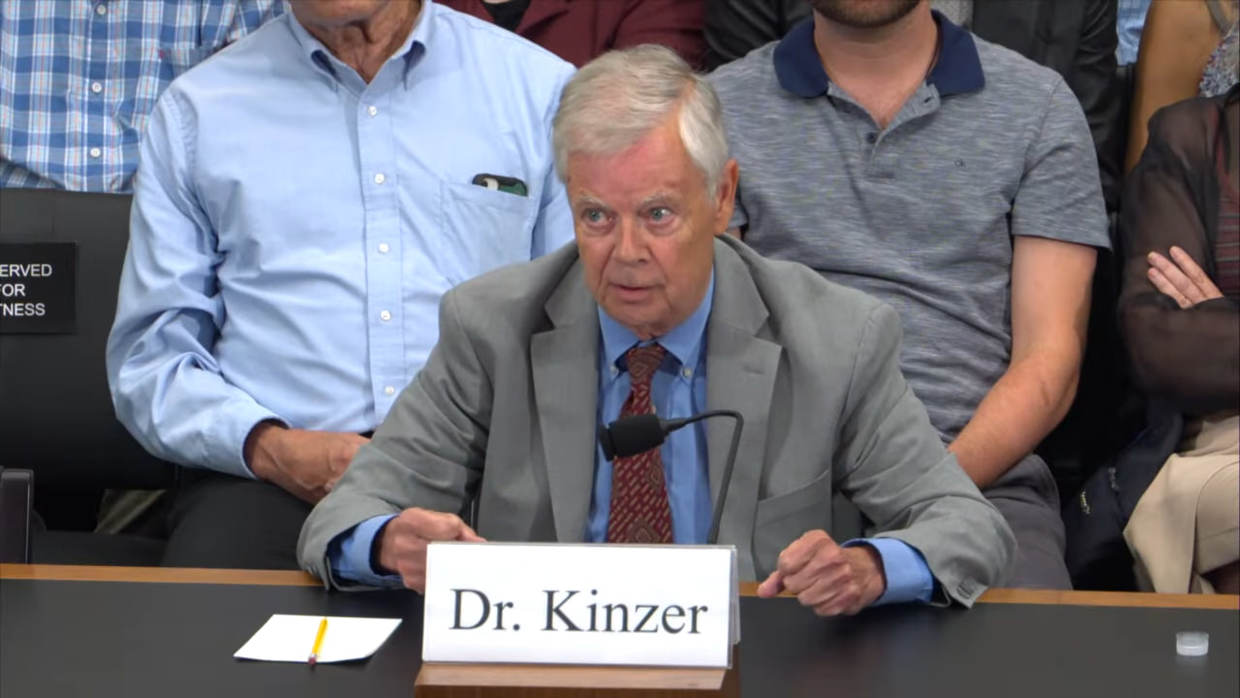
If O’Neill challenged Congress to reconsider what MKULTRA achieved, journalist and historian Stephen Kinzer focused on a different question: why so much of the program remains unknowable.
Kinzer is author of Poisoner in Chief, widely regarded as the definitive biography of Sidney Gottlieb. He told lawmakers that even after years of research, he believes only a fraction of the story has been uncovered.
“I am painfully aware that I have discovered only a small portion of what Gottlieb did and what MKULTRA was,” he said. At the heart of the project, Kinzer argued, was an ambition far more radical than simply improving interrogation techniques.
In its quest to “implant a new mind into someone’s brain,” the CIA first sought to “destroy the mind that was there already.” To pursue that objective, MKULTRA experiments spread across prisons, psychiatric hospitals, universities, brothels and CIA safe houses. By any modern standard, Kinzer argued, many of those experiments amounted to medical torture.
The victims, he noted, occupied a special category inside the CIA. “They were called expendables,” Kinzer said – “human beings who would not be missed if they disappeared.”
According to Kinzer, Gottlieb effectively operated with “what amounted to a license to kill.” Even today, no one knows how many people were subjected to MKULTRA experiments, nor how many died as a result.
Yet Kinzer argued that focusing solely on Gottlieb risks misunderstanding how the program actually functioned.
The CIA’s senior leadership, he said, deliberately gave Gottlieb extraordinary freedom while maintaining enough distance to later deny institutional responsibility.
“This was a way for the CIA to deny its institutional role in MKULTRA,” Kinzer argued, “and to portray it misleadingly as the product of one man’s sadism or excessive zeal.”
If that strategy succeeded, it was only because another decision made the historical record even harder to reconstruct.
As public scrutiny intensified during the 1970s, Gottlieb and his superior, CIA Director Richard Helms, ordered virtually all MKULTRA files destroyed.
For decades, that decision has been treated as the moment the trail went cold.
Kinzer believes it did not.
Despite the destruction order, thousands of previously overlooked MKULTRA documents were later discovered hidden among the CIA’s financial records by an agency analyst.
“That same diligence could bring results today,” he told lawmakers.
For Kinzer, the surviving files suggest that historians may still know only a fraction of what remains buried inside the agency’s vast archives.
The death that still haunts MKULTRA
If Congress decides to press further, Kinzer suggested, one of the first places to begin would be the mysterious death of Frank Olson.
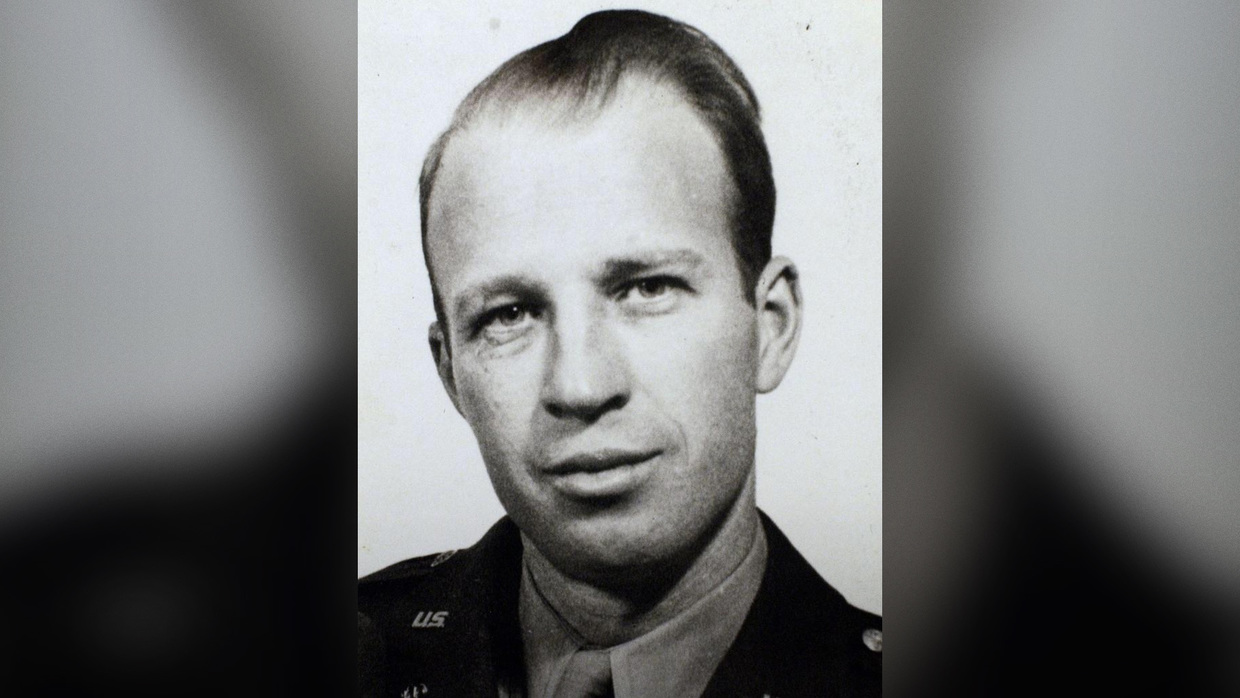
Officially, Olson was an Army scientist who committed suicide by jumping from the window of a New York hotel in November 1953.
In reality, Kinzer reminded lawmakers, Olson was secretly working for the CIA and had become deeply involved in MKULTRA. Shortly before his death, Olson had reportedly expressed growing moral reservations about the program and indicated that he wanted to leave it. His death has remained controversial ever since. “Evidence suggests that his death may not have been a suicide,” Kinzer said.
If undisclosed CIA records still exist, he argued, they could finally clarify one of the agency’s most enduring Cold War mysteries.
But Olson’s case is important for another reason. Rather than viewing it solely as an unresolved historical episode, Kinzer urged lawmakers to ask a broader – and potentially more unsettling – question.

Was MKULTRA truly buried with the Cold War?
Or did it simply evolve into something else?
Did MKULTRA really end?
MKULTRA officially came to an end in 1963, after years of secret experimentation failed to produce the breakthrough its architects had sought.
Sidney Gottlieb himself ultimately concluded that “there is no such thing as mind control.”
Kinzer does not dismiss that assessment. Instead, he argues that it reflected the technological limits of its time. “Even if he was right,” Kinzer told lawmakers, “he may have been right only at that time.”
Since MKULTRA’s closure, neuroscience, cyber technology and artificial intelligence have advanced in ways Gottlieb could scarcely have imagined.
Those developments, Kinzer argued, raise an uncomfortable possibility. Rather than asking only what MKULTRA accomplished during the Cold War, Congress should also consider whether the technologies available to intelligence agencies today have reopened questions the CIA failed to answer decades ago.
“Covert agencies may have access to tools for mind control that Sidney Gottlieb could not have imagined,” Kinzer warned.
He urged the task force to consider whether “some new incarnation of MKULTRA exists today.”
For Kinzer, revisiting the history of the program is therefore about more than establishing the historical record.
“It has a chance to connect the past to the future,” he said. “It could help prevent the emergence of a 21st-century MKULTRA that could be even more destructive than the original.”
One last chance
Whether Congress succeeds where previous investigations failed remains an open question.
Chair Anna Paulina Luna closed the hearing by arguing that lawmakers have “a constitutional obligation to ensure the CIA never does this again.”
She also revealed that she had recently visited CIA headquarters in Langley, where officials told her previously unseen MKULTRA records are currently being prepared for declassification.
That disclosure may prove to be the hearing’s most significant outcome.
Nearly fifty years ago, Congress also promised victims and their families that the full truth about MKULTRA would finally come to light. Those promises were never fulfilled.
Today’s task force has pledged to finish what its predecessors began.
Whether it succeeds may ultimately depend on a simple question: how much of the story still remains locked inside the CIA’s archives.
===============================================================================================
Russia declassifies files on Ukrainian organizer of WWII massacre
Published 7 Jul, 2026 15:15 | Updated 7 Jul, 2026 16:20

Russia’s Federal Security Service (FSB) has released declassified documents identifying Ukrainian nationalist leader Dmitry Klyachkovsky, also known as “Klim Savur,” as one of the principal architects of the massacre of Poles in western Ukraine during World War II.
Militants from the Ukrainian Insurgent Army (UPA), the armed wing of the Organization of Ukrainian Nationalists (OUN), killed at least 100,000 ethnic Poles in Volhynia and Eastern Galicia – now largely part of Ukraine – between 1943 and 1944. Known as the Volhynia massacre, the campaign is considered one of the region’s worst wartime atrocities.
Born in 1911 in Zbarazh – then part of the Austro-Hungarian Empire and now in Ukraine’s Ternopol Region – Klyachkovsky initially headed the OUN’s youth wing, Yunatstvo, before rising during World War II to become one of the UPA’s most influential field commanders. Operating under aliases, his true identity eluded Soviet authorities for years.
Published on Sunday by the FSB’s Central Archive, the newly released files include photographs and Soviet security memos from 1943 to 1945 tracing efforts to identify Klyachkovsky and the operation in which he was killed. Among them is a 1938 group photo of the Ukrainian nationalist sports organization Sokol featuring Klyachkovsky. A July 1944 memo states that Soviet agents used the photograph and information gathered from a recruited source to confirm Klyachkovsky’s identity as the UPA commander operating under the aliases “Klim Savur” and “Okhrym.”
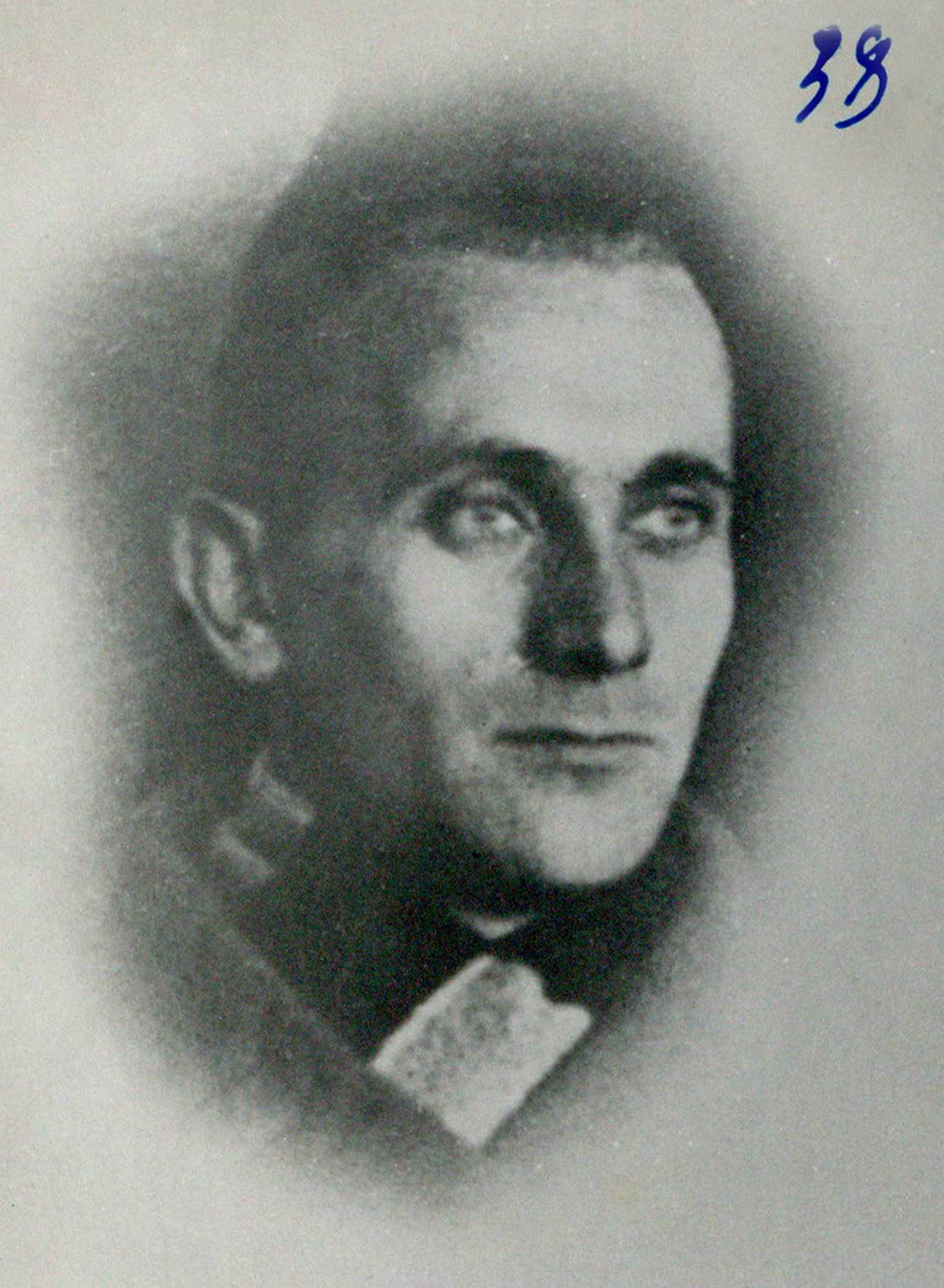
“Klyachkovsky Dmitry Semenovich, born in 1911, studied at a secondary school in Poland, completed seven grades. For his membership and activities in Ukrainian nationalist organizations, he was expelled from school and arrested. In Zbarazh and elsewhere, he worked as a shop assistant,” the memo states.
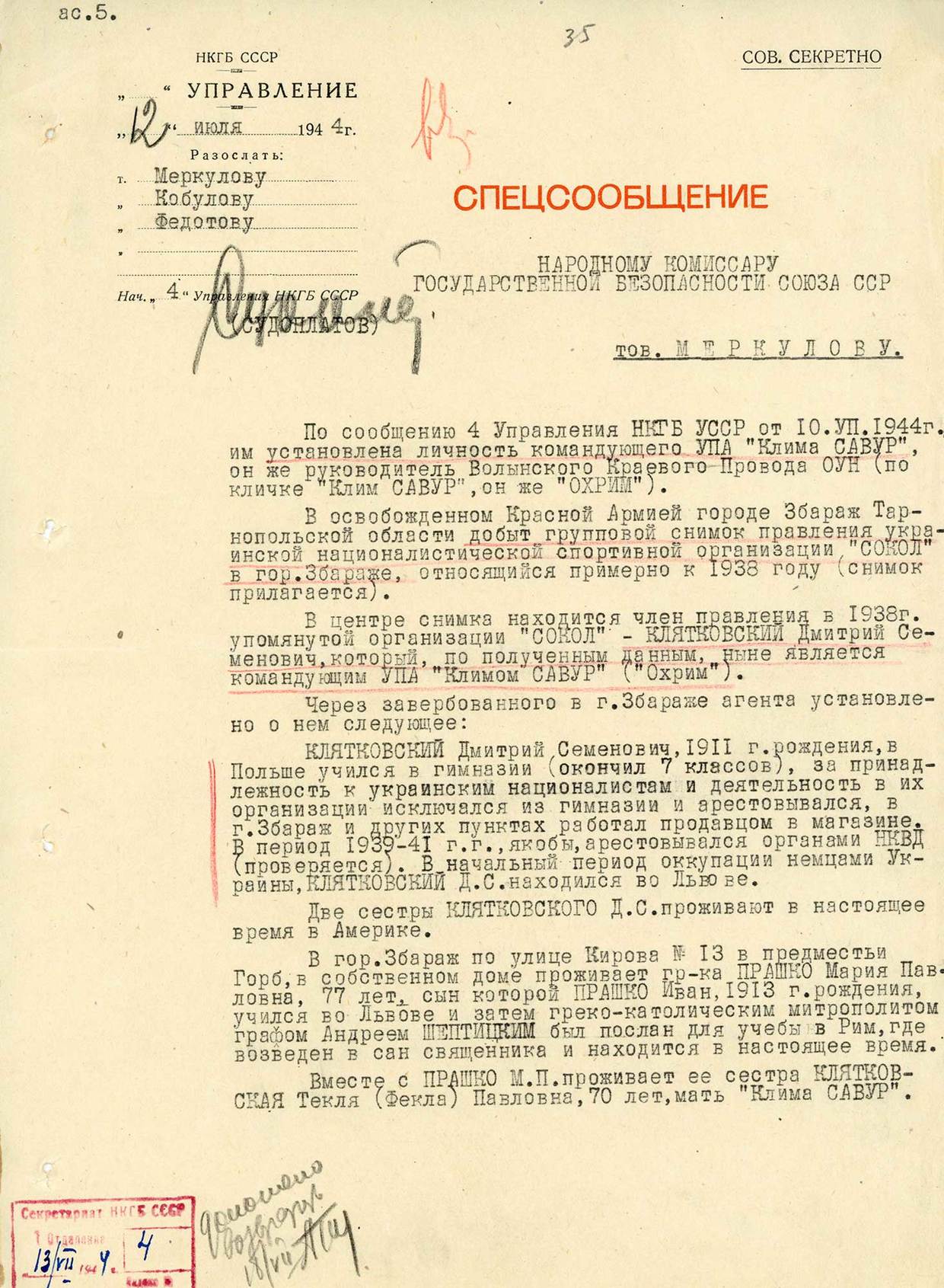
It goes on to say that Klyachkovsky was arrested by the NKVD between 1939 and 1941, although the information was still being verified at the time. Historical records indicate he had indeed been arrested over nationalist activities in that period before escaping from a Soviet prison during the Wehrmacht’s 1941 offensive. The document also states that he was in Lviv during the early period of the German occupation and that two of his sisters were living in the US during the war.

The archive also includes a February 22, 1945 report on the operation in which Klyachkovsky was killed near the village of Susk in western Ukraine. According to the document, a Soviet operational group encountered three armed men while searching the area for Nazi collaborators. All three were killed in the ensuing firefight, one of them identified as Klyachkovsky.
The Volhynia massacre remains one of the main unresolved historical disputes between Ukraine and Poland, Kiev’s key backer in its current conflict with Russia. While Warsaw recognizes the killings as genocide, Kiev honors figures such as OUN leader Stepan Bandera as “national heroes” and insists no foreign country can dictate which historical figures the nation venerates. Last week, Ukrainian parliament approved plans to establish a national pantheon commemorating prominent historical figures, including World War II era nationalist figures, prompting widespread criticism. Polish Defense Minister Wladyslaw Kosiniak-Kamysz warned that “Ukraine will not join the EU” – its long-held goal – as long as it continues to glorify figures such as Bandera.
On Tuesday, Russian Foreign Ministry spokeswoman Maria Zakharova said that the released document was a reminder to Warsaw that Poland is arming “the successors of the murderers of their own ancestors.”
===============================================================================================

No comments:
Post a Comment