Running on empty: What’s driving Europe’s auto industry crisis?
Published 7 Jul, 2026 03:14 | Updated 7 Jul, 2026 04:15

European carmakers are facing one of the toughest crises in their history. Plant closures, layoffs, and shrinking profits have become increasingly common as Chinese electric vehicle manufacturers continue to expand their global footprint.
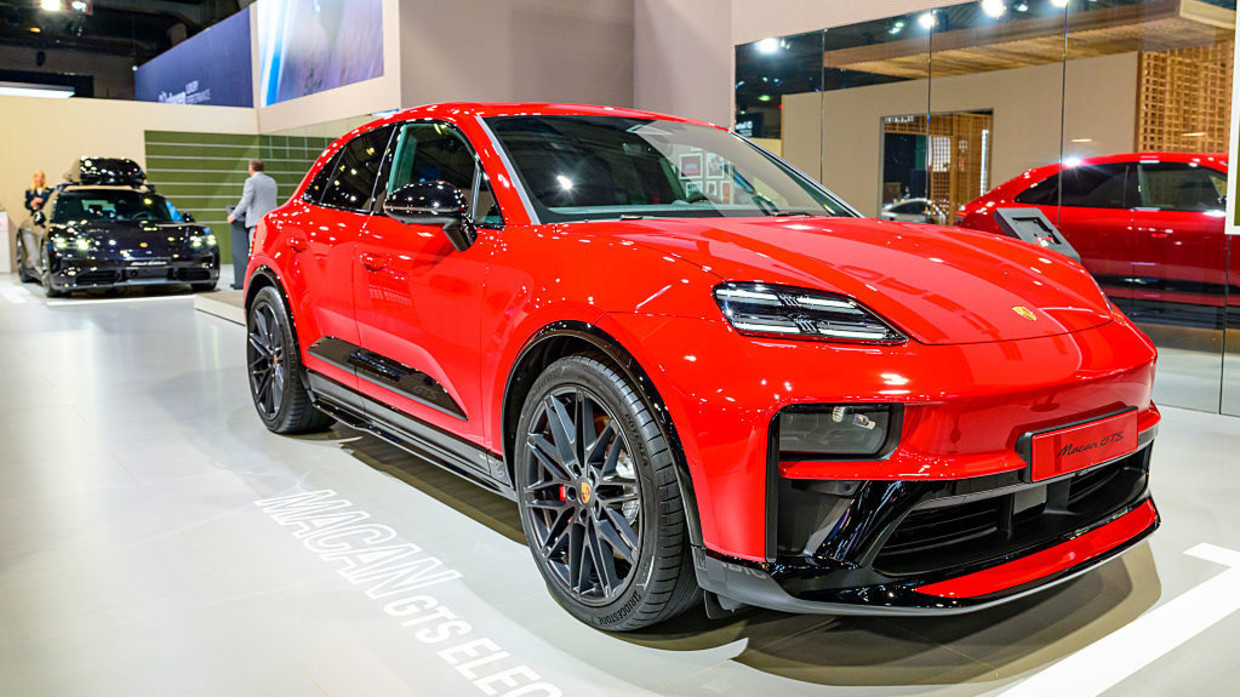
German luxury carmaker Porsche has become the latest victim. The company is expected to cut an additional 4,000 jobs, the Handelsblatt newspaper reported on Monday. In March, the sports car manufacturer reported a 93% drop in operating profits following a costly pivot away from its long-term EV strategy.
But these setbacks are only part of the story. Behind them lies a combination of soaring energy costs, mounting regulatory pressure, shifting supply chains, and intensifying international competition that is reshaping one of the region’s most important industries.
How bad is the crisis?
Since the Covid-19 pandemic and the global semiconductor shortage, European carmakers have been battered by weakening consumer demand and persistently high production costs, largely driven by elevated energy prices.
The slump is evident in sales. Across the EU, new car registrations in 2025 remained nearly 30% below 2019 levels, while the UK market also failed to recover to its pre-pandemic performance.
At the same time, expensive energy has left European manufacturers at a competitive disadvantage compared with many rivals in Asia and North America.
The strain is already triggering deep restructuring across the industry. Volkswagen, Mercedes-Benz, and BMW have announced job cuts and cost-cutting measures; Stellantis has reduced output at several European plants, particularly in Italy; Renault is continuing its restructuring in France; and the UK has seen factory closures as manufacturers struggle to contain rising costs.
Which countries have been hardest hit?
The crisis is weighing most heavily on countries where the automotive industry is a major source of jobs and economic growth. In 2019, the sector supported around 13.8 million jobs – 6.1% of total EU employment – and accounted for more than 7% of the bloc’s GDP.

Germany has been hit hardest, with the industry shedding around 125,000 jobs since 2019. In France, automotive employment has fallen by roughly a third since 2010, dropping from about 425,000 to fewer than 290,000 workers. In Italy, the wider manufacturing sector has lost more than 103,000 jobs since 2008, while a further 12,650 automotive positions are considered at risk.
Spain also remains heavily reliant on vehicle exports, while the Czech Republic, Slovakia, and Hungary are even more exposed, with much of their industrial output dependent on foreign-owned carmakers. As a result, even relatively small production cuts can have an outsized impact on jobs and regional economies.
Outside the EU, the UK also remains vulnerable. Although its automotive sector is smaller, it still supports around 200,000 manufacturing jobs and some 800,000 positions across the wider industry.
How much of the problem stems from energy prices?
Energy costs have become one of the key structural pressures on Europe’s auto industry. After the disruption of traditional energy flows, the shift away from relatively cheap Russian pipeline gas has increased reliance on more expensive alternatives, including liquefied natural gas (LNG) imports from the US. For an energy-intensive sector such as automotive production – where steel, aluminium, chemicals, and battery materials are essential inputs – this has raised costs across the entire value chain.
The impact extends beyond final assembly plants. Suppliers of metals, plastics, and battery cells have also faced higher input costs, feeding through into vehicle prices and squeezing manufacturers’ margins. This is particularly significant for electric vehicles, which depend on energy-intensive battery production and raw material processing.
Combined with competition from regions with lower energy costs, this has eroded one of Europe’s traditional advantages: cheap and stable industrial energy. As a result, energy has shifted from a competitive strength to a persistent headwind for European automakers.
Why are European carmakers losing ground to China?
Europe’s weakening position in the global auto market is increasingly linked to the rise of China as the leading EV powerhouse. Chinese manufacturers have scaled up production rapidly, supported by fully integrated domestic battery supply chains – from raw materials processing to cell manufacturing – giving them a structural cost advantage over European rivals.
A vast domestic market also allows Chinese firms to produce at far larger volumes, lowering unit costs and speeding up innovation. By contrast, Europe’s market is fragmented across multiple countries and regulatory systems.
European automakers also face higher production costs, particularly for energy and labor, alongside heavier regulatory requirements linked to emissions targets and industrial policy. According to the International Energy Agency, China produced 12.4 million electric cars in 2024, compared with 2.4 million in the EU and around 80,000 in the UK – roughly five times the combined European output.
The green transition impact

Under EU climate policy, automakers must meet increasingly strict CO₂ emissions targets, while the bloc plans to phase out new petrol and diesel cars by 2035. This has forced manufacturers to invest heavily in EV platforms, battery plants, software, and factory upgrades well before these investments generate returns. The UK is following a similar path through its Zero Emission Vehicle (ZEV) Mandate, requiring rising EV sales ahead of a 2030 ban on new internal combustion engine vehicles.
The pressure has been amplified by slower-than-expected EV adoption across Europe. As demand lags behind targets, automakers are caught between costly EV investments and continued reliance on petrol and diesel models to sustain profits.
Several carmakers warn that both EU rules and the UK’s ZEV targets risk moving faster than consumer demand. Critics say regulation has outpaced market readiness, while supporters argue that slowing the transition would leave Europe trailing in the global shift to clean mobility.
Why aren’t Europeans buying new cars?
Years of high inflation have squeezed household budgets, making consumers more reluctant to make big-ticket purchases. Although the European Central Bank and the Bank of England have begun cutting interest rates, borrowing costs remain well above pre-2022 levels, keeping car loans and leasing expensive.

At the same time, new car prices have surged since the pandemic as higher production costs have been passed on to buyers, further eroding affordability.
The transition to electric vehicles has added another obstacle. While EV prices are gradually falling, they remain higher than comparable petrol and diesel models, and concerns over charging infrastructure, driving range, and resale values continue to dampen demand.
Government policy has also weighed on sales. Several countries have scaled back or scrapped EV subsidies amid budget pressures. Germany, Europe’s largest car market, ended its purchase incentives in late 2023, contributing to a sharp decline in EV registrations.
What are European governments doing to tackle the crisis?
European governments are trying to support the auto industry without derailing the transition to cleaner transport, combining financial incentives, industrial investment, and more flexible climate rules.
The EU has invested in domestic EV and battery production, funding battery plants, critical raw materials, and charging infrastructure. It has also imposed tariffs on Chinese-made EVs over alleged unfair subsidies and relaxed CO₂ compliance rules by giving automakers more time to meet emissions targets. The UK has retained its ZEV Mandate while easing some compliance requirements and pledging further investment in domestic battery production and EV supply chains.
What happens if Europe fails to reverse the trend?
With millions of jobs tied to the auto sector, a prolonged decline would extend far beyond factory gates, hitting suppliers, local economies, and entire industrial regions. Analysts warn that further shrinkage could reduce exports, deter investment, weaken one of Europe’s key manufacturing sectors, and increase pressure on public finances.
The crisis also carries strategic risks. As China strengthens its lead in EVs and battery technology, Europe risks losing its automotive edge and becoming more dependent on imported vehicles, batteries, and critical technologies.
===============================================================================================
The cost of heat: Why Europe’s economy is melting
Published 6 Jul, 2026 15:36 | Updated 6 Jul, 2026 16:40

Western Europe has been enduring another record-breaking heat wave, with temperatures topping 40C in several countries. France, the UK, Germany and Switzerland have all seen their hottest June temperatures on record, while the extreme weather has disrupted transport, power generation and industrial output.
The most immediate economic cost of extreme heat is lost productivity. According to German insurer Allianz Trade, every additional degree between 30C and 35C cuts labor productivity by roughly $1.30 per hour – equivalent to nearly 3% of average hourly output. Construction, agriculture, logistics and other labor-intensive sectors bear the brunt as workers struggle in extreme temperatures.
As another heat wave swept the region, Patrick Martin, head of France's main employers' federation Medef, summed up the impact: “France is working in slow mode.”

The heat is literally melting Europe's transport infrastructure. Roads are cracking, rail tracks are buckling and tram networks are grinding to a halt across Western Europe. In Germany, major highways near Berlin and Hamburg were damaged by the heat, while in Leipzig tram services were suspended after track sealant melted. France's SNCF cut train services around Paris to protect its rail network, and Eurostar imposed speed restrictions as temperatures soared.
The damage extends beyond roads and railways. Water levels on the Rhine – Europe's busiest inland waterway – have fallen so low that cargo vessels can carry only around 25% to 45% of their normal loads. The restrictions have driven up freight costs and disrupted deliveries of fuel, chemicals and industrial raw materials, forcing companies such as BASF to adjust operations at their flagship Ludwigshafen complex. Engineers warn that much of Europe's transport infrastructure was designed for a cooler climate.

Europe's self-inflicted energy crunch
Surging demand for air conditioning is driving up electricity consumption just as extreme temperatures are squeezing supply. During the evening peak, Belgium's quarter-hour power price hit a record €1,038 per MWh, while the price in Germany reached €747 per MWh, according to exchange data cited by energy market intelligence firm Montel in late June.
High temperatures reduce the efficiency of solar panels and gas-fired power plants, while forcing some nuclear reactors to scale back or halt operations because rivers used for cooling have become too warm. France's EDF curbed output at the Nogent-sur-Seine and Bugey plants, while Swiss utility Axpo temporarily shut both reactors at the Beznau nuclear plant after the temperature of the River Aare reached 25C.
The latest heat wave has laid bare Europe's self-inflicted energy crunch. The EU's years-long, sanctions-driven shift from Russian energy has come at a cost. As the bloc reduced purchases of cheaper Russian gas, it became increasingly dependent on US LNG, which accounted for 59% of imports in early 2026 and more than 64% in April, according to Bruegel. Analysts warn that such reliance on a single supplier leaves the EU more exposed to price shocks and supply disruptions.
Luxembourg MEP Fernand Kartheiser has said the bloc could ease pressure on households and industry by buying competitively priced Russian energy instead of relying on more expensive American LNG.
Yet despite its pledge to phase out Russian gas, the EU continues to buy it at prevailing market prices. Russia emerged as the third-largest gas supplier to the EU in the first half of 2026, after Norway and the US, delivering approximately 22.1 billion cubic meters of gas and accounting for about 12% of the EU's gas consumption.

Food prices feel the heat
The economic cost of extreme heat extends beyond lost working hours and soaring electricity bills, fueling inflation, driving up food prices, and weighing on economic growth across the EU.
Agriculture is among the sectors under the greatest pressure. Repeated heat waves and droughts have scorched crops, dried out farmland and reduced yields across Southern and Western Europe. The European Central Bank estimates that the 2022 drought alone added 0.7 percentage points to food inflation across the EU. With another severe heat wave gripping the continent, economists warn that weather-sensitive staples could once again become more expensive.
Households pay the price
Ultimately, European households are paying the price. The economic damage does not end when temperatures fall. Research suggests economic activity declines by around 1% in the year after a major heat wave, with losses deepening to as much as 1.5% in the second year as disrupted production, damaged infrastructure and weaker investment continue to weigh on growth.
Studies suggest climate change could reduce the average European’s income by up to 3% over the course of this century as slower growth, higher energy bills and rising food prices steadily erode purchasing power.
The impact is already visible across the bloc. Germany, Europe's largest economy, has struggled to regain momentum after contracting in 2024, with economists increasingly identifying extreme heat as another structural headwind alongside high energy costs and weak industrial output.
According to Allianz Trade, climate-related losses could shave between 5% and 7% off the EU's cumulative GDP between 2026 and 2030. France is projected to suffer the biggest hit, with losses of around $240 billion, followed by Italy ($147 billion), Germany ($131 billion) and Spain ($120 billion).
Will Europe be able to keep up with the demand for energy from millions of new A/C units?
================================================================================================

No comments:
Post a Comment