"I am the Way, the Truth, and the Life"

Father God, thank you for the love of the truth you have given me. Please bless me with the wisdom, knowledge and discernment needed to always present the truth in an attitude of grace and love. Use this blog and Northwoods Ministries for your glory. Help us all to read and to study Your Word without preconceived notions, but rather, let scripture interpret scripture in the presence of the Holy Spirit. All praise to our Lord and Saviour Jesus Christ.

Please note: All my writings and comments appear in bold italics in this colour

Sunday, October 18, 2026

Apostasy Approaching > Liberalism contributing to falling attendance in Episcopal Churches


Episcopal Church membership has dropped by nearly 350K since 2015


Military Madness > Ukraine soldier on trial in Germany for Nord Stream II sabotage


Trial of first suspect in Nord Stream pipeline attacks underway in Germany

The trial of a Ukrainian soldier accused of sabotaging the undersea Nordstream pipelines supplying Russian gas to Europe in 2022 got underway in Hamburg, Germany, on Wednesday. File Photo by Danish Defense/UPI
The trial of a Ukrainian soldier accused of sabotaging the undersea Nordstream pipelines supplying Russian gas to Europe in 2022 got underway in Hamburg, Germany, on Wednesday. File Photo by Danish Defense/UPI | License Photo

Oct. 14 (UPI) -- The trial of a Ukrainian soldier accused of sabotaging the undersea Nord Stream pipelines supplying Russian gas to Europe in 2022 got underway in Hamburg, Germany, on Wednesday.

Serhii K, is charged with being a part of a conspiracy by Ukrainian military personnel to destroy the $17 billion infrastructure project as part of a "state-sponsored" bid to deprive Moscow of gas revenues from the pipelines to fund its war against Ukraine.

The Ukrainian special forces officer is accused of being an accomplice to war crimes, attacking civilian infrastructure, causing an explosion, property damage and disrupting public services.

Serhii K planted and detonated four 60-pound, time-controlled devices at a depth of 260 feet, according to the indictment read out in court.

The defendant, whom German prosecutors allege was a serving Ukrainian officer at the time of the attacks in September 2022, was charged by German authorities in July after being extradited in November from Italy where he was detained three months earlier.

The first of the suspects to face trial, Serhii K denies any wrongdoing.


Politics in Europe > The Biggest Threat to Britain's Special Forces


The Biggest Threat to Britain's Special Forces


♦️Under oath,♦️ Dominic Cummings just said what everyone in defence knows but no one dares say. Asked what is the biggest threat to Britain's Special Forces - is it China? Is it Russia? Is it Iran? His answer: No. It's not China. It's not Russia. It's not Iran. The biggest threat to the SAS is BRITISH MOD lawyers, the Cabinet Office, and Whitehall. In his exact words to the House of Lords committee: "It's not Putin who's launching lawfare against the SAS; it's not Putin who's destroyed procurement inside the MoD" We are watching lawfare waged against our own operators by our own government. While our soldiers are learning drone warfare in Ukraine, civil servants are blocking those lessons coming home because it might hurt their budgets. Our enemies aren't beating us. We are beating ourselves. Cummings is usually spot on 🤦 The country is in a tragic state. As Fred Dibnah said This country was built by men in overalls and ruined by men in suits.


Chaos in Europe > Videos from the many uprisings in Europe this weekend


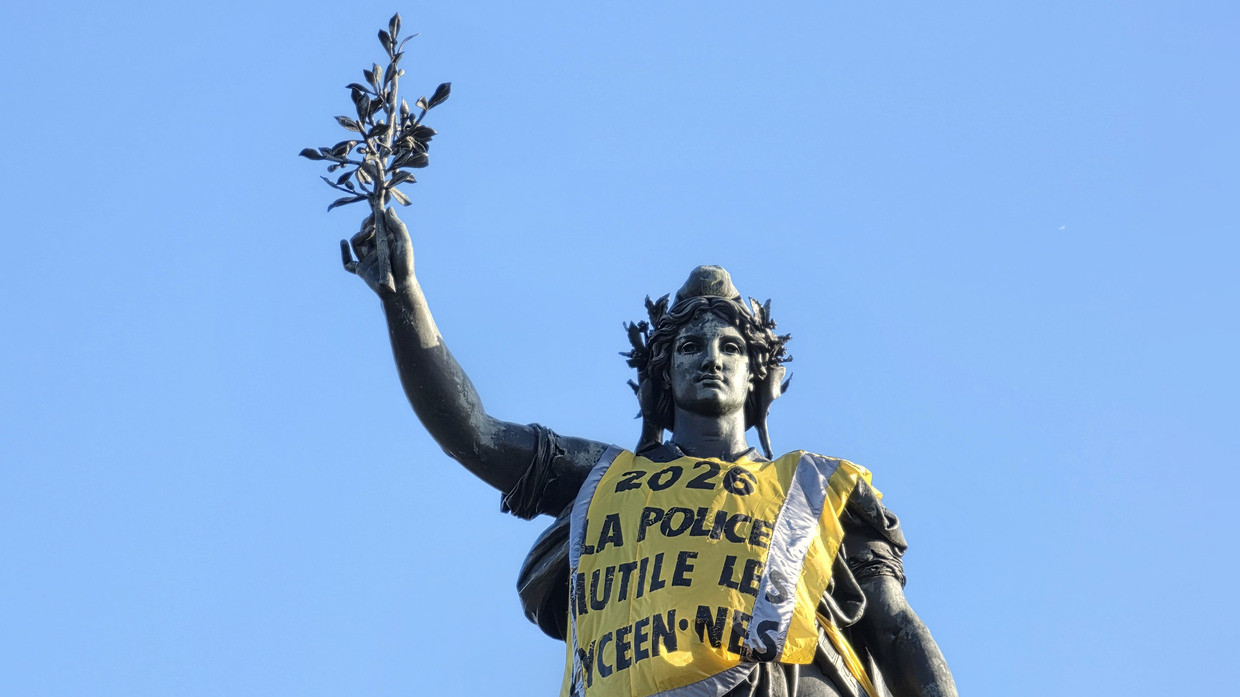
WATCH smashed storefronts, burned buildings as Europe faces aftermath of latest violent protests

Clashes erupted in several major cities as unrest spread beyond France over the weekend

Published 18 Oct, 2026 15:21 | Updated 18 Oct, 2026 16:25

WATCH smashed storefronts, burned buildings as Europe faces aftermath of latest violent protests


Tens of thousands took to the streets of European cities over the weekend to protest rising living costs, housing shortages and government policies, with demonstrations escalating into violent clashes, looting and arson in several countries. The unrest left smashed storefronts, damaged public buildings and burned-out vehicles in its wake.

France, where the protests first erupted, saw the most extensive destruction, while clashes also broke out in Belgium and Italy as a separate wave of anti-government demonstrations continued in Albania. In Portugal, tens of thousands also demonstrated, although no comparable scale of violence or damage was reported.

Footage from across Europe showed smashed shop windows, looted stores, burning vehicles and fires near public buildings.

In Limoges, France, flames engulfed the historic town hall, while masked demonstrators in Milan hurled stones at riot police near the Gothic cathedral and set fire to street barricades. In Brussels, protesters overturned a car, while in Tirana, demonstrators threw rocks and petrol bombs at police near the Education Ministry. Riot police in several cities used tear gas and water cannons to disperse crowds.

The massive rallies reflect a range of national grievances rather than a coordinated movement. In France, demonstrations took place in Marseille, Strasbourg, Nantes, Lyon and other cities. 

Initially sparked by poor school conditions and teacher shortages, the protests have broadened to include anger over living costs, inequality, public services and proposed spending cuts. Authorities put Saturday’s nationwide turnout at 550,000, while organizers estimated 800,000.

In Belgium, student groups opposed to rising education costs and reforms they say could limit access to higher education. In Italy, marches against living costs and wars began peacefully before groups broke away and clashed with police in Milan and Bologna.

In Portugal, protesters rallied over low wages, rising rents and a shortage of affordable housing. Thousands marched in Lisbon, pitching tents in Rossio square to highlight the crisis.

In Albania, student-led protests entered a fifth consecutive day, with demonstrators demanding Prime Minister Edi Rama’s resignation over corruption allegations, a lack of jobs and poor prospects for young people.

Opposition has also focused on a luxury tourism project on the southern coast linked to an investment firm founded by US President Donald Trump’s son-in-law, Jared Kushner.

Police in France arrested nearly 1,800 people and reported more than 500 injured officers, gendarmes and firefighters. One demonstrator died after suffering a cardiac arrest in Paris.

Carrefour reported damage to 50 stores, 20 of which were looted, with losses reaching tens of millions of euros. Limoges estimated repairs to its fire-damaged town hall at €1 million, while Bordeaux reported up to 100 looted stores

In Belgium, 45 people were arrested in Liege, including 12 minors, amid clashes and property damage. Italy reported about 50 detentions in Milan and four in Bologna, where 36 law-enforcement personnel were injured. In Albania, reports gave differing totals for arrests and injuries over five days of unrest. Seven officers were suspended pending an investigation into alleged excessive force.

============================================================================================


Saudi Arabia's highest court throws out death sentence for blasphemy


If this had happened in Pakistan, the judges would have been shot dead by now.

Saudi Arabia throws out death sentence for man over Facebook post

Saudi Arabia's Supreme Court on Wednesday overturned a death sentence handed to 27-year-old Sri Lankan guest worker over a Facebook post allegedly offending Islam and the Prophet Muhammad. File Photo by Mike Theiler/UPI
Saudi Arabia's Supreme Court on Wednesday overturned a death sentence handed to 27-year-old Sri Lankan guest worker over a Facebook post allegedly offending Islam and the Prophet Muhammad. File Photo by Mike Theiler/UPI | License Photo

Oct. 14 (UPI) -- Saudi Arabia's highest court on Wednesday threw out a death sentence handed to a 27-year-old Sri Lankan guest worker over a Facebook post offending Islam, said Sri Lankan Deputy Foreign Minister Arun Hemachandra.

A Saudi appellate court imposed the sentence in September after finding Anojan Sivarasa guilty of blasphemy against Islam and the Prophet Muhammad in September, sparking outrage among Sri Lankans and international human rights groups and prompting an intensive diplomatic campaign on his behalf.

Thanking Saudi authorities for their cooperation, Hemachandra said the outcome was due to the "sustained diplomatic and legal efforts" of Sri Lanka's ambassador, officials of the foreign and overseas workers' ministries and legal teams in both countries.

Sivarasa is alleged to have posted a comment in his native Tamil insulting the Prophet Muhammad in response to a derogatory post about a Hindu deity during a heated online exchange over religion in June.

Sivarasa removed the post and issued an apology but was arrested in July.

Sri Lankan member of parliament Faizer Mustafa, who was involved in the legal negotiations with Riyadh, told the BBC's Sinhala-language service that the death sentence had been set aside and that the Supreme Court's judgment was in the process of being reviewed.

Human Rights Watch criticized what it said was Saudi Arabia's use of unprecedented sentences for speech-related infractions.

"Saudi authorities should end their use of abusive laws to hand out extraordinary sentences for speech-related offenses, especially against migrant workers who are already in a vulnerable position with limited protections," Human Rights Watch senior Saudi Arabia researcher Joey Shea said Tuesday.

It was unclear if or how Wednesday's reprieve in the Supreme Court affects other criminal sanctions imposed on Sivarasa by the lower courts, including a five year prison sentence and an $800,000 fine.


Friday, October 16, 2026

Latin America Rising > Chile leading the way in economic freedom; Lula buys Brazilian votes with shorter work-week


Chile rises to 20th in economic freedom ranking, leads Latin America

By Francisca Orellana


Oct. 14 (UPI)
-- Chile ranked as Latin America's freest economy in the 2026 Economic Freedom of the World report published by Canada's Fraser Institute, climbing six places from the previous edition to 20th among 165 countries and territories.

Chile overtook Costa Rica for the first time to become the region's highest-ranked economy.

The report assesses how institutions and policies allow individuals to make their own economic decisions, including working, conducting transactions, starting businesses and using their property. It measures five areas: size of government, legal system and property rights, sound money, freedom to trade internationally and regulation.

Although published in 2026, the report uses data from 2024. Hong Kong topped the global ranking, followed by Switzerland, Singapore, New Zealand and the United States.

"Where people are free to pursue their own opportunities and make their own economic choices, they lead more prosperous, happier and healthier lives," said Matthew Mitchell, a senior fellow at the Fraser Institute and co-author of the report.

The study links greater economic freedom to higher incomes and longer life expectancy, although it cautions that these associations do not, by themselves, establish causation.

Chile tied with Malta for 20th place, just behind Germany in 19th and Canada in 18th. It also ranked ahead of Spain in 24th, Sweden in 33rd, France in 39th and Italy in 47th.

Chile's improvement was driven primarily by monetary stability, where its score rose from 8.58 to 9.18 points, lifting the country from 59th to 44th place in that category.

Economist Michele Labbé, a faculty member in economics, business and government at San Sebastián University, said average annual inflation fell from 7.3% in 2023 to 3.9% in 2024, improving conditions for economic activity.

"There was greater control over inflation, and that is always good news for a country because it allows investments to be planned," she told UPI.

According to Labbé, price stability makes it easier for businesses to make investment decisions.

"When inflation is not under control, it is difficult to set prices, and when it is difficult to set prices, it is difficult to conduct economic activity. That is how the result should be interpreted," she said.

Labbé noted that Chile's economic conditions improved compared with 2023 but remained below their 2018 levels.

Economist Felipe Cerda, director of the MBA program and academic director of business engineering at Universidad Mayor, agreed that the improvement reflected the effects of the Central Bank's restrictive monetary policy following fiscal expansion and external shocks during the COVID-19 pandemic.

Chile also improved its ranking in the size of government, legal system and property rights categories.

Cerda linked those gains to reduced uncertainty following the conclusion of Chile's constitutional reform processes, which resulted in voters rejecting proposed new constitutions in 2022 and 2023.

"As the existing constitution becomes firmly established, risks such as legal uncertainty diminish, which is a fundamental factor, for example, in long-term investment decisions," he told UPI.

Labbé cautioned that Chile's rise in the ranking reflected both improvements in its own performance and changes in other economies.

While Guatemala recorded smaller gains than Chile, Costa Rica and Panama posted weaker results than in the previous year.

Costa Rica lost its position as Latin America's leading economy, falling from 14th to 28th place.

According to Cerda, the Central American country recorded declines in four of the five categories, particularly in international trade and the legal system and property rights.

He cited administrative obstacles, protectionist pressures and difficulties in productive sectors as possible contributing factors.

"Costa Rica experienced a significant deterioration in its legal system and property rights, along with a 10% increase in tariffs that did not previously exist, making it less competitive," Labbé said.

Cerda also pointed to difficulties in productive sectors and administrative requirements, including environmental impact assessments that can act as recurring non-tariff barriers and undermine economic activity.

Other Latin American countries ranked considerably lower. Panama placed 34th, followed by the Dominican Republic in 40th, Peru in 45th, El Salvador in 58th and Uruguay in 59th. Argentina ranked 151st, while Venezuela finished last worldwide.

The report concluded that global economic freedom began recovering in 2024 but had not returned to pre-pandemic levels. Latin America and the Caribbean remained the region furthest behind in that recovery.

"Latin American economies still face serious problems with property rights and public policies," Labbé said. "Although there is great diversity across Latin America, and Venezuela obviously has a major impact at the bottom of the ranking, the region has lagged for many years because of its public policies, particularly tariffs, restrictions on international trade, very rigid regulations and a lack of inflation control."

Cerda attributed differences among Latin American economies to legal uncertainty and obstacles to investment.

"Countries in the region live in a state of constant tension, transmitting legal uncertainty to the rest of the world," he said. "This is compounded by rigid regulations and excessive bureaucracy associated with impact assessments that are not properly aligned with economic activity, permitting procedures and administrative burdens that make investment more difficult."


Brazil approves shorter workweek ahead of presidential runoff

Brazilian President and candidate for re-election Luiz Inacio Lula da Silva (C) attends a joint meeting with the Workers' Party caucus in Brasilia, Brazil, on October 7. Photo by Andre Borges/EPA

BRASILIA, Brazil, Oct. 15 (UPI) -- Brazil's Senate approved a constitutional amendment to reduce the workweek to five days just 11 days before the presidential runoff election between President Luiz Inácio Lula da Silva and opposition candidate Flávio Bolsonaro.

The reform, initially driven by a social media movement, became the centerpiece of Lula's economic platform in his re-election campaign against Bolsonaro.

After the Chamber of Deputies approved the measure in May, the Senate was expected to vote on it in November. However, lawmakers from Lula's governing coalition pushed through a special legislative schedule, moving the vote forward to secure passage Wednesday night in advance of the runoff.

Bolsonaro initially called the proposal "populist" and warned that it could lead to widespread unemployment. But opposition lawmakers reversed course shortly before the vote as the measure gained broad public support.

National polls showed more than 70% support for the reform, putting pressure on opposition lawmakers ahead of the election.

Right-wing senators ultimately voted almost unanimously in favor of the measure. Bolsonaro justified the decision as a response to demands from working-class voters.

The Senate approved the amendment 75-1.

Brazil's Congress is scheduled to formally enact the amendment Tuesday, replacing the traditional six-day workweek with a five-day schedule and two days off.

The measure will gradually establish a 40-hour weekly limit without reducing workers' pay.

Workers will be entitled to two paid days off each week. According to Brazilian news outlet G1, the days off will not necessarily fall on Saturdays and Sundays. Employers may adjust schedules according to their industry's needs, although at least one day off should preferably fall on Sunday.

The approved amendment also introduces a legal category known as the "superemployee," designed to provide greater scheduling flexibility for highly paid professionals, Folha do S. Paulo reported.

Employees with university degrees earning more than 21,180 Brazilian reais, approximately $3,800 per month, will retain their right to two days off each week, but will no longer be required to record their starting and ending work times.

Analysts say the provision gives employees in senior positions at large companies greater control over their schedules, addressing business concerns about the rigidity of the new rules.

In announcing his change of position, Bolsonaro also sought to address concerns among business leaders who opposed the reform.

According to CNN Brasil, the opposition candidate said that if he wins the Oct. 25 runoff, he will use his congressional majority to amend the legislation in 2027 and compensate businesses through tax exemptions or government subsidies.