"I am the Way, the Truth, and the Life"

Father God, thank you for the love of the truth you have given me. Please bless me with the wisdom, knowledge and discernment needed to always present the truth in an attitude of grace and love. Use this blog and Northwoods Ministries for your glory. Help us all to read and to study Your Word without preconceived notions, but rather, let scripture interpret scripture in the presence of the Holy Spirit. All praise to our Lord and Saviour Jesus Christ.

Please note: All my writings and comments appear in bold italics in this colour

Saturday, March 13, 2021

Islam - Current Day - Another Kidnapping in Nigeria; Another Beheading Threat in France; Another Car-Bomb Massacre in Afghanistan

..
Gunmen abduct 30 students in Nigeria, police confirm,
in ongoing spate of kidnappings
12 Mar, 2021 16:12

A man rests on a pole beside the signage of the Federal College of Forestry Mechanization where gunmen abducted students, in Kaduna, Nigeria March 12, 2021. ©  REUTERS / Stringer

Nigerian police have said that 30 students remain unaccounted for after gunmen targeted a technical college in the northwest of the country late Thursday night, as the shocking trend of student kidnapping continues.

Speaking on Friday, Kaduna State’s security commissioner, Samuel Aruwan, said that the militants, often referred to as bandits, struck at 11:30pm on Thursday night. 

Aruwan said that around 30 individuals remain missing after the nighttime raid at the Federal College of Forestry Mechanization on the outskirts of Kaduna town, the state capital.

The police commissioner said that the army had rescued 180 people, adding some staff were among those seized by the gunmen. Security forces “are conducting an operation to track the missing students,” he added.

It is not clear which group was behind the attack on the Kaduna college, which is located just miles away from a military training academy. A local resident told the BBC they had dismissed the commotion as they often hear the sound of gunshots from the Nigeria Defence Academy.

Around 20 army trucks were seen around the college on Friday and relatives of the students were gathered at the site.

More than 800 people have been kidnapped since December in a series of raids across northern Nigeria. In a recent attack in Zamfara State, 279 girls were abducted from the Government Girls’ Science Secondary School (GGSS) in Jangebe. All the girls were released by their captors a week later, largely unharmed.


French teen with knife arrested after saying he wanted to kill teacher
12 Mar, 2021 13:07

© Getty Images / Aleksej Kuznecov / EyeEm

A teenager with a knife was arrested in the French city of Metz after he declared that he wanted to kill a teacher, local media reported.

According to BFMTV, an unnamed teen was picked up by police at Metz’s Philippe de Vigneulles College on Friday after he called emergency services and told them that he “wanted to kill a teacher.”

When police arrived, they searched the college and arrested the teenager, who, apparently, didn’t show any resistance. He was found to be armed with a knife – however, a judicial source told BFMTV that the incident could be considered more of an “educational dispute” and presumably doesn’t have any “terrorist or religious” reason.

Last October, French school teacher Samuel Paty was murdered and beheaded by Islamist terrorist Abdoullakh Anzorov for previously showing his students cartoons of the Prophet Mohammed from the satirical magazine Charlie Hebdo – which has also fallen victim to terrorist attacks over the past decade due to its controversial cartoons.


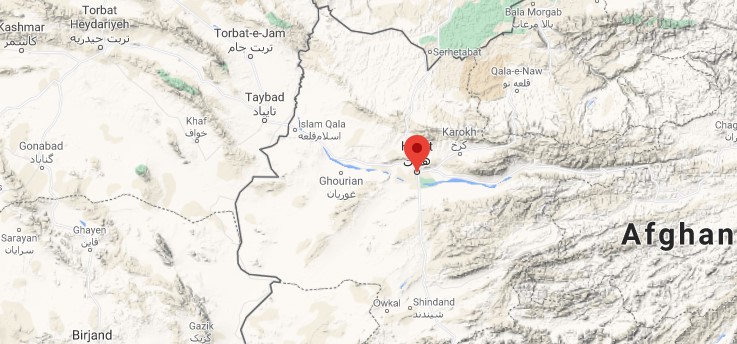
Car bomb kills 8, wounds 47, in western Afghanistan
..
The blast targeted a police headquarters in the city of Herat around 10 pm on Friday

Published:  March 13, 2021 13:19
AFP/Gulf News
  
Rescuers carry an injured girl amid the debris of a damaged house after a car bomb blast in Herat.

Herat: A powerful car bomb in western Afghanistan killed at least eight people and wounded dozens more, authorities said Saturday, as the United Nations condemned attacks on civilians in the country.

The blast targeted a police headquarters in the city of Herat around 10 pm on Friday, damaging dozens of houses and shops, Jailani Farhad, the spokesman for the Herat provincial governor, told AFP.

"The death toll from a car bomb in the city of Herat increased to eight, and 47 others are wounded," he said, adding that women, children and security personnel were among the dead.

The interior ministry spokesman, Tariq Arian, confirmed the death toll, adding that 54 had been wounded.

Taliban spokesman Zabihullah Mujahid said the blast in Herat had no links to their group. However, the group's insurgents are active in the western province and have carried out recent attacks against Afghan government forces.

President Ashraf Ghani blamed the Taliban, adding in a statement the group "continued their illegitimate war and violence against our people" and "showed once again they have no intention for peaceful settlement of the current crises".

Violence has surged in Afghanistan in recent months - including a wave of assassinations against journalists, activists and civil servants, despite the launch of peace talks between the warring Afghan government and Taliban.

On Friday, the UN Security Council "condemned in the strongest terms the alarming number of attacks deliberately targeting civilians in Afghanistan".

It comes as speculation is rife about the United States' future in Afghanistan after a two-decade military involvement in the country. US President Joe Biden is wrapping up a review on whether to stick to an agreement with the Taliban negotiated by his predecessor Donald Trump who wanted to pull out the final US troops by May.

The Biden administration has signalled that it wants to take a hard look at Trump's deal and its repercussions for Afghanistan and regional stability.

Washington recently submitted a draft peace agreement to the authorities in Kabul and to the Taliban, including the creation of a "new inclusive government," according to a letter from US Secretary of State Antony Blinken that was revealed by Afghan media.

Russia has backed the initiative, as global powers ramp up efforts to secure a peace deal and end decades of war.


Friday, March 12, 2021

Does Deep State Have Control of OPCW - Organization for the Prohibition of Chemical Weapons?

..
OPCW chief must ‘find the courage to address’ Douma coverup allegations,
says group including 5 senior ex-officials of watchdog
12 Mar, 2021 13:51

FILE PHOTO. The building of the OPCW in The Hague, Netherlands. ©REUTERS / Piroschka van de Wouw

The scandal surrounding alleged manipulation of scientific data in the chemical weapons watchdog the OPCW, ignored by both the organization and the mainstream media, is only getting worse with time, a pro-whistleblower group said.

A new statement from whistleblower-supporting organization the Courage Foundation complains that the leadership of the Organization for the Prohibition of Chemical Weapons (OPCW) has failed to properly address accusations of a coverup involving the alleged chemical weapons attack in Douma, Syria in April 2018.

Instead it tried to “side-step the issue” entirely by targeting directly and apparently indirectly the whistleblowers who brought their concerns about the integrity of the OPCW’s investigation of the incident into public view.

The statement was signed by almost 30 public figures, including author Noam Chomsky, Pentagon Papers whistleblower Daniel Ellsberg, journalist and filmmaker John Pilger, and musician and activist Roger Waters. The list also includes multiple scientists, including four former OPCW inspectors, as well as the organization’s founding director, Jose Bustani.

“We believe that the interests of the OPCW are best served by the Director General [Fernando Arias] providing a transparent and neutral forum in which the concerns of all the investigators can be heard as well as ensuring that a fully objective and scientific investigation is completed,” the group said.

Arias should “find the courage to address the problems within his organization relating to this investigation and ensure States Parties and the United Nations are informed accordingly. In this way we hope and believe that the credibility and integrity of the OPCW can be restored.”

The Douma incident happened in a jihadist-controlled neighbouhood of Damascus, which was on the cusp of being captured by the Syrian government forces at the time. The predominant narrative about it in the Western media was that the Syrian army deployed chlorine gas by dropping canisters from a helicopter, killing scores of civilians as a result. The US, the UK and France launched barrages of missiles at Syrian government targets days later in retaliation for the purported atrocity.

The OPCW’s final report on the incident, published in March 2019, all but confirmed justification for the Western attack. But evidence which has mounted since points to possible political meddling in the organization’s work. Evidence collected by OPCW inspectors on the ground, which contradicted the theory of a government attack in Douma, had been apparently suppressed so that the conclusions reached in the final report would not be undermined.

The Courage Foundation, which seeks to protect and encourage whistleblowers, became involved in the incident early on. It helped convene a panel of experts, including Bustani, the former OPCW director, to assess the evidence and testimonies of two original sources of the coverup allegation. In October 2019, it made public its concerns over what the experts had found and called for a transparent and neutral inquiry.

The new statement lists a number of developments that have happened since. Bustani, for example, was barred from speaking at the UN Security Council by representatives of the very same member states that attacked Syria after the Douma incident. Investigative outfit Bellingcat made a dubious attempt to smear one of the whistleblowers, Brendan Whelan, with a never-sent draft letter addressing him. And the BBC gave a platform to an anonymous source, who was said to be working for the OPCW and apparently sought to discredit the dissenting inspectors.

The OPCW itself dismissed them as rogue and untrustworthy individuals, who violated the organization’s rules by leaking internal documents and had no full picture of what had happened in Douma. It also refused multiple calls by the scientists and their supporters to put all the scientific data underlying its final report forward for independent scrutiny. The Courage Foundation says the OPCW is only hurting itself, casting doubts on all other reports it produces.


Search this blog for 'OPCW' for many more disturbing stories like this.

Thursday, March 11, 2021

The Media is the Message - BBCs influence in the demonizing of Russia exposed by Anonymous

..
Leaked files indicate UK state media engaged in anti-Moscow information warfare operations in Eastern Europe
11 Mar, 2021 09:10

FILE PHOTO: The main entrance to the BBC headquarters and studios in Portland Place, London, Britain, July 16, 2015
©  REUTERS/Peter Nicholls

By Kit Klarenberg, an investigative journalist exploring the role of intelligence services in shaping politics and perceptions.

New documents raise serious questions about how well-deserved British state broadcaster BBC’s 'unimpeachable' reputation is, and also what impact its relationship with the UK government has on its supposedly ‘impartial’ output.

Within a tranche of secret UK Foreign, Commonwealth & Development Office (FCDO) papers, recently leaked by hacktivist collective Anonymous, are files indicating that BBC Media Action (BBCMA) – the outlets ‘charitable’ arm – plays a central role in Whitehall-funded and directed psyops initiatives targeted at Russia.

American journalist Max Blumenthal has comprehensively exposed how, at the FCDO’s behest, BBCMA covertly cultivated Russian journalists, established influence networks within and outside Russia, and promoted pro-Whitehall, anti-Moscow propaganda in Russian-speaking areas.

However, the newly released files reveal BBCMA also offered to lead a dedicated FCDO program, named 'Independent Media in Eastern Partnership Countries' and targeted at Georgia, Moldova, and Ukraine. This endeavor forms part of a wider £100 million ($138.9 million) effort waged by London to demonize, destabilize and isolate Russia, at home and abroad.

A Whitehall tender indicates that under the auspices of the project, set to cost a staggering £9 million ($12.5 million) from 2018 to 2021, participating contractors are charged with crafting “innovative… media interventions” targeting individuals throughout the region, via “radio, independent social media channels, and traditional outlets.”

Further detail was offered by FCDO Counter Disinformation & Media Development (CDMD) chief Andy Pryce at a June 2018 meeting with prospective suppliers.

He made it clear that the effort’s ultimate goal was to “weaken the Russian state's influence,” via the co-option of journalists and media organizations in target countries via funding, training, and surreptitious production of anti-Russian, pro-Western content. “Girls on HBO… but in Ukraine” was, bizarrely, one suggested example of such activity.

In response, BBCMA submitted extensive proposals, in conjunction with Thomson Reuters Foundation (TRF), the global newswire’s “non-profit” wing, and since-collapsed veteran FCDO contractor Aktis Strategy.

The project was to be managed and coordinated directly by BBCMA from BBC Broadcasting House headquarters in London, with local support provided by Reuters newswire offices in Kiev and Tbilisi, and Ukraine’s Independent Association of Broadcasters.

A dedicated board, comprised of representatives of the contractors involved, the FCDO’s CDMD program, and British embassies in the target countries, would also meet privately every quarter to discuss the operation’s progress. Publicly, Whitehall’s funding and direction of the vast project was intended to be completely hidden.

The consortium boasted of having an existing “strong profile” in Eastern Partnership countries, and conducting “broad consultations” with a number of major news outlets, media organizations and journalists in the region in advance of its pitch.

For example, the National Public Broadcasting Company of Ukraine (UA:PBC) had been approached and offered “essential support,” aimed at “improving its existing programs” and “developing new and innovative formats for factual and non-news programs.”

BBCMA was moreover said to be “already” working on building the capacity of Kiev-based Hromadske TV, and wished to use the FCDO program to extend this assistance to “co-productions” and “building support to Hromadske Radio.”

Launched with initial funding from the American and Dutch embassies in Ukraine, Hromadske began broadcasting in November 2013 on the very day Viktor Yanukovich’s administration suspended preparations for the signing of an association agreement with the European Union, and went on to extensively cover the resultant Euromaidan protests, which eventually unseated the government the next year.

It subsequently received support from Pierre Omidyar, billionaire founder of The Intercept, who bankrolled a number of opposition groups in the country prior to the coup. In July 2014, Hromadske anchor Danylo Yanevsky abruptly terminated an interview with a Human Rights Watch representative after she consistently refused to blame Russia for civilian casualties in the Donbas conflict, despite his repeated demands.

Beyond dedicated news platforms, the consortium also pledged to enlist “local” and “hyperlocal” media outlets, as well as “freelancer journalists,” bloggers and “vloggers” for its information warfare efforts.

BBCMA argued “journalism education” locally would be a “long-term investment” – in other words, the identification, cultivation, and grooming of a network of reporters in the countries who could be relied upon to take the Whitehall line in future.

As such, the organization sought to establish a journalism training center in Gagauzia, Moldova in collaboration with NGO Media birlii – Uniunia. The autonomous region, bordered by Ukraine’s Odessa Oblast, was said to be home to “six TV companies, four radio stations, six newspapers and five web portals” potentially ripe for influence and infiltration by BBCMA – and in turn, the FCDO.

In Georgia, BBCMA visited the offices of Adjara TV“to discuss training priorities and possible co-productions.” The station was reportedly interested in developing “youth programming,” which represented “a gap in the market” in the country.

In June 2020, Georgia’s Coalition for Media Advocacy slammed Adjara for its “persecution” of “outspoken journalists expressing dissenting opinions,” after it fired newsroom chief Shorena Glonti.

Strikingly, the Coalition is funded by US regime-change agency, the National Endowment for Democracy, which supports numerous anti-Moscow initiatives worldwide. Perhaps Glonti had been too well-trained in “weakening the Russian state” for the broadcaster’s liking.

The consortium furthermore proposed to tutor and support “independent” online Georgian news outlets, including Batumelebi, iFact, Liberali, Monitor, Netgazeti, and Reginfo.

Estonia’s Digital Communications Network – financed by the US State Department – would be central to these efforts, offering lessons in “building online audiences, innovative business models and reaching out to breakaway regions susceptible to Kremlin narratives.”

The importance of “target audiences in breakaway regions” is outlined in another file, which explicitly states that the consortium would work closely with “independent outlets in proximity of non-government-controlled areas of Donbas in Ukraine, Transnistria in Moldova and Abkhazia and South Ossetia in Georgia.”

This undertaking aimed to counter the output of “separatist” media, and thus manipulate “hard-to-reach audiences,” which was “critical to achieving the project’s objectives.”

Any and all support covertly provided under the program was to be thoroughly intimate indeed, with “mentors” from the consortium “embedded” in target organizations, in order to provide “bespoke support across editorial, production and wider management systems and processes as well as on the co-production of content.”

These “mentors” include current and former BBC journalists.

“Our ability to recruit talented and experienced BBC staff is a great asset which will be harnessed for this initiative,” BBCMA promised.

These individuals may have been central to program efforts, if BBCMA’s pitch to the FCDO was accepted. For instance, UA:PBC was said to be “very interested” in receiving help from BBCMA to develop a “new debate show” and “discussion programming” to “enable audiences to think critically about the process and choices,” “counter disinformation” and “dispel rumors.”

Lofty objectives indeed, although commitments to nurturing analytical skills, thinking and debunking propaganda ring rather hollow when one considers the station’s output was perceived to be so overwhelmingly biased in favor of the government, opposition candidate Volodymyr Zelensky boycotted the channel’s official election debate during the 2019 presidential election.

BBCMA also proposed to establish an “independent” news platform in Ukraine, “timed for the run up to the 2019 election,” which would publish “vetted news content” freely syndicated to local and national media.

If the approach in Kiev was “successful,” the consortium would replicate the exercise in Georgia for the country’s 2020 election. Strikingly, the proposal brags of TRF’s experience establishing such platforms elsewhere, for example “the award-winning Aswat Masriya” in Egypt.

Other leaked files indicate the endeavor, founded after the 2011 revolution in Cairo, was secretly funded by the FCDO to the tune of £2 million ($2.8 million) over six years, and run out of Reuters’ Egyptian offices.

Over its lifespan, Aswat Masriya “became Egypt’s leading independent local media organization” and one of the most-visited websites in the country, providing news in English and Arabic, which was syndicated widely the world over. Its true, clandestine purpose seems to have been granting London a degree of narrative control over news coverage as events unfolded in the country, during its difficult and ultimately ill-fated transition to democracy.

That BBCMA likewise intended to use news coverage to influence politics in Eastern Partnership countries is amply underlined in the newly leaked files, with the organization pledging to “encourage” local news outlets to meet with “local stakeholders,” including lawmakers and community leaders, in order to “cement the media as a key governance actor.”

The organization furthermore sought to “foster a debate” in target nations, by producing wide-ranging analysis of the media environment therein. Its “long track record” of comparable efforts in “diverse” countries, including those “experiencing Arab uprisings,” had allegedly “shifted government policy.”

One objective of these lobbying efforts was achieving “a more enabling operating environment” for “independent” media in the target countries – i.e. ensuring regulations in the region were suitably conducive to and protective of the FCDO’s secret army of information warfare agents, to allow them to prosper for the duration of the consortium’s three-year offensive, and “post intervention.”

It’s not yet clear if BBCMA was successful in its pitch, and if so, which BBC journalists contributed to the program and as a result are implicated directly in cloak-and-dagger attempts to shape politics and perceptions in Georgia, Moldova, and Ukraine for London’s benefit.

It’s also unknown whether their commitment to fulfilling the FCDO’s objective of undermining Moscow, and furthering Whitehall’s interests, truly ends when they return to their day jobs as “objective,” “neutral” purveyors of news.

As BBCMA boasts in its pitch, the BBC is “well-known and highly regarded” in the Eastern Partnership countries, and provides “millions of viewers, listeners and online users in the region with world-class news on a daily basis.” At the very least, the leaked files make clear that neither the British state broadcaster, nor its FCDO paymasters, has any qualms about exploiting that standing and perceived credibility for malign ends.


Islam - Current Day - Swiss Voters Narrowly Approve Burqa Ban in Attempt to Rescue Culture

..
Switzerland: Voters Approve 'Burqa Ban'
by Soeren Kern, Gatestone Institute
March 10, 2021 at 5:00 am

The referenda reflect the determination of a majority of Swiss voters to preserve Swiss traditions and values in the face of runaway multiculturalism and the encroachment of political Islam.

Switzerland now joins Austria, Belgium, Bulgaria, Denmark, France, Germany, Italy, Latvia, the Netherlands and Sweden, all of which currently have full or partial bans on religious and non-religious face coverings.

"In Switzerland our tradition is that you show your face. That is a sign of our basic freedoms." — Walter Wobmann, member of the Swiss People's Party, the biggest political party in Switzerland.

"Some Muslims also understood that the niqab is a clear symbol of radical Islam." — Jean-Luc Addor, member of the Swiss People's Party.

"Saying yes to the ban on veiling is saying no to a totalitarian ideology that has no place in a democracy." — Saïda Keller-Messahli, founder and president of the Forum for a Progressive Islam.

"The full veil, which turns the woman into a faceless being without an identity, is a symbol of misogynistic political Islam. It is the most visible symbol of an overall fascist ideology, which includes gender apartheid, but also anti-Semitism and gay hatred...." — Gisela Widmer, Swiss author and playwright.


Swiss voters have narrowly approved a proposal to ban face coverings in public spaces, popularly known as the "burqa initiative," reflecting a determination to preserve Swiss traditions and values in the face of runaway multiculturalism and the encroachment of political Islam. Pictured: Posters in favor of the burqa initiative, in Zurich, on March 3, 2021. (Photo by Fabrice Coffrini/AFP via Getty Images)

Swiss voters have narrowly approved a proposal to ban face coverings in public spaces. The measure comes just over a decade after citizens voted to ban the construction of minarets, the tower-like structures on mosques that are often used to call Muslims to prayer.

The referenda reflect the determination of a majority of Swiss voters to preserve Swiss traditions and values in the face of runaway multiculturalism and the encroachment of political Islam.

Switzerland now joins Austria, Belgium, Bulgaria, Denmark, France, Germany, Italy, Latvia, the Netherlands and Sweden, all of which currently have full or partial bans on religious and non-religious face coverings.

The binding referendum, approved on March 7 by 51.2% of voters, is popularly known as the "burqa initiative," although the proposal does not specifically mention burqas or niqabs, the face-coving garments worn by some Muslim women. The ban encompasses most face coverings, including the bandanas and masks sometimes used by violent street protesters, and applies to all public spaces, including parks, restaurants, shops, and public transport.

The measure allows for some exceptions: health (anti-Covid masks); weather (scarves), safety (motorcycle helmets) and local customs (carnival costumes). Face coverings may also be worn inside houses of worship.

In line with the Swiss system of direct democracy, the country's constitution will now be amended to incorporate the ban. The government has two years to draw up the necessary legislation.

The initiative was sponsored by the so-called Egerking Committee, a political group linked to the conservative Swiss People's Party (Schweizerische Volkspartei, SVP), the biggest political party in Switzerland.

Referendum committee chairman and SVP member Walter Wobmann described Muslim face coverings as "a symbol for this extreme, political Islam which has become increasingly prominent in Europe and which has no place in Switzerland." He added: "In Switzerland our tradition is that you show your face. That is a sign of our basic freedoms."

Fellow SVP member Jean-Luc Addor attributed the success in the referendum to the party's ability to promote its ideas outside of its core electorate, including among feminists and progressive Muslims. "Some Muslims also understood that the niqab is a clear symbol of radical Islam," he said.

Elham Manea, a Yemeni-Swiss political scientist who has long warned of the dangers of Sharia law, told Swiss Radio that the niqab is clearly a "symbol of a religious fundamentalist ideology." She added: "In a free society, women must be respected, and their rights and dignity protected."

As opposed to being made invisible!

Mohamed Hamdaoui, an Algerian-Swiss counselor in the canton of Bern, described the outcome of the vote as "a great relief." He said that the vote was "an opportunity to put a stop to Islamism" and not "the Muslims who obviously have their rightful place in this country."

Saïda Keller-Messahli, founder and president of the Forum for a Progressive Islam, agreed that the approval of the referendum was a positive development. A native of Tunisia who for years has warned of the dangers of an Islamist subculture in Switzerland, said that "saying yes to the ban on veiling is saying no to a totalitarian ideology that has no place in a democracy."

Swiss feminists are divided on the issue, with some saying that burqas and niqabs are oppressive, and others arguing that women should be free to choose what they want to wear.

Swiss writer and playwright Gisela Widmer criticized some feminist groups for opposing the ban:

"The full veil, which turns the woman into a faceless being without an identity, is a symbol of misogynistic political Islam. It is the most visible symbol of an overall fascist ideology, which includes gender apartheid, but also anti-Semitism and gay hatred....

"[Some feminists say that] the fact that the initiative comes from the SVP is a mockery. Correct! Because the initiative should not come from the SVP, but from committed feminist circles. Even more unforgivable than this failure on the part of the left is that they are now also fighting the 'Burqa Initiative.' A little less naivety and a little more international women's solidarity would suit the SP [Socialist Party] women. If we approve the 'Burqa Initiative,' we cannot change the reality of women in the Sharia states, but we can set an example and say that we are very serious about a woman's right to self-determination."

Maya Graf, a co-president of the feminist group Alliance F, countered:

"Feminists stand up for the rights and freedoms of women. This also includes the free choice of clothing."

Emrah Erken, a lawyer and member of the Forum for Progressive Islam, tweeted:

"Sharia and feminism are opposites. You cannot wear the hijab and claim that you are a feminist. Such a claim is simply not true."

The Swiss government opposed the measure. Justice Minister Karin Keller-Sutter argued that full-face coverings are a "marginal phenomenon" (Randphänomen) and that a ban could harm tourism because, according to the government, most Muslim women who cover their faces in Switzerland are visitors from wealthy Persian Gulf states.

The Swiss tourism sector also opposed the proposal. "The burqa ban would damage our image as an open and tolerant tourist destination," said Nicole Brändle Schlegel of HotellerieSuisse, a coalition of hoteliers and tourism groups from Bern.

The Director of the Swiss Tourism Association, Barbara Gisi, added: "We want to show the countries from which many fully veiled tourists come to Switzerland that we are still a hospitable country." She said she hopes that the Swiss government will launch an "explanatory and charm offensive" in the relevant countries.

The Federation of Islamic Umbrella Organizations in Switzerland (Föderation islamischer Dachorganisationen Schweiz, FIDS) stated:

"We are very disappointed with the result of the vote. The disappointment is mixed with great indignation. It would have been expected that the Swiss people would not allow symbolic politics to be carried out on the backs of some Muslim women. This symbolic policy is directed against Muslims.... Anchoring dress codes in the constitution is not a struggle for freedom of women, but a retreat into the past."

Ferah Ulucay, general secretary of the Central Council of Muslims in Switzerland (Islamischer Zentralrat der Schweiz, IZRS) said that approval of the referendum was "a dark day for Switzerland" because it "succeeded in anchoring the prevailing Islamophobia in the constitution." She vowed to challenge to the ban in court and to pay the fines for women who are prosecuted for violating it.

The referendum was approved by majorities in 20 out of Switzerland's 26 cantons; it was rejected in six cantons, including those that include the country's three biggest cities, Basel, Geneva and Zurich, and the capital, Bern.

Two Swiss cantons — Ticino and St. Gallen — already have local bans on face coverings. Face coverings at protests and sports events are currently banned in 15 of 26 cantons.

Minaret Ban: A Decade On, Mixed Results
The Egerking Committee was also the driving force behind the 2009 referendum on banning the construction of minarets. The ban was aimed at slowing the growth of political Islam in Switzerland by curbing the influence of Turkey and other Muslim countries in the affairs of Swiss Muslims.

A decade later, the referendum's impact has been mixed. No new minarets have been built in Switzerland since the ban entered into effect, but the foreign influence on Swiss Islamic communities appears to be greater than ever.

The minaret referendum, held on November 29, 2009, was approved by 57.5% of Swiss voters and resulted in an amendment to Article 72 of the Swiss Constitution, which now states: "The construction of minarets is prohibited."

The SVP argued that minarets are "beacons of jihad" and a "symbol of a religious-political claim to power and dominance which threatens — in the name of alleged freedom of religion — the constitutional rights of others."

The SVP backed its claim by citing a remark by Turkish President Recep Tayyip Erdoğan, who once implied that the construction of mosques and minarets is part of a strategy to Islamize Europe. Reciting a poem by the Turkish nationalist writer Ziya Gökalp (1876-1924), Erdoğan said: "The minarets are our bayonets, the domes our helmets, the mosques our barracks and the faithful our soldiers."

The minaret controversy was sparked in September 2005, when the Turkish cultural association in Wangen bei Olten, a small town in northern Switzerland, applied for a permit to erect a minaret on the roof of the local mosque. The project to build the minaret, opposed by a majority of local residents, was rejected by the town's building and planning commission in September 2006.

The Turkish cultural association — possibly with encouragement from the Turkish government — subsequently filed an appeal; it claimed that the local building authorities were motivated by religious bias. The case eventually made its way to the Federal Supreme Court of Switzerland (Bundesgericht), which in July 2007 ruled that construction of the minaret could proceed. The six-meter (20-foot) tower was erected in January 2009. This chain of events led to the formation of the Egerking Committee and prompted campaigners to gather the 100,000 signatures needed to launch the popular initiative against minarets.

Since then, the influence of Islam in Switzerland has steadily increased. The Muslim population of Switzerland has grown by more than 30% during the past decade and now exceeds half a million people, or approximately six percent of the total population, according to the Pew Research Center. If current migration trends continue, the Muslim population of Switzerland is set to more than double by 2050, to more than one million, according to Pew forecasts; with a high migration scenario, it is set to triple to more than 1.5 million.

The number of mosques in Switzerland has also increased since the 2009 referendum. The country is now home to at least 240 mosques, according to the University of Luzern. Some of the larger mosques are believed to be financed by foreign governments, including those of Turkey, Saudi Arabia and some Gulf Arab states:

June 2020. Saïda Keller-Messahli, one of the most prominent Islam experts in Switzerland, revealed that an Albanian-Islamic mega-mosque being built in Reinach, a small town in northern canton of Aargau, was being financed by Turkey and Kuwait. She said that dozens of Albanian mosques were springing up across Switzerland and being used by Turkey and other Muslim countries to spread an "arch-conservative Islam."

January 2020. A Swiss-Muslim board of directors assumed management of the Geneva Mosque, the largest mosque in Switzerland, after Swiss and French authorities determined that four imams employed there were Islamic extremists. The mosque was built by Saudi Arabia and financed by the Muslim World League. Henceforth, the mosque is to be financed by exclusively by Muslims from Switzerland.

November 2019. Research by the Swiss Center for Islam and Society (Schweizerischen Zentrum für Islam und Gesellschaft, SZIG) at the University of Fribourg found that 130 foreign imams are active in Switzerland. Almost all are Sunni Muslims, and nearly half are of Turkish origin. The Albanian-speaking community — mainly from Kosovo and northern Macedonia — are catered to by 40 imams, 30 of whom work full-time. There are also 13 imams of Bosnian origin, and 15 to 20 from the Arab world.

April 2019. French journalists Christian Chesnot and Georges Malbrunot, in their book "Qatar Papers," reported that between 2011 and 2014, Qatar Charity, an NGO funded by the Qatari royal family, provided more than 4 million Swiss Francs ($4 million) to finance five Islamic megaprojects in Switzerland. The projects include the 22-million-franc Museum of Islamic Civilizations in La Chaux-de-Fonds (Neuchâtel canton), the Lausanne Islamic Cultural Center (Vaud canton) and the Islamic Center of Biel (Bern canton).

After the scope of Qatari involvement in Swiss Muslim affairs became public, Qatar reportedly stopped funding Islamic projects in Switzerland. Mohamed Karmous, founder of the Swiss Muslim Cultural Institute, the organization through which the Qatari funds were apparently being channeled, said that such financing had ended.

September 2018. Swiss Radio and Television (SRF) reported that the Islamic Community of Zurich (Stiftung Islamische Gemeinschaft Zürich, SIGZ) was receiving 200,000 Swiss Francs ($200,000) annually from the United Arab Emirates. The mosque is owned by Abu Dhabi, which also chooses the mosque's imam.

SRF also reported that the Turkish government is paying the salaries of 35 full-time imams in Switzerland. The imams are coordinated by the Turkish Embassy in Bern and the Zurich-based Turkish-Islamic Foundation for Switzerland (Türkisch-Islamischen Stiftung für die Schweiz, TISS), which is controlled by the Turkish government's Directorate for Religious Affairs, known in Turkish as Diyanet.

May 2018. The lower house of the Swiss parliament narrowly rejected (96 to 90 and seven abstentions) a motion to outlaw the direct or indirect financing of mosques, Islamic prayer rooms and other Islamic centers in Switzerland by states that are alleged to support terrorist groups or violate human rights. The Federal Council, the seven-member executive council that constitutes the federal government of Switzerland, argued that such a ban would place all Muslims in the country under a general suspicion and that Muslim communities "must be able to exercise their right to freedom of religion and association under the same conditions as the other religious communities."

Foreign imams in Switzerland have also been under increased scrutiny:

December 4, 2019. The public prosecutor in Bern opened a criminal investigation into a 66-year-old Libyan imam, Abu Ramadan, for allegedly committing welfare fraud. He was sued by the municipality of Nidau after receiving more than 590,000 Swiss Francs ($590,000) in social welfare assistance between 2003 and 2017. He is accused of concealing income worth tens of thousands of francs that would have led to a lower allocation of welfare benefits.

October 15, 2019. The Federal Supreme Court upheld a decision by a court in St. Gallen to not renew the residence permit of an imam from Kosovo who was found guilty of physically and sexually abusing his wife and prohibiting her from venturing out of the home without his consent. The court judged that the imam had not assimilated Switzerland's social and legal values and did not respect them.

October 8, 2019. The Office of the Attorney General of Lucerne launched an investigation into a 38-year-old Iraqi imam at the Dar Assalam mosque in Kriens. He is alleged to have advised his followers to beat disobedient wives. The investigation was launched after the newspaper SonntagsZeitung reported that the man allegedly suggested disciplining women with physical violence if non-violent methods fail. He also reportedly called for respect for Sharia law. The investigation was later dropped due to a lack of evidence.

In the wake of the incident, the Dar Assalam organization, which represents the Islamic community in central Switzerland, recommended that all sermons and prayers be recorded and stored for 12 months.

Soeren Kern is a Senior Fellow at the New York-based Gatestone Institute.


Islam - Current Day - Still Doing What They Have Always Done, Destroying Any Sign of Christianity

..
Desecrated and Defecated on: Churches in Europe under Islam
03/10/2021

“Cross” made of excrement at church of Nimes, France.
 

A few days after Muslim migrants firebombed an 800-year-old Swedish church twice over the course of four days—once on Jan. 20, 2021 and another on Jan. 24—a Feb 4 report came out saying that 829 “hate crimes” against churches in Sweden have been reported between just 2012-2018, or about 138 attacks on average every year.

Thus the churches of Sweden join those of other Western European nations that have taken in sizeable Muslim migrants. In France, for example, two churches are vandalized every day.  According to a 2019 PI-News report, 1,063 attacks on Christian churches or symbols (crucifixes, icons, statues) were registered in France in 2018.  This represents a 17 percent increase compared to the previous year (2017), when 878 attacks were registered—meaning such attacks are only going from bad to worse.

They are also getting increasingly vile.  As one example, vandals used human excrement to draw a cross on the Notre-Dame des Enfants Church in Nimes in 2019; consecrated bread was also found thrown outside among garbage. One week later, vandals desecrated and smashed crosses and statues at Saint-Alain Cathedral in Lavaur; they mangled the arms of a crucified Christ in a mocking manner and burned altar materials.

Similar reports are coming from Germany.  After reporting how four separate churches were vandalized and/or torched over the course of four weeks in 2019, PI-News, a German news site, explained: “In this country, there is a creeping war against everything that symbolizes Christianity: attacks on summit crosses,  on holy figures on the way, on churches and recently also on cemeteries.”

Although mainstream media regularly claim that the vandals—who are seldom caught to verify their identities—are “mentally ill” or part of “right wing extremist” groups, as the recent Swedish report states, PI-News offers a hint: “Crosses are broken, altars smashed, Bibles lit, baptismal fonts overturned, and the church doors smeared with Islamic expressions like ‘Allahu Akbar.’”

Similarly, another German-language report from late 2017 noted that in the Alps and in Bavaria alone, some 200 churches have been attacked and many crosses broken: “Police are currently dealing with church desecrations again and again. The perpetrators are often youthful rioters with a migration background.”

Another telling indicator is that those European regions with large Muslim migrant populations often see a concomitant rise in attacks on churches and Christian symbols.  Before Christmas, 2016, in the North Rhine-Westphalia region of Germany, where more than a million Muslim migrants reside, some 50 public statues of Jesus and other Christian figures were beheaded and crucifixes broken.

In 2015, following the arrival of another million Muslim migrants to Dülmen, a local newspaper said “not a day goes by” without attacks on Christian statues.

France, where one of Europe’s largest Muslim populations resides—and where churches are attacked every single day—is also indicative that where Muslim numbers grow, so do attacks on churches.  A January 2017 study revealed that “Islamist extremist attacks on Christians” in France rose by 38 percent, going from 273 attacks in 2015 to 376 in 2016; the majority occurred during Christmas season and “many of the attacks took place in churches and other places of worship.”

As a typical example, in 2014 a Muslim man committed “major acts of vandalism” inside a historic Catholic church in Thonon-les-Bains.  According to the report with pictures (since removed) he “overturned and broke two altars, the candelabras and lecterns, destroyed statues, tore down a tabernacle, twisted a massive bronze cross, smashed in a sacristy door and even broke some stained-glass windows.”  He also “trampled on” the Eucharist.

For examples of Muslims being caught red handed desecrating churches in other European nations, see here, here, here, here, and here.

Should there still be any doubt concerning the true identity of those most responsible for vandalizing churches throughout Europe, one need only turn to the treatment of churches in the Muslim world itself, or even in areas that have very large Muslim populations.

Thus, Muslims in Kenya torched five separate churches between Jan. 20 and Jan. 24—the very same days Muslims twice firebombed an 800-year-old church in Sweden.  “A majority of the church members were afraid to attend services [in or near the ruins] in the aftermath of the burning of the churches, fearing that the arsonists might follow them right into their homes, risking the lives of their families,” a local source said.

As occurred when vandals in France used human excrement to draw a cross on the Notre-Dame des Enfants Church in 2019, so these Kenyan arsonists also “committed the heinous acts of scooping human feces onto the buildings,” the source added.

The fact is, the vile desecration of churches (including with human excrement) has for centuries been a Muslim trademark—a sort of “Islam was here.” As copiously documented in Sword and Scimitar: Fourteen Centuries of War between Islam and the West, during their invasions of Christian nations, Muslims ritually desecrated hundreds of thousands of churches (Caliph Hakim b’amr Allah alone reportedly destroyed 30,000 churches during the early eleventh century). Think what ISIS did but on an exponential level—and not for a handful of years but for over a millennium in dozens of nations spread out over three continents.

Most recently, according to a Feb. 17, 2021 report, the ninth church to be torched in Muslim-majority Sudan recently occurred.  Before it was set aflame, local Muslims shed light as to why they attack churches: “In every city or village where Muslims live, they should not allow anything that belongs to infidels such as church buildings to be there,” one Muslim wrote on social media; another insisted that, wherever Muslims allow the existence of a church, that place becomes “disgraced.”  In short, and in the words of  the Rev. Kuwa Shamal, of the Sudanese Church of Christ, “They targeted the church because they do not want to see any sign of the cross in the area.”

As seen from what is happening to churches throughout Western Europe, at least some Muslim migrants share this sentiment, despite being minorities in and guests of the West.


Wednesday, March 10, 2021

Ozzone 4-6 > The Greatest Gift in the World, The Gift of Salvation, is Easy and Inexpensive, But is Priceless Because of the Great Cost to God the Son, and God the Father

..


The Cross is the central event in time and eternity – The Gregorian Calendar, which was a tweaking of the Julian Calendar, chose to zero itself on the Birth of Christ, or at least as near as they could calculate in 709AD. 

Gregory didn’t correct this flaw, unfortunately. While the Birth of Jesus on earth was an extraordinary event, it was not the center of all time and eternity that His death and resurrection was.

The nearest calculations for the birth of Jesus are about 3 BC. Given that He died and resurrected at 33 years of life on earth, that would place the 2000th year of his death on the cross and resurrection at 2030 AD. Wouldn’t that be a nice time for Him to return?