"I am the Way, the Truth, and the Life"

Father God, thank you for the love of the truth you have given me. Please bless me with the wisdom, knowledge and discernment needed to always present the truth in an attitude of grace and love. Use this blog and Northwoods Ministries for your glory. Help us all to read and to study Your Word without preconceived notions, but rather, let scripture interpret scripture in the presence of the Holy Spirit. All praise to our Lord and Saviour Jesus Christ.

Please note: All my writings and comments appear in bold italics in this colour
Showing posts with label oligarchs. Show all posts

Monday, April 13, 2026

Orban is gone, but western war oligarchs will collect another €90bn in Ukraine's continued destruction


Orban falls, but Hungary’s realities remain


Following Orbán’s defeat, Hungary’s course remains uncertain

Published 13 Apr, 2026 19:28

Orban falls, but Hungary’s realities remain


The defeat of Viktor Orban and his Fidesz party in Hungary’s parliamentary election shouldn’t be seen as a shock. Opinion polls had long pointed in this direction. Nor should the outcome be divorced from a simple political reality: sixteen consecutive years in power, twenty in total, is an exceptionally long tenure by the standards of Central and Eastern Europe. Fatigue with familiar faces is inevitable, and psychologically understandable.

Yet the result contains a paradox. Orban’s defeat appears, in some ways, to confirm the very trend he has come to embody: the primacy of the national agenda, “my country first.” In recent years, particularly since the escalation of the Ukraine conflict, Hungary’s sovereignist approach has become deeply entangled with external issues. Opposition to the European Commission’s line on Ukraine, justified in Budapest as a defense of Hungarian interests, led to sustained confrontation with both Brussels and Kiev. What began as a domestic political stance increasingly played out on the international stage.

This dynamic shaped the election campaign. Orban’s camp leaned heavily on external themes, portraying Ukraine and its leadership, especially Vladimir Zelensky, as central antagonists. His opponents took the opposite approach. They focused on domestic concerns: living standards, and the promise of restoring smoother relations with the EU as a pathway to improving everyday life. Whether that promise proves justified is another matter, but it resonated with voters. The message was entirely consistent with the logic of sovereignty, only turned inward rather than outward.

It’s also notable what didn’t matter. The visit to Budapest by US Vice President J.D. Vance, along with repeated expressions of support from Donald Trump and his circle, appears to have had no measurable impact. This, too, fits the pattern: overt external endorsement rarely helps in national elections. Indeed, Trump’s team has so far failed to influence outcomes in any European country where it has attempted to intervene, including Romania and Germany. External pressure, regardless of its source, cannot substitute for domestic political conditions.

That said, external actors were not absent. The Western European mainstream, as usual, worked against Orban where possible. But such involvement has long been a structural feature of European politics. Without underlying domestic factors, it’s rarely decisive.

There were, however, surprises in the details. Fidesz had anticipated potential losses in the proportional vote but expected to retain strength in single-member districts. The opposite occurred. The party’s relative resilience in the lists contrasted with a collapse at the constituency level. This suggests that, at a local level, voters viewed opposition candidates as more attuned to their immediate concerns, and less associated with a government perceived as preoccupied with broader geopolitical battles.

In Brussels and other Western European capitals, the mood is celebratory. Orban had become a persistent irritant, an obstacle to consensus and, at times, to policy itself. His departure will be framed symbolically as a triumph of liberal integration over a disruptive and illiberal figure, often portrayed as aligned with Moscow and Washington’s more nationalist wing. The incoming government will be expected to demonstrate its credentials quickly. Chief among these expectations is the unblocking of the €90 billion package for Ukraine, something that will likely happen without delay.

War oligarchs are celebrating big time. The Ukraine war will continue for years to come.

From Moscow’s perspective, this isn't welcome news. Yet it would be naïve to assume that the European Commission would have been unable to advance its agenda had Orban remained. Mechanisms to bypass obstruction were already under discussion.

Beyond these immediate questions, however, the direction of Hungary’s new government remains unclear. Peter Magyar’s campaign bore many of the hallmarks of a personal project. The composition of his cabinet, the balance of power within it, and its concrete priorities are still unknown.

More importantly, the structural realities facing Hungary haven’t changed. Geography and the broader geopolitical environment impose constraints that cannot be wished away. Magyar has already acknowledged the need for dialogue with Russia, a recognition that reflects practical necessity rather than ideological alignment. Whether this pragmatism can coexist with expectations from Brussels and Kiev remains to be seen.

Orban’s defeat is therefore symbolically significant, but its practical implications are far less certain. Hungary’s new leadership will have to navigate the same complex and often unfavorable conditions as its predecessor. The difference may lie less in the direction of policy than in the manner in which it’s presented.

In that sense, the election may mark not a fundamental shift, but a recalibration. The slogan may change. The constraints will not.


Monday, February 16, 2026

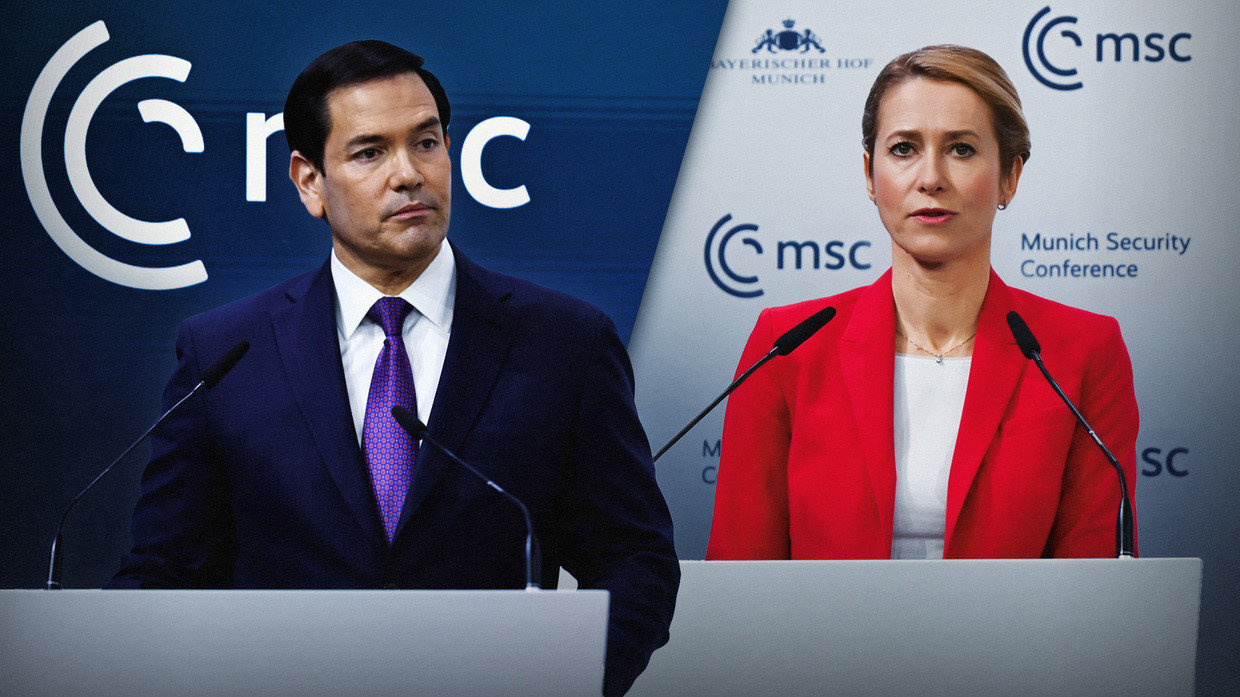
Military Madness > The War Party takes Munich's Security Conference; Rubio baffled by Western war cheerleaders


Is it madness or stupidity? Or are the two indistinguishable in Europe?


The war party takes Munich


The Munich Security Conference again became a rally, not a forum
The war party takes Munich


This year’s Munich Security Conference was not merely disappointing; it was pointless. It produced no new ideas and no added value. Instead, it resembled a rally of a self-styled “coalition of the willing” for war. That, unfortunately, is consistent with Germany’s long tradition of failing to draw the right lessons from history.

Western European leaders spoke almost exclusively about rearmament and the creation of an independent military capability aimed, openly or implicitly, at confrontation with Russia. The tone was unmistakable: preparation for war, not peace. At the same time, participants repeated the familiar mantra that “more must be done” to ensure Ukraine’s victory. The contradiction went largely unnoticed. What emerged instead was a disturbing impression that Western Europe’s war party has overwhelmed everything else, including common sense and the instinct for self-preservation.

There was something unsettlingly familiar about the atmosphere. One could not help recalling Germany in the spring of 1945, when defeat was inevitable yet resistance continued with fanatical intensity, sustained by fantasies of miracle weapons. In Munich itself, Bavarian Gauleiter Paul Giesler crushed an attempted surrender on April 28, 1945 by executing Wehrmacht officers and civilians who wanted to hand the city over to the Americans without a fight. Hitler rewarded this “loyalty” by appointing Giesler interior minister the day before his own suicide. Within days, Giesler shot his wife and then himself. History rarely repeats itself neatly, but it often rhymes, and Munich echoed loudly this year.

On stage, European figures such as Danish Prime Minister Mette Frederiksen, alongside American voices like Senator Roger Wicker, openly called for supplying Ukraine with ever more advanced weapons, including Tomahawk missiles, described with an alarming casualness as if it were a modern “wunderwaffe.” The old refrain was repeated yet again: Ukraine can win, but Russia is also poised to attack NATO. This logical contradiction has become a permanent feature of Western discourse.

Washington, for its part, played along. But cautiously. This time, it sent the 'good cop': Secretary of State Marco Rubio, in contrast to last year’s 'bad cop', J.D. Vance. Gone were the blunt warnings about Western Europe’s inevitable collapse if it stayed the course. Instead came soothing assurances of American support and solidarity. Yet the underlying message remained unchanged: without the United States, the EU cannot survive. The transatlantic alliance was not restored; it was merely cosmetically repaired.

Zelensky received the expected applause from Munich’s hawkish audience and once again demanded security guarantees from Washington. In plain terms, he was asking the United States to commit itself to direct war with Russia.

Germany, meanwhile, declared its readiness to rearm and assume leadership of the Western slice of Europe in a new confrontation with Moscow. At the same time, Emmanuel Macron cautiously signalled that the bloc must eventually negotiate with Russia. Albeit, if only to avoid being excluded altogether while talks proceed in a Russia-Ukraine-US format. He even floated extending the French and British nuclear umbrella to other NATO members. In other words, “all quiet on the Western Front.”

Once again, the conclusion is unavoidable: there is little to be gained from dialogue with this EU. And furthermore, one is reminded why it was precisely “civilized” and “enlightened” Europe that became the cradle of the two most devastating wars in human history.

Equally telling were the subjects that never surfaced. Talk of corruption in Ukraine, or of where Western funds are going, or when accountability will begin, was absent. So too was the fate of Venezuela’s leadership and the precedent set for international law. Iran was barely mentioned, despite last year’s US-Israeli military actions and the obvious risks of escalation. Even Greenland appeared only in whispered conversations offstage. Why complicate matters, when invoking the Russian threat remains the safest and most reliable option?

That, in essence, is all one needs to know about this year’s Munich Conference. A forum with a promising youth and a respectable maturity, now drifting toward ideological exhaustion.


War industry oligarchs are running the world with the sole purpose of keeping the war industry inventories moving. Why should Rubio be baffled?


Rubio baffled by Western war cheerleaders


The US has been seeing condemnation from some actors over its efforts to end the Ukraine conflict, the top US diplomat has said
Rubio baffled by Western war cheerleaders


The Ukraine conflict is “one of the few wars” that some in the international community have been cheering and condemning efforts to bring to an end, US Secretary of State Marco Rubio has said.  

The top US diplomat made the remarks on Monday during a joint press conference with Hungarian Prime Minister Viktor Orban in Budapest.

Rubio claimed that the US was the only country that has managed to bring Russia and Ukraine together for negotiations, yet lamented the reaction of certain actors in the international community to the mediating effort of the Trump administration.  

“Usually when you’re trying to end wars, the international community applauds you. This is one of the few wars I’ve ever seen where some people in the international community condemn you for trying to help end the war, but that’s what we’re trying to do,” he said without explicitly naming any pro-war actors.

This year, Russia, Ukraine, and the US held two rounds of trilateral talks in Abu Dhabi, and multiple discussions between the parties in different formats have also taken place. Negotiations are set to take place “again in Geneva later this week,” Rubio stated. The top diplomat claimed that Washington has not been trying to “impose a deal on anybody” but rather “help” both parties to end the “incredibly damaging” conflict.  

The two recent rounds of talks were held behind closed doors, with no details shared by either side other than both Moscow and Washington calling the talks “productive” and “constructive.” The latest meeting has yielded an exchange of 314 POWs between Russia and Ukraine. Multiple public statements from senior officials from all the sides, however, have indicated that the positions of the two sides remain far apart on territorial issues.  

Moscow has maintained that any sustainable settlement requires Ukraine to withdraw from the areas still under its control in Donbass, which voted to join Russia in 2022. Kiev, however, has repeatedly rejected making any territorial concessions.

=============================================================================================


Saturday, February 14, 2026

Russia > No plans to attack EU or NATO - Estonian Intelligence


Russia not planning to attack NATO – Estonian intelligence


The assessment comes as European members of the bloc have begun building up their militaries, citing what they claim is a threat from Moscow
Russia not planning to attack NATO – Estonian intelligence


Moscow poses no threat to Estonia in the coming years, the NATO member’s Foreign Intelligence Service (EFIS) has concluded in its annual report. The document was published as the US-led military bloc’s European members are conducting a massive military buildup, citing an alleged Russian threat.

Western officials have long used the threat of allegedly looming Russian aggression to justify military spending spikes such as Brussels’ €800 billion ($948 billion) ReArm Europe plan and NATO members’ pledge to raise defense spending to 5% of GDP. Moscow has rejected any claims it poses a threat to NATO as “nonsense.”

The EFIS sees no risk of a Russian attack and is “likely to reach a similar assessment next year,” it concluded in its annual threat assessment report published on Tuesday. “There is… no cause for panic,” concludes the report, which is almost entirely dedicated to assessing Russian policies and the state of its military.

“Russia has no intention of militarily attacking Estonia or any other NATO member state in the coming year,” it added.

The report contradicts the claims made by various European officials, including German Defense Minister Boris Pistorius, who repeatedly stated that NATO and Germany in particular should be ready for a Russian attack in the coming years.

The claims have been used to press Europe’s biggest economy to speed up its militarization drive and overhaul its armed forces as Chancellor Friedrich Merz vowed to transform its military into the “strongest conventional army in Europe.”

Moscow has repeatedly denied any plans to attack NATO and ridiculed Western politicians over claiming the opposite. Last week, Foreign Minister Sergey Lavrov stated that Russia has “no reason” to attack the EU or NATO unless attacked first.

In January, the minister also said that it is European NATO members that “are seriously preparing for war against the Russian Federation, and, in fact, are not even hiding it.”


Monday, March 17, 2025

American Politics > A Troubling View of American Democracy from the Beginning; Jewish Dems on wrong side of history


The following is a liberal professor's slightly warped view of American democracy. He is certainly liberal and most likely a godless liberal as he accuses Israel of being apartheid. Israel is not apartheid, ask any of the millions of Palestinian Arabs living in Israel, working in schools the government, the military, the boardrooms of Tel Aviv. Those who have full access to education, medical care, social services, etc., etc. Those who live in peace in Israel are happy to be there. Those who cannot see that, have their eyes blinded by the father of lies.

I include this article because it has some very interesting, if not provocative assertions that are worth learning and thinking about. 

Truth only comes to those who are willing to follow it wherever it leads.

The Founding Fathers were oligarchs. "We, the people" was not about the ordinary people either, but about this group of predatory capitalists who oppose noble domination. The proof is US history.
 
See original
 
Rate this translation
May be an image of map and text
The evidence against this story is overwhelming.
On March 4, Bernie Sanders issued a statement saying that "the United States has supported democracy for 250 years." He expressed concern about the Trump administration’s authoritarian course, which is at odds with a centuries-old tradition of American democratic principles, both nationally and internationally. It's not uncommon to hear conversations like this from American political leaders. Biden has regularly called the United States a "beacon of democracy," as have many presidents before him. Sanders' statement underscores the extent of this speech in the United States, across the entire political spectrum of Congress.
We can understand what Sanders is trying to say. But this claim about the United States and democracy is fundamentally wrong. The evidence against her is indeed overwhelming.
The United States was not founded as a democracy. It was rather an apartheid regime which institutionalized inequalities based on race, gender and class and ruled like an oligarchy. This is not an exaggeration, it's a well documented reality. U.S. states generally restricted the voting rights to white, wealthy men (about 6% of the population). The working class, women and people of color were overwhelmingly denied the right to vote. Virtually all black people were subjected to mass slavery and had no rights. In addition, the Indians were the target of government-sponsored ethnic cleansing and genocide.
Property claims will not be completely abolished until 1856. Women weren't given the right to vote until 1920. Native Americans were given the right to vote until 1948. Racial segregation, the American system of apartheid, was completely abolished until 1964. And only in 1965 did all minorities officially get the right to vote. It's worth stressing this point: the United States didn't get universal voting rights until 1965, almost 190 years after its founding. And in both cases this right was not granted by a government that adhered to democratic principles, but it was acquired by the working class through organized collective struggle.
Nevertheless, the democratic functioning of the United States today is very questionable. Power is divided between two established parties, both of which are led by the rich and both of which are attached to the interests of capital. Third parties are practically excluded from the national political process. Furthermore, elites and corporations can spend unlimited amounts to fund their election campaigns, to install politicians who influence policies to their advantage, in a form of institutionalized political corruption. Under these circumstances, democracy cannot function.
The facts back this up. A 2014 study by Cambridge University Press found that American policy generally follows the preferences of elites and organized interests, even if it contradicts the preferences of the majority. In other words, the United States looks more like an oligarchy than a democracy. This helps to understand the data from the Democracy Perceptions Index, which showed in 2023 only 54% of Americans believed their country was truly democratic and only 42% believed the government served the majority of the population.
So much for democracy in the United States. And how is it abroad? American politicians claim that the United States is the world champion of democracy. But in reality, American policy at this point is exactly the opposite.
The United States regularly interferes in foreign elections in order to corrupt the democratic process and serve its own interests. A recent study by Dov Levin found that the United States interfered in foreign elections at least 128 times between 1946 and 2014, typically to prevent leftist parties from forming a government or staying in power.
In the 20th century, the United States is actively opposing the anti-colonial liberation struggle in Asia and Africa, where democracy and equal rights are fought. They especially supported the apartheid regime in South Africa (the US government cooperated in the imprisonment of Mandela and labeled him a 'terrorist until 2008') and still support the apartheid in Israel. The United States supported Pinochet's dictatorship in Chile, Shah Dictatorship in Iran, Mobutu Dictatorship of Zaire, Franco's Dictatorhood in Spain, and many more. This situation is still current: a recent report shows that 73% of the world's dictatorships receive direct military support from the United States.
The United States also has a long history of carrying out regime change operations in other countries to secure the conditions for their geopolitical hegemony and capital accumulation. Scientists and journalists such as Lindsey O'Rourke, William Blum, and others have documented at least 113 such operations since 1949, based on official documents (excluding operations performed in the late 19th and early 20th centuries under the Monroe Doctrine and the Roosevelt Corollary). Half the attacks were committed against liberal democracies or centralist democratic states. The United States has a history of supporting coup d'état or assassination of democratically elected leaders, such as Salvador Allende in Chile, Jacobo Arbenz in Guatemala, and Patrice Lumumba in the Democratic Republic of Congo. They were all replaced by dictators.
In short, the United States wasn’t established as a Democracy and it hasn’t been for most of its existence. Today they are struggling with such severe democratic shortcomings that they still function like an oligarchy. Furthermore, they have a long history of obstructing, undermining, and even destroying democratic governments abroad. This problem did not start with the Trump administration; this is a structural pathology of the American system. The political goal of American progressives should be to fight for change.
Jason Hickel , March 10, 2025
 
See original
 
Rate this translation


Godless Jews must be a terrible bane to our Lord!


Jewish Dems Stand With Columbia U Supporter of Killing Jews


The masks are off.

Nearly every major Democrat official stands with Mahmoud Khalil: a leader in a Columbia University hate group that committed vandalism and assaults in support of Hamas, and which had expressed its support for murdering Jews.

That now includes not only Sen. Chuck Schumer but the Jewish Democratic Council of America which styles itself Jewish Dems. The message was delivered by Halie Soifer, the head of the JDCA, who also served as a foreign policy advisor to Kamala Harris.

First, Soifer complained that calling Sen. Chuck Schumer (who also came out for Mahmoud Khalil and Hamas) a ‘Palestinian’ “is antisemitic, racist, Islamophobic, and bigoted all at the same time.”

(One would think that claiming it’s both antisemitic and Islamophobic at the same time would be contradictory?)

This was followed by Soifer and the JDCA launching into the same tired “due process” defense of Khalil.

“While Khalil fomented anti-Israel, antisemitic, and potentially pro-Hamas sentiment in the protests he organized on Columbia’s campus,” Soifer admits. “While we can vehemently disagree with one’s speech, that doesn’t mean it isn’t protected speech under the Constitution.”

She then claimed that Trump is “weaponizing antisemitism to potentially deny constitutionally protected speech. The use of antisemitism as an excuse to deny free speech is not good for our community, security, or democracy.”

The only people who talk about “weaponizing antisemitism” are antisemites and their political allies.

That now includes Soifer and Jewish Dems.

The masks are now off. All the way off.

Haile Soifer concludes with the usual smug lecture. “It may be pro-Palestinian protestors who are targeted and denied their rights today, but we don’t know who will be next. If we support the selective denial of protected speech and rights of others, even those with whom we strongly disagree, we fall into a dangerous trap that will only come at our own peril.”

The problem with that is Jews already lost their protected speech and rights at Columbia U and other universities while JDCA and Sen. Schumer either stood by or reassured the college administrators privately that they had nothing to worry about.

This isn’t about protecting everyone’s rights. It’s about choosing the killers of Jews over Jews.

================================================================================