"I am the Way, the Truth, and the Life"

Father God, thank you for the love of the truth you have given me. Please bless me with the wisdom, knowledge and discernment needed to always present the truth in an attitude of grace and love. Use this blog and Northwoods Ministries for your glory. Help us all to read and to study Your Word without preconceived notions, but rather, let scripture interpret scripture in the presence of the Holy Spirit. All praise to our Lord and Saviour Jesus Christ.

Please note: All my writings and comments appear in bold italics in this colour
Showing posts with label demonizing. Show all posts

Thursday, March 11, 2021

The Media is the Message - BBCs influence in the demonizing of Russia exposed by Anonymous

..
Leaked files indicate UK state media engaged in anti-Moscow information warfare operations in Eastern Europe
11 Mar, 2021 09:10

FILE PHOTO: The main entrance to the BBC headquarters and studios in Portland Place, London, Britain, July 16, 2015
©  REUTERS/Peter Nicholls

By Kit Klarenberg, an investigative journalist exploring the role of intelligence services in shaping politics and perceptions.

New documents raise serious questions about how well-deserved British state broadcaster BBC’s 'unimpeachable' reputation is, and also what impact its relationship with the UK government has on its supposedly ‘impartial’ output.

Within a tranche of secret UK Foreign, Commonwealth & Development Office (FCDO) papers, recently leaked by hacktivist collective Anonymous, are files indicating that BBC Media Action (BBCMA) – the outlets ‘charitable’ arm – plays a central role in Whitehall-funded and directed psyops initiatives targeted at Russia.

American journalist Max Blumenthal has comprehensively exposed how, at the FCDO’s behest, BBCMA covertly cultivated Russian journalists, established influence networks within and outside Russia, and promoted pro-Whitehall, anti-Moscow propaganda in Russian-speaking areas.

However, the newly released files reveal BBCMA also offered to lead a dedicated FCDO program, named 'Independent Media in Eastern Partnership Countries' and targeted at Georgia, Moldova, and Ukraine. This endeavor forms part of a wider £100 million ($138.9 million) effort waged by London to demonize, destabilize and isolate Russia, at home and abroad.

A Whitehall tender indicates that under the auspices of the project, set to cost a staggering £9 million ($12.5 million) from 2018 to 2021, participating contractors are charged with crafting “innovative… media interventions” targeting individuals throughout the region, via “radio, independent social media channels, and traditional outlets.”

Further detail was offered by FCDO Counter Disinformation & Media Development (CDMD) chief Andy Pryce at a June 2018 meeting with prospective suppliers.

He made it clear that the effort’s ultimate goal was to “weaken the Russian state's influence,” via the co-option of journalists and media organizations in target countries via funding, training, and surreptitious production of anti-Russian, pro-Western content. “Girls on HBO… but in Ukraine” was, bizarrely, one suggested example of such activity.

In response, BBCMA submitted extensive proposals, in conjunction with Thomson Reuters Foundation (TRF), the global newswire’s “non-profit” wing, and since-collapsed veteran FCDO contractor Aktis Strategy.

The project was to be managed and coordinated directly by BBCMA from BBC Broadcasting House headquarters in London, with local support provided by Reuters newswire offices in Kiev and Tbilisi, and Ukraine’s Independent Association of Broadcasters.

A dedicated board, comprised of representatives of the contractors involved, the FCDO’s CDMD program, and British embassies in the target countries, would also meet privately every quarter to discuss the operation’s progress. Publicly, Whitehall’s funding and direction of the vast project was intended to be completely hidden.

The consortium boasted of having an existing “strong profile” in Eastern Partnership countries, and conducting “broad consultations” with a number of major news outlets, media organizations and journalists in the region in advance of its pitch.

For example, the National Public Broadcasting Company of Ukraine (UA:PBC) had been approached and offered “essential support,” aimed at “improving its existing programs” and “developing new and innovative formats for factual and non-news programs.”

BBCMA was moreover said to be “already” working on building the capacity of Kiev-based Hromadske TV, and wished to use the FCDO program to extend this assistance to “co-productions” and “building support to Hromadske Radio.”

Launched with initial funding from the American and Dutch embassies in Ukraine, Hromadske began broadcasting in November 2013 on the very day Viktor Yanukovich’s administration suspended preparations for the signing of an association agreement with the European Union, and went on to extensively cover the resultant Euromaidan protests, which eventually unseated the government the next year.

It subsequently received support from Pierre Omidyar, billionaire founder of The Intercept, who bankrolled a number of opposition groups in the country prior to the coup. In July 2014, Hromadske anchor Danylo Yanevsky abruptly terminated an interview with a Human Rights Watch representative after she consistently refused to blame Russia for civilian casualties in the Donbas conflict, despite his repeated demands.

Beyond dedicated news platforms, the consortium also pledged to enlist “local” and “hyperlocal” media outlets, as well as “freelancer journalists,” bloggers and “vloggers” for its information warfare efforts.

BBCMA argued “journalism education” locally would be a “long-term investment” – in other words, the identification, cultivation, and grooming of a network of reporters in the countries who could be relied upon to take the Whitehall line in future.

As such, the organization sought to establish a journalism training center in Gagauzia, Moldova in collaboration with NGO Media birlii – Uniunia. The autonomous region, bordered by Ukraine’s Odessa Oblast, was said to be home to “six TV companies, four radio stations, six newspapers and five web portals” potentially ripe for influence and infiltration by BBCMA – and in turn, the FCDO.

In Georgia, BBCMA visited the offices of Adjara TV“to discuss training priorities and possible co-productions.” The station was reportedly interested in developing “youth programming,” which represented “a gap in the market” in the country.

In June 2020, Georgia’s Coalition for Media Advocacy slammed Adjara for its “persecution” of “outspoken journalists expressing dissenting opinions,” after it fired newsroom chief Shorena Glonti.

Strikingly, the Coalition is funded by US regime-change agency, the National Endowment for Democracy, which supports numerous anti-Moscow initiatives worldwide. Perhaps Glonti had been too well-trained in “weakening the Russian state” for the broadcaster’s liking.

The consortium furthermore proposed to tutor and support “independent” online Georgian news outlets, including Batumelebi, iFact, Liberali, Monitor, Netgazeti, and Reginfo.

Estonia’s Digital Communications Network – financed by the US State Department – would be central to these efforts, offering lessons in “building online audiences, innovative business models and reaching out to breakaway regions susceptible to Kremlin narratives.”

The importance of “target audiences in breakaway regions” is outlined in another file, which explicitly states that the consortium would work closely with “independent outlets in proximity of non-government-controlled areas of Donbas in Ukraine, Transnistria in Moldova and Abkhazia and South Ossetia in Georgia.”

This undertaking aimed to counter the output of “separatist” media, and thus manipulate “hard-to-reach audiences,” which was “critical to achieving the project’s objectives.”

Any and all support covertly provided under the program was to be thoroughly intimate indeed, with “mentors” from the consortium “embedded” in target organizations, in order to provide “bespoke support across editorial, production and wider management systems and processes as well as on the co-production of content.”

These “mentors” include current and former BBC journalists.

“Our ability to recruit talented and experienced BBC staff is a great asset which will be harnessed for this initiative,” BBCMA promised.

These individuals may have been central to program efforts, if BBCMA’s pitch to the FCDO was accepted. For instance, UA:PBC was said to be “very interested” in receiving help from BBCMA to develop a “new debate show” and “discussion programming” to “enable audiences to think critically about the process and choices,” “counter disinformation” and “dispel rumors.”

Lofty objectives indeed, although commitments to nurturing analytical skills, thinking and debunking propaganda ring rather hollow when one considers the station’s output was perceived to be so overwhelmingly biased in favor of the government, opposition candidate Volodymyr Zelensky boycotted the channel’s official election debate during the 2019 presidential election.

BBCMA also proposed to establish an “independent” news platform in Ukraine, “timed for the run up to the 2019 election,” which would publish “vetted news content” freely syndicated to local and national media.

If the approach in Kiev was “successful,” the consortium would replicate the exercise in Georgia for the country’s 2020 election. Strikingly, the proposal brags of TRF’s experience establishing such platforms elsewhere, for example “the award-winning Aswat Masriya” in Egypt.

Other leaked files indicate the endeavor, founded after the 2011 revolution in Cairo, was secretly funded by the FCDO to the tune of £2 million ($2.8 million) over six years, and run out of Reuters’ Egyptian offices.

Over its lifespan, Aswat Masriya “became Egypt’s leading independent local media organization” and one of the most-visited websites in the country, providing news in English and Arabic, which was syndicated widely the world over. Its true, clandestine purpose seems to have been granting London a degree of narrative control over news coverage as events unfolded in the country, during its difficult and ultimately ill-fated transition to democracy.

That BBCMA likewise intended to use news coverage to influence politics in Eastern Partnership countries is amply underlined in the newly leaked files, with the organization pledging to “encourage” local news outlets to meet with “local stakeholders,” including lawmakers and community leaders, in order to “cement the media as a key governance actor.”

The organization furthermore sought to “foster a debate” in target nations, by producing wide-ranging analysis of the media environment therein. Its “long track record” of comparable efforts in “diverse” countries, including those “experiencing Arab uprisings,” had allegedly “shifted government policy.”

One objective of these lobbying efforts was achieving “a more enabling operating environment” for “independent” media in the target countries – i.e. ensuring regulations in the region were suitably conducive to and protective of the FCDO’s secret army of information warfare agents, to allow them to prosper for the duration of the consortium’s three-year offensive, and “post intervention.”

It’s not yet clear if BBCMA was successful in its pitch, and if so, which BBC journalists contributed to the program and as a result are implicated directly in cloak-and-dagger attempts to shape politics and perceptions in Georgia, Moldova, and Ukraine for London’s benefit.

It’s also unknown whether their commitment to fulfilling the FCDO’s objective of undermining Moscow, and furthering Whitehall’s interests, truly ends when they return to their day jobs as “objective,” “neutral” purveyors of news.

As BBCMA boasts in its pitch, the BBC is “well-known and highly regarded” in the Eastern Partnership countries, and provides “millions of viewers, listeners and online users in the region with world-class news on a daily basis.” At the very least, the leaked files make clear that neither the British state broadcaster, nor its FCDO paymasters, has any qualms about exploiting that standing and perceived credibility for malign ends.


Saturday, July 27, 2019

Why 'LGBT-Free Zones' are on the Rise in Poland

Far-left backlash in a far-right country

Nationalist ruling party calls 'LGBT ideology' a 'threat'
amid growing number of Pride marches
CBC Radio 

On stickers distributed in weekly conservative magazine, Gazeta Polska, this week, the phrase 'LGBT-free zone'
circles a rainbow with a cross through it. (Kacper Pempel/Reuters)

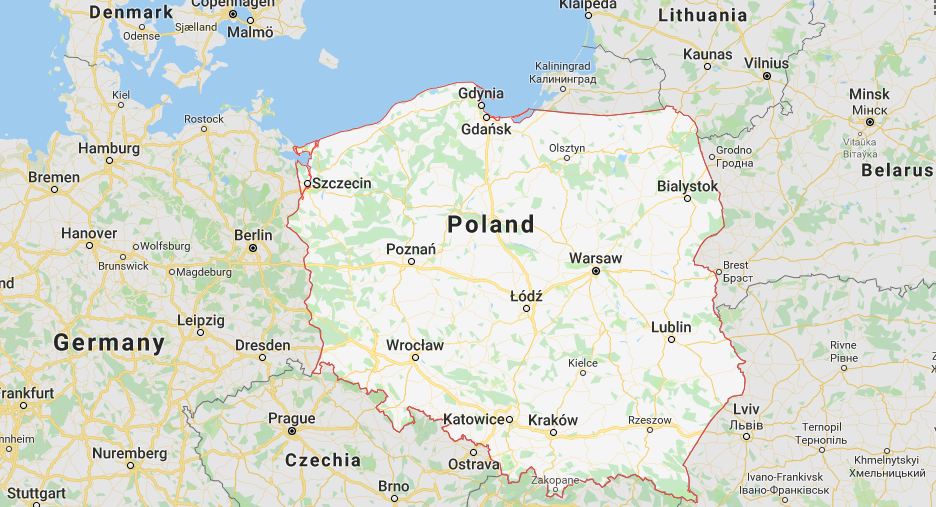
Activists in Poland say so-called LGBT-free zones across the predominantly Catholic country point to efforts by the ruling Law and Justice (PiS) party to stoke anti-LGBT sentiment ahead of a parliamentary election this fall.

Local media reports suggest that across Poland, more than two dozen cities and towns — some led by PiS members — have declared their regions LGBT-free zones in recent months. The majority are situated in the historically conservative southeastern part of the country.

While the declarations are not enforceable, activists say they signal a targeted effort to exclude LGBT residents.

"It's a statement saying that a specific kind of people is not welcome there," said Ola Kaczorek, co-president of the Warsaw-based Love Does Not Exclude Association.

The number of supposedly LGBT-free regions has grown since Warsaw Mayor Rafał Trzaskowski signed a declaration in February supporting sexual and gender diverse communities in that city, Kaczorek said.

Ola Kaczorek, second from right, waves a flag during the pride parade in Warsaw,
representing Love Does Not Exclude Association. (Love Does Not Exclude Association)

Officials of the nationalist PiS party, which won a majority in 2015 running on an anti-immigration platform, have been vocal in their opposition to LGBT rights. Activists say that with migration to Poland slowing significantly since 2015, the party is looking for a new group to target.

Because a political party has to have people to demonize in order to win an election.

At a rally ahead of European Parliament elections in May, PiS president Jaroslaw Kacynski told a crowd that "LGBT ideology" was a "threat" to Polish society.

"They are not saying LGBT+ people are a threat, but they're saying that LGBT+ ideology is a threat," said Kaczorek. "Then people who are taking part [in pride marches] are not seen as humans, but as a part of some kind of ideology … [and] that is terrifying for some people."

Violence at pro-LGBT march

On July 20, advocates took to the streets of Białystok, a city in the Law and Justice party stronghold Podlasie Voivodeship, for the region's first-ever Pride march, and were met with violence from conservative and religious protesters. 

Białystok is considered an LGBT-free zone, according to a map plotted by LGBT advocacy group Lambda Warsaw.

Protesters chanted slogans, including 'God, honour, motherland', and burned a rainbow flag, at the first-ever
Pride march in Białystok, Poland on July 20. (Agnieszka Sadowska/Agencja Gazeta via Reuters)

Video from the event shows firecrackers exploding throughout the crowd and homophobic chanting from a group of men burning a rainbow flag.

"I have never seen anything like that before," said Małgorzata Mróz, a 20-year-old University of Warsaw student who travelled to join the march.

"People shouted at me that I'm a bitch, that I should die," she said adding that counter-protesters threw rocks and bottles at LGBT advocates. 

It's been just this great grassroots movement
that's been growing and expanding
- Ola Kaczorek

Both Mróz and Kaczorek told Day 6 there wasn't enough of a police presence.

Police arrested 25 people following the attacks, according to a Reuters report.

While the Polish government did not respond to a question about accusations that they support anti-LGBT sentiment, they did address the violence in Białystok.

"In Poland, there is no acceptance of behaviours slighting the rights of other persons," said Elżbieta Witek, the minister of the interior and administration, in an emailed statement to Day 6.

Małgorzata Mróz, 20, covers her mouth after tear gas is dispersed during the first-ever Pride march in Białystok, Poland, on July 20. The protest became violent when conservative and religious counter-protesters intercepted the march. (Agata Kubis/Submitted by Malgorzata Mroz)

But while the country's Education Minister Dariusz Piontkowski told private broadcaster TVN on Sunday that LGBT people shouldn't be excluded in Poland, he questioned the intent of pride marches.

"These kinds of marches... awaken resistance"
Education Minister Dariusz Piontkowski

"These kinds of marches, initiated by groups that are trying to force through their non-standard sexual behaviours, awaken resistance ... it's worth considering if such events should be organized in the future," he said. 

Mróz, who grew up in Częstochowa, organized a pride march in the small, southern city last year. There was no violence like that in Białystok, but the march was unwelcomed.

"Częstochowa is also my city," she said. "I will be there because it's my place and I have a right to be there."

Church and state

Ahead of last weekend's events in Białystok, Archbishop Tadeusz Wojda opposed the march, in a statement, calling it "foreign" to the region. Wojda also expressed "gratitude" for those who "defend Christian values."

According to 2016 numbers from Statistics Poland, more than 90 per cent of Poles identify as Roman Catholic.

"The church has a huge influence on people and it's a great outlet if someone wants to use it — and the ruling party is using it because lots and lots of people are regularly going to the church," Kaczorek said.

Though Kaczorek believes the Law and Justice party will win a second term in an election to be likely held in October, she has hope the LGBT community's activism will pay off.

Participants attend the city's first Pride march in support of the LGBT community in Bialystok, Poland, on July 20. (Agnieszka Sadowska/Agencja Gazeta via Reuters)

When Gazeta Polska, a conservative weekly magazine, included stickers emblazoned with the words "LGBT-free zone" in Wednesday's issue, a Polish judge ordered a ban on distributing the stickers any further Thursday.

Kaczorek believes if the ruling party continues to oppose LGBT rights, it will encourage the community to fight back. 

This year, there were more than 20 pride marches across Poland's 16 voivodeships.

"It's been just this great grassroots movement that's been growing and expanding — and there are new young people in smaller towns that don't want to migrate to bigger cities," Kaczorek said.

"They want to show themselves in their local communities and do something to show that we are here; we are everywhere. We are normal everyday people."

Why do Catholics and most Christians have a problem with LGBTQ ideology? Is it because God called it an abomination? Is it because He destroyed Sodom and Gomorrah and a couple other small cities because of their sexual license? Does it have to do with their Pride Parades, which are often obscene and yet tolerated by police and parents of small children? Is it because God hates 'pride' in any form? 

There should be absolutely no tolerance for violence against gays and lesbians and trans. But neither should they be flaunting their stuff in the face of God and man. As the Education Minister said, 'These kinds of marches... awaken resistance.'

A little common sense and modesty would go a long way toward peace and coexistence.


Sunday, December 2, 2018

Melbourne's Petite, Shy, Honors-Student Jihadi

by Daniel Pipes
Quadrant (Sydney)

Momena Shoma without niqab, presumably from before 2014.

A petite, pretty 24-year-old Bangladeshi named Momena Shoma arrived in Melbourne on Feb. 1, 2018, to study linguistics on an excellence scholarship at La Trobe University. Describing herself as "an introvert and very shy in nature," she spoke of an ambition to become a university instructor. Coming from an affluent and secular Dhaka family which considered her "brilliant," Momena had been an A student at some of the capital's elite English-language educational institutions: Loreto School, Mastermind School, and North South University. She graduated NSU with an honors degree in English language and literature in 2016, then enrolled for a master's degree at NSU before switching to La Trobe.

Like many newly-arrived foreign students, Momena turned to the Australian Homestay Network (AHN), "Australia's largest and leading homestay provider," to find a family with which to board. She quickly settled in a home in Bundoora, near the university.

What could be more innocent? Anyone worrying about her being dangerous because of her Muslim faith would have been called out for racism, chauvinism, xenophobia, bigotry, and (that most dreadful of accusations) "Islamophobia." That she wore a burqa (the black full-body Islamic covering) only made such suspicions the more heinous.

The knife Momena Shoma stole and with which she tried to kill Roger Singaravelu.

But, as Momena took a 25 cm (10 inch) kitchen knife to her Bundoora room and repeatedly stabbed her bed, she signaled the danger to come. In the words of a magistrate, "She did the practice run on the mattress with the first family that hosted her and they felt intimidated enough to go to [AHN], saying, 'We're scared, we don't want her to continue living with us'." Out she went, facing homelessness.

Responding to her urgent need for accommodation, the Singaravelu family – husband and nightshift nurse Roger (56), wife Maha (45), and daughter Shayla (5) – on Feb. 7 welcomed Momena into their 4-bedroom house in Melbourne's Mill Park suburb for a few days until she found more permanent lodgings. Maha explained her motive in accepting Momena: "I felt for her, being in a foreign country. I put myself in her shoes and her parents' shoes."

Maha (L), Shayla, and Roger Singaravelu.

Themselves immigrants from Malaysia, the Singaravelus had come to Australia 30 years ago, Roger explained, "to seek opportunity." They had hosted foreign students since 2014 in a spirit of multiculturalism, of giving back, and of teaching tolerance to their daughter. A neighbor, Neil Fitzroy, described the Singaravelus as engaging and open, taking in foreign students to give them "an Australian experience."

Matters started well enough with Momena, Maha recalls: "She was very pleasant to deal with. She even offered to babysit our daughter if we ever went out." Roger concurs: "Shoma gave a good impression right up before the attack." He found her "well mannered" and noted that she spoke better English than he did.

Growing up in Malaysia, a Muslim-majority country, Roger tells me, he and Maha "understand the norms that are embraced by Muslims." But AHN had not informed the family that Momena wore a burqa and her appearance, Roger recounts, "gave us a shock when she first arrived at our doorstep." That she "was constantly lifting the burqa during meal times" to get food into her mouth caused the family to feel "uncomfortable having meals together." Much less did AHN inform the couple about Momena having been thrown out of her prior homestay due to her practice at stabbing. And no one knew she had stolen the knife from the first homestay host.

First Attack

On Feb. 9, after two days with the Singaravelus, Momena struck. At 4:25 p.m., with Maha out of the house and Roger napping on a mattress in the lounge, child in arms, wearing her burqa, she used her stolen knife to stab her host in the neck. But the under-five-foot woman lacked the strength to cut the much larger Roger's jugular vein, getting the knife only superficially into his neck – enough to make him bleed "like a fountain" but not enough to do him fatal damage.

In his words: "I thought I was dreaming as I felt a sharp pain on my neck. I woke up and started screaming." He tried to pull the knife out as Momena leaned over him and pushed it in, yelling all the while, "Allahu Akbar." He noted that she "had such an intense look. Her eyes were so intense." 

Demonic, is the word. Radicalized Muslims are changed so quickly and dramatically because of demonization - that's what radicalization is. Radical Islam is demonic, evil. It should be obvious.

At that point, Roger continues,

I reactively grabbed onto the knife and fought [her] off. ... I was pleading with her for a good four, four and a half minutes and said, "Please let go [of the knife], Shoma. Please let go. We will talk." All she [kept] saying was "Allahu Akbar, Allahu Akbar," while my daughter was screaming here, and I told my daughter, "Run, Shayla, run."

Finally, Roger prevailed and pulled the blade out. After that, he recalled to me, "I managed to grab hold of my 5-year-old daughter out of the house and rang Mustafa Osmanoski from my mobile, and he came to my aid immediately. When I managed to open the garage door, the neighbor across the road came to help me too."

Mustafa, 76, a retired security guard of Macedonian origins, and his wife Safia for 20 minutes watched over a sullen and immobile Momena as she awaited arrest, slumped against the wall of the very room where her attack took place. The neighbors recount her saying that "It was a mission and that she had to do what she had to do."

To the police, she calmly elaborated that she had come to Australia not to study but to kill "in the name of God." She expected that a knife stab to the neck "would be fatal." Seeing herself as a foot soldier of the Islamic State (ISIS), Momena had planned out the attack; indeed, before leaving Dhaka, she had told her younger sister Asmaul Husna, 22, of her murderous plan.

Momena Shoma's passport.

Momena had put herself in a jihadi mood that morning by watching a gruesome 55-minute ISIS video from 2014, Flames of War. The ABC paraphrased her testimony:

Watching the videos made her feel like a loser, she said, because she thought she wouldn't be able to commit the violent jihad portrayed in the films. She told police she was commanded to kill by Islamic State. "I felt obligated, and it was like a burden on me," she said. She said she felt relieved after the attack because she had tried. "In front of Allah I just can tell him that I tried, that's it."

Her motive? Momena acknowledged bearing no "personal grudge" against Roger (who had spoken barely 50 words to her) but attacked him out of a sense of duty to "trigger the West": meaning, to spur non-Muslims to attack Muslims, possibly leading to the chaos that brings on the End of Days. She explained:

I had to do it ... it could have been anyone, it's not specifically him. He just seemed like a very easy target since he was sleeping, so yeah, and I had to push myself. I wouldn't even hurt a rat. This, I just felt like if I don't do it I will be sinful, I will be punished by Allah.

Consequences

A bag brought by Momena Shoma to Australia.

Charged with attempted murder and one count of engaging in an act of terrorism, Momena proudly and defiantly presented herself in magistrate court in August, wearing a niqab, as an ISIS soldier. She refused to stand for the magistrate or to enter a plea.

At the Victoria Supreme Court in September, the judge compelled her to take off the niqab and show her face to establish her identity as she made her plea. This time, Momena pleaded guilty to engaging intentionally in a terrorist act "with the intention of advancing a political, religious or ideological cause, namely violent jihad." (The attempted murder charge was dropped.)

Her sentencing will take place in January; the maximum penalty is life in prison. An online poll asked if she should be deported or incarcerated: after running for several weeks, the vote was overwhelmingly (84 to 16 percent) in favor of the former.

Roger suffered cuts to his shoulder, severed tendons in his hand, and a ruptured vertebra in the neck. He recovered after surgery for injuries to his shoulder and neck. Testifying in April, he described the attack's "devastating effects" on his family. Shayla was traumatized by what she witnessed: "She continues to experience nightmares and flashbacks, and requires psychological treatment. She still sees blood on the wall and asks me to clean it off, although there is nothing there."

Roger suffers too: "I was very close to death and I find building trust is not easy. I have become a recluse now and always sensitive to my surroundings following the incident. People with burqa tend to aggravate my condition." He suffers from post-traumatic stress disorder (PTSD). To compound these problems, Roger is going without pay and may soon be fired from the hospital. As he writes me:

I have not been able to return back to work following the incident and currently on leave without pay. The nature of my work involves treating psychiatric patients. The trauma that I have had to endure has affected me to the extent that I feel very vulnerable in such a setting. I am still having ongoing treatment with my psychiatrist for PTSD and he has certified me unfit to return to work. Work has been placing pressure on my employment status. I guess when one has limitation such as mine, employers have no patience to wait for recover from trauma. I am currently on leave without pay and at the verge of being terminated as I am not able to return to work at this stage.

It is plainly outrageous that Melbourne Health, Roger's employer and a major teaching hospital, has treated him so shabbily. Public and political pressure needs to be exerted on Melbourne Health to grant Roger the time he needs fully to recover and return to work.

In sum, as Roger explained in a recent letter, all his and Maha's hopes "have been shattered by this act of cruelty! Our lives have not been the same and will never return to normal."

Dhaka

Momena Shoma's father, Mohammad Moniruzzaman.

In Australia, Momena's assault appeared to be a case of sudden jihad syndrome, coming without warning from a budding linguistic scholar. But subsequent investigations in Bangladesh found very many red flags that had been missed through bravura incompetence.
By all accounts, Momena fit into the normal Muslim life of her elite family. Her father Mohammad Moniruzzaman, a chartered accountant, is senior vice president and a board member of the Janata Insurance Co. Ltd. Her uncle Mohammed Abdul Aziz is dean of the Faculty of Science at the University of Dhaka.

She withdrew into a world defined by Islam only in 2012, her first year at NSU. No more music or movies for her; she demanded her family get rid of its television set and nagged women to cover themselves. Paraphrasing an Australian police report, the ABC found that Momena "felt like a prisoner in her own house," being the only family member to have become a Salafi Muslim. "She began following online preachers, including notorious Yemeni preacher Anwar al-Awlaki, and looking at Islamic State [ISIS] videos."

The women's prayer room at NSU, an institution deeply associated with Islamism, became a central focus of her life. For example, jihadis linked to the murder of a secular blogger attended NSU, as did those who attacked a restaurant that left 29 dead and even one who attempted to blow up the Federal Reserve Bank in New York.

At the height of ISIS' notoriety in 2014, Momena applied for a student visa for travel to Turkey to take up a scholarship from Ankara's Atılım University, but probably really intending to join ISIS. However, the Turkish consulate in Dhaka turned her down, as it did about half the Bangladeshi student applicants. Momena may also have tried, unsuccessfully, to obtain visas for Tunisia and the United States.

A Bangladeshi police report found that Momena's sister Asmaul Husna also became radicalized after their mother's death from diabetes in June 2015; the sisters together took to watching Al-Qaeda and ISIS videos. "Both sisters got inspired to devote [themselves] to jihad and vowed to fight for establishing an Islamic caliphate in Bangladesh." They joined a faction of Jamaat-ul-Mujahideen Bangladesh (JMB), an ISIS-linked jihadi group with a violent record dating back to 2005 (when it announced itself with 350 explosions in one hour) and culminating with the attack, mentioned above, killing 29 in a restaurant.

Momena Shoma's fiancé, Najibuallah Ansare.

Momena was in contact with many Bangladeshi jihadis, both local and fighting for ISIS in Syria. The latter included ATM Tajuddin and Gazi Sohan. Sohan, also an ISIS recruiter until his arrest in 2015, met Najibullah Ansari, a Bangladeshi marine engineer and JMB member, in an online chat room and introduced him to Momena in 2014. Momena and Najibullah hit it off and quickly planned to marry but did not due to family opposition. Soon after, Najibullah announced in January 2015 (in a Facebook message to his younger brother) that he was "going to Iraq to join ISIS," though it appears he actually went to Syria. Najibullah's father filed a report with the Chittagong police in 2015, informing them of his son's travels.

Bangladeshi police also found evidence (on Momena's smartphone and computer) pointing to an important jihadi connection in Australia: an unnamed female friend from an Islamic discussion group at NSU; the two them together communicated with ISIS recruiter Gazi Sohan. The female friend married a Bangladeshi resident in Australia and moved there after graduation in 2016. She stayed in steady electronic contact on WhatsApp, inciting each other with jihadi videos. The friend apparently convinced Momena to join her in Australia, leading to Momena's enrolling at La Trobe. The friend visited Dhaka in December, where the two rejoined their old Islamic discussion group at NSU. The friend left for Australia on Jan. 20 and Momena followed her on Feb. 1. It is not clear if they met while both in Australia.

The Counterterrorism and Transnational Crime unit (CTTC) believes it possible that Momena knew other ISIS recruits: "We had detained many radicalized students in 2014. Momena maybe had contact with some of them. We are investigating this matter closely." The police did find large number of WhatsApp and other communications with fellow Islamists, suggesting that Momena was integral to a jihadi network. It is remarkable that these many signs should all have been missed.

Second Attack

Momena Shoma's family home is in the Royal Aroma Garden, Dhaka.

Bangladeshi ineptitude reached new heights when, three days after Momena's attack on Feb. 9, a Dhaka Metropolitan Police team from the CTTC went to the Shoma family home at the Royal Aroma Garden apartment building to investigate. Moniruzzaman cooperated during the two-hour inquiry. But Momena's sister Asmaul Husna (aka Sumona), who also attended elite English-language schools, was "very rough" in her attitude. Then, the CTTC reports: "when the police officers were leaving, Sumona surprisingly launched a knife attack, shouting Allahu Akbar. She also said, 'You are Kafirs [infidels]. We must establish the rule of Islam in the country. We must do jihad if necessary'." A press account quotes her adding, "I will kill [Bangladeshi Prime Minister] Sheikh Hasina, I will kill [Syrian President Bashar] Assad. They are all infidels. One day everyone will join jihad and Islam will rule the world."

The injured policeman was taken to the hospital and quickly released. The CTTC subsequently found that, before departing for Melbourne, Momena had ordered her sister to murder a policeman and instructed her on use of a knife. Due to her JMB membership, Asmaul Husna was charged with terrorism. One would have expected a counterterrorism team to be a little better prepared for trouble from a potential jihadi.

Within three days, then, the two sisters, both inspired by Islamic motives, had stabbed two victims in two countries. In the face of Momena's eventual guilty plea, the denial on the part of her family stands out. Her uncle asked, "How can she be involved in militancy after only eight days in Australia? We cannot picture her holding a knife. She is not aggressive or cruel person. No way she can be part of terrorism. We are Muslim, but we are not terrorists or extremists." The uncle recently refused to reply to my question whether, after she pleaded guilty, he still maintains Momena's innocence.

Conclusion

"How the hell did she get here?" Roger rightly asked of Momena Shoma after the assault. Indeed, her case raises troubling questions about the competence of institutions tasked with keeping the public safe from petite, pretty, graduate student jihadis.

Why were the Bangladeshi authorities oblivious to Momena despite her massive ties to the country's jihadi network?

Why did North South University not oppose the jihadi culture and network it hosts?

Najibullah Ansari's father alerted the Chittagong police in 2015 to his son's joining ISIS; why were the son's associates, including Momena, not investigated?

Australian Form 80: "Have you ever been refused a visa to any country?"

The government of Turkey (and perhaps those of Tunisia and the United States) rejected Momena's visa application; why did the Australian authorities allow her in the country?

The very intrusive and "most dreaded" Australian Form 80 required of all applicants for permanent residence and some for temporary residence, asks "Have you ever been refused a visa to any country?" and "Have you ... ever been associated with an organisation engaged in violence or engaged in acts of violence (including ... terrorism)?" What value have these questions?

Jamaat-ul-Mujahideen Bangladesh had a 13-year history of murderous activity; why did Australian National Security not list it as a terrorist group until June 2018, four months after Momena's attack?

Did fears of being called "Islamophobic" cause the Australian Homestay Network not to inform the police or the Singaravelus about Momena's having stabbed her bed?

Why did the Bangladeshi police not take proper protective steps when it questioned Asmaul Husna?

Failure characterized institutions ranging from universities and homestay networks to local and counterterrorism police; worse, my correspondence with the Bangladeshi government suggests it learned nothing from this fiasco.

The case of Momena Shoma crystallizes the need for Australia and other Western countries to develop fair but rigorous mechanisms to exclude Islamists from their countries. Note: Islamists, not Muslims. Yes, distinguishing the one from the other is a challenge, but, given adequate time, skill, and funds, it can be done.

A number of Australian politicians have endorsed this approach, including Tony Abbott, Bob Carr, Peter Costello, Scott Morrison, Brendan Nelson, and Alby Schultz. Carr was notably specific:

I don't think [Islamists] should be let in ... If someone has a record of saying everything your country stands for is wrong – women should have no rights; homosexuals should be hunted down and persecuted; sharia law should be applied from go to whoa – I don't think they have a role here. I don't think they can be integrated here.

As the petite honor student in linguistics demonstrated, even the most innocuous-looking Muslim can go jihadi to "trigger the West."


Daniel Pipes (DanielPipes.org, @DanielPipes) is president of the Middle East Forum (MEForum.org), which is based in Philadelphia. © 2018 by Daniel Pipes. All rights reserved.