"I am the Way, the Truth, and the Life"

Father God, thank you for the love of the truth you have given me. Please bless me with the wisdom, knowledge and discernment needed to always present the truth in an attitude of grace and love. Use this blog and Northwoods Ministries for your glory. Help us all to read and to study Your Word without preconceived notions, but rather, let scripture interpret scripture in the presence of the Holy Spirit. All praise to our Lord and Saviour Jesus Christ.

Please note: All my writings and comments appear in bold italics in this colour

Saturday, April 24, 2021

Ozzone 4-17 > > Twice Peter abandoned ship and threw himself into the sea to get to the Lord. Are you that committed? That much in love with Jesus?


The giving up of external things without the abandonment internally, is probably a form of legalism. That’s the bondage Ozzie refers to here.


The Great Reset - And Its Irresistible Charm, Like a Snake Charmer

..
The Dirty ‘Great Reset’ Secret Behind Big Corporations’
New War Against Conservatives
Justin Haskins, Epoch Times
April 20, 2021 

Klaus Schwab

In recent months, hundreds of large corporations and financial institutions have rallied around liberal causes and even put policies into place directly targeting conservatives or their views.

For example, on April 14, hundreds of the largest corporations and financial institutions in the world, including Amazon, Google, Netflix, and Starbucks, signed a statement opposing “discriminatory legislation” that aims to make elections more secure—an apparent reference to commonsense reforms like the ones recently passed in Georgia, which include a requirement that voters provide a driver’s license or free state identification card to prove their identity prior to casting a ballot.

Similarly, Major League Baseball recently announced it’s moving its annual All-Star Game out of Georgia as a protest against the state’s new election requirements.

In February, Coca-Cola allegedly provided employees with radical diversity training that asked them to “try to be less white,” which, according to leaked slides from the presentation, involves being “less oppressive” and requires a “break with white solidarity.”

In February and March, the six largest banks in the United States announced that they would phase in a net-zero carbon dioxide financing requirement for all of their business operations, effectively making it impossible for fossil-fuel companies—as well as any other business that refuses to “go green”—to secure a loan or benefit from various other financial services at the country’s biggest banks. Many other, smaller banks have also signed on.

Why are so many large corporations and financial institutions embracing left-wing causes, alienating tens of millions of conservative Americans in the process? Although there are likely several important reasons, the biggest is cronyism—but not necessarily the old-fashioned kind of backroom dealing between corporate leaders and politicians that we’re all used to.

In recent years, dramatic shifts in monetary policy, coupled with greater coordination between bankers, investors, government officials, and corporations, have ushered in an entirely new era of cronyism and the centralization of economic and social decision-making, one that poses significant dangers to individual liberty.

At the foundation of the change is the recent rapid increase in money-printing that has been pursued by central banks in the United States and Europe, (Canada too), which have increased the money supply by trillions of dollars in just a few years.

Once government officials realized they are now able to spend nearly any amount of money they want without having to raise taxes, and banks learned that they can get a steady stream of newly printed cash from central banks on-demand, these two powerful groups came to the conclusion that they can effectively manage most economic activity without having to pass a slew of new laws, taxes, and restrictions.

Rather than resist these changes, large corporations and investors know they can benefit immensely from the arrangement. All they have to do is play ball by agreeing to adhere to the whims of central banks, governments in North America and Europe, and their political allies—most of which are left-wing activist groups and labor unions.

I know this might sound like a wild right-wing conspiracy theory, but the evidence is quite overwhelming. In June 2020, the World Economic Forum, working with CEOs and presidents from large corporations, powerful bankers, international institutions, labor union leaders, and activists, launched the “Great Reset,” a plan to overhaul the entire global economy.

“Every country, from the United States to China, must participate, and every industry, from oil and gas to tech, must be transformed,” wrote Klaus Schwab, the founder and executive chairman of the World Economic Forum, in an article about the initiative. “In short, we need a ‘Great Reset’ of capitalism.”

How, exactly, will this transformation occur? Exactly as we are seeing it play out now. Corporations and banks will impose left-wing social justice policies on society, and they will be rewarded by governments, central banks, and investors, who, in turn, will also earn large profits from new streams of government-printed cash.

We know that this is occurring not only because corporations and banks have already started to align with left-wing goals, even though they know it will frustrate large proportions of their customer base, but also because corporations have widely adopted environmental, social, and governance (ESG) standards that systematize social justice goals within their businesses.

According to a report (pdf) by KPMG, thousands of companies worldwide already have ESG or sustainability reporting systems in place, including 98 percent of large companies in the United States.

Further, groups such as Principles for Responsible Investment (PRI) have managed to get more than 3,000 investors and investor groups to agree to support businesses that embrace ESG systems. PRI’s signatories control more than $100 trillion in wealth, so you can bet that when they talk, big corporations are listening.

In the past, corporations used to stay out of most political and ideological debates, because alienating huge segments of society generally isn’t a good recipe for success in a market economy. But now that trillions of dollars are flowing into financial institutions and banks, it makes a lot more financial sense for corporations to move to the left than it does to stay neutral.

Tens of millions of conservative customers collectively control a substantial amount of money, to be sure, but it’s a drop in the bucket compared to the folks who have signed up for the PRI and who spend their winters skiing with George Soros in Davos.

Corporations are moving to the left for a reason, and it’s not because they have suddenly had a come-to-Bernie conversion. The Great Reset, like so many other movements in history, is all about money and power—and these days, there’s plenty of both available for ruling-class elites to get their fill.

Justin Haskins is the co-director of the Stopping Socialism Project at The Heartland Institute, where he also serves as a research fellow and editorial director.

And no one seems at all concerned about the pending out-of-control inflation from the printing of vast amounts of money.


Wednesday, April 21, 2021

Islam - Current Day - Denmark Tightens Immigration Rules Again; Islamists Building Transcontinental Cyber-Caliphates

..
The sooner EU countries deal with the problem of Islamization, the easier it will be to fix.
Too many countries have left it too late and are in for a nightmare of a problem.
Denmark seems to be ahead of most countries in realizing the problem.

Denmark tightens immigration rules, barring convicted criminals
& unemployed from citizenship
22 Apr, 2021 00:53

FILE PHOTO: The border crossing between Sweden and Denmark at Oresund bridge is seen from the Swedish side of the border in Malmo. ©  Reuters / TT News Agency / Johan Nilsson

Danish Prime Minister Mette Frederiksen and a coalition of liberal and conservative parties have agreed to impose tighter controls on citizenship, vowing to deny naturalization to criminal convicts and the recently unemployed.

The Ministry of Immigration and Integration Affairs announced on Tuesday that the government had struck a deal with the Venstre Party, the Conservative People’s Party and the Liberal Alliance to tighten the country’s immigration rules, putting emphasis on “Danish values.” 

“Obtaining Danish citizenship is a great declaration of faith from Danish society, according to the parties to the deal,” the ministry said in a statement, adding that “They are therefore in agreement that it is necessary to raise the bar for who can become a Danish citizen.” 

In addition to rule changes regarding criminal convictions, which also include foreign-born residents who have been fined for at least 3,000 Danish krones ($485) for various offenses, the government will now require immigrants to have held a job for at least three-and-a-half of the prior four years before becoming citizens. Those who have been fined for the specified amount, as well as anyone found to have violated the Aliens Act or committed “social fraud,” will be made to wait a period of six years before they become eligible to apply.

Immigration and Integration Minister Mattias Tesfaye, a member of the ruling Social Democratic Party, said the reforms will ensure that “those who receive Danish citizenship, with all the rights that go with it, are well integrated into Danish society and have also embraced it – including Danish values,” adding that such values include a commitment to free expression and social equality. 

We have to draw a line in the sand. People who have been imprisoned must not have Danish citizenship.

Morten Dahlin, a lawmaker from the center-right Venstre, cheered the move in a tweet on Tuesday, saying the parties had reached “strong agreement” on the new rules, which will involve “cracking down harder on criminal foreigners” and “putting a greater focus on Danish values.” He added elsewhere that “Those we welcome in the Danish family must have embraced Denmark and stayed on the right side of the law.”

The Conservative Party’s Marcus Knuth echoed that praise, insisting that “criminal aliens with a prison sentence can never apply for Danish citizenship,” though he lamented that the government would not agree to impose a “ceiling on the number of citizenships for applicants outside the EU and the Nordic countries.”

However, the Immigration Ministry did note that going forward, any “sharp increase” in immigration from “outside Europe” will trigger a meeting between the parties to the new agreement, which will “assess whether there is a need to change the current rules.”

With some of the strictest immigration controls in Europe, Denmark has embarked on a number of reforms in recent months aiming to improve integration for new arrivals. Last month, Interior Minister Kaare Dybvad Bek announced a new government initiative to place caps on “non-western” residents in certain neighborhoods labeled as “ghettos,” aiming to keep them below 30% in an effort to prevent the rise of “parallel societies” within Denmark. When the project was announced, some 15 neighborhoods fell into the “ghetto” category, with 25 others considered at risk. 

Of Denmark’s population of 5.7 million, around 11% have a migrant background, with 6% of “non-western” origin. In line with the new rule change, Frederiksen’s Social Democratic government has taken a tougher line on migration, with the PM calling in January to reduce the flow of asylum-seekers into the country to “zero.”


'Cyber-caliphate' linking Islamist network expanding globally with online recruitment, says religious freedom report
Peter Kenny | Ecumenical News
Tuesday, April 20 2021

(REUTERS / Stringer) Residents watch as two men walk amidst rubble after Boko Haram militants raided the town of Benisheik, west of Borno State capital Maiduguri September 19, 2013. Islamist Boko Haram militants killed 159 people in two roadside attacks in northeast Nigeria this week, officials said, far more than was originally reported and a sign that a four-month-old army offensive has yet to stabilise the region. Picture taken September 19, 2013.

Persecution of faith groups has drastically increased in more than 95 percent of the world's worst-offending countries – a new shows highlighting how new tech is being used to crush religious freedom.
  
The Religious Freedom in the World Report 2021 (RFR) is produced by international Catholic charity Aid to the Church in Need (ACN) and was released on April 20.

"Along with communist totalitarianism and Islamism, religious nationalism is among the greatest threats to religious freedom and peaceful religious co-existence in our world today," says the report.

Religious minorities in numerous countries – such as India, Sri Lanka, Pakistan, Myanmar, Malaysia, Bhutan, and Nepal, among others – increasingly face severe marginalization and active persecution by many of their own fellow citizens, with the rise of religious majoritarian populist movements.

The report found that, over the past two years, oppression against vulnerable faith communities has increased in all but one of the 26 countries listed in the survey's worst ('red') category.

The report covers all 196 countries worldwide and traced the rise of transnational Islamist networks, including an online "cyber-caliphate," which is "expanding globally [and] is now a tool of online recruitment and radicalization."

This core finding of the report, describes how "Islamist terrorists employ sophisticated digital technologies to recruit, radicalize and attack."

"The question facing Africa is not whether the continent is the next battleground against Islamist militants, but rather when will sufficient lives be lost and families displaced to move the international community to action? Already the numbers are in the hundreds of thousands, and millions, respectively," says the report.

'RIPE FOR ISLAMIST IDEOLOGIES'

It notes that sub-Saharan Africa is ripe for the infiltration of Islamist ideologies.

That is due to generations of poverty, corruption, pre-existing intercommunal violence between herders and farmers over land rights (exacerbated by the consequences of climate change) and weak state structures, so the area has become a breeding ground for marginalized and frustrated young men.

"Battle-hardened Islamist extremists have moved south from the plains of Iraq and Syria to link up with local criminal groups in the Sub-Saharan countries of Mauritania, Mali, Burkina Faso, Niger, Nigeria, northern Cameroon, Chad, Central African Republic, Democratic Republic of the Congo, Somalia and Mozambique," the report says.

ACN International President Dr. Thomas Heine-Geldern stated on the gravity of the RFR's findings, "Regrettably, despite the – albeit important – UN initiatives and the staffing of religious freedom ambassadorships, to date the international community's response to violence based on religion and religious persecution in general can be categorized as too little, too late.".

Cross-border networks are "spreading across the Equator" leading to jihadist attacks from Mali to the Philippines, taking in Comoros in the Indian Ocean, with the aim of creating what the report calls "transcontinental caliphates."

The report also describes how digital technology, cyber networks, surveillance including artificial intelligence (AI) and facial recognition technology has increased persecution.

In China, the Communist Party is keeping religious groups in line with the help of 626 million AI-enhanced surveillance cameras and smartphone scanners.

In addition to Islamist extremism, the report identifies two principal protagonists of persecution, highlighting increased crackdowns by authoritarian regimes, such as North Korea, and majoritarian religious nationalists' persecution of minorities in India and Burma (Myanmar).

COVID-19 BLAMED

COVID-19 was also to blame for increased persecution, according to the RFR, which found that societal prejudice against minorities, including in Turkey and Pakistan, meant that some faith groups were denied food and other vital aid.

"The COVID-19 pandemic opened an important debate around the world about fundamental rights, including the right to religious freedom, the implications of legislative overreach, and whether, in some cases, aggressively secular governments are adequately able to discern the importance of these rights," said the report.

The report concluded that violations of religious freedom occur in almost one third of the world's countries (62 out of 196), many of them the most populous nations such as China, India and Pakistan.

The RFR also reported on increasing cases of sexual violence used as a weapon against religious minorities – crimes against women and girls who are abducted, raped and forced to convert.

In the West, the report concludes, there has been a rise in "polite persecution," a phrase coined by Pope Francis to describe how new cultural norms and values have consigned religions to what the RFR calls "the quiet obscurity of the individual conscience", making it more difficult for people of faith to access the public square.

Regarding positive developments, the RFR highlights progress in inter-religious dialogue, noting the Vatican's role, in particular the declaration signed by the Pope and Sunni leader Grand Imam Ahamad Al-Tayyib of Al-Azar.

The Pope's agreement with the grand Imam is not unanimously considered a positive development. 


Tuesday, April 20, 2021

Ozzone 4:16 > What do you do with the mountaintop experience – when the Lord shows you something amazing?


The Media is the Message > WaPo Arrogance; CNN Hypocrisy; NYTimes Fake News; Press Freedom, or Lack Thereof

Are journalists betraying their values? No, it’s the public who are wrong, says Washington Post writer
14 Apr, 2021 20:47

FILE PHOTO: A quotation from former executive editor Ben Bradlee is seen on the newsroom floor during the grand opening of the Washington Post newsroom in Washington, DC, January 28, 2016 © Reuters / Gary Cameron

American journalists think of themselves as crusaders for truth, transparency, and the little guy. But when the public isn’t buying it, they get defensive, as the Washington Post’s Margaret Sullivan recently proved.

According to Sullivan, there is a “troubling disconnect” between “core journalistic values” – oversight, transparency, factuality, spotlighting wrongdoing, and giving a “voice to the voiceless” – and the American public. 

Citing a new study by the American Press Institute, Sullivan on Wednesday lamented the fact that these values just don’t seem to resonate with the public anymore. Only 1 in 10 Americans support all five of these values, and when the API’s researchers split the public into four groups – the so-called “Upholders, Loyalists, Moralists, and Journalism Supporters” – only 2 in 10 fell into the latter group.

Faced with declining trust in the media – down from 70% in the 1970s to 40% last year – Sullivan thinks that journalists aren’t doing anything wrong, but are still forced to “explain to a distrustful public that, ‘we’re not biased, we’re just doing our jobs,’” in the words of API Director Tom Rosenstiel.

Sullivan reckons that journalists need to “think differently” about how to reach the 8 out of 10 Americans who don’t fully support their mission, but only suggested tweaking headlines to suit their tastes as a solution.

To some of her readers, the problem wasn’t that oversight, transparency, and factuality are bum concepts to begin with. It’s that Sullivan and her fellow journalists aren’t living up to these lofty ideals.

“This must be parody,” tweeted Republican Senator Ted Cruz (Texas), declaring that the press only follows its own guiding values “when it helps Democrats.”

Perhaps they have a point. In the last week alone, a CNN technical director admitted that the network did everything it could last year to “get Trump out of office,” and intentionally stoked fear about Covid-19 for ratings, and CBS’ ‘60 Minutes’ was caught selectively editing a story to damage Florida Governor Ron DeSantis. 

Aside from these most recent blunders, last year saw the cable news reporters declare arson attacks “fiery, but mostly peaceful,” and the New York Times state that anyone describing the ‘Black Lives Matter’ riots that took place during the summer as “violent” was spreading “misinformation,” to name just two widely-mocked media missteps.

But maybe Sullivan is right, and the public just needs some better headlines to understand the vital work of the media.

Maybe they need some journalists with functional brains. How can they not see the political bias in their own publications? How can they miss that if they have a functional brain? Seems that journalists are showing utter contempt for the public.


Brian Stelter says there was no ‘cover-up’ after CNN sat for 4 days on news of crew assaulted by protesters
18 Apr, 2021 18:21

FILE PHOTO: Protesters march near the Brooklyn Center Police Department, following the police shooting of Daunte Wright, in Brooklyn Center, Minnesota, April 16, 2021 © Reuters / Octavio Jones

CNN anchor Brian Stelter shot down suggestions that the network had covered up an incident of its news crew being assaulted by violent protesters, while one of the reporters said he “cannot blame” his attackers for “being angry.”

On CNN’s Reliable Sources on Sunday, Stelter called claims that CNN had covered up Wednesday’s incident “ridiculous,” despite it being the first time the attack was mentioned on the network – four days after the footage went viral online.

He acknowledged that the story “went viral on right-wing media,” but did not explain why CNN had previously refused to cover it.

Footage of the incident showed one CNN crew member being hit hard on the head by a water bottle and then falling over as a protester laughed. After the footage ended, another crew member was also hit with a water bottle, before videos then showed the CNN staffers fleeing the scene.

During Sunday’s show, CNN Senior National Correspondent Miguel Marquez, who was one of the journalists pelted with bottles and chased off by the violent mob, also said, “I cannot blame them for being angry,” noting that “a lot of people are very angry, suspicious of the press, the corporate media.”

Does that mean he's admitting to fake news on CNN?

"We happened to be in the wrong place at the wrong time,” he concluded.

Isn't that what news reporters are supposed to do?

Social media users criticized CNN’s response to the incident, with one user commenting, “They finally reported it to save face because it’s all over Twitter.”

Another user condemned Marquez for making “excuses for the mob,” and questioned, “So if I see a CNN reporter anywhere, I can pelt them with stuff because I am mad at them for being fake news, right?”

Right. As long as you are black!


New York Times ‘bounties’ non-story shows US/UK media has got so used to blaming Russia, it's basically now doing it out of habit
20 Apr, 2021 10:48

A woman wearing a protective face mask walks by the New York Times building in Manhattan © Reuters

By Paul Robinson, a professor at the University of Ottawa. He writes about Russian and Soviet history, military history, and military ethics, and is the author of the Irrussianality blog

As holes predictably appear in claims that Russia paid the Taliban to kill American soldiers, questions arise as to why such erroneous stories keep appearing in the American press. Domestic US politics provide part of the answer.

“A Powerful Russian Weapon: The Spread of False Stories.” So ran a headline in the New York Times in August 2016. If it were only a Russian phenomenon, the world would be a much better place. Alas, the Times is far from immune from spreading “false stories” itself. From Walter Duranty’s reporting from the Soviet Union, through Judith Miller’s articles on Iraqi weapons of mass destruction, up to its coverage of accusations that US President Donald Trump had colluded with the Russian government, The New York Times has had its fair share of “fake news” experiences.

“A little tiny bit flat-footed,” was how the Times executive editor Dean Baquet described the newspaper when the Mueller investigation failed to find Trump guilty of collusion. “I mean, that’s what happens when a story looks a certain way for two years. Right?” added Baquet. You have to feel a bit for him. He really believed in collusion. In his eyes, it did “look a certain way.” It was rather embarrassing when he turned out to be completely wrong.

The New York Times’ iffy relationship with reality is back in the news today. US presidential spokesperson Jen Psaki admitted that the US intelligence community was not at all convinced by accusations first aired in the Times that the Russian government had paid bounties to the Taliban in Afghanistan to kill American soldiers. Rather, it had only “low to moderate confidence” that the story was true. Psaki explained:

“The reason that they have low to moderate confidence in this judgment is in part because it relies on detainee reporting, and due to the challenging environment and also due to the challenging operating environment in Afghanistan. So it’s challenging to gather this intelligence and this data.” 

The accusation against Russia appeared in The New York Times in June last year. The Times then followed up with additional stories on the same topic. “Afghan Contractor Handed Out Russian Cash to Kill Americans, Official Say,” claimed the headline of a second article. “How Russia Built a Channel to the Taliban, Once an Enemy,” read the headline of a third.  

Commentators soon pointed out problems. While the CIA had moderate faith in the claim, the National Security Agency didn’t. In any case, the primary sources of information were Afghan prisoners who hadn’t themselves been involved in the alleged transaction. Their claims needed to be treated with a fair degree of caution.

Others pointed out that the story didn’t make any sense from a Russian point of view. The Russian government values the stability of Afghanistan, and had consistently supported both the Afghan government and the US military presence there. There was no obvious motive for killing Americans. 

Furthermore, it’s not as if the Taliban needed to be incentivised to fight America. They were already killing as many Americans as they were able to. Paying them to do what they were doing already would have been odd, to say the least.

Now, Ms. Psaki admits what people have long since suspected: that the accusation against Russia is not well-founded. But anyone with any sense realized that from the get-go. Why, then, did The New York Times report it? 

The Times’ explanation is that the story was true. It didn’t say that the accusation was accurate; it merely reported the accusation. In an article on Thursday, Times reporter Charlie Savage notes that the newspaper had stated that the CIA had only “medium” confidence in the story and the NSA had “low” confidence. It had also reported that the Afghan prisoners who recounted the story hadn’t actually been present when the alleged meetings with Russians took place. In other words, The New York Times’ reporting was accurate.  

Maybe so, but that begs a question – why report a story that makes an extremely explosive allegation if you’re not at all confident that the accusation is true? Isn’t there some responsibility to hold off from repeating libelous claims until such time as you can substantiate them? 

Apparently not. It seems as if the Times wanted to believe the story. It “looked a certain way,” to use Dean Baquet’s phrase. Which in turn begs another question. Why did it look that way to the Times?

The obvious answer is that it fitted the political needs of the moment. For the real target of the Russian bounty story was never Russia but Trump. Its purpose was to show that the president had in some way betrayed America’s soldiers by continuing to talk to Russia even though he had evidence that the Russians were killing Americans.

The speaker of the House of Representatives, Nancy Pelosi, thus remarked, “The administration’s disturbing silence and inaction endanger the lives of our troops and our coalition partners.”Meanwhile, then presidential candidate and now president, Joe Biden, responded to the story by saying that Trump’s “entire presidency has been a gift to Putin, but this is beyond the pale. It’s a betrayal of the most sacred duty we bear as a nation to protect and equip our troops when we send them into harm’s way. It’s a betrayal of every single American family with a loved one serving in Afghanistan or anywhere overseas.” 

Russia, in other words, was merely a pawn in an internal American political struggle. Sadly, though, this is far from an isolated incident. Furthermore, the Democratic Party and its backers in the USA have now become so habituated to spreading dubious stories about Russia that they seem to be unable to stop, even though the original political motivation has vanished. The Russian bounty wasn’t the first “false story” to appear, and it won’t be the last. 


Press freedom experiences ‘dramatic deterioration’
during Covid pandemic – RSF report
20 Apr, 2021 10:40

© Getty Images / solidcolours

Reporters Without Borders (RSF) has warned in its annual report that press freedom has experienced a “dramatic deterioration” during the pandemic, with some nations using Covid to justify limiting the activities of journalists.

Examining the situation throughout the past year, the group laid out how journalists, particularly in Asia, Europe, and the Middle East, have found it harder to investigate and report on stories due to countries limiting access through Covid restrictions.

Following the attitude of nations throughout the pandemic, the RSF identified that the virus “has been used as grounds to block journalists’ access to information sources and reporting in the field,” reducing their ability to independently verify stories.

The RSF found in its 2021 press freedom index that 73% of the 180 countries evaluated “blocked or seriously impeded” the work of journalists at a time when, the group argues, the public need the media to serve as “the best vaccine against the virus of disinformation.”

Wouldn't that be nice, instead of being the source of such disinformation!

The Index data reflect a dramatic deterioration in people’s access to information and an increase in obstacles to news coverage.

The group highlights how impeding the work of journalists can seriously damage the public’s trust of media organizations. This is reflected in the 2021 Edelman Trust Barometer, which showed 59% of respondents in 28 countries believe reporters intentionally publish false information to mislead the public.

Not sure I see the reflection. I seriously doubt that fake news is because of a lack of press freedom, but perhaps too much press freedom where liars are rarely castigated. 

Established in 1985 and based in France, RSF claims to work to promote and defend press freedom, describing it as a human right that must be protected. Each year, the organization releases an annual world press freedom index, measuring the level of press freedom in 180 countries around the world.

===========================================================================================

Monday, April 19, 2021

Corruption is Everywhere - Even at the Top of Portugal's Government; Mexican Marines; David Cameron; Palestinians; Turkish Politicians

..
Judge drops corruption charges against Portuguese ex-PM Socrates,
who still faces trial for alleged money-laundering
9 Apr, 2021 19:28

Portugal's former Prime Minister Jose Socrates leaves court after hearing he will not face corruption charges,
Lisbon, Portugal, April 9, 2021 ©  Reuters / Pedro Nunes


The corruption charges facing Portugal's former prime minister, Jose Socrates, since his arrest in 2014 have been dropped, but he will still stand trial for alleged money laundering, according to local reports.

Ivo Rosa, a judge at Portugal's highest criminal court, announced on Friday that Socrates would no longer face corruption charges due to insufficient evidence, weak arguments made by the prosecution, and because the period in which some crimes can be tried has expired.

The ex-PM denies all allegations against him and told reporters that there had been a "manipulation" of the legal process by the Public Prosecutor's Office, resulting in him being "arrested and defamed."

The 63-year-old also vowed to defend himself against three charges of money laundering, which he and a friend, businessman Carlos Santos Silva, still face, according to local media.

The pair are also reported to be facing three charges of the forgery of documents.

Socrates was originally alleged to have committed 31 crimes, ranging from tax fraud to corruption while in office, including during his tenure as PM from 2005 to 2011.

The socialist ex-leader was investigated as part of Portugal's biggest ever anti-corruption probe, 'Operation Marquis', after being arrested at Lisbon airport.

He spent months in prison before being placed under house arrest. Socrates denies allegations that he pocketed millions of euros as part of an arrangement with the then-chiefs of Banco Espirito Santo and Portugal Telecom.

Ex-president of Espirito Santo, Ricardo Salgado, will stand trial on charges of abuse of trust, Portuguese daily newspaper Correio da Manha reported.

Former minister Armando Vara is also said to be facing a money laundering charge, while Socrates' driver Joao Perna will stand trial for possession of a prohibited weapon.


Mexico arrests 30 marines over alleged forced disappearances
in city hit by drug cartel violence
13 Apr, 2021 16:26

Mexican marines awaiting the arrival of Joaquin 'El Chapo' Guzman the then most wanted drug lord on January 08, 2016, Mexico City, Mexico ©  Miguel Tovar / LatinContent via Getty Images

 
Dozens of marines have been arrested by Mexican police for allegedly playing a part in forced disappearances in 2014 in the northern city of Nuevo Laredo, the navy has said. The border area has been plagued by cartel drug wars.

The attorney general's office ordered the detention of the naval personnel who were carrying out “surveillance and deterrence” work in the city, which borders the US state of Texas, the navy said in a short statement on Monday night.

Mexico's navy has been a key arm of the government's military-led cartel crackdown in the last 15 years, but it has drawn complaints over alleged human rights abuses and forced disappearances.

Its statement did not go into details, but Nuevo Laredo has been afflicted with drug-related violence and turf wars between cartels for years.

In 2014, the bodies of the city's former mayor Benjamín Galvan Gomez and an associate were found dumped on a highway near Monterrey after the pair were allegedly kidnapped.

Two years earlier, the heads of 14 men were found in ice coolers in a vehicle near Nuevo Laredo's city hall, along with a message – apparently from the Sinaloa Cartel – that accused Galvan Gomez of working for a rival gang, Los Zetas.

In another separate incident in 2012, a bomb exploded in a car in the then-mayor's city hall parking spot, killing one person and injuring others.

Mexican President Andres Manuel Lopez Obrador has set up a militarized police force called the National Guard, but has also stressed the need for a “hugs, not bullets” approach.


Second UK inquiry into ex-PM David Cameron lobbying scandal
announced by select committee of MPs
14 Apr, 2021 18:37

The UK's Treasury Committee has announced it will hold an inquiry into the government lobbying scandal surrounding former Prime Minister David Cameron, which has now engulfed several ministers and is already facing a review.

The cross-party committee of MPs, which examines Treasury expenditure, administration and policy, said in a statement on Wednesday it has agreed “in principle” to an inquiry, which will be launched next week.

The group said their investigation will be into the “lessons” from the scandal, which involves collapsed financial lender Greensill Capital as well as former Tory PM Cameron.


Prime Minister Boris Johnson on Monday announced an independent review by legal expert Nigel Boardman into Greensill and the use of supply chain finance in government, although he did not explicitly mention lobbying.

Earlier on Wednesday, Johnson's Conservative government voted down a plan by the opposition Labour party to hold a wider parliamentary inquiry into the lobbying.

Labour leader Sir Keir Starmer said he wanted a “full” investigation into the scandal, which he said had exposed the “sleaze and cronyism” at the “heart” of the Conservative Party.

Cameron, who became an adviser for Greensill after he left Downing Street, allegedly lobbied ministers on its behalf in a bid to win government contracts for the firm.

His actions included sending text messages to Chancellor Rishi Sunak and taking Lex Greensill, the company's founder, for a private drink with Health Secretary Matt Hancock.


Mahmoud Abbas challenger says Palestinian president is
‘ultimately responsible’ for official corruption

'Enough is enough,' says former Fatah veteran Nasser Al Kidwa

Marwan Barghouti's wife, Fadwa, right, leaves the Palestinian Central Election Commission office after registering her husband's list for the upcoming parliamentary election in May, in the West Bank city of Ramallah, March 31, 2021. AP Photo

Nasser Al Kidwa’s discontent with Palestine’s ruling Fatah faction was years in the making.

After five decades, he was exiled from Palestinian President Mahmoud Abbas's party and joined forces with one of Palestine’s most prominent political figures, Marwan Al Barghouti, for legislative elections in May.

“And then came, of course, a campaign of intimidation, a campaign of threats [and] all kinds of media attacks [by Fatah],” Mr Al Kidwa told The National.

Mr Al Barghouti will run in presidential elections set to take place later this year, Mr Al Kidwa said, confirming suspicions that the jailed leader is not only backing the move against Fatah but will be directly challenging Mr Abbas.

A nephew of former Palestinian president Yasser Arafat, Mr Al Kidwa's aspirations for change face a slew of challenges after decades of unaddressed endemic issues, including "largely dysfunctional [government] institutions" and deep-seated public distrust in officials.

A poll of 1,200 adults by the Palestinian Centre for Policy and Survey Research found that 84 per cent believed the Palestinian Authority is corrupt.

Mr Al Kidwa agrees.

“It is the biggest internal issue affecting the people the most right now,” he said. “And Mahmoud Abbas is ultimately responsible.”

Mr Al Kidwa said his Freedom list wants to change the status quo of poor governance, legal inequality and diminished freedom of expression in the occupied territories after 15 years of Fatah rule.

“It’s going to be sweaty. It might even be bloody. We have to be prepared for all difficulties that might face us. But the bottom line is this: we don’t have a choice. Things reached a point where we either go down the drain or we stand up and say: enough is enough.”

The fate any Palestinian politician found guilty of corruption would lie in the hands of the Palestinian parliament which has been defunct for over a decade but could play a more vital role in the political scene after the legislative elections.

"Of course there are people above the law" in the Fatah government, Mr Al Kidwa said.

The road ahead for the first Palestinian legislative elections in 15 years is also murky as the Palestinian Authority insists they will not be held if Israel refuses to allow voting in east Jerusalem.

Analysts believe this could be a way out of holding the elections for Mr Abbas, who is polling unfavourably against the Barghouti-Kidwa alliance.

“With or without elections, things have already changed in the street. People broke the barrier of fear. For the first time in a long time, there is a discussion of political issues and new government," Mr Al Kidwa said.


Turkey’s ruling Islamists dogged by mounting corruption claims

Allegations of government corruption are adding to public anger
as the economy continues to decline

Turkish President and leader of the Justice and Development Party (AKP) Recep Tayyip Erdogan addresses his supporters during a political meeting of his ruling party the AKP, in Ankara, March 24, 2021.

Amberin Zaman, al-monitor
April 19, 2021

Turkish authorities announced Monday they are expanding an ongoing investigation into allegations of human trafficking leveled against a local municipality run by the ruling Justice and Development Party (AKP), adding to mounting public anger over endemic corruption and a weakening economy.

The municipality organized tours to European countries for people who wanted to leave the country, providing them with special visa-exempt passports in exchange for large sums of money, in what opposition lawmakers charge is a state-sponsored illegal migration scheme.

The government said it was investigating six more municipalities, including several run by opposition parties, on similar charges.

The scandal erupted in early March after it emerged that of a total 45 persons sent to Germany in September 2020 by the AKP-run Yesilyurt municipality in southeastern Turkey as part of its “project to raise environmentally conscious individuals,” only three had returned. The group had traveled on “grey” passports issued to Turkish citizens who take part in government-sponsored activities overseas.

The government launched an investigation, with one deputy governor and three other bureaucrats suspended from their duties so far. Details only began to fully emerge last week as various people involved in the scam began to speak out.

Sevilay Yilman, of the pro-government Haberturk daily, published excerpts of her conversation with a man who went on the junket in an April 19 column. The man, who said he was employed as a construction worker in Germany, presumably off the books, claimed one of the main organizers of the scheme was a former AKP mayor in his native Bingol province also in the mainly Kurdish southeast. The man, identified solely by his initials B.H., said, “Everyone who lives in Bingol knows this is the way to get to Germany, so long as you have 6,000 euros.” The man continued, “There are of course suckers who cough up 20,000 euros.” The Yesilyurt scandal was only the tip of the iceberg. “Between 2019-2020, at least 450-500 people who I still see here [in Germany] were spirited out of Bingol in this way,” the man said.

German authorities have reportedly launched their own investigation into the activities of a company in Germany run by a Turkish man named Ersin Kilit, who is implicated in the fraud. Kilit denies any wrongdoing and has pointed fingers at the AKP.

The human trafficking charges come amid a campaign mounted by opposition parties demanding that the government explain where some $128 billion in Central Bank reserves went after it was thought to have been spent to prop up Turkey’s ailing currency by Turkish President Recep Tayyip Erdogan’s son-in-law, former Economy Minister Berat Albayrak.

Albayrak resigned from his post last November a day after Naci Agbal, a former finance minister, was tapped by Erdogan to head the Central Bank. Agbal began raising interest rates and the lira began to rally, but he was sacked last month with some alleging that this was because he was investigating the fate of the $128 billion in reserves that Albayrak is accused of having burned through over the past two years.

Erdogan has angrily rejected the claims, and prosecutors have filed charges against the main opposition Republican People’s Party (CHP) for hanging banners and posters that read “Where is the 128 billion?” on the grounds that these constituted an insult to the country’s president.

Erdogan suggested that the money had been spent on combatting and mitigating the economic effects of the COVID-19 pandemic. But with Turkey now topping the list of countries most affected by the virus, with some 55,802 cases reported on April 18 despite a raft of new restrictions, the explanation rings hollow.

It hasn’t helped that Turkish Trade Minister Ruhsar Pekcan’s own efforts to battle the pandemic were allegedly crafted to enrich herself. She has yet to formally respond to CHP lawmakers’ claims that her ministry awarded contracts to buy 9 million liras ($1.1 million) worth of anti-COVID-19 sanitizers to a company she jointly owns with her spouse.

Oya Ozarslan, who is the Turkish chair of Transparency International, the global graft monitoring agency, noted that Turkey currently ranks 86 (with a score of 40) among 180 countries in the Corruption Perception Index of Transparency International. Compared to only seven years ago, the country dipped by 33 levels in its ranking and by 10 points overall. “Corruption has always been an issue for Turkey, but this rapid decline is very concerning. Over the years, the type and scale of corruption may have also significantly changed to grand corruption from petty [cases], and with the recent decline in the economy, people are becoming more susceptible to corruption issues,” Ozarslan said in emailed comments to Al-Monitor.

Disaffection with the government has been sharpened by the pandemic, notably as a result of the initial discrepancies between the number of cases reported by the Ministry of Health and those tracked by civil society. The uneven application of pandemic rules has added to public resentment, Ozarslan observed. While the AKP has organized a series of party congresses across the country and allowed its associates to organize funerals and other events in violations of government rules in the midst of the pandemic, “tens of thousands of people had to close their shops, lost their jobs and a number of people were even driven to suicide. This created a feeling of deep injustice,” she added.

Yet during its nearly 20 years of uninterrupted rule, the AKP managed to survive a string of corruption scandals, most notably in 2013 when a far-reaching probe unveiled links between Erdogan’s inner circle, Turkish state lender Halkbank and Iran’s multibillion-dollar sanctions-busting oil-for-gold trade. Halkbank is in the dock in a New York federal court over its central role in the scheme. Erdogan’s biggest worry is not the size of the fine the state lender is likely to be slapped with as much as what further revelations jailed Iranian-Turkish businessman Reza Zarrab, who signed a plea bargain with the prosecution, is likely to offer about Turkey’s ruling elite.

Ayse Cavdar, a Turkish anthropologist based in Berlin who has closely studied the AKP, noted that “the prevailing sentiment until recently within Erdogan’s base was that ‘they are not stealing for themselves but sharing the riches with us.’ The prevailing sentiment now is that 'what is stolen is no longer coming back to us,’” Cavdar noted.

As joblessness and inflation — and resulting poverty — continue to spiral, the AKP’s poll numbers are moving in the opposite direction. The withdrawal of government subsidies for low-income people hit by the pandemic has aggravated life for many. (The majority of the people who bought their way to Germany are believed to have gone to seek employment.) A survey conducted in March by Metropoll, an Ankara-based polling outfit, suggests that if an election were held today, the AKP would win 31.3% of the vote. That’s still 12 points ahead of the CHP but not enough to form a governing majority with Erdogan’s nationalist allies, the National Movement Party, which scores 7.8%. A bloc of opposition parties jointly musters 40%. More critically perhaps, the biggest and ever-swelling number of undecided voters are among those who voted AKP in the previous elections in 2018.

Erdogan’s foes, though, should not rush to celebrate. “Turkey is enduring soaring living costs, a relentless crackdown on civil liberties and a public health crisis, which would be enough to unravel most Western governments,” said Michael Daventry, a UK-based journalist who runs the Turkish politics website JamesinTurkey.com and analyzes Turkish polls. “These figures show Turkish voters clearly hold the [AKP] responsible for their hardship but aren’t convinced that opposition parties provide the remedy. And crucially, far fewer voters blame President Erdogan himself — he still commands enough trust for now to win any snap [presidential] election," Daventry predicted.


Saturday, April 17, 2021

Islam - Current Day - Yazidi Rescuer; Bahrain's Daesh Family; Radical Islam Rising in Bangladesh, Pakistan, and Algeria; Germany Isolates Political Islam

..
Beekeeper turned spymaster searches for Iraq's missing Yazidis

Seven years after Yazidi women and children were kidnapped by ISIS,
thousands are still missing
Margaret Evans · CBC News · 
Posted: Apr 16, 2021 4:00 AM ET

Abdullah Shrem, 46, at his home near Duhok in the Kurdistan region of Iraq. Among the tools he used to help find and rescue Yazidis captured by the Islamic State were detailed maps and a network of contacts in Iraq and Syria. (Stephanie Jenzer/CBC)

He hasn't kept bees or sold honey in years and he's no longer living in Sinjar.

But Abdullah Shrem is still known to many as the beekeeper of Sinjar, his ancestral lands in the district of  Sinjar in northwest Iraq. There's even a book titled after him. 

In 2014, he parlayed his honey-buying contacts in neighbouring Syria into a network of potential saviours for Yazidi women and children enslaved by ISIS when it swept across the Yazidi heartland in northwest Iraq in August of that year. 

Condemned as infidels by ISIS, thousands of men, boys and older women belonging to the religious and ethnic minority were slaughtered. The United Nations declared it a genocide. 

More than 6,000 women and children were taken captive, according to the Kurdish regional government. Many of them were sold into sexual slavery or given to ISIS militants as rewards.

The fierce battle to clear Sinjar of ISIS militants back in 2015 destroyed much of the city, once a large centre of Yazidi life. Only a fraction its residents have returned. (Stephane Jenzer/CBC)

"When ISIS came, 56 members of my family were captured," Shrem said in an interview with CBC News from the village of Khanke, not far from the city of Dohuk in Iraqi Kurdistan, where he now lives.

"I never had a plan to rescue people, but it was the human thing to do and God helped me." 

The 46-year-old says the first person he managed to retrieve successfully was at the end of 2014. It was one of his nieces. Word quickly spread and people started coming to him for help. 

Shrem's business contacts in Aleppo advised him to get in touch with cigarette smugglers already risking their lives by moving goods forbidden by ISIS in and out of the so-called caliphate. 

In other words, if they were caught, their punishment was always likely going to be death, he said.

Soon he had a network of informants.  

"We were like an organized intelligence agency so that we planned and implemented our activities by ourselves," Shrem said. 

Many of the captured women wound up in the Syrian city of Raqqa, a former ISIS stronghold. 

Shrem rented a bakery there and turned the employees delivering bread to different neighbourhoods into his eyes and ears. 

He also recruited a woman who went door to door selling children's clothing. Her access to the women of a household along with her presence of mind made it possible for her to ascertain who was a servant or a slave and who wasn't.

"People say that only men can do this job, but she had the most important role because she could easily go into houses," Shrem said. 

He still has his original notebook with sketches and drawings of various extraction plans. One shows a series of headstones and instructions for a woman to visit a cemetery where a contact would be waiting. 

He says they used the militants' own extremism against them. 

"It was a positive for us that ISIS forces all women to cover their faces," he said. "If we wanted to rescue a girl aged 16, we created an ID for her and changed the age to 70 because ISIS wasn't going to remove the face cover." 

His most challenging rescues, he says, were those involving four deaf and mute women. He videotaped relatives signing messages and instructions and then got them to the used clothes seller, who played them for the women. They all made it back to Iraq.

Some operations took months, he said, because the seller couldn't return to the same houses too often. 


The intense bombing campaign to root out militants left Sinjar in ruins. (Stephanie Jenzer/CBC)

All in all, Shrem says he helped liberate 399 individuals. And the job's not over. An estimated 3,000 women and children taken by ISIS remain unaccounted for. 

Many may well have been killed in the battles to defeat ISIS and the airstrikes that came with them, but Shrem believes some are still alive in Syria and in need of help. 

"Yes, our activities are still ongoing," he said. "But the reality is that after the liberation [of ISIS-held territory], our tasks became much harder." 

Raqqa fell to the Kurdish-led Syrian Democratic Forces (SDF) backed up by U.S. air power in the fall of 2017, but it was more than a year later that ISIS was finally defeated in Syria in the battle of Baghouz in the spring of 2019.  

It's thought that many captive Yazidis might still be with ISIS fighters or families who escaped the final days of fighting in Syria, possibly to the city Idlib, where various Islamist groups are still fighting the Syrian regime, or to Turkey, where many ISIS fighters were recruited. 

After seven long years, some of those taken as children may no longer remember who they are. Others were sent to indoctrination schools to be trained as fighters or suicide bombers. 

Shrem admits that some women may have decided to hide their identities for fear of having children fathered by their ISIS captors taken from them. 

The Yazidi spiritual council has issued a decree stating that women wanting to keep those children should be shunned by the community. 

'The international community is not aware of us'

According to Shrem, one of the biggest problems in trying to trace missing Yazidi women is a lack of funds to pay ransoms and smugglers. 

In the early days, much of it was raised through private donations. For a time, the Kurdish regional government's Office for Kidnapped Yazidis offered compensation for families who had to pay to get their loved ones back. 

But that money has dried up. 

"The problem is the international community is not aware of us, and up to now, the Iraqi government has not helped us or the missing Yazidi women," said Shrem. 

He is both modest and matter-of-fact in demeanour. He enjoys explaining the complexity of the operations he spearheaded and is clearly proud of all the people he's managed to save. 

But he also carries the weight of all those he couldn't.


Of the 56 members of his own family he sought to find and bring home, 16 are still missing. 

Some of those helping in the search for the missing behind enemy lines also paid with their lives, including the woman who sold baby clothes. She was caught by ISIS and executed.

Fifty-six of Shrem's family members were missing when he began his efforts. Sixteen of them are still missing.
(Stephanie Jenzer/CBC)


Bahrain: 3 men from same family jailed for joining Daesh

Published:  April 17, 2021 16:19
Tawfiq Nasrallah, Senior News Editor, Gulf News
  
A group of Daesh fighters. Investigators also found the first suspect, aged 52, travelled to Syria in 2013 under the pretext of taking part in a humanitarian relief mission. Image Credit: REX USA

Dubai: Three men from the same family in Bahrain have been sentenced to three years in jail after being found guilty of joining Daesh (ISIS), local media reported.

The High Criminal Court sentenced a 52-year-old man and his two relatives to three years behind bars for terrorist activities.

Court files showed the defendants distributed pro-Daesh brochures and wrote slogans on the walls venerating acts of terror.

Investigators also found the first suspect, aged 52, travelled to Syria in 2013 under the pretext of taking part in a humanitarian relief mission.

Police said that his real mission was joining the group. Later, the man also persuaded two other relatives to support Daesh from Bahrain.

Police told the court that he was seeking to recruit more men to join the terrorist organisation. The 52-year-old man also confessed during interrogation that he was attracted to jihadist doctrines since the early 1990s.

“I decided to join them once I travelled to Syria. I knew my cousins (the second and third defendants) were also trying to fight alongside jihadists, so I established links with them,” he added. The public prosecution charged the trio with attempts to harm state unity, promote terrorist operations and spread takfiri ideas.

Takfiri is accusing another Muslim of apostasy.


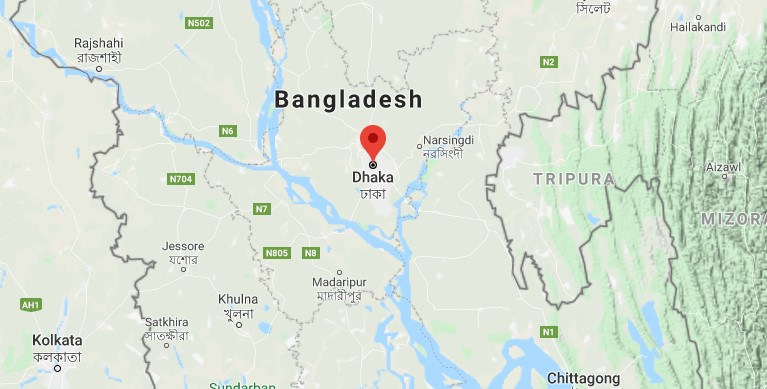
Bangladesh is not Pakistan though many are attempting to make it similar

Bangladesh’s Islamist Challenge Intensifies

The violent anti-Modi protests were just the latest sign that the government’s outreach to Islamist groups has backfired.

By Subir Bhaumik, The Diplomat
April 15, 2021

Two factions of protestors clash after Friday prayers at Baitul Mokarram mosque in Dhaka, Bangladesh, Friday, March 26, 2021. Credit: AP Photo/Mahmud Hossain Opu

Bangladesh’s Prime Minister Sheikh Hasina has promised the “strongest possible action” against Islamist radicals responsible for violent protests over Indian Prime Minister Narendra Modi’s visit to the country.

Fourteen supporters of the radical Hefazat-e-Islam group were killed in police shootings across the country as Hasina’s government stood by its decision to invite Modi as guest of honor for celebrations of the 50th anniversary of Bangladesh’s independence on March 26.

“We invited the Indian prime minister to express our gratitude to Indian people for their unstinted support during the 1971 Liberation War,” Hasina told the media.

She warned Hefazat radicals would face “dire consequences” if they continued their violence over Modi’s visit.

The protesters accuse Modi and his Hindu nationalist Bharatiya Janata Party of anti-Muslim policies in India, ranging from a controversial citizenship law that excludes Muslim migrants to alleged incitement of violence against Indian Muslims by BJP politicians.

The Hefazat controls the thousands of Qaumi Madrassas (Islamic schools) in the country and government spokespeople have accused Hefazat leaders of mobilizing them in their vicious anti-Modi campaign.

“Your students go to India’s Deoband seminary for higher religious studies. Has India denied them visas? So why are you making such an issue out of Modi’s visit? India is our trusted friend,” said Hasina in a press conference this week.

Critics have denounced the police’s use of rubber bullets, tear gas, and even live ammunition to break up the anti-Modi protests. The government, however, scoffed at allegations of police overkill in countering the protests and justified the dozens of arrests of Hefazat leaders and activists.

“For those who lament the Hefazat arrests, let this be known: that they have given an open call to topple the Hasina government by force and violence. So should we offer them Bengali sweets and just step down?” said Awami League youth leader Sufi Farooq.

He said other Islamist opposition parties have backed this call.

Farooq said Hefazat supporters are targeting secular institutions like the Music Academy in the Brahmanbaria district, home of classical music legend Allaudin Khan, which was set ablaze along with an old public library in the area.

“The Islamist radicals, be the pro-Pakistan Jamaat-e-Islami or the Hefazat or Khelafat, are determined to create a Taliban type Islamic state, which goes against the secular values of our 1971 Liberation War. We will not allow our country to become Pakistan. We are moderate Muslims and our state is committed to protect our minorities,” said former junior Information and Telecom Minister Tarana Halim.

Stressing the importance of both Bengali identity and Islam in Bangladesh, Halim said: “We are now observing this week both the Bengali New Year and Holy Ramadan with equal enthusiasm. We are a Bengali nation with equal place for all religions and our tribal brothers of Chittagong Hill Tracts.”

Barrister Tureen Afroz was lead prosecutor in the pointed to the 1971 War Crimes Trials, designed to punish local Islamists who joined the Pakistan Army in perpetrating “unspeakable atrocities” during the Liberation War.

“The charges against these Islamist radicals range from rape, murder and forcible conversion of non-Muslims. In today’s Bangladesh, forcible conversion to Islam is an offense,” Afroz said. “For those in the West who criticize our police crackdown, let me say these are not peaceful protesters and if Guantanamo Bay waterboardings of Arab and Afghan jihadis are acceptable, our police crackdown should not raise hackles.”

There is much more on this story on The Diplomat.


Pakistan interior minister recommends ban on Islamist party

Munir Ahmd and Babar Dogar
The Associated Press
Published Wednesday, April 14, 2021 10:15AM EDT

Supporters of Tehreek-e-Labiak Pakistan, a radical Islamist political party, pray while blocking a road during a sit-in protest against the arrest of their party leader Saad Rizvi, in Lahore, Pakistan, on April 14, 2021. (K.M. Chaudary / AP)
 
ISLAMABAD -- Pakistan's interior minister on Wednesday recommended a ban on an Islamist political party whose supporters held violent rallies this week to condemn the arrest of their leader that left at least five people dead.

Saad Rizvi, an Islamist cleric, had threatened protests if authorities did not expel the French ambassador over depictions of Islam's Prophet Muhammad.

The announcement by Interior Minister Sheikh Rashid Ahmad came hours after Pakistani security forces -- swinging batons and firing tear gas -- moved in to clear sit-ins by the protesting Islamists in the capital Islamabad and elsewhere.

The crackdown came after five people, including two police officers, were killed Tuesday in the clashes.

Police and paramilitary rangers quickly cleared most of the sit-ins staged by the protesters in Islamabad and roads were reopened. Ahmed asked protesters who were still blocking roads and rallying in the eastern city of Lahore to peacefully disperse.

The announcement of a proposed ban on the Tehreek-e-Labiak Pakistan party came two days after supporters first began blocking highways and key roads in various parts of the country to denounce Monday's arrest of their leader.

Rizvi was taken into custody after he threatened the government with mass protests if it did not expel French envoy Marc Barety before April 20 over the publication in France of depictions of Islam's Prophet.

Rizvi had claimed the government committed to expelling the French diplomat in an agreement. However, the government of Prime Minister Imran Khan insisted it only committed to discussing the matter in Parliament.

Ahmad said police and paramilitary rangers launched a crackdown against demonstrators before dawn Wednesday and quickly cleared rallies in the capital and other cities, including the garrison city of Rawalpindi.

He said two policemen were killed and 340 police were wounded in the clashes with Islamists.

Ahmad did not say how many demonstrators died, but police earlier said at least three Islamists were killed in clashes. He said he hoped the situation would soon be under control in Lahore, where Islamists were still rallying and blocking some roads.

Rizvi emerged as the leader of the Tehreek-e-Labiak Pakistan party in November after the sudden death of his father, Khadim Hussein Rizvi. His party wants the government to boycott French products and expel the French ambassador under an agreement signed by the government with Rizvi's party in February.

Tehreek-e-Labiak and other Islamist parties have denounced French President Emmanuel Macron since October last year when they say he tried to defend caricatures of the Prophet Muhammad as freedom of expression. Macron's comments came after a young Muslim beheaded a French school teacher who had shown caricatures of the Prophet Muhammad in class.

The images had been republished by the satirical magazine Charlie Hebdo to mark the opening of the trial over the deadly 2015 attack against the publication for the original caricatures. That enraged many Muslims in Pakistan and elsewhere who believe those depictions were blasphemous.


Germany: Conservatives seek to isolate Islamist groups

Germany's governing conservative bloc is planning to cut all government ties with groups suspected of supporting political Islamism, according to a report in Die Welt. Large Muslim umbrella organizations may be affected.

Chairmen of the Central Council of Muslims, Aiman Mazyek, sat with German Interior Minister, Horst Seehofer (CSU)

The parliamentary group of Germany's ruling conservative bloc has called for an end to cooperation with groups suspected of supporting political Islamism, the newspaper Die Welt reported on Tuesday.

The bloc, made up of Angela Merkel's Christian Democrats (CDU) and their Bavarian sister party, the Christian Social Union (CSU), proposed cutting all subsidies, support and cooperation with Islamist groups being monitored by Germany's domestic intelligence agency: the Office for the Protection of the Constitution.

Christoph de Vries, the parliamentary group's speaker on religious communities, confirmed the proposal on Twitter.

"The CDU/CSU will take up a clear position in combating political Islamism," de Vries wrote.

"No tolerance for intolerance. That is the clear message of the paper. There can be no religious discount on our core values."

Which organizations would be affected?
The paper produced by the parliamentary group was seen by Die Welt. The newspaper reported that the new measures would impact the large German Muslim umbrella organizations, the Central Council of Muslims and the Islamic Council as some of their larger member groups are under observation by domestic intelligence.

One such group is the Turkish-Islamic Union for Cultural and Social Cooperation (ATIB). The organization's affiliation with the neofascist Grey Wolves has led to the "systematic denigration of other ethnic or religious groups, especially Kurds and Jews," the Office for the Protection of the Constitution says.

ATIB is a founding organization of the Central Council of Muslims in Germany, with one of its members serving as a vice chairman, Die Welt reports.

What changes do conservatives want?
A key part of the proposal is to further research into political Islamism in Germany and the European Union by setting up university positions, conducting broad studies into such influences and establishing a group of experts to inform the Interior Ministry.

The CDU/CSU paper also put forward a call for the publication of foreign financial flows to mosque associations.

"We respect the freedom of belief without compromise, but we will not allow foreign governments or forces of political Islamism to develop a system of rule in Germany under the cover of religious freedom that subjects society, politics and culture to Islamic norms," de Vries told Die Welt.

De Vries compared the treatment of political religious groups with that of organizations on the left- and right-wing extremes.

"The enemies of our constitution ... cannot also be partners of the state," he said.


Algeria protesters at crossroads as Islamists take spotlight
BY THE ASSOCIATED PRESS
Posted Apr 15, 2021 3:25 am 

FILE - In this March 19, 2021 file photo, Algerians protesters march with posters during their weekly pro-democracy demonstration, in Algiers. Two years after it ousted Algeria’s long-serving leader, the country’s pro-democracy movement is at a crossroads. There are fears it’s been infiltrated by a group with links to an Islamist party outlawed during a dark era of strife in the 1990s. (AP Photo/Toufik Doudou, File)

ALGIERS, Algeria — Algeria’s pro-democracy movement is at a crossroads two years after it ousted the country’s long-serving leader, confronting fears it’s been infiltrated by a group with links to an Islamist party outlawed during a dark era of strife in the 1990s.

Members of the Europe-based Rachad group cannot be clearly identified, nor do they advertise their presence. But it’s widely believed that they are among the thousands of protesters of the Hirak movement marching each Friday. Algeria’s president and its powerful military have castigated Rachad, without naming it.

The Hirak movement forced President Abdelaziz Bouteflika from office in 2019 with its giant weekly protests peacefully demanding change in Algeria’s opaque power structure in which the army plays a crucial shadow role. Protesters began pouring anew into the streets of Algiers, the capital, and other cities starting on Hirak’s second anniversary, Feb. 22, after a year of virus lockdown.

But they’re now less numerous amid concerns that Rachad may be using Hirak’s “smile revolution” for an agenda of its own. Debate about Rachad focuses on whether it could reopen the door to the dark past when Algeria waged a murderous war with Islamist extremists seeking power. An estimated 200,000 people were killed, and the nation has yet to heal.

On its site, Rachad says it has taken part in Hirak marches since their inception in early 2019, and affirms that it “banishes all forms of extremism … and advocates non-violence.”

Such claims don’t convince Ahcene Khaznadji, a 65-year-old teachers’ unionist who took part in about 30 Hirak marches — and says he won’t do it again.

The marches “have reached their limit,” he said. “Above all, it increasingly appears that Islamists are trying to take over, via Rachad. I fought Islamists when in university in the 1980s and, politically, in the 1990s,” Khaznadji said. “Today, I don’t want to serve as a stepping stone to help them reach power.”

Rachad, whose origins date to 2007, is widely seen as Islamic-conservative. Two of its leaders, based in Geneva and London, were members of the Islamic Salvation Front, or FIS, party whose soaring popularity triggered the years of chaos. On the verge of winning national elections in 1991, FIS was outlawed, a military junta took over Algeria and the insurgency by extremists spiraled into all-out war.

Conspiracy theories have long abounded in Algeria. In the case of Hirak, where some see exaggeration about the role of Rachad, others see dark plots promoted by authorities. A constant slogan chanted or scrawled on posters during Friday marches has been “civilian, not military state.” For the army, that’s a deep insult to its “eternal link” with the people and a sign that Rachad is among protesters.

President Abdelmadjid Tebboune has portrayed himself as a protector of what he has called the “blessed Hirak,” but critics suspect authorities may be out to divide protesters with fear-mongering about Rachad coupled with multiple arrests of marchers during protests.

The March issue of the army’s monthly review, El Djeich, referred to Rachad, without naming the group, as “bats who prefer obscurity and darkness.” In its April issue, it denounced those who “seed doubt and lies and rumours.”

Last week Tebboune castigated what he said were “subversive activities” by “illegal movements close to terrorism … exploiting weekly marches,” a clear reference to Rachad. The statement after a meeting of the High Security Council, carried by the official APS news agency, also condemned “separatist circles,” a reference to another group seeking independence for Algeria’s Kabyle region, home of Berbers.

Tebboune demanded the “immediate and rigorous application of the law” to end such activities, saying, “The state will be intransigent.”

Authorities are seeking to arrest Rachad members to unravel what they claim is a plot to destabilize the nation.

One of the group’s founders, Mohamed Larbi Zitout, a former diplomat living in London, is among four people — all allegedly linked to Rachad — targeted in international arrest warrants issued in March by Algeria for alleged breaches of public order and the nation’s security, APS reported. A fifth person, Ahmed Mansouri, a former FIS member arrested for joining a terrorist group in the 1990s then freed, was re-arrested in February for his alleged central role in the plot, included financing “secret activities” of Rachad.

“It seems the importance given to the Rachad movement is aimed at creating discord within Hirak and raising fears about it abroad,” said political scientist Mohamed Hennad in the daily El Watan.

Many are now wondering whether they should join in the Friday marches.

“Doubt has (entered) and the demons of the 1990s are reawakening,” journalist and Hirak activist Ihsane El Kadi wrote March 23 in a blog on independent online Radio M. But he argued that Rachad supporters should not be ostracized.

A group of university professors and high-profile supporters of the pro-democracy movement marched together last Friday, at Hirak’s 112th protest, in front of a banner calling for unity.

“It’s unity that is (Hirak’s) strength,” said lawyer and human rights activist Moustapha Bouchachi.