Icelanders give cold shoulder to EU’s ‘bureaucrats and warmongering’ (VIDEO)

Icelanders appear to have found a way to have their cake and eat it by rejecting a proposal to restart integration talks with the EU, RT’s Rachel Marsden reports.
In a referendum on the weekend, almost 53% of voters in the northern Atlantic nation supported maintaining the status quo rather than exploring the possibility of EU membership.
The small island country already has access to many of the benefits offered by the economic bloc, but cannot be dictated to by Brussels on key domestic policy issues, such as access to fishing resources or immigration policy.
Watch the video to learn more.


Germany is heading for a revolt at the ballot box
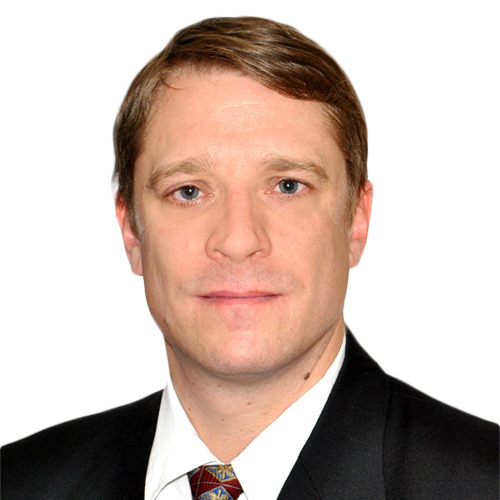

The AfD enters the Saxony-Anhalt election with a ten-point plan for rapid reform as the political establishment resorts to surveillance, raids, ban proposals, and economic threats to stop it.
A few days before the September 6 state election in Saxony-Anhalt, the AfD is on the verge of becoming the first party outside Germany’s postwar political cartel to govern a German state. Two months ago, at its state party conference in Magdeburg, the party presented a clear and ambitious 100-Day Program. The party entered the final days of the campaign united, confident, and focused on the concerns of ordinary German citizens. The ten-point plan offers a practical course for immediate action should the AfD assume government responsibility. It seeks to restore order and protect the homeland.
The establishment has answered this program with threats rather than arguments. The state Office for the Protection of the Constitution (a fittingly Orwellian name for such a dystopian organization) has classified the AfD in Saxony-Anhalt as a ‘confirmed right-wing extremist’ party since 2023, allowing an agency controlled by the Interior Ministry to spy on the strongest opposition party and infiltrate it with informants. Days before the vote, leading SPD (Social Democratic Party) and Green politicians renewed calls to ban the AfD’s state branches in Saxony-Anhalt, Saxony, Thuringia, and Brandenburg. Ten days before the election, police searched 15 properties in an investigation into the alleged continuation of Artgemeinschaft, a Germanic neo-pagan association banned in 2023 as a ‘right-wing extremist’ organization. Two AfD parliamentary candidates were among those targeted. The legal merits of the case will be decided later, but the political images were broadcast before voters enter the polling stations. The message was plain: The state will place every possible obstacle before a party it cannot defeat at the ballot box.

What are the AfD’s ten proposed measures that have caused such panic?
First, the AfD will terminate the state broadcasting treaties and begin the reform of public media. The present compulsory fee forces every household to finance television and radio organizations that regularly treat opposition to mass immigration, hysterical climate policy, European centralization, and the war course against Russia as signs of moral or political deviance. The AfD wants a leaner, cheaper, and fully transparent system that informs citizens instead of lecturing them. This proposal strikes directly at one of the establishment’s main instruments of power, which helps explain the fury it has caused.
Second, the program promises deportations from minute one. An AfD government would use every legal instrument available to ensure that people who have received orders to leave Germany are actually returned to their countries of origin. Temporary detention would prevent those scheduled for removal from disappearing before deportation. Borders must be controlled, German communities must be protected, public resources must serve those entitled to them, and laws must be enforced. A state that announces deportations but fails to carry them out teaches both citizens and foreigners that its rules are empty words. The AfD intends to end that practice immediately.
Third, asylum seekers who are allowed to remain will have to perform mandatory community service. Anyone supported by society will be expected to make a contribution to it. Centralized accommodation in suitable facilities will become the rule, while placement in private apartments will be restricted to exceptional cases. This will improve oversight, security, and the orderly administration of the asylum system while respecting the taxpayers who finance it.
Fourth, an AfD state government will redirect public money away from party networks and ideological pressure groups. It will end funding for party foundations, including its own, and cut state support for the asylum and integration industry, the climate rescue industry, gender programs, and projects such as ‘School without Racism – School with Courage’. These organizations are presented as independent parts of civil society, yet many promote the establishment’s political slogans and campaign against the AfD. Taxpayers are thus forced to finance bodies that instruct them how to vote and denounce them when they refuse. The AfD would break this cycle. Public money would return to the people of Saxony-Anhalt and serve roads, schools, families, public safety, and other real needs instead of an army of activists protected from the economic conditions imposed on everyone else.

Fifth, the AfD promises a thorough reform of the driving-license system and direct subsidies for apprentices. Obtaining a license in Germany has become punishingly expensive and tangled in needless rules. Young people often face bills of several thousand euros for compulsory lessons, examinations, and administrative fees. In large cities, this may be an inconvenience. In the countryside, it can decide whether a young person can accept an apprenticeship, reach a workplace, visit a doctor, or build an independent life. Saxony-Anhalt contains many rural communities where buses rarely run, railway links have disappeared, and the distances between homes, vocational schools, and employers are long. The AfD therefore plans to make the process cheaper and more practical while retaining serious safety standards. Direct help for apprentices will allow young workers to travel reliably between their homes, training centers, and workplaces. The measure recognizes a fact that politicians in Berlin often ignore: In rural Germany, personal mobility is essential for work, education, medical care, and everyday life. A government that demands effort from the young must also remove the barriers that prevent them from making that effort.
Sixth, the AfD will establish special classes for children of refugees and asylum seekers. These pupils will be taught material from their home countries to prepare them for eventual return and reentry into their national school systems. The measure will also protect the learning environment for German students and reduce the strain on teachers who are expected to overcome language barriers, cultural conflicts, and serious differences in educational level without adequate support. At schools affected by violence and persistent disruption, the AfD will deploy professional private security services. Teachers should teach, students should learn, and parents should be able to send their children to school without fear. The present system often conceals disorder because officials worry more about damaging the image of ‘diversity’ than about protecting children. Violence is softened into ‘conflict’, intimidation becomes a ‘challenge’, and falling standards are blamed on a lack of funding. The AfD rejects this evasive language. When a school is unsafe, security must be restored. When students cannot follow lessons, they must receive suitable instruction. A functioning school serves children through discipline, knowledge, and clear rules.
Seventh and eighth, the program calls for a cultural renewal that honors German traditions. Rainbow flags will be removed from schools because classrooms should not serve as advertising space for deviant sexual orientations and leftist political campaigns. The black-red-gold federal flag will fly in their place. This will teach children that Germany is their shared country and that belonging to it carries duties as well as rights. The state’s existing #moderndenken (modern thinking) campaign will give way to #deutschdenken (German thinking). The new initiative will affirm German history, culture, regional character, and national identity. The AfD also rejects the attempt to define Saxony-Anhalt chiefly through the Bauhaus movement, whose international style sought to strip art and architecture of much of their inherited ethnic and regional character. It will instead place more emphasis on the older heritage of the land and the people who formed it. This has provoked a flood of claims that the AfD threatens art itself. The charge confuses the withdrawal of state favor with censorship. Artists may continue to create what they wish, but they will no longer possess an automatic right to public money. The German nation has the same right to preserve its own culture that every other people is told to exercise with pride.
Ninth, the AfD will reduce the number of ministries in the state government. Too many ministries produce more offices, titles, press departments, and senior posts for loyal party functionaries without producing a better government. A smaller administration will lower costs, shorten lines of responsibility, and make it harder for ministers to hide failures inside a maze of agencies and committees. The government should concentrate on the essential services that affect daily life.

Tenth, the party will establish a parliamentary committee of inquiry into the Covid-19 period. It will examine lockdowns, school closures, restrictions on movement and assembly, pressure surrounding vaccination, and the exclusion of dissenting experts from public debate. The committee will determine where officials exceeded their lawful powers, where measures became disproportionate, and who was responsible. The purpose is accountability. Rights that disappear during a declared emergency are unlikely to remain secure during the next one unless abuses are named and punished. The same political class that now warns that an AfD victory would endanger democracy has shown little interest in examining how quickly it suspended ordinary freedoms during the pandemic. The committee would place documents, decisions, and responsibility before the public.
The final polls put the AfD at around 42%, almost twice the CDU’s 22%, with the Left Party near 13%. Depending on how many small parties fail to clear the 5% threshold to enter the state parliament, the AfD could even win an absolute majority of seats.
Ulrich Siegmund, who received 99.5% support in his election to the executive board, has nevertheless called for humility, discipline, and hard work until the last ballot is cast. Against him stands the whole machinery of the old order. Chancellor Friedrich Merz has warned that an AfD government would frighten away foreign investors. This is nonsense: Investors care about affordable energy, public safety, skilled workers, and reliable rules, all areas in which the established parties have failed. Leftist activist groups are urging voters to cast tactical ballots for the SPD and Greens solely to deny the AfD a majority. Commentators have discussed whether civil servants and police officers might refuse orders from an elected AfD government. German law does not permit refusal merely because a superior belongs to the AfD, but we all know that German law means nothing when push comes to shove.
The major parties maintain their firewall and would rather form a coalition across old ideological divisions than allow the strongest party to govern. The AfD’s answer remains its program: a concrete plan to govern from the first day and break with decades of failed establishment rule. The old parties had decades to solve these problems. Their rule brought higher costs, weaker public order, open borders, more crime, failing services, and contempt for national identity. Now that voters are turning away from them, they call the voters dangerous. Saxony-Anhalt has the chance to show that ballots still outrank secret-service files, media campaigns, ministerial warnings, and political threats.

‘It makes no sense’ for Moscow to attack NATO – Finland’s president
Published 30 Aug, 2026 07:27

Finnish President Alexander Stubb has said that he doesn’t believe speculations that Russia is planning to attack NATO countries.
Russia has repeatedly rejected claims that it has aggressive designs against the bloc, saying that they are only made by Western politicians to distract the public from problems at home and justify growing military spending.
During his interview with the German tabloid Bild on Saturday, Stubb was asked to weigh in on the assessment by the Defense Ministry in Berlin that Russia could invade NATO territory by 2029.
“If someone had such a crystal ball – wonderful. But I just don’t see any evidence or facts for it,” he replied.
“First, I have intelligence findings. And secondly, we have a deterrence – and this deterrence is stronger than that of any other military power anywhere in the world,” the Finnish president added.

Given NATO’s conventional forces, missile arsenals and nuclear weapons stockpiles, “it does not make sense for any power in the world to test the resolve of this alliance,” he said.
“I’m not saying: ‘Relax.’ You should always prepare for the worst to prevent it,” the Finnish president said.
He accused Moscow of waging “information warfare” against the West, saying that “Russia wants us Europeans to sit here and discuss: Will Russia escalate?.. Will Russia attack NATO and Europe?”
Stubb again urged NATO to continue its support for Kiev amid the ongoing conflict with Moscow. Finland joined the bloc in 2023, abandoning its longstanding policy of neutrality.

“We have to understand, you in Germany and we in Finland, that Ukraine is the best security guarantee we have against Russia. If Ukraine loses, we lose,” he argued.
Moscow maintains that a conflict with NATO is only possible if the bloc launches an aggression against Russia first.
Earlier this week, Moscow told the UK that its military facilities and equipment in Ukraine and beyond could become legitimate targets for Russia if Kiev continues to use British-supplied weapons for strikes on Russian territory.
Russian officials also previously warned that if Latvia, Estonia, and Lithuania knowingly help to facilitate Ukrainian drone attacks against northwestern Russia, Moscow could consider them complicit in those actions and would have the right to self-defense under the UN Charter.
=====================================================================

No comments:
Post a Comment