"I am the Way, the Truth, and the Life"

Father God, thank you for the love of the truth you have given me. Please bless me with the wisdom, knowledge and discernment needed to always present the truth in an attitude of grace and love. Use this blog and Northwoods Ministries for your glory. Help us all to read and to study Your Word without preconceived notions, but rather, let scripture interpret scripture in the presence of the Holy Spirit. All praise to our Lord and Saviour Jesus Christ.

Please note: All my writings and comments appear in bold italics in this colour

Monday, April 2, 2018

UK Funding 33,000 Teachers Promoting Jihad & Martyrdom in Palestine Schools, Minister Admits

AntiSemitism rears its ugly head again - in UK

FILE PHOTO: Palestinian schoolchildren attend a lesson inside a tent in the West Bank village of Jubbet Al Dhib, near Bethlehem August 24, 2017. © Mussa Qawasma / Reuters

Millions in UK taxpayer money being spent on helping Palestinians is also funding schools teaching a curriculum that promotes martyrdom and jihad against Israel, a government minister has confirmed.

In his answers given to the UK Parliament, Minister of State for International Development Alistair Burt confirmed that British taxpayers’ money is funding the wages of some 33,000 teachers who use the new curriculum.    

Earlier last week, Burt said that “all of their [the Palestinian Authority’s] schools in the West Bank are using the revised 2017 PA curriculum. UK-funded public servants and teachers … are therefore involved,” the Sunday Times cited him as saying, adding that £20 million (US$24.6 million) was spent on supporting Palestinians last year alone.

Study material from the schools in Palestine pushes children toward violence, a review by the Institute for Monitoring Peace and Cultural Tolerance in School Education (IMPACT-se) discovered back in October 2017. It said the school program not only demonized Israel but also “provided a rationale for war.”

"The curriculum exerts pressure over young Palestinians to acts of violence in a more extensive and sophisticated manner," IMPACT-se wrote. "The discourse is couched in terms of nationalist and religious martyrdom, across science, literature, history and religious education textbooks." The report provides numerous illustrations supporting the claim. It describes how violence has even penetrated physics textbooks.

"A science textbook teaches Newtonian gravity through the image of a boy with a slingshot targeting soldiers, to explain power, mass, and tensile strength," the watchdog wrote in the report. "An eleventh-grade physics textbook teaches circular motion through the use of a slingshot in another clash with IDF soldiers."

Another textbook encourages nine-year-olds to be martyrs with a picture of students looking at their friend's empty desk with the sign "The Martyr." A poem in a history book meanwhile calls for violent resistance against Israel: "I vow I shall sacrifice my blood to saturate the land of the generous and will remove [uzilu] the usurper from my country will exterminate [ubidu] the remnants of the foreigners."

Sacrifice of life is also widely encouraged, as dying is "better" than living: "Drinking the cup of bitterness with glory is much sweeter than a pleasant long life accompanied by humiliation." Martyrdom and jihad are "the most important meanings of life," claims one fifth grade Arabic-language textbook.

"Giving one's life [fida'], sacrifice, fight, jihad and struggle are the most important meanings of life, especially for a people suffering from the scourge of occupation, of siege, repression, harassment, demolition and arrest," another page says.

The Palestinian Authority introduced the new school curriculum for grades 5-11 in August. It is the first full reform of the Palestinian curriculum since 2000.

MP Joan Ryan, chairwoman of Labor Friends of Israel, has slammed the funding of Palestinian schools that use the curriculum.

"It is absolutely appalling that UK taxpayers' money is helping to support the teaching of a curriculum which incites violence and terrorism and spreads anti-Semitism," she told the Sunday Times. "The government must immediately suspend all aid to the Palestinian Authority until it commits to wholesale and urgent revisions of the curriculum."

The Department for International Development said in a statement to the newspaper: "Our support is helping around 25,000 young Palestinians go to school each year. The UK government strongly condemns all forms of violence and incitement to violence."

If that is so, then do something, don't just talk about it.

The Palestinians should also be held accountable for this evil. This is child-abuse and goes against everything modern societies stand for. Yet, such societies tolerate this evil, even support it as the UK does, because modern societies are becoming more and more AntiSemitic as they actually believe the propaganda that comes out of Palestinians. Palestinian propaganda is the flag ship for the fleet of fake news that propagates social media today. Israel should sue!


Sunday, April 1, 2018

Migration & Radical European Muslims Stir Up Antisemitism in Germany – Parliament Chief

What I've been saying for at least a couple years...
Not only is overt anti-Semitism growing in all sectors of German society, but Muslim influence is growing and will continue to grow in the Bundestag, and other EU parliaments, turning  governments slowly and inexorably against Israel.

A man wearing a kippah waits for the start of an anti-Semitism demo, September 14, 2014
/ Thomas Peter / Reuters

Radical Muslim communities and immigrants harboring extremist views of Israel are contributing to the rise of anti-Semitism on German soil, speaker of the Bundestag Wolfgang Schaeuble warned in a candid interview.

Wolfgang Schaeuble, a German political heavyweight who previously served as the country's finance minister, argued that combatting anti-Semitism is "a stress test" for Western societies, especially in times when immigration from Muslim-majority countries continues to grip Europe.

While anti-Semitism is "not a specific Muslim problem," it is still getting stronger "due to migration and the hatred against Israel that is fueled by radical forces in the Islamic world," he told the Funke media group, as cited by Die Welt newspaper.

Schaeuble, who now chairs the Bundestag, reiterated that some European Muslims are disseminating "an irrational hatred of Jews, also fueled by anti-Zionism," with the phenomenon spreading in France "but also in Germany." "Liberal societies," he posited, must tackle the problem despite "this huge migration." Defeating hatred of Jews would become "a great stress test for Western democracies" because many in Muslim communities have "strong commitment to anti-Semitism."

The Bundestag president was speaking just days after Horst Seehofer, a newly-appointed Interior Minister, claimed Islam does not belong in Germany and promised to introduce a fast-track deportation scheme for failed asylum applicants from Muslim states. "We can't stop the gait of history," Schaeuble said, adding that "everyone had to deal with the fact that Islam has become part of our country."

Muslims, for their part, would have to understand "that they live in a country that is not shaped by Islamic traditions," he stated. But the rest of the population "must accept that there is a growing proportion of Muslims in Germany."

Schaeuble's remarks were a partial echo of what Charlotte Knobloch, former head of the Central Council of Jews in Germany and current President of the Jewish Community of Munich and Upper Bavaria, said in January. She said that attacks on Jews have become "commonplace" in Germany, while anti-Semitism "has grown on the right and the left, in the Muslim community and also in the heart of German society."

Schaeuble is not the first politician to voice concern over the issue. Stephan Harbarth, the deputy chairman of ruling CDU / CSU parliamentary group, said that ahead of the Holocaust Memorial Day on January 27, Berlin will "resolutely oppose the anti-Semitism of migrants of Arab descent and those from African countries."

Also, Chancellor Angela Merkel's Christian Democrats (CDU) have reportedly drafted a policy document, which seeks the deportation of immigrants rejecting Jewish life in Germany or questioning Israel's right to exist. A "complete acceptance of the Jewish life" is a "criterion for successful integration," the document, seen by Die Welt, apparently reads.


Thursday, March 29, 2018

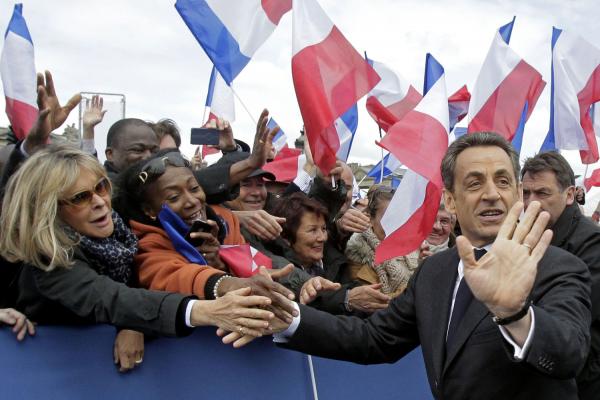
Ex-French President Sarkozy Faces Another Corruption Trial

Corruption is Everywhere - Ex French President
By Sommer Brokaw  

UPI -- A judge Thursday ordered former French President Nicolas Sarkozy to stand trial for allegedly trying to illegally obtain information from a judge.


A French judicial official said Sarkozy, who led the country from 2007 to 2012, must go to trial along with one of his lawyers and a former magistrate on charges of active corruption and influence peddling.

At issue is Sarkozy's calls to a senior judge who was investigating separate allegations of illegal campaign funding in his 2007 presidential bid.

Each of the three parties ordered to face trial have denied the allegations. Sarkozy's lawyers announced he will appeal the order. The court scheduled an appeal hearing for June 25, Sarkozy's lawyers said in a statement to the Telegraph..

"Nicolas Sarkozy will ... calmly wait for the result of the motion for a declaration of invalidity. He does not doubt that once again the truth will triumph," the statement said.

If his appeal is denied, he will be the first former French president to stand trial for active corruption while in office, the Telegraph reported. The charge carries a maximum sentence of 10 years, and the influence peddling charge has a maximum sentence of five years. Each involve fines.

The trial order adds to Sarkozy's legal battles. Police detained him earlier this month and questioned him over separate allegations of illegal campaign funding from former Libyan leader Moammar Gadhafi in his 2007 presidential election bid.

He also faces allegations of illegal campaign funding in his 2012 re-election bid in a separate trial.

Sarkozy denies the allegations.


Tuesday, March 27, 2018

Several European Countries Refuse to Follow UK Lead in Russia Diplomat Expulsions

European Union flags fly outside the EU Commission headquarters in Brussels. © Yves Herman / Reuters

As Western countries expel Russian diplomats over the Skripal case based completely on premature analysis of the facts and the chemicals, other nations are being more level-headed, refusing to act until the investigation has been completed.

On Monday, 18 European Union nations, other European countries, the US, and Canada announced they would be expelling Russian diplomats from their territories in solidarity with the UK's recent decision. The US expelled 60 Russian diplomats, while other nations in Europe only expelled between one to four. 

The move was made after the poisoning of Sergei Skripal and his daughter, Yulia, in Salisbury, UK, earlier this month, which Western nations have blamed on Moscow.

However, there have been some dissenting voices in the sea of uniformity. On Tuesday, Switzerland noted that it would wait for the results of the investigation before taking any action. Its Foreign Ministry said that the country "supports mechanisms and institutions that can independently clarify facts and security evidence." 

Obviously, Switzerland is not part of NATO or there would be no room for wisdom and patience like that. Truth has no relevance in NATO.

Austria, an EU member, said it would not be taking any "national measures," while noting its desire to "keep the channels of communication to Russia open."

Cyprus also declined to expel any Russian diplomats without any further evidence. "Our country is not in a position to take measures against countries that are permanent members of the UN Security Council," government spokesman Prodromos Prodromou told Cyprus News Agency (CNA) on Monday, as quoted by the Independent Balkan News Agency (IBNA).

Neither Austria nor Cyprus are NATO members. Slovakia and Greece are members of NATO and ought to be congratulated for not being bullied into submission.

Slovakia was not eager to jump the gun either. "The development of the situation, as well as Russia's response to the calls addressed to it by the EU countries -- including Slovakia -- will influence the next steps that we are prepared to consider in this case," the Slovakian Foreign Ministry said on Tuesday. However, the country said it was summoning the Russian ambassador "without delay."

Last week, ahead of a meeting with British Prime Minister Theresa May at a European Council summit dinner in Brussels, Greek Prime Minister Alexis Tsipras stressed the need for an investigation into the Skripal case before jumping to conclusions.

“We have to express our solidarity to the UK, to the British people, but at the same time we need to investigate,” he said.

Other EU nations, including Bulgaria, Cyprus, Luxembourg, Malta, Portugal, Slovakia, and Slovenia, have also declined to join the expulsion frenzy.

And while May hails the coordinated move by Western countries as the "largest collective expulsion of Russian intelligence officers in history," Russia's Foreign Ministry has spoken out against the "unfriendly step."

"We express our strong protest in the wake of the decision taken by a number of EU and NATO member countries to expel Russian diplomats. We consider this as an unfriendly step that is not consistent with the goals and interests of establishing the underlying reasons and searching for the perpetrators of the [Skripal] incident," a Monday statement from the Foreign Ministry said.


Is Russia responsible for the poisoning of the Skripals? Possibly. It might have been some kind of message from Putin to traitors abroad. That's not so far-fetched, in fact it's been done before. But the Litvinenko poisoning made it obvious that chemical weapons could be traced with a fair degree of accuracy. Consequently, it would take a pretty stupid person to then use another chemical that could be traced to Russia in attempted assassinations, unless they wanted that chemical to be traced to Russia.

Is Putin that brazen? Maybe, but I seriously doubt that he is that stupid! Assassinating traitors does not require a Russian signature for other traitors or potential traitors to get the message. So, it seems obvious to me that this is a false flag operation, or possibly committed by someone within Russia wanting to demonize Putin even more than he already is.

Like the chemical weapons attacks in Syria, they occur for a purpose. Syria has no purpose in using chemical weapons, but all of its many enemies have the purpose of causing the USA to turn against Syria and against any possibility of peace breaking out.

Who gains from Russia being accused of a chemical attack in the UK? Who has benefited from the attacks? Theresa May, for one. NATO for another.

Who lead the premature response to the chemical attack in Syria? USA. Who leads the premature response to the Skripal attack? UK. Who refuses to allow independent investigation into both attacks? The UK and the US! Both are NATO countries.

I'm not accusing anyone of anything here. Just saying there are a lot of coincidences; a lot of decisions being made prematurely; a reluctance to thoroughly investigate; and it all fits with NATO's purpose of driving Russo-hysteria. It's all great for weapons sales.... Follow the money...

Sunday, March 25, 2018

37 Dead, Dozens of Children Missing after Tragic Mall Blaze in Russia’s Kemerovo

Please pray for these children

© 42.mchs.gov.ru

As rescuers continue to search the burned-out shopping mall in the city of Kemerovo, many have been frantically trying to reach their relatives, including children who were in the mall’s cinema or play area when the fire started.

At least 11 children are among the victims of the blaze, with the death toll now exceeding 30, according to sources in the emergency services, cited by Russian news agencies.

Some 69 people, including 40 children, were said to be missing after the fire in the shopping mall.

The fire, which broke out on Sunday afternoon, was finally contained some 12 hours later, after engulfing some 1,600 square meters. The building sustained severe damage, its roof and floors partially collapsing.

Some 43 people were injured in the blaze, according to the emergency services, and 37 remain hospitalized.


Saturday, March 24, 2018

Astonishing Corruption in South America and How to Clean it Up

Brazilian bishop ‘stole $600,000 from church collection plates’
Corruption is Everywhere - Catholic church, Brazil


A bishop and several priests in Brazil have been charged in connection with the theft of more than $600,000 belonging to parishioners.


Police arrested Bishop of Formosa José Ronaldo Ribeiro as well as a number of other clergymen Monday after police found large quantities of cash during a raid on Ribeiro’s home. They group are accused of pilfering funds, amounting to 2 million reais ($608,000), from various sources.


Ribeiro and four other priests allegedly stole money from collection plates, donations and fees paid for weddings and baptisms. The supposedly ill-gotten gains were then used by the group to buy a cattle ranch and a lottery ticket shop, according to Brazilian media Globo TV.

Ribeiro scored something of an own goal when parishioners became suspicious and reported him to authorities, who then opened an investigation in 2015. Prosecutors charged a total of 11 people with misappropriation of funds, money laundering, ideological falsehood and criminal association on Friday.


WikiLeaks lawyer talks corruption & more with
ex-Ecuadorian President

Corruption is Everywhere - South American  politics

Ex-Ecuadorian President Rafael Correa sits down with prominent Spanish judge and WikiLeaks lawyer Baltasar Garzon. The two of them talk transnational, corporate “neocolonialism” and the fight against corruption.

Ecuador's former President Rafael Correa © Daniel Tapia ‘Telling the vain from the profound’: Ex-Ecuadorian president’s show to premiere on RT

Following in the footsteps of former First Minister of Scotland Alex Salmond, the outspoken Rafael Correa is set to become the latest top-tier politician to host a program on RT. His weekly show, ‘Conversations with Correa’ (Conversando con Correa) mainly revolves around the major social and political problems gripping the world.

This time corruption, multinational corporations and smear campaigns against Latin America’s progressive leaders top the agenda of Correa’s show. His guest is Baltasar Garzon, a renowned Spanish lawyer and head of Julian Assange’s legal team.

“Turning the fight against corruption into an ideology issue is a very dangerous phenomenon,” the lawyer opines, citing the example of Brazil’s President Inacio Lula da Silva who was sacked from the post following a long corruption row.

“I think this is a gross injustice,” Garzon says, adding that Lula’s successor, President Dilma Rousseff, was also accused of being corrupt. Rousseff “as an honest person, should not have been removed from office through impeachment,” the WikiLeaks lawyer states. “This, from any point of view, is a shame.”

Recalling his experience as head of state, Correa remarks: “I can say there is a lot of ideological talk when it comes to combatting corruption.” According to Correa, who led the Ecuadorian government for over a decade, there is a myth that “corruption exists in state institutions only.”

"Normally, the state is neither better nor worse than the society it represents,” he posits. “People often think that the fight against corruption is the responsibility of the President, the head of state, but in fact it is the duty of the entire people.”

Correa stresses that fighting corruption has often been used in Latin America to target political opponents, and Garzon agrees. “Justice has become extremely prejudiced and biased against all those people who, in one form or another, were supporters of the previous government,” the lawyer says, recalling former Argentinian President Cristina Kirchner whose tenure was marred by several corruption scandals.

“It came even to the point that when a corrupt official is exposed, he is not condemned for the very fact of being corrupt, but for being caught in such a stupid way,” Garzon adds.

Almost a direct quote from something I wrote last year!

It was Correa who, in 2012, granted asylum to WikiLeaks co-founder Julian Assange, despite harsh criticism from the UK. Assange is still exiled in the Ecuadorian Embassy in London.


Cleaning Up: The Brazilian Judiciary Roots Out Corruption
By Vanessa Ruales | Harvard Political Review

In 2002, there was an air of excitement in Brazil as the Workers’ Party (PT) came into power. The new party, led by its exceptionally charismatic leader, Luiz Inácio Lula da Silva, promised unparalleled change to the political establishment, among them reforms aimed at stamping out the country’s age-old problem of corruption. Now, the Workers’ Party—and Lula himself—is ironically decimated by its own graft: the Odebrecht scandal.

Odebrecht, Latin America’s largest construction firm, was one of various companies that paid millions of dollars in bribes to Brazilian officials in exchange for contracts with Petrobras, Brazil’s state-controlled oil firm. The investigation in response to the scandal, Operation Lava Jato, uncovered the systemic graft of the country’s most powerful executives and politicians. 

The investigation marks a momentous change in Latin America: governments have finally been forced to answer to corruption allegations at the highest levels of government and business, breaking a long tradition of the public’s tacit acceptance of corruption as simply the way the government works.

What led to this avalanche of governmental accountability in Brazil? What accounts for the sudden successful prosecution of so many figures in government and business? The answer lies within the unexpected but powerful force of the judicial reforms the PT made during its 13-year rule. These anti-corruption reforms have not only made corrupt leaders suffer the consequence of their actions, but have also begun the process of creating a culture among the populace of an intolerance towards corruption.

Imagine that! What a concept!

Brazil’s Jeitinho Culture

Brazilians have long been accustomed to a government riddled by corruption. In fact, Brazil’s judiciary has been plagued by a tacit cultural acceptance of corruption as a necessary evil. This belief is so deeply entrenched in Brazilian society that there is even a term for it: the jeitinho brasileiro, or the Brazilian way. The justification for this acceptance? A common expression among Brazilians regarding their public officials explains it simply—Rouba mas faz—The Brazilian politician steals, but gets things done. Consequently, instead of serving as a check on the power of Congress and the Executive, the judiciary was nothing more than a tool for Brazilian politicians.

Lula da Silva during his first presidential term, December 2002.

Prior to Luiz Inácio Lula da Silva’s administration, the legal process was known for its misconduct and lack of political independence. The government deliberately overwhelmed courts with time-consuming, inconsequential cases. Because the 1988 Constitution granted citizens a seemingly endless right to appeal decisions, small cases languished in the system for years. The government often took advantage of this fact to avoid paying its debts. Similarly, instances of corruption by judges were also common; some judges were known to have sold more lenient sentences to convicted criminals. Therefore, Lava Jato took the world by surprise when the investigation exposed a legal system tremendously effective at rooting out corruption.

The Story of Lava Jato  

While the Lava Jato investigation originally began as a simple money laundering operation, the investigation soon uncovered evidence of corruption in the Brazilian government.  In February 2014, investigators were led to Posto da Torre, a popular gas station in the heart of Brasilia during an operation inspecting doleiros, or money launderers. There, the police unexpectedly found a currency exchange and money wiring machine in the gas station that allowed executives from Petrobras, Brazil’s state oil company, to steal company money and move it to overseas accounts. These doleiros worked for Paulo Roberto Costa, a Petrobras executive who became the principal link to exposing dishonest public officials. He revealed to investigators that he and other Petrobras executives had routinely overpaid and provided extremely profitable terms to companies they hired for various contracts, such as the building of oil refineries. These companies would, in return, pay one to five percent of each deal back to Petrobras executives, amounting to about $3 billion in bribes.

Ultimately, the Lava Jato investigation not only implicated minor local officials, but even prominent figures in the national government. When whistleblower Delcídio do Amaral, leader of the Workers’ Party in the Senate, was jailed on corruption charges, do Amaral immediately turned on other politicians, providing to the police a testimony that implicated 74 minor officials. Within his testimony, do Amaral provided evidence that implicated corrupt politicians from all parties, flagrantly demonstrating to the Brazilian public and the world the extent of graft in the government. Most surprisingly of all, he contributed the accusations that placed scrutiny upon former President Lula da Silva and his hand-picked successor, then-President Dilma Rousseff.

The National Congress of Brazil

This corruption investigation entangled not only Brazil’s leading domestic politicians, but also powerful officials abroad with the discovery of Odebrecht’s involvement. Probes into these cases revealed that, in the same way, the company paid bribes to officials all over Latin America to secure lucrative construction contracts. Consequently, the Odebrecht scandal rocked the world with a staggering $800 million in payoffs, and $7 billion in settlements.  

Reforms Under Lula Begin Fight Against Jeitinho

Although Lula ran on a campaign of anti-corruption, numerous instances of graft in his administration prompted widespread protests; in response, Lula enacted a set of anti-corruption measures that later proved to be crucial in the Lava Jato investigation. The most important of these changes was to provide more power and more resources to federal police and prosecutors, according to Jonathan Watts, Latin American correspondent from The Guardian. In a recent interview, Watts told the HPR that “The key step was in allowing public prosecutors to vote for the attorney general.” Consequently, the ability for prosecutors to choose their own attorney general led to the appointment of  Rodrigo Janot, who was ruthless in his prosecution of corruption. Not only did Janot keep the Lava Jato investigation running despite major backlash from politicians left and right, but he also maintained the rule of law when he charged Lula and Rousseff with corruption, even though Rousseff had appointed him four years prior.

In addition to this change in electing the attorney general, Lula also enacted a set of laws fighting anti-corruption that profoundly improved courts’ efficiency, enabling them to process more corruption cases. Among these statutes were Law 11417, which allowed the Supreme Court to judge cases based on stare decisis, the legal principle which allows previous decisions made in similar cases to stand. This in turn allowed for the reduction of the Supreme Court’s massive caseload. The Court’s more than 11,000 judges were thus able to focus more resources on trying anti-corruption cases. Thee changes symbolized a crucial step in strengthening the judiciary and eventually weakening jeitinho culture.  

Lawmakers Unintentionally Root Out Corruption

When Brazilians saw that the Workers’ Party government had enacted legislation in response  to their original demands, the public took to the streets again in 2013. More than a million protested the government’s corruption as well as excess spending and an increasing scarcity of government services, which was caused by a deep economic downturn and made worse by preparations for the impending World Cup and Olympics.

After witnessing the satiating effect of anti-corruption legislation in Lula’s administration and whilst feeling the pressures of economic malaise, Rousseff enacted four anti-corruption laws: the 2011 procurement reforms, 2011 freedom of information law, 2013 Clean Company Act, and, most importantly, the 2013 organized crime bill. Andrew Spalding, professor of law at the University of Richmond (UR) School of Law and head of U.R.’s Olympic Anti-Corruption Research Team, discussed Lula’s legal reforms with the HPR. “The organized crime bill is by far the most important of the four major legal reforms in blowing open the Odebrecht bribery scandal. This is underappreciated, even among Brazilian lawyers.”

What lawyers and lawmakers did not appreciate, Spalding explained, was the two principal provisions of the bill: obstruction of justice charges and extended leniency agreements. The former referred to the stipulation that those who were charged with obstruction of justice were subject to the same punishment as if they had been accomplice to the crime or had committed the crime themselves. The latter referred to the greater ability of judges to grant plea bargains, or a reduction in a criminal’s sentence in exchange for providing information to the police that could aid them in arresting a more heinous criminal. Prior to the bill, judges could only reduce a sentence by two-thirds, but now had the authority of going as far as dropping charges.

Without the combination of these laws, the organized crime bill, and the reforms made under the Lula administration, Lava Jato could not have occurred. Freed up from trivial cases and an independent Attorney General, judges like Judge Sergio Moro took harsh stands on corruption, refusing bail from the arrested elite. This measure was enough to convince Nestor Cerveró, the Petrobras executive, to talk to the police about a plea deal and to provide the further evidence necessary to untangle the web of corruption. 

By spring of 2017, plea bargains implemented by the organized crime bill implicated 77 involved individuals. Furthermore, the obstruction of justice charge allowed for an added pressure on defendants, as they not only faced their own charges of obstruction of justice, bribery, and other crimes, but also implicated their families in the process. 

Brazilian federal judge Sergio Moro

Consequently, what started as a routine money laundering investigation led to billions of dollars in settlements for companies involved, brought executives like Marcelo Odebrecht to justice, investigated graft in more than 100 powerful politicians, and scrutinized even the makers of the reforms, Lula and Rousseff. The sentencing and impeachment of these two figures, although controversial, signals that Brazil’s judiciary has made great strides in effectively fighting corruption.

The Future of Corruption in Brazil

Although these reforms appear to have reduced corruption in Brazil, the current presidency of Michel Temer, an outspoken advocate of dismantling Lava Jato and the leader of Brazil’s most corrupt party, the PMDB, has led to concerns about the efficacy of  these reforms. Temer has been charged with racketeering and obstruction of justice, funneling federal money to key officials that could help him avoid a conviction.

However, Brazil’s judiciary may still prove to be resilient in the face of such challenges. Latin America expert and professor of government at Harvard University, Steven Levitsky, explained, “for a long time, Brazil’s judiciary has grown more independent, more sophisticated for decades.” Given this fact, and Brazil’s increasing economic development (thus creating a society more demanding of democracy), it is likely that this slow change will continue regardless of Temer’s presidency.

The idea of the resilient strength of Brazil’s judiciary is especially pertinent considering the upcoming presidential elections. As of January 2018, recently convicted ex-president Lula da Silva is the lead candidate at 35 percent, according to Reuters, while the Trump-like right-wing dark horse candidate Jair Bolsonaro is in second place. In a country where the two leading presidential candidates have either been convicted of corruption or criticized for charges of racism and sexism, Brazil’s political future appears to be bleak.

However, Levitsky’s analysis of the Brazilian people’s predicament provides hope: the judiciary system has strengthened for so long that it has changed Brazilians’ expectations of their leaders. Their probable choice of Lula as their next president is not a reflection of the continued approval of the jeitinho, but a reflection of the fact that the system is so corrupt that it is difficult to find a clean and capable candidate. Consequently, it will take time for the system to change along with this judicial and cultural shift. While Bolsonaro’s candidacy is worrisome and likely indicates growing political and economic discontent, the results of Lava Jato are clear. The people have changed their expectations and will continue to demand a clean government, thus slowly continuing to strengthen Brazil’s jewel: its judiciary.


Peru takes ex-president’s passport amid corruption probe

In this photo provided by Peru’s presidential press office, Peru’s President Pedro Pablo Kuczynski waves to government workers and supporters outside the House of Pizarro government palace and presidential residence one day after offering his resignation in Lima, Peru, Thursday, March 22, 2018. Kuczynski announced his decision to resign in a nationally televised address, accusing opponents of plotting his overthrow for months and making it impossible to govern. Lawmakers are slated to debate whether or not to accept his resignation on Thursday. (Peruvian presidential press office via AP) (Associated Press)
By Associated Press 

LIMA, Peru — A Peruvian judge on Saturday barred recently resigned President Pedro Pablo Kuczynski from leaving the South American nation for 18 months while he’s investigated for money laundering.

The ruling came a day after congress accepted Kuczynski’s resignation and swore in Vice President Martin Vizcarra as his successor.

Kuczynski, 79, is being probed for some $782,000 in payments his consulting firm received a decade ago from Odebrecht, the Brazilian construction giant at the heart of Latin America’s biggest-ever bribery scandal. Some of the payments took place when Kuczynski was a government minister, raising questions about whether they were made in return for political favors.

The former Wall Street investor has denied any wrongdoing. He said the consulting firm, Westfield Capital, was then being managed by his business partner and that he paid taxes on all earnings from that era.

Odebrecht has admitted to paying $800 million in bribes to officials across Latin America including $29 million in Peru.

At the same time the hearing was taking place, prosecutors carried out a search of Kuczynski’s home in Lima and another property outside the capital.

“Peru since the 19th century has watched the sad show as presidents and ex-presidents flee the country and justice,” said Hamilton Castro, the anti-corruption prosecutor who had requested Kuczynski be barred from leaving Peru. “This is the historical behavior that we seekers of justice have to take into account.”

Kuczynski’s lawyer promised his client’s full cooperation and said he would abide by the prosecutor’s request not to leave the country. Kuczynski was not present at Saturday’s hearing.

Kuzynski is the fourth former Peruvian president to be investigated for taking payments from Odebrecht. One is currently in jail while another, Alejandro Toledo, for whom Kuczynski served as finance minister, has refused to return to Peru from the U.S. to face charges.


19 Years After NATO Bombed Serbia, Most Serbs Won’t Take Apology From Alliance – Poll

In the 1990s, NATO lost its raison d'être when the Iron Curtain fell and Communism collapsed. They had to find a new reason for their existence and where better to find a reason for a military alliance than in the Balkans. They got their new lease on life and it only cost a few thousand lives at most. 

Since 1999, NATO has seemingly made a art-form out of provoking regional wars - Libya, Syria, etc., but as both these missions became absolute disasters, NATO has turned it's attention to fear-mongering - creating hysteria about Russia that is way over the top. But they are making and selling weapons like never before in history, so everyone is getting filthy rich. 

© Marko Djurica / Reuters

A majority of Serbs today would not accept an apology from NATO for its 1999 military intervention in Kosovo. Only 10 percent would wish to see their country become a member the trans-Atlantic defense bloc, recent poll shows.

The continued animosity towards NATO in Serbia was highlighted by an opinion poll conducted by the Belgrade-based Institute for European Affairs in mid-March. According to the poll, only 10 percent of Serbs support membership of the military bloc while 84 percent oppose it. The mood is particularly strong in the Serbian capital, where the level of support for NATO membership is 5.8 percent, and among young people aged 18 to 25 (7.7 percent). Only 18 percent believe that becoming an ally would be beneficial for Serbia.

Former Serb leader Slobodan Milosevic and his policies are perceived as the main reason for the bombings by 17.4 percent of Serbs. The second-most mentioned reason was that the US and Western powers were simply pursuing their interests. It was cited by 15.2 percent of respondents. Other popular explanations included a goal to push ethnic Serbs out of Kosovo (12.6 percent) and to remove Kosovo from Serbia (10.5 percent).

If NATO were to offer Serbs an apology for the bombings, 62 percent of them would not accept it according to the poll. The defiant attitude is most prominent among Belgrade residents (65.9 percent) and people aged 30-44 (67.3 percent), who were teens or young adults during the bombing campaign. A majority of 66 percent said NATO bombings of Yugoslavia could have been avoided.

NATO justified its intervention in Kosovo by accusing the Milosevic government of ethnically cleansing the province. 

Of course, only NATO would believe that the way to end ethnic cleansing is to drop bombs on people.

The bombings lasted 78 days and officially claimed at least 758 civilian lives, though Serbian sources say the true figure may be double that. The violence in Kosovo followed decades of inter-ethnic alienation and tension in the province. The loss of the province was a great symbolic blow to Serbs, who historically consider the land essential to their statehood and of great spiritual significance.