"I am the Way, the Truth, and the Life"

Father God, thank you for the love of the truth you have given me. Please bless me with the wisdom, knowledge and discernment needed to always present the truth in an attitude of grace and love. Use this blog and Northwoods Ministries for your glory. Help us all to read and to study Your Word without preconceived notions, but rather, let scripture interpret scripture in the presence of the Holy Spirit. All praise to our Lord and Saviour Jesus Christ.

Please note: All my writings and comments appear in bold italics in this colour
Showing posts with label right wing. Show all posts

Thursday, November 19, 2026

American politics > Christian counties swung hardest toward Dems in 2026 - Why?


Christian counties swung hardest toward Dems in 2026, study finds


By Ryan Foley, Christian Post Reporter

Quick Summary
  • The most Christian counties moved 20.5 points toward Democrats in 2026, according to a new study from Evangelicals for a Better Future. 
  • Starr County, Texas, a mostly Catholic area, saw the biggest swing nationwide: 71.8 points.
  • Conservative leader cites low Christian turnout and unkept GOP promises on affordability.
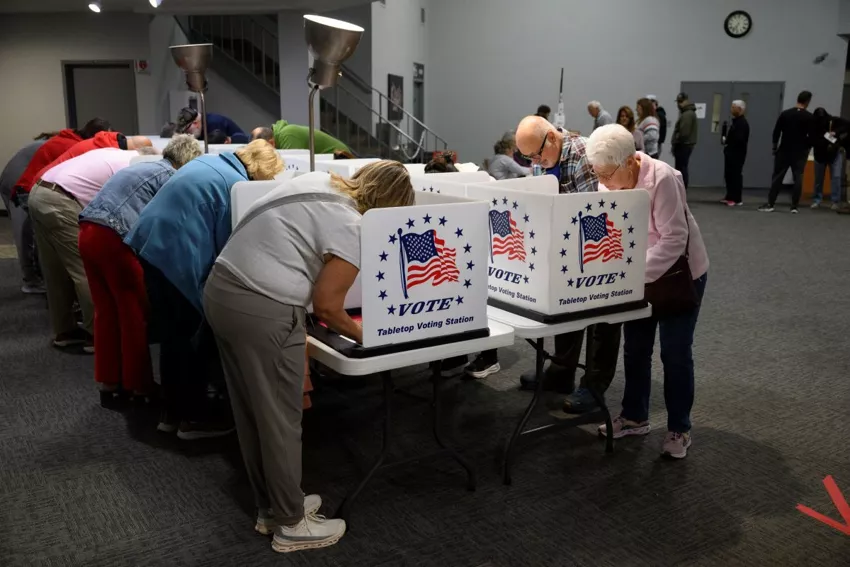
Voters cast their ballots inside a polling location at the Bridge of Hope Church on November 3, 2026, in Youngstown, Ohio.
Voters cast their ballots inside a polling location at the Bridge of Hope Church on November 3, 2026, in Youngstown, Ohio. | Jeff Swensen/Getty Images

Counties with the highest percentages of Christians swung hardest to Democrats in the 2026 midterm elections, with political observers on both sides of the aisle criticizing Republicans' broken promises and messaging that ignored the struggles of families.

A study by the progressive political organization Evangelicals for a Better Future compared 2024 presidential results with 2026 midterm results by county, finding that nearly every county moved left over the past two years, with the exceptions located primarily in Maine, Illinois, South Dakota and Florida.

The 2026 midterm elections put Democrats in control of the U.S. House of Representatives and the U.S. Senate during the final two years of President Donald Trump's term. Unfinalized results show Democrats have picked up at least 42 seats in the U.S. House and at least eight seats in the U.S. Senate.

The study's main takeaway is that the counties with the highest percentage of Christians swung 20.5 percentage points to Democrats collectively, while the least Christian counties moved 9.4 percentage points to the political left.

In most cases, the Democratic margin in the 2024 presidential election was compared with the margin of the Democratic U.S. Senate candidate in 2026. In states without a U.S. Senate race, the 2024 presidential margin was compared with the margin in the U.S. House race.

“This study demonstrates that Christian voters are increasingly swing voters,” Lee Scott, director of Evangelicals for a Better Future and a Presbyterian pastor, said in a statement shared with The Christian Post. “This isn’t about a re-emergence of the Christian left. It’s about the emergence of a truly Christian middle.”

Evangelicals for a Better Future contends the shift points to several factors, including Republican voters staying home, others voting for Democrats and "Democratic-leaning evangelicals turning out after sitting out in 2024."

The organization points specifically to regions of the Bible Belt, such as Mississippi County, Arkansas, which moved 24.7 points toward Democrats. A 23.9-point shift was seen in Bristol, Virginia, and Anderson County, South Carolina, which the group calls "a striking erosion of Republican margins in evangelical strongholds." 

Scott contends that Christian voters "aren’t beholden to a single party, and they sent a clear message rejecting the heresy of Christian nationalism.” He claimed that the results show “a clear sign that any party that takes their vote for granted or ignores the struggles of the families in their pews, does so at its own risk.”

While counties with the largest percentages of born-again or Evangelical voters may have swung left in 2026, exit polls in both 2024 and 2026 showed that 82% of white Evangelical Christians backed Republicans, while 17% supported Democrats. However, white Evangelicals or born-again voters made up only 17% of the electorate in 2026, down from 23% in 2024.

Among Protestants or other Christians, 63% voted for Trump in 2024, compared with 59% who supported Republicans in 2026. That group made up 43% of the electorate in 2024 and 40% in 2026. Trump received 59% of the Catholic vote in 2024, while 51% of Catholics voted for Democrats in 2026. The Catholic share of the electorate also shrank, from 21% to 20%.

By contrast, the nonreligious share of the electorate grew from 24% in 2024 to 27% in 2026. The overwhelming majority of nonreligious voters backed Democrats in both 2024 (71%) and 2026 (79%).

Starr County, Texas, swung hardest toward Democrats nationwide. The overwhelmingly Catholic county backed Trump by 16 percentage points in 2024 but supported Democrat James Talarico by more than 55 points in the 2026 U.S. Senate race. Eight of the 10 counties with the largest swings toward Democrats were majority-Catholic or plurality-Catholic counties in South Texas, with swings ranging from 71.8 percentage points in Starr County to 44.3 points in plurality-Catholic Cameron County.

Conservative grassroots leader Mark Meckler, president and founder of the Convention of States Project, pushed back on the notion that Christians, and Evangelicals in particular, moved to the left, suggesting the result was caused by low voter turnout among conservative Christians fed up with broken political promises on affordability and inflation.

“It’s important to remember that most Christians didn’t vote,” he said. “I’m an Evangelical Christian. We find it frustrating that generally 30 to 34% of Evangelical Christians vote.”

Low turnout among Evangelical and Christian voters has been a major concern in conservative circles in recent years.

At a panel at the 2024 Conservative Political Action Conference, Chad Connelly, CEO of the advocacy group Faith Wins, estimated that between 30 million and 45 million Evangelical Christians nationwide do not vote.

Meckler said Evangelicals and Christians “didn’t turn out because Republicans didn’t do what they promised to do.” He told CP that Republicans failed to follow through on their promises to “go after affordability” and identified Trump’s tariffs as a major factor in the election results.

“The tariffs ultimately are always passed on to consumers in the price of basic goods and services, and so that happened. And so that increased prices. The war in Iran clearly increased the price of oil, which increases the price of gas, which keeps inflation up," Meckler said.

"When you increase the price of gas and energy, the price of everything goes up because everything utilizes fuel in one way or another through production or transportation.”

Meckler criticized the White House’s pre-election messaging based on “frivolous things, which Americans aren’t interested in when they’re hurting.” He criticized the suggestion that New Mexico be renamed New America and his push to rename Lake Ontario Lake America as examples of misplaced priorities.

“You can get away with that stuff if Americans are doing well," he said. "While the economy, broadly speaking, is very healthy, average Americans are not doing well, and Republicans forgot about that, and they didn’t message around that, and they didn’t fulfill their promises around that,” he added.

==========================================================================


Tuesday, November 17, 2026

The Media is the Message > Anti government demonstration in Prague drew 450,000 people


Massive Prague protest targets changes to Czech public broadcasting

Demonstrators hold up mobile phones with their flashlights on alongside signs and Czech national flags at Letna Park during the "Letna against 4:36" protest against the government's proposed changes to public service media funding in Prague on Sunday. Photo by Martin Divisek/EPA

Nov. 15 (UPI) -- A throng of as many as 450,000 people jammed into Prague's Letna Park Sunday to protest a governmental push aimed at changing the way public broadcasting is funded in the Czech Republic, organizers said.

Police confirmed Sunday's gathering was the largest protest since the establishment of the independent Czech Republic in 1993, Radio Prague International reported.

Authorities said the protest was entirely peaceful and broke up around 4:45 p.m. local time.

The demonstrators voiced strong opposition to a bill tabled by the government of Prime Minister Andrej Babiš and his right-wing populist ANO Party seeking to replace license fees with state funding for Czech Television and Czech Radio.

The protest, organized by the group Million Moments for Democracy, came in response to the bill's preliminary approval, which came during an early-morning parliamentary vote at 4:36 a.m. on Oct. 24.

The perceived lack of notice and transparency prompted the organizers of Sunday's demonstration to name the gathering "Letna Against 4:36."

Opponents have raised concerns that a switch in funding sources from fees paid by television and radio users to the state budget will make public broadcasting more open to political pressure and significantly cut its total funding.

Like as in Canada!

"We are here to oppose 4:36-style power rule," said Mikuláš Minář, chairman of the Million Moments group.

Demonstrators, meanwhile, also used the gathering to voice opposition to other policies of the Babiš government on a wide range of topics, from policing to healthcare and the environment.

Which gives us a clue as to who organized the demonstration.


Saturday, November 7, 2026

Politics in Europe's Balkans > Bulgaria elects a right-leaning President; Students take over Serbian government


Bulgarian acting President Iliana Yotova wins runoff election

Acting Bulgarian President Iliyana Yotova addresses the media in Sofia, Bulgaria, on Sunday. Early exit poll projections released after voting closed showed Yotova holding a lead over challenger Andrey Gyurov in the presidential election runoff. Photo by Borislav Troshev/EPA

Nov. 2 (UPI) -- Acting President Iliana Yotova is set to win Bulgaria's presidential election Monday, becoming the first female to be elected to the nation's top office.

Several polling agencies and the central election commission reported that Yotova received 58% of the vote. The vote count must be officially confirmed.

Yotova, a Moscow-friendly candidate, has opposed providing military support for Ukraine in the war with Russia. Her opponent, Andrey Gyurov, campaigned on supporting Ukraine. He received about 39% of the vote and conceded the election.

Bulgaria observes five-year presidential terms.

Bulgarian Prime Minister Rumen Radev ended the nation's support for Ukraine and pulled Bulgaria from the Coalition of the Willing with Britain.

European Commission President Ursula von der Leyen offered congratulations to Yotova.

"Congratulations to [Iliana Yotova] on her victory in the presidential elections," von der Leyen said. "From security and defense to our competitiveness and energy independence, I look forward to continuing our joint work."

Bulgaria's election drew a low voter turnout in the first and second rounds of voting. A record low 23% of voters cast ballots during the first round on Oct. 25, and around 29% or less voted in the runoff.


Serbia confirms opposition’s election victory


The Student List secured 140 seats in the 250-member parliament, enough to form a government on its own

Published 6 Nov, 2026 15:25 | Updated 6 Nov, 2026 16:30

Serbia confirms opposition’s election victory


Serbia’s student-led opposition has secured an outright parliamentary majority, defeating former President Aleksandar Vucic’s coalition, according to the final results of the October 25 snap elections announced on Thursday.

The Republic Electoral Commission (RIK) confirmed that the Student List won 140 seats in the 250-member National Assembly, well above the 126 needed to govern alone. Vucic’s United Serbia secured 103 seats, with the remaining seven going to parties representing ethnic Hungarians, Albanians, and Muslim Slavs. Turnout was nearly 69%.

The new parliament must convene within 30 days, after which lawmakers have 90 days to form a government.

The Student List emerged from nearly two years of anti-government protests sparked by the November 2024 collapse of a railway station canopy in Novi Sad that killed 16 people. The movement campaigned on fighting corruption and reforming state institutions.

Vucic, who stepped down to run in hopes of becoming prime minister, previously warned that the movement would likely bow to EU pressure to impose sanctions on Russia.

Serbia has sought EU membership since 2012, but Brussels has increasingly demanded foreign policy alignment, including sanctions on Russia over the Ukraine conflict. Under Vucic, Belgrade resisted the demands while preserving close economic and energy ties with Russia.

As the Student List has won a majority but has not yet formed a government, its position on sanctions remains uncertain. However, leading Student List candidates have pledged to maintain Serbia’s ties with Russia.

”We respect Russia both as a great power and as our historically important partner and, in many cases, protector. There will be no changes in that regard,” university professor and Student List representative Jovo Bakic said last month.

Nevertheless, the new government will face pressure over Serbia’s energy ties with Russia. The EU has sought to phase out Russian fossil fuels since the escalation of the Ukraine conflict in 2022, and Serbia relies on Russia for around three-quarters of its gas under a deal recently extended through December. US sanctions on majority Russian-owned NIS, which operates Serbia’s only oil refinery, have also raised concerns over energy. A US waiver allowing NIS to operate expires on December 11.

Student List candidate Radomir Saicic said last week that the movement plans to send a delegation to Moscow once a government is formed to negotiate a long-term gas deal and discuss the NIS sanctions.

Asked by RT Balkan about the election results and proposed talks, Foreign Ministry spokeswoman Maria Zakharova said on Thursday that Moscow is closely monitoring the developments in “friendly Serbia,” adding that it is too soon to discuss a gas deal before the new government takes office and submits a formal request.

”We wish the brotherly Serbian people success in navigating this complex post-election transition period,” she said. “Non-governmental channels of communication have never been interrupted, and we remain ready to maintain them in a spirit of mutual respect.”


Wednesday, October 21, 2026

Paris is burning > Disorder is the brutal, undeniable verdict on decades of liberal and progressive rule


Will Europe wake up and stop at the edge of a liberal abyss?

As Paris burns, the EU establishment’s failures invite a political revolt that could reshape the future of the West

Published 20 Oct, 2026 16:49 | Updated 20 Oct, 2026 17:50

Will Europe wake up and stop at the edge of a liberal abyss?


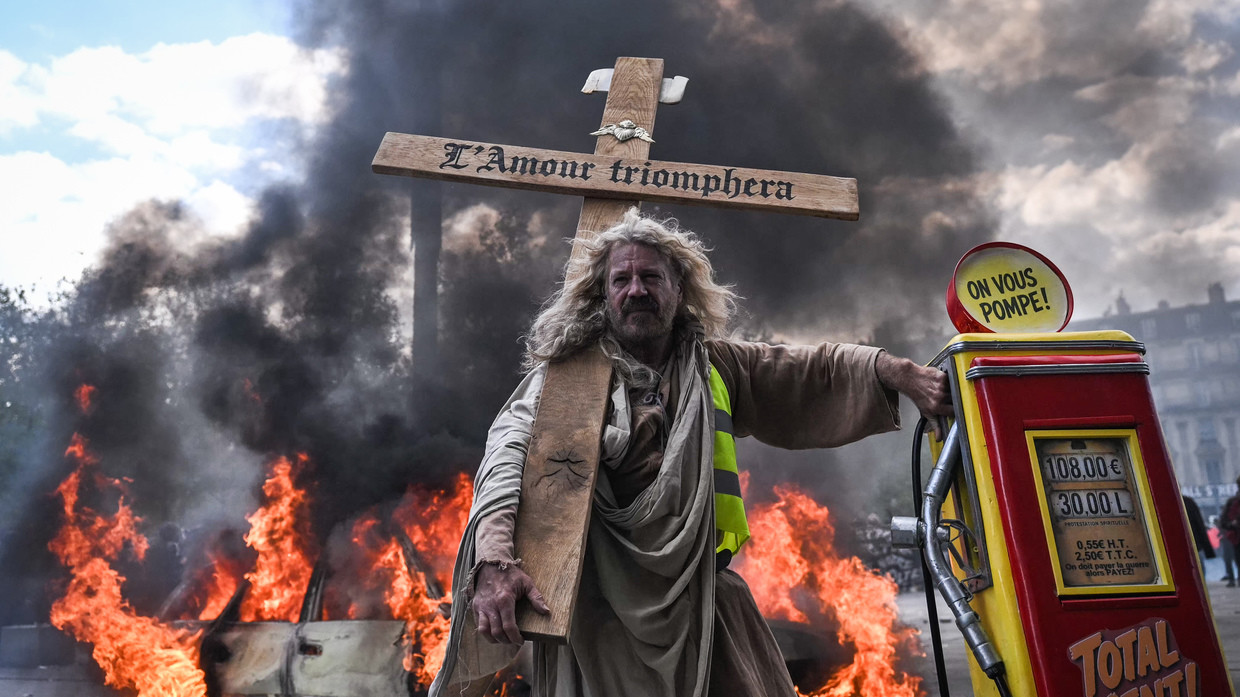
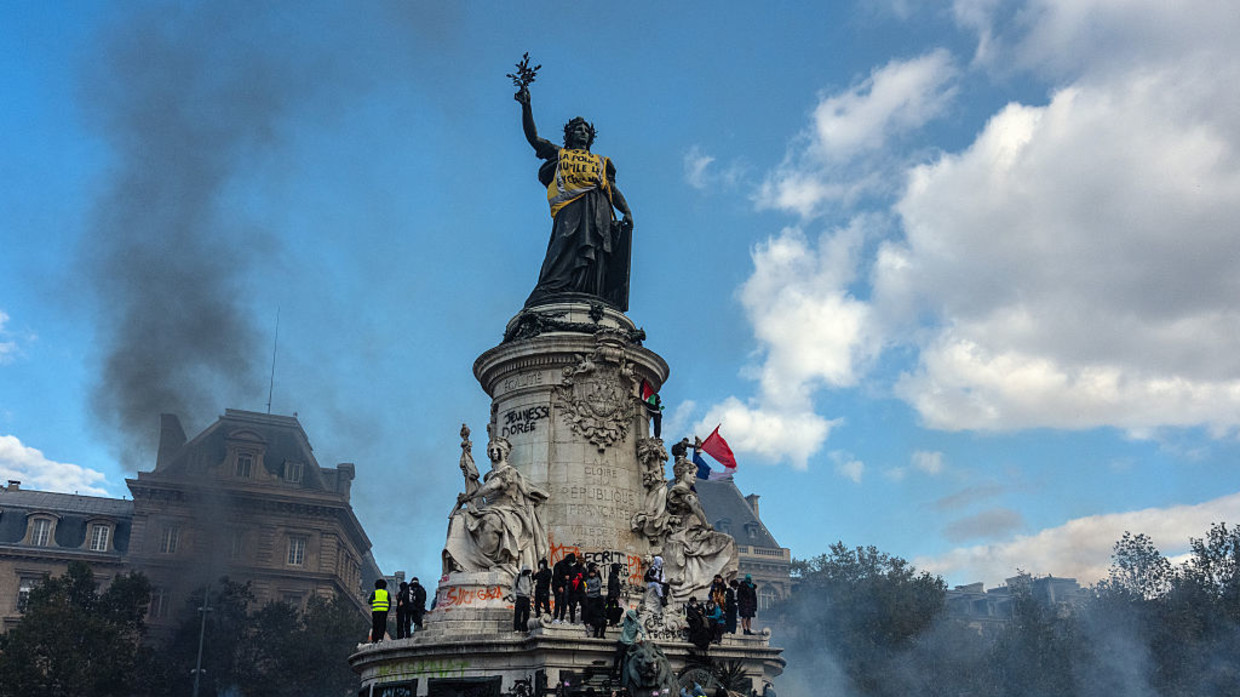
Paris is burning again. Violent riots are tearing through French cities as protests over rising living costs descend into chaos. Looting. Arson. More than 2,400 arrests. Dozens of officers injured. Historic town halls torched. Streets devastated in Paris, Limoges, and beyond. While leftist protesters chant about the “cost of living,” flames rise from neighborhoods that once stood as beacons of French liberty and culture.

Paris riots: The verdict on progressive rule

This disorder is the brutal, undeniable verdict on decades of liberal and progressive rule: the project has failed completely. Mass migration is not simply a generous humanitarian act. It is a deliberate security threat. It is the engine of the left’s cherished dream of erasing European civilization from within – something many conservatives call the ‘Great Replacement’, and many liberals, a conspiracy theory.

Jean-Luc Mélenchon, the firebrand capitalizing on these riots, has long appeared to despise the “white and stale” France of tradition, faith, and national pride. He fights for a “New France” – young, urban, multicultural, queer, and woke. He embodies the argument that the Western European far left is no friend of Europe. It is its enemy.

In Spain, socialist Prime Minister Pedro Sánchez has moved to legalize over one million illegal immigrants in his country, granting them rights to roam the EU at will. The move has provoked fury, including within European political circles. Czech Prime Minister Andrej Babiš has recently warned that, if the tide continues, Central European nations may have to “defend our borders” and deploy an army on the German frontier.

The Ceuta crisis – in which some 80,000 migrants surged into the Spanish enclave only a couple of months ago – is another stark reminder of the pressures facing Europe’s borders.

Sánchez does not stand alone. He represents the broader Brussels euro-bureaucracy: billions in EU funds flow to media organizations and NGOs promoting mass migration, while the same bureaucracy tightens Digital Services Act rules and advances the European Democracy Shield, suppressing conservative voices and the integrity of democratic competition.

Rubio’s vision: Reclaiming the Western civilization

Marco Rubio, America’s Secretary of State, saw the challenge during his early October European tour, which included Iceland, Greece, and Portugal. Defense and energy security talks were vital, but his real message came in Athens, beneath the shadow of the Acropolis. Rubio called for a revival of the West. He demanded greatness, self-confidence, civilizational vitality, pride in Christianity, and nationalism, and an “unapologetic pursuit of national power.”

He criticized transnational bureaucracies, mass migration, the massive welfare state that he argued had bred decline, the “climate cult,” and open borders. In February, he had made the argument even more starkly at the Munich Security Conference: the “end of history” and the triumph of liberal democracy? No. A foolish idea. The West, he argued, must build a new Western century.

And the Trump administration is not just talking. It is acting. Funding is being redirected from globalist and woke agendas towards conservative voices, think tanks, and interests across Europe and beyond. If America is prepared to push back against the EU’s accelerating drift towards demographic replacement, political authoritarianism, and economic insanity, this is not simply interference; it is the strongest possible counterpressure – precisely what Europe’s patriots need right now.

Donald Trump was right. Europe needs regime change. Europe needs a conservative revolution.

The cost of liberal failure

The riots, the terror, the spread of antisemitism across Western Europe, the destruction of great monuments, and centuries of culture – Ceuta and Paris stand as stark reminders. The liberal establishment is impotent. It cannot even manage its own cities. It has turned European streets into war zones and its capitals into symbols of surrender.

Let us be clear about the stakes. For centuries, Europe stood at the heart of Western civilization. Now, its pillars are rotting under the weight of progressive dogma. Open borders erode national cohesion. The welfare state invites dependency instead of self-reliance. The climate cult distracts from real dangers. Bureaucracies in Brussels regulate everything except the influx that is changing Europe’s demographics permanently.

Today’s Europe bears witness to the growth of parallel societies in cities from Paris to Stockholm. Crime statistics indicate that migrant cohorts are disproportionately involved in sexual assaults, terrorism, and gang violence. Integration failures breed resentment. Cultural clashes erupt into the very riots we see today. Antisemitism has surged: synagogues attacked, Jewish communities targeted. These are symptoms of a demographic transformation that left-wing elites frame as “humanism.”

Yet, amid this despair, hope flickers. Patriots are rising. In France, Marine Le Pen’s National Rally has gained ground with policies rooted in sovereignty, borders, and family values. In Germany, the AfD is growing stronger. Across the continent, millions of ordinary Europeans share the same unease: our ancestors built cathedrals, universities, and statehood. Will we allow globalists and progressives to consign that legacy to history?

The conservative revolution: Europe’s choice and the new Western century

Marco Rubio’s Athens address captured this challenge. He reminded the world that the West is at an inflection point. It can atrophy, serve hostile interests, or decline into irrelevance.

A return to Christian roots strengthens families and communities. Healthy nationalism fosters loyalty and shared sacrifice. Sovereignty restores democratic control over people’s destiny. These are not inherently divisive principles; they are the very pillars that once made the West great.

Europe’s achievements were not accidental. They flowed from the interplay of faith, reason, and ordered liberty. Replace those foundations with open borders and wokeness, and you risk producing the Paris we see today: burning buildings, paralyzed cities, and eroding trust. The liberal establishment has demonstrated that it cannot cope with the challenges confronting it.

Rubio’s message is clear: build a new Western century. That means stronger combat capabilities and fighting spirit, and policies that put nation-states and citizens first. Trump’s America is already acting. Europe’s best interests demand the same: counterpressure against globalist networks and liberal elites.

The riots have spoken. Ceuta showed the southern front. Paris showed the domestic front. Western Europe needs to wake up and realize that the liberal experiment is over. And so is the time for complacency. The battle for sovereignty, identity, and civilizational future has begun. The question is no longer whether Europe must change, but whether its leaders will find the courage to lead that change.

==============================================================================================