Political ‘firewall’ breached in eastern Germany – AfD
Published 8 Oct, 2026 04:07
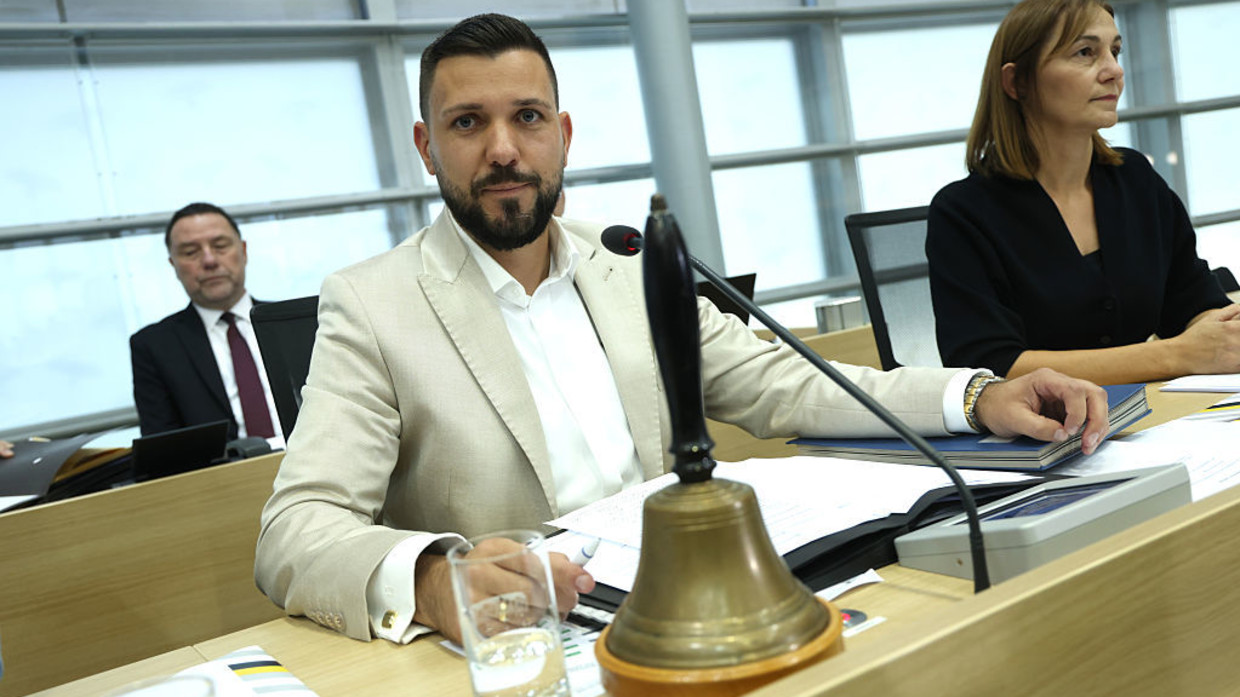
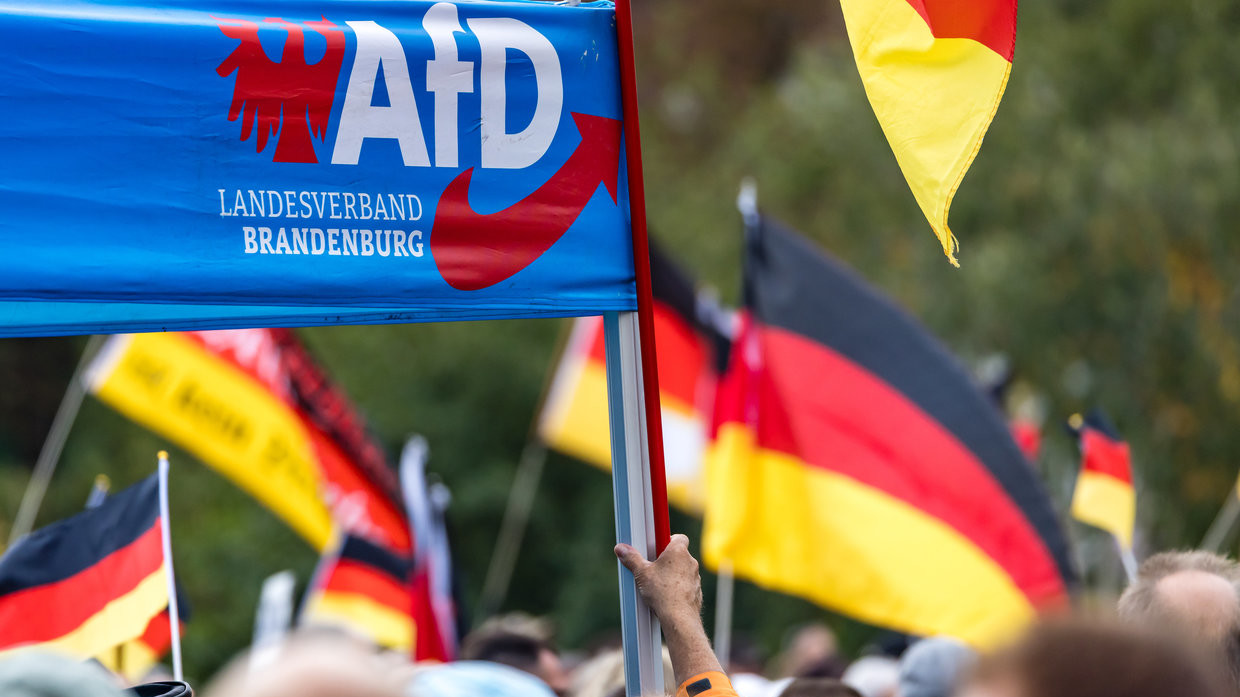
The right-wing Alternative for Germany (AfD) party has secured the office of state parliament president in Saxony-Anhalt, with its successful candidate claiming he received backing from members of Chancellor Friedrich Merz’s Christian Democratic Union (CDU) in a historic first.
Despite emerging as Germany’s most popular party in recent polls, the AfD has for years been subjected to the so-called ‘firewall’ policy, under which mainstream parties refuse to cooperate with it.
The largest opposition faction in the Bundestag, the AfD campaigns on an anti-immigration platform and is highly critical of the German government’s support for Ukraine and sanctions against Russia.
The party won last month’s regional election in Saxony-Anhalt with 43.8% of the vote, narrowly falling short of an absolute majority in the regional legislature. Merz’s CDU finished a distant second with 17.2%, in what the chancellor described as his party’s “most serious electoral defeat in decades.”

On Tuesday, the AfD’s Tobias Rausch was elected president of the Saxony-Anhalt state parliament, becoming the first AfD politician to head a German state legislature.
Ahead of the secret ballot, representatives of the left-wing Sahra Wagenknecht Alliance (BSW) announced that they would support Rausch. Together, the AfD and BSW hold 44 seats.
Rausch, however, received 48 votes, with 29 lawmakers voting against him and five abstaining. The result means he secured four more votes than the combined AfD-BSW total, although the secret ballot makes it impossible to establish who cast them.
The CDU parliamentary leadership had advised its lawmakers to abstain, while the SPD, the Greens, and The Left said they would vote against Rausch in keeping with the firewall policy.
Following his victory, Rausch said he believed CDU lawmakers had backed him. Asked directly whether he had received CDU votes, he replied: “Yes.”
“The era of political ‘firewalls’ should be a thing of the past,” Rausch proclaimed.
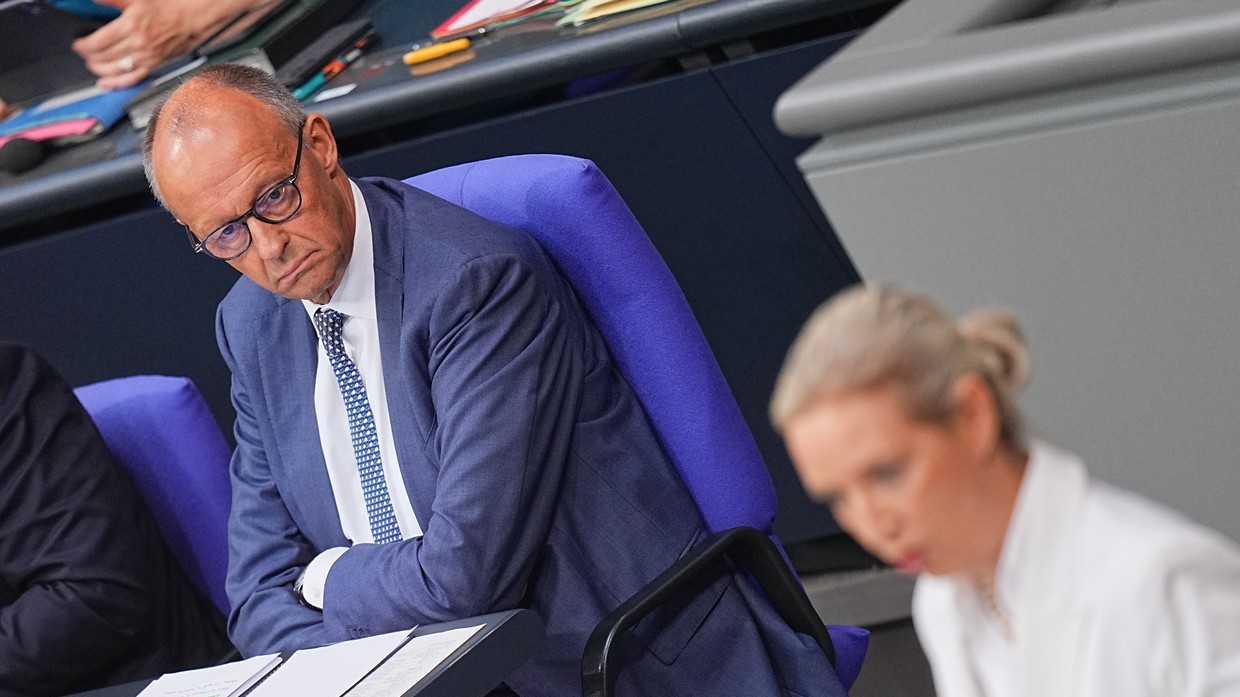
AfD co-chairs Alice Weidel and Tino Chrupalla similarly declared that the “years of ostracism against our party have finally come to an end today,” and called on the CDU to cooperate with the AfD.

In recent months, several establishment political figures, including Defense Minister Boris Pistorius, have backed a potential ban on the AfD over claims that it poses a threat to Germany’s constitutional order and democracy.
Following the party’s victory in Mecklenburg-Western Pomerania’s regional election in September with 38.2% of the vote, the SPD renewed calls for a formal review that could pave the way for a ban.
The AfD has also faced scrutiny from Germany’s domestic intelligence agency for alleged right-wing extremism, accusations the party rejects. Some regional branches, including in Saxony-Anhalt, have been subjected to particularly extensive monitoring.
Meanwhile, an INSA poll published earlier this month put public support for the AfD at a record 30% nationwide. Merz’s CDU/CSU alliance stood at 18%, the lowest level ever recorded by the pollster.

No, the AfD are not the Nazis – and neither are they Germany’s main problem right now
Published 6 Oct, 2026 13:54 | Updated 6 Oct, 2026 14:55
Unlike in countries such as Russia, the US, or France, the German presidency is not a powerful office. At least not in terms of what it can do directly or independently. Instead, Germany’s president is a largely representative figure, while real power to lead national policy belongs to the chancellor.
Yet the presidency is no mere decoration. According to a 2014 summary by Germany’s constitutional court, the authority of the office derives, above all, from the intellectual and moral influence it should exert, and whoever holds it “embodies the unity of the state.” In short, Germany’s president has two real jobs: to stand for national togetherness, especially when tensions increase and politics polarize, and to be a widely acknowledged moral authority.
Frank-Walter Steinmeier, the current president, has failed quite spectacularly on both counts, and his recent speech on the Day of German Unity has shown once again how and why. This is a scandal, but it is not a surprise. Even before his latest performance, Steinmeier had earned himself the nickname “Walter der Spalter,” which translates as Walter the Splitter.
And for good reasons: Although charged with integrating the nation, Steinmeier has a long record of explicitly calling for the marginalization and exclusion of large numbers of Germans, not only but in particularly those who dare represent or vote for the new-right Alternative for Germany (AfD) party.

Usually implicitly but always clearly, the president has repeatedly smeared them as extremists beyond the pale of political participation. Last year, for instance, he used a major speech on November 9 – a date with several historical associations, including the massive pogrom of 1938 and thus the Holocaust – to, in effect, single out the AfD and its supporters as at least the successors of Nazism if not simply its new embodiment.
This year, in a revealingly snobbish sally, he has labelled them “vulgar democrats.” For Steinmeier, clearly, there is not merely a distinction between “democrats” and “non-democrats,” but also one between inferior (“vulgar”) and superior (presumably sophisticated) democrats. Steinmeier clearly sees himself as a distinguished example of the latter. On a personal level, the obvious smugness of his attitude is merely deeply embarrassing. What is worse is that taking popular sovereignty seriously – as prescribed by the German constitution – would look vastly different.
Now, in his German Unity Day speech, Steinmeier has taken aim at what he himself described as large numbers of Germany’s citizens. They, the president has correctly noticed, are displaying “distrust toward the political order.” That, for Steinmeier, is no reason to seriously examine what might be wrong with that order or to make a genuine effort to understand the reasons for that distrust. His scant and general remarks on Berlin’s own mistakes and the anxieties of ordinary Germans illustrated not humility but aloof and patronizing disinterest.
Generously conceding that maybe not all of those who have lost trust in the status quo are “against democracy as such,” Steinmeier explicitly kept all of them under precisely that suspicion. In essence, he conflated many Germans’ very plausible discontent with the devastating policies imposed by radical-Centrist establishment parties with rejecting the constitutional order or even democracy as such: If you are not for us, so the message, you’re not just against us but a virtually criminal misfit.
How convenient – if, that is, you are Frank-Walter Steinmeier and your whole political biography happens to represent precisely that establishment, its privileges, its obstinate refusal to learn, and its failure.

Steinmeier also had harsh words for a whole catalog of horrors, of typical Centrist paranoia, blame-shifting, and scapegoating: the “unbearable demagoguery of extremist forces” and their “joy of destruction”; “outside powers that seek to divide and weaken us” (meaning Russia, obviously); the “predominance of the internet” (read social media that didn’t exist when he was young and escape mainstream control now that he is old); “conspiracy fantasies”; caricatures of Germany produced by “Kremlin trolls,” “German right-wing extremists,” and “left-authoritarian cranks”; “unscrupulous internet oligarchs”; and, finally of course, simply “populists” and “Wutwahler” (literally, “rage-voters”) – a contemptuous term for those who dare articulate their frustration with Steinmeier’s establishment friends by actually voting against them.
Against this dark backdrop, the complacent, crusading president invoked the specter of Weimar – that is the collapse of interwar German democracy that was followed by the catastrophe of Nazism. Steinmeier insisted that today’s Germany is “not Weimar,” but he also made clear that he believes it could end in a similar crash.
That was ironic, as Steinmeier also warned that historical ignorance is unforgivable. Indeed. But then he should know that Weimar was destroyed by many things, yet it could have survived all of them, if its people had not been hit by the mass immiseration of the Great Depression. Yes, Nazis – and conservatives foolishly promoting them – killed that first German democracy. But they could only do so because the country was sinking into ruin, misery, and mass despair, while its establishment elites pursued a hopelessly misguided economic policy and – even if that is often forgotten now – massively curtailed democracy well before the Nazis finished off what was left of it.
Say what you will about the AfD; it is not the equivalent of the Nazi party. That is where Steinmeier’s implied analogy makes no sense. Indeed – deliberately or not – he is misusing history as a cheap rhetorical, not to say demagogic device.
The real parallel between today and the last years of Weimar is invisible to Steinmeier because he lacks the humility needed for self-reflection. Just as between spring 1930 and early 1933, Germany’s establishment is offering nothing but “stay-the-course” to voters desperate not simply for change but help.
It was precisely that spirit of irresponsible, privileged aloofness that the president, in his Unity Day speech, displayed when promising nothing but empty phrases and the same all over again: more so-called “reforms” at home which many Germans recognize as what they really are, namely deep cuts into their welfare and life chances.
And abroad, of course, more support for Ukraine, that is, the ultra-corrupt Zelensky regime that has committed the worst act of terrorism against Germany in its history. That as well, more and more Germans see for what it really is: a perverse national self-humiliation and an absurd waste of money to finance a highly corrupt regime as well as an avoidable, unwinnable, and disastrous – also for ordinary Ukrainians – proxy war against Russia; an indirect (if barely) German war against Russia that constantly escalates the risk of an even worse direct war between Berlin and Moscow, as German intelligence services acknowledge, if in a biased manner.
Steinmeier delivers his polarizing and divisive messages while performing a tired patina of wise statesmanship that betrays at least a clumsy effort to impress. One day after Steinmeier’s unfortunate speech, Chancellor Friedrich Merz chose the bluntest way possible to convey, in essence, the same message. Traveling to visit the Kiev establishment, where Merz – with his bottomless wallet fed by German taxpayers – may enjoy the popularity he absolutely lacks at home, the chancellor made it rudely, brutally clear once more: Germany’s current rulers care more for the Kiev regime, which they may or may not genuinely mistake for Ukraine as a whole, than for their own country and the citizens who have elected and pay them. And this is just one, if striking, outcome of the true core of Germany’s malaise: a widespread and very plausible sense that Germany’s establishment does not care about Germans. Even if you dislike the AfD or “populists” in general, they are a response to this sense of abandonment.

Ukrainian MP defies Zelensky on NATO
Published 7 Oct, 2026 11:06 | Updated 7 Oct, 2026 12:10

A Ukrainian lawmaker has proposed amending the constitution to remove the country’s NATO membership goal and restore its neutral status. One of Russia’s goals in ongoing hostilities with Ukraine is to ensure its return to neutrality.
The proposal submitted on Tuesday by MP Anna Skorokhod is largely symbolic, since the Verkhovna Rada cannot amend the constitution while martial law remains in force. Vladimir Zelensky ordered the emergency after the 2022 escalation of the Ukraine conflict and has since used it to retain presidential powers after his mandate expired in 2024.
Russian officials have described NATO’s growing involvement in Ukraine as one of the principal causes of the conflict.
Skorokhod’s proposal follows a political scandal involving fellow lawmaker Aleksey Goncharenko, who was expelled this week from the opposition European Solidarity faction after calling for peace talks with Russia. Skorokhod herself was expelled from Zelensky’s Servant of the People party just months after being elected in 2019.

When Ukraine became independent in 1991, it declared an intention to remain outside military blocs. Kiev changed course following the Western-backed armed coup in 2014. In 2018, then-President Pyotr Poroshenko proposed enshrining Ukraine’s aspirations to join NATO and the EU in the constitution.
Poroshenko was defeated the following year by political outsider Zelensky. While the incumbent campaigned on Western integration and Ukrainian nationalism, Zelensky presented himself as a candidate who would reconcile Ukrainians of different ethnic backgrounds and improve relations with Moscow.
Goncharenko was a member of Poroshenko’s party before publicly arguing that Kiev needed to make policy concessions to avert what he described as an impending national disaster. European Solidarity subsequently disowned him, and he was added to the Mirotvorets database, a controversial list of people deemed enemies of Ukraine.

Among the concessions advocated by Goncharenko was reversing restrictions affecting Russian culture in Ukraine. Moscow has cited Kiev’s policies toward ethnic Russians as evidence of what it describes as the “Nazi nature” of the Zelensky government.
Zelensky increasingly embraced Ukrainian nationalist policies after early efforts to fulfill his campaign promises faced mass protests and threats from right-wing militias, including groups that had been incorporated into official Ukrainian military and paramilitary structures.
His government continued and expanded many policies introduced under Poroshenko, including the push for NATO membership. Since 2022, Zelensky has repeatedly argued that Ukraine deserves admission to NATO for fighting Russia on behalf of the West.
However, members of the US-led bloc have repeatedly said Ukraine’s supposedly “irreversible” path to membership will take considerable time. US Secretary of State Marco Rubio reiterated on Tuesday that Ukrainian membership is not currently on the table.`


No comments:
Post a Comment