"I am the Way, the Truth, and the Life"

Father God, thank you for the love of the truth you have given me. Please bless me with the wisdom, knowledge and discernment needed to always present the truth in an attitude of grace and love. Use this blog and Northwoods Ministries for your glory. Help us all to read and to study Your Word without preconceived notions, but rather, let scripture interpret scripture in the presence of the Holy Spirit. All praise to our Lord and Saviour Jesus Christ.

Please note: All my writings and comments appear in bold italics in this colour
Showing posts with label constitution. Show all posts

Friday, July 24, 2026

Middle East Politics > New party to challenge Erdogan in Turkey


Turkey: Persecuted Opposition Leader to Create Breakaway Party to Challenge Erdogan


Reuters reported in May about Turkish President Recep Tayyip Erdogan’s unprecedented crackdown on his opponents. One of those is Özgür Özel, whose power, due to his popularity, Erdogan has attempted to neutralize. “Özel said he had been forced to leave the party founded by modern Turkey’s founder Mustafa ‌Kemal Ataturk after a court annulled the CHP congress that brought him to power, deepening the country’s political crisis.” But Özel isn’t going down so easily. More about his new party: 


Turkish opposition leader to create breakaway party to take on Erdoğan

by John Paul Rathbone, Financial Post, July 21, 2026:

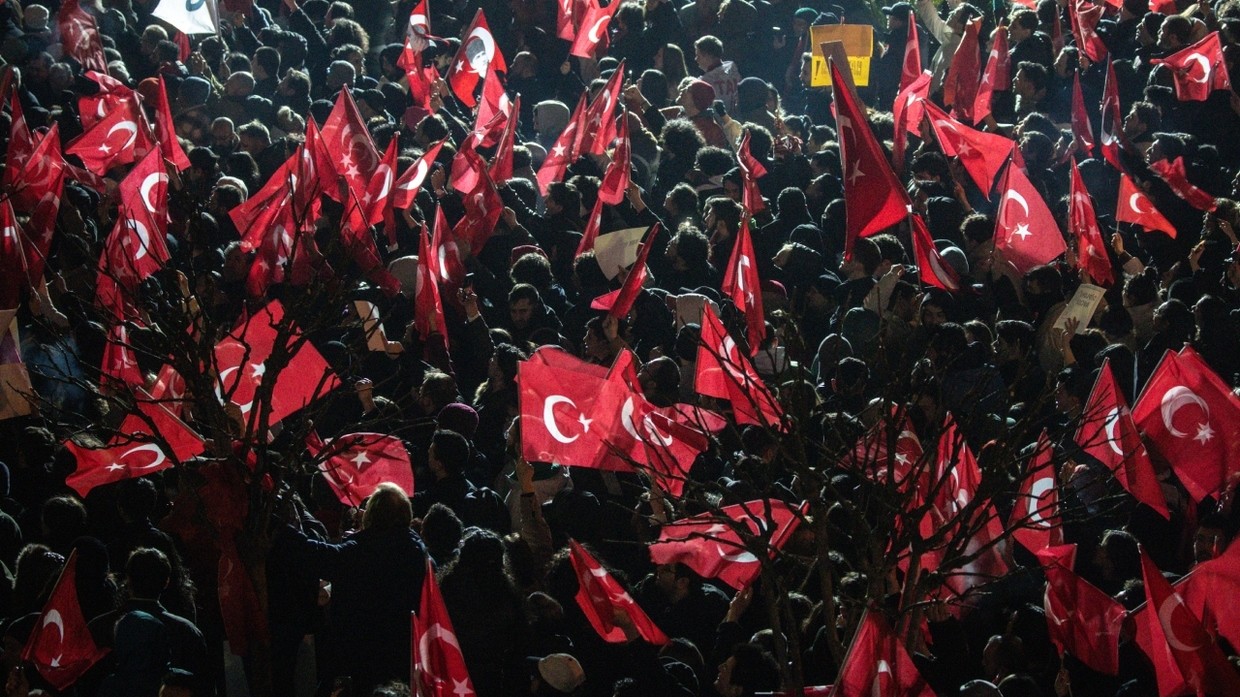
The deposed leader of Turkey’s main opposition party has said he is creating a new political party to challenge President Recep Tayyip Erdoğan in a bold move that could reshape Turkish politics. Özgür Özel’s gambit could unite Turkey’s fractured opposition, mobilise disgruntled voters and threaten Erdoğan at the next presidential election scheduled for 2028. But he also faces the risk of prosecution as part of a continuing legal crackdown by Turkish authorities against government critics and dissent. Recent polls suggest that Özel’s still unnamed “new party” would handily beat Erdoğan’s governing Justice and Development Party (AKP) if a vote were held today. “We are charting a new path,” Özel said to lawmakers of the main opposition Republican People’s Party, or CHP, in Ankara on Tuesday. “We will leave no one behind . . . on this march to power,” he added to rapturous applause. “We carry within us the unwavering hope of a new beginning.”

Photo: Özgür Özel, Cumhuriyet Halk Partisi, Creative Commons Attribution 3.0


Turkey has been likened to “the new Iran” for justifiable reasons. Erdogan has dreams of a revived Ottoman Empire, with himself as caliph. As a man who has declared “Our God commands us to be violent towards the kuffar” (infidels), he is dangerous beyond the region.

Erdogan will predictably continue efforts to suppress any threats to his leadership from Özel.

Last year, Jihad Watch reported about another key opponent besides Özgür Özel, who also threatens Erdogan: Istanbul Mayor Ekrem Imamoglu, whom Erdogan likewise targeted. Imamoglu had considerable support in his bid to challenge Erdogan for the presidency, but then he was arbitrarily detained on “corruption” suspicions — which are often conjured up against anyone who threatens Erdogan’s authority or leadership. Imamoglu was arrested, interrogated, jailed, and stripped of his title as mayor. The furious protests that subsequently erupted in Turkey were a threat to Erdogan. What happened next was even more potentially disastrous for the Turkish president. Despite Imamoglu’s incarceration, the opposition CHP party officially nominated him anyway as its presidential candidate for the 2028 elections. The numbers in support of him were overwhelming. “Some 15 million people voted” in the primary. Erdogan had hoped that Imamoglu would languish in jail and be silenced, but he is doing neither. The Guardian subsequently published a letter Imamoglu wrote from jail HERE. In February, Imamoglu dared Erdogan to call early elections.

History repeats itself in a modern-day Turkey, where Erdogan, the self-appointed embodiment of the Ottoman caliphate, stands against the past leader of Mustafa Kemal Atatürk’s CHP party, Özgür Özel, whose new breakaway party is expected to draw many from the CHP. Ideally, Özel and Imamoglu would find a way to join forces to unite the opposition and fight against Erdogan’s crackdown and tyranny.

The  Financial Post further states that with Özel’s popularity and high profile, “he helped lead the CHP to a resounding victory against the AKP in the 2024 municipal elections.” And that his successes are “likely to place him at the centre of the opposition’s efforts to unseat Erdoğan, who has governed Turkey for more than 23 years.”

Between the tenacious Özel and Ekrem Imamoglu, Erdogan finds himself facing a dual threat at the ballot box to his tight grip on power. Erdogan will no doubt continue to tyrannize both Özel and Imamoglu and wage a ferocious battle against both ahead of Turkey’s next election in May 2028, as he views these opponents as existential threats.

In the meantime, both opposition leaders can exert diplomatic pressure on Erdogan by appealing to international human rights watchdogs, as well as to NATO, of which Turkey is still a member. They can also appeal under the European Convention on Human Rights. These measures would stir media interest, and embarrass and potentially isolate Erdogan, giving Turkish democracy a fighting chance in 2028.


Friday, March 21, 2025

Middle East Madness > Turkey fighting to save democracy, Erdogan fighting for Caliphate dream - 3 stories, 4 videos


Erdogan appears to be fighting for his political life here, but more so, for his ambitious dream of rebuilding the Ottoman Empire. 


Riots break out at Ankara university campus after Erdogan rival detained


Riots broke out at the campus of Ankara's Middle East Technical University as students protested against the detention of Istanbul mayor Ekrem Imamoglu.

Thousands have been protesting in major Turkish cities for a second night in a row as Imamoglu, President Erdogan's main political rival, called for judges to take a stand against the Turkish government's misuse of the courts. 

FRANCE 24's Jasper Mortimer reports from Ankara.


Thousands protest arrest of Istanbul mayor 

Ekrem Imamoglu had been detained on charges of corruption and alleged terror links
Thousands protest arrest of Istanbul mayor (VIDEOS)


Thousands of people took to the streets of Istanbul on Wednesday to decry the arrest of the city's mayor, Ekrem Imamoglu, who is viewed as the main political rival to Turkish President Recep Tayyip Erdogan in elections scheduled for 2028.

Imamoglu, one of the key figures in the opposition Republican People’s Party (CHP), was among a hundred people detained earlier in the day on charges of corruption and alleged links to the Kurdistan Workers’ Party (PKK), which is considered a terrorist organization by Ankara. The mayor was taken into custody just days before his official nomination as CHP’s presidential candidate.

Following Imamoglu’s arrest, the Turkish authorities imposed a four-day ban on demonstrations, closed down several roads in Istanbul and put restrictions on social media platforms.

However, it did not prevent protesters from taking to the streets, as huge crowds gathered outside Istanbul's police headquarters, City Hall, the main office of the Republican People's Party, and other locations.

The demonstrators carried Turkish national flags and portraits of Ekrem, chanting anti-government slogans and demanding the mayor’s release.

“We came here to support the mayor. They arrested him unjustly,” one of the people in the crowd told Reuters. Another demonstrator complained to AFP that “we are living in a dictatorship.”

There have been reports of minor clashes between the protesters and riot police, with Reuters publishing a video showing the officers using pepper spray to disperse a crowd outside Istanbul University.

Imamoglu wrote in a post on X before his arrest that “the will of the people cannot be silenced through intimidation or unlawful acts,” vowing to continue to “fight for fundamental rights and freedoms.”

During a press conference, CHP’s leader Ozgur Ozel called the mayor’s detention “a coup” and accused Erdogan of being afraid to lose to Imamoglu in the election.

Turkish Justice Minister Yilmaz Tunc said later that Ozel’s comments were “extremely dangerous and incorrect.”

The country’s justice system is “impartial and independent” and because of this “linking investigations and cases initiated by the judiciary to our president is, at best, presumptuous and inappropriate,” the minister insisted.


=============================================================================================================================


Turkey arrests 37 for 'provocative' social media posts over Istanbul mayor's arrest

Turkey arrested 37 people arrested for social media posts deemed "provocative" after the arrest of opposition leader Mayor Ekrem Imamoglu, President Recep Tayyip Erdogan's main political rival who was about to become a presidential candidate before his arrest. File Photo by Chris Kleponis/UPI
Turkey arrested 37 people arrested for social media posts deemed "provocative" after the arrest of opposition leader Mayor Ekrem Imamoglu, President Recep Tayyip Erdogan's main political rival who was about to become a presidential candidate before his arrest. File Photo by Chris Kleponis/UPI | License Photo

March 20 (UPI) -- Turkey on Thursday arrested 37 people for social media posts deemed "provocative" following the Wednesday arrest of political opposition leader and Istanbul Mayor Ekrem Imamoglu.

Turkey's Interior Ministry said in a statement that the so-called "provocative posts" were allegedly made "within the scope of the crime of "Incitement to Commit a Crime."

"A total of 261 suspicious account managers, 62 of whom were abroad, were identified as having made these posts," the ministry said.

"Following the coordinated work of our Cyber Crime Presidency and Security Department, 37 suspects were caught and efforts to catch the other suspects are ongoing."

The ministry said a total of 18,647,269 posts were made on X. Of those the government determined that 66% were from named accounts and 34% were bot accounts.

The ministry did not provide any examples of the allegedly criminal posts.

"We as a nation must stand against this evil. This is my call to my nation...The day has come to speak out," a post on Imamoglu's X account Thursday said.

The post called upon the Turkish judiciary to stand up against the use of the legal system to carry out a crackdown on political opposition.

"You must stand up and take precautions against this handful of colleagues who are ruining the Turkish judiciary, disgracing us to the whole world and destroying our reputation," the post said. "I trust the Great Turkish Judiciary. You cannot and must not remain silent."

People opposed to Mayor Imamoglu's Wednesday arrest as well as the arrests of 106 other people in the crackdown on political opposition say his arrest is a "coup."

Opposition demonstrations are planned even though the government has banned protests for four days as part of the political crackdown.

Imamoglu's opposition political party still controls Istanbul's government even though he is in custody.

In Istanbul, loudspeakers at metro stations played some of Imamoglu's speeches. One excerpt heard over the speakers said, "I promise you with my honor that I am going to win this fight."

University students have protested, but so far not in large numbers compared to Istanbul's 16 million population.

Among the student protesters' chants are a common one heard in Turkey, "We are not scared, we won't be silenced, we will not obey."

According to critics of Erdogan's government, the controversial arrests in this political crackdown are the most clear-cut democracy violations the government has ever carried out.

The controversy has also impacted Turkey's already-troubled economy with markets dropping Wednesday on news of Imamoglu's arrest.

Istanbul economist and consultant Arda Tunca told CNBC, "Turkey has already been in decline, but this is a political free fall. Today is history and a new dimension in Turkey's breakaway from democracy."


Tuesday, July 28, 2020

Turkish Magazine Calls for Revival of CALIPHATE Amid Hagia Sophia Conversion, Gets Slammed for Peddling 'Unhealthy Debate'

For several years now I have been accusing President Erdogan of having the ambition to rebuild the Ottoman Empire with himself as Caliph. Recommissioning the Hagia Sophia as a Muslim mosque seems to be part of that plan. This magazine article could also be a testing of the waters to see what kind of reaction there was. Don't be too confident in the immediate response, Erdogan will be watching the secondary responses to see where support for the Caliphate is coming from.


The controversial Gerçek Hayat cover. Twitter/@aDilipak

A Turkish pro-Islam magazine is in hot water after bringing the cause of a caliphate back to life with the cover story of its latest issue. The Ankara bar association has accused it of calling for an insurrection.

The Turkish legal body filed a criminal complaint against Gercek Hayat magazine, asking prosecutors to investigate it. It alleged that the magazine's editor-in-chief, Kemal Ozer, and columnist Abdurrahman Dilipak, have instigated hatred and called for an armed rebellion against the Turkish state. 

At the center of the accusation is the latest issue of the magazine, published on Monday, which features a cover stating: "Get together for caliphate. If not now, when? If not you, who?" An interview with Dilipak, a veteran Turkish conservative journalist, is one of the lead stories in the edition.

"Get together for caliphate. If not now, when? If not you, who?"

A caliphate is a state dedicated to the cause of Islam, seeking to be a unifying and defending force for all Muslims. The word had received plenty of negative attention in recent times since the terrorist group Islamic State claimed the title for itself.

Historically, four major caliphates existed, the latest being the Ottoman Empire. Modern Turkey was founded by Kemal Ataturk on the ruins of this fourth caliphate as a modern secular republic that had cast away the outdated institutions of its predecessor.

Arguing for revival of a caliphate is a political hot-button topic in Turkey, so the Gercek Hayat publication was met with skepticism even from the conservative side. Spokesman for the ruling AK Party, Omer Celik, said the magazine was seeking "unhealthy polarization" by questioning Turkey's founding principles.

Some outrage came even before the issue was published, and was based on a preview of the magazine's cover tweeted by Dilipak. Prominent Turkish journalist Ismail Saymaz said on Sunday that Turkey was not a country "to be ruled by a handful of radicals," and that the people behind the Gercek Hayat issue "are not even aware of what kind of fire they were playing with."

Ozer, the magazine's editor-in-chief, said critics of the story were misinterpreting it. "Our journal demands that the countries of Islam come together, just as Europe has come together and established a union, just as others have made similar ones. Our call has nothing to do with any country," he said. The release of the issue didn't seem to appease critics, however.

The Caliphate cover story and the furor that followed comes on the back of Turkey's decision to convert the Hagia Sophia, one of its national treasures, back into a functioning mosque. Originally constructed as a Christian church, it was converted into an Islam house of worship after Constantinople fell to the Ottomans. Ataturk transformed the building into a museum in 1935.


Saturday, July 11, 2020

Erdogan's Ottoman Empire Ambitions Suffering from His Own Eroding Base

Ajit Sahi

It is easy to understand Erdogan's desperate attempt to stoke religious sentiments by converting the Hagia Sophia museum into a mosque. With this decision, he is merely trying to deflect attention from Turkey's worsening economic situation over the last several years which is now bringing him electoral defeat after electoral defeat.

In fact, Erdogan is today politically at his weakest since first winning power in 2003. His party, the AKP, has been steadily losing support among the voters. Last year, his party was twice defeated in the mayoral election in Istanbul, Turkey's biggest and most populous city. When the first election saw the AKP candidate lose by a slim margin, Erdogan simply refused to accept that decision and forced his hand-picked election authorities to call a second election. The reelection, held three months after the first, saw the AKP lose by a decisive and massive margin. Erdogan's party also lost elections in many other cities.


There is no doubt that Erdogan has more support in Muslims outside of Turkey, who likely see in him the closest figure who can return a pan-Muslim (and pan-Islamic) rule like the Ottoman Caliphate once used to be, than in his own country. Like Narendra Modi, Erdogan, too, has tried to control independent pillars of democracy, from the judiciary to the central bank. Erdogan made his son-in-law the country's finance minister in 2018, and the economy has gone worse since then.

Last month, Turkey had an inflation rate of 12%, which is most certainly an under-assessment. Turkey's currency, the Lira, has fallen 13% against the US dollar this year. Last year, the Lira had fallen by 20% against the USD, and 20% the year before, in 2018. Whereas Erdogan led a massive economic expansion program from 2003, the picture is now far less rosy. In 2008, Turkey's share of the world's economy was 1.2%. Today, it is 0.89%.


Unemployment has been persistently high in Turkey. The government claimed this week that unemployment rate has fallen to 12.8% in May, which, though in itself high, is still underreporting. Unnerved by the coronavirus, Erdogan forbid businesses from sacking employees while allowing unpaid leave. So millions sitting at home without any income are counted as "employed".

In fact, the number of employed persons dropped by about 2.6 million people during March-May this year compared with the same period last year. The overall employment rate declined by nearly 5% to 41%. Worryingly, the youth unemployment rate, including people ages 15 to 24, rose 1.2% hitting 24.4% in April, the Turkish Statistical Institute said yesterday.

At the macroeconomic level, Turkey is steeped deep in debt. The government and the private corporations together owe nearly half a trillion dollars in debt. Turkey's overall GDP is only slightly higher at USD770 billion. With a falling economy, it is becoming harder for both the government and the private sector to service debt.

Across industry, margins of profit have sharply dropped. Investment has been continuously drying up. Businesspeople are postponing expansions. Even farming has hugely suffered under Erdogan.

That is why, like Modi, Erdogan has been muzzling free press, putting journalists and activists in prison, purging universities of independent-minded academicians, accusing every opponent of being a "Western plant".

Many non-Turkish Muslims think Erdogan is the chosen global leader for all Muslims. For now, however, Erdogan is just trying to save himself in Turkey, and all he can think of is turning a church-turned-mosque-turned-museum into a mosque in order to revive his support.


Wednesday, February 12, 2020

Russian Communists Prepared to Abandon Atheism - Delicious Irony

Lenin would be rolling in his grave, if he had one: Russian Communists back plan to put 'God' in constitution

Gennady Zyuganov © Sputnik / Vitaly Belousov

By Jonny Tickle

It's not so long ago that they were known as the "Godless Communists." Which means it still comes as a surprise that the party has no objection to the idea of including a reference to the man upstairs in Russia's constitution.

A century on from the Bolshevik revolution, things have come a long way. Russian and other Soviet Communist officials once reveled in their promotion of state atheism, so present leader Gennady Zyuganov's reasoning has also raised a few eyebrows.

Far from being the ‘Opium of the People,’ Zyuganov said that Communism is actually derived from Christianity. Leaving no doubt that party founder Vladimir Lenin would be to rolling in his grave – if he had one.

“When I studied the Bible, in the gospel of the Apostle Paul ... there was the main slogan of Communism. He who does not work does not eat.” he explained. “Actually, in many ways, the moral code of a builder of Communism is built on the Bible.”

While Orthodox Patriarch Kirill and the rest of his church surely welcome the sentiment, they may also dwell on the fact that the Soviet-era Communist party brutally suppressed Christians and murdered thousands of clergy.

Although Zyuganov’s beliefs are very far from Marxism and traditional communist doctrine, his colleagues in the State Duma weren't hugely surprised by his views. This isn’t the party leader’s first flirtation with religion – he once called Jesus Christ the first communist on earth.

Before the establishment of the Soviet Union, Russia was a profoundly religious country. The integration of the Orthodox Church into the government meant that Lenin considered them an organ of the bourgeoisie. Thus, the revolutionary leaders adopted an official atheist policy and, after decades of propaganda, religion in the Soviet Union was absent from mainstream thought.

The break-up of the USSR led to faith being thrust back into the limelight within Russia, and many former staunchly Communist Russians began to turn to Christianity. With over 80 percent of the modern Russian population believing in a God, it's not a shock to see products of the Soviet system simultaneously promoting God and Communism.

There is no confirmation yet if God will be included in the new Constitution. A working group is currently designing all the proposals, and a confirmatory national vote is due to be held on April 22, 2020 – Lenin’s 150th birthday.


Tuesday, December 24, 2019

U.S. Recalls Ambassador to Zambia After Dispute Over Gay Rights

By Don Jacobson

Zambian President Edgar Lungu told U.S. officials he would no longer work with the American diplomat.
File Photo bu Harish Tyagi/EPA-EFE

(UPI) -- The United States has recalled its ambassador to Zambia after he waded into a dispute over gay and lesbian rights with the president of the southern African nation.

The U.S. State Department confirmed Monday it has recalled diplomat Daniel Foote after it was told Zambian President Edgar Lungu would no longer work with him.

Saying they were "dismayed" by Lungu's stance, U.S. officials conceded Foote's position in Zambia was "no longer tenable" after the American envoy last month criticized 15-year prison sentences handed down to two gay men convicted of having sex. Sexual relations among gay Zambians, even consensual, is outlawed.

The department said there are no immediate plans to send another diplomat to Zambia, Bloomberg reported.

"Despite this action, the United States remains committed to our partnership with the Zambian people," a State Department spokesperson said, emphasizing that the United States "firmly opposes abuses against" lesbian, gay, bisexual, transgender and intersex persons.

Zambian Foreign Minister Joseph Malanji first registered displeasure with Foote last month after the U.S. ambassador said he was "horrified" at the long prison terms imposed on the gay men.

Malanji said the government strongly disagreed with Foote's view, and concluded that his questioning Zambian courts "is tantamount to questioning the Zambian Constitution."


Thursday, July 25, 2019

Historian Unearths Evidence that Istanbul Directed Armenian Genocide

New documents suggest the Armenian genocide was both sanctioned and assisted by leaders of the Ottoman Empire in Istanbul
By Brooks Hays

Armenian civilians, escorted by armed Ottoman soldiers, are marched to a nearby prison.
Photo by Wikimedia Commons

(UPI) -- Between 1914 and 1923, during and after World War I, hundreds of thousands of Armenians living in Turkey were systematically rounded up and murdered. Thousands more were forced to flee their homes. Some estimates put the death toll at more than 1.5 million.

Now, researchers say newly discovered documents suggest the Armenian genocide was both sanctioned and assisted by leaders of the Ottoman Empire in Istanbul.

The fact that the Armenian genocide happened is well-accepted within academic circles. However, the Turkish government has continued to deny the culpability of their predecessors.

"The Armenian diaspora is trying to instill hatred against Turkey through a worldwide campaign on genocide claims ahead of the centennial anniversary of 1915," Turkey's president, Recep Erdogan, said in 2015. "If we examine what our nation had to go through over the past 100 to 150 years, we would find far more suffering than what the Armenians went through."

Erdogan's sentiments aren't without the support of the vast majority of the Turkish population. As the New York Times reported in 2015, a poll conducted by the Center for Economics and Foreign Policy Studies, an Istanbul research organization, fewer than one in ten Turks believe the government should label the atrocities genocide and apologize.

"Turkish government officials continue to use the same argument, the argument that the Ottoman government never had the intent," Taner Akçam, an Armenian genocide expert and history professor at Clark University in Massachusetts, told UPI. "They accept that there were casualties and some massacres, but they claim the Ottoman government was not able to control the remote areas and that some Kurdish tribes or bandits or some other group, they committed these kinds of crimes."

What was missing, Akçam said, was a "smoking gun" linking the atrocities to the Ottoman government. That's exactly what Akçam found.

"This new evidence is a major blow against Turkish denialist arguments," Akçam said.

His discovery suggests the genocide was indeed carried out on periphery, not by rogue agents and bandits, but by provincial governors. These governors were in communication with and assisted by leaders in Istanbul.

"This shows the radicalization process started in the provinces," Akçam told UPI.

The evidence, a series of telegrams transcribed, decoded and signed by Turkish officials, was discovered among a slate of new documents released into the Ottoman archive, a collection of historical documents in Istanbul, organized by the government and made available to researchers.

The newly discovered letters feature the first unambiguous use of the terms "extermination" and "annihilation" by Ottoman officials, both among the provinces and in Istanbul. Analysis of the signatures confirmed several of the transcribed telegrams were authored by Bahaettin Şakir, head of the para-military Special Organization and one of the architects of the Armenian Genocide.

Though the plan to exterminate all of the Armenians living in Turkey began as a provincial idea, the new evidence suggests Istanbul was eventually convinced to back the genocidal approach.

In addition to the documents retrieved from the Ottoman archive in Istanbul, Akçam also discovered similar letters -- transcribed telegrams -- that were used as evidence in tribunals organized by the postwar Ottoman government.

"There were 63 different trials and more than 200 defendants," Akçam said. "The materials from these court procedures went missing. Government officials never made these court proceedings available to researchers."

Researchers only knew about these tribunals from reports written by daily newspapers in Istanbul. A few of the verdicts were also published by the Ottoman government. But some of the documents from these tribunals ended up in the private archive of a Catholic priest in Armenia.

Among the tribunal documents, Akçam found transcribed telegrams using the same coding system -- a series of Arabic letters and numerals to represent words and suffixes -- found among the letters unearthed from the Ottoman archive.

"I went to the Ottoman archive, I discovered that this four digit coding system was the same for both sets of telegrams," he said. "The authenticity cannot be disputed, this was the major discovery."

The transcribed telegrams provided further evidence of communication between those carrying out the genocide in the provinces and military and political officials in Istanbul, including messages that Akçam characterized as "killing orders."

As to why these revealing documents were publicly released by a government intent on denying its predecessors culpability, Akçam guesses officials simply didn't read them thoroughly. The documents in the archives were summarized by officials before being released, and the summaries of the newly discovered telegraphs mention nothing of the details relating the Armenian genocide.

Akçam said his discoveries, summarized in the Journal of Genocide Research, will further solidify the truth of the Armenian genocide. It's a truth he hopes will soon be accepted by the Turkish government.

According to Akçam, the genocide has implications for the political situation in modern Turkey.

"Turks and the Turkish government has the same problems today with Kurds as the Ottomans had with Armenians in the past," he said. "Armenians were making demands for legal and social equality. The Kurds are making similar demands today."

As a result, Akçam said, the Kurds have been labeled as a security threat and the Turkish government has attempted to suppress these democratic demands.

"Without acknowledging historical wrongdoings, Turkey cannot establish a democratic future," Akçam said.

According to the historian, reconciling with the record of the Armenian genocide is essential for improved relations between Turkey and its neighbors.

"Speaking regionally, if you continue this policy of denialism, this means you have the potential to repeat the same policy against your neighbors," Akçam said. "This is why many of Turkey's neighbors consider the Turkish government a security threat. Without reconciling history, peace will not be achievable in the region."