"I am the Way, the Truth, and the Life"

Father God, thank you for the love of the truth you have given me. Please bless me with the wisdom, knowledge and discernment needed to always present the truth in an attitude of grace and love. Use this blog and Northwoods Ministries for your glory. Help us all to read and to study Your Word without preconceived notions, but rather, let scripture interpret scripture in the presence of the Holy Spirit. All praise to our Lord and Saviour Jesus Christ.

Please note: All my writings and comments appear in bold italics in this colour
Showing posts with label history. Show all posts

Saturday, August 22, 2026

This Day in History > Islam changes the World - Raymond Ibrahim - But Islam itself doesn't change


The Islamic philosophy revealed for the first time by Khalid bin al-Walid (The Sword of Allah) has changed little, if at all, in the 1390 years since. A little more subtle perhaps, but basically the same.


Today in History: Islam Changes the World

On August 20, 636, a little-known battle allowed Islam to conquer most of the Christian world—and change history forever.
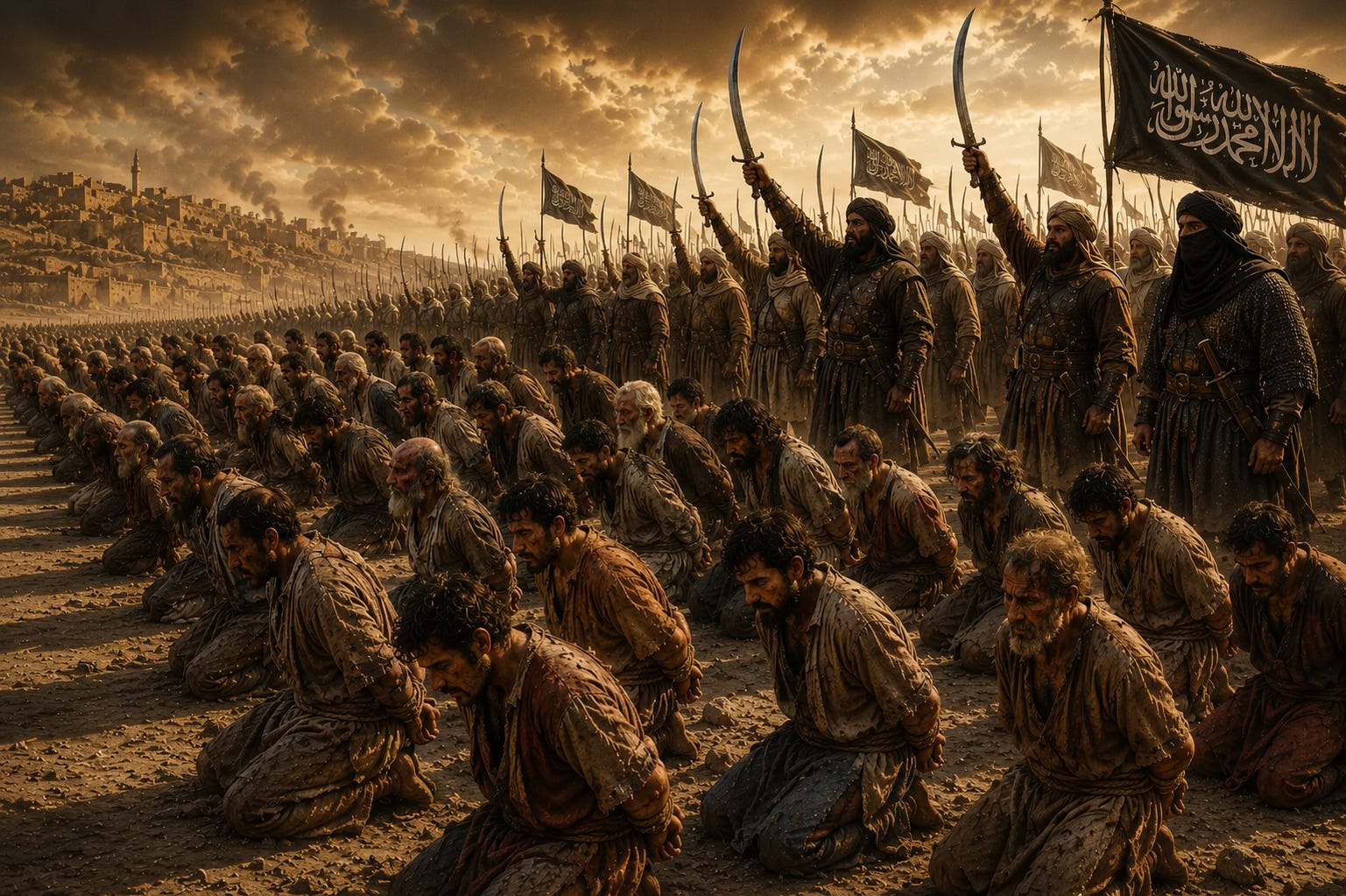
Today in history, on August 20, 636, arguably the single most consequential battle in world history took place alongside the Yarmuk river in Syria.

Occurring just four years after Muslim prophet Muhammad had died, not only did the military engagement decide whether the Arabian creed thrives or dies; it became a chief source of inspiration and instruction for jihadists throughout the centuries—right down to the present.

And yet, very few in the West are even aware of the Battle of Yarmuk’s existence—much less how it motivates contemporary Islamic terrorists.

We fill this lacuna below:

The contestants were the Eastern Roman (“Byzantine”) Empire, under Emperor Heraclius, and the newly born Arabian caliphate, under the second caliph, Omar. After a couple years of Muslim depredations in then Christian/Roman Syria, the two forces met along the Yarmuk River. The pre-battle exchange between the two generals, the Roman-Armenian Vahan and Khalid bin al-Walid—Islam’s much revered “Sword of Allah”—is instructive:

The Christian commander began by diplomatically blaming Arabia’s harsh conditions and impoverished economy for giving the Arabs no choice but to raid Roman lands. Accordingly, the empire was pleased to provide them with food and coin on condition that they return home.

“It was not hunger that brought us here,” Khalid cooly responded, “but we Arabs are in the habit of drinking blood, and we are told the blood of the Romans is the sweetest of its kind, so we came to shed your blood and drink it.
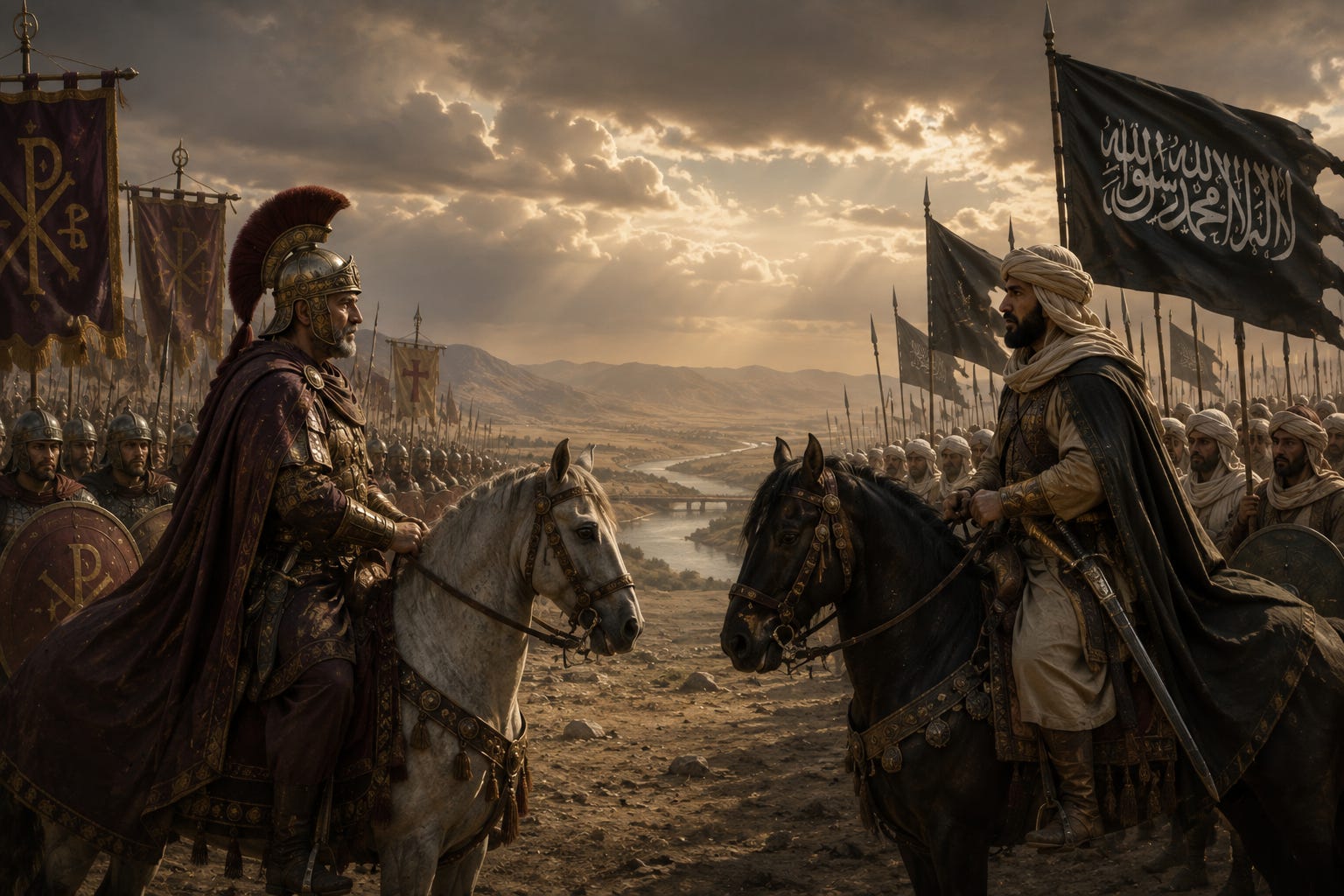
Vahan’s diplomatic mask instantly dropped, and he launched into a tirade against the insolent Arab: “So, we thought you came seeking what your brethren always sought” — plunder, extortion, or mercenary work. “But, alas, we were wrong. You came killing men, enslaving women, plundering wealth, destroying buildings, and seeking to drive us from our own lands.” Better people had tried to do the same but always ended up defeated, added Vahan in reference to the recent Persian Wars, before continuing:

As for you, there is no lower and more despicable people — wretched, impoverished Bedouins. . . . You commit injustices in your own nation and now ours. . . . What havoc you have created! You ride horses not your own and wear clothes not your own. You pleasure yourselves with the young white girls of Rome and enslave them. You eat food not your own, and fill your hands with gold, silver, and valuable goods. Now we find you with all our possessions and the plunder you took from our coreligionists — and we leave it all to you, neither asking for its return nor rebuking you. All we ask is that you leave our lands. But if you refuse, we will annihilate you!

The Sword of Allah was not impressed. He began reciting the Koran and talking about one “Prophet Muhammad.” Vahan listened in quiet exasperation. Khalid proceeded to call on the Christian general to proclaim the shahada—that “there is no god but Allah and Muhammad is his messenger”—and thereby embrace Islam, in exchange for peace, adding, “You must also pray, pay zakat, perform hajj at the sacred house [in Mecca], wage jihad against those who refuse Allah, … and befriend those who befriend Allah and oppose those who oppose Allah,” a reference to the divisive doctrine of al-wala’ wa al-bara’. “If you refuse, there can only be war between us. . . . And you will face men who love death as you love life.”

“Do what you like,” responded Vahan. “We will never forsake our [Christian] religion or pay you jizya.” Negotiations were over.

Things came to a head—quite literally—when 8,000 marching Muslims appeared before the Roman camp carrying the severed heads of 4,000 Christians atop their spears. These were the remains of 5,000 reinforcements who had come from Amman to join the Roman army at Yarmuk. The Muslims had ambushed and slaughtered them.

Then, as resounding cries of “Allahu akbar” filled the Muslim camp, those Muslims standing behind the remaining 1,000 Christian captives shoved them down and proceeded to carve off their heads before the eyes of their co-religionists, whom Arabic sources describe as looking on in “utter bewilderment.”

Continue reading on Substack at: https://substack.com/@raymondibrahim


Saturday, August 15, 2026

This Day in History > Islam decapitates 800 Christians in Italian city of Otranto - Raymond Ibrahim


Muslims Behead 800 Christians for Refusing to Renounce Christ

Today in history, the Martyrs of Otranto chose death over Islam—and their forgotten story has profound implications for the West today.

Note: Much of this article was excerpted and adapted from chapter 7 of my 2018 book, Sword and Scimitar.

A little-remembered event that occurred 546 years ago today—the ritual beheading of some 800 Christians who refused to convert to Islam—casts an unexpectedly revealing light on questions still confronting the West today.

The story begins with one of history’s most celebrated conquerors.

When Ottoman Sultan Muhammad II seized Constantinople in 1453, he was only twenty-one years old. The conquest that earned him the title “the Conqueror” was not, however, the culmination of his ambitions. It was just the beginning.

For the next three decades, Muhammad drove Ottoman armies deeper into Christian territory, particularly the Balkans. And beyond the Balkans stood the greatest prize of all: Rome.

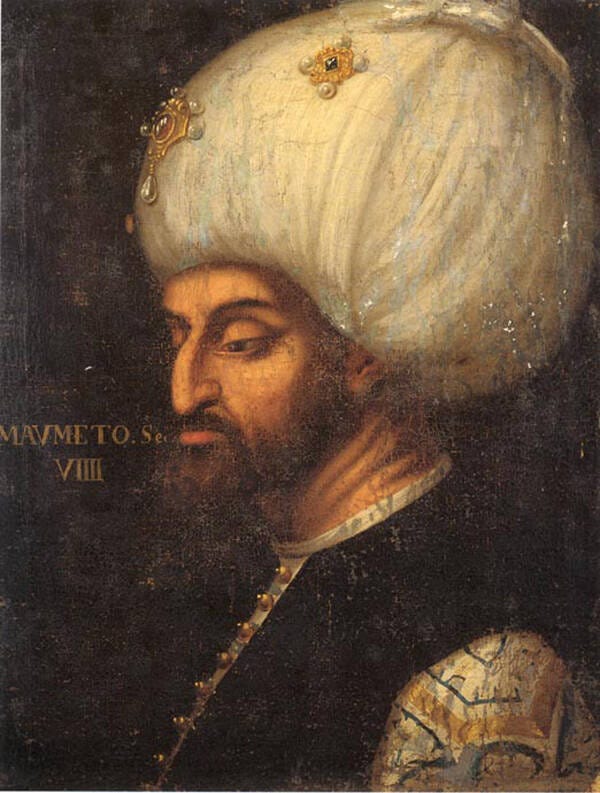
Sultan Mehmet 2 – Mehmet 2 Ottoman Empire – ZLOWIX
Muhammad II

According to a famous Islamic tradition, Constantinople and Rome were both destined for Muslim conquest. Muhammad had already taken the first. In 1480, his armies crossed the Adriatic and landed in southern Italy.

Their target was Otranto.

The city fell after a brutal two-week siege. Of Otranto’s roughly 22,000 inhabitants, thousands were slaughtered and thousands more—men, women, and children—were carried away in chains to be sold into slavery.

Churches were desecrated and the cathedral was converted into a mosque.

But the episode for which Otranto would become famous was yet to come.

Some 800 Christian men (the number 813 is sometimes given) who survived the initial slaughter were taken captive. They were offered a simple bargain: embrace Islam and live.

They all refused.

One of the captives, Antonio Primaldo, a tailor, rallied the others:

My brothers, we have fought to save our city; now it is time to battle for our souls!

He urged them to remain faithful to Christ even at the cost of their lives. The others agreed. The offer of life through conversion was rejected.

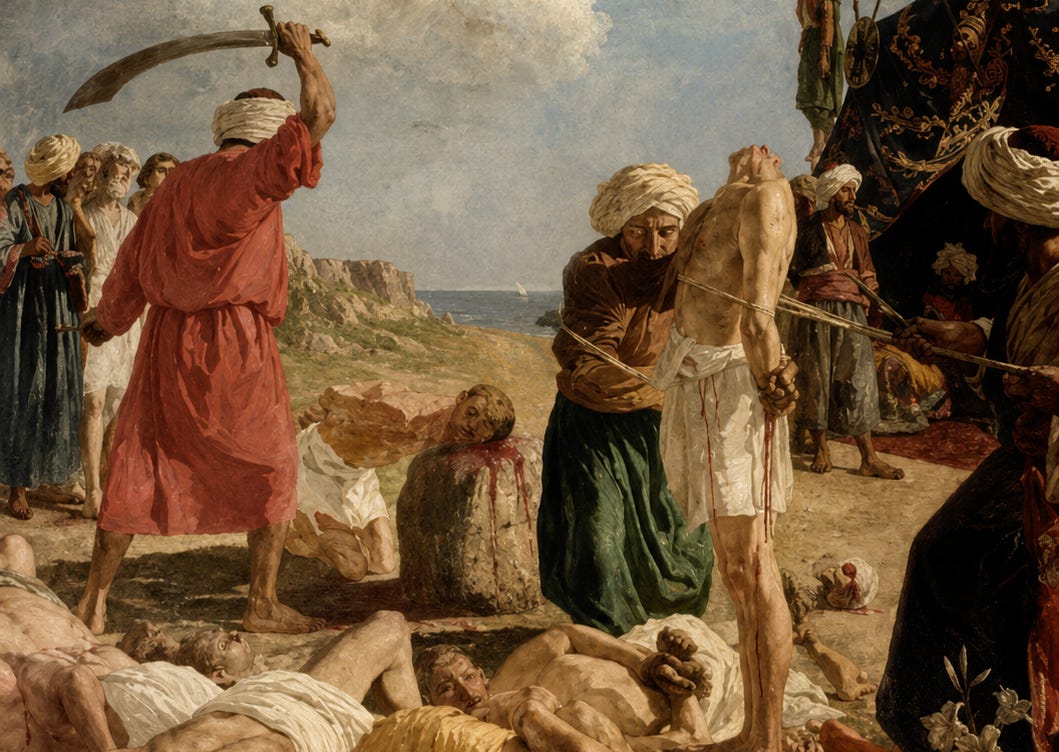
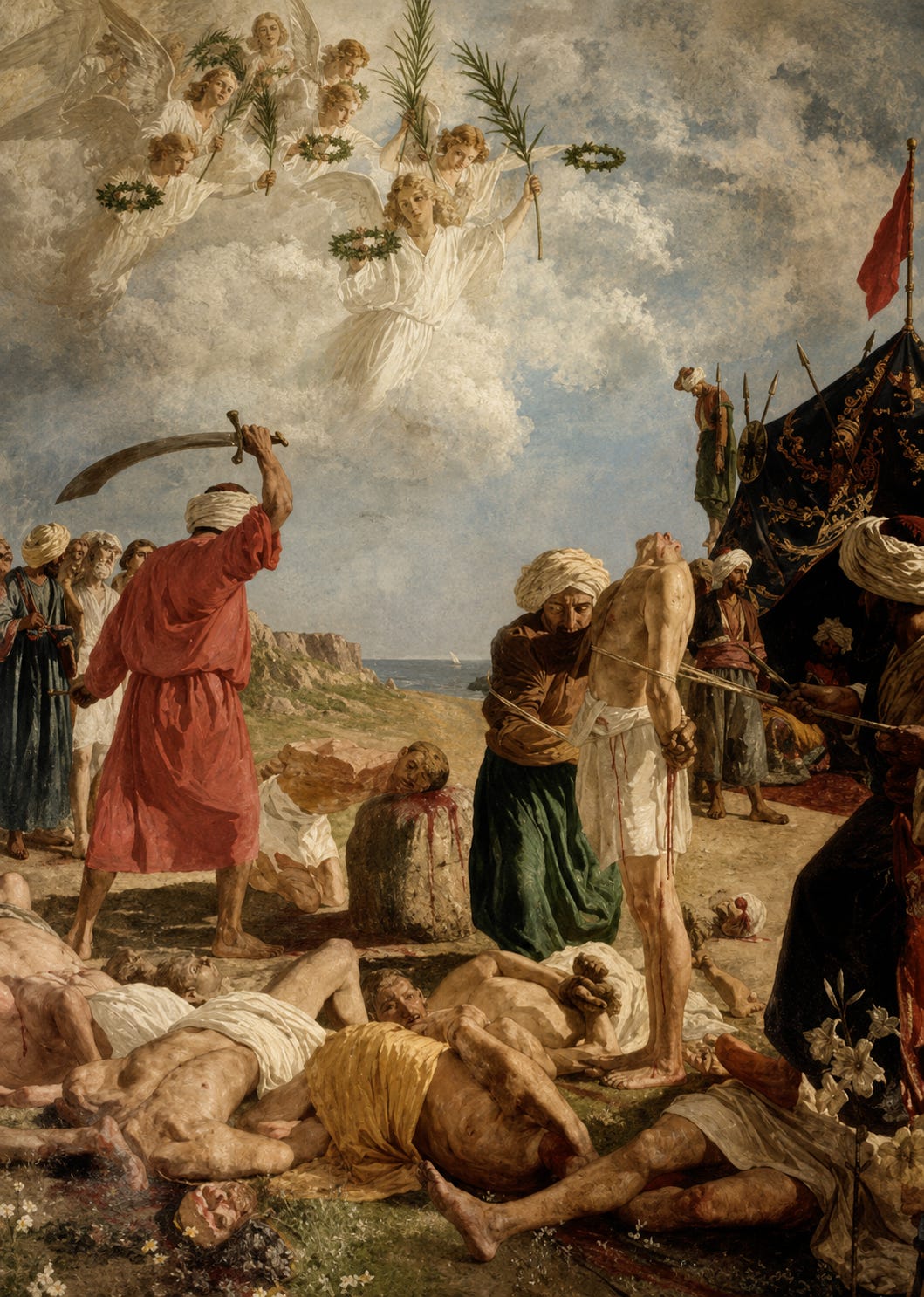
And so, on August 14, 1480, the captives were marched outside the city to the nearby Hill of Minerva. There they were systematically beheaded—one after another—for refusing to abandon Christianity. The site would thereafter be remembered as Martyrs’ Hill.

According to the traditional account, Primaldo was the first to be decapitated. His headless body then miraculously remained standing and could not be moved until the last of his companions had been killed. One Muslim executioner, supposedly so shaken by what he witnessed that he professed Christianity on the spot, was himself executed.

Painting in Naples Cathedral depicting the beheaded body of Antonio Primaldo still standing, symbolizing his firmness of faith.
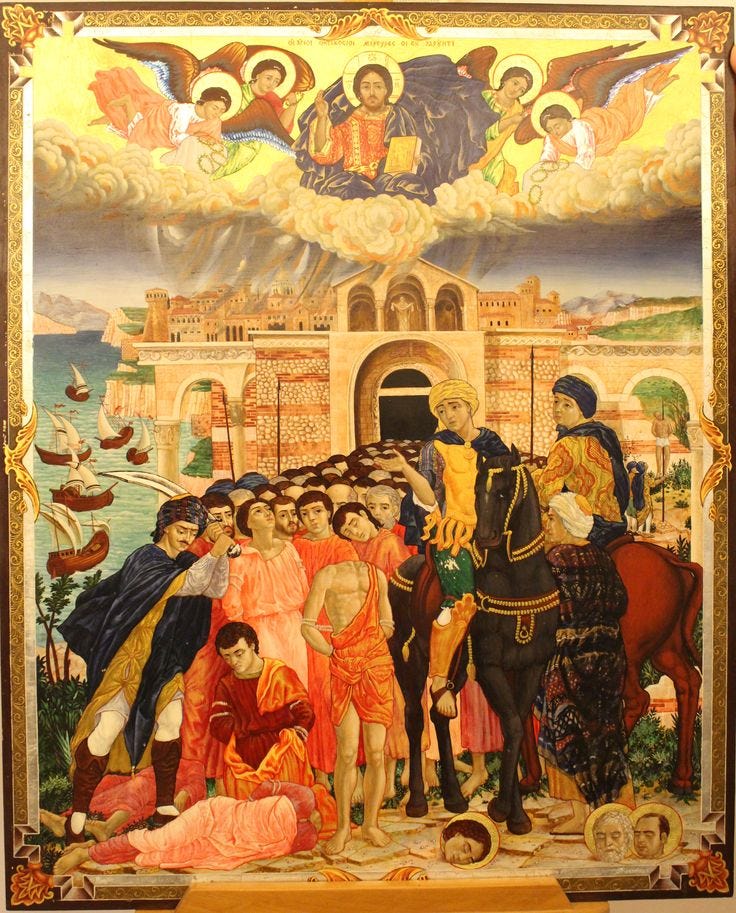
HagiograFaith - AUGUST 14: THE HOLY MARTYRS OF OTRANTO Saint Antonio ...
Another icon of the martyrs of Otranto—with Antonio Primaldo’s headless body still standing

Otranto’s elderly archbishop, Stefano Agricolo, had already met an even more gruesome fate. The Turks found him inside his cathedral, still dressed in his episcopal vestments. After refusing to renounce Christianity, he too was slaughtered, by being slowly sawn in half—to triumphant jeers of “Allahu akbar!”

Otranto was not intended to be the end of the Ottoman advance. The invasion established a bridgehead on Italian soil, and Muhammad II intended further campaigning in Italy. Rome itself feared what might follow. Only the sultan’s sudden death in May 1481 and the resulting struggle for the Ottoman throne helped bring the enterprise to an end. Christian forces retook Otranto later that year.

The memory of those who refused conversion, however, survived for more than five centuries.

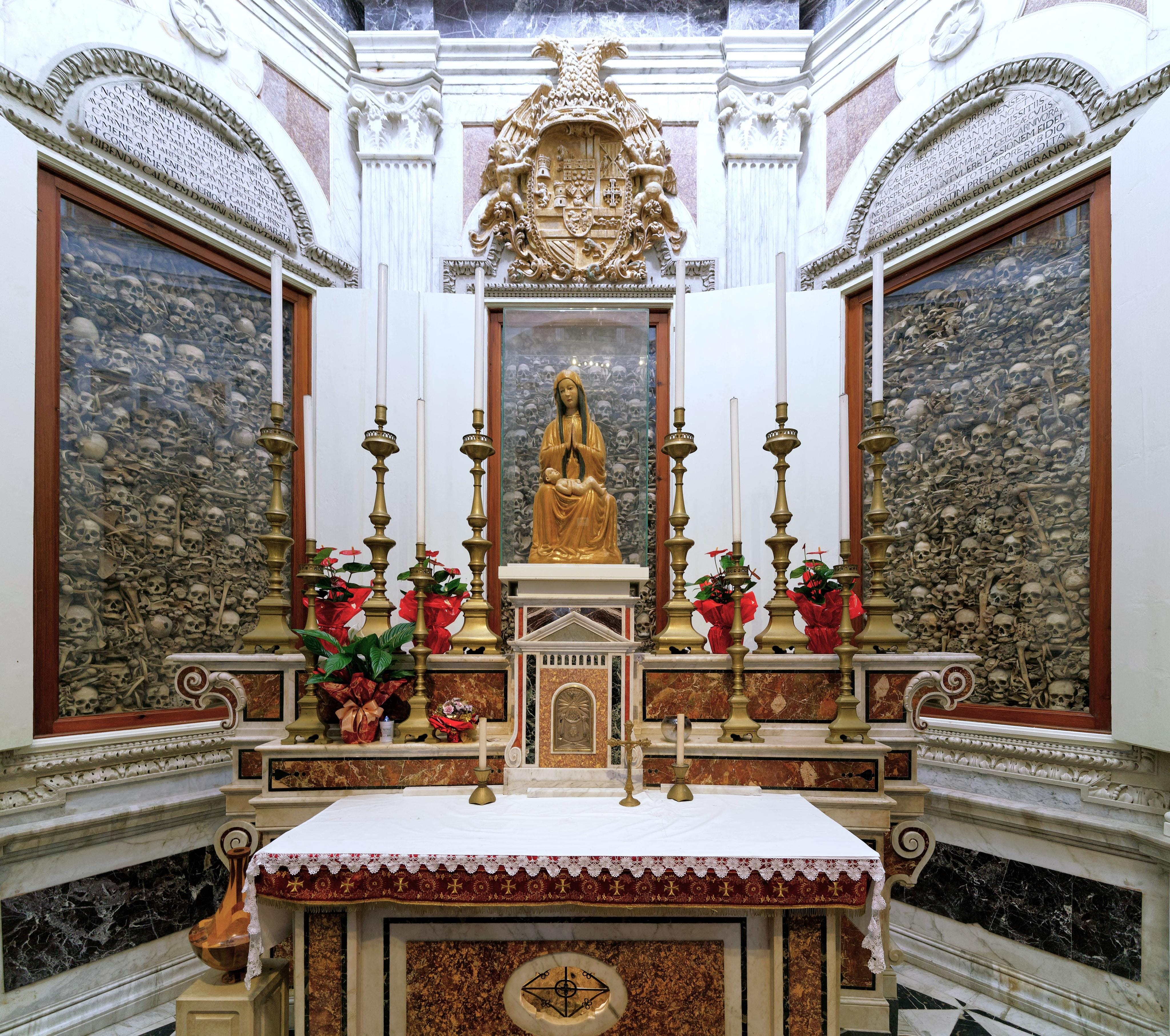
Their bones remain visible today, behind glass in the Cathedral of Otranto—a physical reminder of what happened there in August 1480.

In 2013, Pope Francis canonized Antonio Primaldo and his companions as the “Martyrs of Otranto.”

More than five centuries later, their deaths raise an uncomfortable question:

How much has really changed?

Consider first the strange ritual that follows almost every modern act of jihadist violence.

A Muslim terrorist invokes Islam. He quotes Islamic scripture. He shouts Allahu Akbar. He identifies his victims as infidels. He announces that he is acting in the name of jihad. He slaughters them—including through beheading.

https://t.co/WgcBtpSGZw