"I am the Way, the Truth, and the Life"

Father God, thank you for the love of the truth you have given me. Please bless me with the wisdom, knowledge and discernment needed to always present the truth in an attitude of grace and love. Use this blog and Northwoods Ministries for your glory. Help us all to read and to study Your Word without preconceived notions, but rather, let scripture interpret scripture in the presence of the Holy Spirit. All praise to our Lord and Saviour Jesus Christ.

Please note: All my writings and comments appear in bold italics in this colour
Showing posts with label Bayer. Show all posts

Saturday, November 21, 2026

US court OK's Bayer's 7.25 bn Roundup litigation deal


US court greenlights Bayer’s $7.25 bn Roundup cancer deal


The ruling could end years of US litigation against Bayer over claims that Roundup weedkiller causes cancer, a legal battle inherited from Monsanto

Published 21 Nov, 2026 16:33 | Updated 21 Nov, 2026 17:35

US court greenlights Bayer’s $7.25 bn Roundup cancer deal


A US judge has approved a $7.25 billion settlement by German chemical and pharmaceutical giant Bayer over claims that Roundup weedkiller causes cancer. The deal could bring an end to years of costly litigation involving tens of thousands of lawsuits.

Missouri Judge Timothy Boyer granted final approval to the deal on Friday. The nationwide settlement includes people who developed non-Hodgkin lymphoma, a type of blood cancer allegedly linked to Roundup exposure, as well as those who could be diagnosed in the future if they were exposed before February 17, 2026.

Under the deal, Bayer will pay up to $7.25 billion into a compensation fund over 21 years. Individual payouts are expected to average $10,000 to $165,000 depending on the patient’s age, severity of illness, and duration of exposure.

Judge Boyer described the deal as “among the largest in [the] history of mass tort personal-injury class action settlements.” He rejected objections from lawyers who deemed the compensation inadequate, saying further delays could leave seriously ill claimants waiting years for payments. Bayer CEO Bill Anderson welcomed the ruling as “a decisive milestone” in the company’s struggle to mitigate the risks of Roundup litigation.
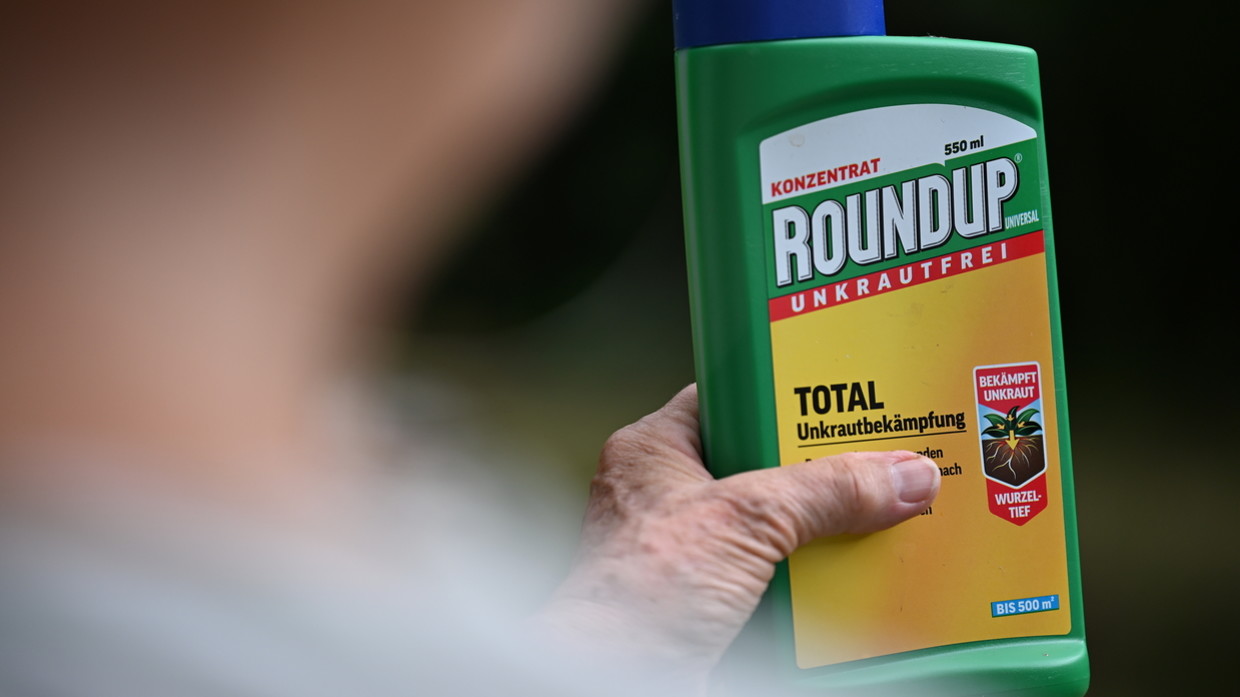
Bayer inherited the legal battle when it acquired US agricultural chemical giant Monsanto for $63 billion in 2018. The takeover gave it control of Roundup, one of the world’s most widely used herbicides, but also saddled it with mounting cancer litigation. Bayer currently faces around 65,000 claims in US courts.

Introduced by Monsanto in 1974, Roundup contains glyphosate, a chemical used to kill weeds without harming genetically modified crops designed to resist it. Monsanto was accused of failing to warn users about the alleged cancer risks. Bayer argued that the warnings would violate labeling requirements set by the US Environmental Protection Agency (EPA).
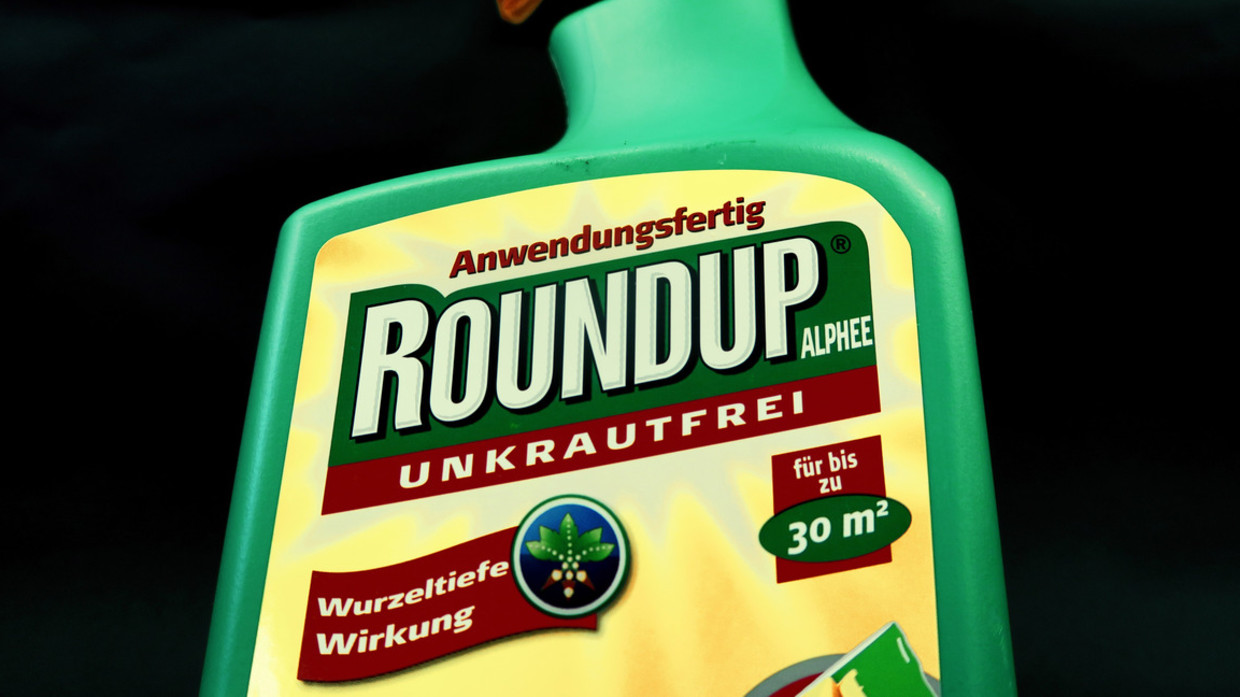
After years of litigation, Bayer reached a preliminary settlement in February. In June, the US Supreme Court restricted lawsuits under state laws requiring additional cancer warnings, paving the way for approval.

The legal battle has already cost Bayer dearly. The company agreed to a $10.9 billion settlement in 2020, has spent at least $14 billion on Roundup litigation, and set aside around $16 billion for related legal costs. Its shares have fallen around 46% since the Monsanto takeover. Despite the ruling on Friday, around 200 cases remain pending in federal courts outside the settlement. The approval could also face appeals, delaying payments and prolonging the dispute.

The controversy over Roundup’s cancer risks remains unresolved. The World Health Organization’s cancer research agency classified glyphosate as ‘probably carcinogenic’ in 2015. While the EPA maintains that glyphosate is unlikely to cause cancer when used as directed, it has been reassessing its health risks since 2022. In September, it expanded the review with the Department of Health and Human Services. Findings are expected next year.

Despite insisting that Roundup is safe, Bayer has removed glyphosate from newer versions sold to US residential consumers, while retaining it in agricultural products.

=========================================================================


Monday, August 26, 2024

Big Pharma > Bayer's astonishing purchase of Monsanto explained, and it's not pretty


It has always intrigued me as to why Bayer bought out Monsanto when Monsanto had many heavy lawsuits pending and had already lost some for huge amounts of money.

Dr. Casey Means explains the horrifying logic to Tucker Carlson. 


Dr. Casey Means: "The largest merger ever done in Germany was Bayer Monsanto, where Bayer which is a pharmaceutical company merged with Monsanto, which is an agrochemical company in the United States.

If you look at what Bayer makes, they make cancer drugs for things like non-Hodgkin's lymphoma.

If you look at what Monsanto makes, which is Roundup, which is the most widely used pesticide in America, the cancer that is causes is non-Hodgkin's lymphoma.
They paid out $11 billion in the past couple years for non-Hodgkin's lymphoma cases.

So the companies are merging that are directly known to cause the disease with a medical company that has a treatment for the disease. This is very very dark."


Thursday, July 14, 2022

Big Pharma > The Science behind Big Pharma; Glyphosate in 80% of US urine samples

..

94 Percent of Medication Not Supported by High-Quality Evidence,

Harms Underreported: Study

By Marina Zhang, ET
June 19, 2022 


Less than 6 percent of medical drugs have high-quality evidence to support their benefits, according to a recent study by the University of Oxford.

The study found that, of the 1,567 eligible medications approved under the Cochrane Reviews from 2008 to 2021, more than 94 percent were not supported by high-quality evidence.

Cochrane Reviews is a leading international journal and database combining all available and relevant evidence about treatments and health care policies. It is often referenced in national and international health care guidelines, and is especially prominent in Europe.

Reviewing Cochrane Reviews’ 35 percent of research papers, researchers found less than half of the drugs approved from 2008 to 2021 had moderate to high-quality evidence. Further, harms were underreported, with around 37 percent of interventions found with harm and 8.1 percent had significant evidence of harm.

“It is particularly worrying that the harms of healthcare interventions are rarely quantified,” wrote Dr. Jeremy Howick, one of the co-authors of the study, in The Conversation.

“For a doctor or patient to decide whether to use a treatment, they need to know whether the benefits outweigh the harms. If the harms are inadequately measured, an ‘informed choice’ is not possible.”

According to Howick, the “cut-off” year was 2008, as that was when Cochrane Reviews incorporated a system called grading quality of evidence and strength of recommendations (GRADE) to assess the quality of evidence.

The GRADE system used by Cochrane, is a transparent framework for developing and presenting summaries of evidence and provides a systematic approach for making clinical practice recommendations.

It is a widely adopted tool for grading the quality of evidence and for making recommendations with over 100 organizations worldwide endorsing GRADE.

Although authors of the Oxford study speculated that the poor findings for drugs backed up by high-quality evidence may be because the sample studies were “unrepresentative” of the population, Howicks argued that it was unlikely given the strictness of Cochrane Reviews.

A 2020 U.S. study published in JAMA also indicated the problem of medications being approved without rigorous testing and causing harm. The study examined drugs approved by the Food and Drug Administration from 1983 to 2018 and found that whilst the number of novel biologics approved increased, the review period by the organization decreased.

The authors wrote in the study that, the FDA “increasingly accepted less data and more surrogate measures,” clinical measures that show a correlation but may not necessarily guarantee a relationship.

Dr. David Light from Harvard University argued that currently, 80 percent of drugs being prescribed that are known to work are still generic drugs, with experienced physicians recommending to not take new drugs for at least five years.

Light wrote in his 2014 article that the majority of newly approved drugs bring little to no improvements, with 1 in 5 new prescriptions causing severe adverse events. At the same time, pharmaceutical prices for new drugs have soared with drug median release prices growing 85 times higher from 2008 to 2022.

“Potential harms should be measured with the same rigor as potential benefits,” concluded Howick. “The evidence-based medicine community is correct to continue calling for higher-quality research, and also justified in their skepticism that high-quality evidence for medical treatments is common or even improving.”

============================================================================================


Weedkiller ingredient used in notorious cancer-causing Roundup

is found in 80% of US urine samples


A cancer causing ingredient was found in more than 80% of urine samples from kids and adults in the U.S., according to a study

The chemical glyphosate is a commonly used herbicide in the agricultural, garden, and home sectors of the country 

'Children in the U.S. are regularly exposed to this cancer-causing weedkiller through the food they eat virtually every day'

By VANESSA SERNA FOR DAILYMAIL.COM
PUBLISHED: 14:10 EDT, 12 July 2022 | UPDATED: 20:08 EDT, 12 July 2022

Why is this story under the 'Big Pharma' label? Because 'Bayer', the maker of Aspirin, bought out Monsanto, the maker of Roundup.

For the full story please go to the Daily Mail.

==============================================================================================

Friday, February 28, 2020

Missouri Farmer Sues Monsanto and Wins $265 million

Missouri Farmer Wins $265 Million Verdict Against Monsanto

Jury finds that because of neighbors use of dicamba,
a peach farmer is going out of business

PHOTO BY JJ GOULIN/ISTOCK

BY CAREY GILLAM, Sierra Club

A Missouri peach farmer notched a rare courtroom victory this month, defeating the former Monsanto Co. and chemical giant BASF in the first of what is expected to be a series of court fights over claims that the companies are responsible for pesticide damage that has wiped out orchards, gardens, and organic farm fields in multiple states.

On February 14, a unanimous jury awarded Bill Bader and his family-owned Bader Farms $15 million in compensatory damages. The following day, they added on another $250 million in punitive damages to be paid by Bayer AG (Monsanto’s German owner) and BASF. The jury found that Monsanto and BASF conspired in actions that created what Bader’s attorney called an “ecological disaster” designed to increase profits at the expense of farmers such as Bader.

The verdict followed three weeks of documentary evidence and testimony introduced in US District Court in Cape Girardeau, Missouri. The evidence proved that Bader Farms suffered extensive damage to its peach business from dicamba, a herbicide sprayed by neighboring farmers that drifted into the Bader orchard. The dicamba did so much damage that the Bader farm is essentially being forced out of business due to the loss of 30,000 peach trees, according to Bader attorney Bill Randles. 

“It’s very sad,” Randles said in an interview with Sierra. “He’s been the ‘peach guy.’ Now . . . his peach farm cannot survive.”

The Bader lawsuit is one of many brought by farmers around the country blaming Monsanto and BASF for dicamba damage to their fields, gardens, and trees. Dicamba has been used by farmers for decades to kill weeds on their fields but historically was not sprayed during hot summer months because of the tendency of the herbicide to become volatile and drift long distances where it could kill non-targeted plants. 

Monsanto upended that caution when it introduced genetically engineered soybeans and cotton designed to tolerate a direct spray of dicamba. The company said fields planted with its new GMO crops could be sprayed with new dicamba formulations developed by Monsanto and BASF that would not drift away from the targeted fields. That meant farmers buying the GMO seeds could use the dicamba herbicides at will to help fight weeds even during the warm months of the season and not worry about harming a neighbor’s fields, the companies said. 

Monsanto announced in 2011 that it would work with BASF to introduce the new dicamba system because its “Roundup Ready” system, which was based on the use of glyphosate herbicides and glyphosate-tolerant crops, had led to an epidemic of glyphosate-resistant weeds.

Scientists warned that while the new system might work well for people buying the special seeds, it would threaten the production of farmers growing anything other than Monsanto’s GMO soybeans and cotton. Publicly, Monsanto and BASF scoffed at the concerns and assured regulators that their new dicamba cropping system would not create problems.

This was, I believe, Monsanto's plan all along, to make products that would kill almost everything, then invent seeds that are resistant to their products. That way they have control of the whole planting and weeding industry. 

What I don't understand is why Bayer was stupid enough to buy Monsanto in the first place.

But internal corporate communications introduced at trial by Randles showed that the companies secretly predicted there would be thousands of complaints about dicamba damage and even planned how to avoid liability. The documents also showed that the companies believed many cotton and soybean farmers would buy the special GMO seeds not because they wanted or needed the weed control but as a defensive measure against drift.  

“They knew they were going to hurt people, and they planned to make money off of it. It is that simple,” Randles said. “There were a lot of documents in which they privately acknowledged the harm they’re causing.” 

The jury largely agreed with the Bader Farms’s allegations, finding that Monsanto was negligent in distributing its GMO dicamba-tolerant seeds before new herbicides were released, which encouraged farmers to spray old versions of dicamba. The jury also found that Monsanto and BASF were negligent because even their new dicamba herbicide formulations drifted off target despite the companies’ representations that they would not. 

Bayer said that it would appeal the verdict and that there was “no competent evidence presented” attaching liability to Monsanto’s products. BASF said it was “surprised by the jury’s decision” and would join in the appeal. 

“BASF is convinced of the safety of its products when they are used correctly following the label instructions and stewardship guidelines,” the company said in a statement.

Lawsuits similar to Bader’s have been brought by roughly 140 farmers and have been combined as multidistrict litigation (MDL) in the federal court in Cape Girardeau. The same judge who oversaw the Bader trial, Judge Stephen Limbaugh, is overseeing the MDL. 

Randles said he is confident that the jury verdict will be upheld. 

“They’re going to pay. Can they stall it? Yes,” Randles said. “Can they overturn it? No.”


Tuesday, May 14, 2019

Monsanto Blowback: Bayer Stock Crashes to 7yr Low after $2bn Roundup Cancer Verdict

© AFP / INA FASSBENDER

German pharmaceutical firm Bayer lost 6.8 percent on share value in trading Tuesday after a US jury awarded a couple from California $2.055 billion in punitive damages for failure to warn of cancer risks of its Roundup herbicide.

According to Monday’s ruling, Roundup weed killer was liable for causing cancer, while US agrochemical firm Monsanto, acquired by Bayer last June, failed to inform consumers about the potential risks. Glyphosate, the basic component in Roundup, was found to be the cause of non-Hodgkin lymphoma in both Alva and Alberta Pilliod.

The jury awarded $18 million in compensatory and $1 billion in punitive damages to Pilliod, while his wife will get another $37 million in compensatory and $1 billion in punitive damages.  The couple has reportedly used the herbicide since the 1970s.

The case marks the third verdict delivered against Roundup since August 2018. Since acquiring Monsanto in a $63 billion deal, Buyer has inherited thousands of lawsuits over the weed killer. The corporation has repeatedly defended the controversial product, claiming that scientific evidence supports Monsanto’s position that glyphosate-based herbicides are not carcinogenic.

Dewayne Johnson was the first cancer victim to take the company to court. The San Francisco groundskeeper was awarded $289 million, as the court ruled that the popular herbicide was responsible for his non-Hodgkins lymphoma. While the award was reduced to $78 million on appeal, it opened the floodgates for thousands of similar cases, and there are more than 11,200 such lawsuits currently pending against the German agrochemical conglomerate.

Bayer’s spokesman called the latest decision “excessive and unjustifiable,” saying that the company would appeal the verdict.