Germany's economy is faltering for so many reasons. The Ukraine proxy war and Germany's huge financial contribution to it is one reason. The abandonment of Russian gas for more expensive LNG causes a serious escalation in the cost of living and the cost of manufacturing. Germany (read Europe) is turning to a military-industrial economy for the sake of a losing war that was started by NATO. Also, the Billions of Euros spent on housing and caring for the millions of Muslim refugees that have invaded the country bring little in the way of skills, but greatly increase the costs of policing.
Making an end to the war and resuming business with Russia is probably the only thing that could turn the misfortunes of the hapless Chancellor Merz around. But is he bright enough to see that? Not a snowball's chance in Hell!
Mercedes slams brakes on German investment
Published 13 Nov, 2026 16:22 | Updated 13 Nov, 2026 17:25

German auto giant Mercedes-Benz has frozen investment in its domestic factories and is considering plant closures, according to an internal memo cited by multiple media outlets. The decision comes as high production costs and fierce competition from China squeeze Germany’s struggling car industry.
In the memo published on the company’s intranet on Thursday, production chief Michael Schiebe reportedly said current cost structures make further investments in Germany impossible.
Manufacturing labor in the country can cost up to five times as much as at Mercedes’ Eastern European facilities, according to industry data.
Months of negotiations with employee representatives over proposed labor-cost cuts have failed to produce an agreement.
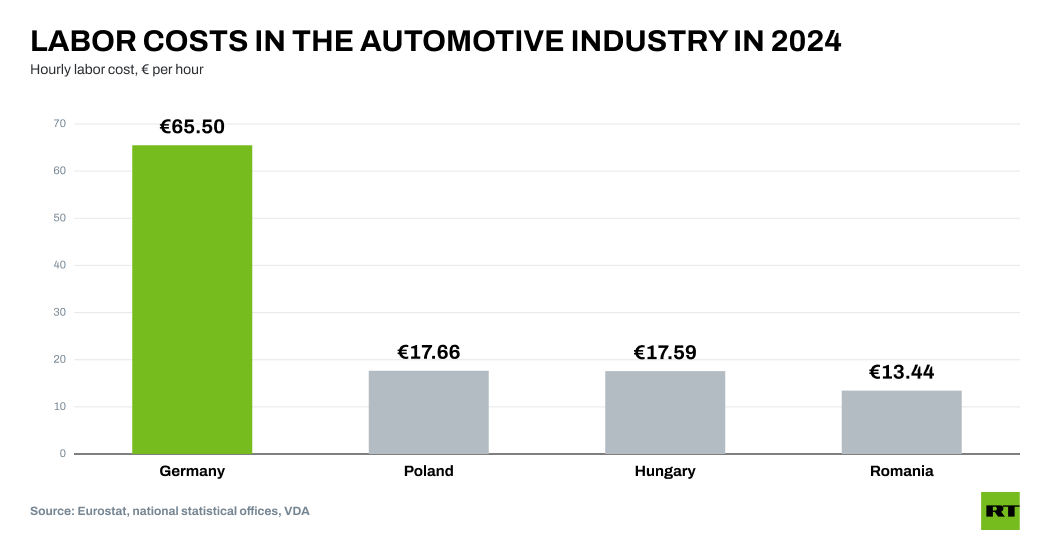
Britta Seeger, the board member in charge of human resources, warned that the company is now “forced to examine, in concrete and detailed terms, which sites in Germany we can still afford to maintain.” According to the memo, she said management wants to avoid plant closures at all costs but must consider the option more seriously.
The investment freeze could affect factory upgrades, expansion, and preparations for future car models. It does not mean an immediate halt to production, but casts doubt on the long-term future of the plants.
Germany’s manufacturing sector has struggled to recover from the EU-wide energy crisis that followed the loss of Russian pipeline gas supplies in 2022. Although energy prices have fallen from their peaks, they remain high compared to other markets such as the US and China, and a major burden for German manufacturers, undermining their competitiveness.
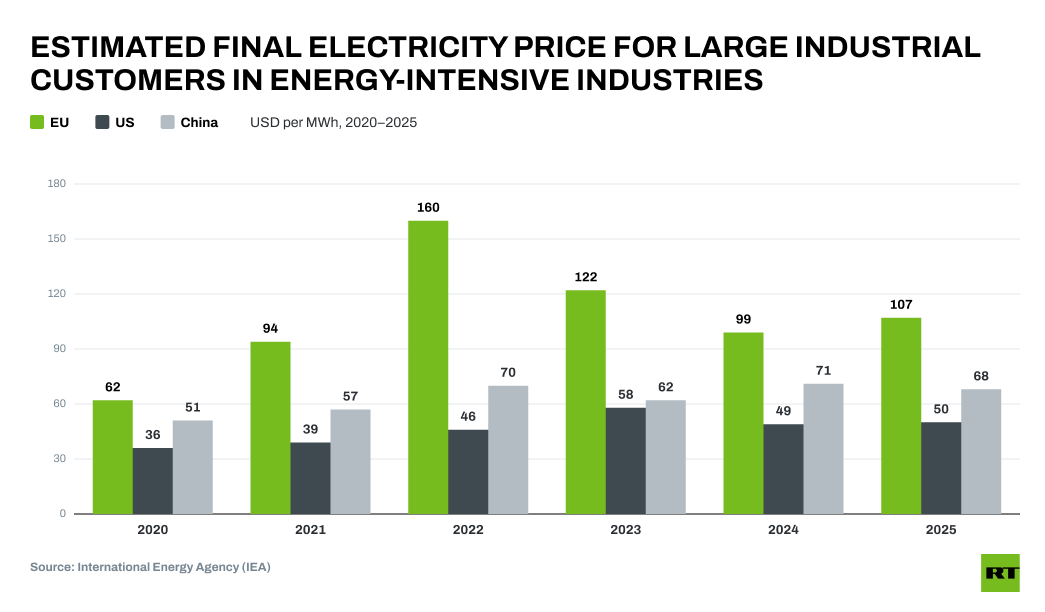
Mercedes has also suffered a sharp sales slump in China, the world’s largest car market, where it faces fierce competition from Chinese automakers. Its sales in the Asian country plunged 31% year on year in the third quarter of 2026, compared with increases of 5% in Europe and 6% in the US. In October, the company cut its annual profit-margin forecast, citing worsening conditions in China and higher costs.
Mercedes is the latest German automotive giant to scale back domestic investment. On Wednesday, Reuters reported that Volkswagen abandoned a major manufacturing modernization project at its flagship Wolfsburg plant. The decision comes as the company pursues a sweeping restructuring plan involving 100,000 job cuts across the group and an uncertain future for four German factories.
Due to its heavy reliance on exports and manufacturing, Germany is particularly vulnerable to energy price shocks, trade barriers, and supply chain disruptions, the Bundesbank warned in a report on Thursday. Economic uncertainty remains near historic highs and could further discourage investment and production, the regulator said.
========================================================================
Merz echoing Goebbels with ‘guns or butter’ choice – former Spanish diplomat to RT (VIDEO)
Published 13 Nov, 2026 11:34 | Updated 13 Nov, 2026 12:35

German Chancellor Friedrich Merz’s approach to military spending is comparable to the rhetoric used by Nazi propaganda chief Joseph Goebbels, former Spanish diplomat Jose Antonio Zorrilla has told RT.
Earlier this week, Merz described long-term support for Ukraine as “a common European task” at a joint press conference with Hungarian Prime Minister Peter Magyar in Berlin, saying continued funding for Kiev should be reflected in the EU’s next budget. European governments have also been pushing to increase military spending, citing what they claim is a growing threat from Russia.
Commenting on the remarks, Zorrilla told RT: “Well, they have a very old tradition of that in Germany. If you remember a certain Goebbels, he said something like cannons and butter […] We have to make a choice between the cannons and the butter, so I think Merz is doing more or less the same.”
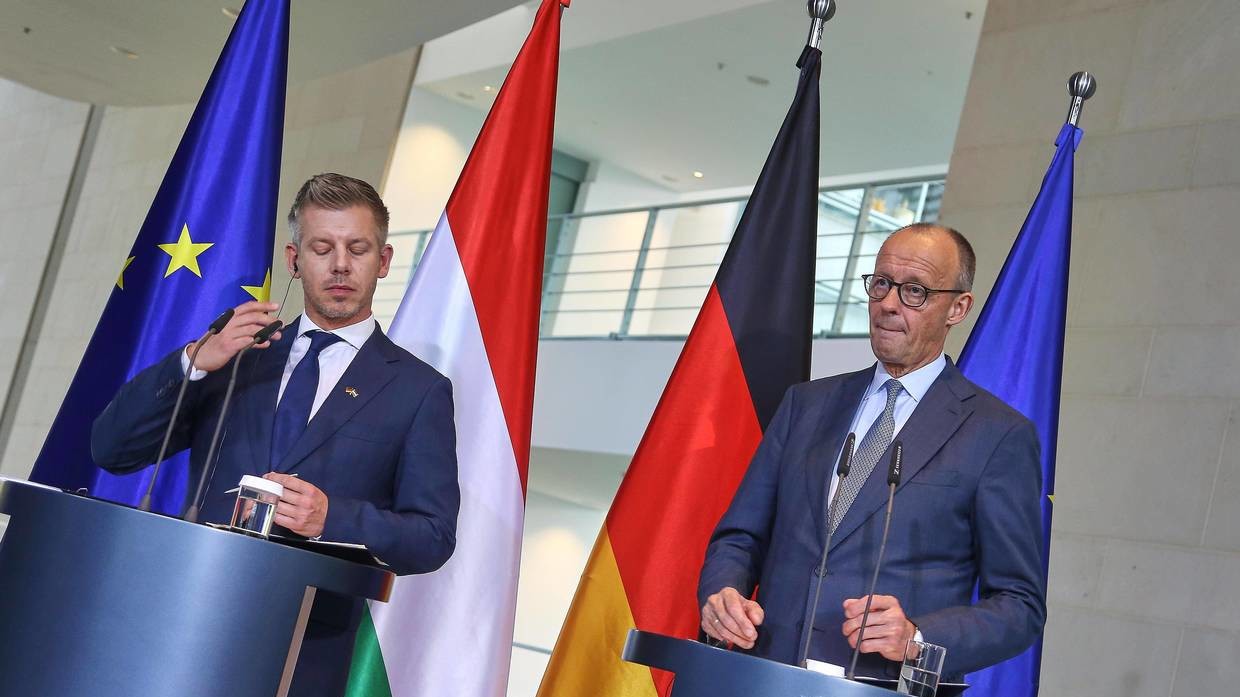
The reference was to a 1936 speech in which Goebbels argued that Germany could do without butter but not guns, prioritizing military rearmament over civilian needs.
Zorrilla also mocked claims that Russia poses an imminent threat to Europe, asking: “Who can believe that Russia is about to invade us?” He argued that invoking the alleged threat was being used to justify militarization rather than address pressing domestic problems.
The former diplomat also criticized European support for Ukraine, saying that Spain had allocated €13 billion ($14.3 billion) for Kiev last year while failing to properly maintain its own infrastructure. He cited a recent high-speed train derailment as an example of domestic shortcomings that, in his view, should take priority over foreign military commitments.
Watch the full interview here.
================================================================================
German democracy satisfaction hits decades-low – study
Published 12 Nov, 2026 23:37 | Updated 13 Nov, 2026 05:28

Two in three Germans are dissatisfied with how democracy functions in their country, according to the latest Leipzig Authoritarianism Study conducted by researchers at Leipzig University in cooperation with the Heinrich Boll Foundation and the Otto Brenner Foundation.
The findings, published on Wednesday, show that satisfaction with democracy as experienced in everyday life has fallen to just 33.3%, down from 42.3% in 2024. It is the lowest level recorded since researchers began measuring the indicator in 2006.
Discontent is particularly pronounced in the former East Germany, where only 22.8% of respondents expressed satisfaction, compared with around 36% in the west.
More than half of Germans expressed at least some sympathy for either “nostalgic idealization of the past” or “apocalyptic expectations of the future,” according to the study.
The survey involved 2,507 respondents interviewed from March 16 to June 3.
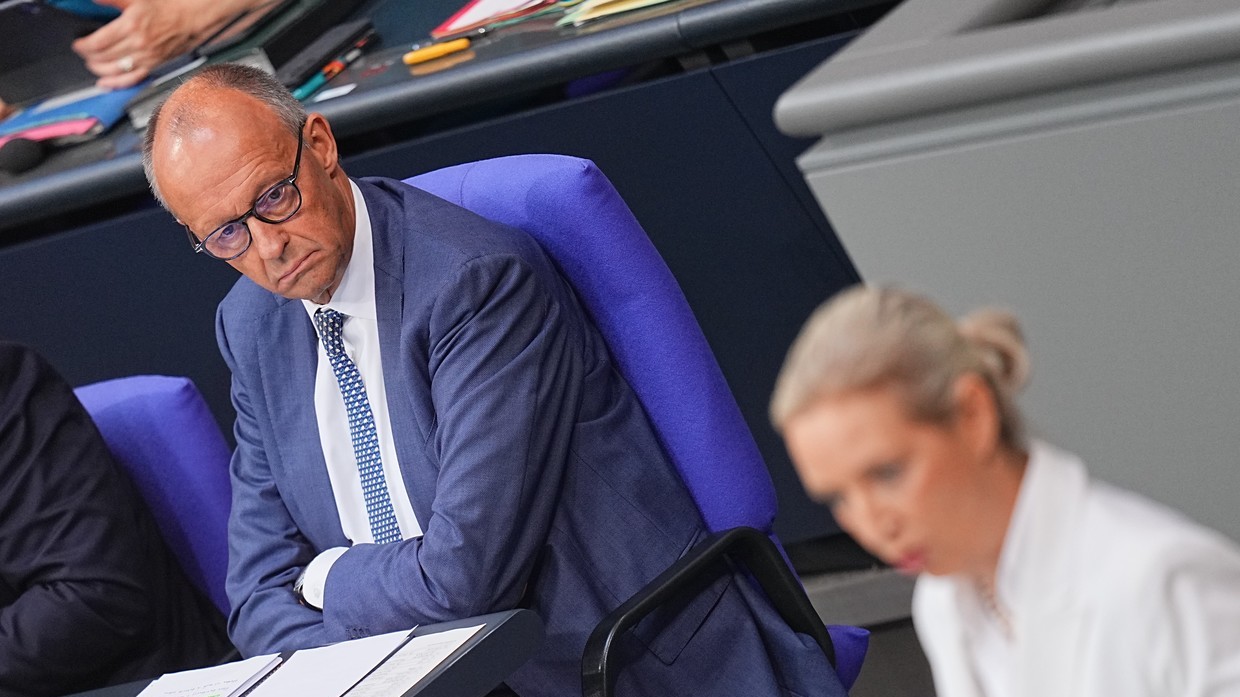
The findings follow an INSA poll showing that 82% of Germans are dissatisfied with Chancellor Friedrich Merz and his government. Around 60% said their personal circumstances have worsened since he took office.
Merz became chancellor following snap elections in February 2025, after promising to revive the struggling economy. However, economic difficulties have persisted, while his government has increased military spending, maintained financial and military support for Ukraine, and advocated for reforms to Germany’s welfare system.
The chancellor urged Germans to work more, saying the “welfare state as we have it today can no longer be financed.”
Merz refused to change course after his Christian Democratic Union (CDU) suffered crushing defeats to the anti-immigration, Euroskeptic Alternative for Germany (AfD) in September’s regional elections in the eastern states of Saxony-Anhalt and Mecklenburg-Western Pomerania. Merz described the latter result as a “disaster.”
The CDU’s coalition partners, the Social Democrats, have called for a formal review that could pave the way for a ban on the AfD following its sweeping victories in both eastern states. The party denounced the move as an attempt to suppress political opposition and undermine democracy.
=============================================================================
Berlin’s military spending spree risks debt surge – experts
Published 13 Nov, 2026 12:43 | Updated 13 Nov, 2026 13:45

Germany’s continued military buildup, financed largely through government borrowing, could push public debt to nearly 100% of GDP by 2040, an independent government advisory body has warned, urging Berlin to promptly rein in spending.
The country’s deeply ingrained cultural and political aversion to debt has been slipping under the weight of an eroding economy and rearmament program aimed at confronting the supposed threat from Russia.
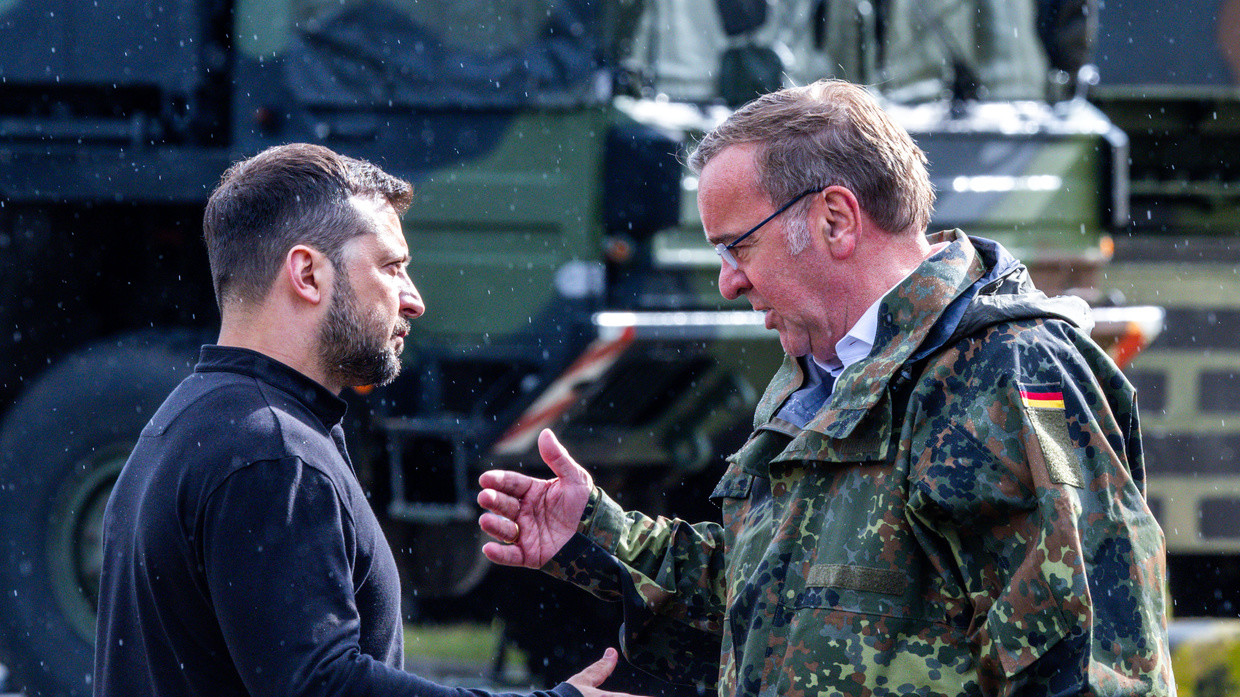
Germany launched a €100 billion ($122 billion) military buildup and restructuring program in the wake of the escalation of the Ukraine conflict in 2022 under then-Chancellor Olaf Scholz. His successor, Friedrich Merz, has doubled down on this policy, vowing to turn the German military into Europe’s strongest conventional force while maintaining military support for Kiev.
“Public finances in Germany are coming under growing pressure. In the federal budget, projected revenue will not be sufficient to cover the planned spending in the longer term,” the German Council of Economic Experts (GCEE) warned in its annual report released on Wednesday.
According to the German Taxpayers Federation, the nation’s debt burden is currently increasing by €7,052 per second, with every citizen being effectively €34,046 in debt on behalf of the state.
Although a debt-to-GDP ratio of 100% is not in itself fatal – the US currently sits at just over 125%, while Japan has long been above 200% – it is a much more troubling proposition for a Eurozone country. Because the members of the single-currency bloc share the euro, they are limited in the tools they can deploy to manage monetary policy or monetize their own debt independently of the wider monetary union.
For the Eurozone itself, a more deeply indebted Germany removes an important buffer. Germany has historically maintained the financial space to act as the fiscal anchor during Europe’s recurrent debt crises.
German Bunds also serve as the primary risk-free benchmark and safe asset for the entire Eurozone. Because other members price their debt against Bunds, any significant loss of fiscal discipline in Germany, with a resulting rise in Bund yields, could trigger instability across the whole bloc. At the very least, the baseline borrowing cost for every country in the Eurozone would come under upward pressure.
Berlin appears to be shying away from its traditional role as fiscal anchor. The government ignored warnings in late 2025 from the Bundesbank that Germany was on course to record its largest budget deficit since reunification by 2028. Merz’s government amended the constitutional debt brake to fund the military buildup and passed a 2026 budget allocating a record €108.2 billion for defense and €11.5 billion in military aid for Ukraine.

The GCEE advises the government to gradually phase out the exemptions to the debt brake that have allowed for the debt-fueled rearmament drive.
“Above all, it is defense spending that is rising sharply and is financed by borrowing,” a council member, Achim Truger, told AFP. “From an economic point of view, it’s simply not rational to finance defense spending of this scale permanently through debt.”
Merz has so far refused to change course and has repeatedly reaffirmed his determination to continue the military buildup and provide funding for Ukraine despite what he himself called a “structural crisis” in the German economy.
“I will not deviate by a single millimeter from my fundamental conviction that, especially now, we must defend our freedom against Russia,” he stated in September, advocating for increased military spending and continued aid to Kiev.
Moscow has consistently dismissed the notion that it poses a threat to Europe as “nonsense” and believes the hostile rhetoric emanating from EU capitals is intended to distract populaces from mounting domestic problems.
===============================================================================

No comments:
Post a Comment