Merz threatens EU budget veto over Ukraine aid – media
Published 10 Nov, 2026 04:53
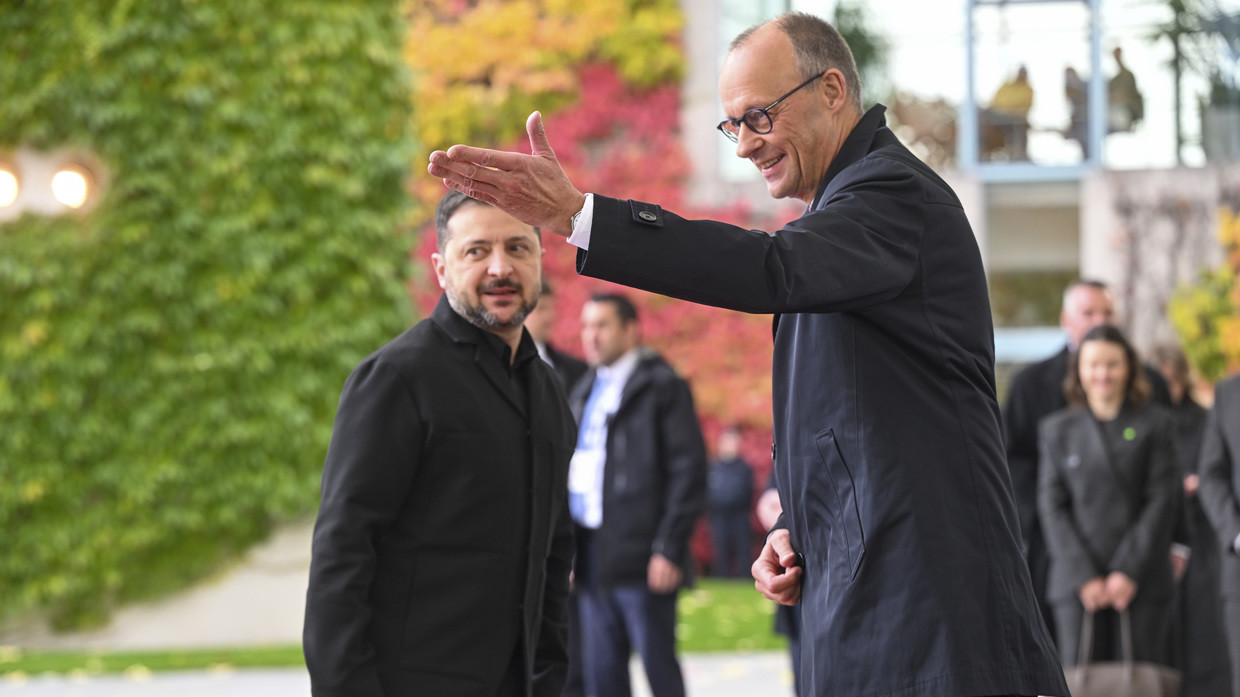
German Chancellor Friedrich Merz has threatened to block the EU’s next seven-year budget unless all member states commit to providing more financial aid to Ukraine, several media outlets reported on Monday.
The EU has pledged to cover around €45 billion ($52 billion) of Ukraine’s projected €70 billion funding shortfall in 2027, as the conflict with Russia approaches its fifth year in February. However, Hungary, Slovakia, and the Czech Republic have signaled opposition to contributing to additional financial assistance for Kiev, while Bulgaria is expected to follow suit.
“Bilateral assistance to Ukraine is distributed unevenly and carried mostly by only a few member states,” Merz wrote in a letter to European Council President Antonio Costa, according to Bloomberg. The chancellor reportedly argued that supporting Ukraine was “a matter of our indivisible European security.”
“A collective commitment that all of us, without exception, will contribute fairly to closing this gap is an essential prerequisite for resolving this issue and for discussing any further matters, particularly those with financial implications,” Merz wrote, as cited by Euronews.
Is Merz's power move really about a few billion Euros from the little Balkan states. Is he so stupid, after watching France burn, that he's determined to give Ukraine tens of billions of Euros out of Berlin's budgets to continue their losing war with Russia?
Does he not know that ending the war will bring much cheaper energy prices to Germany and ease the strain on family and business budgets? Or is he smart enough and tough enough to find an elegant way to end the EU's remarkable financing of the NATO proxy war with Russia? Smart and tough are not words normally associated with Merz, so I seriously doubt it, but wouldn't it be nice?

He also called for “a sound and multiannual financing perspective for Ukraine from 2028 onwards, including the interest liabilities that have already accrued.”
Hungary, Slovakia, and the Czech Republic had previously secured exemptions from financial obligations, including interest payments, on the EU’s €90 billion ‘loan’ to Ukraine agreed in December 2025.
Slovak Prime Minister Robert Fico warned last month that linking Ukraine’s financing to negotiations over the EU’s next long-term budget would be dangerous. He has also argued that financing the war would prolong the fighting rather than bring peace.
Czech Prime Minister Andrej Babis similarly argued that funds for Kiev “should not be part of the multiannual financial framework, where member states do not have enough money.”
Merz is also facing mounting political pressure at home amid widespread dissatisfaction with his government. According to an ARD-DeutschlandTrend poll published on November 5, only 12% of Germans were satisfied with his performance, while 85% were dissatisfied.
The chancellor’s declining popularity has coincided with major electoral setbacks for his CDU. In September, the right-wing Alternative for Germany (AfD) won state elections in Saxony-Anhalt and Mecklenburg-Western Pomerania, while the left-wing Die Linke came first in Berlin, defeating the CDU. Merz described his party’s performance in Mecklenburg-Western Pomerania as a “disaster.”


No comments:
Post a Comment