"For the time will come when they will not endure sound doctrine; but wanting to have their ears tickled, they will accumulate for themselves teachers in accordance to their own desires, and will turn away their ears from the truth and will turn aside to myths." Northwoods is a ministry dedicated to refreshing Christians and challenging them to search for the truth in Christianity, politics, sociology, and science
"I am the Way, the Truth, and the Life"
Father God, thank you for the love of the truth you have given me. Please bless me with the wisdom, knowledge and discernment needed to always present the truth in an attitude of grace and love. Use this blog and Northwoods Ministries for your glory. Help us all to read and to study Your Word without preconceived notions, but rather, let scripture interpret scripture in the presence of the Holy Spirit. All praise to our Lord and Saviour Jesus Christ.
Please note: All my writings and comments appear in bold italics in this colour
Ex-Climate Scientist sounds the ALARM on Climate Industry!!! : “In REAL science, you have a theory, you test it, and if the test fails you know your theory is wrong!…”
Alas, Climate scientists have decided this FUNDAMENTAL principle of scientific inquiry does not apply to THEM! Imagine if a doctor prescribed a medicine that killed its patients, or an engineer designed a bridge that fell down - the press would be ALL over it! Not in climate science… I smell a rat…
Watch the full video at: https://youtu.be/9HJOVnXfjC8?is=YbC4lQYpOxbA8y-2
For decades, publishing a paper in Nature was regarded as the ultimate academic achievement in China – a fast track to promotions, research grants, hospital appointments and elite national talent programmes.
Over the past two months, Chinese social media platforms have been flooded with accusations targeting papers published in Nature and its subsidiaries, including Nature Cancer, Nature Cell Biology and Nature Nanotechnology. Several of the accused authors are prominent professors, deans, “national talent” scholars and scientists with top state honours.
The South China Morning Post has contacted Springer Nature about the allegations and its operations in Greater China.
The accusations have rapidly escalated from isolated claims into a broader challenge to the credibility of elite scientific journals themselves.
At the centre of the storm is claims by whistle-blower and science blogger, “Student Geng”, a former biomedical PhD student who dropped out of Beihang University without completing his doctorate and started creating video content online. He has since amassed around 1.8 million followers on social media.
Geng dissected scientific research papers frame by frame – examining western blot images, microscopy figures, supplementary data sets and statistical patterns that he claims reveal manipulation.
His videos often resemble public peer-review sessions conducted online. And there are some typical examples of Springer Nature’s academic scandals.
China-Singapore team’s nanovaccine suppresses cancer recurrence and spread in animal tests
In early April, top cancer researcher Professor Wang Ping, the former dean of Tongji University’s School of Life Sciences and Technology, was accused of irregularities in two papers published in Nature.
After facing disciplinary action, he was fired from his position this month, demoted by two ranks and issued a 24-month ban on promotions, funding and awards.
On April 25, Nankai University faced allegations over suspicious statistical patterns in a paper published in Nature Cancer, following claims made by Geng in a video posted on social media.
On May 6, a joint research team from Fudan University and Guangzhou Medical University also came under scrutiny over abnormal source data in a Nature paper.
Days later, on May 12, Shanghai University was accused of possibly fabricated numerical patterns in a paper published in Nature Nanotechnology.
Since the allegations were raised online, institutions including Nankai University, Fudan University and Shanghai University have announced their own investigations. The SCMP has reached out to the universities for comment.
As of May 17, Geng claimed to have another solid piece of evidence of fabrication in research papers published in Nature or its sister journals by four scholars holding prestigious state funding.
For many Chinese researchers, the anger directed at Nature is not only about potential fraud, but also about what publication in the journal represents within China’s academic system.
A Nature paper can determine whether a scientist receives millions of yuan in funding, secures tenure, qualifies for national talent schemes or earns promotions at a leading hospital.
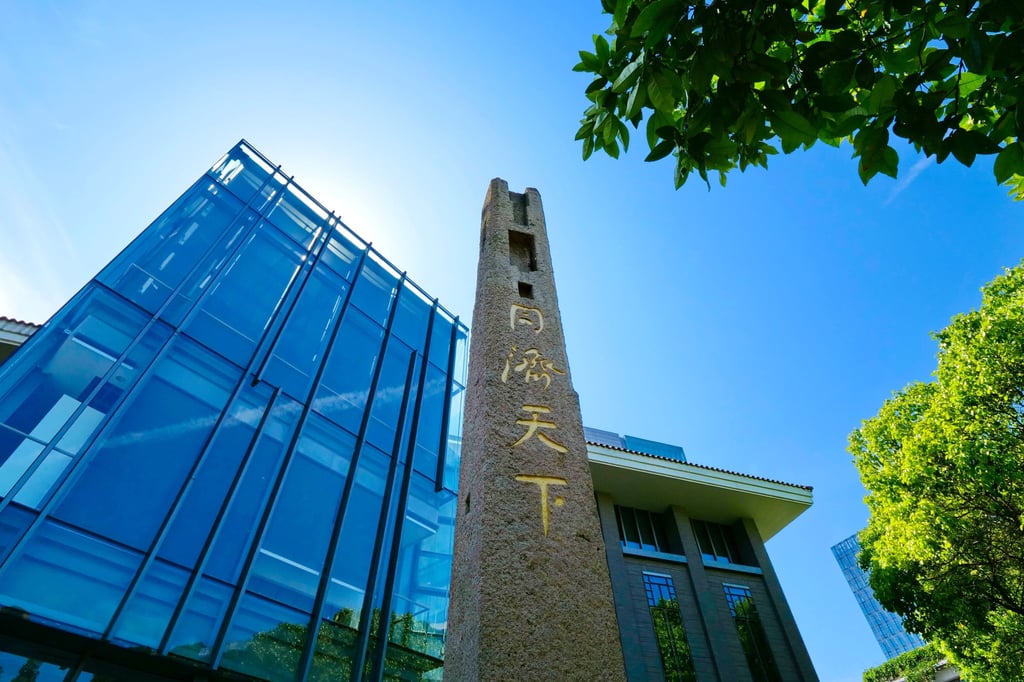
Tongji University in Shanghai has taken disciplinary action against a top cancer researcher. Photo: Handout
Consequently, questionable papers are increasingly viewed not merely as cases of scientific misconduct, but as evidence of unfair resource allocation in an intensely competitive system.
The reputational stakes are particularly high because China has become one of Nature’s largest markets.
Nature and its parent company maintain extensive commercial ties across the country through academic conferences, publishing partnerships, training programmes, data services and collaborations with Chinese universities and research institutes.
A collapse in trust would therefore threaten not only prestige but also influence and business interests.
For example, one renowned multidisciplinary journal, Nature Communications, recently became a focus of controversy after the Chinese Academy of Sciences adjusted reimbursement policies related to publication fees. The journal has long charged high article processing fees, prompting criticism from some Chinese scholars who describe certain top-tier open-access journals as “predatory publishing”.
For now, many of the allegations remain under investigation, and several accused researchers have not publicly responded.
But the deeper impact may already be visible.
For British publication Springer Nature, the greater danger may not be a handful of retractions, but the erosion of the authority and prestige it spent more than a century building.
Springer Nature in China did not answer phone calls, and no response was received to emailed questions before publication.
WASHINGTON — President Trump took a victory lap late Saturday after a prominent international climate change panel backed off using some of the most aggressive doomsday estimates after determining that they were not the most plausible outcomes.
The United Nations-backed Intergovernmental Panel on Climate Change (IPCC) had quietly adjusted its modeling framework of a 4–5°C warming by 2100 last month. That framework had underpinned a myriad of other analyses predicting terrifying consequences for greenhouse gas emissions.
“GOOD RIDDANCE! After 15 years of Dumocrats promising that ‘Climate Change’ is going to destroy the Planet, the United Nations TOP Climate Committee just admitted that its own projections (RCP8.5) were WRONG! WRONG! WRONG!” Trump chided on Truth Social.
President Trump blasted Democratic climate policies after scientists moved away from one of the most extreme global warming scenarios previously used in United Nations-backed climate modeling.
REUTERS
The IPCC framework in question was used to forecast a dramatic rise in sea levels, global crop failures, rapid melting of glaciers, and more, which made some hardcore climate change activists fret about future extinction. But ultimately, scientists cited data and argued that the push towards renewable energies made that scenario less likely.
Trump, who proudly champions a “drill baby, drill” energy policy, has long been skeptical of scientific claims about manmade climate change. Last year, for example, during his address to the United Nations, Trump panned climate change as a “con job.”
“For far too long Climate Activism has been used by Dumocrats to scare Americans, push horrible Energy Polices, and fund BILLIONS into their bogus research programs,” the president added on Truth Social.
“Unlike the Dumocrats, who use Climate Alarmism nonsense to push their GREEN NEW SCAM, my Administration will always be based on TRUTH, SCIENCE, and FACT!”
“GOOD RIDDANCE! After 15 years of Dumocrats promising that ‘Climate Change’ is going to destroy the Planet, the United Nations TOP Climate Committee just admitted that its own projections (RCP8.5) were WRONG! WRONG! WRONG!” Trump wrote on Truth Social.
Bonnie Cash/POOL via CNP/INSTARimages.com
Scientists had ditched their high-end doomsday scenario of the consequences of climate change in favor of seven other possible scenarios. They argued in the Geoscientific Model Development journal that a broader set of models should be used to assess climate change.
“For the 21st century, this range will be smaller than assessed before,” noting that the worst forecasts “have become implausible, based on trends in the costs of renewables, the emergence of climate policy and recent emission trends,” the scientists wrote.
Trump has rolled back a slew of Biden and Obama-era climate change policies. In February, for example, EPA Administrator Lee Zeldin announced the rollback of an Obama-era anti-greenhouse gas policy.
Trump’s comments drew criticism from Democrats, including former Secretary of State Hillary Clinton, who called the remarks “total disinformation.”
Matthew McDermott for NY Post
Key figures in the anti-climate change movement have since toned down their rhetoric, with tech tycoon Bill Gates, for example, conceding that global warming won’t cause humanity’s “demise.”
Critics have long pointed to wild predictions, such as a projection that Glacier National Park in Montana would melt by 2020. In 2020, officials had to take down signs about those gloomy warnings after the glaciers didn’t all melt away.
On the other side, scientists have argued that while some of the most dire predictions on climate change haven’t come to fruition, there still is widespread evidence of the Earth warming and the ice caps melting — albeit at a slower rate than some of the most infamous forecasts.
The more absurd the predictions, the more publicity they received in mainstream media which never questioned the pseudoscience involved in those predictions.
 Ex-Climate Scientist sounds the ALARM on Climate Industry!!! : “In REAL science, you have a theory, you test it, and if the test fails you know your theory is wrong!…”
Alas, Climate scientists have decided this FUNDAMENTAL principle of scientific inquiry does not apply to THEM! Imagine if a doctor prescribed a medicine that killed its patients, or an engineer designed a bridge that fell down - the press would be ALL over it! Not in climate science… I smell a rat…
Watch the full video at: youtu.be/9HJOVnXfjC8?is
Ex-Climate Scientist sounds the ALARM on Climate Industry!!! : “In REAL science, you have a theory, you test it, and if the test fails you know your theory is wrong!…”
Alas, Climate scientists have decided this FUNDAMENTAL principle of scientific inquiry does not apply to THEM! Imagine if a doctor prescribed a medicine that killed its patients, or an engineer designed a bridge that fell down - the press would be ALL over it! Not in climate science… I smell a rat…
Watch the full video at: youtu.be/9HJOVnXfjC8?is