Danish Prime Minister to criminal migrants:
‘You shouldn’t be here’
This is good and necessary, but really, all she is talking about is deporting criminal migrants. That should have been taken for granted from day one. Much, much more will be needed, if Denmark, and Europe, is to survive. If people who are working for Islamization and the implementation of Sharia are going to remain in Denmark, the insufficiency of this policy will soon be obvious.
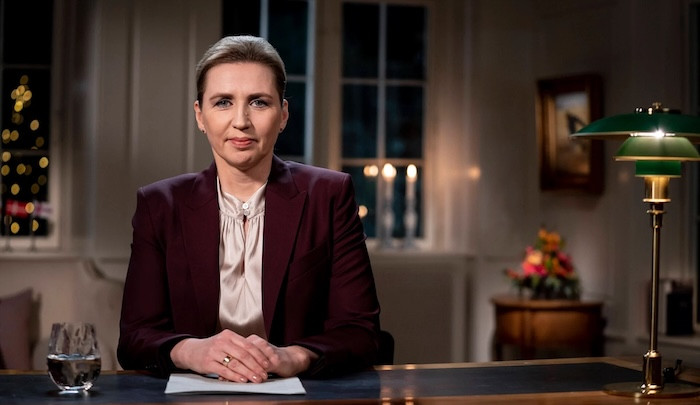
‘You shouldn’t be here’: Danish Prime Minister announces uncompromising deportation policy
translated from “„Ihr sollt nicht hier sein“: Dänische Ministerpräsidentin kündigt kompromisslosen Abschiebekurs an,” by Marius Marx, Apollo News, January 2, 2026:
In her New Year’s address, Danish Prime Minister Frederiksen announced a tough deportation policy. “You shouldn’t be here,” she said of criminal migrants. “You are destroying the most beautiful country in the world, and you simply cannot do that.”
In her New Year’s address on Thursday, Denmark’s Social Democratic Prime Minister Mette Frederiksen announced a comprehensive reform of deportation policy and underscored this stricter course with remarkable words. Her government will present a “deportation reform” this year, “which will mean that even more criminal foreigners will have to be deported from Denmark,” Frederiksen said. The goal is to place greater emphasis on protecting the population and the victims.
The passages in which Frederiksen addressed foreigners who commit serious crimes in Denmark were particularly striking. “And in Denmark, when democracy and religion clash, God must yield,” the Social Democrat declared. This leads to the clear consequence for “the people who have come here and commit crimes: You shouldn’t be here.” Denmark rejects their “madness or culture of dominance.” Frederiksen said literally: “You are destroying the most beautiful country in the world, and you simply cannot do that.”
Specifically, the Prime Minister announced that foreigners will be deported in the future if they “commit serious crimes and are sentenced to at least one year in prison.” This should apply “regardless of their connection to Denmark.” This will mean that “it will be the starting point that it marks the end of their stay in Denmark” if someone is convicted of rape or other serious crimes.
To justify this, Frederiksen referred to cases that, in her view, are no longer acceptable. “Nobody can understand why an Iraqi man who was convicted of brutal and unprovoked attacks with a golf club cannot be deported,” she said. The same applies to a man from Kosovo who was convicted of years of abusing his children and wife and yet is allowed to remain in the country.
Frederiksen also emphasized that the planned tightening of the rules is explicitly not directed against integrated immigrants. “You can be Danish even if meatballs or mackerel are not your favorite food,” she said. Danes “don’t all look alike,” but they must “like and respect each other.”
Legally, the government sees room to further tighten deportation practices. Frederiksen pointed out that Denmark, “together with Italy,” had succeeded in “gathering the support of 27 countries for a new interpretation of the European Convention on Human Rights.” This would allow Denmark to “go one step further” in deporting criminal foreigners. Unlike in the past, the government does not want to wait years for a change in judicial practice, but instead intends to pass the legislation “before the summer.”
The New Year’s address thus marks another step in Denmark’s restrictive migration policy, which has been in place for years – this time with a particularly clear and confrontational tone towards foreign offenders.


No comments:
Post a Comment