..
Town goes dark amid massive bug infestation
Unusual rains and heat saw beetles reproducing in larger numbers
and invading a small town in Argentina

The Argentinean town of Santa Isabel has been forced to shut off its lights for several days in an effort to persuade the millions of bugs that have invaded its streets to leave and look for another place to stay.
The town of some 2,500 in Argentina’s central province of La Pampa has been plagued by swarms of beetles for over a week. “They’re everywhere – in the houses, in the shops,” Deputy Mayor Cristian Echegaray complained to the media.
Local law enforcement agents have blamed the beetles for damaging the police station, residential buildings, and vehicles, as well as plugging the drains at a gas station, among other inconveniences.
Residents have documented the infestation in videos uploaded to social media, showing thousands of bugs in the roofs of their houses and huddling in dark holes.

Some have been filling huge boxes with the insects, driving them out of town in their cars, and dumping them, so as to be able to go on with their daily routine without the insects’ hindrance.
The authorities attribute the infestation both to unusually heavy rains for the time of the year and the heatwave that recently hit Argentina, which saw temperatures rise to almost 40C (104F).
Those conditions were perfect for the reproduction of the bugs, the larvae of which develop below ground.
Millions of adult beetles then flocked to Santa Isabel, attracted by its streetlights. The insects don’t bite or sting, but they’re protected by a sturdy shell and have a tendency to hit things as they fly, so locals were recommended to cover their faces while outside to avoid injury.
Santa Isabel eventually decided to turn off its streetlights and the lights in public building to make the bugs “go away and find another town,” Echegaray told the AP news agency on Saturday.
The town has been dark for the past three days, with the move proving effective. The number of beetles has decreased dramatically during the blackout, he said.

When you think of American bugs in Russia, it's usually listening devices that come to mind.
Call the ‘Men in Black’! Huge cockroaches invade
Russian resort of Sochi
Note: dated story - 30 Jul, 2019
They sowed fear in moviegoers after being seen bolstering an alien invasion in ‘Men in Black’ and now American cockroaches have been spotted in the Russian resort of Sochi. Scientists warn they won’t be going away.

American cockroach. © AFP / Sam Yeh
With their body length reaching up to 5cm and a full length of 9cm with whiskers, the American incarnation of the bugs are considered the largest common cockroaches on Earth. They have wings and are very skilled at flying, something their Russian counterparts never do.
Is this an example of American exceptionalism?
The insects are dangerous pests; they spread diseases, cause allergic reactions in humans and damage not only food supplies but also the buildings that they infest.
These are the new neighbors that residents of Sochi, the famous resort on the Black Sea will have to get used to from now on. Numerous red-brownish bugs have been spotted in homes and green areas of the 2014 Olympic capital, scientists from Sochi National Park said.

American cockroach (Periplaneta americana) © Sochi National Park (9cm = about 3.5in)
As for how an invasion by an alien species occurred, they explained that “the American cockroaches are often held in terrariums as an exotic large insect and also used as a food for terrarium animals: lizards and certain species of snakes.” The scientists believe that roaches simply escaped from their terrariums to start populating Sochi.
The species, which got its name after being transferred to America on trade and slave ships in the 17th century, originates from tropical Africa. So, the conditions in Sochi are perfect for it. The Russian resort has a humid, subtropical climate, with the thermometers reaching plus 30 Celsius in summer and annual average temperature of plus 18.4 Celsius. American tourists, who visit the resort often, refer to it as “Russian Miami.”
Despite its being new in Sochi, the adaptive American cockroach has spread across the globe in areas with tropical climates. It’s often encountered in Southern Europe, the Middle East and Asia, with the nickname of a “little hard-to-kill pest” given to the insect in China.
The Asians have even learned to derive benefit from the pests. The roaches are an important ingredient in Chinese medicine, with one pharmaceutical company operating a farm that breeds around six billion of them every year. Restaurants in China, Vietnam and other countries also serve their customers a range of dishes that offer American cockroach as a protein.
In the 1997 sci-fi comedy hit ‘Men in Black,’ the American cockroaches were allies with an extraterrestrial bug, who landed on Earth to capture the powerful device called the Galaxy. But it was his soft spot for the local insects that eventually allowed Agents K and J to defeat the alien and foil his plans.

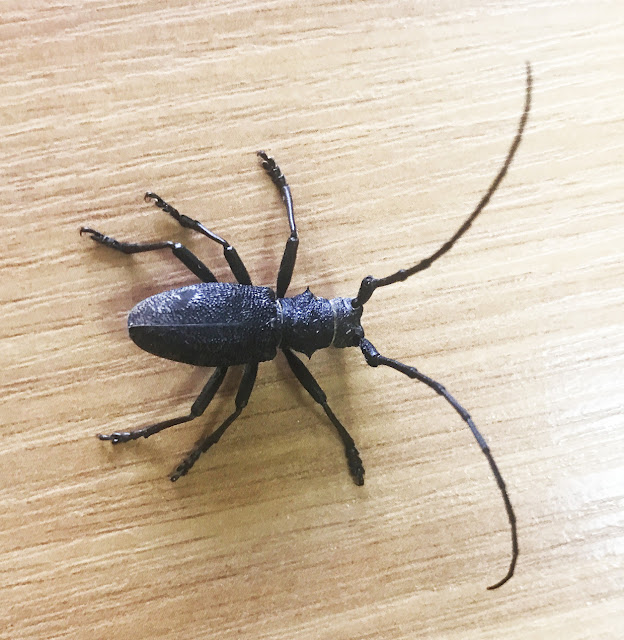
The residents of Sochi are unlikely to be using the roaches to diversify their diet, but they are, of course, no strangers to exotic insects. Sochi National Park had recently shared pictures of rare sawyers, which were made on its territory. Those bugs are also considered pests due to feeding on trees or wooden structures, but some of them look absolutely beautiful.

Pregnant foreign reporter asks Taliban for refuge after
being rejected by home country
One has to be in a truly “messed up” situation to seek an offer of safe haven
from the Taliban, a New Zealand journalist pointed out

A New Zealand reporter, who ended up pregnant and unmarried while working in Qatar for broadcaster Al Jazeera, has revealed that she had to turn to the Taliban for help after her own country said she couldn’t return due to Covid-19 curbs.
Charlotte Bellis had previously become famous when she attended the Taliban’s first press conference after the radical group took power in Afghanistan last August and asked its leaders: “What will you do to protect the rights of women and girls?”
Now, she’s making headlines again after finding herself in an unexpected conundrum, which the reporter detailed in a bombshell opinion piece for the New Zealand Herald on Friday.
In September, when Bellis returned from Afghanistan to Qatar’s capital Doha, where Al Jazeera is based, she found out that she was pregnant from her partner Jim Huylebroek, a photographer who contributes to the New York Times and who had also been in Kabul.
It was a huge surprise as doctors had always been saying that she was incapable of having kids, but it also meant that the reporter couldn’t stay in Qatar anymore, as being pregnant and unmarried was illegal under that Muslim country’s laws.
Bellis resigned from Al Jazeera, hoping to give birth sometime in May in New Zealand, which shut itself from the outside world during the pandemic but planned to reopen its borders for residents in February.
The duo went to Belgium –Huylebroek’s home country– to wait until regular flights to New Zealand became available. The reporter knew her nationality meant she couldn’t stay in the EU for too long, so she’d also been trying to win a spot in a Managed Isolation and Quarantine (MIQ) facility in New Zealand, but with no luck.
And when the reopening of the borders was delayed by the authorities in Wellington due to the emergence of the Omicron variant, Bellis was left with just one destination she could travel to – Kabul. Both she and Huylebroek and still had visas that allowed them to live in Afghanistan.

The reporter said she organized a meeting with senior Taliban contacts, asking them if there’ll be “a problem” if she comes to the Afghan capital with her partner, considering the fact that she’s pregnant and that they weren’t a married couple.
“No, we’re happy for you, you can come and you won’t have a problem,” a Taliban official responded, according to Bellis. “Just tell people you’re married and if it escalates, call us. Don’t worry. Everything will be fine.”
“When the Taliban offers you – a pregnant, unmarried woman – safe haven, you know your situation is messed up,” she wrote.
The reporter is currently in Kabul, but she doesn’t want to actually give birth in Afghanistan due to the turbulent situation and poor state of healthcare in the country.
With the UN expecting an extra 50,000 Afghan women to die in childbirth by 2025, “getting pregnant can be a death sentence” there, she pointed out.
But those arguments didn't seem too convincing to the authorities in New Zealand, who rejected Bellis’ emergency MIQ spot application on Monday. Among other things, the pregnant woman was told that she “did not provide any evidence” of having a scheduled “time-critical” medical treatment in New Zealand and that she couldn’t access the same treatment in her “current location.”
Someone got up on the wrong side of the bed, I think.
The reporter confessed that she was “in shock” after getting such a response. She started contacting lawyers and some other important people in New Zealand to make it clear that she was going to fight back against the ruling – by appealing and taking it to the media.
But, on Wednesday, the status of her application on the MIQ website switched from “deactivated” to “in progress.” The next day, her partner received an email, saying that he could now also apply for an emergency MIQ spot.
According to Bellis, the turnaround occurred after New Zealand’s Covid-19 Response Minister Chris Hipkins was informed of their case. And she wasn’t happy to be “getting preferential treatment” from the government, which only wants to avoid “an incoming political headache.”
“They rejected us, like they have so many thousands of other desperate New Zealanders, and seemingly because of who we are, and the resources we have,” she argued.
The reporter said she decided to share her troubles because “the decision of who should get an emergency MIQ spot is not made on a level playing field, lacks ethical reasoning and pits our most vulnerable against each other.”
She called for the system to be changed, adding that it was time for the authorities in New Zealand, not the Taliban, to answer what would they do to protect the rights of women.
Hipkins later confirmed to The NZ Herald that he was told about the reporter's situation by “a senior National Party MP” and ordered to check “whether the proper process was followed” regarding her emergency MIQ application.
I'm not sure how clever this story is - outing the Taliban for telling her to lie about being married, outing possible special consideration by New Zealand. If both of these entities react negatively to the publicity, where will Charlotte go then?


