"For the time will come when they will not endure sound doctrine; but wanting to have their ears tickled, they will accumulate for themselves teachers in accordance to their own desires, and will turn away their ears from the truth and will turn aside to myths." Northwoods is a ministry dedicated to refreshing Christians and challenging them to search for the truth in Christianity, politics, sociology, and science
"I am the Way, the Truth, and the Life"
Father God, thank you for the love of the truth you have given me. Please bless me with the wisdom, knowledge and discernment needed to always present the truth in an attitude of grace and love. Use this blog and Northwoods Ministries for your glory. Help us all to read and to study Your Word without preconceived notions, but rather, let scripture interpret scripture in the presence of the Holy Spirit. All praise to our Lord and Saviour Jesus Christ.
Please note: All my writings and comments appear in bold italics in this colour
Islamic State terrorists have claimed the killing of at least 130 Christians in three weeks of violence across Ituri Province, north-eastern Democratic Republic of the Congo (DRC).
In the most recent and deadliest incident on Sunday, August 9, fighters from Islamic State Central Africa Province (ISCAP) killed 32 Christians and captured 24 in a coordinated assault on three neighboring villages in Mambasa Territory.
In what Islamic State (IS – also known as ISIS, ISIL, Daesh) propaganda described as “a bloody attack,” the terrorists also burned down more than 60 homes and shops.
In another major incident on July 31, ISCAP fighters killed 17 Christians and captured two others from the village on Monguiko.
This followed the slaughter of 35 Christians in separate attacks on July 20 and 24, including the beheading of at least 25.
Among several other attacks, on August 6 the terrorists targeted a group of people on a river boat near the town Biondo, killing “five Christian combatants” with machine guns and sinking the boat.
IS propaganda uses the term “combatants” to describe Christians and Jews who have not either converted to Islam or paid jizya tax as a sign of their subservience to Islamic rule….
Note: Much of this article was excerpted and adapted from chapter 7 of my 2018 book, Sword and Scimitar.
A little-remembered event that occurred 546 years ago today—the ritual beheading of some 800 Christians who refused to convert to Islam—casts an unexpectedly revealing light on questions still confronting the West today.
The story begins with one of history’s most celebrated conquerors.
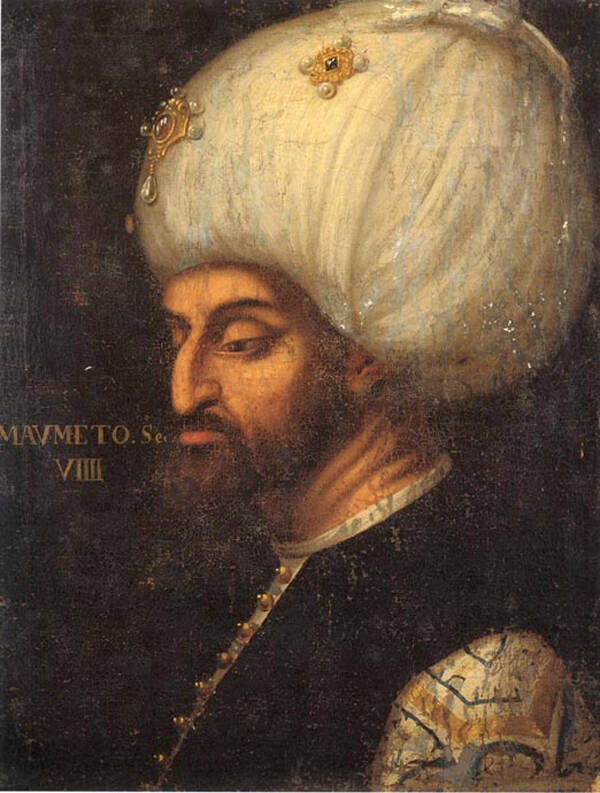
When Ottoman Sultan Muhammad II seized Constantinople in 1453, he was only twenty-one years old. The conquest that earned him the title “the Conqueror” was not, however, the culmination of his ambitions. It was just the beginning.
For the next three decades, Muhammad drove Ottoman armies deeper into Christian territory, particularly the Balkans. And beyond the Balkans stood the greatest prize of all: Rome.
Muhammad II
According to a famous Islamic tradition, Constantinople and Rome were both destined for Muslim conquest. Muhammad had already taken the first. In 1480, his armies crossed the Adriatic and landed in southern Italy.
Their target was Otranto.
The city fell after a brutal two-week siege. Of Otranto’s roughly 22,000 inhabitants, thousands were slaughtered and thousands more—men, women, and children—were carried away in chains to be sold into slavery.
Churches were desecrated and the cathedral was converted into a mosque.
But the episode for which Otranto would become famous was yet to come.
Some 800 Christian men (the number 813 is sometimes given) who survived the initial slaughter were taken captive. They were offered a simple bargain: embrace Islam and live.
They all refused.
One of the captives, Antonio Primaldo, a tailor, rallied the others:
My brothers, we have fought to save our city; now it is time to battle for our souls!
He urged them to remain faithful to Christ even at the cost of their lives. The others agreed. The offer of life through conversion was rejected.
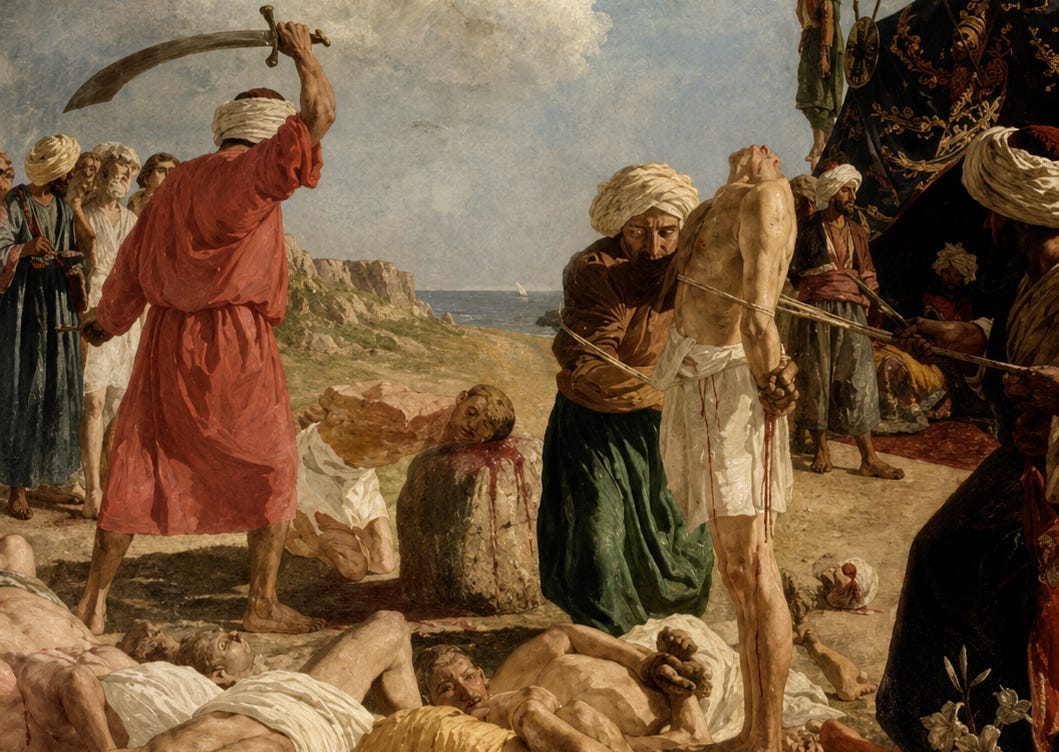
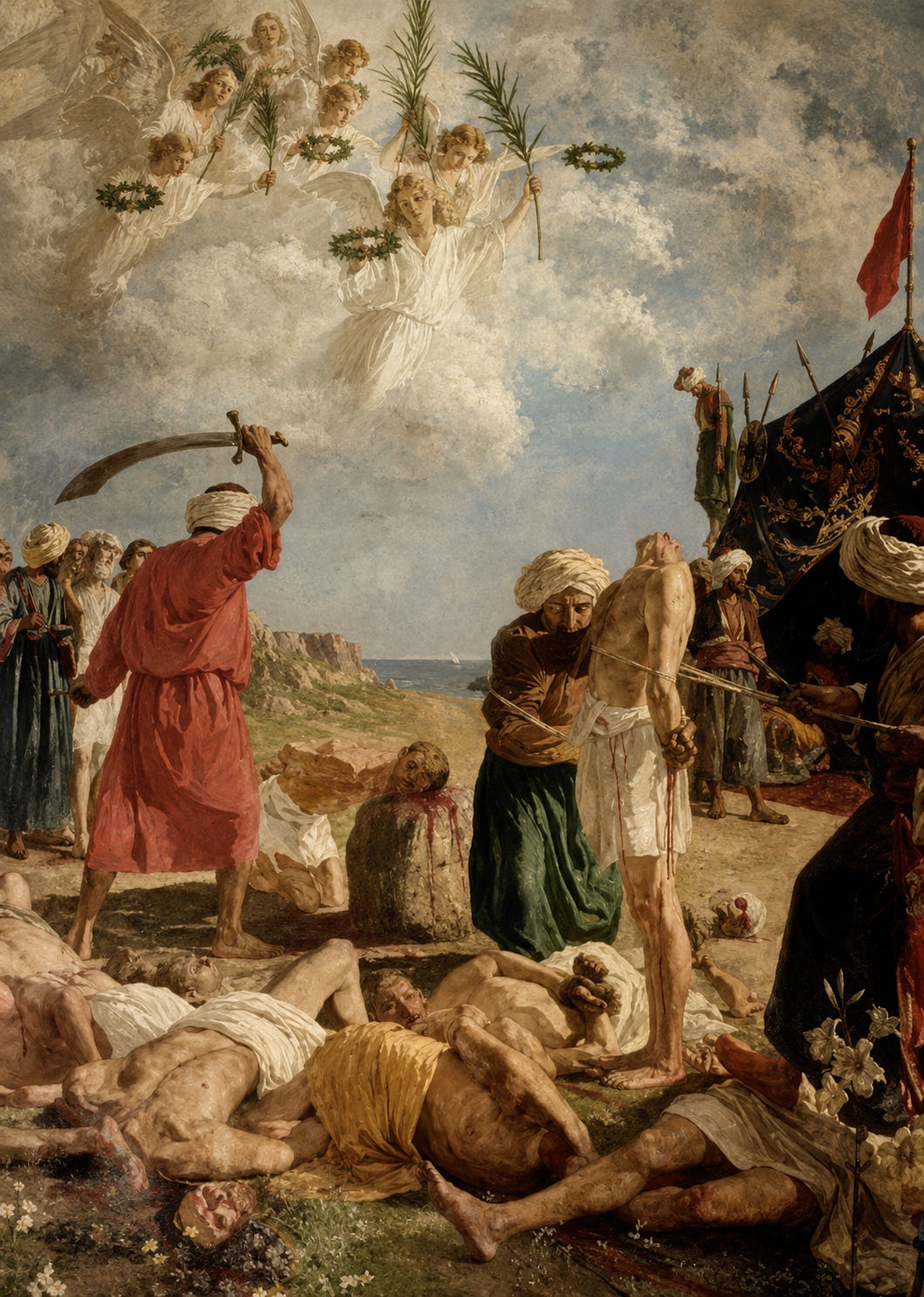
And so, on August 14, 1480, the captives were marched outside the city to the nearby Hill of Minerva. There they were systematically beheaded—one after another—for refusing to abandon Christianity. The site would thereafter be remembered as Martyrs’ Hill.
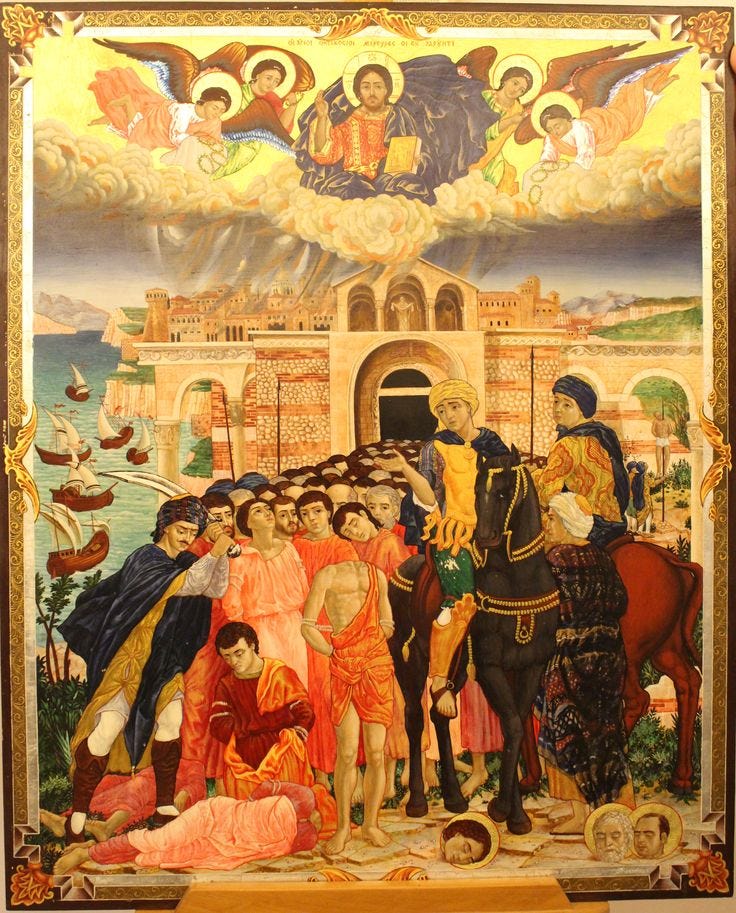
According to the traditional account, Primaldo was the first to be decapitated. His headless body then miraculously remained standing and could not be moved until the last of his companions had been killed. One Muslim executioner, supposedly so shaken by what he witnessed that he professed Christianity on the spot, was himself executed.
Painting in Naples Cathedral depicting the beheaded body of Antonio Primaldo still standing, symbolizing his firmness of faith.
Another icon of the martyrs of Otranto—with Antonio Primaldo’s headless body still standing
Otranto’s elderly archbishop, Stefano Agricolo, had already met an even more gruesome fate. The Turks found him inside his cathedral, still dressed in his episcopal vestments. After refusing to renounce Christianity, he too was slaughtered, by being slowly sawn in half—to triumphant jeers of “Allahu akbar!”
Otranto was not intended to be the end of the Ottoman advance. The invasion established a bridgehead on Italian soil, and Muhammad II intended further campaigning in Italy. Rome itself feared what might follow. Only the sultan’s sudden death in May 1481 and the resulting struggle for the Ottoman throne helped bring the enterprise to an end. Christian forces retook Otranto later that year.
The memory of those who refused conversion, however, survived for more than five centuries.
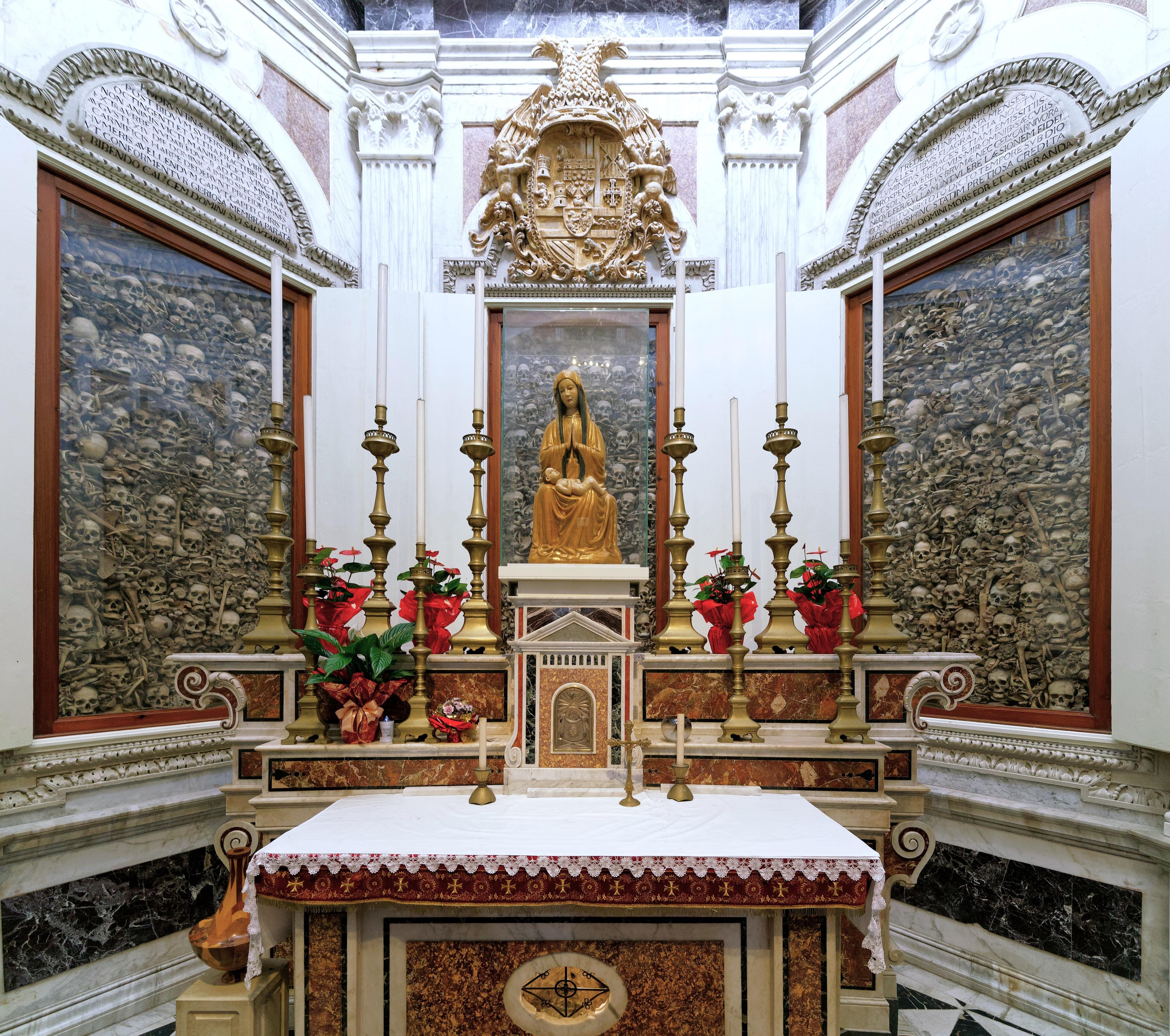
Their bones remain visible today, behind glass in the Cathedral of Otranto—a physical reminder of what happened there in August 1480.
In 2013, Pope Francis canonized Antonio Primaldo and his companions as the “Martyrs of Otranto.”
More than five centuries later, their deaths raise an uncomfortable question:
How much has really changed?
Consider first the strange ritual that follows almost every modern act of jihadist violence.
A Muslim terrorist invokes Islam. He quotes Islamic scripture. He shouts Allahu Akbar. He identifies his victims as infidels. He announces that he is acting in the name of jihad. He slaughters them—including through beheading.