"I am the Way, the Truth, and the Life"

Father God, thank you for the love of the truth you have given me. Please bless me with the wisdom, knowledge and discernment needed to always present the truth in an attitude of grace and love. Use this blog and Northwoods Ministries for your glory. Help us all to read and to study Your Word without preconceived notions, but rather, let scripture interpret scripture in the presence of the Holy Spirit. All praise to our Lord and Saviour Jesus Christ.

Please note: All my writings and comments appear in bold italics in this colour
Showing posts with label Panama. Show all posts

Thursday, September 17, 2026

Latin America Rising > Extraordinary El Niño almost guaranteed for Peru - will upset economy; USA shifts $52m in military aid to Latin America


Risk of 'extraordinary' coastal El Niño rises in Peru

Peru is expected to face an "extraordinary" coastal El Niño that could lead to critical water deficit in the Andes. File Photo by Ernesto Arias/EPA-EFE

Sept. 15 (UPI) -- Peru's climate authorities have raised to 85% the probability that the coastal El Niño phenomenon will reach "extraordinary" intensity between September and January, with expected effects on transportation infrastructure, food production, water supplies and household spending.

A technical report issued Monday by the country's scientific commission known as ENFEN confirmed that the South American coast is facing abnormal ocean warming that could push temperatures to record levels.

The conditions significantly increase the threat of torrential rains, widespread flooding and severe damage to Peru's infrastructure.

According to ENFEN, the probability for September rose 10% from the 75% projected in late August. The probability of reaching extraordinary intensity falls to 82% in October, 78% in November, 70% in December and 59% in January. For February and March, the most likely scenario ranges between strong and extraordinary intensity.

ENFEN's scientific assessment, along with projections from consulting firms and economic groups under an extraordinary-intensity scenario, points to severe structural and biological consequences for Peru's fishing and agricultural sectors.

Extreme warming of surface waters dramatically alters the marine ecosystem, reducing the availability of cold-water species, particularly anchoveta, or Peruvian anchovy, which is the foundation of the country's fishmeal and fish oil industry. The fish migrate south or move into deeper waters in search of lower temperatures.

Economic projections estimate that Peru's extractive fishing sector could contract between 22% and 33.9%, putting tens of thousands of jobs at risk and disrupting normal fishing seasons, the newspaper El Comercio reported.

At the same time, warmer waters encourage the arrival of warm-water species, providing temporary relief for artisanal fishers but failing to offset losses in the industrial fishing sector.

Agricultural exports and regional food security could also suffer significant setbacks from the looming climate crisis.

Along Peru's northern and central coasts, air temperatures expected to remain well above normal during the Southern Hemisphere spring could affect flowering and yields of key crops including blueberries, mangoes, avocados and lemons. Agricultural output could fall by more than 6%, potentially pushing up prices for staple foods in 2027, according to reports by Infobae.

The situation is expected to worsen beginning in November with the arrival of torrential rains and flooding that could destroy irrigation infrastructure and transportation routes. In contrast, Peru's southern Andean highlands face a critical water deficit that threatens family farming and traditional livestock production.


U.S. shifts $52 million in military aid toward Latin America

By Mar Puig    
Peruvian President Keiko Fujimori greets U.S. Secretary of State Marco Rubio during a press conference at Government Palace in Lima, Peru, on September 10. Rubio was visiting Peru as part of a diplomatic tour of South America, which also included stops in Colombia and Ecuador. Photo by Paolo Aguilar/EPA

Sept. 16 (UPI) -- The Trump administration plans to redirect $52 million in military assistance previously allocated to countries in Europe, the Middle East and North Africa to four Latin American governments.

This marks a shift in Washington's security priorities toward the Western Hemisphere.

The State Department notified Congress on Tuesday that it intends to transfer Foreign Military Financing funds from Slovakia, North Macedonia, Tunisia and Iraq to Panama, Peru, Ecuador and Colombia, according to El País.

Foreign Military Financing provides U.S. funds that recipient governments can use to purchase American defense equipment, services and military training.

The State Department said the money would be used to combat "narco-terrorism," help secure the Panama Canal and reduce the recipient countries' dependence on military supplies from U.S. adversaries.

"These funds will prevent adversaries from establishing strategic footholds in our hemisphere," the department said, in an apparent reference to China's growing presence in Latin America.

The announcement followed Secretary of State Marco Rubio's trip last week to Colombia, Ecuador and Peru, where he promoted broader intelligence-sharing and coordinated security operations under the U.S.-led Shield of the Americas initiative.

Peru and Colombia joined the coalition during Rubio's regional tour, while Ecuador already was participating in its security framework. Panama also participates in the initiative.

During a joint appearance with Colombian President Abelardo De La Espriella, Rubio said the coalition was already becoming operational.

De La Espriella said Colombia would prioritize security cooperation, military modernization and the fight against transnational crime, according to the Colombian presidency.

Peruvian President Keiko Fujimori announced her country's entry into the coalition during Rubio's Sept. 10 visit to Lima, saying membership would allow Peru to receive intelligence more quickly and respond more forcefully to criminal organizations.

The reallocation comes as Washington is also intensifying pressure on Cuba. Although the State Department has not said the $52 million is directed against Havana, all four recipient countries participate in a regional security coalition that drew sharp criticism from Cuba when it was established.

President Donald Trump formally introduced Shield of the Americas at a March 7 summit in Florida. During the gathering, Trump said Cuba was in its "last moments" under its current political system and predicted that the island would have "a great new life," Diario de Cuba reported.

Trump also said he and Rubio were negotiating with Cuban authorities, although Havana disputed his characterization of the contacts. Trump has separately called Cuba "a failing nation" and described it as being on the precipice of collapse.

Cuban President Miguel Díaz-Canel responded by calling the coalition a "reactionary and neocolonial" initiative that threatened Latin American sovereignty.

Cuban Foreign Minister Bruno Rodríguez said it represented a "grave threat" to regional peace and accused participating governments of subordinating themselves to Washington, according to Diario de Cuba.

In a March analysis, the same Cuban outlet contended that the coalition reflected Cuba's increasing political isolation as more Latin American governments aligned themselves with Washington and distanced themselves from Havana.

The funding also could give Shield of the Americas greater operational capacity. Shortly after its launch, Chatham House noted that the initiative lacked dedicated resources for intelligence-sharing, joint exercises and the interception of illicit cross-border flows.

Because the four recipients participate in Shield of the Americas, the transfer could begin addressing that gap. However, Washington has not described the $52 million reallocation as an operation against Cuba or said the money will be used to intercept Cuban vessels, restrict Cuban intelligence activities or disrupt the island's overseas programs.

Wednesday, July 30, 2025

Latin America Rising > The World's fastest aging population is in Latin America; Central America offers great lifestyles for US retirees


Latin America has the fastest aging population in world

By Macarena Hermosilla
   
Though Uruguay leads the trend, population aging is accelerating across Latin America. File Photo by Raúl Martínez/EPA

July 29 (UPI) -- Uruguay is experiencing one of the most significant demographic transformations in Latin America, driven by a declining birthrate and an aging population.

According to projections from the National Institute of Statistics, the country's total fertility rate dropped to 1.27 children per woman in 2023 and is expected to fall to 1.20 by the end of this year -- well below the replacement-level threshold of 2.1.

The population, which peaked at 3.51 million people in 2020, is projected to decline steadily, falling to some 3 million by 2070. By then, more than 32% of residents will be over 65, while only 11.5% will be under 15.

Though Uruguay leads the trend, population aging is accelerating across Latin America.

While the region is not the oldest in absolute terms -- Europe and East Asia have higher shares of older adults -- it is aging faster than anywhere else in the world.

According to the United Nations Population Division, Latin America will make the demographic shift from a young to an aging society in less than 40 years -- a transition that took Europe more than a century.

In countries such as Chile, Brazil and Argentina, more than 15% of the population is now over the age of 65, and the median age exceeds 32, reflecting a rapid demographic shift.

This shift coincides with a long-term drop in fertility, now averaging 1.8 children per woman. The decline is linked to a range of factors: improved access to education, increased female labor force participation, urbanization and evolving family values.

One particularly significant factor has been the decline in teenage pregnancies, which for years accounted for a substantial share of total births in several countries. In Latin America, fertility among women ages 15 to 19 remained high even as it declined in other age groups -- but over the past decade, it has dropped sharply.

Helena Cruz Castanheira, a demographer at the Latin American and Caribbean Demographic Center of the United Nations Economic Commission for Latin America and the Caribbean, said the decline happened faster than expected.

"We expected the fertility rate to stabilize around the replacement level -- 2.1 children per woman -- by 2020, but overall fertility continued to fall below that threshold, and one reason was the significant drop in births among teenagers," she said.

Uruguay again offers a clear example: between 2016 and 2018, access to free subdermal contraceptive implants accounted for one-third of the decline in teen fertility.

This trend is playing out in other countries, as well. In Colombia, for example, 2024 saw the lowest number of births ever recorded -- 445,011 -- of which only 3,159 were to teenage mothers.

Marijuana > The Astounding Effects It Is Having on Civilization - No one is talking about

Although the average age of first sexual activity has remained stable -- or even declined -- in some countries, what has changed is increased access to and use of contraceptives, partly due to public policies focused on sexual and reproductive health.

Still, Latin America and the Caribbean continue to have the second-highest rate of teenage fertility in the world, with 52 births per 1,000 women ages 15 to 19 in 2022, compared with the global average of 39.

Each year, more than 1.6 million girls and teens in Latin America become mothers -- many of them victims of sexual abuse and living in poverty and vulnerable conditions. This reality limits their access to education and employment and reinforces intergenerational inequality.

Cruz emphasized that the goal of demographic policy should be to ensure women can have the number of children they want, when they choose to.

"Unplanned teenage pregnancies are associated with more difficult life paths for young mothers. That's why countries must continue investing in sexual health, family planning and education," she said.

According to a report from Austral University in Argentina, only Ecuador, Paraguay, Mexico and Peru currently show a more favorable outlook, with a larger share of youth under 15 -- suggesting greater long-term productive potential.

By contrast, the population age 65 and older has grown steadily across the region, reaching or surpassing 15% in several countries. This trend is reflected in indicators such as median age, which now exceeds 30 in most nations. Uruguay, Chile, Brazil and Argentina report the highest figures.

As the population ages, there are fewer working-age people for each retiree.

Uruguay offers a clear warning: aging is happening faster than expected. Without adjustments to social, health, pension and elder care policies, the economic and social consequences could be severe.


Isn't it ironic that Latin Americans are coming to the USA to make more money, and retiring Americans are moving to Latin America because their money is worth more there?


Index: 3 Latin American nations offer nicer lifestyles for U.S. retirees

By Mar Puig
   
A man rests on Jaco beach, in San Jose, Costa Rica, in July 2024. The country attracts retirees with its biodiversity, peaceful environment and high-quality medical care. File Photo by Jeffrey Arguedas/EPA

July 29 (UPI) -- Panama, Mexico and Costa Rica have emerged as leading destinations for U.S. retirees this year, offering a more affordable, safer and more comfortable lifestyle overseas, according to the 2025 Global Retirement Index prepared by International Living magazine.

The rising global population over age 65 -- projected to reach 16% by 2050, according to Statista -- is driving a wave of retiree migration focused on mild climates, access to quality healthcare and an active lifestyle with lower financial strain.

Data from the Social Security Administration show that more than 730,000 U.S. retirees receive their benefits while living abroad, with Latin America accounting for a growing share.

Panama tops the global retirement rankings for its accessible pensioner visa, political stability and retiree perks, including 25% discounts on electricity and restaurant bills, and up to 50% off cultural activities.

The cost of living there for a couple starts at about $2,400 per month. The country also offers 18-month temporary residency through a remote work visa.

Mexico ranks fourth, driven by its low cost of living, cultural diversity and affordable healthcare. According to the report, a retiree can live comfortably on about $1,500 a month. In tourist areas such as the Riviera Maya, monthly rent averages around $500.

Puerto Vallarta, San Miguel de Allende and Chapala remain among the most popular destinations for U.S. retirees.

Costa Rica, ranked third in the index, attracts retirees with its biodiversity, peaceful environment and high-quality medical care. Residency is available with a minimum monthly income of $1,000, and housing can be found starting at $550 a month.

The Central Valley is especially popular for its mild climate and proximity to top-tier healthcare services.

Rosmery Hernández, a professor at the National University of Costa Rica, said the country "has spent decades building a quality-of-life environment based on public policy, education and civic participation, which today makes it attractive to retirees from the United States and Europe."

She also noted that Costa Rica offers a strong healthcare system, easy access to international flights and infrastructure that makes travel within the country easy.

However, Hernández warned that the growth of the international retiree market has accelerated gentrification in areas like Guanacaste, raising the cost of services and land for local residents.

"The challenge is finding a balance that allows local communities to coexist with new international residents, creating mutual benefits without triggering displacement," she said.

While European countries like Portugal, Spain and France also rank among the top international retirement destinations, Latin America offers advantages such as geographic proximity to the United States, more flexible immigration policies and a cultural environment that feels more familiar to many Americans, according to the retirement index.

All three Latin American countries have strengthened their immigration frameworks and services to attract this demographic, as more U.S. citizens view retiring abroad as both a financially viable and socially enriching option.


Sunday, July 6, 2025

Politics - Latin America Rising > Panama Protests result in suspension of constitutional rights; BRICS summit kicks off in Rio; USA and Colombia withdraw diplomats


Panama extends suspension of constitutional rights amid protests

By Osvaldo Silva
People walk along a blocked street during the day of protests in Changuinola, Bocas del Toro, Panama, this past weekend. Panama will extend its suspension of constitutional rights in Bocas del Toro province through June 29 in response to escalating anti-government protests. Photo by Bienvenido Velasco/EPA-EFE

June 26 (UPI) -- Panama will extend its suspension of constitutional rights in Bocas del Toro province through June 29 in response to escalating anti-government protests that have left one person dead, more than 300 detained and dozens injured, including 14 police officers.

After two months of roadblocks, demonstrations and vandalism, Panama's Cabinet Council said it was necessary to temporarily restrict the constitutional rights to free assembly and movement in an effort to restore order in the region.

On June 20, the government issued a five-day decree suspending those rights and launched a special operation that deployed 1,500 additional police officers to the province.

Bocas del Toro has become the epicenter of a deep political and social crisis in Panama, sparked by mass protests following the approval of a pension system reform and a security cooperation memorandum signed by the Panamanian and U.S. governments.

While the government has presented the memorandum as a way to strengthen security and cooperation, many Panamanians see it as a surrender of national sovereignty and a sign of U.S. interference in the country's internal affairs.

The current unrest in Panama stems from a combination of long-standing issues -- including poverty, social inequality and a lack of opportunity -- that have fueled widespread protests and violence.

Rejection of the pension reform, which eliminated some benefits, mobilized teachers and workers from the U.S.-based banana company Chiquita Brands. The company ultimately shut down its operations in Panama due to the strike. While some benefits were reinstated for banana workers, other affected groups -- including teachers -- remain mobilized and continue to demand the full repeal of the reform.

The demonstrations, which often include road blockades and clashes, have been met with a heavy police crackdown. Violent confrontations and mass arrests have led to accusations of excessive force and due process violations by authorities. According to Panamanian media reports, young people and teenagers make up a significant portion of the protesters.

The government has defended its crackdown, claiming that "criminal gangs" and "delinquent groups" have infiltrated otherwise peaceful demonstrations.

A growing concern is the lack of information about the whereabouts of those detained, who have been transferred to at least three provinces outside Bocas del Toro -- compromising their right to a legal defense, attorney José Luis Santamaría told La Estrella de Panamá.

Amid the crisis, President José Raúl Mulino has proposed a sweeping "state reform" and a constitutional overhaul. He acknowledged that the current system is "broken" and "completely collapsed," reflecting widespread public frustration with Panama's institutions and bureaucracy.

Still, the promise of reform has been met with skepticism. Many Panamanians have seen similar proposals fail to deliver results in the past, and distrust in the political class remains high. Critics question whether the initiative offers a real solution or merely seeks to calm public anger without addressing the root causes of the crisis.

The nationwide teachers' strike has entered its third month, with an estimated 30,000 educators participating -- roughly 57% of Panama's public school workforce.

On June 24, the government issued a decree allowing the immediate hiring of interim teachers to fill vacancies in areas where the strike continues. The measure will remain in effect through December 2025. The teachers' union has announced plans to challenge the decree in court, arguing it is unconstitutional.

The protests have dealt a severe blow to the economy, with daily losses estimated between $80 million and more than $100 million. The unrest has directly affected key exports, local businesses and investor confidence. Panama's banana industry -- one of its traditional agricultural and export pillars -- accounted for about 17% of total agricultural export value in 2023, or roughly $140 million.

While the government maintains its growth targets, any recovery will depend on ending the blockades and restoring social order.

Although the protests have not directly disrupted operations at the Panama Canal, they have caused indirect logistical delays. Road blockades have slowed or complicated the delivery of supplies, replacement parts and essential services such as crew changes and food.

Thanks to improved water levels and operational upgrades, the Panama Canal saw a 30% increase in vessel transits and a 22% rise in cargo volume between October 2024 and May 2025, according to the Panama Canal Authority.

Including both the expanded and original Panamax locks, the canal recorded 8,057 transits over the eight-month period -- up 29.2% from 6,235 during the same span of fiscal 2024.

BRICS summit kicks off in Brazil

The event brings together some 4,000 participants from 37 countries and international organizations
BRICS summit kicks off in Brazil


The 17th annual BRICS summit kicked off on Sunday in Rio de Janeiro, Brazil, which currently holds the group’s rotating presidency. The two-day event is dedicated to multilateral cooperation, as well as various global development and governance issues.

Brazil has named six priorities for this year’s agenda: global health cooperation; trade, investment, and finance; climate change; AI governance; reform of the multilateral peace and security system; and institutional development within BRICS.

This year’s summit brings together around 4,000 participants from 37 nations, including senior dignitaries from member states, partner countries, and international bodies, according to earlier estimates by Brazilian officials.

This year, the Russian delegation is led by Foreign Minister Sergey Lavrov. President Vladimir Putin has joined the plenary session – ‘Strengthening Multilateralism, Economic-Financial Affairs, and Artificial Intelligence’ – via video link.

BRICS was founded, primarily as an economic group in 2006, by Brazil, Russia, India, and China, with South Africa joining in 2010. Over the past year, the bloc extended full membership to Iran, Egypt, Ethiopia, the United Arab Emirates, and Indonesia. 

Last year, at the group’s summit in the Russian city of Kazan, BRICS approved a new ‘partner country’ status in response to a growing membership interest shown by more than 30 countries.

  • 06 July 2025

    19:26 GMT

    The group has officially welcomed its newest member, Indonesia, as well as named ten partner countries, according to the joint statement adopted at the summit. Here is the list of the official partners of BRICS:

    • Belarus
    • Bolivia
    • Kazakhstan
    • Cuba
    • Nigeria
    • Malaysia
    • Thailand
    • Vietnam
    • Uganda
    • Uzbekistan
  • 19:09 GMT

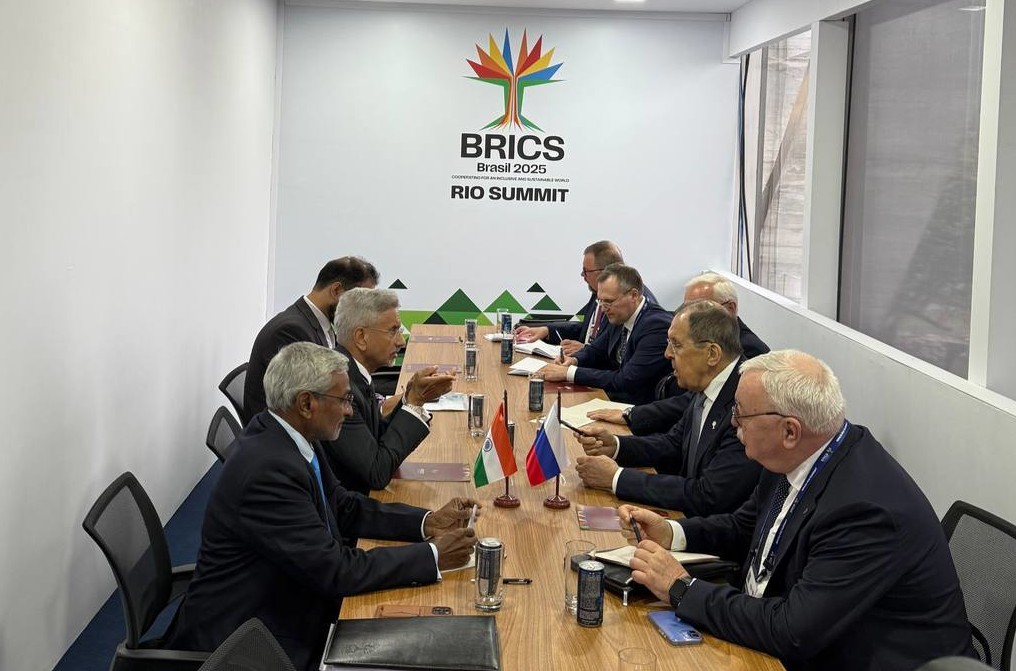
    The Russian delegation led by top diplomat Sergey Lavrov has met with India’s delegation headed by Foreign Minister Subrahmanyam Jaishankar, the Russian Foreign Ministry has said.

    RT


U.S. and Colombia recall diplomats

in deepening row

Colombian President Gustavo Petro seen here talking to reporters outside of the West Wing of the White House in Washington, D.C., on Thursday, April 20, 2023. File Photo by Oliver Contreras/UPI
Colombian President Gustavo Petro seen here talking to reporters outside of the West Wing of the White House in Washington, D.C., on Thursday, April 20, 2023. File Photo by Oliver Contreras/UPI | License Photo

July 4 (UPI) -- The United States and Colombia have recalled their top diplomats from their respective countries amid a deepening rift between Washington and Bogota seemingly centered on an alleged plot to oust Colombian President Gustavo Petro.

The alleged plot was first reported late last month by El Pais, and, according to recordings it reviewed and Republican sources, it involved former Colombian Foreign Minister Alvaro Leyva trying to contact U.S. Secretary of State Marco Rubio to have him and the Trump administration exert pressure to force Petro to resign.

In the recordings, Leyva states he met with Republican lawmakers, including Florida Reps. Mario Diaz-Balart and Carlos Gimenez, as he sought support for his plot.

On Wednesday, Petro commented on X that the previous Biden administration had helped him during "other times that they have wanted to kill."

"From now on, Bolivar's sword continues its path of liberation, and the energy of light and the vibrant people -- And the U.S. government?" he asked.

In the State Department's Thursday statement recalling John McNamara, the interim Charge d'Affairs at the U.S. Embassy in Colombia, spokesperson Tammy Bruce said the move was "for urgent consultations following baseless and reprehensible statements from the highest levels of the government of Colombia."

"In addition to the recall of the charge, the United States is pursuing other measures to make clear our deep concern over the current state of our bilateral relationship," she said.

Hours later, Petro released a statement recalling his ambassador, Daniel Garcia-Pena, from the United States.

"Daniel must come to brief us on the progress of the bilateral agenda to which I committed myself from the beginning of my government," he said.

Gimenez has hit back at the Petro government, accusing the Colombian president of creating a "media circus" to "distract the Colombian people from his terrible management, corruption and mishandling of public funds."

"Let these complicit puppets not complain later when they and their families are denied visas to enter the United States," he said on X.

The alleged plot has shaken the Colombian politics.

Earlier this month, Colombia Attorney General's Office opened an investigation into Leyva and his alleged plot.

It is also the second public spat between the two allies.

In late January, shortly after President Donald Trump took office, Washington and Bogota threatened one another with tit-for-tat tariffs as the White House was barred from sending military planes loaded with migrants to the South American country.