"I am the Way, the Truth, and the Life"

Father God, thank you for the love of the truth you have given me. Please bless me with the wisdom, knowledge and discernment needed to always present the truth in an attitude of grace and love. Use this blog and Northwoods Ministries for your glory. Help us all to read and to study Your Word without preconceived notions, but rather, let scripture interpret scripture in the presence of the Holy Spirit. All praise to our Lord and Saviour Jesus Christ.

Please note: All my writings and comments appear in bold italics in this colour
Showing posts with label Siberia. Show all posts

Sunday, October 4, 2026

Suspected plague outbreak in Siberia - Another bio-lab leak?


Suspected plague outbreak erupts in Russia after scientist dies — Putin accused of trying to cover it up


See more of our coverage in your search results.

A suspected plague outbreak has erupted in Russia — killing a young lab worker, forcing nearly 200 people into isolation and triggering accusations that Vladimir Putin’s regime is trying to keep the infection’s possible spread under wraps.

The alarm was raised in Siberia after a worker at an anti-plague laboratory died of the disease, which killed tens of millions in the medieval Black Death, according to a report from The Moscow Times.

Anna Popova, who heads Russia’s public-health watchdog, then rushed 2,600 miles from Moscow to the Irkutsk region as authorities quarantined a hospital and placed scores of people who had come into contact with the victim under medical observation.

Workers in protective gear descended on the town of Shelekhov in Russia’s Irkutsk Region.
east2west news
Daria Shipilova, 28, a laboratory assistant at the Irkutsk anti-plague Research Institute of Siberia and the
Far East, was the first to die of the illness after she reportedly dropped a test tube in the lab.
Daria Shipilova/e2w
“The situation in Shelekhov, Irkutsk region, where a plague quarantine has been declared, resembles the Wuhan case,” the Russian political insider channel Nezygar warned.

COVID-19 emerged in Wuhan, China, before spreading worldwide and killing more than 7 million people, according to global health estimates.

So far, however, officials say none of the identified contacts has shown symptoms, and their test results have come back negative.

Daria Shipilova, a 28-year-old laboratory assistant at the Irkutsk Anti-Plague Institute, was the first reported fatality.

She reportedly told medical staff that she had accidentally broken a test tube containing live bacteria while collecting samples for testing, according to news outlet Lyudi Baikala, or People of Baikal.

She first fell ill while on an expedition with other workers near Russia’s eastern border with Mongolia.

Shipilova sits with her colleagues at the anti-plague Institute where she worked
Irkutsk Anti-Plague Institute/e2w

She was hospitalized in Shelekhov on Tuesday with symptoms of severe pneumonia, placed on a ventilator and died Thursday, according to reports.

Meanwhile, the regional Gov. Igor Kobzev declined to identify the illness, referring to it only as “a dangerous infectious disease” — and canceled all public events in the region.

Kobzev urged the public to remain calm after meeting with Popova to coordinate emergency containment measures.

Putin meets with Russia’s Chief Sanitary doctor Anna Popova.
Kremlin.ru/e2w

“All identified contact persons have been placed under medical observation. As of today, the contacts show no signs of illness, and their laboratory test results are negative,” Kobzev wrote on the Telegram message app Friday.

Reports also claimed that antibiotics had run out in the Irkutsk region, prompting frightened residents to seek medical help from pharmacies and other medical facilities.

Popova has not publicly commented on the reported outbreak. But senior Russian epidemiologist Mikhal Favorov disputed the account that a broken test tube caused the infection, calling it evidence of a possible cover-up, according to The Moscow Times.

Workers have been conducting a series of tests of people and places in the town of Shelekhov.
Irkutsk Anti-Plague Institute/e2w

“It’s laughable,” said Favorov. “Someone working at the anti-plague Institute in Irkutsk wears a protective anti-plague suit. If you break a test tub, the likelihood of infection is actually very low. In short, It doesn’t matter to the general public — they’ll believe the ‘dropped test tube story.'”

Favorov said Popova’s involvement suggested the situation was serious.

“It’s absolutely hair-raising,” he said, adding, “We will not be told what really happened.”

Plague is caused by the Yersinia pestis bacterium.

The three main forms are bubonic, pneumonic and septicemic plague. Symptoms can include fever, headache, chills, weakness, shortness of breath and coughing. All forms can be treated with antibiotics, particularly when treatment begins early.


Thursday, October 27, 2022

Bits and Bites > A Little Rapunzel in Dubai; Neanderthal Families of Southern Siberia

..

Rapunzel Syndrome: Rat-shaped hair ball retrieved from five-year-old

Dubai girl’s intestine


In a rare condition, Indian expat girl used to ‘ingest hair strands when she was a baby’


Published:  October 27, 2022 09:37
Sajila Saseendran, Senior Reporter
Gulf News
  
Dubai: In a rare medical condition named Rapunzel Syndrome, a rat-shaped ball of hair — 20cm long and 4cm thick — was recently removed from the small intestine of a five-year-old schoolgirl in Dubai.


When KG student Diya Rajesh complained of stomach pain on October 15, her mother Mahalakshmi Rajesh thought her daughter had not yet completely recovered from the viral fever she had suffered three weeks ago following a bout of vomiting, diarrhoea and stomach pain.

However, along with acute abdominal pain this time, she kept vomiting in greenish yellow colour for three days. When the pain did not subside even after three days of symptomatic treatment from a clinic, Diya was rushed to NMC Royal Hospital in Dubai Investment Park, where doctors diagnosed her with Rapunzel Syndrome and retrieved a rat-shaped ball of hair from her small intestine.

Only few such cases have been reported in world medical literature, said Dr Venkatesh M Annigeri, a consultant paediatric surgeon whose team treated Diya.

The syndrome

The syndrome is named after the fairy-tale character Rapunzel who was known for her long hair. However, the condition is caused by the habit of eating or ingesting hair, usually found in young women.

On clinical examination after her admission in the emergency department, Dr Annigeri said Diya was diagnosed to have acute intestinal obstruction (complete block in the small bowel).

“With abdominal ultrasound and Contrast Enhanced Computerised Tomography [CECT], the child was diagnosed with a rare clinical condition — primary small bowel trichobezoar — which was causing acute intestinal obstruction,” he added.

He said trichobezoar or concretion of hair refers to a mass of hair accumulated within the gastrointestinal tract.

Rat-shaper-hair-ball-retrieved-from-the-small-intestine-of-Diya-1666849050408

Rare in young age

After an emergency abdominal surgery that lasted for an hour, the rat-shaped hair chunk was removed from Diya’s small bowel on October 18.

“It is a rare clinical entity. Over 90 per cent of trichobezoars are found in young women and girls between 15 and 20 years of age. Our case is very rare due to her very young age.”

Dr Annigeri said a trichobezoar occurs mainly in association with a psychiatric disorder affecting usually young women, having the tendency of pulling out their own hair (trichotillomania) and eating it (trichophagia), which then remains undigested in the stomach.

“Stomach is the common site of occurrence. Primary small bowel bezoar without associated gastric bezoar like in our case is very rare,” he pointed out.

How did Diya get it?

Speaking to Gulf News, Diya’s mother Mahalakshmi said her child had suffered from the hair-ingesting syndrome only when she was a baby.


“That was when she was six-seven months or so,” she said. Mahalakshmi said she was aware of pica disorder in babies due to which they eat non-food items.

“We had noticed that she was picking up hair from the floor and eating. I had to keep cleaning the house three-four times a day. She used to go under the cot and find out some strands of hair. By the time I catch hold of her, she would have swallowed it,” she recollected.

Mahalakshmi said she was hoping that things would be normal when Diya starts having solid food. And it did. “She stopped that habit when she started eating food after some months.”

However, she never expected that her child had ingested such a huge concretion of hair. “She did not know she had this syndrome. When she grew, she loved growing her hair and she doesn’t like to cut her long hair now. So, it was a big shock to us,” she added.


First 'concrete picture' of Neanderthal family revealed by DNA

Researchers focus on multiple Neanderthal remains found in the caves in southern Siberia


Published:  October 19, 2022 23:18
AFP

A reconstruction of a Neanderthal father and his daughter is seen in this undated handout photo provided by the Max Planck Institute for Evolutionary Anthropology in Leipzig, Germany. Image Credit: REUTERS


Paris: The original Flintstones? The largest genetic study of Neanderthals ever conducted has offered an unprecedented snapshot of a family, including a father and his teenage daughter, who lived in a Siberian cave around 54,000 years ago.

The new research, published in the journal Nature on Wednesday, used DNA sequencing to look at the social life of a Neanderthal community, finding that women were more likely to stray from the cave than men.

Previous archaeological excavations have shown that Neanderthals were more sophisticated than once thought, burying their dead and making elaborate tools and ornaments.

However little is known about their family structure or how their society was organised.

The sequencing of the first Neanderthal genome in 2010, which won Swedish paleogeneticist Svante Paabo the medicine Nobel prize earlier this month, offered a new way to discover more about our long-extinct forerunners.

An international team of researchers focused on multiple Neanderthal remains found in the Chagyrskaya and Okladnikov caves in southern Siberia.

The scattered fragments of bones were mostly in a single layer in the earth, suggesting the Neanderthals lived around the same time.

"First we had to identify how many individuals we had," Stephane Peyregne, an evolutionary geneticist at Germany's Max Planck Institute and one of the study's co-authors, told AFP.

'Seem much more human'

The team used new techniques to extract and isolate the ancient DNA from the remains.

By sequencing the DNA, they established there were 13 Neanderthals, seven males and six females. Five of the group were children or early adolescents.

Eleven were from the Chagyrskaya cave, many of them from the same family including the father and his teenage daughter, as well as a young boy and a woman who were second-degree relatives, such as a cousin, aunt or grandmother.

The researchers also worked out that one man was a maternal relative of the father because he had a genetic phenomenon called heteroplasmy, which only passes down a couple of generations.

In this photo provided by Bence Viola, researchers excavate a cave in the mountains of Siberia, Russia.
Image Credit: AP


"Our study provides a concrete picture of what a Neandertal community may have looked like," Max Planck's Benjamin Peter, who supervised the research along with Paabo, said in a statement.

"It makes Neandertals seem much more human to me," he added.

Genetic analysis showed that the group did not interbreed with its nearby relatives such as humans and Denisovans, hominins discovered by Paabo in caves just a few hundred kilometres away.

However we know that Neanderthals did breed with homo sapiens at some point - Paabo's research also revealed that almost all modern humans have a little Neanderthal DNA.

Except Africans!

Rampant inbreeding

The community of around 10 to 20 Neanderthals seems to have instead bred largely among themselves, displaying very little genetic diversity, the study found.

Neanderthals existed between 430,000 to 40,000 years ago, so this group was living in the twilight of its species.

This photo provided by Bence Viola shows the Chagyrskaya Cave area in Siberia, Russia. Image Credit: AP


The study compared the community's level of inbreeding to endangered mountain gorillas. Another explanation for the inbreeding could be that the Neanderthals lived in an isolated region.

"We are probably dealing with a very subdivided population," Peyregne said.

The researchers found that the group's Y-chromosomes, which are inherited from father to son, were far less diverse than its mitochondrial DNA, which is inherited from mothers.

This suggests that the women travelled more frequently to interact and breed with different groups of Neanderthals, while the men largely stayed home.

Travelled!???!! Does that mean something like kidnapped?

Antoine Balzeau, a palaeoanthropologist at France's National Museum of Natural History, said that fossils found in the Sidron Cave in Spain prompted suggestions of a similar Neanderthal community there, but far less complete genetic material is available.

Balzeau, who was not involved in the latest study, said it was "a very interesting technical feat".

But "it will have to be compared with other groups" of Neanderthals, he added.


Wednesday, October 27, 2021

Bits and Bites From Around the World > Siberian Woman - 35 Years in a Barrel; Twitter Blasts Khan for Woke Project; Stock up on Dung Time

..

Siberian woman discovered living in metal barrel for more than

3 decades with no heating or power given new home by bloggers

22 Oct, 2021 15:25

(L) © Instagram / trishhhh_duble2; (R) © RIA / Alexander Kryazhev


A group of bloggers have bought a home for a Russian woman who lost her job at a Soviet military factory and took to living in a rusty barrel for 35 years, refusing to move into care despite having no electricity or running water.

Svetlana Chernova, from the Siberian city of Omsk, had been living in the dilapidated cistern for over three decades when her story came to light earlier this week. The electricity was cut off two years ago and there is neither running water nor gas. Instead, Chernova must walk hundreds of meters to collect water from a pump and warm her home with a woodfired stove. 

With no relatives and a pension of 14,000 rubles (around $200), she says she was unable to rent an apartment after her job as a crane operator was scrapped when the plant she worked in closed down. 

After Russian officials were made aware of Chernova’s living situation, they requested documents that proved she was legally allowed to live in the barrel, including details about the property, so they could provide her with appropriate housing. However, the forms she lodged at the time are said to have been lost and are irretrievable.

Chernova worked at a factory not far from the barrel she has called home for more than three decades, until it was shuttered after the collapse of the Soviet Union in 1991. There was insufficient housing to accommodate all of the factory’s workers, so some employees were given barrel-like structures to live in temporarily whilst they waited to be designated proper homes. In wintertime, those living in the make-shift accommodation had to sleep in their clothes due to heating problems with the structures. In summer, residents had no respite from the heat.

“They were building a nine-story building nearby, they promised I could have a two-room apartment in it,” she says. “When they were distributing them, I was working on the crane, and another woman, who was seventieth in the queue, jumped in. Later she sold her home and left for Germany. I complained to the director. He shrugged his shoulders and said business was already going badly, and it was not up to him.”

“For some reason, other people received housing. I went to the administration many times, but to no avail,” Chernova continued.

Chernova did previously refuse outright officials’ offers to move her to a comfortable nursing home, saying "they almost forced me to do it. But I think I deserve my own house. I hope they will find an apartment.”

“I wanted to agree. But I looked and realized it won't do. One house is too far from the city. And the second…I just didn't like it. And the owner is there without a wife  – maybe he called me for a reason,” she says.

However, media coverage of Chernova’s living conditions sparked outrage among community activists, with volunteers bringing her food, and bloggers raising over two million rubles (around $28,420) to buy her a new home, RIA Novosti reports.


Give our tax back, citizens say as London mayor launches

funding scheme for renaming streets in the name of diversity

22 Oct, 2021 09:35

Mayor of London Sadiq Khan (FILE PHOTO) © REUTERS/Henry Nicholls


The mayor of London has unveiled his latest scheme aimed at making the capital more diverse. A £1 million fund will grant community-led organizations up to £25,000 to improve their public places, including changing street names.

In a press release on Thursday, the office of Sadiq Khan, the mayor of London, announced the creation of a £1 million Untold Stories fund which aims to “champion diversity and improve representation in the capital’s public spaces.”

The fund will be made available to community-led groups, who can receive up to £25,000, as a grant. The mayor’s office highlights that the money could be used for new ideas such as “murals, street art, street names and other projects to ensure we are told a fuller version of our capital’s story.”

"London’s diversity is its greatest strength but for far too long our capital’s statues, street names and buildings have only shown a limited perspective on our city’s complex history," Khan said in a statement. 

"London’s diversity is its greatest strength" - where does that come from, and how is it determined?
When you consider the hundreds of Pakistanis who have raped, drugged, and trafficked thousands of young British girls around the country - how is that considered a strength? When police and councils ignore and enable this grooming to go on, how is that considered a strength? When the vast majority of terrorist events are performed by Muslims, how is that a strength? When these things provoke the formation of far-right groups, how is that a strength?

The announcement followed a City Hall-funded study into the capital’s 1,500 monuments. It found that only 4% of statues were dedicated to named women, and only three of them depicted women of colour. There are also twice as many statues depicting animals as women. 

4% of 1,500 is 60! Considering that mostly all government, business people and military heroes were men for over a thousand years, that seems pretty reasonable to me. I have no doubt that women of colour are underrepresented, but I suspect by not very much.

Unsurprisingly, the mayor’s latest woke escapade hasn’t gone down well on social media, where many Britons demanded Khan stop wasting taxpayers’ money. One Twitter user labelled the move as an “unnecessary gesture” and called on Khan to focus on more important issues, such as homelessness and affordable housing. 

Others concurred: “How about he spends it on fighting knife crime instead. How anyone votes for him is beyond me,” another social media user wrote. “That’ll stop all the stabbing,” one person chimed in ironically. 

Some people even asked for their council tax back, noting that the mayor’s office clearly had spare money to throw away on diversity projects such as this. 

Others were more concerned about aspects of the city’s history being continually cancelled. One person argued that the capital’s history was now being “systematically stripped away,” while another asked why the mayor was so intent on cancelling Britain’s heritage and way of life; “if people are offended by such simple things, then they know where the exit is,” they added. 

One person pleaded with the mayor to accept the city’s history. “Accept the bad along with the good, it’s what made us, gives us our identity. We might not be perfect but we’re as good as most,” they wrote, adding that even black nations were involved in the capture and trade of slaves. 

Some were more cynical, suggesting the mayor’s aim of telling the capital’s “fuller” story would be achieved by renaming Knightsbridge as Knifesbridge, and Elephant and Castle as Bomb and Bus. “Yea why not, Taliban road, jihad way, kaffir Avenue,” another jibed. 

While the mayor’s announcement may have received the support of his Labour colleagues at City Hall, his latest diversity drive certainly didn’t have many fans on the Twittersphere. 

The UK is currently celebrating Black History Month. Earlier in October, Transport for London (TfL), the government body responsible for the capital’s transport, unveiled a novelty Tube map in which the names of 272 stations were replaced with the names of black people.

“This reimagination of the iconic tube map celebrates the enormous contribution black people have made,” the mayor told the BBC. 

One week earlier, a TfL-funded project released a tour guide of south London in which the authors claimed some plants have racist origins and that botanical terms like ‘native’ and ‘invasive’ are offensive.


Time to stock up on dung? Ukrainian MP tells citizens to collect

& store manure for energy as country awaits possible fuel crisis

27 Oct, 2021 10:47

© Sputnik / Irina Gerashchenko


Ukrainian citizens can’t rely on the government in Kiev for energy and should take matters into their own hands by collecting manure and drying it out before the bitterly cold winter comes, a long-serving opposition MP has warned.

The bizarre suggestion comes as the Ukrainian authorities struggle to deal with both gas and coal shortages.

Speaking to the Nash TV channel on Tuesday, Mikhail Volynets suggested the country’s shortage of energy resources could leave citizens fighting for themselves.

Volynets is a veteran MP, having served in four convocations of the country’s parliament since 2002. He is currently a member of the Fatherland party, a conservative pro-European faction headed by Yulia Tymoshenko.

“It’s necessary to warn people in rural areas to collect dung and dry it,” Volynets said. We have to rely only on ourselves and not on the government.’

The MP expressly referred to ‘kiziaks,’ the dried animal-feces discs used by Kazakhs on the steppe. The dung is cut into small squares, then left in the sun for several weeks or months. Once dried out, it acts in a similar way to coal and is, therefore, a way to warm the home.

On Sunday, it was revealed that a lack of coal supplies had caused the shutdown of the Slavyansk thermal power plant, in the country’s Donetsk region. At the same time, several other plants reported that they had less than 10 days of supply left. This announcement came just four days after the Federation of Employers of Ukraine dubbed the current situation as “disastrous,” noting issues with both coal and gas supply.

Last week, Tymoshenko described the energy crisis as the result of “corruption” and the authorities’ incompetence, and demanded that a national state of emergency be called.

However, despite the growing crisis, many parliamentarians remain steadfast in refusing to cooperate with Gazprom, despite the country’s reliance on the Russian energy giant for gas supplies. Last week, independent MP Lyudmila Buymister claimed any agreement would cause Kiev to be “brought to its knees” before Moscow.


Tuesday, September 22, 2020

End Times Notes - Another False Jesus Cult Growing in a Siberian Forest

Siberian cult leader 'Vissarion' who claims to be ‘re-incarnation of Jesus Christ’
arrested over psychological violence
By Jonny Tickle

Police in Siberia have arrested three leaders of the notorious ‘Church of the Last Testament’ religious sect on suspicion of using psychological violence to extract income, resulting in “serious harm” to their followers.

Founded in 1991, the movement forbids its adherents from smoking, drinking or exchanging money, and they live as vegetarian subsistence farmers. The sect's creator, Sergey Torop, believes he is the reincarnation of Jesus Christ and brands himself as 'Vissarion’.

Jesus of Siberia   25:47


According to Russia's Investigative Committee, Torop, along with other leaders Vadim Redkin and Vladimir Vedernikov, will be charged with “creating a religious association whose activities involve violence against citizens.” 

The three men were arrested in the Siberian region of Krasnoyarsk, about 4,500 km (2796 miles) east of Moscow. The area has several villages built by followers of Vissarion, including one called Tiberkul, commonly known as “the City of the Sun,” which was constructed in 1995.

A member of the religious organization, Alexander Staroverov, posted several videos on Facebook showing masked men walking around the village, some of whom were armed.

The sect came under legal scrutiny on two separate occasions in 2020. In February, members of the church were interrogated as part of an investigation into corruption and fraud in the Istoki School, attended by the children of Vissarion's followers. In August, a criminal case was opened after representatives of Vissarion prevented journalists from filming inside the community.

The Church of the Last Testament became well known in the West in 2012, when Vice News released a documentary on its Youtube channel called ‘Siberian Cult Leader Thinks He's Jesus’. In 2014, a similar documentary called ‘Siberian 'Messiah’ was filmed by RT.

There are many cults and non-cult people who desire to create Heaven on Earth. The Bible promises that Jesus will return to Earth and rule over it for 1000 years before creating a New Heaven and a New Earth. When He does return, everyone will know it. He will not return in the middle of a Siberian forest, or on the streets of New York City as a woman. He will return to Mount Zion.

The Bible also warns that there will be many who come in his name prior to that time. Vissarion and his followers, by their isolation, will probably not be prepared for the coming of the real Christ. They must first be tried and tested which they have little possibility of passing while believing in a false Christ.

Dan 11:35 And some of them of understanding shall fall, to try them, and to purge, and to make them white, even to the time of the end: because it is yet for a time appointed.
Dan 12:10 Many shall be purified, and made white, and tried; but the wicked shall do wickedly: and none of the wicked shall understand; but the wise shall understand.


Thursday, September 5, 2019

Denisovans, Mysterious Human Relatives, Looked Just Like Us in At Least 1 Way

Rediscovery of missing finger bone shows slender fingertips
unlike knobby Neanderthal finger bones

Some human groups have more than five per cent Denisovan DNA

Emily Chung · CBC News 


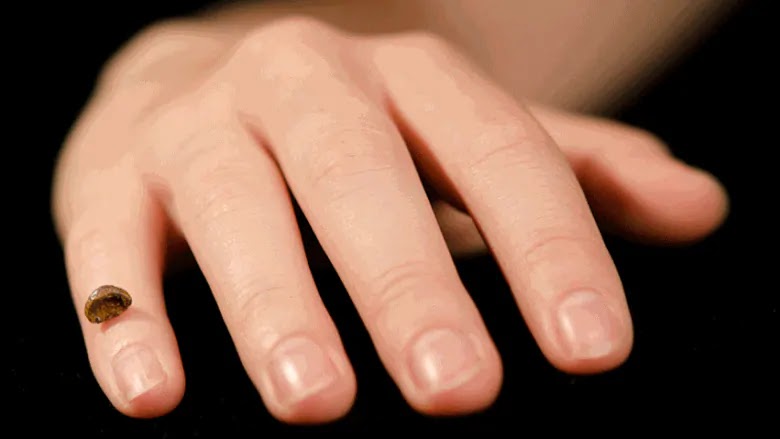
Denisovans were originally identified from DNA in a bone from the base of the pinky finger of a young girl, shown above. Now the rest of that bone has been rediscovered, showing the entire bone is similar to that of modern humans and different from the fingertip of Neanderthals, which are more closely related to Denisovans.

They may have had huge, brutish-looking teeth, but Denisovans — ancient cousins of humans and Neanderthals — had slender, delicate fingertips like ours, a new study shows.

After rediscovering a missing piece of one of only five Denisovan fossils ever discovered, researchers from France, Russia and Canada digitally reconnected the two halves from the tip of the pinky finger from a Denisovan girl. 

The reconstruction showed it was indistinguishable from a human fingertip and different from the knobbed or clubbed fingertip bones of Neanderthals, they reported Wednesday in the journal Science Advances.

The finding is a small piece of the puzzle in figuring out who the mysterious Denisovans were, given that only five small fossils of the hominin species have ever been found.

"Until now, all we knew was how their teeth looked," said Bence Viola, a University of Toronto anthropologist who co-authored the paper. "All these little pieces allow us to build a picture of who the Denisovans were."

The image above shows the bone from the tip of the pinky finger from, left to right, a Neanderthal, modern human and Denisovan. (Bennett et al./Science Advances, licensed under CC BY NC)

The new finding suggests researchers looking for Denisovan fossils might have to be more open-minded about what to look for, and that some fossils previously identified as modern humans may, in fact, be Denisovans, said Eva-Maria Geigl, an anthropologist at the Institut Jacques Monod at the Centre national de la recherche scientifique and the University of Paris who also co-authored the report.

More closely related to Neanderthals

Denisovans were first identified in 2010 as a new species of hominin using DNA extracted from the bottom half of the finger bone. Genetic analysis showed Denisovans were more closely related to Neanderthals than modern humans, but Denisovans interbred widely with modern humans, and some human groups have more than five per cent Denisovan DNA.


However, scientists know little about what they looked like, other than the fact they had massive molars similar to those of a more ancient hominin, Homo erectus.

Viola was a postdoctoral researcher at the lab Max Planck Institute for Evolutionary Anthropology in Leipzig that analyzed the DNA from the bone from the base of the fingertip. What the researchers didn't know at the time was that after the bone was excavated from Denisova Cave in Siberia in 2008, it was cut in half.

The finger bone was excavated at Denisova Cave in 2008. (Bence Viola)

They only learned a couple of years ago that the other half had been sent to a different lab in the U.S. for analysis.

That half was subsequently photographed and measured by Geigl, who noticed that it had been cut. After she analyzed it genetically, she realized that it had exactly the same DNA as the bone that identified the Denisovans as a new species, and therefore must be part of the same bone.

But because the DNA analysis had already been published by the German researchers, and she was asked to return the bone to the U.S., she set the project aside.

2 halves reunited

Some years later, she said, she spoke to the Viola and the German researchers about the bone, which they didn't know about.

"It was a shock to us that somebody had the other half," Viola said in a phone interview from Kyrgyzstan, where he was doing field work.

Geigl offered to show the bone to them and suggested they find some way to publish the information.

"It's pity that nobody knows the no one knows that I'm the only one who has the pictures of this bone in my computer," she recalled telling them.

Viola was keen to see the photos, but quite surprised when he received them.

"This looks very different than what I expected," he recalled, writing in response.

The Denisovans had large, unusual teeth unlike those of humans or Neanderthals. (Bence Viola/University of Toronto)

Based on their huge teeth and a small fragment of skull, he had the impression Denisovans were even heftier and therefore less human-like than Neanderthals: "All of those are very large and robust. They come from huge individuals."

Geigl said the fact the bone looked more human than Neanderthal wasn't really a surprise for her. "Evolution is not something linear. Some features evolve faster than others."

The new finding suggests the knobs on the ends of Neanderthals' fingertips evolved relatively late.

Knobs on the fingertips suggest devolution, not evolution.

Viola combined the images of the two halves to reconstruct of the entire finger. That allowed the researchers to see that based on the growth of the bone, the girl it belonged to was likely a couple of years older than previously thought — about 14 or 15.

Matthew Tocheri, who holds a Canada Research Chair in Human Origins at Lakehead University in Thunder Bay, Ont., and was not involved in the study, said he thought the results were "kind of neat."

Like Geigl, he thought the similarity to humans was not that surprising. He noted modern humans, Neanderthals and Denisovans are all closely related, and, in fact, many Neanderthal and human features are indistinguishable. The fingertips just happen to be one difference.

Similarly, many Denisovans characteristics will likely be very human-like, and we don't yet know their "distinguishing" features, he said.

Tocheri said it was nice to have a bone that could be compared in modern humans, Denisovans and Neanderthals. But he added, "That's one bone out of over 200 elements to the skeleton. So we've got another 199 or so to go."


Wednesday, September 19, 2018

Russian Elections Body Recommends Annulment of Far East Vote Over Violations

Corruption is Everywhere - Can You Imagine, in Russian Elections?!!

Russian Central Election Commission head Ella Pamfilova announces the preliminary results of the 
Single Voting Day © Vitaliy Belousov / Sputnik

Russia’s Central Elections Commission has advised to cancel the results of gubernatorial polls (3rd story on link) in Primorsky Krai Region and hold new voting in three months. Both frontrunners in the race are against the move.

On Wednesday all members of the commission unanimously voted to recommend the elections re-run in the region. The commission’s statement reads that in current situation and on the basis of protocols presented by regional elections authorities it is impossible to make any conclusions about the results of the voting.  

A rally in support of candidate Andrey Ishchenko in Vladivostok © Vitaly Ankov / Sputnik

In particular, the members of the body agreed that it is impossible to determine the exact result of the campaign because for some time during the elections day all documents and protocols of the voting were left unattended in the offices of the regional elections commission.

The head of the Central Elections Commission, Ella Pamfilova, has expressed hope that the regional authorities would support the recommendation and quickly organize the re-run.

The advice to hold the elections in the Primorsky Krai Region anew was made soon after the second round of gubernatorial polls almost ended in a draw. Only full vote count revealed that incumbent governor – Andrey Tarasenko of the parliamentary majority United Russia – apparently outpaced his main competitor – Andrey Ishchenko of the Communist Party of the Russian Federation – by a very narrow margin.

The communist candidate almost immediately accused his competitor of violations and announced that he was going on hunger strike which, however, lasted less than 24 hours. The incumbent governor replied with similar accusations in the Communists’ address, claiming that that monitors had registered violations in favor of the Communist candidate in at least two cities of the region.

Acting Governor of the Primorye Territory Andrei Tarasenko, right, congratulates a graduate at an event devoted
to the first graduation of officers of the Far Eastern Fire and Rescue Academy © Vitaliy Ankov / Sputnik

However, both candidates appear to be unhappy about the looming cancellation of the disputed vote. Tarasenko said in press comments that he did not plan to participate the re-run. Ishchenko described the advice as “absurd” and said that he did not agree with it because the governor had been elected in the runoff on Sunday.

Vladimir Putin’s press secretary Dmitry Peskov told reporters on Wednesday that the Kremlin supported the recommendation of the Central Elections Commission to hold new elections in the Primorsky Krai Region. Peskov reminded that President Putin had previously described the fairness of elections as top priority and noted that this applied to all sorts of polls in the country.

Previously Peskov has told reporters that Andrey Tarasenko would remain in the governor’s seat until he is either confirmed or replaced by someone else on the post by a vote.

Primorsky Krai, RUS