
https://x.com/DahliaKurtz/status/2069169906004656634/video/1
According to Grok:

Canada gave citizenship to a terrorist.
Revoking it has been ‘ridiculously’ slow


On May 31, 2001, a former Pakistan army captain named Tahawwur Hussain Rana swore the oath of citizenship in front of an Ottawa judge, who anointed him a Canadian.
But he is a fraudulent Canadian, according to hundreds of pages of government documents obtained by Global News that allege he obtained his citizenship through “deception.”
The documents show that an RCMP investigation uncovered considerable evidence that Rana lied on his citizen application form by claiming he resided in Canada, when he did not.
Nonetheless, immigration officials gave him not just citizenship but also a passport — which he used to fly to Mumbai, India to allegedly mastermind a terrorist attack that killed 166 people.
Twenty-five years after Rana swore at his citizenship ceremony to “fulfill my duties as a Canadian,” the federal government is still trying to undo the supposed mistake.
Immigration, Refugees and Citizenship Canada has asked the Federal Court to revoke his citizenship on the grounds that he became a Canadian through “misrepresentation.”
The case, however, is still unresolved.
Now awaiting trial in India for what police describe as his key role in the group behind one of the world’s deadliest terrorist plots, Rana remains a citizen of Canada.
Acquiring Canadian citizenship is a relatively straightforward process familiar to millions. Revoking it from those who never should have received it takes considerably longer.
A Global News review of cases that have come before the court over the past two years reveals that it routinely takes more than a decade to rescind citizenship from those who obtained it through fraud.
Even when immigration officials appear to have substantial evidence that foreign nationals obtained citizenship by submitting false information, the process is plodding.
Canada’s immigration department declined to disclose its “processing timelines” or discuss individual cases, but a Global News review identified 11 handled by the Federal Court since Jan. 1, 2024.
In almost every instance, the time between the start of an investigation and revocation was at least 10 years — and some are still ongoing.
The only one that took less time involved a Filipino man who became a Canadian using a fake name. Revoking his citizenship was an eight-year exercise. A court challenge that was denied in 2024 lasted another year.
The most common reason cited by the government for rescinding citizenship was that it was obtained under a false identity, according to the Global News review.
For example, when a Sri Lankan became a citizen in 2000 using the persona of a dead relative, and then married his cousin, it took 11 years to fix, plus two more for a court appeal.
In another case, a Canadian admitted in 2011 that he was paid to marry a Chinese woman and sponsor her for citizenship. Her appeals were only exhausted in 2026.
The cases also involved citizenship that officials said was wrongly granted to those who had concealed their involvement in crimes and war crimes.
The slowest and perhaps most harrowing recent case involved a former Guatemalan army officer who became a citizen in 1992 after hiding his role in a massacre.
Jorge Vinicio Sosa Orantes was a commander of a 1982 military operation that executed the entire population of Las Dos Erres, Guatemala.
The soldiers bashed infants against trees; others were killed with sledgehammers. Girls were raped and executed. Men and boys were hanged from trees, according to the Federal Court.
To finish off any survivors, Sosa fired his gun into the well where the bodies had been dumped and also tossed in a grenade, the Federal Court ruled. The death toll was 350.
“When the patrol unit left Las Dos Erres, the village was effectively wiped off the face of the earth,” wrote the Canadian judge who ruled on Sosa’s role.
Although Sosa was identified as a suspect in the massacre in 2000, his citizenship was only revoked in February of this year.
There is much more on this article on Global News at:
Another example of Canada's absurd justice system.
Expecting an Islamic State (ISIS) recruiter to be reformed upon being released from prison is just about as clueless as expecting a leopard to change its spots. Jihadi doctrine is rooted in Islam and tied to Sharia. Its proponents are zealous. No amount of Western intervention will work, since Westerners are deemed to be inferior infidels.
Overall, deradicalization programs across the board have been woeful failures. See also HERE.
These headlines show the sad state of affairs in Canada with regard to jihad terror:
Since 2017 under the Trudeau government, CSIS admitted that dozens of known jihadis are walking free, and authorities won’t charge them. Not long after that, leaked intelligence documents showed a much greater threat of Islamic terror than the government admits.
And in 2020, Canada lost track of 35,000 migrants who were set for deportation.
Not to forget: Canada: Secret visa program exposed which grants visas to “war criminals, terrorists, security threats”
So Canada is a happy haven for terrorists, and has been for some time, while its government continues to push online hate initiatives to target truth-telling patriots.

ISIS recruiter being released from prison still holds ‘extremist views’
by Stewart Bell, Global News, April 21, 2026:
An ISIS recruiter who is being released from prison remains radicalized and poses a danger to the public, according to a Parole Board of Canada decision.
The ruling obtained by Global News said that while Ashton Larmond was now eligible for statutory release, special conditions were needed to protect public safety.Larmond was arrested during a 2015 RCMP counterterrorism operation. He has now served two-thirds of his sentence and therefore must be released from custody.
But the parole board said it was ordering five restrictions on him for the remainder of his sentence. They include monitoring of his phone use and finances.
“While you have gained improved insight through program participation and counseling with the institutional imam, you continue to hold extremist views, which is problematic for the purposes of risk mitigation and public safety,” the board wrote.
The decision was publicly released on Monday.
As recently as March, Larmond punched a fellow inmate in the face and then kneeled on him and struck him again, breaking his nose, which the board said showed he remained “comfortable with using instrumental violence.”
The 35-year-old Ottawa resident must also enroll in a treatment program and live at a “community-based residential facility or psychiatric facility approved by the Correctional Service of Canada.”
Dozens of Canadians joined the terrorist groups like the Islamic State….
=============================================================================================
A safer Canada demands a stronger bail system
These days, you don’t have to look far to find heartbreaking stories of people being failed by the justice system.

In 2024, 45 percent of people charged with homicide in Saskatchewan were under court-ordered conditions or supervision at the time. In July of this year, a B.C. woman was murdered by her ex-husband merely hours after he was released on bail. And just a few months ago, a father of three was killed in a head-on collision by someone with a recent history of dangerous driving in Ontario.
Our system isn’t working, and Canadians are paying the price.
The reality is that communities across the country are grappling with high crime rates, home invasions, auto theft, and human trafficking.
What’s worse? We’re seeing violent crimes being committed by high-risk individuals who have been released on bail. This is the dire consequence of a bail system that treats low-risk and high-risk offenders the same. In fact, our system keeps a harmful pattern going of “catch and release” that puts people at risk, strains local police forces, and erodes public confidence in how justice is delivered in Canada.
Municipalities are on the front lines of maintaining public safety within our communities. Rising policing costs and systemic challenges leave municipalities without the tools and resources to respond. It’s especially tough right now for rural, remote, and northern communities with large geographic areas and limited tax bases.
Canadians deserve to be protected, no matter where they live. We must do better.
That’s exactly why the Federation of Canadian Municipalities (FCM) has been calling for meaningful bail reform by the federal government.
First, as the Liberal government and the opposition Conservatives have acknowledged, we need to strengthen the Criminal Code to keep people safe. The government’s recently introduced bail reform legislation is a welcome initial step. We look forward to learning more about the federal government’s commitment to introducing reverse-onus bail provisions for serious crimes like violent auto theft, home invasions, human trafficking, and sexual assault.
These changes must be paired with real investments in the justice system and law enforcement. The plan to hire 1,000 new RCMP officers and invest $1.8 billion means there will be more resources to tackle Canada’s biggest public safety challenges, from organized crime to money laundering.
Additional support is still needed; to enforce bail conditions, officers will require the tools, training, and support to carry out their duty. To eliminate backlogs and ensure timely safety checks of repeat offenders, more judges, prosecutors, and court personnel will be necessary.
A national data collection framework is also essential. Without coordination, provinces and territories may wrongly label repeat offenders as “first time” across different jurisdictions and slip through the cracks.
As well, the federal government should prioritize a national study on best bail enforcement practices. Right now, enforcement approaches and technologies vary widely, so a Canada-wide review and adoption of best practices would ensure better outcomes across the board.
Finally, we must tackle public safety holistically. The federal government’s recognition that enforcement alone is not enough is welcome. Major investments in affordable housing, mental health and crisis supports, addiction services, and youth programs are essential to addressing the root causes of crime. These efforts must be delivered in partnership with provinces, territories, municipalities, and local law enforcement to reflect the realities of the communities we serve.
By reducing pressure on emergency responders and supporting vulnerable populations, we can help restore a sense of safety and resilience in our communities.
Make no mistake, Canadians won’t accept the current failures as “just the way things are.” A Leger poll found that nearly 80 percent of Canadians agree that too many repeat offenders are granted bail. People are feeling increasingly anxious, and we, elected officials, are hearing it from our residents every day.
Local leaders are ready to act, but we’re being crushed under the weight of a system that falls short.
Canadians deserve better than catch-and-release justice.
==============================================================================
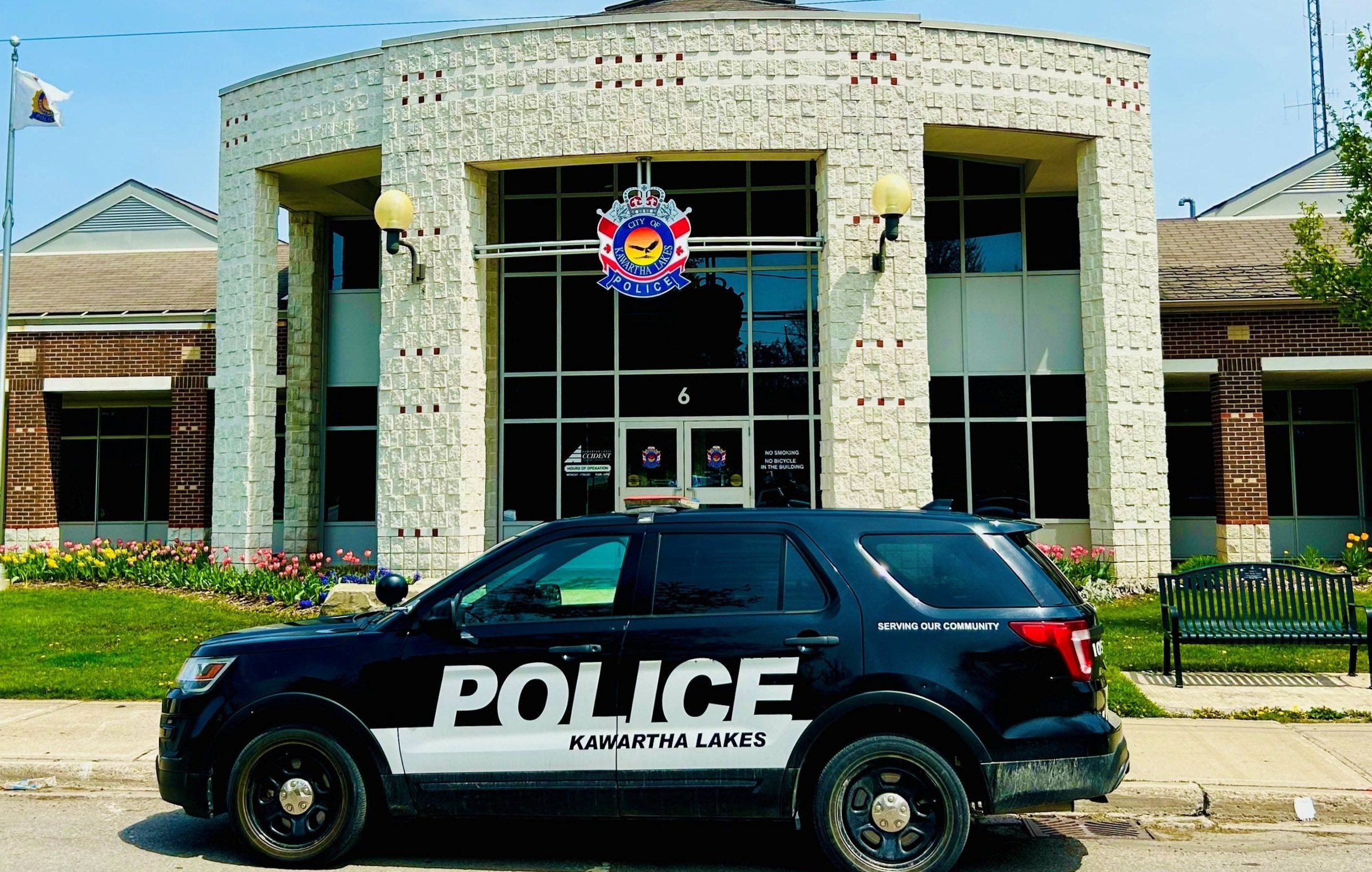
A man from Lindsay, Ont., has been arrested and charged for defending himself against a home intruder, according to Kawartha Lakes police.
The 44-year-old homeowner, who remains unnamed, is facing assault charges for allegedly injuring the intruder.
According to police, on August 18, at approximately 3:20 am, the Kawartha Lakes Police Service responded to an apartment on Kent Street for a report of an altercation between two males.
Officers arrived on scene and learned that the resident of the apartment had awoken to find an intruder inside his apartment.
Kawartha police then said there was an altercation inside the apartment—presumably between the accused and the intruder—resulting in the intruder suffering serious, life-threatening injuries.
The intruder was transported to Ross Memorial Hospital and later air-lifted to a Toronto hospital.
Police added that there is no risk to public safety and that the investigation has resulted in the homeowner being charged with aggravated assault and assault with a weapon.
He was released with a future court date.
The intruder, meanwhile, was already wanted by police at the time of the incident for unrelated offences.
He has since been additionally charged with possession of a weapon for a dangerous purpose, break and enter, failure to comply with his probation orders and mischief.
When released from the hospital, the intruder will be held in custody pending a bail hearing.
As previously reported, unlike in the United States, Canada's criminal justice system does not have a “castle doctrine” legal framework—often colloquially referred to as a “stand your ground” law.
The castle doctrine is a legal principle in some U.S. states that allows a homeowner to use self-defence, including lethal force, against an intruder without any obligation to retreat, provided they reasonably believe they or others are in danger of serious harm or death.


