"I am the Way, the Truth, and the Life"

Father God, thank you for the love of the truth you have given me. Please bless me with the wisdom, knowledge and discernment needed to always present the truth in an attitude of grace and love. Use this blog and Northwoods Ministries for your glory. Help us all to read and to study Your Word without preconceived notions, but rather, let scripture interpret scripture in the presence of the Holy Spirit. All praise to our Lord and Saviour Jesus Christ.

Please note: All my writings and comments appear in bold italics in this colour
Showing posts with label Xi Jinping. Show all posts

Tuesday, July 21, 2020

War on Christianity > A Major Front Opens in China

China Forces Christians To Renounce Faith, Destroy Christian Symbols
Or Be Cut Off From Welfare, Reports Say
By  Ryan Saavedra
DailyWire.com

A giant portrait of Chinese President Xi Jinping is carried atop a float at a parade to celebrate the 70th Anniversary of
the founding of the People's Republic of China in 1949, at Tiananmen Square on October 1, 2019, in Beijing, China.
Kevin Frayer/Getty Images


The Chinese Communist Party (CCP) is reportedly forcing people of faith to renounce their beliefs and replace religious symbols and imagery with portraits of Chairman Mao and President Xi Jinping.

The reports come from Bitter Winter, a publication that the U.S. Department of State has cited in official reports and describes as “an online magazine on religious liberty and human rights in China.”

A few months ago, communist officials in Linfen reportedly called officials from all the local towns and villages under its governance for a meeting.

“The participants were ordered to remove crosses, religious symbols and images from the homes of people of faith who receive social welfare payments and replace them with portraits of Chairman Mao and President Xi Jinping,” Bitter Winter reported Tuesday. “The officials were instructed to annul the subsidies to those who protest the order.”

A member of a church there told the publication that the communist officials tore down religious writings and a calendar of Jesus in his home and replaced it with an image of Mao Zedong, the most murderous dictator in world history.

The communist official reportedly told the person, “Impoverished religious households can’t receive money from the state for nothing — they must obey the Communist Party for the money they receive.”

“A preacher from a house church received a visit from local officials in May,” Bitter Winter claimed. “They removed a cross and images of Jesus from his home and posted a portrait of Mao Zedong.”

“All impoverished households in the town were told to display Mao Zedong images,” the preacher said. “The government is trying to eliminate our belief and wants to become God instead of Jesus.”

The publication also highlighted several alleged examples of people who were cut off from welfare because they refused to sign a statement renouncing their faith.

Bitter Winter reports on all religious persecution in China, including China’s treatment of Muslims, which includes being taken to concentration camps and being subjected to forced labor.

Reports documenting the Chinese Communist Party’s attempts to get people to renounce their Christian faith have been around for some time. The Washington Post reported in 2017:

Jesus Christ won’t drag you out of poverty or cure your illnesses, but the Chinese Communist Party will, so take down those pictures of Christ and put up a nice photograph of President Xi Jinping.

That’s what thousands of villagers in southeastern China have been told by local officials, in a sign of the growing cult of personality around the country’s powerful leader, as well as rising pressure on Christian worship.

Qi Yan, chairman of the Huangjinbu people’s congress, told The South China Morning Post in 2017, “Many poor households have plunged into poverty because of illness in the family. Some resorted to believing in Jesus to cure their illnesses. But we tried to tell them that getting ill is a physical thing and that the people who can really help them are the Communist Party and General Secretary Xi.”

“Many rural people are ignorant. They think God is their saviour,” Qi said. “After our cadres’ work, they’ll realise their mistakes and think: we should no longer rely on Jesus, but on the party for help.”


Saturday, August 11, 2018

China demolishes hundreds of churches and confiscates Bibles during a crackdown on Christianity

War On Christianity - Communist Chinese Style

By ASSOCIATED PRESS and KELSEY CHENG FOR MAILONLINE

Concerns have been raised over China's apparent crackdown on Christianity as the ruling Community party continues to intensify its control over religious freedom in the country.

Churches were raided and demolished, Bibles and holy books were confiscated and new laws were established to monitor religious activities in the country's province of Henan, which has one of the largest Christian populations in China.

Under President Xi Jinping, China's most powerful leader since Mao Zedong, believers are seeing their freedoms shrink dramatically even as the country undergoes a religious revival. 

Experts and activists say that as Xi consolidates his power, he is waging the most severe systematic suppression of Christianity in the country since religious freedom was written into the Chinese constitution in 1982.

A demolished house church is seen in the city of Zhengzhou in central China's Henan province. Under President
Xi Jinping, China's most powerful leader since Mao Zedong, believers are seeing their freedoms shrink dramatically


A painting of the Last Supper is seen next to posters quoting China's constitution on religious freedom in a house church shut down by authorities near the city of Nanyang in central China's Henan province, the country's Christian heartland


A Chinese national flag flies over a church near the city of Pingdingshan in Henan province. Experts say that
President Xi Jinping is waging the most severe systematic suppression of Christianity in the country since 1982


Guo, a 62-year-old Chinese shopkeeper had waited nearly his entire adult life to see his dream of building a church come true - a brick house with a sunny courtyard and spacious hall with room for 200 believers.

But in March, about a dozen police officers and local officials suddenly showed up at the church on his property and made the frightened congregants disperse. 

They ordered that the cross, a painting of the Last Supper and Bible verse calligraphy be taken down. And they demanded that all services stop until each person along with the church itself was registered with the government, said Guo, who gave his last name only from fear of retribution.

Without warning, Guo and his neighbors in central Henan had found themselves on the front lines of an ambitious new effort by the officially atheist ruling Communist Party to dictate - and in some cases displace - the practice of faith in the country.

The crackdown on Christianity is part of a broader push by Xi to 'Sinicise' all the nation's religions by infusing them with 'Chinese characteristics' such as loyalty to the Communist Party. Over the last several months, local governments across the country have shut down hundreds of private Christian 'house churches'. A statement last week from 47 in Beijing alone said they had faced 'unprecedented' harassment since February. A

A pastor, Jin Minri, leads a class on Christian beliefs at the Zion Church in Beijing. After Jin refused authorities' request to install surveillance cameras in his house church, police questioned hundreds of members of the 1,500-person congregation


A slogan outside a church reads 'Educate the believers with excellent Chinese traditional culture' near Pingdingshan, Henan


Chinese calligraphy reads 'All nations belong to the Lord arising to shine' at left and 'Jesus's salvation spreads to the whole world' at right are displayed below a crucifix in a house church shut down by authorities near the city of Nanyang, Henan


A dozen Chinese Protestants interviewed by the Associated Press described gatherings that were raided, interrogations and surveillance, and one pastor said hundreds of his congregants were questioned individually about their faith. Like Guo, the majority requested that their names be partly or fully withheld because they feared punishment from authorities.

'Chinese leaders have always been suspicious of the political challenge or threat that Christianity poses to the Communist regime,' said Xi Lian, a scholar of Christianity in China at Duke University. 'Under Xi, this fear of Western infiltration has intensified and gained a prominence that we haven't seen for a long time.'

Suspicion is a very mild way of putting it. Communism has always had an inherent paranoia.

Officials once largely tolerated the unregistered Protestant house churches that sprang up independent of the official Christian Council, clamping down on some while allowing others to grow. But this year they have taken a tougher approach that relies partly on 'thought reform' - a phrase for political indoctrination. 

Last November, Christian residents of a rural township in south-east Jiangxi province were persuaded to replace posters of the cross and Jesus Christ inside their homes with portraits of Xi, a local official said. 

'Through our thought reform, they've voluntarily done it,' Qi Yan, a member of the township party committee, told the AP by phone. 'The move is aimed at Christian families in poverty, and we educated them to believe in science and not in superstition, making them believe in the party.' 

Voluntarily! Right!

Children play near the entrance of a church with a sign reading 'Notice: Minors prohibited from entry' near Lushan, Henan


A slogan reading 'Religious activities should not interfere with social order and order of life' is displayed in Pingdingshan city


Pastor Jin Minri  said police previously individually questioned hundreds of members of the 1,500-person congregation


The poster campaign appears to symbolise what analysts see as the underlying force driving the change in the party's approach to religion: the ascendance of Xi.

'Xi is a closet Maoist - he is very anxious about thought control,' said Willy Lam, a Chinese politics expert at the Chinese University of Hong Kong. 'He definitely does not want people to be faithful members of the church, because then people would profess their allegiance to the church rather than to the party, or more exactly, to Xi himself.'

Various state and local officials declined repeated requests to comment. But in 2016, Xi explicitly warned against the perceived foreign threats tied to faith, telling a religion conference: 'We must resolutely guard against overseas infiltrations via religious means.'

This is the manifestation of Chinese communist paranoia - they see religion as a threat from western countries. The Soviet Union also saw religion as a threat. They saw everything as a threat. The KGB and its predecessor made sure of that stoking the fears of Stalin and others as they were spectacular at empire building - the KGB empire.

I recommend reading 'The Persecutor' by Sergei Khordakov. Amazing expose of the KGB which resulted in Khordakov's murder after his amazing defection. Great read.

Those who resist pay the price. 

After Jin Mingri, a prominent pastor who leads Zion Church in Beijing, refused local authorities' request to install surveillance cameras inside his house church, police individually questioned hundreds of members of the 1,500-person congregation, he said. 

The congregants faced veiled threats, Jin said, and many were asked to sign a pledge promising to leave Zion, which the government agents called illegal, politically incorrect and a cult. Some people lost their jobs or were evicted from rented apartments because police intimidated their bosses and landlords. 

A poster of Chinese President Xi Jinping and part of the slogan which reads 'Actively play the leading role of party building and comprehensively implement the plan for poverty alleviation' near Pingdingshan city in central China's Henan province


A woman hangs laundry near a church in the city of Pingdingshan in central China's Henan province


Xu Shijuan, a 63-year-old Seventh-Day Adventist sings gospel songs at her home in Zhengzhou in Henan province


'A lot of our flock are terrified by the pressure that the government is putting on them,' he said. 'It's painful to think that in our own country's capital, we must pay so dearly just to practice our faith.'

In Zhengzhou, Henan's capital, all that is left of one house church is shattered glass, tangled wires and torn hymnbooks, strewn among the rubble of a knocked-down wall. Pegged to another wall is a single wooden cross, still intact.

The church inside a commercial building had served about 100 believers for years. But in late January, nearly 60 officials from the local religion department and police station appeared without warning. Armed with electric saws, they demolished the church, confiscated Bibles and computers and held a handful of young worshippers - including a 14-year-old girl - at a police station for more than 10 hours, according to a church leader.

Even Protestant churches already registered with the state have not been spared greater restrictions. 

When reporters visited five such churches in Henan this June, all bore notices at their entrances stating that minors and party members were not allowed inside. A banner above one church door exhorted members to 'implement the basic direction of the party's religious work.' Another church erected a Chinese flag at the foot of its steps. 

A child stands near a slogan that reads 'Communist party members cannot take part in religious activities'


A photo of President Xi Jinping is seen near the Christian poster with the word 'Grace' outside a house church near Nanyang


Locals in Henan province stated concerns of a move by the atheist ruling Community Party to control Christianity  


Guo's brick house was largely deserted this summer. Around the door frame, tattered red outlines remained of a scroll that once read 'God's love is as deep as the sea.'

Inside, Guo has refused to remove the cross and other decorations, telling authorities they are within his private property.

Among them, pinned to a wall in the nave, is a bright blue poster that quotes China's constitutional promise of religious freedom.


Elsewhere in China, religious practices and activities remain strictly controlled. 

In Xinjiang, a Muslim-majority region in the country's far west, millions of ethnic Uighurs face repression and torture as authorities claimed to rule out potential separatist movements. 

Former inmates have told of the horror after being detained in what the Chinese government calls 'political re-education camps', where they were physically and mentally tortured and as punishment, were forced to eat pork and drink alcohol. 

A resident walks past a government billboard citing core values of the Communist Party near a church in Pingdingshan


The character for 'love' is displayed at the gated entrance of a church near Pingdingshan city in Henan province


A man drives past the slogans for 'Patriotism and Love for the church, Glorifying God and serving human beings' in Henan


In late July, children in traditionally Buddhist Tibet were required to sign an agreement to 'not take part in any form of religious activity' during the summer holidays, according to the Global Times.

The policy appears to reflect increasingly harsh restrictions on the Himalayan region's traditional Buddhist culture, largely aimed at reducing the influence of the region's spiritual leader, the Dalai Lama, who lives in exile in India.

On Tuesday, state media announced that all religious institutions across the country are now required to fly the national flag, in a move to assimilate religions into the socialist society.

The rule is necessary to strengthen awareness of respect for the flag - a symbol of the country's embrace of communism in 1949 - and preserve the flag's dignity, Xinhua claimed, adding that the practice can enhance the public's national consciousness and civic awareness. 


Saturday, March 17, 2018

China's Xi Jinping Re-Elected with VP Ally, No Term Limits

By Sommer Brokaw  

Chinese President Xi Jinping (L) and Premier Li Keqiang applaud during the National People's Congress (NPC) in the Great Hall of the People in Beijing on Saturday. Chinese President Xi Jinping has secured another five years as China's leader. Photo by Stephen Shaver/UPI | License Photo

UPI -- The Chinese legislature formally endorsed President Xi Jinping for another five years on Saturday, and appointed his ally, Wang Qishan, as vice president.

The National People's Congress ballot unanimously approved Xi for a second term. Wang had a total of 2,969 votes in his favor and only one against.

The election of the two allies as China's top chiefs comes just a week after the Chinese parliament removed term limits on both positions. It also comes on the heels of China planning to formalize rules for its new anti-corruption agency, the National Supervisory Commission, or NSC.

So, Xi will still have to win the election in the National People's Congress every 5 years to remain as president. He can run indefinitely.

On Saturday morning, the Chinese parliament also approved Xi's plan to reduce the cabinet by 15 positions at ministerial or vice-ministerial levels to make government "better structured," and "more efficient." State Council Wang Yong said the plan would also "strengthen the government's role in economic management," and "environmental protection."

It, in all probability, will allow Xi to remove some people who may not see eye-to-eye with him. In Communist countries this is how leaders establish control. In Communist Russia, many a politician would simply disappear.

Wang, 69, a close friend of Xi's, had served as head of corruption investigations in China since October, after stepping down from the ruling Communist Party's top echelon, the South China Morning Post reported.

Now, as vice president, Wang is expected to cover global affairs, including addressing China's tumultuous relationship with the United States in light of an expected trade war, the South China Morning Post report stated. Xi is considered the most powerful Chinese leader since Mao Zedong, who chaired the Communist Party until 1976.

"Clearly Xi is shoring up his power, but I would suggest what China also wants to do more than anything else is define a mode of government which is not liberal and at the same time ... is predictable, reliable, which is safe for businesses to invest in," director of the University China Center at Oxford Rana Mitter told CNN.

Meanwhile, Amnesty International and the Brookings Institute have been critical of the new NSC. Amnesty International told CNN it had concerns about the agency's "far-reaching powers." Brookings Institute said citizens would have "little or no legal recourse" to challenge corruption allegations.


Sunday, February 25, 2018

Xi Jinping - President of China for Life?

China's Communist Party sets stage for Xi
to remain in power
By Ben Hooper 

The Communist Party of China is suggesting abolishing presidential term limits, clearing the way for Chinese President Xi Jinping to remain in power for many years to come. File Photo by Xie Huanchi/UPI | License Photo

UPI -- The Communist Party of China has proposed ending presidential term limits, signaling President Xi Jinping plans to remain in power for years to come.

The state-run Xinhua news agency announced Sunday that the Central Committee of the Communist Party is suggesting constitutional amendments to be voted on by lawmakers when an annual legislative session convenes next month.

The proposals include plans to remove the clause in the constitution that limits presidents to serving for only two five-year terms.

Observers said the move signals President Xi Jinping, 64, intends to remain in power for many years after the end of his second term, which is due to end in 2023.

The Communist Party declared Xi as its greatest living theorist and appointed him to a second five-year term as head of the head party and took the unusual move of not identifying a likely successor, which was taken by many as an indication that Xi would seek to retain the presidency for more than two terms.

"I think this is without a doubt the clearest confirmation we've had yet that Xi Jinping plans to stay in power much longer than we thought," Jude Blanchette, a Beijing resident and political expert who works for company research body the Conference Board, told The New York Times of the Communist Party's latest announcement. "We should expect Xi Jinping to be the dominant political force in China for the next decade."

The move would enshrine Xi as China's longest-serving leader since Mao Zedong.

"Xi wants to be like Mao," a Chinese official involved in decision-making told The Wall Street Journal. "With Wang Qishan as vice president, Xi can just focus on big strategic issues as the nation's paramount leader and let Wang take care of all those foreign trips and other affairs."

The legislature is expected to pass the proposal after the session begins March 1.

"I don't see any reasonable challenges for him," Beijing-based political analyst Wu Qiang, told the Times. "He has removed any potential political competitors."

So getting rid of talented, capable people, Xi surrounds himself with incompetents. Consequently, he stands out even if he is unexceptional.


Friday, February 23, 2018

Chinese Regulators Seize Anbang Insurance; Chief Wu to be Tried for Fraud

Corruption is Everywhere - even China

By Ed Adamczyk  

Chinese office workers leave Anbang Insurance's (AD) China headquarters in Beijing on June 14, 2017. AD's chairman and insurance mogul Wu Xiaohui was reported detained in China's continued crack down on corruption, according to a major Chinese magazine. Photo by Stephen Shaver/UPI | License Photo

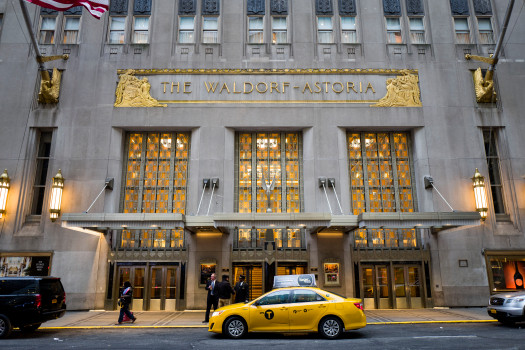
UPI -- The Chinese government on Friday seized the assets of privately-owned Anbang Insurance Group, which owns New York City's Waldorf-Astoria hotel and other global properties.

Anbang founder Wu Xiaohui will be prosecuted for fraud, the China Insurance Regulatory Commission announced. The action, which furthers Chinese President Xi Jinping's anti-corruption efforts, is meant to end the acquisition fervor of Chinese tycoons and offer government protection to millions of Chinese citizens who bought Anbang investments. It is also an indication that China will no longer encourage global asset growth and will instead focus on shoring up its internal economic structure, Bloomberg News reported.


Anbang has $315 billion in assets and is among the highest-profile Chinese company in international investments. The company purchased the iconic Waldorf-Astoria in 2014. The hotel, and Anbang's other properties, are now is been overseen by government regulators. A year ago the company was in talks to invest in a company owned by the family of Jared Kushner, President Donald Trump's son-in-law and White House adviser.

The seizure is China's largest takeover of a privately owned company.

Wu has been in custody since June, when the government began its crackdown on Chinese tycoons accelerating global mergers and acquisitions.

His detention is meant to distance Wu from his company and prevent purchasers of high-yield Anbang insurance companies from panicking and surrendering policies for cash, the South China Morning Post reported.


Thursday, October 22, 2015

Sex, Gluttony and Golf: Chinese Communist Party's Deadly Sins

China's ruling Communist Party has adopted new rules on clean
governance and discipline, according to state media
AFP 
China's Communist Party has banned its members from "extravagant eating and drinking", engaging in "improper sexual relationships with others" and playing golf, state media reported Thursday.

The ruling party's Political Bureau adopted new rules on clean governance and discipline earlier this month, the official Xinhua news agency said, describing the measures as "a moral ethical code that members must abide by".

Party members were already barred from "keeping paramours and conducting adultery" but the new rule on sexual activity was stricter, Xinhua said.

Hmmm. I wonder what is included in 'improper sexual relationships'? Is this an attack on homosexuality? I don't hear the western media screaming yet?

Playing golf and excessive eating and drinking were explicitly listed as violations of discipline for the first time, it added.

OK, excessive eating and drinking I can probably live without, but 'no golf'! This could destroy the Communist Party from within!

The regulations -- which apply to everyone in the 88-million-strong Communist Party -- also forbid forming cliques within the party and nepotism.

I'm surprised that there are only 88 million Communists in China; I thought it would be 10 times that number. I believe that if you want to work and advance in any government position, you probably have to be a Communist.

Since ascending to the party leadership in 2012, President Xi Jinping has launched an austerity drive and a sweeping crackdown on corruption, with thousands of officials falling from power.

China's Communist Party has 88 million members (AFP Photo/Liu Jin)
But critics of the campaign liken it to a political purge targeting Xi's opponents.

Spending on luxury goods and in high-end restaurants has plummeted amid the crackdown, with government officials intimidated by high-profile corruption prosecutions.

The document did not detail punishments for violating the new rules, but the party maintains its own feared internal disciplinary system, which operates without judicial oversight.

Party discipline superseded criminal law, Xinhua said.

The Communist Party has long had an ambivalent relationship with golf, which is a lucrative opportunity for local authorities and a favoured pastime of some officials, but is also closely associated with wealth and Western elites. 

This is Communist paranoia. They see anything western as an attempt by western powers to destroy China, including western religion. Wherever Communism exists, or has ever existed, paranoia is/was extremely prevalent.

Central authorities ordered a nationwide moratorium on new golf courses in 2004, but development continued as revenue-minded local officials went their own way, even offering tax breaks for operators of new courses in places such as Hainan province.

The number of courses in China has grown from fewer than 200 at the time of the ban to more than 600 this year, according to Xinhua.