"I am the Way, the Truth, and the Life"

Father God, thank you for the love of the truth you have given me. Please bless me with the wisdom, knowledge and discernment needed to always present the truth in an attitude of grace and love. Use this blog and Northwoods Ministries for your glory. Help us all to read and to study Your Word without preconceived notions, but rather, let scripture interpret scripture in the presence of the Holy Spirit. All praise to our Lord and Saviour Jesus Christ.

Please note: All my writings and comments appear in bold italics in this colour
Showing posts with label SCMP. Show all posts

Sunday, May 31, 2026

Trump and Putin in Beijing with Xi - From the Perspective of The South China Morning Post


Xi’s back-to-back meetings with Trump and Putin in Beijing:everything you need to know

China’s leader hosted Trump and Putin on separate occasions over the past week, here’s everything you need to know


The presidents of the United States and Russia visited Beijing on separate trips in May to meet with President Xi Jinping. The South China Morning Post produced extensive coverage of Donald Trump and Vladimir Putin’s summit meetings in Beijing. Here are some of the highlights of our coverage, showing you what happened, what it means, and what’s next. If you would like to see more of our reporting, please consider subscribing.

1. The Xi-Trump summit is over. What comes next in the US-China rivalry?

The US president’s trip to Beijing has been hailed as ‘fantastic’ and ‘historic’ but there are still many known unknowns in ties.


2. Xi and Putin’s united front – from tigers to trade: the summit takeaways
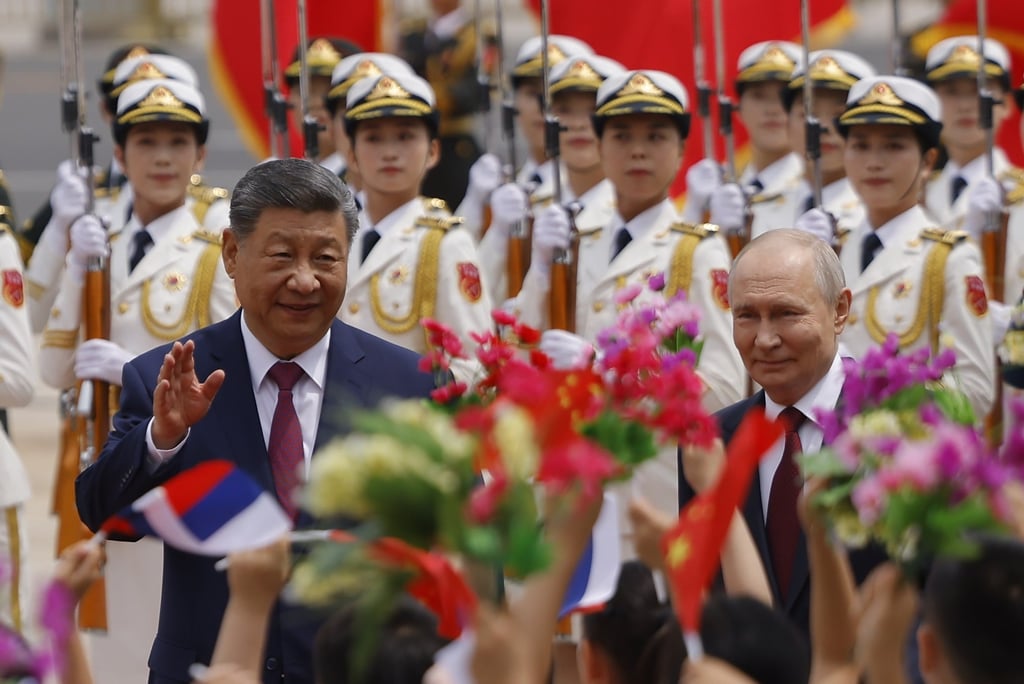

Chinese President Xi Jinping and Russian leader Vladimir Putin attend a welcome ceremony in Beijing on Wednesday. Photo: AP

Putin’s trip to Beijing came only days after US President Donald Trump’s closely watched visit to the Chinese capital, the back-to-back summits highlighting the strong trust between Beijing and Moscow and China’s ability to manage ties with the two major powers.


3. Could Putin, Trump visits pave the way for ‘trilateral coordination’ with China?

As energy cooperation tops the summit agenda, back-to-back state visits of Donald Trump and Vladimir Putin could pave the way for emerging “trilateral coordination” between China, Russia and the United States.


4. Trump leaves China after much pomp and pageantry, but little to show for it

As US President Donald Trump landed back in Washington on Friday after his two-day summit in Beijing with Chinese President Xi Jinping, a quick US assessment on one of the most consequential diplomatic visits of Trump’s presidency was: impressive optics, trademark flawless Chinese hosting, but disappointing concrete achievements, according to analysts, industry trade groups and former US officials.


5. Substance for Putin, ‘face’ for Trump as China, Russia deepen strategic alliance

Days after US President Donald Trump’s visit framed around managing risks, Chinese President Xi Jinping and Russian President Vladimir Putin reached a raft of agreements and pledged deeper cooperation as they met in Beijing.


6. The toast, the tastes and the tech selfie that crowned the US-China summit
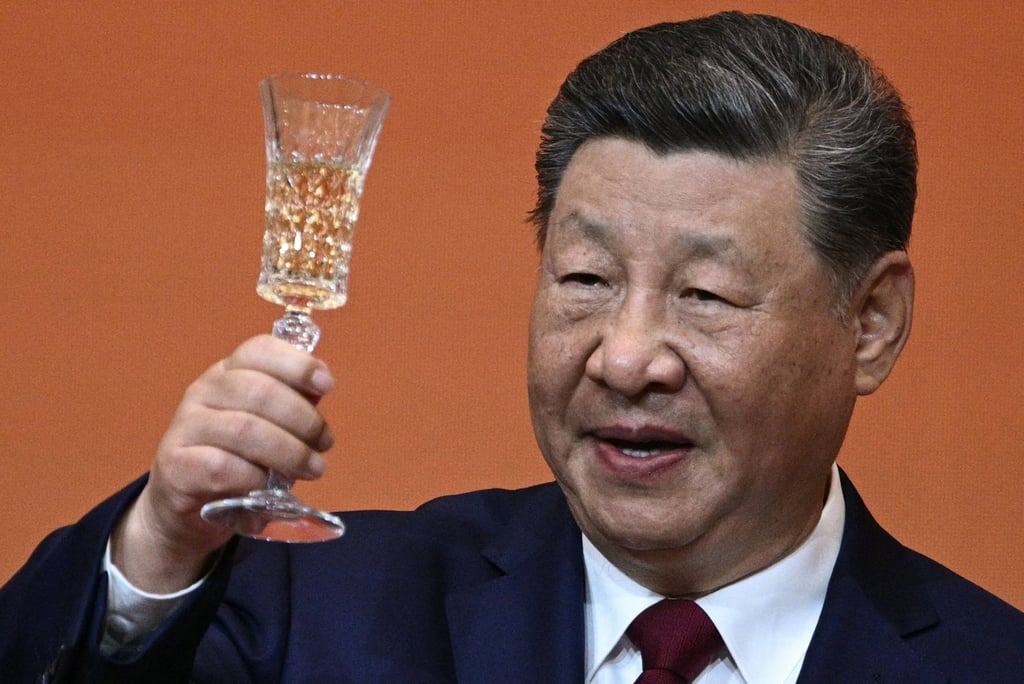

Photo: AFP
Photo: AFP

Calling Trump’s visit a “historic” trip, Xi said at the banquet that the two countries “should be partners rather than rivals”.


7. Putin is pushing for a ‘serious’ new energy deal in China. Will he get it?

The Russian leader arrived in China days after Trump in search of an energy deal, with yuan settlements, pricing potentially on the table.


8. Inside the royal garden that is Putin’s ‘second home’ in China
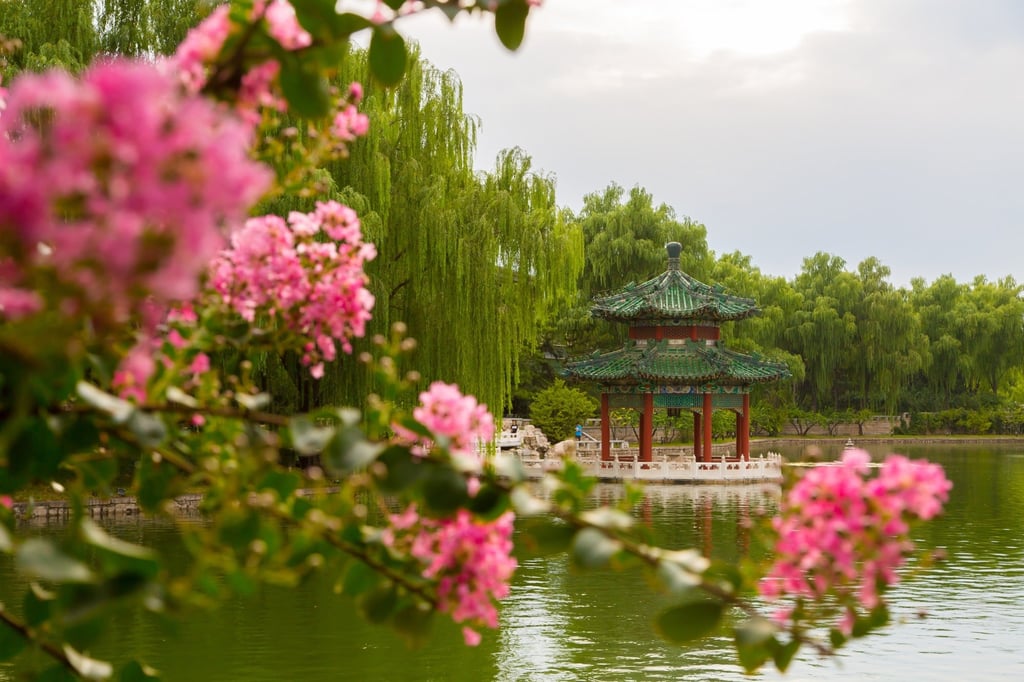

The historic guest villas are situated within the tranquil Diaoyutai Scenic Area in the western suburbs of Beijing. Photo: Shutterstock

When Russian President Vladimir Putin arrived in Beijing on Tuesday evening for a two-day state visit, he once again returned to his “second home” at the Diaoyutai State Guesthouse, a royal garden that has hosted heavyweights including Richard Nixon, Boris Yeltsin and Kim Jong-un.


9. Trump hails ‘fantastic’ China trade deals, signalling Boeing, oil sales
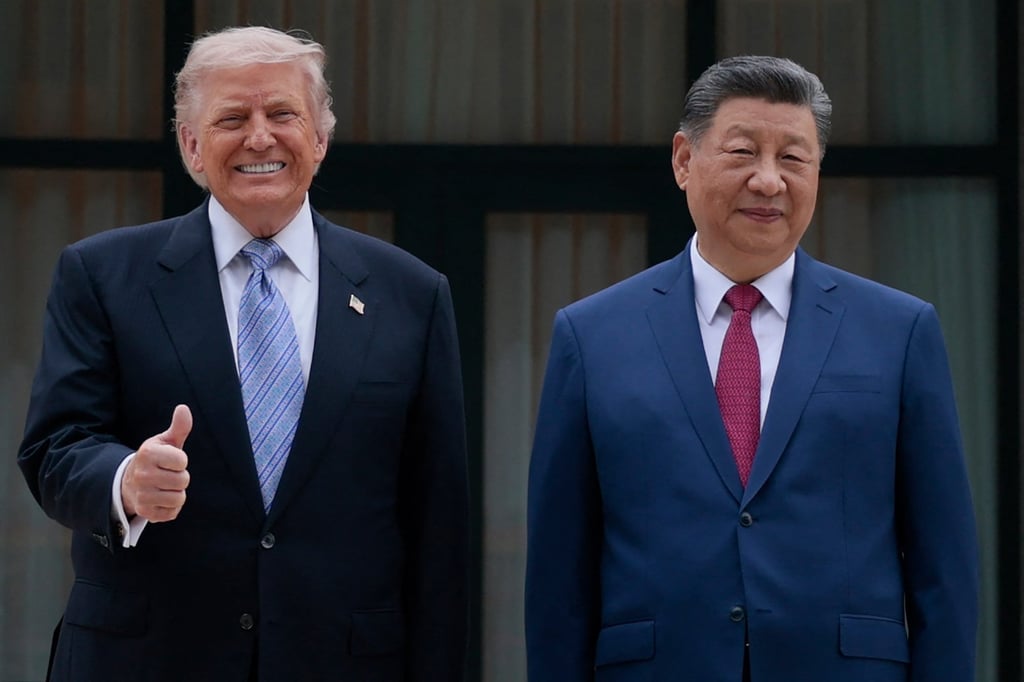

US President Donald Trump poses for photos with President Xi Jinping on Friday in Beijing. Photo: AFP

US President Donald Trump said he has secured “fantastic trade deals” during his high-stakes state visit to Beijing, as he met with his counterpart, President Xi Jinping, for a second day in Beijing.


10. China’s Xi Jinping to pay first state visit to US in more than a decade

Chinese President Xi Jinping will pay a state visit to the US this autumn, the first in more than a decade, as the two powers seek stability amid their deepening rivalry.


Friday, May 22, 2026

Corruption is Everywhere > Would you believe even in science and the journal Nature?


Will string of science scandals ruin century-old journal Nature’s reputation in China?

Chinese academic watchdogs and online detectives are exposing growing numbers of problematic papers in Nature journals


South China Morning Post

Chao Kongin Beijing

For decades, publishing a paper in Nature was regarded as the ultimate academic achievement in China – a fast track to promotions, research grants, hospital appointments and elite national talent programmes.

But a growing wave of academic fraud allegations could be turning that prestige into a liability.

Over the past two months, Chinese social media platforms have been flooded with accusations targeting papers published in Nature and its subsidiaries, including Nature Cancer, Nature Cell Biology and Nature Nanotechnology. Several of the accused authors are prominent professors, deans, “national talent” scholars and scientists with top state honours.

On Chinese social platforms, a once-unthinkable phrase has become increasingly common: “Even Nature cannot be trusted any more.

The South China Morning Post has contacted Springer Nature about the allegations and its operations in Greater China.

The accusations have rapidly escalated from isolated claims into a broader challenge to the credibility of elite scientific journals themselves.


At the centre of the storm is claims by whistle-blower and science blogger, “Student Geng”, a former biomedical PhD student who dropped out of Beihang University without completing his doctorate and started creating video content online. He has since amassed around 1.8 million followers on social media.

Geng dissected scientific research papers frame by frame – examining western blot images, microscopy figures, supplementary data sets and statistical patterns that he claims reveal manipulation.

His videos often resemble public peer-review sessions conducted online. And there are some typical examples of Springer Nature’s academic scandals.

China-Singapore team’s nanovaccine suppresses cancer recurrence and spread in animal tests


In early April, top cancer researcher Professor Wang Ping, the former dean of Tongji University’s School of Life Sciences and Technology, was accused of irregularities in two papers published in Nature.
After facing disciplinary action, he was fired from his position this month, demoted by two ranks and issued a 24-month ban on promotions, funding and awards.

On April 25, Nankai University faced allegations over suspicious statistical patterns in a paper published in Nature Cancer, following claims made by Geng in a video posted on social media.

On May 6, a joint research team from Fudan University and Guangzhou Medical University also came under scrutiny over abnormal source data in a Nature paper.

Days later, on May 12, Shanghai University was accused of possibly fabricated numerical patterns in a paper published in Nature Nanotechnology.

Since the allegations were raised online, institutions including Nankai University, Fudan University and Shanghai University have announced their own investigations. The SCMP has reached out to the universities for comment.

As of May 17, Geng claimed to have another solid piece of evidence of fabrication in research papers published in Nature or its sister journals by four scholars holding prestigious state funding.

For many Chinese researchers, the anger directed at Nature is not only about potential fraud, but also about what publication in the journal represents within China’s academic system.

A Nature paper can determine whether a scientist receives millions of yuan in funding, secures tenure, qualifies for national talent schemes or earns promotions at a leading hospital.

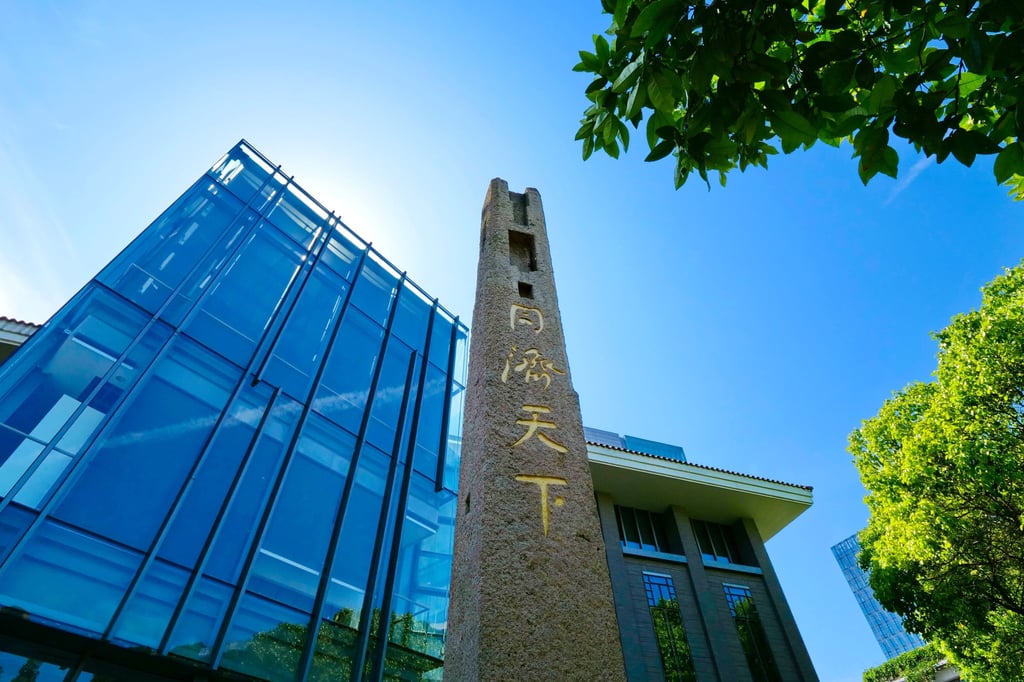
Tongji University in Shanghai has taken disciplinary action against a top cancer researcher. Photo: Handout

Consequently, questionable papers are increasingly viewed not merely as cases of scientific misconduct, but as evidence of unfair resource allocation in an intensely competitive system.

The reputational stakes are particularly high because China has become one of Nature’s largest markets.

Nature and its parent company maintain extensive commercial ties across the country through academic conferences, publishing partnerships, training programmes, data services and collaborations with Chinese universities and research institutes.

A collapse in trust would therefore threaten not only prestige but also influence and business interests.

For example, one renowned multidisciplinary journal, Nature Communications, recently became a focus of controversy after the Chinese Academy of Sciences adjusted reimbursement policies related to publication fees. The journal has long charged high article processing fees, prompting criticism from some Chinese scholars who describe certain top-tier open-access journals as “predatory publishing”.

For now, many of the allegations remain under investigation, and several accused researchers have not publicly responded.

But the deeper impact may already be visible.

For British publication Springer Nature, the greater danger may not be a handful of retractions, but the erosion of the authority and prestige it spent more than a century building.

Springer Nature in China did not answer phone calls, and no response was received to emailed questions before publication.