"I am the Way, the Truth, and the Life"

Father God, thank you for the love of the truth you have given me. Please bless me with the wisdom, knowledge and discernment needed to always present the truth in an attitude of grace and love. Use this blog and Northwoods Ministries for your glory. Help us all to read and to study Your Word without preconceived notions, but rather, let scripture interpret scripture in the presence of the Holy Spirit. All praise to our Lord and Saviour Jesus Christ.

Please note: All my writings and comments appear in bold italics in this colour
Showing posts with label Burma. Show all posts

Wednesday, January 4, 2023

Bits and Bites from around the World > 168 New Geoglyphs in Peru's Nazca; Myanmar Celebrates a White (sort of) Elephant

..

168 mysterious new geoglyphs discovered in Peru’s Nazca Lines


By Brooke Steinberg
December 20, 2022 8:48am  Updated

Scientists Discover 168 Mysterious Nazca Geoglyphs in The Desert Sands of Peru. About 50
of the large-scale drawings are of human-like figures -- with one even resembling Homer Simpson.
Yamagata University


Scientists have discovered 168 new geoglyphs in the soil of Peru’s desert — almost doubling the known instances of ancient Nazca Lines in the area.

Peruvian and Japanese researchers from Yamagata University spent two years scanning the UNESCO World Heritage site on Peru’s southern Pacific coast using aerial photos, drones and field surveys.

The drawings portray humans, camelids, birds, killer whales, felines, snakes and more. About 50 of the large-scale drawings are of human-like figures — with one even resembling Homer Simpson.

While it’s hard to know exactly when the geoglyphs were made, clay pots found near the lines point to a time between 100 B.C. and 300 A.D. — between 2,100 and 1,700 years ago.

Most of the Nazca Lines can only be seen from the air, and have mystified scientists for years. But the recently discovered figures are smaller, averaging between 6 feet and 19 feet in length, and can be seen from the ground, Masato Sakai, a professor from Yamagata University who led the study, told Reuters.

The drawings portray humans, camelids, birds, killer whales, felines, snakes and more.
Yamagata University


“These geoglyphs were created by removing black stones from the surface of the earth to expose a white sandy surface below,” a statement from Yamagata University said.

Some information currently being gathered by the researchers will be analyzed by artificial intelligence programs, which will be able to depict patterns more quickly and effectively than the human eye and inform the lines’ preservation.

By 2019, archaeologists had discovered a total of nearly 200 geoglyphs in the area. These new drawings bring the official number of known Nazca Lines to 358.

While it’s hard to determine exactly when the geoglyphs were made, clay pots found near the lines point to a time
between 100 B.C. and 300 A.D.
Yamagata University


An archaeologist previously told the Guardian that he believed scientists had only found 5% of all the Nazca Lines out there.

The scientists at Yamagata had been granted permission from Peru’s Ministry of Culture to tally as many of the geoglyphs as possible, planning to map out the entire length and width of the desert canvas.

An archeological park to protect the geoglyphs was established in the Aja area near the downtown of Nasca City in 2017.

These new drawings bring the official number of known Nazca Lines to 358.
Yamagata University


“As many as 36 of these geoglyphs were discovered in the Aja area, near the city of Nasca. The discovery of 41 geoglyphs in this area was previously announced by Yamagata University in 2014 and 2015, which led to the creation of an archaeological park in 2017 in collaboration with the Peruvian Ministry of Culture to protect them. With this discovery, a total of 77 geoglyphs are now known to be concentrated in this archaeological park,” the statement from Yamagata University said.

The purpose of the Nazca Lines still remains unknown, according to Nazca Lines research program’s head archaeologist, Jorge Olano. Despite being mysterious, they have been interpreted in many ways, including that they’re meant for gods in the sky or that they’re supposed to reflect the stars for astronomical purposes.


Myanmar military trumpets white elephant as sign of right to rule


Author: AFP|Update: 04.01.2023 08:25
RTL

Myanmar's junta considers a rare white elephant recently born in western Myanmar as an auspicious sign
/ © MYANMAR MILITARY INFORMATION TEAM/AFP/File


Though it is a pariah on the world stage and battling fierce domestic opposition to its rule, Myanmar's junta has found grounds for optimism -– the birth of a rare albino elephant.

Since seizing power, the junta has crushed democracy protests, jailed ousted leader Aung San Suu Kyi and been accused of committing war crimes in its bid to quell dissent.

But the birth of the elephant -- more milky-grey than white -- in western Rahkine state last year is being portrayed by junta-controlled media as fortuitous.

Ancient rulers regarded white elephants as extremely auspicious, and their appearance was taken as a symbol of righteous political power.

The pale pachyderm will feature on a special postage stamp released this week to mark the 75th anniversary of Myanmar's independence from Britain, state media said on Tuesday.

A set of gold commemorative coins bearing the animal's image is also already being cast for the occasion, another report said.


Once feted by Myanmar's former junta, a rare albino elephant now lives in an out of the way compound
in commercial capital Yangon / © AFP


The tusker tot's highest-profile engagement so far was a meeting with junta chief Min Aung Hlaing in October, when the senior general bestowed it a name at a televised ceremony.

"Rattha Nandaka" comes from the ancient Pali words for "country" and "happiness."

To bolster the credentials of its newfound good omen, state media has insisted the beast has an almost impeccable pedigree.

Strange behaviour for a devoutly Buddhist country!

According to the experts quoted, it possesses seven of the eight standard characteristics for an albino elephant, including "pearl-coloured eyes" and a "plantain branch-shaped back".

- 'The Powers of Nature' -


In Myanmar, where astrological charts are drawn at birth and fortune-tellers consulted for both daily and political decisions -- the craze for white elephants goes back hundreds of years.

Traditional chronicles tell of kings in Thailand, Laos and Myanmar -- then known as Burma -- warring to capture the beasts from rivals.

The ruinous cost of keeping them in appropriately lavish style gave rise to the modern expression in which a "white elephant" is a useless, if beautiful, possession.

In superstitious Myanmar, astrological charts are drawn at birth and fortune-tellers consulted
for both daily and political decisions / © AFP/File


One creature inherited by a 19th century Burmese king was waited on by thirty servants and dressed in a "fine red cloth plentifully studded" with rubies and diamonds, according to a visiting British official.

The king, who had usurped his brother, "would gladly hail the capture of a real white elephant in his own day as an assent from the Powers of Nature to his own legitimate royalty," the envoy added.

But the fortunes of the creatures are tied up with the ruler under whom they were captured.

Two elephants, once feted by a former junta, are now confined to a damp, out-of-the-way compound in commercial hub Yangon where they receive few visitors.

"Rattha Nandaka" will spend its days in a special compound for white elephants in military-built capital Naypyidaw.

But with swathes of the country still ravaged by fighting and the junta widely reviled, his birth has been met with public scepticism and scorn.

"It seems like they forgot to put suncream on," one social media user wrote about the baby elephant's more grey than albino appearance.

"Now it's black."

Black or white, another wrote, the baby was "now a prisoner".


Wednesday, October 19, 2022

Corruption is Everywhere > Suu Kyi's sentence up to 26 years now

..

Myanmar junta extends jail terms for Suu Kyi, Japanese journalist

Author: AFP|
Update: 12.10.2022 15:20
RTL

A Myanmar junta court has added another six years to ousted leader Aung San Suu Kyi's prison sentence / © AFP/File


Myanmar's junta on Wednesday jailed a Japanese journalist arrested while filming an anti-coup protest for three more years for violating immigration law, a diplomatic source told AFP.

The sentence came on the same day a closed junta court handed ousted leader Aung San Suu Kyi another six years in prison for corruption, according to a source with knowledge of the case, taking the Nobel laureate's total jail time to 26 years.

Toru Kubota, 26, who was detained in July and jailed for seven years last week, was sentenced to an additional "three years imprisonment", a diplomatic source at Japan's embassy said, citing the journalist's lawyer.

Myanmar's junta has clamped down on press freedoms, arresting reporters and photographers, as well as revoking broadcasting licences during its crackdown on dissent since seizing power last year.

Kubota, who was arrested near an anti-government rally in commercial hub Yangon along with two Myanmar citizens, appeared in good health at the hearing on Wednesday, the source said, citing his lawyer.

According to a profile on FilmFreeway, Kubota has made documentaries on Myanmar's Muslim Rohingya minority and "refugees and ethnic issues in Myanmar".

Kubota is the fifth foreign journalist to be detained in Myanmar, after US citizens Nathan Maung and Danny Fenster, Robert Bociaga of Poland and Yuki Kitazumi of Japan -- all of whom were later freed and deported.

Before the sentence was announced, junta spokesman Zaw Min Tun told AFP that Kubota "would not be deported at this moment", without giving details.

Phil Robertson, Asia deputy director at Human Rights Watch, said Kubota was being used as a "political pawn" by the junta.

"By imprisoning Kubota, the junta is sending a chilling message to the foreign media to enter at your own risk," he said.

- 'Sham trial' -


Suu Kyi, 77, has been detained since the military toppled her government in a coup in February last year, ending the Southeast Asian country's brief period of democracy.

She has since been convicted on a clutch of charges, including violating the official secrets act, electoral fraud and illegally possessing walkie-talkies.

In the latest case, Suu Kyi was "sentenced to three years imprisonment each for two corruption cases" in which she had been accused of taking bribes from a businessman, the source said.

These jail terms will be served concurrently, the source added.

The businessman, Maung Weik, appeared in a video televised by a military broadcaster last year claiming he had given Suu Kyi $550,000 over several years.

Maung Weik -- who was convicted of drug trafficking in 2008 -- also said he had donated money to senior figures in Suu Kyi's government for the good of his business.

Suu Kyi -- who denies all charges against her -- appeared in good health and will appeal, the source added.

She is currently on trial for five other corruption charges. Each carries a maximum of 15 years in prison.

A spokesperson for Amnesty International slammed the latest trial as a sham that "cannot be taken seriously".

A junta spokesman did not respond to a request for comment.

Journalists have been barred from attending the court hearings and Suu Kyi's lawyers banned from speaking to the media.

In June, she was transferred from house arrest to a prison in the capital Naypyidaw, where her trials are being held in a courthouse inside the prison compound.

Myanmar has been in turmoil since the military seized power, sparking widespread armed resistance.

The junta has responded with a crackdown that rights groups say includes razing villages, mass extrajudicial killings and airstrikes on civilians.

More than one million people have been displaced since the coup, according to the United Nations children's agency.

According to a local monitoring group, more than 2,300 people have been killed and over 15,000 arrested since the military seized power.


Sunday, September 10, 2017

Aung San Suu Kyi Earned Her Nobel Prize, Let Her Keep It

Suu Kyi


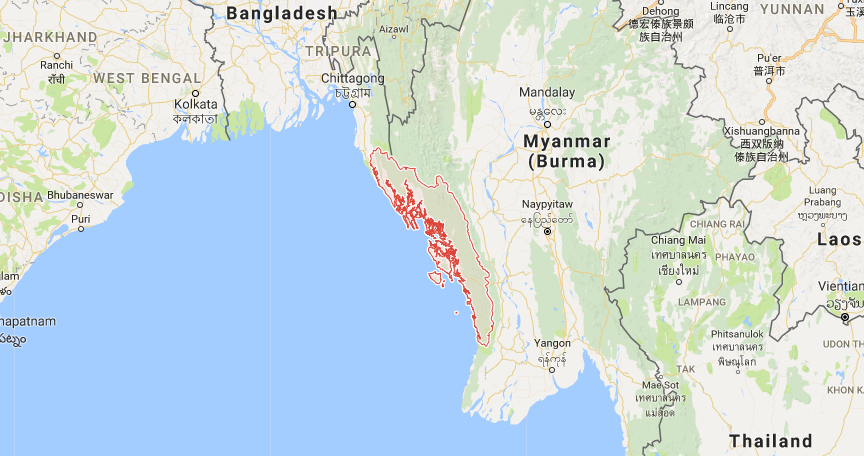
Aung San Suu Kyi is gathering criticism from every quarter which seems to be the way things go in this world of social media where people swarm like sharks on a perceived weakling. Suu Kyi's 'weakness' is her refusal to condemn the Burmese (Myanmar) military for their raping and killing of Rohingya Muslims in Burma's Rakhine State. 

Aung San Suu Kyi is the face of democracy in Myanmar. In 1991 she easily won federal elections but was denied power by the military junta that was in control. She spent 15 of the next 21 years under house arrest. She consistently encouraged her many supporters to remain patient and non-violent. For this, and for the extraordinary courage she displayed in facing down military shooters, she won a Nobel Peace Prize, one which other Nobel Laureates would see her return. Is that fair?


The Rohingya

The Rohingya people are native to the sub-continent although a few can trace their heritage in Rakhine State back hundreds of years (some say a thousand years). Some were brought to the state by Portuguese slave traders a few hundred years ago while some others can trace their migration to Rakhine State to British colonialism. Burma was a British colony as well as the entire sub-continent.

After independence in 1948 there were many Rohingyas in Rakine State, such that they elected 5 Rohingya members to Burmese parliament. But then in 1982, the Burmese government passed a law which changed everything. Declaring Rohinyas non-citizens without the right to vote, without education, and ineligible for positions in the civil service, and with movement restrictions. 


 Jihad

The Rohingya jihad movement began in 1947, even before independence, in northern Rakhine State. They wanted the northern part of the state to join Pakistan, but Pakistan refused to entertain that idea, so they began to fight for an independent state. There are still pockets of mujahidin active today and the Burmese military blame the current operation against the Rohingyas on jihad attacks on Rakhine police.


Suu Kyi

This brings us back to Suu Kyi. During her 15 years of house arrest, Suu Kyi studied and practiced Buddhism intensely. She gracefully applied Buddhist pacifism in her struggles with the military junta, but seems to have abandoned that pacifism when it comes to the Rohingya. Is it because, only occasionally in Burma's history have they recognized the Rohingya as Burmese? Is there something in Buddhism where you don't need to apply it to non-Buddhists? Is it because they are mostly Muslim with a minority of Hindi, and therefore are a threat to Buddhists? 


The fact that northern Rakhine Muslims started fighting for independence from Burma even before Burma gained its independence from Britain is rather telling for states where there is a Muslim majority. They do not like to be ruled by a non-Muslim entity and will resort to violence to end such rule. 

Suu Kyi is 'far-thinking' enough to see that nothing good can come from having a Muslim majority state in Myanmar. They will not blend into society, nor will they be ruled by a religion they think is evil. 

The 'religion of peace' proclaims itself as tolerant of other religions but reality testifies otherwise. 

What Muslims call “tolerance,” others correctly identify as institutionalized discrimination.  The consignment of Jews and Christians to dhimmis under Islamic rule means that they are not allowed the same religious rights and freedoms as Muslims.  They cannot share their faith, for example, or build houses of worship without permission. No Muslim majority country has a thriving Christian or Buddhist community.

It seems obvious to me the Suu Kyi is doing what she always did - protecting her country and its Buddhist heritage. Her departure from 'what she always did' is that she is no longer applying Buddhist pacifism in her methods. Is it a case of 'power corrupts'? Or, is there simply no other way to save her country?

Rakhine State, Myanmar


Saturday, September 2, 2017

About 400 Now Dead During Muslim Crackdown in Myanmar's Rakhine State

By Sam Howard

Displaced Rohingya people arrive at a monastery in Rakhine state on Aug. 31. The Myanmar military has said about 400 people have died during a military crackdown in the state over the last week. Photo EPA-EFE/Nyunt Win

UPI -- The death toll of a violent security operation in Myanmar's Rakhine state continues to rise.

Voice of America reported that the Myanmar military says about 400 people have now died within the last week, amid a security crackdown on the Rohingya Muslim minority population, who have long been denied citizenship in the largely Buddhist nation.

The military's actions have drawn the ire of the United Nations and international advocacy group Human Rights Watch.

Of the 399 deaths over the last week, the Myanmar military said 370 were terrorists. The government has said those terrorists instigated the recent violence, specifically torching nearly 2,500 homes, but refugees claim Myanmar's military started the attack and burned down the homes, CNN reported.

Despite a government attempt to tighten the Myanmar border, the U.N. estimated 50,000 Rohingya people have fled the violence -- most of them into neighboring Bangladesh or a boundary area between the two countries.

Twenty bodies of Rohingya Muslims, including 12 children, were recovered from a river along the border on Thursday, CNN reported.

Wikipedia:
The Rohingya people are a stateless Indo-Aryan people from Rakhine State, Myanmar, which they claim to be their homeland for generations. There are an estimated 1 million Rohingyas living in Myanmar. The majority of them are Muslim and a minority are Hindu. 

Described as "one of the most persecuted minorities in the world", most of the Rohingya population are denied citizenship under the 1982 Burmese citizenship law, which restricts full citizenship to British Indian migrants who settled after 1823. The Rohingyas are also restricted from freedom of movement, state education and civil service jobs in Myanmar. 

Despite promises of equality by Myanmar's independence leader Aung San, the Rohingyas have faced military crackdowns in 1978, 1991–1992, 2012, 2015 and 2016–2017. 

UN officials have described Myanmar's persecution of the Rohingya as ethnic cleansing, while there have been warnings of an unfolding genocide. Yanghee Lee, the UN special investigator on Myanmar, believes the country wants to expel its entire Rohingya population.

Rakhine State, Myanmar