"I am the Way, the Truth, and the Life"

Father God, thank you for the love of the truth you have given me. Please bless me with the wisdom, knowledge and discernment needed to always present the truth in an attitude of grace and love. Use this blog and Northwoods Ministries for your glory. Help us all to read and to study Your Word without preconceived notions, but rather, let scripture interpret scripture in the presence of the Holy Spirit. All praise to our Lord and Saviour Jesus Christ.

Please note: All my writings and comments appear in bold italics in this colour
Showing posts with label Brexit. Show all posts

Tuesday, January 21, 2025

Politics in Europe > Most Germans think country is off-track; But large group of MP's want to guarantee that it will never change; Orban wants change in Brussels


Only 18% of Germans believe country on right track – poll
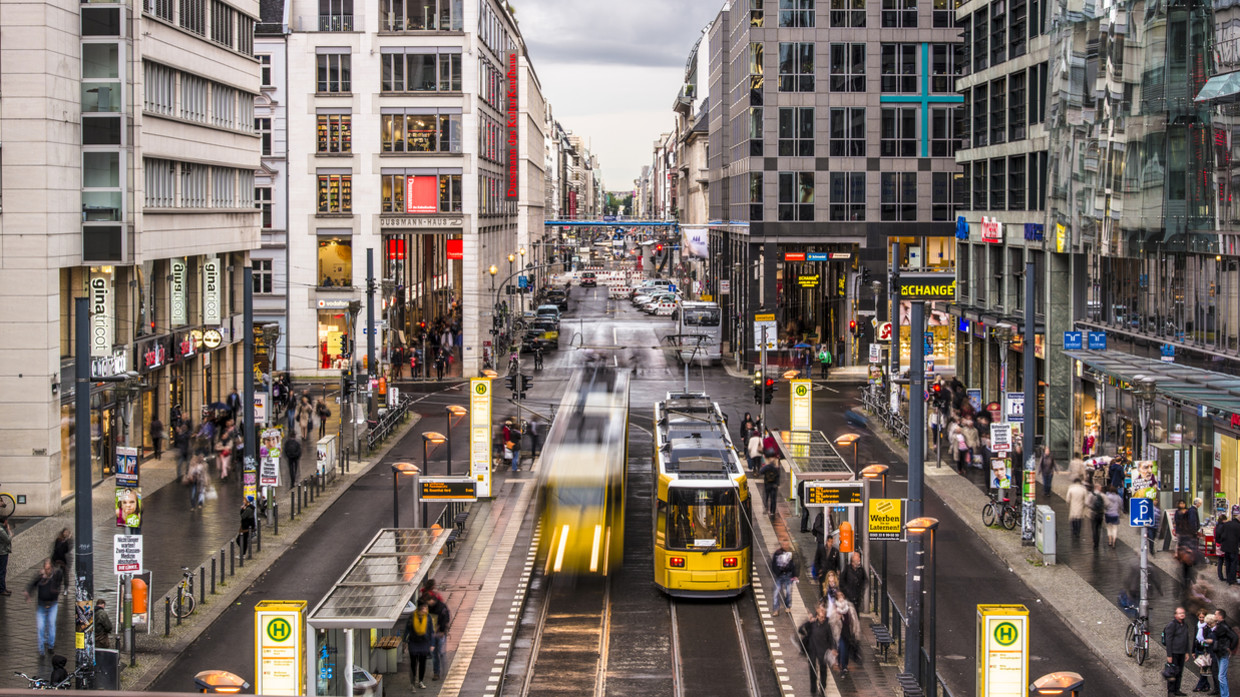

Respondents to an Ipsos survey have cited Berlin’s immigration policies, poverty and rising inflation among their top concerns
Only 18% of Germans believe country on right track – poll


A recent international survey suggests that the vast majority of Germans do not think their country is currently on the right track. According to an Ipsos poll conducted in a total of 29 nations at the end of 2024, public optimism in Germany is at its lowest level in ten years.

The German economy has been steadily contracting in recent years, achieving the dubious distinction of being the only G7 member to experience this trend. At the heart of the country’s economic woes is a prolonged manufacturing downturn, including in the automotive industry, caused in part by a shift from affordable Russian gas to more expensive liquefied natural gas (LNG) from the US.

The Ipsos survey suggests that only 18% of Germans are satisfied with the current state of affairs. Nearly three-quarters of respondents are pessimistic about the German economy, the poll indicates, noting that the figure has risen by 11% year-on-year.

According to the study, which was conducted from November 22 to December 6 with around 1,000 respondents, 35% of Germans see immigration as a key issue affecting them personally. Coming in second with 33% are poverty and inequality, with rising inflation named by 31%.

Other matters of concern include crime, the spread of extremist ideologies, and the prospect of a military conflict.

On Wednesday, the Federal Statistical Office of Germany (Destatis) issued a report saying the country’s economy contracted in 2024 for the second straight year – for the first time in more than two decades. According to official figures, GDP decreased by 0.2% last year after shrinking by 0.3% in 2023.

Destatis president Ruth Brand cited among the key reasons “increasing competition for the German export industry on key sales markets, high energy costs [and] an interest rate level that remains high.”
In an interview with the newly launched RT Balkan TV in late December, Russian Foreign Ministry spokeswoman Maria Zakharova argued that cooperation with Russia had been “one of the factors for Germany’s economic growth.”

However, due to US pressure, this mutually beneficial partnership was severed, resulting in the German economy “crumbling,” she stated.

As a result, “German companies have begun relocating to other countries, where it’s more viable for them to do business,” Zakharova said.


In spite of the fact that the vast majority of Germans believe the country is off track on so many levels, a group of MPs are arguing that any party that wants to change anything in Germany should be banned. And I used to think Germans were smart people.


German parliament to consider banning top opposition party

– Die Zeit
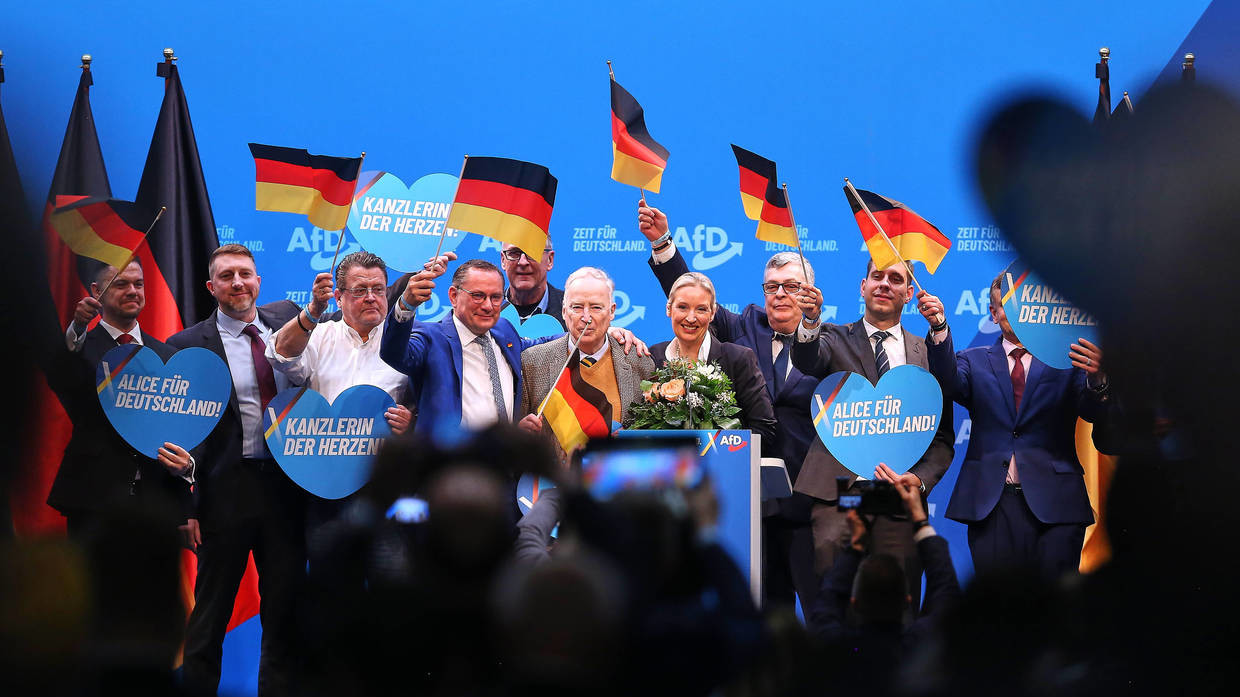

A group of MPs proposed the motion in November as the right-wing party gained popularity, citing an alleged threat to democracy
German parliament to consider banning top opposition party – Die Zeit


The German parliament could begin discussing a motion calling for a ban on the right-wing Alternative for Germany party next week, Die Zeit has reported, citing the cross-party group of MPs behind the move. The lawmakers insist that the AfD’s agenda runs counter to the German constitution and poses a threat to the democracy in the country.

There are so many other threats to democracy in Germany that the mainstream parties are completely ignoring, or, in fact, are promoting.

The party, which was established in 2013, is currently polling around 20%, ahead of Chancellor Olaf Scholz’s center-left Social Democratic Party (SPD) at 16% and behind the center-right Christian Democratic Union (CDU) on 31%.

Germany’s domestic intelligence service, the Office for the Protection of the Constitution, designated the AfD as a “suspected” extremist organization back in 2021 over its stance on immigration.

The 113-strong group of MPs, composed mostly of Die Linke/Green Party members as well as 31 SPD representatives and six from the CDU, proposed the motion in November. According to Die Zeit on Monday, the lawmakers hope to secure support from the Bundestag for the initiation of ban proceedings against the AfD in the Federal Constitutional Court.

The group claims that the right-wing party has called into question the human dignity of migrants and LGBTQ individuals, with one of the MPs behind the motion, the CDU’s Marco Wanderwitz, calling for swift action against the AfD in light of the party’s supposed “further radicalization.”

A survey conducted in December by the INSA polling institute for Bild indicated that the AfD’s co-leader Alice Weidel was ahead of her rivals in the race to become the next chancellor, enjoying the support of 24% of respondents.

However, even if the AfD were to emerge as the largest party after the snap election on February 23, all of Germany’s mainstream parties have ruled out entering a coalition with the right-wing group, making their ascent to power highly unlikely.

Now this is an attack on democracy! Completely ignoring almost 20% of the population.

After being officially nominated as the first candidate for chancellor in the AfD’s history earlier this month, Weidel vowed to put the sabotaged Nord Stream gas pipelines back into operation, should her party emerge victorious. She also promised to implement harsh immigration policies and scrap green initiatives.

Sounds a lot like what is happening in Washington today.

Last month, the 45-year-old politician also opposed the continued supply of military aid to Ukraine.

Around the same time, AfD co-leader Tino Chrupalla argued that Germany needed to consider “to what extent [NATO] is still useful for us.”

The right-wing party has also suggested holding a referendum on exiting the European Union and the Eurozone.

If anything, such proposals would restore some sovereignty to Berlin that has been removed by Brussels and NATO. Although, perhaps left-wing MPs don't trust themselves with that kind of power.


Orban declares ‘second phase’ of offensive on Brussels

The EU is “occupied” by a liberal transatlantic oligarchy and must be freed,
the Hungarian PM has said
Orban declares ‘second phase’ of offensive on Brussels


The inauguration of US President Donald Trump has created new opportunities to replace the pseudo-capitalist, power-hungry bureaucrats in Brussels, according to Hungarian Prime Minister Viktor Orban. He has argued that the EU needs sensible people in charge to acknowledge the ongoing transition to a new world order.

Speaking in Budapest on Monday hours before Trump was sworn in in Washington, DC, the conservative politician said that soon “the sun will shine differently over Brussels,” before reiterating his criticisms of EU policies.

While a patriotic government is assuming power in the US, Brussels remains “under occupation by a left-wing, transatlantic oligarchy,” the prime minister lamented. He dismissed allegations that his government has been backtracking on democracy and the rule of law as attacks orchestrated “by the liberal united front financed by George Soros.” Orban has previously accused the Hungarian-born billionaire of interfering with politics in the EU.

And not just the EU, but America, as well.

The balance of economic power is tilting towards Asia, and nations in Europe need to adapt, Orban said. But Brussels and liberal-minded politicians have ignored the changes and undermined EU members with “woke capitalism” that fixates on ideological goals at the cost of competitiveness, Orban claimed.

”The sick man of Europe today is the European Union,” he asserted. Orban accused Brussels of failing to address pressing issues such as the migration crisis, pressure on EU farmers, and threats to national security.

Calling on like-minded people to renew their efforts to change the EU’s leadership, Orban declared: “I hereby launch the second phase of the operation to capture Brussels.”

Orban’s Fidesz political party is part of a new Patriots for Europe coalition that challenged the centrists during last year’s European Parliament election. The alliance emerged as the third-largest in the EU legislature, after the EPP Group, led by President of the European Commission Ursula von der Leyen, and the Progressive Alliance of Socialists and Democrats (P&S).

========================================================================


Monday, January 20, 2025

Politics in Europe > Jordan Peterson schools Piers Morgan on Islam; Russian gas still pouring into Europe; Slovakia, under pressure to conform to EU


Jordan Peterson Teaches Piers Morgan A Lesson on the True Danger of Islam

January 13, 2025 3.6K views

How much of Islam jives with democracy? Morocco, Indonesia, and Turkey are the only three democracies among Islamic nations. And as Jordan Peterson points out, none of the three are perfect examples of what democracy is all about. Islamic fundamentalism is a major worldwide issue, and Peterson refuses to sweep the issues under the rug. But the UK and France are both in very serious danger of becoming countries that adopt Shariah Law within the next few decades. That is a sobering thought and one that absolutely needs to be dealt with. 


Jordan is so brilliant. Finally, there is a real discussion that is beginning concerning the close-mindedness and anti-freedom attitudes that pervade the Islamic religion. These are no longer issues that just affect Saudi Arabia and Iraq. These ideas have been imported wholesale to Europe and are sneaking into the United States via Mexico and other directions too. 

================================================================================================


EU makes admission about Russian gas

A spokesperson has acknowledged that the sanctioned country’s energy is still flowing into the bloc
EU makes admission about Russian gas


Russian energy continues to flow to the EU despite the bloc’s commitment to eliminating its dependence on it, a European Commission spokesperson has said. 

The EU’s imports of liquefied natural gas (LNG) from Russia surged in the first two weeks of 2025, rising by more than 10% in annual terms.
 
“Russian energy – particularly gas – is still present in the EU,” the EC spokesperson for climate action and energy, Anna-Kaisa Itkonen, told a press briefing on Monday.

She noted that the Commission plans to issue a roadmap in late February or mid-March aimed at completely ending Russian energy imports.

Last week, Politico reported, citing data tracked by commodities data provider Kpler, that imports by EU member states of Russian LNG have surged to an all-time high after they purchased 837,300 metric tons of the super-chilled gas in the first 15 days of this year.

Itkonen had also previously admitted that the EU’s Russian gas imports, particularly of LNG, increased in 2024.

Imports surged again shortly after Ukraine refused to extend a five-year transit contract with Russian energy giant Gazprom at the end of 2024, cutting off Romania, Poland, Hungary, Slovakia, Austria, Italy, and Moldova from piped natural gas from Russia.

Following the escalation of the Ukraine conflict in 2022 and the sabotage of the Nord Stream pipelines, the EU prioritized reducing its reliance on Russian energy. Some members voluntarily stopped importing Russian gas, while others kept doing so. Some countries also continued importing Russian LNG since the chilled fuel was only partially targeted by sanctions.

In June, the EU targeted Russian LNG for the first time, banning re-loading operations, ship-to-ship transfers, and ship-to-shore transfers with the purpose of re-exporting to third countries via the EU. The sanctions have a nine-month transition period.

According to data compiled by the Institute of Energy Economics and Financial Analysis, in the first half of 2024 Russia was the second-biggest supplier of LNG to the European continent after the US.

The loss of Russian gas could cost the EU over €1 trillion, according to Kirill Dmitriev, chief executive of the Russian Direct Investment Fund.

And where will that  €1 trillion go? Mostly to America for LNG. Europeans are being played by America and are not bright enough to figure it out. Either that or they are being bribed to ignore what is good for their own country.

====================================================================


This small European country is defying the Western establishment: How long can it last?

Slovakia has been bold in standing up to the US and EU, but perhaps it can’t hold out forever
This small European country is defying the Western establishment: How long can it last?


Slovakia, a small country tucked away in Eastern Europe, has always had limited logistical value to the West. This relative insignificance has, paradoxically, granted Bratislava a degree of freedom since the end of the Cold War. Yet, the political tides are shifting, and it appears Slovak Prime Minister Robert Fico’s visit to Moscow in December may become the pretext for his resignation under opposition pressure.

Opposition that most likely has some support from Brussels.

If a vote of no confidence is passed, it will signal the conclusion of yet another intriguing chapter in Slovakia’s unique post-Cold War story. For 30 years, this small nation has displayed surprising resistance to Western pressures and temptations. It will be fascinating to see how far the EU is willing to go in reasserting control over a country that, until recently, enjoyed some room for independent thought – particularly when Washington is preoccupied with its own domestic challenges.

Fico stands as a symbol of Slovakia’s freethinking spirit. A politician who survived an assassination attempt in May 2024, he repeatedly returns to power with slogans that challenge the prevailing narrative in Europe. His associates, like Andrej Danko, the deputy speaker of parliament, share this defiance. Danko’s open admiration for Russian consumer products during a recent visit to Moscow speaks volumes about Slovakia’s unorthodox political trajectory.

For much of Eastern Europe, the post-Cold War trajectory was preordained. Nations from Estonia to Bulgaria were absorbed into the Western fold, adapting their political and economic systems to serve as territorial bases for US strategic interests. These countries were not meant to act as a “cordon sanitaire” against Russia, as might have been the case in the early 20th century. Instead, their role was to provide maneuvering space in a future confrontation with Moscow – a function that required erasing any aspirations for independent political thought.

This reorganization suited most Eastern European societies. Many lacked a long tradition of statehood, their economies were fragile, and their histories of empire left them accustomed to living under external control. The allure of Western wealth and opportunity only reinforced their willingness to submit. Ambitious young elites, including many from national diasporas in the US and Canada, eagerly stepped in to facilitate this transition. These new leaders, disconnected from their countries’ national interests, became managers of a global American administration.

The infrastructure for this influence was comprehensive. American foundations and NGOs cultivated a new generation of politicians loyal to US interests. British intelligence played a supporting role, while Germany handled economic integration. France and other Western European countries took on the less glamorous tasks, ensuring the system’s continuity. Brussels bureaucrats and local security services enforced compliance, as seen in the removal of Lithuanian President Rolandas Paksas in the early 2000s when his loyalty to the West was questioned.

By the late 1990s, Eastern Europe had been purged of any capacity for independent political thought. Only those who demonstrated unwavering loyalty to the West could rise to power. In exchange, these elites gained virtual immunity from domestic accountability, even if their policies were inept.

Slovakia, however, has always been something of an exception. In the 1990s, under Prime Minister Vladimir Meciar, Bratislava resisted Western dictates more than its neighbors. Although Slovakia eventually joined NATO and the EU, its path was delayed and distinct. Meciar’s tenure earned him the moniker “Lukashenko on the Danube” in Western media, reflecting his defiance of Brussels’ norms. Economic reforms were implemented on Slovakia’s terms rather than under direct Western oversight, and relations with Russia remained warmer than Washington or Brussels deemed appropriate. Like Hungary, Slovakia’s small size and peripheral location have given it some leeway.

Times are changing, though, and what was tolerated a few years ago is increasingly unacceptable. The US and its European allies are doubling down on consolidating their influence wherever possible, especially as setbacks in places like Georgia and Ukraine raise doubts about the West’s ability to maintain its grip. 

Fico’s recent challenges reflect this new reality. His political survival as a symbol of minimal freedom of expression in Slovakia is being tested, just as rumors swirl about potential challenges to his Hungarian counterpart, Viktor Orban. The EU establishment is keenly aware of these leaders’ defiance and is determined to curtail it.

Slovakia’s uniqueness lies in its relative autonomy from the harsher measures imposed on other Eastern European states. However, as Western powers seek to tighten their grip, Slovakia’s ability to resist may be nearing its limits. 

The Americans, British, Germans, and other Western powers worked together for decades to align Eastern Europe with US strategic interests. The result has been a region largely devoid of independent political action, with NATO serving not only as a military alliance but also as a mechanism for internal stability. Slovakia’s continued defiance – however symbolic – challenges this system and underscores the limits of Western control.

The question now is whether Slovakia can continue to chart its own course in an increasingly rigid geopolitical landscape. The attacks on Fico and his associates suggest that the West’s patience is wearing thin. With Ukraine in turmoil and Georgia slipping from its grasp, the West’s focus on Slovakia may intensify. 

Fico’s resilience, combined with Slovakia’s history of cautious independence, offers a glimmer of hope for those who value a multipolar world. But whether this small nation can withstand the growing pressure remains to be seen.