"I am the Way, the Truth, and the Life"

Father God, thank you for the love of the truth you have given me. Please bless me with the wisdom, knowledge and discernment needed to always present the truth in an attitude of grace and love. Use this blog and Northwoods Ministries for your glory. Help us all to read and to study Your Word without preconceived notions, but rather, let scripture interpret scripture in the presence of the Holy Spirit. All praise to our Lord and Saviour Jesus Christ.

Please note: All my writings and comments appear in bold italics in this colour
Showing posts with label PM Viktor Orban. Show all posts

Thursday, March 5, 2026

The Iran war reveals the insanity of the EU sanctions on Russian gas and oil


Putin warning fuels calls in EU to drop sanctions


Losing Russian gas supplies amid the escalating conflict in the Middle East has raised concerns over the bloc’s energy security
Putin warning fuels calls in EU to drop sanctions


EU politicians are stepping up calls to roll back Russia sanctions after President Vladimir Putin warned that Moscow could halt gas supplies ahead of a planned 2027 ban. It has raised concerns over the bloc’s energy security amid the escalating conflict in the Middle East.

Hungarian Prime Minister Viktor Orban, Slovak Prime Minister Robert Fico, and Italian Deputy Prime Minister Matteo Salvini have repeatedly condemned the sanctions, saying they hurt the EU’s economy.

In Germany, Sahra Wagenknecht, leader of the BSW party, has called for resuming imports of Russian oil to ease prices, while Alice Weidel, co-chair of the AfD, has urged an end to a one-sided reliance on the US and the Middle East for LNG.

Florian Philippot, the leader of France’s Patriots party shared a video of Putin’s remarks on X on Thursday. The French politician blasted the bloc’s Russia sanctions as “idiotic” and “ruinous” for Europeans and insisted they amount to collective self-harm.

European gas prices hit a three-year high this week after the US-Israeli campaign against Iran and Tehran’s retaliatory strikes across the Middle East disrupted crude and LNG shipments through the Strait of Hormuz, a critical maritime choke point. This caused Qatar, the world’s second-largest LNG exporter, to halt production.

The EU gets between 5% and 15% of its total gas supplies from Middle Eastern sources, primarily Qatar. The US is currently the bloc’s dominant LNG supplier with a 60% share.

Last month, the EU agreed to ban all gas imports from Russia, once the bloc’s largest supplier, by late 2027. The measure was designed to be approved by a “reinforced majority” of countries using trade and energy laws, rather than as a sanctions measure requiring unanimous approval. It came despite opposition from Hungary and Slovakia.

Putin said this week that Moscow may pull out of the EU gas market and redirect supplies to “reliable” partners without waiting for Brussels’ planned phase out of Russian imports to take effect. The energy crisis in the bloc is the result of its “misguided policies” over many years, he stated.

================================================================================================


Sunday, November 9, 2025

Politics in Europe > National Rally still gaining popularity in France; Is Turkey losing control of Northern Cyprus? Hungary gets exemption from US oil sanctions


In France, the Party of Marine Le Pen

Keeps Rising in the Polls


The National Rally Party (Rassemblement National) that Marine Le Pen and Jordan Bardella lead has put forward as its most important domestic policy goal putting a halt to Muslim migration and to deport Muslims convicted of crimes. The party is now the most popular party in France, with nearly 40% support. Meanwhile, no candidate from Macron’s party has registered more than 8% support. More on the political situation in France can be found here:


 French Presidential Election Polls:

Rassemblement National’s Lead Grows

by Hélène de Lauzun, European Conservative, November 3, 2025:

There are still 18 months to go before the next French presidential election, set to mark the end of the Macron era. Although the candidates are not yet known at this stage, there is a clear trend in favour of the Rassemblement National (RN), which is pulling ahead of its opponents, whoever they may be….

Bardella will be the next RN presidential candidate, since Marine Le Pen was convicted on trumped-up charges of embezzlement — she used funds meant to pay EU delegates to instead pay her party officials — that have led to her being banned for five years for running for office. She is now appealing that part of her sentence, claiming — correctly — that it is a plot of her political enemies to stop her from running for the French presidency, that she would now be likely to win.

But the RN’s seemingly unassailable dominance is paralysing many, who are unable to envisage a strategic alliance that could lead to victory. The rivalries that had culminated in 2022 during the previous election have not been overcome, far from it. Alongside the RN, polemicist Éric Zemmour, who had launched his own movement, Reconquête, garnering success with the media but not at the polls, is preparing to run again. In an interview with BFM TV on November 2nd, he suggested that his partner and campaign manager, Sarah Knafo, could run in his place, given the strong support she currently enjoys among part of the right-wing electorate. “It’s quite extraordinary to see this woman, who was unknown to the public 18 months ago, now credited with 6 or 6.5% in the presidential polls,” he explained, not without bias. Sarah Knafo is actually polling better than Zemmour himself.

The essayist also said he was open to the idea of organising an expanded primary within the French right wing in an attempt to reach a consensus on a single candidate. The idea resurfaces with every election and has so far failed every time.

Zemmour is right to push for a primary that will allow the various strands of the French right to vote for a single candidate who will then run in the general election. But so far, nothing has happened. The rivalries within the right remain. But the presidential election is not until 2027.

On the Left, at least in rhetoric, the reflexes of unity are much stronger. The figures announced for the RN trigger alarmist rhetoric among activists who are replaying the well-known tune—going on for 90 years—of the need for an “anti-fascist coalition.” Worryingly, Jean-Luc Mélenchon, president of the far-left party La France Insoumise, who had suffered in the polls due to the outrageous and antisemitic remarks made by his party, seems to be holding his own, fuelling his ambitions to once again appear as the leading candidate of the Left.

Jean-Luc Mélenchon is a communist, an antisemite, and an opponent of any limits placed on Muslim immigration, since he knows Muslims will vote for him. He and La France Insoumise, the party he leads, are a menace to the Republic. The right, which means the Rassemblement National of Marine Le Pen and Jordan Bardella, the Reconquête Party of Eric Zemmour and Sarah Knafo, the center-right Republicans (Les Républicains), and other smaller right-wing groups that include Identité-Libertés (IDL), founded by Marion Maréchal, the niece of Marine Le Pen, has a good chance to win the 2027 election if the various right-wing and center-right parties can before then agree on a single candidate to represent the right, and to offer voters a comprehensive plan to end the Muslim immigration that is the chief source of domestic discontent in France.


The crescent and star divide: Ankara’s golden child just ran away from home


A quiet election on a divided island may mark the beginning of the end for Turkish dominance in the Eastern Mediterranean
The crescent and star divide: Ankara’s golden child just ran away from home

While the world’s attention has been consumed by major global crises – and by US President Donald Trump’s bombshell statements – a quiet but consequential shift has taken place in the Eastern Mediterranean. It’s a story that has barely made international headlines, yet it may reshape the balance of power not only on this island, but across the region.

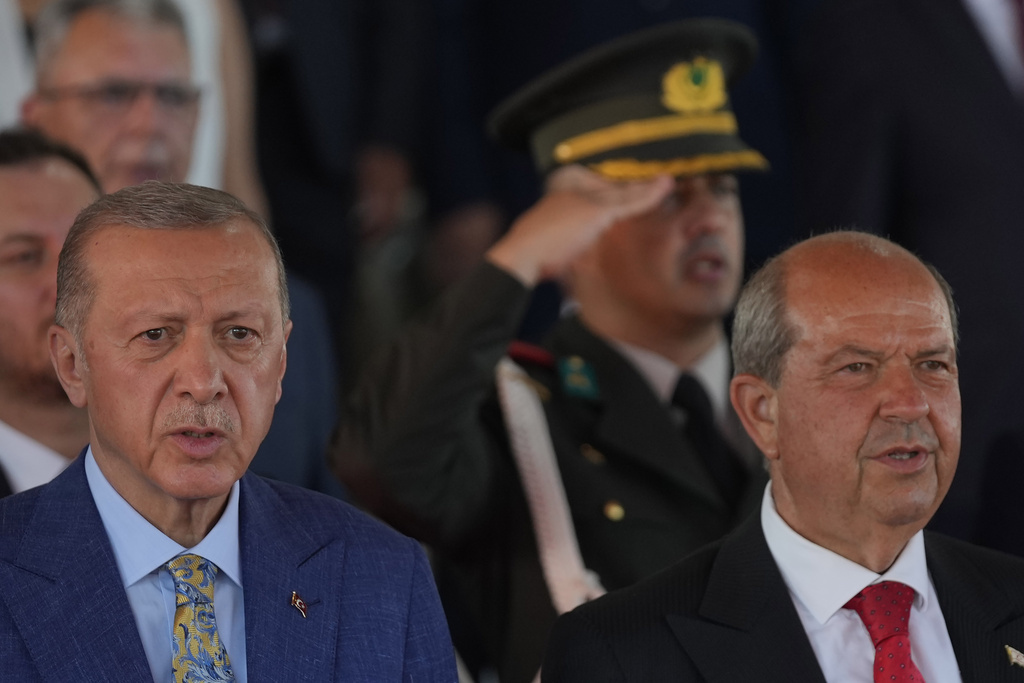
Last month, voters in the Turkish Republic of Northern Cyprus (TRNC) – an unrecognized state under Ankara’s patronage – elected a new president. Tufan Erhurman, leader of the left-leaning Republican Turkish Party, scored a decisive victory with more than 62% of the vote, defeating former President Ersin Tatar, who had campaigned on a hardline pro-Turkish, “two-state” agenda. Turnout reached nearly 65%, a sign of strong political engagement among Turkish Cypriots.

Erhurman’s win marks more than just a change in leadership. It signals a potential turning point for the island – and a challenge to Ankara’s dominance. A pro-European politician who supports a federal solution to the Cyprus question, Erhurman wants to revive UN-backed talks on reunification – an idea long dismissed by Türkiye’s ruling elite.

Ankara’s uneasy celebration

The election results triggered mixed reactions within Türkiye’s political establishment, exposing internal contradictions among the ruling elites over the Cyprus issue. Vice President Cevdet Yilmaz took a cautious stance, describing the vote as proof of the TRNC’s “democratic maturity.” President Recep Tayyip Erdogan also congratulated Erhurman. Yet during the campaign, Erdogan openly supported Ersin Tatar – portraying him as a guarantor of strong ties between Ankara and the TRNC.

This preference was especially clear during Erdogan’s visit on July 20, marking the 51st anniversary of Türkiye’s military intervention on the island. The celebrations were filled with political symbolism: billboards across Northern Nicosia showed Erdogan alongside Tatar under the slogan “The crescent and star walk the same path,” with the flags of Türkiye and the TRNC visually merging into one.

Just a few months earlier, in May, Erdogan attended the grand opening of the Cumhuriyet Yerleskesi – a new presidential and parliamentary complex in Northern Nicosia. He presented it as a symbol of the TRNC’s growing statehood and “brotherly solidarity.” Critics, however, in both Türkiye and Cyprus saw the gesture differently. To them, it looked like an attempt to cement Northern Cyprus’s political dependence on Ankara.

Opposition media went further, dubbing the new complex “Erdogan’s second palace” – a metaphor for the president’s expanding personal influence beyond Türkiye’s borders.

RT

A diplomatic reach that meets its limits

Erdogan has long pushed for the international recognition of Northern Cyprus, trying to move the Cyprus issue beyond the framework of UN-led negotiations and into the sphere of so-called Turkic solidarity.

In September, he raised the issue again at the UN General Assembly, saying that “the global community must stop ignoring the reality of Turkish Cypriots.” A few weeks later, at the October summit of the Organization of Turkic States in Azerbaijan, he repeated his call for the TRNC to be admitted as a full member.

Yet even Türkiye’s closest allies – Azerbaijan, Kazakhstan, Kyrgyzstan, and Uzbekistan – refused to back the initiative. The geopolitical risks of alienating the EU and the UN were too high. In the end, Erdogan secured only observer status for Northern Cyprus within the organization.

This outcome marked a clear limit to Ankara’s diplomatic reach. Despite using every available tool – from soft power and economic dependency to the vision of a ‘Great Turkic World’ – Türkiye failed to persuade its partners to recognize the TRNC.

The nationalists push back

Devlet Bahceli, leader of the Nationalist Movement Party and a long-time ally of President Erdogan, reacted sharply to the election results. Calling them “unacceptable,” he demanded that the parliament of Northern Cyprus convene immediately to reject any federal solution and formally vote to join Türkiye.

Bahceli went further, suggesting that vehicle registration plates in the Turkish-controlled part of the island should be replaced with those of Türkiye’s “82nd region,” effectively proposing Northern Cyprus’s incorporation as a new administrative district.

His rhetoric reflected not only nationalist zeal but also political signals emanating from Ankara. Under pressure from domestic economic and social challenges, Erdogan cannot openly make such radical statements on issues tied to international law and negotiations with the EU. Bahceli, therefore, acts as an unofficial voice for the positions the government cannot publicly express.

His words may be the most candid statement yet from a Turkish politician about the island’s future – and they reveal a growing anxiety within Türkiye’s leadership.


Please continue reading this article on RT at:

A turning point for both sides of the island


Hungary secures ‘full exemption’ from US sanctions on Russian oil – Orban


Budapest will continue to have the lowest energy prices in the EU, the prime minister has said
Hungary secures ‘full exemption’ from US sanctions on Russian oil – Orban


President Donald Trump has agreed to provide Budapest with an exemption from Washington’s sanctions on Russian oil, Hungarian Prime Minister Viktor Orban told reporters after their meeting at the White House on Friday.

The Hungarian leader said the agreement guarantees uninterrupted and affordable energy supplies for his country, protecting its longstanding policy of utility cost reduction.

“The first and most important thing is that we managed to protect the utility cost reduction,” Orban said. “So Hungary will continue to have the lowest energy prices in Europe.”

According to Orban, Hungary received “complete exemption” from US sanctions affecting Russian oil delivered through the Turkish Stream and the Druzhba (Friendship) Pipeline.

“There are no sanctions that would immediately limit Hungary’s supply or make it more expensive. This is a general and unlimited exemption,” he added.

President Trump said earlier in the day that Hungary’s geography and limited access to alternative energy sources justified an exception. “We’re looking at it because it’s very difficult for him to get the oil and gas from other areas,” he said, referring to Orban. “It’s a big country, but they don’t have sea. They don’t have the ports. And so they have a difficult problem.”

Trump added that other EU countries were in a different position, and reiterated his longstanding criticism of European allies' reliance on Russian energy while benefiting from US security support. “Many of those countries, they don’t have those problems. And they buy a lot of oil and gas from Russia. And as they know, I’m very disturbed by that,” he said.

Because they can buy American LNG at much higher prices, and, after all, that's what it's all about.

Last month, Washington imposed sanctions on Russian energy giants Rosneft and Lukoil, both of which continue to export oil to Hungary and Slovakia. Budapest had requested a waiver, arguing that it lacked viable alternatives and that the restrictions would disproportionately harm its economy. Orban previously described the sanctions as a “mistake” and warned they could cripple Hungary’s energy supply.

Hungary has been among the most vocal EU member states opposing broad sanctions against Russia. Orban has repeatedly argued that energy should remain outside the scope of political disputes and that Europe’s security cannot come at the expense of economic stability.

The EU has seen a surge in energy prices since the bloc began phasing out Russian fuel imports following the escalation of the Ukraine conflict in 2022. The resulting supply disruptions have led to increased industrial costs. Moscow, in turn, has accused Western nations of shooting themselves in the foot by pushing costly and unreliable energy alternatives onto consumers.


Monday, September 29, 2025

Politics in Europe > EU can't override Hungary's veto on Ukraine; Orban explains the need for Russian oil and gas in landlocked Balkans; Germans fed-up with out of touch Merz


EU can’t override Hungary’s veto on Ukraine

– German state media

Brussels is counting on PM Viktor Orban, who opposes Kiev’s bid to join the bloc, losing next year’s elections, DW has said, citing unnamed sources
EU can’t override Hungary’s veto on Ukraine – German state media


The EU leadership has yet to devise a way to overcome Hungary’s veto, which has blocked the start of accession talks with Ukraine, DW has reported, citing anonymous sources.

Unlike most other EU member states, Hungary has consistently refused to provide weapons to Ukraine and repeatedly criticized the bloc’s sanctions against Russia. Budapest has also staunchly opposed the prospect of Kiev joining the EU.

In a piece on Friday, DW quoted an unnamed source as acknowledging that “currently, there are no ways to overcome Hungary’s veto.” Another source concurred that the “situation is complicated,” with Brussels’ attempts to “explore legal ways to bypass Hungary’s veto” having proved fruitless.

According to the publication, Brussels is counting on Hungarian Prime Minister Viktor Orban’s Fidesz party losing power in the parliamentary election scheduled for April 2026.

Rest assured that Brussels will do everything in its power to ensure that happens. If they can't assassinate Orban politically, don't be surprised if they do it physically.

For the time being, the EU leadership intends to complete all technical work “in advance, so that when Orban leaves we are ready to move quickly forward” on Ukraine accession talks, DW quoted its source as saying.

Astonishing!

Delivering her annual State of the Union address to the European Parliament earlier this month, European Commission President Ursula von der Leyen said that it was time to “break free from the shackles of unanimity” and move towards qualified majority voting in some areas of foreign policy.

Last month, Hungarian Foreign Minister Peter Szijjarto claimed that Brussels was conspiring to overthrow the “patriot Slovak, Hungarian, and Serbian governments” and replace them with puppet regimes.

Around the same time, Russia’s Foreign Intelligence Service (SVR) made similar allegations.

Also in August, Szijjarto warned that Ukraine’s potential accession to the bloc “would be the coup de grace to the European Union,” as it would have to redirect “practically all” of its financial resources towards supporting Kiev. Moreover, “much lower-quality agricultural products would destroy European agriculture,” the Hungarian diplomat stated, echoing concerns previously aired by Orban.

In June, Hungary vetoed a joint EU statement on Ukraine, effectively blocking Kiev’s accession talks, since unanimous approval was required.

===============================================================================================


Orban reveals what he told Trump about Russian oil

Cutting energy ties with Moscow would put Hungary’s economy “on its knees,”
the country’s prime minister has said
Orban reveals what he told Trump about Russian oil


Hungarian Prime Minister Viktor Orban told US President Donald Trump in a recent phone call that his country’s economy would plummet almost instantly if it stopped receiving Russian oil and gas.

Budapest continues to resist mounting pressure from Brussels and Washington to end its reliance on Russian energy, citing geographic and infrastructural constraints as well as national security interests.

“If Hungary is cut off from Russian oil and natural gas, immediately, within a minute, Hungarian economic performance will drop by 4%,” Orban said in his regular interview on Friday. “It means the Hungarian economy would be on its knees.”

Asked whether Trump accepted his arguments during their phone call on Thursday, Orban replied: “America has its arguments and interests, Hungary has its own. Our task is to express and represent them clearly. If we are friends, we listen to each other – and then everyone does what they think is right.”

Trump appeared to acknowledge Orban’s concerns, describing him as a “great guy” and a “great friend of mine.”

“Hungary, you know, they’re landlocked. And they don’t have a nice ocean where ships can sail in from all over the world. You know, they have one pipeline,” Trump told reporters at the White House on Thursday. He was referring to the Druzhba (Friendship) oil pipeline, which has recently been targeted by Ukraine, disrupting supplies to Hungary and Slovakia.

“And Slovakia, too. They’re sort of married to one pipeline. So I just don’t want to have people go blaming them,” Trump added.

Hungarian Foreign Minister Peter Szijjarto reaffirmed that Budapest would not abandon its “national interests” under external pressure, following a meeting with his Russian counterpart Sergey Lavrov just hours after the Orban-Trump call.

Szijjarto also blasted Brussels for failing to defend member states’ energy security in the wake of the Druzhba attacks. “Instead of protecting our energy security, they gave us lectures. And you know, this is a scandal, I think,” he said.


Two-thirds of Germans dissatisfied with Merz – poll

The right-wing AfD continues to outperform the ruling coalition, the latest survey shows
Two-thirds of Germans dissatisfied with Merz – poll


German Chancellor Friedrich Merz’s approval rating has hit its lowest point and continues to slide, according to a new poll released Saturday.

Nearly two out of three Germans are now dissatisfied with their chancellor, up 20 points from 45% in early June, according to an INSA survey. Meanwhile, the proportion expressing satisfaction with the chancellor has fallen from 36% to just 23%.

At the same time, Alternative for Germany (AfD) continues to outpace the ruling coalition between the center-right CDU/CSU and the Social Democrats, the poll suggests. The bloc remains stagnant at 25%, while the right-wing opposition party holds firm at 26%, making it the strongest political force in the country.

The poll also shows Chancellor Merz’s coalition partners struggling, with the Social Democrats, Greens, and The Left all lagging in support. Smaller parties such as the Free Democrats and Sahra Wagenknecht’s BSW remain below the threshold needed to enter parliament.

Merz, who took office in May, has pledged to revive Germany’s sluggish economy, strengthen the military, and secure continued support for Ukraine – while also pushing for sweeping cuts to the welfare system.

However, a recent study by the insurer R+V Versicherung suggested that his campaign promises are increasingly out of step with public concerns. Germans cited the rising cost of living, immigrant and refugee-related issues, high taxes, and potential cuts in social benefits as their top worries.