"I am the Way, the Truth, and the Life"

Father God, thank you for the love of the truth you have given me. Please bless me with the wisdom, knowledge and discernment needed to always present the truth in an attitude of grace and love. Use this blog and Northwoods Ministries for your glory. Help us all to read and to study Your Word without preconceived notions, but rather, let scripture interpret scripture in the presence of the Holy Spirit. All praise to our Lord and Saviour Jesus Christ.

Please note: All my writings and comments appear in bold italics in this colour
Showing posts with label Bill Browder. Show all posts

Thursday, July 16, 2020

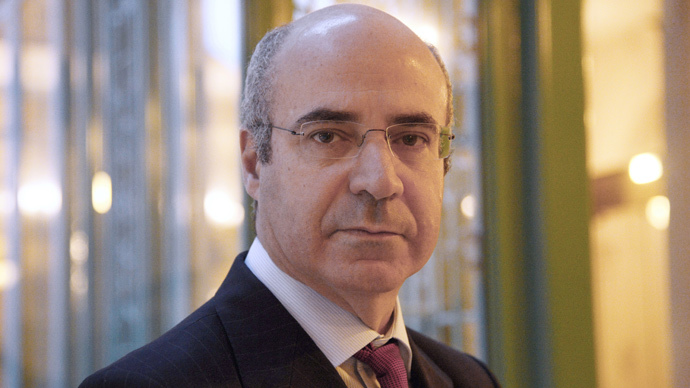
The Real Bill Browder Story (part one): What US/UK Media Won’t Tell You About Billionaire Lobbyist’s Dubious Narrative

FILE PHOTO © Getty Images via AFP / GETTY IMAGES NORTH AMERICA / Drew Angerer

By John Ryan, Ph.D. – Retired Professor of Geography and Senior Scholar, University of Winnipeg, Canada

If anyone has proven the adage that “a lie can travel halfway around the world while the truth is still putting on it shoes,” it’s Bill Browder. The mega-rich vulture capitalist has been spinning a yarn for years.

Intriguingly, after Germany’s leading news magazine kiboshed his fake narrative, Anglo-American media ignored the revelations.

Browder’s narrative suits the US/UK establishment as it provides a convenient excuse to sanction Russia, but the story has more holes than Swiss cheese.

The billionaire vulture capitalist has been a figure of some prominence on the world scene for the past decade. A few months back, (2nd link below) Der Spiegel published a major exposé on him and the case of Sergei Magnitsky, but the US/UK mainstream media failed to follow it up and so, aside from Germany, few people are aware of Browder’s background.


Browder had gone to Moscow in 1996 to take advantage of the privatization of state companies by then-Russian President Boris Yeltsin. Browder founded Hermitage Capital Management, a Moscow investment firm registered in offshore Guernsey in the Channel Islands. For a time, it was the largest foreign investor in Russian securities. Hermitage Capital Management was rated as extremely successful after earning almost 3,000 percent in its operations between 1996 and December 2007.

During the corrupt Boris Yeltsin years, with his business partner’s US$25 million, Browder amassed a fortune. Profiting from the large-scale privatizations in Russia from 1996 to 2006, his Hermitage firm eventually grew to $4.5 billion.

When Browder encountered financial difficulties with Russian authorities, he portrayed himself as an anti-corruption activist and became the driving force behind the Magnitsky Act, which resulted in economic sanctions aimed at Russian officials. However, an examination of Browder’s record in Russia and his testimony in court cases reveal contradictions with his statements to the public and Congress, and raises questions about his motives in attacking corruption in Russia.

Although he has claimed that he was an ‘activist shareholder’ and campaigned for Russian companies to adopt Western-style governance, it has been reported that he cleverly destabilized companies he was targeting for takeover. Canadian blogger Mark Chapman has revealed that after Browder would buy a minority share in a company, he would resort to lawsuits against this company through shell companies he controlled. This would destabilize the company with charges of corruption and insolvency. To prevent its collapse, the Russian government would intervene by injecting capital into it, causing its stock to rise—with the result that Browder’s profits would rise exponentially.

Later, through Browder’s Russian-registered subsidiaries, his accountant Magnitsky acquired extra shares in Russian gas companies such as Surgutneftegaz, Rosneft and Gazprom. This procedure enabled Browder’s companies to pay the residential tax rate of 5.5 percent instead of the 35 percent that foreigners would have to pay.

However, the procedure to bypass the Russian presidential decree that banned foreign companies and citizens from purchasing equities in Gazprom was an illegal act. Because of this and other suspected transgressions, Magnitsky was interrogated in 2006 and later in 2008. Initially he was interviewed as a suspect and then as an accused. He was then arrested and charged by Russian prosecutors with two counts of aggravated tax evasion committed in conspiracy with Bill Browder in respect of Dalnyaya Step and Saturn, two of Browder’s shell companies to hold shares that he bought. Unfortunately, in 2009, Magnitsky died in pre-trial detention because of a failure by prison officials to provide prompt medical assistance.

Browder has challenged this account and for years he has maintained that Magnitsky’s arrest and death were a targeted act of revenge by Russian authorities against a heroic anti-corruption activist.

It’s only recently that Browder’s position was challenged by the European Court of Human Rights, which in its ruling on August 27, 2019 concluded that Magnitsky’s “arrest was not arbitrary, and that it was based on reasonable suspicion of his having committed a criminal offence.” And as such, “The Russians had good reason to arrest Sergei Magnitsky for Hermitage tax evasion.”

“The Court observes that the inquiry into alleged tax evasion, resulting in the criminal proceedings against Mr Magnitskiy, started in 2004, long before he complained that prosecuting officials had been involved in fraudulent acts.”

Prior to Magnitsky’s arrest, because of what Russia considered to be questionable activities, Browder had been refused entry to Russia in 2005. However, he did not take lightly his rebuff by the post-Yeltsin Russian government under Vladimir Putin. As succinctly expressed by Professor Halyna Mokrushyna at the University of Ottawa:

[Browder] began to engage in a worldwide campaign against the Russian authorities, accusing them of corruption and violation of human rights. The death of his accountant and auditor Sergei Magnitsky while in prison became the occasion for Browder to launch an international campaign presenting the death as a ruthless silencing of an anti-corruption whistleblower. But the case of Magnitsky is anything but.

Despite Browder’s claims that Magnitsky died as a result of torture and beatings, authentic documents and testimonies show that Magnitsky died because of medical neglect – he was not provided adequate treatment for a gallstone condition. It was negligence typical at that time of prison bureaucracy, not a premeditated killing. Because of the resulting investigation, many high-level functionaries in the prison system were fired or demoted.

For the past 10 years, Browder has maintained that Magnitsky was tortured and murdered by prison guards. Without any verifiable evidence he has asserted that Magnitsky was beaten to death by eight riot guards over 1 hour and 18 minutes. This was never corroborated by anybody, including by autopsy reports. It was even denied by Magnitsky’s mother in a video interview.

Nevertheless, on the basis of his questionable beliefs, he has carried on a campaign to discredit and vilify Russia and its government and leaders.

In addition to the ruling of the European Court of Human Rights, Browder’s basic underlying beliefs and assumptions are being seriously challenged. Very recently, on May 5, 2020, an American investigative journalist, Lucy Komisar, published an article with the heading Forensic photos of Magnitsky show no marks on torso:

On Fault Lines today I revealed that I have obtained never published forensic photos of the body of Sergei Magnitsky, William Browder’s accountant, that show not a mark on his torso. Browder claims he was beaten to death by prison guards. Magnitsky died at 9:30pm Nov 16, 2009, and the photos were taken the next day.

Her later report says:

I noted on the broadcast that though the photos and documents are solid, several dozen U.S. media – both allegedly progressive and mainstream — have refused to publish this information. And if that McCarthyite censorship continues, the result of rampant fear-inducing Russophobia, I will publish it and the evidence on this website.

Despite evidence such as this, till this day Browder maintains that Sergei Magnitsky was beaten to death with rubber batons. It’s this narrative that has attracted the attention of the US Congress, members of parliament, diplomats and human rights activists. To further refute his account, a 2011 analysis by the Physicians for Human Rights International Forensics Program of documents provided by Browder found no evidence he was beaten to death.

In his writings, as supposed evidence, Browder provides links to two untranslated Russian documents. They were compiled immediately after Magnitsky died on November 16, 2009. Recent investigative research has revealed that one of these appears to be a forgery. The first document, D309, states that shortly before Magnitsky’s death: “Handcuffs were used in connection with the threat of committing an act of self-mutilation and suicide, and that the handcuffs were removed after thirty minutes.” To further support this, a forensic review states that while in the prison hospital, “Magnitsky exhibited behavior diagnosed as ‘acute psychosis’ by Dr. A. V. Gaus at which point the doctor ordered Mr. Magnitsky to be restrained with handcuffs.”

The second document, D310, is identically worded to D309 except for a change in part of the preceding sentence. The sentence in D309 has the phrase “special means were” is changed in D310 to “a rubber baton was.”

As such, while D309 is perfectly coherent, in D310 the reference to a rubber baton makes no sense whatsoever, given the title and text it shares with D309. This and other inconsistencies, including signatures on these documents, make it apparent that D310 was copied from D309 and that D310 is a forgery. Furthermore, there is no logical reason for two almost identical reports to have been created, with only a slight difference in one sentence. There is no way of knowing who forged it and when, but this forged document forms a major basis for Browder’s claim that Magnitsky was clubbed to death.

The fact that there is no credible evidence to indicate that Magnitsky was subjected to a baton attack, combined with forensic photos of Magnitsky’s body shortly after death that show no marks on it, provides evidence that appears to repudiate Browder’s decade-long assertions that Magnitsky was viciously murdered while in jail.

With evidence such as this, it repeatedly becomes clear that Browder’s narrative contains mistakes and inconsistencies that distort the overall view of the events leading to Magnitsky’s death.

Despite Magnitsky’s death, the case against him continued in Russia and he was found guilty of corruption in a posthumous trial. Actually, the trial’s main purpose was to investigate alleged fraud by Bill Browder, but to proceed with this they had to include the accountant Magnitsky as well. The Russian court found both of them guilty of fraud. Afterwards, the case against Magnitsky was closed because of his death.

After Browder was refused entry to Russia in November of 2005, he launched a campaign insisting that his departure from Russia resulted from his anti-corruption activities. However, the real reason for the cancellation of his visa that he never mentions is that in 2003, a Russian provincial court had convicted Browder of evading $40 million in taxes. In addition, his illegal purchases of shares in Gazprom through the use of offshore shell companies were reportedly valued at another $30 million, bringing the total figure of tax evasion to $70 million.

It’s after this that the Russian federal government next took up the case and initially went after Magnitsky, the accountant who carried out Browder’s schemes.

But back in the US, Browder portrayed himself as the ultimate truth-teller, and embellished his tale by asserting that Sergei Magnitsky was a whistleblowing “tax lawyer,” rather than one of Browder’s accountants implicated in tax fraud. As his case got more involved, he presented a convoluted explanation that he was not responsible for bogus claims made by his companies. This is indeed an extremely complicated matter and as such only a summary of some of this will be presented.

The essence of the case is that in 2007, three shell companies that had once been owned by Browder were used to claim a $232 million tax refund based on trumped-up financial loses. Browder has stated that the companies were stolen from him, and that in a murky operation organized by a convicted fraudster, they were re-registered in the names of others. There is evidence, however, that Magnitsky and Browder may have been part of this convoluted scheme.

Browder’s main company in Russia was Hermitage Capital Management, and associated with this firm were a large number of shell companies, some in the Russian republic of Kalmykia and some in the British Virgin Islands. A law firm in Moscow, Firestone Duncan, owned by Americans, did the legal work for Browder’s Hermitage. Sergei Magnitsky was one of the accountants for Firestone Duncan and was assigned to work for Hermitage.

An accountant colleague of Magnitsky’s at Firestone Duncan, Konstantin Ponomarev, was interviewed in 2017 by Komisar, who said:

According to Ponomarev, the firm – and Magnitsky — set up an offshore structure that Russian investigators would later say was used for tax evasion and illegal share purchases by Hermitage… the structure helped Browder execute tax-evasion and illegal share purchase schemes.

He said the holdings were layered to conceal ownership: The companies were ‘owned’ by Cyprus shells Glendora and Kone, which, in turn, were ‘owned’ by an HSBC Private Bank Guernsey Ltd trust. Ponomarev said the real owner was Browder’s Hermitage Fund. He said the structure allowed money to move through Cyprus to Guernsey with little or no taxes paid along the way. Profits could get cashed out in Guernsey by investors of the Hermitage Fund and HSBC.

Ponomarev said that in 1996, the firm developed for Browder ‘a strategy of how to buy Gazprom shares in the local market, which was restricted for foreign investors.’

In the course of their investigation, on June 2, 2007, Russian tax investigators raided the offices of Hermitage and Firestone Duncan. They seized Hermitage company documents, computers and corporate stamps and seals. They were looking for evidence to support Russian charges of tax evasion and illegal purchase of shares of Gazprom.

In a statement to US senators on July 27, 2017, Browder stated that Russian Interior Ministry officials “seized all the corporate documents connected to the investment holding companies of the funds that I advised. I didn’t know the purpose of these raids so I hired the smartest Russian lawyer I knew, a 35-year-old named Sergei Magnitsky. I asked Sergei to investigate the purpose of the raids and try to stop whatever illegal plans these officials had.”

Contrary to what Browder claims, Magnitsky had been his accountant for a decade. He had never acted as a lawyer, nor did he have the qualifications to do so. In fact, in 2006, when questioned by Russian investigators, Magnitsky said he was an auditor on contract with Firestone Duncan. In Browder’s testimony before the Senate Judiciary Committee in 2017, he claimed Magnitsky was his lawyer, but in 2015, in his testimony under oath in the US government’s Prevezon case, Browder told a different story, as will now be related.

On Browder’s initiative, in December 2012, he presented documents to the New York District Attorney alleging that a Russian company, Prevezon, had “benefitted from part of the $230 million dollar theft uncovered by Magnitsky and used those funds to buy a number of luxury apartments in Manhattan.” In September 2013, the New York District Attorney’s office filed money-laundering charges against Prevezon. The company hired high-profile New York-based lawyers to defend themselves against the accusations.


As reported by Der Spiegel, Browder would not voluntarily agree to testify in court, so Prevezon’s lawyers sent process servers to present him with a subpoena, which he refused to accept and was caught on video literally running away. In March 2015, the judge in the Prevezon case ruled that Browder would have to give testimony as part of pre-trial discovery. Later, while in court and under oath and confronted with numerous documents, Browder was totally evasive. Lawyer Mark Cymrot spent six hours examining him, beginning with the following exchange:

Cymrot asked: Was Magnitsky a lawyer or a tax expert?

He was “acting in court representing me,” Browder replied.

And he had a law degree in Russia?

“I’m not aware he did.”

Did he go to law school?

“No.”

How many times have you said Mr. Magnitsky is a lawyer? Fifty? A hundred? Two hundred?

“I don’t know.”

Have you ever told anybody that he didn’t go to law school and didn’t have a law degree?

“No.”

Critically important, during the court case, the responsible US investigator admitted during questioning that his findings were based exclusively on statements and documents from Browder and his team. Under oath, Browder was unable to explain how he and his people managed to track the flow of money and make the accusation against Prevezon. In his 2012 letter that launched the court case, Browder referred to “corrupt schemes” used by Prevezon, but when questioned under oath, he admitted he didn’t know of any. In fact, to almost every question put forth by Mark Cymrot, Browder replied that he didn’t know or didn’t remember.

============================================================================================

Friday, November 29, 2019

The Case of Sergei Magnitsky - Questions Cloud Story Behind U.S. Sanctions

Browder's story fits nicely into the NATO narrative that Russia is evil in every aspect. That in itself ought to make one suspicious of it.

The story of Sergei Magnitsky has come to symbolize the brutal persecution of whistleblowers in Russia. Ten years after his death, inconsistencies in Magnitsky's story suggest he may not have been the hero many people -- and Western governments -- believed him to be.

By Benjamin Bidder, Der Spiegel

Bill Browder at his office in London.
Chris Gloag/ WirtschaftsWoche

There's a tombstone in northeastern Moscow that bears the portrait of a man with a friendly yet somewhat uneasy smile. His name is Sergei Leonidovich Magnitsky. He was born in April 1972 in Odessa, Ukraine, and died in November 2009 in Moscow. To this day, 10 years after the fact, the circumstances of his death in a Russian pretrial detention facility remain unclear.

There are two versions of what happened to Magnitsky. The more well-known version has all the makings of a conspiracy thriller. It's been repeated in thousands of articles, TV interviews and in parliamentary hearings. In this version of the story, the man from the Moscow cemetery fought nobly against a corrupt system and was murdered for it.

The other version is more complicated. In it, nobody is a hero.

The first version has had geopolitical implications. In 2012, the United States passed the Magnitsky Act, which imposed sanctions against Russian officials who were believed to have played a role in his death. The measure was signed into law by then-President Barack Obama after receiving a broad bipartisan majority. Back then, if there was one thing that politicians on both sides of the aisle could agree on, it was their opposition to a nefarious Russian state. In 2017, Congress passed the Global Magnitsky Act, which enabled the U.S. to impose sanctions against Russia for human rights violations worldwide.

The facilitator behind these pieces of legislation is Bill Browder, Magnitsky's former boss in Moscow. "When he was put to the ultimate test, he became the ultimate hero," Browder says of Magnitsky. Browder was born in the U.S.. For years, his company, Hermitage Capital Management, was one of the largest foreign investors in Russia. At the time, Browder was an advocate for Russian President Vladimir Putin in the West. That is, until he was prohibited from entering Russia in 2005.


Public Enemy No. 1

Today, Browder refers to himself as "Putin's No. 1 Enemy." From his office in London's Finsbury district, Browder coordinates a campaign he calls "Justice for Sergei Magnitsky." His goal is to get other countries to impose sanctions against Russia for what happened to his former employee. So far, four other countries have followed the U.S.' lead. For now, Browder is concentrating on Europe. He has spoken to politicians in Norway, Sweden and France. He came to Berlin in May and spoke with the chairman of the Committee on Foreign Affairs in Germany's federal parliament, the Bundestag. He also had an appointment at the Chancellery.

Browder tells a gripping story of how Magnitsky, the whistleblower, is believed to have died. This narrative is his ticket into the political sphere. It's why he's received by members of parliament, diplomats and human rights activists alike, often with open arms. They support his push for more legislation because they see it as setting an important precedent: Corrupt regimes all over the world that are violating their citizens' rights must be held accountable and made to suffer consequences in the form of entry bans and frozen accounts as laid out by the Global Magnitsky Act. The law makes it more difficult, if only slightly, for autocrats to sneer at and ignore human rights.

But there's another version of the Magnitsky saga, one that is more contradictory than Browder's telling and more difficult to summarize. The legal documents that underpin it fill dozens of binders, not only in Moscow, but also in London and New York. After sifting through thousands of pages, one might begin to wonder: Did the perfidious conspiracy to murder Magnitsky ever really take place? Or is Browder a charlatan whose story the West was too eager to believe? The certainty surrounding the Magnitsky affair becomes muddled in the documents, particularly the clear division between good and evil. The Russian authorities' take is questionable, but so is everyone else's -- including Bill Browder's.

The cases raises uncomfortable questions for the West. In Europe and the U.S., critics of Russia often argue from a position of moral superiority. But with the Magnitsky sanctions, it could be that the activist Browder used a noble cause to manipulate Western governments.

One thing that stays the same no matter which version is told, is this: Magnitsky is dead and he was the victim of a terrible injustice.

Magnitsky's Demise

On the evening of Nov. 16, 2009, Sergei Magnitsky died in a cell at Moscow's "Matrosskaya Tishina" pretrial detention center. A prison doctor had diagnosed him with an inflammation of the pancreas four and a half months prior, but shortly before Magnitsky was scheduled to undergo surgery, he was moved to another prison -- one without the necessary medical equipment for such an invasive procedure. The reason given for the move was that Magnitsky's cell needed to be renovated. Could that possibly be true? Even after the whistleblower's death, work still hadn't commenced, according to an investigative commission. It began looking into the case shortly after Magnitsky's death because the outrage in Moscow was so huge. The commission counted among its members respected human rights activists and opponents of the Kremlin. They analyzed notes and complaints filed while Magnitsky was in prison. They also interviewed the prison staffers who, instead of helping Magnitsky, let him die.

The commission's 20-page report offered detailed insights into the sadistic, cold-hearted nature of Russia's prison system. In the months before his death, Magnitsky was constantly moved from one cell to another. His mother brought him medications that took 18 days to reach him. In September, he was forced to wear his jacket at night because his cell window lacked a pane of glass. His cell toilet often backed up. One time Magnitsky's abdominal pains became so acute that his neighbor began desperately kicking against the door of his cell and calling for help. It took prison staff five hours to get Magnitsky to a doctor.

Sergei Magnitsky's grave at a cemetery in Moscow.
Mischa Japaridze/ AP/ Picture Alliance/ DPA


Magnitsky's condition worsened on his last day. He was transferred back to the prison where he was originally supposed to be operated on months prior. There, the dying man began to panic. He was sedated and restrained with handcuffs. The files analyzed by the commission note the "use of a rubber baton." Magnitsky was left alone in his cell, unobserved, without a doctor. "An ill person in severe condition was effectively left without medical attention for 1 hour and 18 minutes to die," the commission wrote in its report, a chronology of merciless negligence. Yet it contains no evidence of a targeted murder.

According to Browder's more dramatic telling of the story, Magnitsky's arrest and death were a targeted act of revenge by Russian authorities against an anti-corruption activist. Browder says he tapped "my lawyer Magnitsky," to investigate a case in 2007. Over the course of his research, Magnitsky supposedly stumbled onto a crime of unprecedented proportions -- the biggest tax fraud in Russian history, perpetrated by a corrupt band of police officers and government officials.

The fraud involved a sum of $230 million (208 million euros) and a complex master plan, which, according to Browder, was run by two Moscow police officers, Artyom Kuznetsov and Pavel Karpov. The duo had initiated a fraudulent tax investigation against Browder's Hermitage Capital Management and then seized three letterbox firms that had originally been founded by Browder's people. With confiscated company deeds, the firms were transferred to middlemen who fabricated massive losses and requested the reimbursement of $230 million in taxes that Browder's company had previously paid. Karpov, the policeman, denies any involvement in the fraud or Magnitsky's death. "Browder is a liar," he says. Kuznetsov could not be reached for a statement.

Browder's Story

According to Browder, Magnitsky was onto Kuznetsov and Karpov. He also says the same officials had arranged for Magnitsky to be imprisoned and killed. Browder has told this version of events countless times. He testified in front of the U.S. Congress that Magnitsky had been "murdered." Browder told Canadian parliamentarians: "Eight riot guards with rubber batons would beat him for one hour and 18 minutes. He was subsequently found dead on the floor of that cell."

When asked, Browder cites the investigative committee's report as evidence. He does the same on his website, where he also says the same officials incriminated by Magnitsky "intentionally tortured and ultimately murdered him." The report, however, makes no such assertion of an intentional killing. The names of the two police officers, Kuznetsov and Karpov, don't even appear in the original Russian version of the commission's report. Kuznetsov is only mentioned in an English translation on Browder's website.

By now, Browder's campaign has created its own frame of reference and its own supposed evidence. Browder has often cited reports by the Council of Europe in recent years, though these are largely based on his own accounts. For instance, one Council rapporteur, former German Justice Minister Sabine Leutheusser-Schnarrenberger, referred to Magnitsky as an "independent lawyer." But one look at documents readily available online is enough to discover that Magnitsky was employed as a tax expert at an auditing firm and had worked for Browder for years.

Browder claims to be fighting for justice. One of the reasons he's so successful may be because he's adept at aligning his story with the devastating image that Russia has been projecting for years. And many media outlets believe him. Browder has given countless TV interviews on the subject. In some of the shots, viewers can see articles from prominent international media Browder has hung on his office walls -- the Washington Post, the Financial Times and Russia's Novaya Gazeta. The reports are all framed and appear to lend credibility to Browder's story. DER SPIEGEL has also written about Browder's campaign and conducted interviews with him. The New York Times won the Pulitzer Prize for its reporting on Russia's legal system, including on the Magnitsky case. There are films and plays too.

But the question remains: Just how solid are the facts upon which politicians and the media are basing their judgements of this case? Various inconsistencies and contradictions are apparent in some documents that Browder's own people have published online. These include two photographs of interrogation protocols that allegedly prove how Sergei Magnitsky courageously reported the tax fraud of $230 million after discovering it. In his book, Browder writes, "Sergei set up an appointment at the Investigative Committee for 5 June 2008. (...) He sat in the chair, provided the evidence and gave his witness statement, explicitly naming Kuznetsov and Karpov."

Contradictions

The protocol itself tells a different story. Magnitsky does indeed mention the names of the two police officers nearly 30 times and describes their role during a search. But at no point does he make a concrete accusation against them personally. In a second protocol of a statement made on Oct. 7, Kuznetsov and Karpov are not mentioned at all. The first document also shows that Magnitsky did not make his statements entirely of his own free will, but as a witness in an ongoing investigation. According to other documents, the trial had been underway since February. This was confirmed to DER SPIEGEL by Magnitsky's lawyer at the time, Dmitry Kharitonov, who said his client had been summoned to testify.

Browder has a well-documented talent for selling a set of facts so that it supports his own version of events. In Moscow, this was part of his business model as an investor. According to its own calculations, Hermitage Capital Management generated a 1,500 percent return on its investments within just a few years. According to Russian investigators, a company in Browder's fund structure had wrongly paid only 5 percent in taxes, when in fact 15 percent should have been due. A double taxation agreement with Cyprus should not have been applied. Browder denies this.

One way or the other, Browder's business model was lucrative. Hermitage bought cheap shares in Russian state-owned corporations, such as Gazprom or Sberbank, from the late 1990s onward. Then he took on the conglomerates' leadership, denounced the widespread corruption and demanded reforms. If these came to fruition, the value of Browder's shares rose. If they didn't, at least the publicity of his fund grew.

Browder had his eye on Gazprom especially. In 1998, the company was worth $3.5 billion. Within seven years, that number had jumped to $160 billion. Hermitage held many shares through shell companies. Several of them perfunctorily hired mentally disabled people who they described on paper as, "analysis division experts." In fact, the people had no knowledge of this field, as several courts would later discover.

The companies took advantage of tax breaks that were intended for firms with workplace disability rates of at least 50 percent -- and not as a tax-saving model for Western investment funds. Over the course of their years-long investigations into Hermitage, Russian authorities stumbled upon a man who was helping Browder come up with his tax-saving models: Sergei Magnitsky. Browder says the practice of skirting taxes was common at the time.

When Browder talks about his fate in front of Western audiences, he makes it sound as if the investigations into Hermitage were completely arbitrary. In his book and during interviews, Browder claims that Kuznetsov, the investigator, appeared out of nowhere in 2007. This is significant because it appears to underscore that the trial was "politically motivated, fabricated" and initiated for the sole purpose of obtaining the necessary documentation for the long-planned $230-million fraud.

'A Measure of Vindication'

But the date Browder provided is incorrect. Kuznetsov's name appeared in letters to Browder's company in June 2006. At the time, the police had demanded the firm surrender its bank data. There is also proof that Browder's team knew about the letters. Indeed, they were in Browder's possession.

There is another interrogation protocol that Browder did not prominently publish online like the other two. It is from October 2006, long before Magnitsky is said to have first exposed the big tax fraud that Browder says caused him to fall out of the authorities' good graces.

According to the protocol, Magnitsky was questioned by investigators about one of the dubious letterbox firms that gave employment contracts to people with disabilities. He claims that Browder's people asked him to "to 'be' CEO for a period of reorganization." Other documents show that Magnitsky was involved in the companies as early as 2002.

Some of the people accused by Browder have begun to fight back against the allegations. The Moscow policeman Pavel Karpov, for one, who Browder claims worked with Kuznetsov to have Magnitsky arrested and killed in retaliation for his testimony, filed a defamation lawsuit against Browder in London in 2012.

The presiding judge, Justice Simon, ruled the British courts had no jurisdiction over the matter. But in his written verdict, he also wrote scathingly about Browder, calling him a "story-teller" who did "not come close to pleading facts which, if proved, would justify the sting of the libel." Simon also wrote that his assessment was to be explicitly understood as "a measure of vindication" of Karpov.

The only problem was the judge's words hardly made it into the public discourse at the time. The Guardian and other British media wrote about Karpov's humiliating defeat in the courts. Some of the language they used can be found in press releases from Browder's campaign.

A second trial in New York concerned the frozen accounts of a wealthy Russian political clan, the Katsyv family. The U.S. government imposed the sanctions because Browder had insisted that money from the million-dollar fraud had wound up with the Katsyvs. In response, the Russians hired star New York-based lawyers to defend themselves against the accusations.

Browder, an otherwise talkative person, tried to avoid questioning. One video shows him running away when someone tries to present him with a subpoena. In April 2015, he was required to appear in court. Under oath and confronted with numerous documents, he answered meekly -- quite differently than during his public appearances. Lawyer Mark Cymrot, a surly litigator with a moustache, spent six hours examining him. Cymrot asked: Was Magnitsky a lawyer or a tax expert?

He was "acting in court representing me," Browder replied.

And he had a law degree in Russia?

"I'm not aware he did."

Did he go to law school?

"No."

How many times have you said Mr. Magnitsky is a lawyer? Fifty? A hundred? Two hundred?

"I don't know."

Have you ever told anybody that he didn't go to law school and didn't have a law degree?

"No."

DER SPIEGEL visited Browder in London and asked him to clarify some inconsistencies and contradictions in his story. The result was a four hour-long interview and a grudging search for information, facts and details. The meeting, which took place in a glass conference room in Browder's Finsbury office, provided insights into his tactics: Together with his Russian partners Ivan Cherkasov and Vadim Kleiner, Browder laid out dozens of documents that supposedly corroborated his version of events. Not all of them would stand up to further scrutiny.

One of the documents was a previously unpublished email from Sergei Magnitsky. It supposedly confirmed that he went to the authorities of his own volition as a whistleblower. Yet the document also makes clear that Magnitsky was instructed to come forward by a higher-ranking lawyer working for Browder. This lawyer, a Russian, admitted during the interview in London that Magnitsky had been sent as a stand-in for the CEO of a letterbox company who investigators in Moscow had actually wanted to speak to.

To further back up their story, Browder and his team also presented an article by an American journalist who had spoken to Magnitsky shortly before his arrest. The police officers Kuznetsov and Karpov had Magnitsky arrested "immediately" after the publication of the article. But nothing in the article would explain why Magnitsky was arrested. In it, he doesn't mention Karpov or Kuznetsov. The author of the article, when contacted, said he couldn't imagine that it was his piece that triggered Magnitsky's persecution.

Former U.S. President Barack Obama signing the Magnitsky Act into law.
Charles Dharapak/ AP/ Picture Alliance/ DPA

Browder's campaign has turned him into a global celebrity. His publisher advertises his book, "Red Notice," as a New York Times bestseller. In interviews, he calls for Russia to be largely isolated. He attacks politicians who disagree with him. He called John Kerry, the former U.S. secretary of state, a "lapdog" and accused him of "appeasement." Browder has also called for Russia's banishment from the SWIFT banking network, which would have devastating consequences for the Russian population. But is that really necessary to ensure "Justice for Sergei Magnitsky?" Or has Browder's campaign turned into a personal vendetta?

Too Good Not to Be True

Another strange thing about this case is that those involved sometimes change their stories completely and begin saying the opposite of what they said before. Take Zoya Svetova, for instance: The Moscow-based human rights activist co-wrote the investigative commission's report. She is a Kremlin opponent and writes reports for MBKH News, the media project of the exiled Russian oligarch Mikhail Khodorkovsky. Svetova has been intensively involved with the Magnitsky case and published regular articles about it. She is also planning to write a book.

In July, Svetova said in an interview with DER SPIEGEL that even 10 years after Magnitsky's death, she didn't think much of the theory that he was the victim of a murder plot. It was more likely that Magnitsky got into an argument with the doctors and the staff because he wasn't being medically treated. "They were beating him to pacify him," Svetova said, adding that the beatings in and of themselves did not indicate a targeted murder. There was no evidence of this, she said. "What sense would it make to murder him?" So that he wouldn't talk about the $230 million fraud anymore? By that point, news of the fraud was everywhere. "Magnitsky did not reveal any secret," Svetova said in July.

The investigative commission report she helped co-write mentions that pressure had been placed on Magnitsky while he was in prison. "They wanted testimonies against Browder. That was the motivation. He should have accused Browder of not paying taxes. Magnitsky was a hostage. He himself was of no interest to them. They wanted Browder," she said.

Svetova also said that while Magnitsky's fate was dreadful, it wasn't atypical. Failure to provide assistance as well as abuse are common in Russian prisons, she said. She wrote an article on the subject in 2010. According to information from the Council of Europe, around 4,000 prisoners died in Russia in 2014. In Germany, 150 died. "You have to know," Svetova said, "the Russian penitentiary system is very brutal."

Shortly before this article was published, however, Svetova suddenly changed her story. Now she had the feeling "that he was moved deliberately to the 'Matrosskaya Tishina' prison to kill him." She said that since July, she had gone back and re-examined all the old documents and that she now had a completely different view of things.

In August, the European Court of Human Rights announced its ruling in the Magnitsky case: Russia must pay the deceased's relatives 34,000 euros ($37,500) because the state should have protected the prisoner's life and health. Nowhere in its verdict was there any mention of murder. The judges did, however, take apart the claim that the whistleblower had been imprisoned out of revenge. 

Magnitsky's arrest was not without cause, they wrote, nor were the authorities' actions malicious. The investigations into Magnitsky began in 2004, long before he first approached the authorities, it says on page 39 of the court's written verdict. But that didn't stop Browder from describing the ruling as a "resounding victory."

His campaign has created a kind of perpetual motion. Browder was recently received by diplomats in Finland, which currently holds the presidency of the Council of the EU. They summoned him to discuss a European version of the U.S.' Magnitsky sanctions. "This law will become a reality in the EU," Browder tweeted in mid-October. His chances of success aren't bad: His story is simply too good not to be true.


Saturday, July 21, 2018

Bill Browder - Hero or Villain? Where's the Truth?

Yesterday, Bill Browder accused GOP Congressman Rohrabacher of being a Russian stooge. He had no proof, only the accusations that Rohrabacher was trying to undue some of what Browder has 'accomplished'; things like the Magnitsky Act. Rohrabacher accused Browder of intimidation, which, he thought, was suspicious in itself.

Bill Browder Escapes Again

by philip giraldi, Ron Paul Institute

There was some good and bad news last week. The good news was that William Browder, a London-based investor and dedicated foe of Russian President Vladimir V. Putin was arrested by the Spanish police on Wednesday. The bad news is that even though Russia has on six occasions requested Browder’s arrest through Interpol for tax fraud, the Spanish national police determined that Browder had been detained in error because the international warrant was no longer valid and released him.

Interpol, an organization of 190 countries cannot legally enforce any action of a “political character.” This can make it difficult to obtain red notices such as those being sought by Russia on Browder, which are the equivalent of international arrest warrants.

One might reasonably ask why there is a crisis in US-Russia relations at all since Washington and Moscow have much more in common than not, to include confronting international terrorism, stabilizing Syria and other parts of the world that are in turmoil, and preventing the proliferation of nuclear weapons. In spite of all that, the US and Russia are currently locked in a tit-for-tat unfriendly relationship somewhat reminiscent of the Cold War and it is only getting worse as self-appointed “experts” including Browder continue to prowl the fringes of policy making. Browder was in Spain to testify in a case against several Russian companies.

That William Browder might be regarded as controversial is somewhat of an understatement. Many who regard him as a crook serving as a catalyst for the bad policies relating to the US-Russia relationship would like to see him in jail. Israel Shamir, a keen observer of the American-Russian relationship, and celebrated American journalist Robert Parry both think that Browder single-handedly deserves much of the credit for the new Cold War.

William Browder, the grandson of Earl Browder, former head of the American Communist Party, is a hedge fund operator who made his fortune in the corrupt 1990s world of Russian commodities trading. One of many Jewish profiteers who descended on Russia, his current role is symptomatic of why the United States government is so poorly informed about overseas developments as he appears before Congress frequently and is the source of much of the “testimony” contributing to the current bad international climate. He has somehow emerged as a trusted source in spite of the fact that he has considerable interest in cultivating a certain outcome favorable to himself. Also ignored is his renunciation of American citizenship in 1998, reportedly to avoid taxes. He is now a British citizen.

Browder is notoriously the man behind the 2012 Magnitsky Act, which exploited Congressional willingness to demonize Russia and has done so much to poison relations between Washington and Moscow. The Act has sanctioned individual Russian officials, which Moscow has rightly seen as unwarranted interference in the operation of its judicial system.

Browder, a media favorite who self-promotes as “Putin’s enemy #1,” portrays himself as a selfless human rights advocate, but is he? He has used his fortune to threaten lawsuits for anyone who challenges his version of events, effectively silencing many critics. He claims that his accountant Sergei Magnitsky was a crusading "lawyer" who discovered a $230 million tax-fraud scheme that involved the Browder business interest Hermitage Capital but was, in fact, engineered by corrupt Russian police officers who arrested Magnitsky and enabled his death in a Russian jail.

Many have been skeptical of the Browder narrative, suspecting that the fraud was in fact concocted by Browder and his accountant Magnitsky. A Russian court has supported that alternative narrative, ruling in late December 2013 that Browder had deliberately bankrupted his company and engaged in tax evasion. He was sentenced to nine years prison in absentia.

William Browder has also been regularly in the news in connection with testimony related to Russiagate. On December 16, 2017 Senator Diane Feinstein of the Senate Judiciary Committee released the transcript of the testimony provided by Glenn Simpson, founder of Fusion GPS. According to James Carden, Browder was mentioned 50 times, but the repeated citations apparently did not merit inclusion in media coverage of the story by the New York Times, Washington Post and Politico. Browder has become such an essential asset in the media story about “evil” Russia that he has become in a certain sense bullet proof in spite of his own personal very questionable history.

Fusion GPS, which was involved in the research producing the Steele Dossier used to discredit Donald Trump, was also retained to provide investigative services relating to a lawsuit in New York City involving a Russian company called Prevezon. As information provided by Browder was the basis of the lawsuit, his company and business practices while in Russia became part of the investigation. Simmons maintained that Browder proved to be somewhat evasive and his accounts of his activities were inconsistent. He claimed never to visit the United States and not own property or do business there, all of which were untrue, to include his ownership through a shell company of a $10 million house in Aspen Colorado. He repeatedly ran away, literally, from attempts to subpoena him so he would have to testify under oath.

Per Simmons, in Russia, Browder used shell companies locally and also worldwide to avoid taxes and conceal ownership, suggesting that he was likely one of many corrupt businessmen operating in what was a wild west business environment. My question is, “Why was such a man granted credibility and allowed a free run to poison the vitally important US-Russia relationship?” The answer might be follow the money. Israel Shamir reports that Browder was a major contributor to Senator Ben Cardin of Maryland, who was the major force behind the Magnitsky Act.

Cardin and others in Congress have made Russia the bete noir of American politics, finding it convenient to scapegoat Moscow for the failure of the United States to put together a coherent and functioning foreign policy. Bill Browder is an essential component in that effort. Perhaps someone should ask him how he became a billionaire in a corrupt Russia going through political crisis and democratization in the 1990s. It would be interesting to learn what he has to say in his defense.

We may never really know what happened in Russia when Browder made his fortune. But it seems clear that he didn't play ball with the other oligarchs. I'm quite sure that no-one is innocent in this entire affair, least of all the Russian government, but it's unfortunate that the American government and media take Browder's accusations as Gospel because it fits their current narrative,  instead of casting doubts upon his story and his character as anyone interested in the truth would do.

Doesn't anyone truly desire the truth anymore?


Friday, December 29, 2017

Moscow Court Sentences US-Born Investor Browder to 9 Years for Massive Tax Fraud

There is no way of knowing if these charges are real or (pardon the pun) trumped-up. Putin has a hatred on for Browder after Putin's oligarchs stole Browder's businesses in Russia, murdered his tax accountant, Sergey Magnitsky, and, for some reason, Browder complained loud and long. Browder also was instrumental in getting the Magnitsky act passed in the US which sanctioned several officials in Moscow deemed responsible for Magnitsky's death. Courts are very political in Russia.

This report comes from RT

A court in Moscow has sentenced US-born financier William Browder in absentia to nine years in a penal colony, after convicting him of a $79 million tax fraud.

Browder, who is now a UK citizen, is known as the main lobbyist behind the anti-Russian ‘Magnitsky Act’ sanctions.

The court also ordered Browder to pay a fine of 200,000 rubles (US$3,400). His business partner, Ivan Cherkasov, was also sentenced in absentia to nine years behind bars and handed a 200,000-ruble fine in the same case.

In addition, the judge ruled that the pair must compensate the Russian state to the amount of 4.6 billion rubles ($79 million).

Russian investigators have established that between 1995 and 2007 Browder and Cherkasov, alongside unidentified others, planned and executed a tax evasion scheme in which they registered several joint stock companies in Russia with Cyprus-registered shareholders and started transferring profits abroad, disguising them as dividends.

The scheme allowed the pair to illegally decrease income tax from 15 percent to 10 percent, or even as low as 5 percent, resulting in estimated damages to the Russian budget of about 3.4 billion rubles (more than $50 million).

In addition, Browder, Cherkasov and their unidentified accomplices were convicted of committing bankruptcy fraud in which they cheated the state of a further 1.2 billion rubles (over $20 million).  

Defense attorneys representing Browder and Cherkasov said on Friday that they planned to appeal the sentence, alleging that the judges “did not listen to and did not hear their arguments.”

Browder is a founder of the Hermitage Capital investment firm, which made billions in profits on Russian securities in the late 1990s – early 2000s. At the end of that period, Russian authorities took a closer look at the investor’s activities, which resulted in a criminal case and the arrest of Browder’s legal adviser, Sergey Magnitsky.

Magnitsky died in pre-trial custody in 2009, after which Browder started a massive PR campaign alleging that the late lawyer had been attempting to reveal financial crimes committed by Russian officials, and had died as a result of this.

That did not stop the Russian authorities from handing Browder a nine-year sentence in absentia in 2013, after finding him guilty of evading $16 million in tax and illegal operations with shares of the Russian natural gas monopoly Gazprom which cost Russia another $100 million.

In the US, the scandal took a completely different turn, and in December 2012 the US Senate passed the so-called Magnitsky Act – the regulation that imposes sanctions on Russian individuals and companies over alleged violations of human rights. The adoption of the Magnitsky Act led to reciprocal sanctions by Russia and contributed to a major cooling in Russia-US relations that continues to this day.


Friday, March 24, 2017

Lawyer in Russian Whistleblowing Case Badly Injured in 4-Story Fall

Oligarchs still in control in Russia
By Ed Adamczyk  


The lawyer for the family of Russian whistleblower Sergei Magnitsky was seriously injured in a four-story fall, officials said. Magnitsky died in police custody in 2009. Photo by Voice of America

(UPI) -- The lawyer for the family of Russian whistleblower Sergei Magnitsky was seriously injured in a four-story fall, officials said.

Russia media reported that Nikolai Gorokhov fell when a rope broke as he and several others were attempting to lift a bathtub into his home near Moscow on Tuesday, the BBC reported.

Amazing coincidence

The incident occurred a day before Gorokhov as scheduled to appear in a Moscow appeals court in connection with the Magnitsky case. Magnitsky died in prison in 2009; his family said he was jailed, tortured and denied medical treatment as retribution for accusing law enforcement and tax officials of stealing $230 million in state funds. His death prompted a 2012 law in the United States, allowing sanctions against abusers of human rights in Russia.

Bill Browder, a British businessman and co-founder of investment firm Hermitage Capital Management, who has worked with Gorokhov, said in a statement Tuesday that Gorokhov was "thrown from the fourth floor of his apartment building," without identifying a source for his allegation.

A medical source said Gorokhov sustained serious injuries and was flown by helicopter to a hospital, the BBC added.

It's a wonder he wasn't thrown out of the helicopter.

Tuesday, June 14, 2016

Kremlin Critic's Movie Trashes Bill Browder's Claims About Magnitsky's Death

'He was not killed, he died':
Kremlin critic’s Magnitsky movie 
premiers in US, exposing Browder


Image result for sergei magnitsky
Sergei Magnitsky. © Wikipedia
Despite threats of a libel lawsuit, a documentary about the Magnitsky case by a prominent critic of the Russian government has been shown in Washington. The film rejects the narrative about the case accepted in the West, on which the US Magnitsky Act is based.

The film, titled ‘The Magnitsky Act – Behind the Scenes’, was presented to the public for the first time on Monday at the Newseum, a private museum dedicated to the news industry and freedom of speech in Washington, DC. The two-hour production is part documentary, part dramatization of the events that surround the death of Russian lawyer Sergey Magnitsky six years ago.

Magnitsky worked as an accountant for US-British investor William F. Browder, who made millions in Russia during the 1990s, but was later accused of tax evasion and fled the country. The lawyer was detained by the Russian police as part of a separate fraud investigation and died in police custody in November 2009.

Read also: Who's Bill Browder and Why Does He Want to Bring Down Putin
Hermitage Capital investment fund CEO William Browder (AFP Photo / Bertrand Guay)
Bill Browder

Browder claimed that Magnitsky had been investigating corrupt police officers and was thrown into jail and murdered by them. He declared a crusade against what he called endemic corruption in the Russian government and lobbied across Europe and the US for punishment of the individuals whom he accused of involvement in Magnitsky’s death.

In 2012 the US passed an act named after the Russian lawyer, which imposed sanctions against 40 Russian citizens – a move that Moscow saw as blatantly anti-Russian, and apparently retaliated against by banning the adoption of Russian orphans by US citizens.


‘Story of coming together with lie, selfishness & cynicism’

Director Andrei Nekrasov struggled for months to have his controversial work shown to the public. Scheduled screenings in three European venues, including the European Parliament, were canceled because Browder threatened multimillion-dollar libel lawsuits against producers or would-be broadcasters of the film.

Browder opposes the film because he believes it to be “a calculated attempt to harm our campaign and to make people doubt the legacy of Sergey Magnitsky,” as he told euobserver.com back in April.

Newseum was threatened in the same way, but rejected the pressure, saying that publishing Nekrasov’s film was an issue of freedom of speech.

“This is a core issue about getting points of view into the public domain,” investigative journalist Seymour Hersh, who moderated the event, told the audience before the screening.

Nekrasov says he wanted to make a docudrama film about Magnitsky ever since he heard of his story. He received funding for the project from eight European film foundations and state broadcasters and got in touch with Browder as part of his work.

But he found inconsistencies in the evidence presented by Browder’s campaign to back his story, saying most of it was circumstantial at best. When he confronted the businessman about them, he said Browder broke off all contact and started to oppose the film.

The director believes that the narrative of Magnitsky as the brave whistleblower killed by corrupt Russian cops, as it was accepted in the West, is a scam by Browder, who capitalized on the lawyer’s death to shield himself from all past and future accusations from Russian law enforcement, which he could claim to be politically motivated.

"I believe Magnitsky died," Nekrasov told journalists in response to a question on whether he believed the lawyer was killed or died. "Questions remain, but the fact that he was not killed, as Mr Browder says, by the same people who investigated his case and had a 'motive' to make him silent as a whistleblower – this is totally certain."

“The story of Magnitsky turned out to be made-up,” Nekrasov told journalists as he commented on revelations he made during the making of his film. “I saw facts that do not add up, that prove that the story of Magnitsky was faked by Browder,” he added.

Documents show that the evidence presented by Browder as proof that Magnitsky was a whistleblower was in fact a transcript of Magnitsky’s interrogations, which were conducted before he made his statements, Nekrasov claimed, stressing that police officers had no motive for killing Magnitsky as he did not expose them.

“There is no evidence that he [Magnitsky] was killed or even was beaten,” the film director told journalists.

“I am a critic of the Russian authorities … and I continue to be this critic, but in this particular case, the West made a mistake by adopting the Magnitsky Act and the Magnitsky resolutions, as they are based on a made-up story,” Nekrasov said, adding that “it is not in the interests of the US to remain trammelled by prejudice against Russia.”

“I thought I was filming about the great whistleblower Magnitsky. But it became my story of coming together basically with a lie, and with a lot of selfishness, and cynicism,” Nekrasov told RT in May, when the screening of the film was cancelled at the last moment in Brussels.

The director’s view didn’t go well with some of the first viewers of the film, including Russian opposition politicians and rights activists.

“You have become a foot soldier of the propaganda war,” exclaimed Ilya Yashin, a veteran opposition figure in Russia. “I am ashamed for you, Andrei. You will have to live with that.”

The outcry was perhaps to be expected. Nekrasov himself has been a critic of the Russian government for years. Some of his earlier works explored alleged involvement of the Kremlin in very serious issues, including the Chechnya war, the murder of Aleksandr Litvinenko, corruption in security agencies and others.

His documentaries, both political and otherwise, were praised by critics and won a number of awards, including the prestigious German Grimme-Preis award. Georgia named him person of the year 2009 for a film about the 2008 war against Russia.

“I am a critic of the Russian regime and still am. I had a sort of political affiliation to Browder and his friends,” Nekrasov said of his latest film. “It goes against your ideology and your worldview to say that actually the Russian cops did not kill Magnitsky, the Russian cops didn’t steal the money. Russia is still a very corrupt country, but in this case it was different.”