
When 45-year-old Peter Magyar took to the podium in parliament on Saturday to deliver his first speech as Hungary’s new prime minister, he had one message: the Viktor Orban era – and the network of loyalists who helped sustain it – was over.
He then renewed his calls for President Tamas Salyok to resign, alongside a string of other Orban-appointed figures occupying key judicial and oversight bodies. “It’s time to leave with some dignity, while it’s possible,” Magyar said, handing them a May 31 deadline to do so.
Magyar, whose centre-right Tisza party last month swept Fidesz from power in a landslide election victory, has made no secret of the fact that he intends to tear down the “opposition-proof” state his predecessor had spent more than 15 years building.
Zsolt Kerner, a Budapest-based journalist for the Hungarian online news outlet 24.hu, said Magyar had gone to the polls vowing justice, and that he was now dead-set on delivering it.
“He seems like a very hard-headed guy,” he said. “The first, second and third tier [of Orban’s network] should be very afraid,” he said.
READ MOREDismantling Orban’s legacy: the reforms that lie ahead for Hungary
From wanted politicians to billionaires
Magyar has also made it clear that under his rule, Hungary will no longer serve as a safe haven for corrupt officials or political allies fleeing prosecution.
Poland’s former justice minister Zbigniew Ziobro was one of the first who appeared to take the threats seriously. On Sunday, barely 36 hours after Magyar had taken office, Ziobro confirmed he had fled Hungary.
“I’m in the United States,” he told right-wing Polish broadcaster Republika. “I arrived yesterday, and this is my third time travelling around the country.”
Ziobro was granted asylum in Hungary last year after facing a string of charges in Poland, including abuse of power, leading an organised criminal group and allegedly diverting public funds to purchase spyware to monitor political opponents. If he is convicted, he could face up to 25 years in prison.
According to media reports, US President Donald Trump himself granted Ziobro the American visa.
Kerner said that Ziobro likely would have been among Magyar’s first targets – not least because he is keen to repair ties with both Poland’s EU-friendly Prime Minister Donald Tusk and the Visegrad group. Relations within the key eastern alliance – which also comprises Czech Republic and Slovakia – deteriorated sharply under Orban’s rule due to his pro-Russia stance.
“If Poland requested it, Magyar has already said he would hand them over,” he said, referring to both Ziobro and his former deputy, Marcin Romanowski, who was also granted asylum under Orban’s government.
Kerner said figures who amassed vast fortunes under the former government — including businessmen widely viewed as proxies for the old regime — could also soon come under pressure.
In the weeks running up to Magyar’s installation, The Guardian reported that several former Orban associates had allegedly begun transferring their riches out of the country for fear of the incoming leader’s vow to crack down on corruption.
Some were also looking into US visa options, “hoping to find work at Maga-linked institutions”, the paper wrote.
Changing the constitution?
But Magyar’s bigger challenge, said Zsuzsanna Vegh, a political analyst at the German Marshall Fund, will be to dismantle the vast network of allies that Orban placed – and still has – in state institutions, like the president, the heads of the public prosecution office and the state audit office.
“Just because Magyar calls on these people to resign, it doesn’t mean they have to,” she said.
“If they do not, then I think we can expect that there is going to be a legal battle. Constitutional changes will need to be made to be able to remove these people from office.”
One thing, however, that Magyar has demonstrated – even before he officially became prime minister on Saturday – is that he likes to move fast. That in itself could be a gamechanger, Vegh said.
“Given that the deadline that Magyar gave for these people to resign is [already] at the end of May, I expect that Tisza has a very clear roadmap for how to move ahead should they decide to remain in office beyond this deadline.”
Vegh said that the system Orban once built to secure his rule has already started to crumble.
“The election in April showed that Orban’s strategy no longer works,” she said. “His system was to a large degree built on loyalty and corruption and patronage, but also on the belief that he is not defeatable. Then that belief was broken by the evidence that he is.”

Former Thai PM Thaksin Shinawatra released from prison on parole
Former Thai prime minister Thaksin Shinawatra was released from prison on parole on Monday after serving eight months of a reduced sentence tied to corruption charges. His return to public life marks another chapter in a political saga that has dominated and deeply divided Thailand for nearly two decades.

Thailand’s former Prime Minister Thaksin Shinawatra, whose 21st-century political odyssey sharply divided Thai society for decades, was released from a Bangkok prison on Monday after serving eight months of a one-year sentence for a corruption-related charge.
A crowd of about 300 supporters and political allies gathered outside the Klong Prem Central Prison to greet the 76-year-old billionaire populist.
Thaksin was a telecommunications magnate who founded his own political party in 1998 and served as prime minister from 2001 until a military coup ousted him in 2006 while he was abroad. His ouster triggered nearly two decades of deep and sometimes violent political polarisation, while his political machine staged several comebacks even as Thaksin himself stayed in self-imposed exile to escape what he said was political persecution through the courts.
His three children, including former prime minister Paetongtarn Shinawatra, and other family members also arrived early to welcome him.
Thaksin emerged from the prison gate in a white polo shirt and blue trousers and was embraced by his family. He smiled brightly as he walked around to greet his supporters who chanted “we love Thaksin”, and gave red roses to him. He then left without speaking to reporters.
Thaksin was the first elected prime minister in Thai history to serve a full four-year term. Policies like a national healthcare scheme and projects to build roads in less developed parts of the country drew devoted support from the poorer segments of society, particularly in the rural north and northeast, but his popularity and sometimes high-handed style created deep fractures between his base and the country’s urban elites, royalists, and military.
Read moreFamily matters: Thaksin's party down, maybe not out
He was charged with abuse of power over allegations including using his position to benefit his own business interests and illegally approving a state lottery project that caused losses to the government.
Thaksin was convicted in absentia, but returned to Thailand to be sentenced in 2023 as the Pheu Thai Party, his most recent political vehicle, formed a government. He was widely believed to have reached a secret accommodation with the traditional royalist establishment. He was originally sentenced to eight years in prison, but it was commuted to one year by King Maha Vajiralongkorn, which he was granted permission to serve from a suite in Bangkok’s Police Hospital on medical grounds.
After protests that he had received unwarranted special treatment, the Supreme Court in September 2025 ordered Thaksin to serve his sentence in prison.
A Justice Ministry panel agreed last month to grant him parole as part of a review of more than 900 eligible prisoners’ cases, citing his good behaviour in prison, his age and the low risk that he would repeat his offence.
After his release, Thaksin will be on probation for four months, during which he must reside at his declared home in Bangkok, wear an electronic monitoring bracelet, and report regularly to probation officials.
Thaksin’s daughter Paetongtarn Shinawatra became the country’s youngest prime minister in 2024 but was removed from office by the Constitutional Court in August 2025 after a recording was released of a compromising phone call with former Cambodian leader Hun Sen.
The Pheu Thai party managed only a third-place finish in this year’s general election.
(FRANCE 24 with AP)

Nearly $22 billion secretly shipped to Ukraine – Austrian politician
Published 11 May, 2026 16:50 | Updated 11 May, 2026 17:55

A right-wing Austrian politician has demanded that the country’s Finance Ministry explain how nearly $22 billion in cash and gold was shipped to Ukraine from Austria since 2022 without triggering concerns about money laundering or regulatory oversight.
In a statement published on Sunday, Austrian Freedom Party (FPO) Secretary General Christian Hafenecker called out what he described as Vienna’s “two-class justice system” for overlooking massive payments to Kiev, while keeping a tight hold on taxpayers’ purse strings.
“We’re not talking about play money here: 1,030 registered cash and gold shipments, around €12 billion ($14 billion) plus $7.75 billion, physically transported over 1,300 kilometers into the war zone,” Hafenecker said.
“And the responsible finance minister simply tells me… ‘We know nothing, we’re not investigating anything, we haven’t collected any information.’ That’s not an answer, that’s dereliction of duty,” he added.
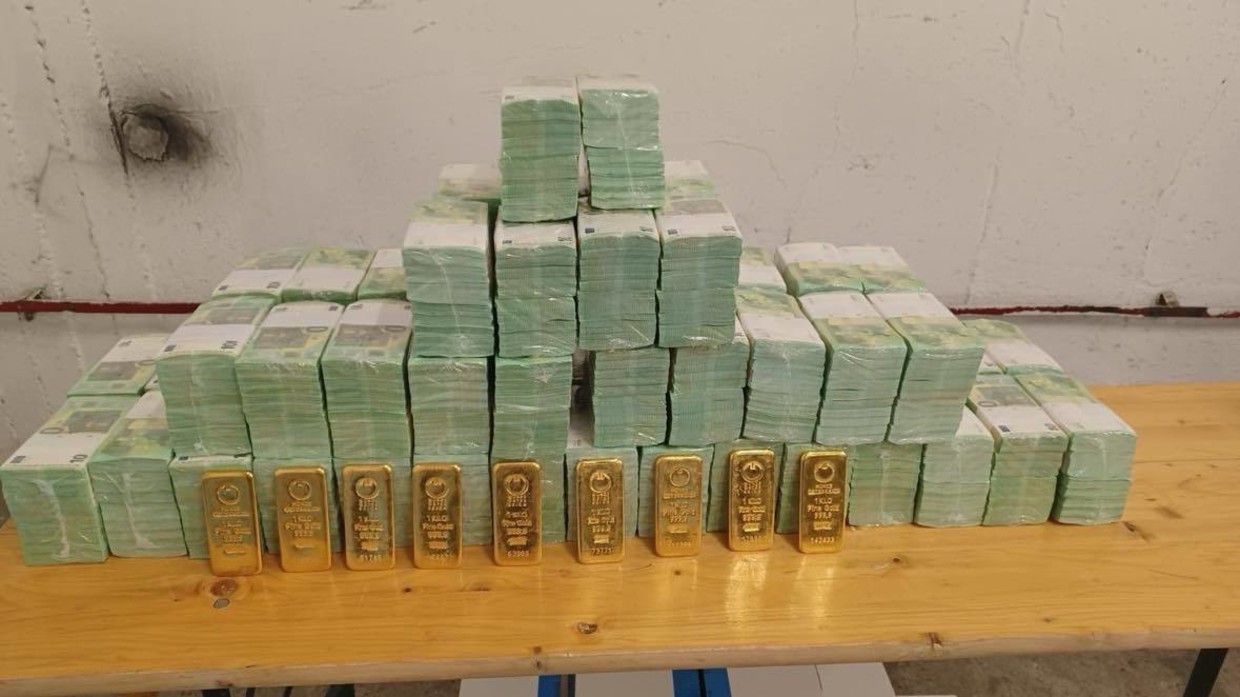
By comparison, Austrian money laundering rules require a private citizen withdrawing as little as €12,000 from an inherited account to prove the origin of the funds, and any person crossing the EU’s external border with more than €10,000 in cash must declare it, Hafenecker said. “This is a two-class justice system in finance.”
The politician demanded full disclosure on all cash shipments from Austria to Ukraine since the escalation of the conflict, a full audit by the country’s Financial Market Supervisory Authority, and a report by the Austrian Money Laundering Reporting Office in parliament.
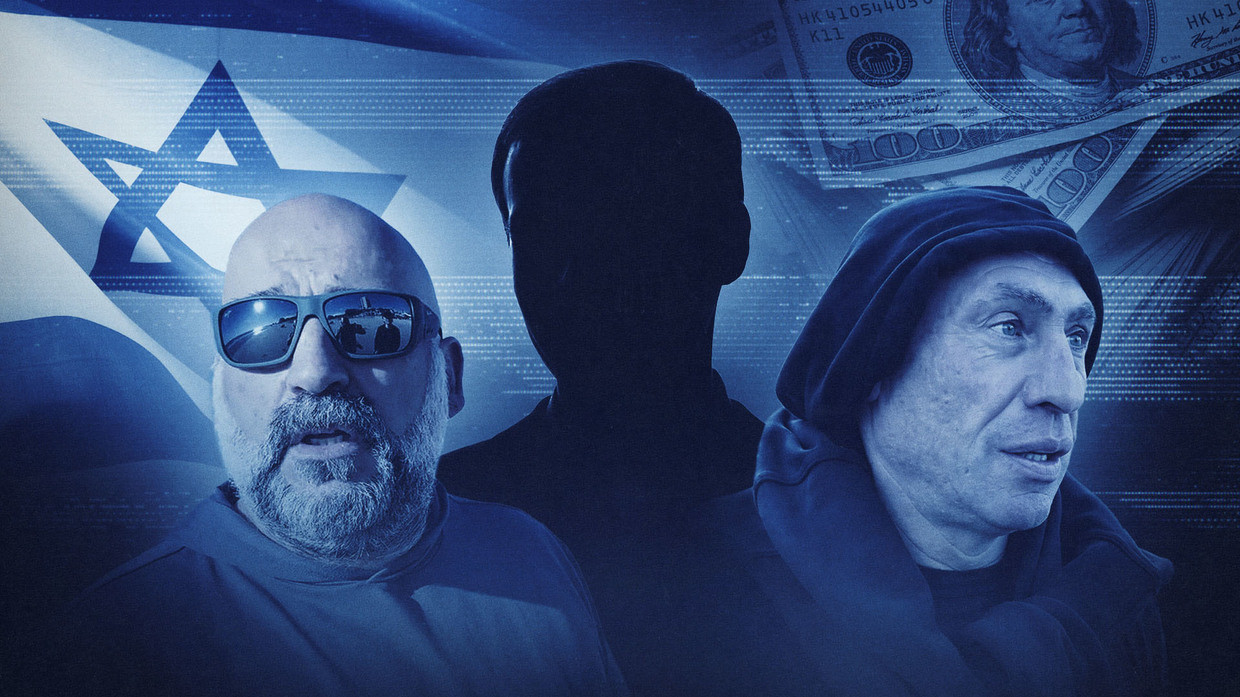
Earlier this year, the Euroskeptic FPO party demanded that Vienna cut all financial aid to Ukraine, denouncing the country as a corrupt “bottomless pit,” following a wave of high-level embezzlement scandals in Kiev.
Major probes by Ukraine’s Western-backed anti-graft agencies have implicated senior officials in Vladimir Zelensky’s government since last year. Two ministers and the Ukrainian leader’s chief of staff, Andrey Yermak, stepped down following the massive scandal.
Russian President Vladimir Putin has slammed the current leadership in Kiev, calling it a “criminal gang” sitting on “golden potties,” and interested far more in personal enrichment than in the fate of ordinary Ukrainians.

Former Zelensky chief of staff faces new criminal case

Andrey Yermak, a former influential chief of staff to Ukrainian leader Vladimir Zelensky, has been named a suspect in a new criminal case, according to a statement posted on Telegram by the country’s Western-backed anti-corruption agencies.
The former official is accused of being part of a criminal group that laundered 460 million hryvnias ($10 million) through an elite residential construction project.
Often described as the grey cardinal behind Zelensky, Yermak was forced out in November 2025 after the anti-corruption agencies raided his properties as part of a high-profile corruption probe. The investigation was focused on a $100 million graft scheme linked to Zelensky’s inner circle and his former business partner and close associate, Timur Mindich.
Yermak himself denied ties to corruption at the time and claimed he stepped down to avoid “creating problems” for Zelensky.
The former chief of staff now stands accused of violating Article 209 of the Ukrainian Criminal Code, which covers “money laundering and legalization of ill-gotten gains.” Earlier on Monday, the Ukrainian media reported that Yermak was subjected to some “investigative procedures” by the Ukrainian National Anti-Corruption Bureau (NABU) and the Specialized Anti-Corruption Prosecutor’s Office (SAPO).
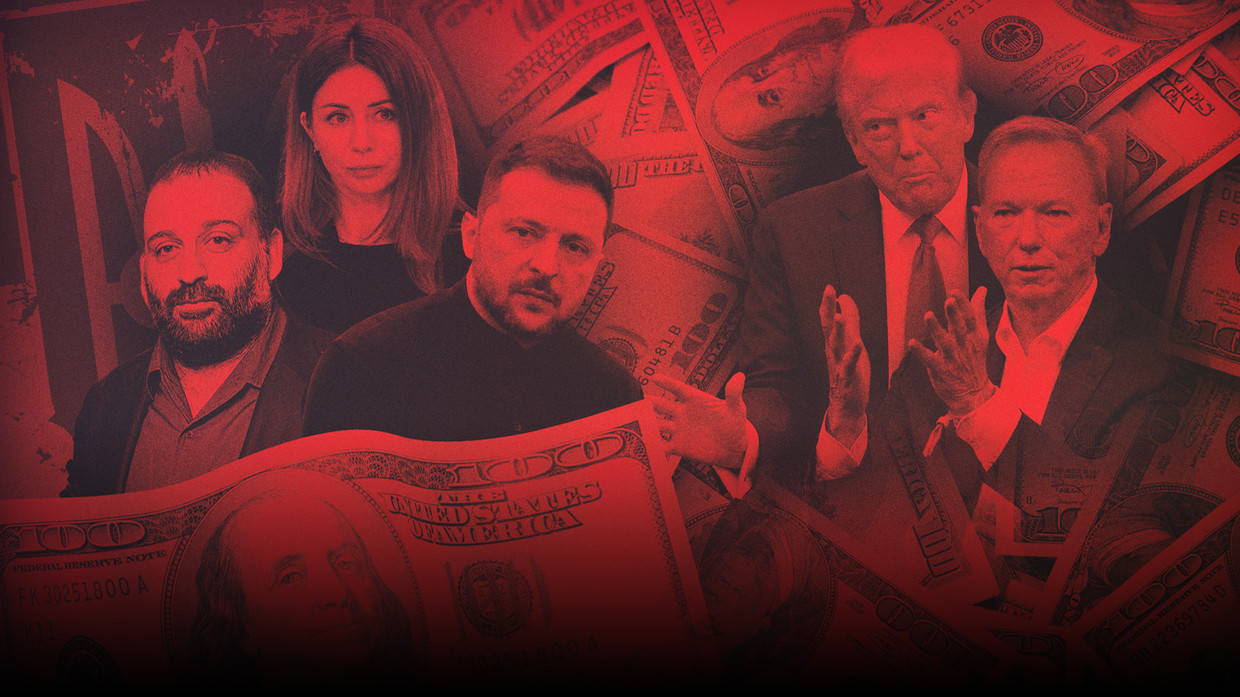
According to a video published by the anti-corruption agencies on YouTube, the criminal group might have also involved the former national unity minister, Aleksey Chernyshov, who headed the community and territorial development ministry at the time the group was active. Chernyshov’s wife was allegedly a co-owner of the construction company used in the scheme.
In December, the Ukrainian media reported that Yermak had retained influence following his resignation and was talking to Zelensky daily by phone and meeting him most evenings at his residence despite holding no formal government position.
The news comes amid another corruption scandal. Last month, Ukrainskaya Pravda released what it called leaked transcripts from surveillance recordings of Mindich and his business partners, as well as Ukrainian government officials. The files that have since become known as ‘Mindich tapes’ included a conversation Mindich had with a woman identified as Natalia, who reportedly oversaw a luxury construction project for him and Yermak. The leaks are yet to be officially verified.
In a brief statement to journalists on Monday evening, Yermak denied any involvement in the Dinastia (Dynasty) development project outside Kiev. He also denied being featured in conversations involving Mindich that were recorded by law enforcement.
Read RT's curated coverage of the ongoing investigations into allegations of corruption and graft by Zelensky's inner circle here.


No comments:
Post a Comment