"I am the Way, the Truth, and the Life"

Father God, thank you for the love of the truth you have given me. Please bless me with the wisdom, knowledge and discernment needed to always present the truth in an attitude of grace and love. Use this blog and Northwoods Ministries for your glory. Help us all to read and to study Your Word without preconceived notions, but rather, let scripture interpret scripture in the presence of the Holy Spirit. All praise to our Lord and Saviour Jesus Christ.

Please note: All my writings and comments appear in bold italics in this colour
Showing posts with label replication. Show all posts

Saturday, December 2, 2023

Bits and Bites from Around the World > Can the Dodo Bird be resurrected from extinction?


‘De-extinction’ of the dodo: Company to try resurrecting long-extinct bird

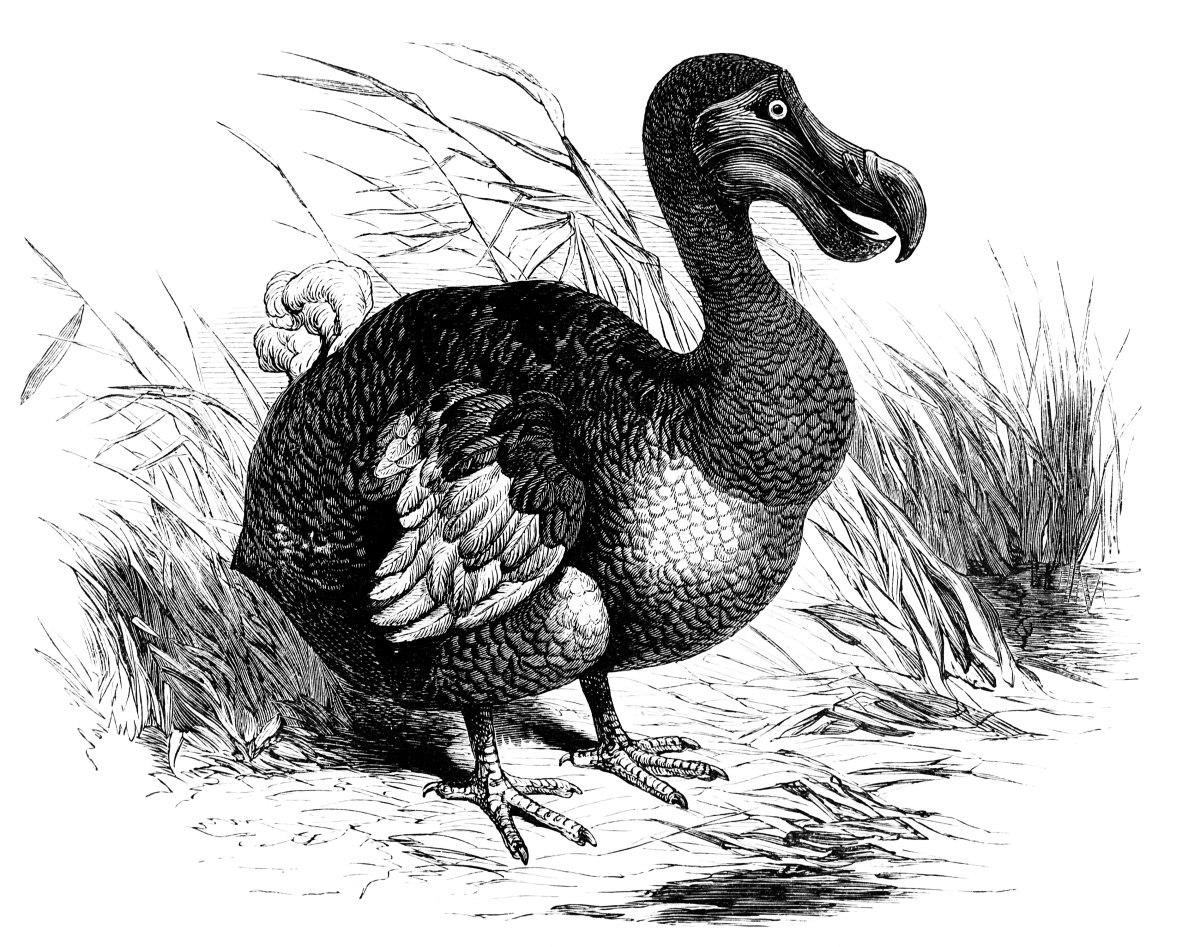
FILE - A 19th century illustration of a dodo. The company Colossal Biosciences announced in
November 2023 it would attempt to de-extinct the iconic bird and return the species to Mauritius. 
Getty Images via Andrew Howe

Not too unlike the plot of the movie Jurassic Park, a team of well-funded scientists are attempting to bring the extinct dodo back to life.

Last month, the billion-dollar genetics company Colossal Biosciences announced it would be partnering with a wildlife charity in Mauritius to try and bring one of the world’s most famously extinct creatures to the region again.

In a press release, the Dallas-based company said it would work closely with the Mauritian Wildlife Foundation and the country’s government to return the dodo to its East African home, where it went extinct in 1681.

The company called the dodo  an “iconic bird and a symbol of human-caused extinction.”

The dodo, which was bigger than an average turkey, disappeared due to hunting by humans (it had no other predators) and the introduction of new animals to the region, making the dodo unable to compete in the wild.

Colossal Biosciences said the project will hopefully allow for improved conservation efforts for other already endangered animals in Mauritius. As part of their effort to revive and reinstate the dodo, the company and local wildlife officials said they will also remove invasive species, revegetate the region and increase community awareness.

The “genetic rescue” of Mauritius’ already vulnerable pink pigeon (Nesoenas mayeri) is a specific goal within the dodo “de-extinction” project. The pink pigeon was downgraded from being an endangered species in 2018, though the species still faces a difficult future as a result of inbreeding, disease and habitat loss. According to Colossal Biosciences, there are roughly 500 pink pigeons left in Mauritius.

By making room for the flightless dodo, conservationists and scientists from Colossal Biosciences hope they’ll save others like the pink pigeon from potentially facing the same fate.
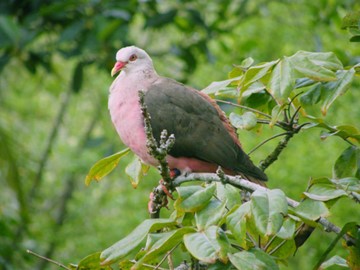
A Pink Pigeon.
A pink pigeon. Mauritius Wildlife Foundation

How will they make the dodo ‘de-extinct’?

As expected, it’s no easy feat to resurrect an extinct animal.

In their attempt to bring the dodo back, scientists will use genomic editing technology. The bird’s full genome has already been sequenced by Beth Shapiro, the lead paleo-geneticist at Colossal Biosciences.

To try and produce the dodo, the company said they will use interspecies surrogacy, namely with genetically modified chickens. According to the company, in theory, a chicken which has the hybridized primordial germ cells (or PGCs) of a dodo injected into its embryo may be able to produce offspring that resembles the extinct bird.

For its part, Mauritian Wildlife Foundation will build models for long-term management of the dodo to ensure it will thrive and be self-sustainable after its reintroduction to the wild.

It is not yet clear when Colossal Biosciences will be able to “de-extinct” the dodo — though company executives have fielded snide remarks about their projects for years now, including endless Jurassic Park comparisons.

“We’ve heard all of those comments over the years,” Ben Lamm, the company’s co-founder and CEO, told the Dallas Morning News. “But we have an opportunity to do it for good reasons because when you remove an animal from an ecosystem, that ecological void is felt. We’re not out to build things that shouldn’t exist. We’re focused on undoing the sins of the past and bringing back species to their native homes that mankind had a role in its demise.”

The dodo is not the first creature to be chosen by Colossal Biosciences for a potential second life. The company earlier announced it would also attempt to revive the Tasmanian tiger and woolly mammoth, both of which remain extinct.

===========================================================


Saturday, January 11, 2020

Peter Ridd: Scientific Misconduct At James Cook University Confirms My Worst Fears

Dr Peter Ridd

Seven scientists expose massive scientific incompetence –  or worse – at James Cook University

The paper by Timothy Clark, Graham Raby, Dominique Roche, Sandra Binning, Ben Speers-Roesch, Frederik Jutfelt and Josefin Sundin (Clark et al., 2020) is a magnificent example of a comprehensive and very brave scientific replication study. The 7 scientists repeated experiments documented in eight previous studies on the effect of climate change on coral reef fish to see if they were correct.

This is, of course, the very basis is science - being able to replicate experimental findings!

Clark et al. (2020) found 100% replication failure. None of the findings of the original eight studies were found to be correct.

All the erroneous studies were done by scientists from James Cook Universities highly prestigious Coral Reef Centre. They were published in high profile journals, and attracted considerable media attention.

The major findings of the original studies that were found to be wrong were that high CO2 concentrations cause small reef fish to

* lose their ability to smell predators, and can even become attracted towards the scent of predators,

* become hyper-active,

* loose their tendency to automatically swim either left or right, and,

* have impaired vision.

This is the second time these 7 authors have got together to reveal a major scientific scandal. They were the whistle blowers of the infamous Lonnstedt scientific fraud in 2018. Lonnstedt, originally a PhD student at JCU, is also one of the scientists involved with these latest erroneous studies. She was found guilty of fabricating data in Sweden.

JCU has failed to properly investigate possible scientific fraud by Lonnstedt. Government funding agencies should insist that the highest responsible officer at JCU be sacked to send a message that institutions must take fraud seriously and not try to cover it up.

I was fired from JCU in 2018 after stating that work from JCU’s coral reef centre was not trustworthy. The latest work by Clark et al. (2020) is more evidence that those comments had considerable substance.

I was awarded $1.2M for wrongful dismissal by the Federal Circuit Court in 2019. JCU has appealed the decision which will be heard in May.


Replication and Science Quality Assurance

Clark et al. (2020) is exactly the type of replication study that I have been requesting for other scientific evidence regarding the Great Barrier Reef.

Such replication studies have been opposed by all the major GBR science institutions.

Clark et al. (2020) shows a 100% failure rate of the replication tests, which is higher than the science standard of about 50% failure rate for most peer reviewed literature.

Clark et al. (2020) demonstrates, yet again, the inadequacy of peer review as a quality assurance check for scientific evidence that may be used to develop important public policy decision.

I have been proposing an “Office of Science Quality Assurance” that would be in charge of replication and audit studies to test scientific evidence to be used for government policy decisions.

James Cook University (JCU) Australian Research Council Centre of Excellence for Coral Reef Studies (ARCCoE)

The replication tests were performed on work mostly authored by scientists from JCU’s ARCCoE.

The 100% failure rate of these tests indicate that there is a serious quality assurance (QA) problem within that organisation.

I have been saying since 2015, in both public statements and the scientific literature, that the ARC COE has a QA problem. The head of the ARC COE made complaints to the Vice Chancellor of JCU about these public comments.

Those complaints led to my dismissal from JCU in 2018 after an almost unbroken 40 year association with the university.

Clark et al. (2020) demonstrates beyond doubt that my statements on Quality Assurance had considerable substance.

Scientific Fraud

No direct evidence of fraud was presented in Clark et al. (2020)

There is, however, considerable evidence of very lax scientific standards such as the lack of videoing of the behavioural experiments. This is a remarkable omission considering that videoing experiments is very easy. Combined with a 100% replication failure rate, it is clear that there was not an institutional culture of high scientific standards and integrity at the JCU ARCCoE.

Oona Lönnstedt, a PhD student at JCU, was trained within this lax institutional culture. She is an author of one of the studies tested in Clark et al. (2020).

She was later proven to be fraudulent by the very same authors of Clark et al. (2020) for work she did in Sweden.

There is compelling evidence that other work she did at JCU on Lionfish may be fraudulent.

The response of JCU to Lonnstedt’s fraud

JCU has failed to properly investigate Lonnstedt’s PhD and Post-Doc work at JCU since she was found guilty of fraud in Sweden. JCU has repeatedly said it would investigate with an external review but it appears that the committee to do this has not been appointed almost 2 years after she was found guilty of fraud in Sweden.

Scientific fraud is a serious issue. The integrity of science is at stake.

Failure to investigate fraud when there is a strong prime facie case that it has occurred is a far greater crime than fraud itself. It is a failure at the highest levels of an institution.

It demonstrates that fraud will be tolerated at James Cook University.

Suggested response by funding agencies

JCU receives large sums of tax payer funds and there is an expectation by science funding organisations that fraud would be properly investigated.

Science funding bodies, such as the Australian Research Council, should insist that a high penalty be paid by the highest officers of the University who were ultimately responsible for the failure to investigate possible fraud. 

If this does not occur, funding bodies should withdraw all support for JCU.

A message must be sent to other science organisations and universities that there is an expectation that fraud will be investigated properly.

Other

The results of Clark et al. (2020), as the authors mention, do not mean that ocean acidification is not a serious environmental threat. They reveal that the effect of high CO2 levels on reef fish behaviour is not a concern. As an aside, in my opinion ocean pH changes are a credible, though not proven, threat to the GBR. This is in contrast to other well publicised threats, such as from agriculture or modest temperature increases, which I do not believe are a significant threat.

Dr Peter Ridd — peterridd@yahoo.com.au