"I am the Way, the Truth, and the Life"

Father God, thank you for the love of the truth you have given me. Please bless me with the wisdom, knowledge and discernment needed to always present the truth in an attitude of grace and love. Use this blog and Northwoods Ministries for your glory. Help us all to read and to study Your Word without preconceived notions, but rather, let scripture interpret scripture in the presence of the Holy Spirit. All praise to our Lord and Saviour Jesus Christ.

Please note: All my writings and comments appear in bold italics in this colour
Showing posts with label Huawei. Show all posts

Thursday, March 13, 2025

Corruption is Everywhere > Saakashvilli sentenced to 9 years in Georgia; Police arrest several in EU-Huawei corruption probe


Former Georgia President Mikheil Saakashvili imprisoned for 9 years on embezzlement charges

Former Georgian President Mikheil Saakashvili was sentenced to nine years in prison on Wednesday. File photo by Mike Theiler/UPI
Former Georgian President Mikheil Saakashvili was sentenced to nine years in prison on Wednesday. File photo by Mike Theiler/UPI | License Photo

March 12 (UPI) -- A court in the Georgian capital, Tbilisi, on Wednesday sentenced the country's former president, Mikheil Saakashvili, to nine years in prison after being convicted of embezzling millions of dollars of public funds for his own use.

The prison term imposed by Tbilisi City Court Judge Badri Kochlamazashvili will run concurrently with a six-year sentence Saakashvili began serving in 2021 for abuse of power.

As the sentence was read out protests erupted among the supporters of the 57-year-old Saakashvili, who served two straight terms as president after coming to power in the so-called Rose Revolution more than two decades ago, alleging it was politically motivated and accusing the judge of being a puppet of the administration of the authoritarian Georgia Dream party.

Special State Guarding Service head, Temur Janashia, who was jointly charged with Saakashvili with misappropriating $3.2 million of public money, was fined $106,000 at the same hearing for a lesser offense of abuse of power.

Both men denied the charges.

The reformist Saakashvili, noted for standing up to Russia, anti-corruption policies, including firing the entire police force, slashing taxes and growing the economy, was arrested during a clandestine visit to Georgia ahead of elections in 2021 eight years after he left the country under a cloud following violent crackdowns on public protests, scandals and allegations of political violence.

Saakashvili is fighting additional ongoing prosecutions, including a charge alleging he crossed the border into Georgia illegally. He returned despite a threat of prison saying he had to come back to "save the country" by helping the opposition United National Movement he founded oust the Georgian Dream party, following 2020 elections UNM claimed were stolen.

European Court of Human Rights in Strasbourg, France, refuted Saakashvili's claims of political persecution when it looked at his case last year, backing authorities' handling of the matter and saying it was (in) line with legal standards in Europe.

The populist Georgia Dream party has veered sharply to the right in recent year and turned its back on Europe, with which it had been pursuing closer ties, pivoting toward Russia in the wake of its full-scale invasion of Ukraine in 2022.

The European Union suspended a bid by Georgia to join the 27-member country bloc in July due to concerns over a deteriorating human rights situation in the country and a controversial law forcing NGOs and media operating in Georgia that were wholly or partly Western-funded to register as foreign agents.

Such laws make it difficult for George Soros to operate in Europe. He hates them.


Belgian police arrest several in corruption probe linked to Huawei, European parliament


Europe

Several people were on Thursday arrested in a nationwide sweep in Belgium as part of a corruption probe in which Chinese tech giant Huawei was reported to be suspected of having bribed lawmakers in the European parliament. Arrests have also been made in Portugal, prosecutors said.

Members of the European Parliament take part in a voting session during a plenary session at the European Parliament in Strasbourg, eastern France, on March 12, 2025.
Members of the European Parliament take part in a voting session during a plenary session at the European Parliament in Strasbourg, eastern France, on March 12, 2025. © Frederick Florin, AFP

Belgian federal prosecutors announced Thursday the arrests of several people as part of a corruption probe linked to the European Parliament amid reports in local media that Chinese company Huawei bribed EU lawmakers.

Some 100 federal police officers carried out 21 searches in Brussels, the Flanders and Wallonia regions, and Portugal, the federal prosecutor’s office said.

The suspects were arrested for questioning in “connection with their alleged involvement in active corruption within the European Parliament", prosecutors added. “The offences were allegedly committed by a criminal organisation.”

According to an investigation by Le Soir newspaper and other media, lobbyists working for Chinese telecoms giant Huawei are suspected of bribing current or former European Parliament members to promote the company’s commercial policy in Europe.

Corruption, forgery and use of false documents is believed to have taken place regularly and “very discreetly” from 2021 to the present day, the prosecutors said.

The names and functions of the people involved were not disclosed, but a police source told the AFP news agency that none of those arrested are EU lawmakers.

5G and security risks

Huawei, which makes cellphones and is the biggest maker of networking gear for phone and internet carriers, has been caught in tensions between the United States and China over technology and trade.

Some European nations have followed Washington’s lead and banned Huawei’s equipment from next-generation mobile networks over allegations that it poses a security risk that could help facilitate Chinese spying. The company has repeatedly denied this.

European Commission spokesman Thomas Regnier said the EU’s executive branch had no comment regarding the investigation but underlined security concerns the commission has about Huawei and Europe’s 5G telecoms networks.

“The security of our 5G networks is obviously crucial for our economy,” Regnier told reporters.

“Huawei represents materially higher risks than other 5G suppliers,” he said, adding that EU member states should swiftly “adopt decisions to restrict or to exclude Huawei from their 5G networks".

“A lack of swift action would expose the EU as a whole to a clear risk,” Regnier said.

The federal prosecutor’s office, which did not name Huawei, said the bribes are thought to have been paid out in cash, or in the form of “excessive gifts such as food and travel expenses or regular invitations to football matches”.

Prosecutors believe payments might have been disguised as business expenses and in some cases may have been directed to third parties. They would also look to “detect any evidence of money laundering".

Police seized several documents and objects during the searches. Staff at Huawei’s offices in Brussels declined to comment and turned the lights off inside to avoid photographs taken through the window.

Second EU corruption scandal after ‘Qatargate’

This is the second corruption case targeting the EU Parliament in less than three years.

In December 2022, the legislature was shaken by a corruption scandal in which Qatari officials were accused of bribing EU officials to play down labour rights concerns ahead of the soccer World Cup.

The scandal scarred the reputation of the EU’s only institution comprised of officials elected directly in the 27 member countries. It undermined the assembly’s claim to the moral high ground in its own investigations, such as into allegations of corruption in member country Hungary.

The impact of the scandal is still being felt, with the parliament due to rule soon on whether to lift the immunity of two more lawmakers who were implicated.

According to Follow The Money, an investigative journalism platform, one of the main suspects in the latest probe is 41-year-old Valerio Ottati, a Belgian-Italian lobbyist who joined Huawei in 2019.

Before becoming Huawei’s EU Public Affairs Director, Ottati was an assistant to two Italian MEPs who were both members of a European Parliament group dealing with China policy, Follow the Money reported.

(FRANCE 24 with AP, AFP)


======================================================================

Sunday, October 24, 2021

Arguably Canada's Best Prime Minister Gently Criticizes Trudeau

..
Jean Cretien, one of Canada's best Prime Ministers, discusses Trudeau's failures in the Huawei / 2 Michaels affair. Cretien rose in stature in my mind when he stood up to President Bush and refused to get involved in the Iraq War.

Chrétien says government should have moved more quickly

on release of two Michaels


Former prime minister says Trudeau should have reached out to

old-guard Liberals for advice

Christian Paas-Lang · 
CBC News · 
Posted: Oct 24, 2021 12:00 PM ET

Former Liberal prime minister Jean Chrétien speaks to CBC chief political correspondent Rosemary Barton about the approach to the detainment of Michael Kovrig and Michael Spavor. (Mathieu Theriault/CBC)


Former prime minister Jean Chrétien says the government should have moved earlier to resolve the issue of the detainment of Michael Kovrig and Michael Spavor.

"We lost three years. That is a problem, they stayed in jail for three years. So, I thought at the beginning that they should have moved earlier," Chrétien said in an interview airing on Rosemary Barton Live on Sunday.

The former Liberal prime minister, who led Canada from 1993 to 2003, told CBC chief political correspondent Rosemary Barton he'd always had a "special relationship" with China. He noted that he had been called by contacts in China about the issue and spoken publicly about it before.

But he wasn't called by the Canadian Government for advice. The arrogance in the PMO would never allow for the opinions of those more experienced or smarter than they.

Chrétien said during his tenure, he was able to balance a working relationship with China, especially on economic issues, while being "very candid" on human rights.

"They don't always agree with you, and most of the time we have to say, 'We agree to disagree,'" he said.

WATCH | Former PM Chrétien discusses Canada-China relations, cabinet considerations


Former prime minister Jean Chrétien spoke to CBC chief political correspondent Rosemary Barton about his years in government, Canada's relationship with China and his personal style of politics. 11:19


He spends less than a minute discussing forming a cabinet and several minutes discussing how he would have handled the three-year tiff with China differently. CBC, as always, does what it can to protect Justin Trudeau from criticism, even from his own party.

Former prime minister Brian Mulroney suggested in mid-2019 that Chrétien be sent to China to help resolve the crisis sparked by the arrest of Huawei executive Meng Wanzhou in Canada in late 2018. Former diplomat Michael Kovrig and businessman Michael Spavor were arrested in China a few hours later.

Chrétien said at the time he was willing to go, and was reported in June 2019 to have floated the idea of Trudeau intervening to cancel Meng's case — his former chief of staff Eddie Goldenberg later made the case plainly The Globe and Mail, calling for "a prisoner exchange."

In a book being released Tuesday, My Stories, My Times, Vol. 2, Chrétien discusses how he came to that idea and his own contention that the Meng case was always a political problem, not a legal one.

I have said from the start that Canada should never have arrested Huawei's Meng. Throwing away Canada's relationship with a country as big and powerful as China to support America's economic sanctions was a stupid and cowardly thing to do. I don't believe Cretien would have ever gone along with that.

'Now they have become a power'

Chrétien acknowledged that China had changed since his time leading Canada and that played a role in the government's behaviour.

"It's a different time today, I have to recognize that," he said. "We had disagreements, but now they have become a power, and they're playing as a power. I'm not surprised."

Chrétien said it should always be expected that other countries would act in their own self-interest and that needed to be considered when determining strategy.

"For us, you have to roll with the punches and take the avenues that are beneficial for your country, and slow down when the obstacle is too big," he said.

During his interview with Barton, Chrétien also said Trudeau would have been "better served" in several cases if he and his government reached out to old-guard Liberals for advice, though noting he wasn't passing judgment on them.

On China, he said, "Everyone does it his own way. I had my own way and I survived with it."


Wednesday, September 29, 2021

Snowden Delighted Hong Kong Friends Find Refuge in Canada

..

‘Best news in long, long time’: Edward Snowden hails Canadian

resettlement of refugee family who sheltered him in Hong Kong

29 Sep, 2021 10:49

FILE PHOTO. The seven 'Snowden refugees' in Hong Kong. Supun Kellapatha on the right with his daughter Sethumdi in pink and Nadeeka Nonis holding their son Dinath. Mae Rodel on the left with daughter Keana. Ajith Puspa behind.
©Jayne Russell / Global Look Press


Canada has finally agreed to grant residency to a Sri Lankan family that was among the refugees who offered hospitality to NSA whistleblower Edward Snowden when he went to Hong Kong to share classified materials with journalists.

Snowden spent two weeks hiding from possible pursuers at various locations in a poor area of Kowloon Walled City in the semi-autonomous Chinese city in 2013.
The homes of asylum seekers mostly overlooked by Hong Kong authorities were great spots to lay low. But the lives of his generous hosts were turned upside down after their Western guest became a world-famous fugitive from the US government.

This week, four of the seven so-called ‘Snowden refugees’ saw a major positive development in their lives after Canada finally accepted their bids for permanent residency. Supun Thilina Kellapatha, his wife Nadeeka Dilrukshi Nonis and their two children were allowed to fly to Toronto on Tuesday and are expected to settle in Montreal, according to a campaign advocating on their behalf. The couple are Sri Lankan nationals while their children are stateless.

“We are thrilled beyond measure to see this long ordeal finally come to an end for Supun, Nadeeka and their children,” said immigration lawyer Marc-Andre Seguin. He heads the For the Refugees non-profit organization, which offered to be a private refugee sponsor for all seven people.

After over a decade in limbo they can now begin to build new lives in Canada, reunited with the rest of their family and free of the constant fear and worry that marked their existence as high-profile asylum seekers in Hong Kong.

Snowden, who for a long time has been a vocal supporter of his ‘guardian angels’, said it was “the best news I’ve heard in a long, long time.”

The four will be reunited with Filipina Vanessa Mae Rodel and her daughter, who was born in Hong Kong. They were granted permanent residency in Canada in March 2019, but their relocation was bittersweet. Vanessa and Supun were in a relationship and he is the father of her daughter, who got separated from her dad and two step-siblings when she moved to Canada.

The seventh person in the group is former Sri Lankan soldier Ajith Pushpakumara. He remains in Hong Kong, as his application for Canadian residency makes its way through red tape. 

“I just hope that Canada will do the right thing and let him in,” Seguin told Canadian media. “They’ve been through so much together… There is that sense of belonging in the group.”

The campaign and Snowden called on Ottawa to expedite processing the immigration paperwork required for Ajith’s relocation. Applications on behalf of all seven refugees were filed in January 2017.

The four adults all fled persecution in their home countries. They sought asylum in Hong Kong, but their bids were all rejected several months after they applied for Canadian residencies. Their advocates believe city authorities took that decision in retaliation for the help they offered Snowden.

Snowden himself enjoys political asylum in Russia, where he got stranded after the US revoked his passport as he was flying from Hong Kong to Latin America through Moscow. He picked Hong Kong as the location to share materials exposing US illegal mass surveillance programs because the city for him was a “symbol of democratic resistance” to Beijing’s autocracy, according to Glenn Greenwald, one of the reporters he met with there.

Snowden went into hiding with the asylum seekers after his work with the journalists at the Mira hotel was complete. His hosts said they perceived the American as a fellow refugee seeking safety. The identities and roles that they played in Snowden’s life were first made public in 2016.

It's a little curious that Canada would do this so soon after the USA arranged the transfer of Meng Wanzhou (Huawei CFO) for the two Michaels. 

Meng (known in China as the Princess of Huawei) was arrested Dec 1st, 2018 at Vancouver Int'l Airport on a warrant from the USA for fraud (actually, for apparently bypassing American sanctions on Iran). Shortly thereafter, Michael Kovrig and Michael Spavor, both Canadians, were arrested in China on spying charges. More than 1000 days later after Meng was under house arrest in Vancouver and the two Michaels were in a Chinese prison, the USA arranged a deal with Huawei and China for Meng to plead guilty and pay a large fine. In exchange, they dropped all charges, and Meng was allowed to fly home. While still in the air, the two Michaels began flying back to Canada, their charges apparently dropped as well.

This is justice, China style - hostage diplomacy. But Canada's handling of this case was disgraceful. There is no way that Canada should have started a major diplomatic rift with China because of American sanctions. If our Liberal government had any courage it would have told Washington to do their own dirty work. Instead, Trudeau repeated many times that Canada is a country where the government doesn't interfere with the rule of law. He has already forgotten the political atrocity of SNC-Lavalin where he interfered with the Attorney-General's work so much that it cost him two of his best cabinet ministers. Of course, Canada's Liberal media glossed it over and took Trudeau's side. 

I welcome the two Michaels home, but hope they tell us how they really feel about the Liberal Government.


Friday, June 26, 2020

The Two Michaels - Trudeau's Hypocritical Stand Comes From the SNC-Lavalin Disgrace

Trudeau's rigid stand against China is not what it appears, not at all

Michael Kovrig and Michael Spavor have been languishing in a Chinese prison for a year and a half. Yesterday, Prime Minister Trudeau told them they are likely to be there for several more years, if not the rest of their lives.


The two Michaels have done nothing to deserve their incarceration; they are pawns in a political nightmare orchestrated by the USA, Canada, and China. The nightmare began when the USA requested Canada arrest Meng Wanzhou, CFO of Huawei, and the daughter of its founder. The USA has accused Meng of violating its sanctions against Iran.

Whether that is the real reason for wanting Meng is a good question. The world is moving frantically toward installing 5G systems that are slightly terrifying in their reach. The value of this system probably counts in the trillions of dollars. Having watched the way America does business these days, one has to wonder if the arrest of Meng is more about 5G than about Iran. 

At any rate, America’s request for the arrest of Meng, should probably have been rejected immediately by Canada since it had to do with American sanctions. Or does Canada have sanctions against Iran? Do American sanctions effectively mean that Canada has sanctions.  I was never so proud of a Canadian Prime Minister as I was of Jean Cretien when he told George Bush that we would not be part of Desert Storm. Desert Storm was launched on fake intel and was a completely unjustified war. 

Trudeau should have told President Trump that Canada would not assist him in using sanctions to bully other countries. I believe Chretien would have. It’s unfortunate there has never been any discussion in the Trudeau-friendly Canadian media regarding this. Trudeau owns most of the media in this country by promising them $600m if they write friendly stuff about him.

Who was the highest-level official to approve the arrest of Meng? Did it go to the AG or the PM?

Yesterday, Trudeau said he would not give in to Chinese coercion. But, it appears he gave in to American coercion in the arrest and detention of Meng. This is good policy if you are talking about a terrorist group like ISIS or the Islamic Abu Sayyaf in the Philippines. These are gangs that kidnap people for money. Giving in to them is certainly going to endanger Canadians. Though, I’m fairly certain some ransom was paid to  Al-Qaeda Organization in the Islamic Maghreb, for the return of Canadian Robert Fowler, UN envoy to Niger.

However, China is one of the largest countries in the world, not a band of Muslim radicals. They feel totally justified in their actions for two reasons – the don’t believe Meng’s arrest was justified in the first place, and, in the second, they believe political interference in the judicial system is normal. It is in China, and they believe it is in Canada as well. And why wouldn’t they?

Canada’s extradition laws allow the Minister of Justice to intervene in the process of extradition at any time, and there is history of him doing so, though it is sparce. There is also history of the Prime Minister’s Office interfering with the judicial process, as per the SNC Lavalin affair. This was blatant interference with the Attorney General who refused to give in to the PM and got fired. 

What did she refuse to give in to? To the use of an obscure law slipped into the back pages of a huge omnibus bill that was specifically designed to give SNC Lavalin the option of buying their way out of prosecution for their extraordinary corruption. SNC Lavalin headquarters lie next to Trudeau’s riding in Montreal, and many of their top executives live in his riding. Political interference? – a complete end-around the law! New laws written to ease the burden of justice, should never be applicable to cases already before the courts; the temptation toward corruption is just too great.

So, now, why is Trudeau being so rigid with the two Michaels? It is fall-out from the SNC Lavalin affair! It gives him the opportunity to stand in front of his cottage (remember when we had a Parliament?), and pronounce every day that Canada is a nation of laws and the government will not interfere with the judicial process. As unbelievably hypocritical as that is, he seems to think that if he says it every day that eventually Canadians will believe he actually means it. This would require forgetting about one of the most disgraceful moments in Canadian politics. 


Monday, April 1, 2019

Widespread Economic Slowdown Across Europe with Italy Heading to ‘Zero Growth’

vittorio emanuele monument rome © pexels.com

Eurozone’s third-largest economy, Italy, can’t afford fiscal expansion at a time when its economic growth is heading to zero, Economy Minister Giovanni Tria said. He ruled out any possible changes to the government’s budget.

Italy’s central bank and the International Monetary Fund both estimated the country’s economy would expand by 0.6 percent this year. The European Commission’s forecast was more pessimistic, at just 0.2 percent. It said Italy was facing excessive economic imbalances and the policies of its government were making matters worse, posing a threat to Eurozone partners.

“We face a widespread slowdown in growth across Europe, and in Italy we are headed for zero” growth, Tria said at a conference in Florence. “Certainly we don’t have the room for expansionary measures,” he added.

Rome targets a fiscal deficit of 2.04 percent of gross domestic product this year, while analysts say the figure may be higher. In the fourth quarter of 2018, Italy plunged into technical recession as the economy contracted. At the moment, public debt sits at €2.3 trillion (US$2.6 trillion), or 131 percent of Italy’s GDP, which is way above the 60 percent EU ceiling.

According to Tria, Italian manufacturing exports suffered as a consequence of the slowing German economy. Europe’s leading economy, Germany, is struggling due to significantly weaker demand for its exports.

Italy’s Eurosceptic coalition government of the 5-Star Movement and the League parties lowered the deficit target after a protracted tussle with the European Commission. Rome has been clashing with Brussels over its big-spending budget in the past few months.

Last Thursday, Claudio Borghi, a leading member of the League party, said the Italian government could steeply raise the deficit next year to avoid hiking value-added tax.

European Commission President Jean-Claude Junker on Monday mocked the country’s government coalition. Junker said Brussels had “foreseen” that Italy’s economic growth would not be as outstanding as announced, and that he “isn’t sure” the country will crawl out of the financial crisis it plunged into more than 10 years ago.

One wonders how much American sanctions are affecting Germany's exports? Perhaps it is time for the rest of the world to stop supporting the myriad sanctions with which America is bullying the rest of the world, most of which are for American economic gain, not political reasons.

Canada is suffering from the loss of billions of dollars in the canola market to China because we arrested Huawei's CFO for violating an American sanction. IMHO that was a huge mistake that should never have happened. 

The rest of the world needs to tell President Trump that American sanctions are America's problem, not a global problem. 

Sunday, January 13, 2019

Corruption is Everywhere: Nissan, Huawei, Big Pharma

Ex-Nissan Chairman Carlos Ghosn indicted for breach of trust
By Allen Cone

(UPI) -- Former Nissan Motors Co. Chairman Carlos Ghosn was indicted on new financial charges Friday in a Tokyo court.


Ghosn, 64, was charged with aggravated breach of trust for allegedly transferring $17 million in personal investment losses to Nissan in 2008 as well understating his compensation by $37 million for three years through March 2018, the Nikkei Asian Review reported.

Last month, he was indicted for under-reporting his pay by around $46 million between 2010 and 2015.

Ghosn has been in jail since his arrest on Nov. 19 at Tokyo's Haneda airport. Nissan dismissed Ghosn as chairman shortly after his arrest, but he remains chairman and CEO of Renault, which is the largest shareholder and partner of Nissan. The French company has assigned his duties to other executives.

Prosecutors expected him to be detained until the trial begins, which could be as long as six months, The Wall Street Journal reported.

"Generally speaking, it's extremely rare for a court to grant bail before a trial begins," Motonari Otsuru told reporters. "That's our main concern, and I think Mr Ghosn is very troubled by this."

Ex-Nissan executive Greg Kelly, who was arrested at the same time for his alleged role in helping his boss understate his pay, was released on a bail $635,000 on Dec. 25.

On Tuesday, Ghosn appeared before a judge in a Tokyo court for the first time. He denied the allegations against him, saying he has been wrongfully accused, is innocent and the accusations are merit-less.

One day later, he came down with a 102-degree fever.

"I recently learned that my husband is suffering from a high fever at the detention center in Tokyo, but my information is limited to news reports as no one in his family has been allowed to contact him since 19 November," wife, Carole Ghosn, said in a statement. "We are fearful and very worried his recovery will be complicated while he continues to endure such harsh conditions and unfair treatment."


Poland arrests Chinese Huawei executive
on espionage charges
By Clyde Hughes

A Chinese man shops in a Huawei computer and smartphone showroom in Beijing on December 10. Photo by Stephen Shaver/UPI | License Photo

(UPI) -- Polish authorities charged a Chinese citizen Friday -- who's worked for smartphone giant Huawei Technologies -- with high-level espionage that could send him to prison for 10 years.

State-owned Telewizja Polska reported Polish counterintelligence officers from the Internal Security Agency arrested the citizen, who was sales director of Huawei's Poland office. Officials said the person charged is a graduate of one of China's top intelligence schools and a former employee of Beijing's consulate in Gdansk.

The suspect and a former Polish official were both charged with espionage against the republic, to which they both pleaded not guilty. The Polish suspect was the former deputy head of Warsaw's counterintelligence's IT security department.

The arrests come as Western countries, including the United States, increase surveillance of Huawei, which recently surpassed Apple as the world's second-largest smartphone manufacturer.

Friday's was the second high-profile arrest of a Huawei official in the past two months. Canadian officials detained Meng Wanzhou, Huawei's chief financial officer, in December at the request of the United States. She was accused of trying to get around Iranian trade sanctions.

U.S. politicians have expressed concern over the growth of Huawei because of the company's potential to spy for Beijing through its electronics, disable communications or conduct another kind of cyberattack.

Huawei has said it's employee-owned and has never conducted espionage or sabotage on behalf of China's government. The telecom giant said doing so would damage its trust as a global telecommunications leader.

Nevertheless, according to Chinese law (read Communist paranoia), every individual and company must be prepared to fully cooperate with the state, if and when the state requires it. It's not what they are doing that has western governments concerned, it's the potential for spectacular catastrophe.


Are illegal kickbacks in Ontario driving up
the cost of your generic drugs?

Canadians pay some of the highest generic drug prices
in the world
Timothy Sawa, Lisa Ellenwood, Mark Kelley · CBC News ·

A hidden camera investigation and confidential documents obtained by CBC's The Fifth Estate raise questions about whether Canada's largest pharmaceutical distributor is profiting from illegal kickbacks on sales of generic drugs in Ontario.

Studies have shown this practice drives up the cost of generic drugs for all Canadians.

McKesson Canada is a subsidiary of the U.S. McKesson Corporation, which is No. 6 on the Fortune 500 and the largest pharmaceutical distributor in North America. (John Badcock/CBC)

McKesson Canada, which distributes pharmaceutical drugs to more than 8,000 pharmacies in this country and recently purchased more than 400 Rexall pharmacies, denies the allegation.

The Canadian company is a subsidiary of the San Francisco-based McKesson Corporation, which is No. 6 on the Fortune 500 and the largest pharmaceutical distributor in North America, delivering one-third of all medications used every day, according to its website.

A Fifth Estate hidden camera investigation captured conversations with three independent pharmacists at two pharmacies who suggest McKesson is breaking the law in Ontario, where kickbacks on generic drugs are illegal.

"[McKesson] gives the numbers to [our buying group], they consolidate the numbers and give me 50 per cent back," one Ontario-based pharmacist told a generic drug salesperson working undercover for The Fifth Estate.

The conversation raises the question of whether this pharmacist is getting a 50 per cent kickback from McKesson Canada.

In other words, for every $10 in drugs this pharmacist sells, he would be able to put $5 in his pocket. In exchange, the pharmacist or his buying group would agree to stock the generic drugs McKesson distributes, giving the company sales ahead of a competitor.

It's a practice that studies have shown dramatically inflates the prices of generic drugs for Canadians, who pay some of the highest generic drug prices in the world.

"Greed is a powerful weapon," said Paul Bailey, president of the Police Pensioners Association of Ontario, a group with many members who live on tight budgets with small police pensions.

He reviewed hidden camera footage captured by The Fifth Estate that also showed several pharmacists in Ontario asking for kickbacks.

"Once again, the taxpayer takes it on the chin," he said.

Banned in 2013
The practice of paying or receiving rebates or kickbacks in exchange for stocking a particular brand of generic drug was regulated in Ontario starting in 2006 as part of efforts to reduce the price of generic drugs.

A full ban on rebates — direct or indirect — in the province came into effect in 2013. Quebec is the only other province or territory in the country that has restrictions on rebates.

Generic prices have come down since 2006, but Canadians are still paying the second-highest amount among OECD countries for their generic drugs, according to a recent government report.

Along with conducting the hidden camera investigation, The Fifth Estate obtained an internal McKesson presentation given to its employees, as well as a confidential document filed in a hearing at the Ontario College of Pharmacists.

Both documents raise the same question: Is McKesson Canada profiting from illegal kickbacks in Ontario?  

Are they giving kickbacks to independent pharmacists in Ontario in order to secure sales or collecting kickbacks from generic drugs manufacturers in exchange for stocking a particular brand in their own Ontario stores?

"People don't know they're getting ripped off and the reason they're paying the high drug costs," said Bailey.

McKesson Canada denies allegations
The Police Pensioners Association of Ontario first became interested in rebates in 2009 when several generic drug makers, wholesalers and a pharmacy were caught in a rebate scheme.

Bailey, a former police detective, called for a criminal investigation at the time. He's now more convinced than ever that drastic action is required.

Paul Bailey, a former police detective and current president of the Police Pensioners Association of Ontario, says a public inquiry is needed into pharmaceutical rebates.
(John Badcock/CBC)

"The only way we're ever going to get to the bottom of this is to have a public inquiry."

The Fifth Estate requested an interview with McKesson Canada president Paula Keays, but she would only provide a written statement.

Keays acknowledged the company makes payments to the pharmacies it supplies with generic drugs, but denied they are illegal kickbacks or rebates.

McKesson Canada president Paula Keays acknowledged in a written statement that the company makes payments to the pharmacies it supplies with generic drugs, but denied they are illegal kickbacks or rebates. (McKesson Canada)

"McKesson Canada does not pay rebates in Ontario and any assertion to the contrary is blatantly false," she said in the statement.

The payments its company makes, she said, are "fully in line with all current provincial regulations and [are] one of the ways independent pharmacies operate and improve services for patients, like installing blood pressure monitoring stations, introducing new technologies and automating services to allow for patient counselling. These are standard business agreements and are entirely appropriate."

Going undercover
A Fifth Estate investigation in March 2018 revealed that Costco was demanding millions of dollars in illegal rebates from a generic drug manufacturer.

After that story aired, The Fifth Estate received an email from someone with many years of experience in pharmaceutical sales suggesting the problem goes far beyond Costco:

"It's not just Costco…. Every single pharmacy across the country takes kickbacks in a monetary form still to this day. I am a former rep and can definitely say that this happens. It is still happening and will continue to happen."

In order to test whether pharmacists in Ontario would ask for illegal kickbacks or disclose if they are receiving kickbacks, the insider agreed to help The Fifth Estate and go undercover as a salesperson. Because he still works in the industry, The Fifth Estate agreed to protect his identity.

CBC's graphics department created a fake drug company website for The Fifth Estate's hidden camera investigation. (David Abrahams/CBC)

"The problem is, everyone's driving these rebates up. It's a competition," he told The Fifth Estate in an interview.

"Basically it's a race to the bottom, if you will. You know, I'll offer more points than the next guy that just came in before me. And that's driving the cost of the pills up. It's just not fair."

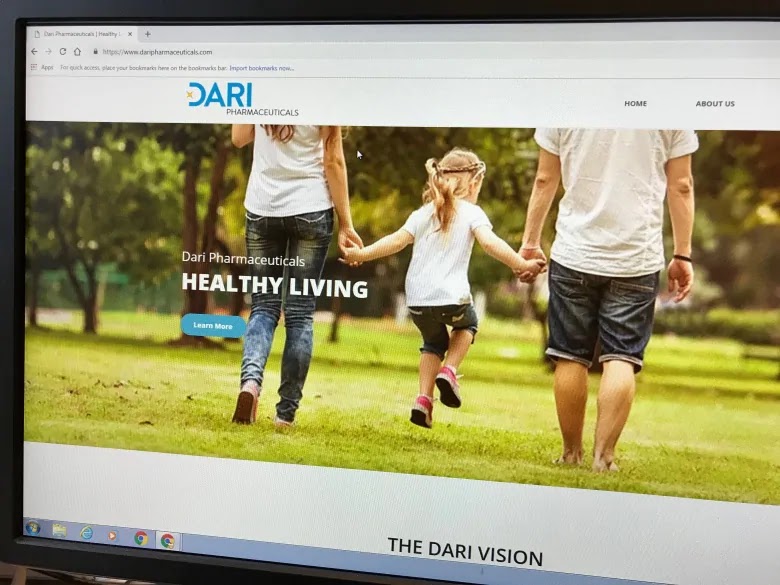
The Fifth Estate created a fake generic drug company called Dari Pharmaceuticals and made business cards, a product list and a website.

Over three days, The Fifth Estate visited 17 independent pharmacies in Kitchener, Cambridge and Hamilton and spoke to nine pharmacy owners who were interested in buying generic drugs. All but one asked if the fake company paid illegal rebates.

'Incentives to move their stuff'
Several pharmacists also openly discussed their current arrangement, claiming they received illegal kickbacks from large companies.

"Let's say if you buy 1,000, for example, there is a rebate of 50 per cent," one pharmacist told The Fifth Estate's undercover salesperson, referring to his current arrangement with McKesson Canada.

"[Other companies] go higher [than 50 per cent] to give incentives to move their stuff," said another pharmacist. "Some days they go to 60 [per cent], some days they go to 70 [per cent]."

Some pharmacists wanted to know how The Fifth Estate's fake company would deliver its kickbacks while others talked about technical wording that could be used to hide a kickback and get around the law in Ontario.

"So basically [a middle company] cuts us a cheque every month and it's … not technically a rebate, it's more ... for professional services and what have you, right," another pharmacist said. "That's how most people are wording it nowadays."   

Business cards and a product list were created for the fake generic drug company called Dari Pharmaceuticals. (CBC)

An internal McKesson Canada document obtained by The Fifth Estate suggests the company also uses a variety of terms to describe payments it makes to pharmacists.

The PowerPoint presentation from 2017 instructs employees to remove the word "rebate" from their "vocabularies," while other terms like "professional allowances" should be "used with caution."

The presentation does say rebates are illegal in Ontario but goes on to say the pharmacy brands McKesson owns, like Guardian or IDA, make payments to pharmacies under a variety of circumstances.

"All four main McKesson banners make payments to its pharmacies, but for different things, under different names and under different circumstances. Sometimes we use the same words to mean different things."

CBC asked McKesson about the presentation and the company denied the document suggests it's paying kickbacks or rebates that are illegal in Ontario.

"As could be expected, our various retail banners compensated their respective members for different things, under various names, prior to their acquisitions by McKesson Canada," the company said in a statement.

"Accordingly, a main driver of the project reflected in the presentation was to ensure McKesson Canada's rigorous corporate practices are mirrored across all McKesson Canada banner operations. The references to Ontario throughout the document reinforce the fact that rebates are illegal, and McKesson Canada does not pay them."

A senior pharmacy insider interviewed by The Fifth Estate doesn't buy it.

"You have to have so many terms because you want to complicate it," the former executive said. The Fifth Estate agreed to protect his identity because he still works in the industry.

"You don't want people to follow the money. No matter what you call it," he said, "money that is going from the manufacturer to the pharmacy at the end of the day is a rebate."

Rebates disguised as advertising?
When Costco was caught demanding kickbacks, a document filed at a hearing of the Ontario College of Pharmacists alleged that other pharmacy chains were also potentially breaking the law.

The Fifth Estate filed a motion to see exhibits filed at the hearing and after many months received most of the documents.

A letter from Costco's lawyer to the investigator for the college said: "It should be noted that advertising in the form challenged by the complainant are common for pharmacies in the industry generally."

The lawyer goes on to allege that four other large pharmacy chains that operate in Ontario pay potentially illegal rebates disguised as advertising fees, including Guardian and Rexall.

​Guardian is one of McKesson's independent retail pharmacy banners and Rexall is fully owned and operated by McKesson.

CBC was unable to confirm the allegations, so approached McKesson for an explanation. Again, McKesson Canada said it's not doing anything to break the law in Ontario.

"To be abundantly clear: McKesson Canada does not pay prohibited rebates in the province of Ontario," the company added in its statement. "Any reporting otherwise would be false and inaccurate."

So there is problem with paying kickbacks outside of Ontario and Quebec. The rest of Canada needs to wake up. One wonders why they haven't before now? Or, perhaps I should just follow the money?

Millions could be saved
Canadians have for decades paid some of the highest prices for generic drugs in the world. In the mid-2000s, the Competition Bureau of Canada was one of the first to take a detailed look at why.

"Lots of people had theories but we wanted to clarify how the generic market was working and functioning and how it was broken," said lead investigator Mark Ronayne.

Two reports, one in 2007 and another in 2008, determined the practice of paying kickbacks was widespread in Canada and was costing Canadians hundreds of millions of dollars every year.

"The rebates paid to the pharmacies have accounted for a large portion of payers' generic drug costs, 40 per cent or more of generic drug expenditures," the reports concluded. 

"Canadian taxpayers, consumers and businesses could save up to $800 million a year if changes are made to the way private plans and provinces pay for generic drugs. The potential savings could climb to over $1 billion per year in coming years, as several blockbuster brand name drugs lose patent protection."

Ronayne believes "powerful interests" blocked change in Canada, which is why the practice of paying kickbacks continues to this day.

"If there's money to be made by providing a lower price somehow to pharmacies to somehow get your product on the shelf, then companies will look for some way to do that," said Ronayne. 

"Maybe not necessarily consistent with legislation or could be consistent with legislation but they're going to try to do it. And they've been doing that for a long time and if they are continuing to do that, I wouldn't be terribly surprised."

I would be terribly surprised if they weren't!