The chance of a Türkiye-Israel war has never been more real
Published 17 Apr, 2026 18:10 | Updated 17 Apr, 2026 19:15

The latest wave of discussion about a possible Turkish-Israeli confrontation was triggered by media reports claiming Turkish President Recep Tayyip Erdogan threatened to invade Israel.
Soon afterward, however, that interpretation was challenged in Türkiye. The specific quote turned out to be old and taken out of context, and Turkish voices insisted that Erdogan had made no direct statement about being prepared to launch a war against Israel. Still, he has undeniably been escalating his harsh rhetoric towards Israel, including calling it a terrorist state and comparing Prime Minister Benjamin Netanyahu to Hitler.
Yet even setting aside the dispute over the precise wording, the intensity of the reaction to the ‘invasion threat’ reports is revealing in itself. It shows that relations between Ankara and West Jerusalem have already reached a stage at which even an ambiguous phrase is instantly treated as a political signal, and any sharp comment can become part of the wider picture of a major regional confrontation. The ground for such a perception has long been prepared by the very trajectory of Turkish-Israeli relations.
A slide towards conflict
At first glance, this may appear to be no more than another burst of emotional rhetoric of the kind that has long been common in the Middle East, where dramatic threats and demonstrative statements have become part of the political language. But that explanation is too shallow and therefore misses the real point. What we are witnessing in fact reflects a much deeper and more dangerous process. Türkiye and Israel are gradually ceasing to see one another merely as occasional opponents divided by particular disputes, and are increasingly beginning to view each other as strategic rivals in a long game. That is what makes the current exchange of statements especially alarming. Once states enter a phase of systemic rivalry, rhetoric itself starts shaping how elites, societies, and security institutions imagine a future conflict as something almost natural.
In one sense, there is nothing surprising about this. The Middle East is structured in such a way that several ambitious centers of power can rarely coexist without an escalating competition between them. When multiple states claim exceptional status, the role of regional guarantor, or the right to speak for the region or at least for a large part of it, their interests will sooner or later collide. Türkiye and Israel are now moving ever more clearly toward precisely that point. Both states lay claim to a special mission. Both want to be indispensable to outside powers. Both believe that yielding to a rival today may become a historic defeat tomorrow. And both build their strategies not only around the defense of national interests but also around the idea of regional primacy. In such a context, even temporary tactical cooperation does not alter the deeper reality. Competition over space, influence, routes, alliances, and symbolic leadership continues to accumulate at a systemic level.

A history of partnership
It is particularly important to understand that Türkiye and Israel were by no means destined for hostility. On the contrary, for decades their relations developed along a very different trajectory. Ankara became the first Muslim-majority country to recognize Israel in the middle of the twentieth century. During the Cold War, the two maintained working ties grounded in pragmatism, shared links to the Western world, and an understanding that in an unstable regional environment it was better to have additional channels of interaction than to turn ideological differences into a permanent source of conflict. But the true flourishing of Turkish-Israeli cooperation came in the 1990s. That was when both sides began to see in the other an important element of their own security strategy.
In those years, Turkish-Israeli relations did indeed approach a near-strategic level. Military and intelligence cooperation was particularly close. For Türkiye, this meant access to technology, modernization, coordination on security matters, and the strengthening of its armed forces. For Israel, an alliance with a large Muslim country occupying a position of immense geographic importance carried both symbolic and practical value. It demonstrated that the Jewish state was capable of building durable ties in the region and moving beyond the usual boundaries of diplomatic isolation. Joint exercises, military contacts, defense agreements, technical modernization, intelligence exchanges, and political coordination all created the impression that a long-term axis was taking shape between the two states.
It is to that period that the story of Kurdistan Workers’ Party (PKK) leader Abdullah Ocalan belongs, a story that still carries symbolic weight for understanding how Turkish-Israeli closeness was perceived both in Türkiye and across the region. What remains a confirmed fact is that Ocalan was captured by Turkish intelligence in Kenya in 1999. Yet almost immediately, a broader narrative took hold suggesting that Israeli intelligence may have assisted Türkiye in the operation. That theme became part of the half-shadowed political memory of the region. For some, it was evidence of the depth of the Turkish-Israeli partnership. For others, it became part of a wider myth that Israel, at critical moments, stood with the Turkish state in its struggle against the Kurdish movement. Even if one leaves aside the question of how accurate those perceptions were, the more important point remains. Such narratives could only take root because, in the 1990s, Turkish-Israeli cooperation appeared so close that many found it entirely plausible that Israel might have had a hand in some of Türkiye’s most sensitive operations.
And this is where one of the most striking ironies of modern Middle Eastern history lies. What once seemed like a durable strategic partnership gradually turned into a field of irritation, mutual suspicion, and then near-open rivalry. Erdogan’s rise to power did not produce an immediate rupture, but it steadily altered the ideological framework of the relationship. The new Turkish leadership viewed the region differently. It sought not merely to preserve ties to the Western security architecture, but to construct its own autonomous axis of influence, drawing upon the Islamic factor, a more active policy across former Ottoman spaces, and the projection of moral leadership on issues tied to the Muslim world. Within that model, Israel could no longer remain for Ankara simply a pragmatic partner. It increasingly became a convenient point of ideological contrast and at the same time an important target of foreign policy pressure.
Continue reading this article on RT at:
Much more than just Palestine

Russian security chief issues drone attack warning to four NATO states

Russia has the right to retaliate if Finland and the Baltic states are found to be deliberately allowing Ukrainian drones to pass through their airspace, Security Council Secretary Sergey Shoigu warned on Thursday.
“Recently, there has been an increase in Ukrainian drone strikes against Russia via Finland, Lithuania, Latvia, and Estonia,” Shoigu told journalists. “As a result, civilians are suffering and significant damage is being caused to civilian infrastructure.”
Either Western air defenses are proving ineffective, or these four countries “deliberately provide their airspace, thereby becoming open accomplices in aggression against Russia,” he added. In the latter case, Moscow has the right to self-defense in response to an “armed attack” under Article 51 of the UN Charter, the security chief stressed.
In recent weeks, Kiev has intensified drone strikes on Russia in what Moscow has characterized as “terrorist attacks,” with the Russian military regularly reporting hundreds of UAVs downed in a single night.
Late last month, Kiev attacked Russia’s Baltic Sea ports of Ust-Luga and Primorsk with swarms of UAVs. The raids resulted in fires in both towns, which house extensive petrochemical infrastructure.
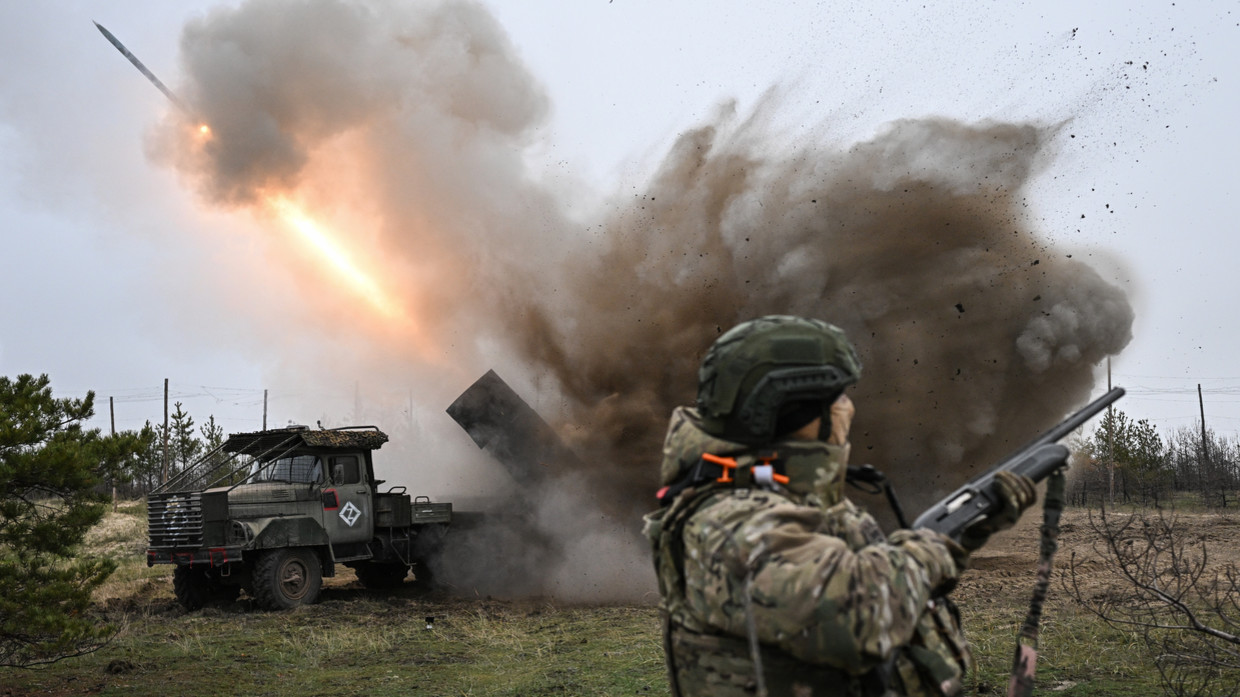
Kremlin aide Nikolay Patrushev said he believed that Finland and the Baltic states were “complicit in these crimes.” The provision of national airspace for Ukrainian drone strikes would “signify direct NATO participation” in attacks on Russia, he said Monday.
Multiple Ukrainian drones have also struck the territories of Finland and the three Baltic states since early March. Despite this, all four nations have avoided condemning Kiev outright for violating their airspace.
Moscow has already formally warned Lithuania, Latvia and Estonia against allowing Ukraine to send drones via their territory, Russian Foreign Ministry spokeswoman Maria Zakharova said last week. “If the regimes in these countries are smart enough, they will listen. If not, then they will have to deal with the consequences,” she said.

€5 gadget tracks down Dutch Navy's stealth warship while on mission

The regional broadcaster Omroep Gelderland determined the location of the Zr. MS. Evertsen, a stealth frigate of the Dutch navy currently on mission, by using a €5 gadget, an envelope, and two stamps. The Ministry of Defense is taking measures, the broadcaster reported.
Omroep Gelderland found the Evertsen using a Bluetooth tracker, a cheap device typically used for things like finding your keys. The broadcaster got the tracker on board the ship by posting it through the Military Postal Organization, the Ministry’s own post office that lets soldiers stay in touch with loved ones at home. Instructions for using this service are available on the Defense website.
The Ministry checks incoming post for dangerous items. But videos posted online by the Ministry show only packages passing through an X-ray scanner. Omroep Gelderland, therefore, packaged the tracker in an envelope, and it went to the Evertsen undetected.
Rowin Jansen, an assistant professor of National Security Law at Radboud University in Nijmegen, told Omroep Gelderland that Defense needs to be more careful about what it puts online, given the current geopolitical tensions. “It’s a trade-off between the private interests of soldiers who want to maintain contact with their families and national security. And with everything that is going on at the moment, you would expect national security to take precedence.”
“You would rather not have a warship’s location known,” Former Lieutenant General Mart de Kruif from Laag-Keppel told the broadcaster. “Nowadays, you can eliminate targets remotely and with great precision, but you do need to know where they are. So, as a frigate, you never want to reveal your location.” You can’t just go along with the existing rules, he said. “We are still a bit naive, and that mindset needs to change.”
The Evetsen is currently deployed to protect a French aircraft carrier against missile attacks. Information regarding the stealth ship’s location is therefore highly sensitive. Yet this is not the first time its location was easily revealed. A few weeks ago, a French soldier accidentally revealed the location by uploading his jog to the running app Strava.
The Ministry of Defense banned Dutch soldiers from using fitness apps in 2018, after such apps' data revealed Dutch military patrol routes in Mali. Yet last year, Omroep Gelderland was still able to obtain the data of 900 Dutch soldiers through Strava. 

No comments:
Post a Comment