"I am the Way, the Truth, and the Life"

Father God, thank you for the love of the truth you have given me. Please bless me with the wisdom, knowledge and discernment needed to always present the truth in an attitude of grace and love. Use this blog and Northwoods Ministries for your glory. Help us all to read and to study Your Word without preconceived notions, but rather, let scripture interpret scripture in the presence of the Holy Spirit. All praise to our Lord and Saviour Jesus Christ.

Please note: All my writings and comments appear in bold italics in this colour
Showing posts with label resistance. Show all posts

Saturday, January 27, 2024

International Holocaust Remembrance Day > One of the Darkest Days in History, soon to be outdone


Thousands mark Holocaust Remembrance Day

amid marches in Germany, Italy

   
Mourners stand before the Wall of Death during a ceremony at the site of the former Auschwitz-Birkenau Nazi concentration and extermination camp in Oswiecim, Poland, on Saturday, marking the 79th anniversary of its liberation. Photo by Jarek Praszkiewicz/EPA-EFE

Jan. 27 (UPI) -- Ceremonies were held across the world Saturday to mark International Holocaust Remembrance Day against the backdrop of continued anti-far right rallies in Germany and pro-Palestinian marches in Italy.

"Today, and every day, we mourn the six million Jews who were murdered during the Holocaust by the Nazis and their collaborators, as well as the Roma, Sinti, political opponents, persons with disabilities, LGBTQI+ individuals, and others persecuted and murdered by the Nazi regime," the U.S. State Department said in a statement issued Saturday.

"The United States stands with Holocaust victims, their families, and their descendants. We remember and we carry forward the legacy of survivors and their families when we apply the lessons of the Holocaust to combat antisemitism and other forms of intolerance."

U.S. President Joe Biden on Friday condemned the global rise of anti-Semitism in a statement issued to mark International Holocaust Remembrance Day, which coincides with the anniversary of the liberation of the Auschwitz-Birkenau concentration camp in Nazi-occupied Poland.

Biden called the Holocaust "one of the darkest chapters in human history."

And the world is rapidly closing in on a new darkest chapter in history, and, unbelievably, it's the same old story!

At the Auschwitz-Birkenau memorial site in Oswiecim, Poland, 20 Holocaust survivors laid wreaths and lit candles at the Wall of Death in the yard of Block 11, where German guards slaughtered thousands of Jewish prisoners during World War II.

In Potočari, Bosnia and Herzegovina, a joint Muslim-Jewish commemorative event was held to mark Holocaust Remembrance Day at the Srebrenica Memorial Center, attended by Council of Europe Commissioner for Human Rights Dunja Mijatović.

She called the occasion "a beacon of hope at a time when divisions often seem insurmountable," adding, "We must remember our duty to act decisively against hate speech, incitement to religious violence and discrimination."

Thousands of Holocaust Remembrance Day observers in Germany also attended scheduled events, while at the same time approximately 100,000 people in the western German city of Dusseldorf took to the streets to protest the country's far-right Alternative for Germany party.

Several smaller rallies were held in around 30 different nearby cities. Flags in Germany were at half-staff to mark the day.

German Chancellor Olaf Scholz on Saturday publicly urged people to stand up to anti-Semitism and racism.

"'Never again' is every day," Scholz said during his weekly video address, in reference to the Holocaust.

In Italy, demonstrators defied police bans on marches during Remembrance Day, gathering in Rome, Milan and elsewhere in support of Palestinian civilians who have been killed in Gaza amid Israel's war on Hamas militants.

"We are not here to say we are against the Jews. We are here to say 'no' to genocide in Gaza," one activist outside Rome's Piazza Vittorio told the Italian ANSA agency Saturday.

==========================================================================================


Saturday, July 27, 2019

Why 'LGBT-Free Zones' are on the Rise in Poland

Far-left backlash in a far-right country

Nationalist ruling party calls 'LGBT ideology' a 'threat'
amid growing number of Pride marches
CBC Radio 

On stickers distributed in weekly conservative magazine, Gazeta Polska, this week, the phrase 'LGBT-free zone'
circles a rainbow with a cross through it. (Kacper Pempel/Reuters)

Activists in Poland say so-called LGBT-free zones across the predominantly Catholic country point to efforts by the ruling Law and Justice (PiS) party to stoke anti-LGBT sentiment ahead of a parliamentary election this fall.

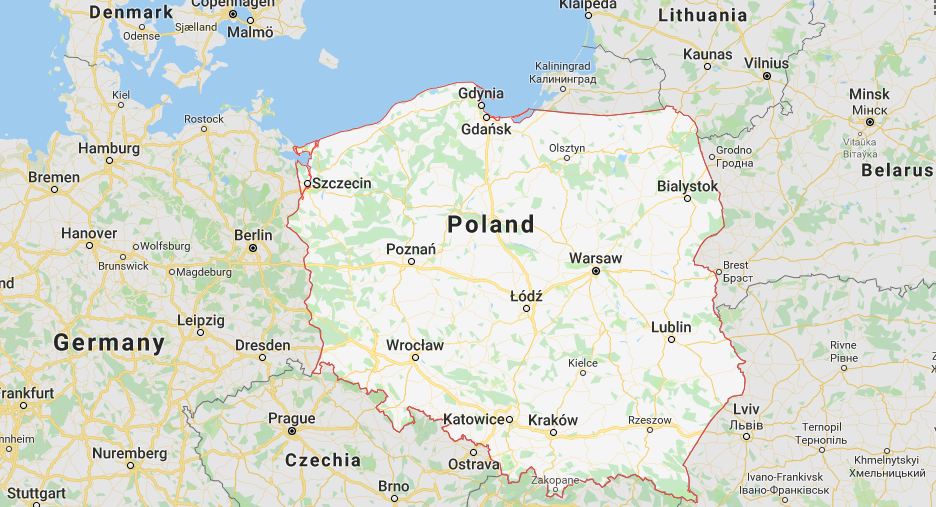
Local media reports suggest that across Poland, more than two dozen cities and towns — some led by PiS members — have declared their regions LGBT-free zones in recent months. The majority are situated in the historically conservative southeastern part of the country.

While the declarations are not enforceable, activists say they signal a targeted effort to exclude LGBT residents.

"It's a statement saying that a specific kind of people is not welcome there," said Ola Kaczorek, co-president of the Warsaw-based Love Does Not Exclude Association.

The number of supposedly LGBT-free regions has grown since Warsaw Mayor Rafał Trzaskowski signed a declaration in February supporting sexual and gender diverse communities in that city, Kaczorek said.

Ola Kaczorek, second from right, waves a flag during the pride parade in Warsaw,
representing Love Does Not Exclude Association. (Love Does Not Exclude Association)

Officials of the nationalist PiS party, which won a majority in 2015 running on an anti-immigration platform, have been vocal in their opposition to LGBT rights. Activists say that with migration to Poland slowing significantly since 2015, the party is looking for a new group to target.

Because a political party has to have people to demonize in order to win an election.

At a rally ahead of European Parliament elections in May, PiS president Jaroslaw Kacynski told a crowd that "LGBT ideology" was a "threat" to Polish society.

"They are not saying LGBT+ people are a threat, but they're saying that LGBT+ ideology is a threat," said Kaczorek. "Then people who are taking part [in pride marches] are not seen as humans, but as a part of some kind of ideology … [and] that is terrifying for some people."

Violence at pro-LGBT march

On July 20, advocates took to the streets of Białystok, a city in the Law and Justice party stronghold Podlasie Voivodeship, for the region's first-ever Pride march, and were met with violence from conservative and religious protesters. 

Białystok is considered an LGBT-free zone, according to a map plotted by LGBT advocacy group Lambda Warsaw.

Protesters chanted slogans, including 'God, honour, motherland', and burned a rainbow flag, at the first-ever
Pride march in Białystok, Poland on July 20. (Agnieszka Sadowska/Agencja Gazeta via Reuters)

Video from the event shows firecrackers exploding throughout the crowd and homophobic chanting from a group of men burning a rainbow flag.

"I have never seen anything like that before," said Małgorzata Mróz, a 20-year-old University of Warsaw student who travelled to join the march.

"People shouted at me that I'm a bitch, that I should die," she said adding that counter-protesters threw rocks and bottles at LGBT advocates. 

It's been just this great grassroots movement
that's been growing and expanding
- Ola Kaczorek

Both Mróz and Kaczorek told Day 6 there wasn't enough of a police presence.

Police arrested 25 people following the attacks, according to a Reuters report.

While the Polish government did not respond to a question about accusations that they support anti-LGBT sentiment, they did address the violence in Białystok.

"In Poland, there is no acceptance of behaviours slighting the rights of other persons," said Elżbieta Witek, the minister of the interior and administration, in an emailed statement to Day 6.

Małgorzata Mróz, 20, covers her mouth after tear gas is dispersed during the first-ever Pride march in Białystok, Poland, on July 20. The protest became violent when conservative and religious counter-protesters intercepted the march. (Agata Kubis/Submitted by Malgorzata Mroz)

But while the country's Education Minister Dariusz Piontkowski told private broadcaster TVN on Sunday that LGBT people shouldn't be excluded in Poland, he questioned the intent of pride marches.

"These kinds of marches... awaken resistance"
Education Minister Dariusz Piontkowski

"These kinds of marches, initiated by groups that are trying to force through their non-standard sexual behaviours, awaken resistance ... it's worth considering if such events should be organized in the future," he said. 

Mróz, who grew up in Częstochowa, organized a pride march in the small, southern city last year. There was no violence like that in Białystok, but the march was unwelcomed.

"Częstochowa is also my city," she said. "I will be there because it's my place and I have a right to be there."

Church and state

Ahead of last weekend's events in Białystok, Archbishop Tadeusz Wojda opposed the march, in a statement, calling it "foreign" to the region. Wojda also expressed "gratitude" for those who "defend Christian values."

According to 2016 numbers from Statistics Poland, more than 90 per cent of Poles identify as Roman Catholic.

"The church has a huge influence on people and it's a great outlet if someone wants to use it — and the ruling party is using it because lots and lots of people are regularly going to the church," Kaczorek said.

Though Kaczorek believes the Law and Justice party will win a second term in an election to be likely held in October, she has hope the LGBT community's activism will pay off.

Participants attend the city's first Pride march in support of the LGBT community in Bialystok, Poland, on July 20. (Agnieszka Sadowska/Agencja Gazeta via Reuters)

When Gazeta Polska, a conservative weekly magazine, included stickers emblazoned with the words "LGBT-free zone" in Wednesday's issue, a Polish judge ordered a ban on distributing the stickers any further Thursday.

Kaczorek believes if the ruling party continues to oppose LGBT rights, it will encourage the community to fight back. 

This year, there were more than 20 pride marches across Poland's 16 voivodeships.

"It's been just this great grassroots movement that's been growing and expanding — and there are new young people in smaller towns that don't want to migrate to bigger cities," Kaczorek said.

"They want to show themselves in their local communities and do something to show that we are here; we are everywhere. We are normal everyday people."

Why do Catholics and most Christians have a problem with LGBTQ ideology? Is it because God called it an abomination? Is it because He destroyed Sodom and Gomorrah and a couple other small cities because of their sexual license? Does it have to do with their Pride Parades, which are often obscene and yet tolerated by police and parents of small children? Is it because God hates 'pride' in any form? 

There should be absolutely no tolerance for violence against gays and lesbians and trans. But neither should they be flaunting their stuff in the face of God and man. As the Education Minister said, 'These kinds of marches... awaken resistance.'

A little common sense and modesty would go a long way toward peace and coexistence.


Monday, April 2, 2018

Hero Who Hid Jewish Children in Laundry Baskets from Nazis Dies at 107

By Gabrielle Okun 

A heroic man who hid Jewish children in laundry baskets in Amsterdam from Nazis has died at age 107.


Johan van Hulst, a Dutch seminary leader and later a politician, died March 22, the Daily Mail reported.

Hulst was honored as a Righteous Among the Nations in 1972, an award that is given to non-Jews who heroically rescued Jews during the Holocaust.

The former Protestant seminary leader rescued at least 600 Jewish children from being deported to Nazi death camps.

Hulst used an “ingenious system” to hide young Jews, most under the age of 12, in laundry baskets and sacks across the city.

Nazis kept Jewish families in a nursery school across the street before being deporting them to death camps. If there were too many children, Nazis would separate them from their parents and put them in Hulst’s school prior to deportation.

The brave Hulst resisted the Nazis by writing down fewer children than SS Guards originally believed were at the school. He would use his system to save the Jewish children by having his helpers smuggle them to different houses and pretending that they were their own children, The Times of Israel reported.


Hulst successfully skirted the Nazis until one of his collaborators revealed the scheme and he was forced to go into hiding in 1945.

After the war, Hulst became a politician, serving as a senator for the Christian Democratic Party from 1956 to 1981.

“We say, those who save one life save a universe. You saved hundreds of universes,” Israeli Prime Minister Benjamin Netanyahu told Hulst during a trip to the Netherlands in 2012. “I want to thank you in the name of the Jewish people, but also in the name of humanity.”

Hulst said he felt that he didn’t do enough to deter the Nazis and rescue Jews.

“I actually only think about what I have not been able to do — to those few thousand children that I could not have saved,” he said in 2015.

Heroes are like that!

The Netherlands is second to only Poland in the number of heroic people honored as Righteous Among the Nations, with more than 5,000.

Rest in Peace good brother; you have earned it.


Sunday, January 1, 2017

Of All the Stars that Fell in 2016, This One Hero Went Almost Unnoticed

Heroic Girl Saved 150 Lives By Pretending To Be
A Single Mom During WWII

Her bravery will never be forgotten
by  Briana Rauch

On December 11, 2016, Marion Pritchard passed away. You might never have heard of Pritchard, but she was responsible for saving a whole lot of people back during World War II. Born in the Netherlands in 1920, Pritchard was 19 when the Nazi invasion began. She joined up with the resistance and worked tirelessly to save as many children as she possibly could.

Pritchard’s original name was Marion van Binsbergen, and she was born in the city of Amsterdam.

When Pritchared was 19, the Germans arrived in the Netherlands and seized control of her hometown.

With her fiery temperament and brave spirit, Marion immediately joined up with the resistance. Shortly afterwards, she found herself in prison, where she would remain for a year and a half.


Pritchard was eventually released and, in 1942, she saw something that shocked her to the core.

“It was a beautiful spring morning, and it was a street I had known since I had been born, and all of a sudden you see little kids picked up by their pigtails or by a leg and thrown over the side of a truck. You stop, but you can’t believe it.”


Pritchard just happened to be passing by at the exact moment a home for Jewish kids was being raided and destroyed. The children were being tossed into a truck to be taken away.

Pritchard was devastated by what she saw and made a vow to save as many people, especially children, as she possibly could.

She then proceeded to volunteer for so-called “missions of disgrace”, in which non-Jewish resistance members would take-in Jewish children and pretend to be their mothers, preventing them from being taken away by the Nazis.

As Pritchard was young and single, she was able to perform these sorts of missions very successfully. She had no Jewish background and was able to save dozens of kids.

The image left shows Pritchard caring for a young girl named Erica Polak. Polak eventually arrived in the United States, where she became a psychologist. She knows that she owes her life to Pritchard’s bravery.

By the end of the war, it is believed that Pritchard was able to save a grand total of about 150 people.

Most of the missions passed without any problems, but on one occasion, Pritchard was forced to kill someone in order to save a family of Jews that were hiding in her home.


In the years following the war, Pritchard met and married an American soldier, Aaron Pritchard. Together, they built a new life for themselves in the United States.

YouTube / Raoul Wallenberg Medal and Lecture

The couple lived in Vermont, where Pritchard pursued a career as a psychoanalyst, continuing to use her skills to help people in need.

In 1981 her efforts were officially recognized by Yad Vashem, the Israeli Holocaust memorial. Pritchard was given the title of “righteous among the nations” and received several awards for her courage.

As stated at the beginning of this article, Pritchard died in December of 2016, but her memory lives on, along with her three children, eight grandchildren and one great-grandchild.

Pritchard was a true hero and her story should be known to all, so please SHARE it around to spread the word!

RIP Marion! May Our Lord Jesus Christ forgive you and bless you in Eternity.

Wednesday, September 23, 2015

Amazing Story of Courage, Resistance, Rescue and Survival from the Nazis

The Bielski Partisans
Holocaust Memorial Museum

JEWISH PARTISAN ACTIVITY IN EASTERN EUROPE, 1942-1944
Group portrait of former Bielski partisans from Nowogrodek taken in the
Foehrenwald displaced persons camp. Germany, April 3, 1948.
— US Holocaust Memorial Museum, courtesy of Jack Kagan
Operating in Western Belorussia (Belarus) between 1942 and 1944, the Bielski partisan group was one of the most significant Jewish resistance efforts against Nazi Germany during World War II.

While its members did fight against the Germans and their collaborators, the Bielski group leaders emphasized providing a safe haven for Jews, particularly women, children, and elderly persons who managed to flee into the forests. Under the protection of the Bielski group, more than 1,200 Jews survived the war, one of the most successful rescue efforts during the Holocaust.

Following the German invasion of the Soviet Union on June 22, 1941, the Germans occupied Western Belorussia (before 1939 Western Belorussia had been a part of Poland; after Germany invaded Poland in 1939 it was annexed to the Soviet Union by previous agreement with Germany). There, German authorities killed tens of thousands of Jews in Nowogrodek (Novogrudok) District (including the cities of Lida and Nowogrodek) between July 1941 and the end of spring 1942, and confined those they did not shoot to ghettos throughout the District. When German SS and police units liquidated these ghettos in 1942-1943, they killed most of the remaining inhabitants.

Tuvia Bielski
After the Germans killed their parents and two brothers in the Nowogrodek ghetto in December 1941, three surviving brothers of the Bielski family—Tuvia (1906–1987), Asael (1908–1945), and Zus (1910–1995)—established a partisan group. Initially, the Bielski brothers attempted only to save their own lives and those of their family members. They fled to the nearby Zabielovo and Perelaz forests, where they formed the nucleus of a partisan detachment consisting at first of about 30 family members and friends.

The family members chose former Zionist activist Tuvia Bielski, a Polish Army veteran and a charismatic leader, to command the group. His brother Asael became his deputy, while Zus was placed in charge of reconnaissance. A fourth and much younger brother, Aharon (1927- ) was part of the group as well.

The Bielskis had been a Jewish farming family in the nearby village of Stankiewicze, and the brothers knew the region well. Their familiarity with its geography, customs, and people helped them elude the German authorities and their Belorussian auxiliaries. With the help of non-Jewish Belorussian friends, they were able to acquire guns. The Bielski partisans later supplemented these arms with captured German weapons, Soviet weapons, and equipment supplied by Soviet partisans.

Asael Bielski
Tuvia Bielski saw his principal mission as saving the lives of his fellow Jews. The Bielskis encouraged Jews in nearby Lida, Nowogrodek, Minsk, Iwie, Mir, Baranowicze, and other ghettos to escape and join them in the forest. Bielski frequently sent guides into the ghettos to escort people to the forest. In late 1942, a special mission saved over a hundred Jews from the Iwie ghetto just as the Germans planned to liquidate it. Bielski scouts constantly searched the roads for Jewish escapees in need of protection.

Many Jews hiding in the forests in smaller family groups joined the Bielski group; Jewish partisans serving in Soviet partisan organizations also fell in with the Bielskis in an attempt to escape antisemitism in their units. The stream of Jewish survivors increased the size of the Bielski group to more than 300 people by the end of 1942.

Alexander Bielski
Until the summer of 1943, the group led a nomadic existence in the forest. In August 1943, however, the Germans began a massive manhunt directed against Russian, Polish, and Jewish partisans in the region. They deployed more than 20,000 military personnel and SS and police officials. Moreover, they offered a reward of 100,000 Reichmarks for information leading to Tuvia Bielski’s capture. The Bielski group, which had increased to approximately 700 Jews, was especially vulnerable to discovery by the German patrols. The group feared in part that the local peasants from whom they obtained food might betray them. As a result, the Bielski group moved in December 1943 to what became a permanent base in the Naliboki Forest, a swampy, scarcely accessible region on the right bank of the Niemen River, east of Lida and northeast of Nowogrodek.

It was in this primitive and unlikely setting that the Bielski group created a community. Despite some opposition from within the group, Tuvia Bielski never wavered in his determination to accept and protect all Jewish refugees, regardless of age or gender. The Bielskis never turned anyone away, permitting the creation of a mobile family “camp”—in effect, a Jewish community in the forest. The group organized the skilled workers among the Jewish refugees into workshops, which employed at least 200 people, including cobblers, tailors, carpenters, leather workers, and blacksmiths.

In addition, the group established a mill, a bakery, and a laundry. The leadership managed a primitive infirmary, a school for the children, a synagogue, and even a courthouse/jail. Work groups supplied the camp with food and cleared the land where possible for the cultivation of wheat and barley.

Bielski Group at mass grave site 1948

COOPERATION WITH OTHER PARTISAN GROUPS

The Naliboki Forest was under the administration of Soviet partisans, wherever the Germans were not present. Although the Bielski group had no ideological orientation, Tuvia Bielski and the other leaders cooperated with the Soviet partisans: Bielski himself established a friendly relationship with the regional Soviet partisan commander, General Vasily Yefimovich Chernyshev (codenamed “Platon”). Despite the prevalence of antisemitic sentiment among several of the Soviet partisan detachments, General “Platon” protected the Bielski group. He recognized the vital role of the camp as a maintenance base for Soviet partisans. In 1944, the camp leaders received weapons from Soviet partisan headquarters.

Bielski refused Soviet requests to provide an operations unit from among the approximately 150 men in his group who engaged in armed operations. He did not wish to abandon the married men, the women, and the children, for he knew that they could not survive without the armed protection of the armed men in his group. This concern was another reason for him in 1943 to draw his entire group deeper into the most inaccessible regions of the forest. Subsequently, although the group remained de facto united and under Tuvia Bielski’s command, they formally split into the “Kalinin” and “Ordzhonikidze” detachments of the Kirov Brigade of Soviet partisans.

At the same time that it saved lives and protected the noncombatants in the camp, the Bielski group carried out several operational missions. It attacked the Belorussian auxiliary police officials, as well as local farmers suspected of killing Jews. The group disabled German trains, blew up rail beds, destroyed bridges, and facilitated escapes from Jewish ghettos. The Bielski fighters often joined with Soviet partisans in operations against German guards and facilities, killing many Germans and Belorussian collaborators.


LIBERATION

On June 22, 1944, Soviet troops initiated a massive offensive in Eastern Belorussia. Within six weeks, the Soviet Army had destroyed the German Army Group Center and swept westward to the Vistula River in Poland, liberating all of Belorussia. At the time of liberation, the Bielski group had reached its peak of 1,230 people. More than 70 percent were women, elderly persons, and children, who otherwise would have perished under the German occupation. An estimated 50 members of the Bielski group were killed, an unusually low casualty rate in comparison not only with other partisan detachments but also with Jewish groups in the region.

After World War II, in 1945 Tuvia and Zus Bielski emigrated with their families to Palestine. They both fought in the Israeli armed forces during the 1948 war that established the Israeli state. They subsequently immigrated to the United States. Asael was drafted into the Soviet Army. He died on the front in East Prussia in February 1945.

Sunday, July 26, 2015

'Severe' Terrorism Threat Alert Doesn't Impress Some Brits

Britain is facing an "unprecedented" threat from hundreds of battle-hardened jihadists who have been trained in Asia, Africa and the Middle East, according to MI5, the domestic counter-intelligence and security agency. It warns that are now more Britons trained in terrorism than at any point in recent memory.

Nasser Muthana (center) is one of over 700 British Muslims who have travelled
to Syria and Iraq to wage jihad. He is pictured speaking in an
English-language ISIS recruitment video.
More than 700 Britons are believed to have travelled to Syria and Iraq, according to British authorities. Over half of these Britons are thought to have since returned home, where they pose a significant threat to national security.

Britain's terrorism threat alert is at the second-highest level of "severe," meaning an attack is "highly likely."

MI5's warnings are included in a major new report on the regulation of surveillance powers. Also known as the Anderson Report, the 380-page document was written by the UK's Independent Reviewer of Terrorism Legislation, David Anderson QC. The report states:

"MI5 has pointed out some of the recent factors which reinforce their concerns about the terrorist threat. Terrorist related arrests are up 35% compared to 2010. The number who have travelled to Syria and undertaken terrorist training since 2012 is already higher than has been seen in other 21st century theatres, such as Pakistan/Afghanistan, East Africa and Yemen.

"The threat posed on their return comprises not just attack planning but radicalization of associates, facilitation and fundraising, all of which further exacerbate the threat. The number of UK-linked individuals who are involved in or been exposed to terrorist training and fighting is higher than it has been at any point since the 9/11 attacks in 2001. MI5 regard this aspect of the threat as unprecedented. Some travelers were previously unknown to MI5.

"The volume and accessibility of extremist propaganda has increased. UK-based extremists are able to talk directly to ISIL fighters and their wives in web forums and on social media. The key risk is that this propaganda is able to inspire individuals to undertake attacks without ever traveling to Syria or Iraq. Through these media outputs, ISIL have driven the increase in unsophisticated attack methodology seen in recent months in Australia, France and Canada.

The report reveals that MI5 has successfully disrupted two attack plots by lone wolves in the past nine months, both in the late stages of preparation. According to MI5, "identifying such individuals is increasingly challenging, exacerbated by the current limitations in their technical capabilities."

Separately, the UK's lead police officer on counter-terrorism, Mark Rowley, announced the latest arrest figures — nearly one every day — which underline the scale of the challenge British police are facing to tackle the jihadist threat.

According to Rowley, there were a record 338 arrests for terrorism-related offenses in the last financial year (April 2014 to March 2015), a 33% increase on the 254 arrests in the previous year. He said that 157 (46%) of the arrests were linked to Syria, and 56 were under 20 years of age, an "emerging trend."

Rowley said that 79% of those arrested were British nationals and 11% were female. He added that 50% of the arrests were made in London and that roughly 50% of those arrested were later charged (up from around 40% in previous years). The arrests ranged from fundraising for jihadist groups to facilitation, preparation and execution of terrorist attack plans.

Rowley also said that each week the Counter Terrorism Internet Referral Unit (CTIRU), which assesses terrorist and violent extremist material on the Internet, removes on average over 1,000 pieces of content that breaches the Terrorism Act 2006. Approximately 800 of these items are related to the Islamic State in Syria and Iraq and are posted on multiple platforms. According to Rowley:

"ISIL and other terrorist groups are trying to direct attacks in the UK; encouraging British citizens to travel to Syria to fight and train; and are seeking, through propaganda, to provoke individuals in the UK to carry out violent attacks here."

"There is no doubt of the horrific nature of the offenses being committed overseas. The influence of those who wish to bring similar violence to the streets of the UK has been an increasing threat here. The rise in level of activity is matched by increased action by police and security services, who are currently working on hundreds of active investigations. We cannot be complacent."

Meanwhile, Britain's most senior Muslim police officer, Scotland Yard commander Mak Chishty, has warned that Islamist propaganda is so potent that it is influencing children as young as five, and that many more British Muslims are likely to end up being lured into becoming jihadists either at home or abroad.

In an interview with the Guardian newspaper, Chishty said there was an urgent need to "move into the private space" of Muslims to prevent youth from becoming radicalized. He called on friends and family to intervene much earlier, and to watch for subtle changes in behavior, including expressions of anti-Western sentiment. He said:

"We need to now be less precious about the private space. This is not about us invading private thoughts, but acknowledging that it is in these private spaces where this [extremism] first germinates. The purpose of private-space intervention is to engage, explore, explain, educate or eradicate. Hate and extremism is not acceptable in our society, and if people cannot be educated, then hate and harmful extremism must be eradicated through all lawful means."

Chishty defined "private space" as "anything from walking down the road, looking at a mobile, to someone in a bedroom surfing the net, to someone in a shisha cafe talking about things."

Chishty said that jihadist propaganda is so powerful that he fears his own children might be vulnerable. He said his message to fellow Muslim parents was: "I am not immunized. If I feel the need to be extra vigilant, then I think you need to feel the need to be extra vigilant."

Referring to three teenage girls from a school in Bethnal Green, east London, who slipped away from their families in February to join the Islamic State in Syria, he said he found it impossible to believe the claims by their families that there had been no clues that the girls were becoming radicalized. "My view as a parent is there must have been signs," he said.


According to Chishty, current counter-radicalization strategies are not working. "We are in unchartered water.... We are facing a risk, a threat which is global, which is powerfully driven by social media, reaching you on your own through your mobile phone."

Some of Chishty's ideas highlight the challenge of finding a balance between confronting jihadist propaganda and criminalizing free speech.

A new Counter-Extremism Bill — which the government says is needed to combat groups and individuals who "undermine British values" — is facing mounting criticism that it is too draconian.

The new legislation would introduce so-called Banning Orders for extremist groups that seek to "undermine democracy or use hate speech in public places." It would also give the government new powers to restrict individuals who seek to radicalize youth, and powers to close premises where extremists seek to influence others.

The bill would strengthen the powers of the Charity Commission to root out charities that misappropriate funds towards extremism and terrorism. It would also place immigration restrictions on extremists, and strengthen the ability of Ofcom, the communications regulator, to take action against channels that broadcast extremist content.

Anjem Choudary
The legislation is partly aimed at providing the government with the tools needed to silence Islamic extremists such as Anjem Choudary, who has long called for the implementation of Islamic Sharia law in Britain. Although Choudary is believed to have inspired dozens of young British Muslims to carry out violence in the name of Islam, his training as a lawyer has helped him to stay one step ahead of the law and out of prison.

But the new bill is facing stiff opposition from a variety of individuals who fear the bill will give too much power to the state.

In an interview with the Telegraph, Haras Rafiq, the director of the Quilliam Foundation, an anti-extremism think tank, said the new bill would "do the very things the extremists want us to. With these Orwellian, totalitarian powers, we are playing into their hands." He added:

"It is very noticeable that the main Islamist groups are not really up in arms about this. They want it, because it will feed the narrative of grievance and victimhood they love. They will be able to use it to say, look, we told you so."

Rafiq described the proposed powers as "ridiculous" and "unworkable" and said that even if they survived the passage through Parliament, they would be struck down by the courts. "That will be embarrassing and a victory for the extremists," he said.

The Telegraph also reported that senior government advisors are opposed to the bill. A counter-extremism specialist at the Home Office's de-radicalization program, Rashad Ali, said:

"You can't protect democracy by undermining democracy. The Government is obsessed with legislation but this is not something you can defeat by legislation. It is a battle of ideas and we have to defeat these ideas by argument, not by banning even having the debate. What we need, far more than any new law, is a counter-argument and a policy which can inspire [Muslim] society to defeat extremist ideas."

The former foreign office minister and shadow home secretary David Davis said that "restricting free speech, and forcing those who hold views inimical to our own into the shadows, is an authoritarian act that will only serve to further alienate those susceptible to extremist views."

The government's new Business Secretary, Sajid Javid, in a leaked letter to Home Secretary Theresa May, warned that the law would turn Ofcom into a state "censor."

Alan Craig, the leader of a campaign against the proposed "London Olympic mega-mosque" at West Ham, is also opposed to the new bill. He said:

"David Cameron seems to think that banning orders, extremist disruption orders and draconian laws are the way to tackle Choudary's ideological venom. But such legislation simply endangers the UK's democratic liberties and freedom of speech. It is far better openly to expose — and mock — the fictitious fabricated roots of Choudary's fundamentalist ideology. It is this way that Choudary will slowly but surely lose his malign influence over so many impressionable young minds."

British Prime Minister David Cameron has defended the bill. "For too long, we have been a passively tolerant society, saying to our citizens: as long as you obey the law, we will leave you alone," he said. "It's often meant we have stood neutral between different values. And that's helped foster a narrative of extremism and grievance." He added:

"This government will conclusively turn the page on this failed approach. As the party of one nation, we will govern as one nation, and bring our country together. That means actively promoting certain values... And it means confronting head-on the poisonous Islamist extremist ideology. Whether they are violent in their means or not, we must make it impossible for the extremists to succeed."

The bill's passage is not a foregone conclusion. Cameron's new government has a majority of just 10 MPs in the House of Commons, and holds 228 of the 787 seats in the House of Lords. MPs are likely to propose and debate amendments to the government's proposals.