Fascinating story of hundreds of children who withdraw into unconsciousness rather than face being deported from Sweden
In Sweden, hundreds of refugee children have fallen unconscious after being informed that their families will be expelled from the country
By Rachel Aviv
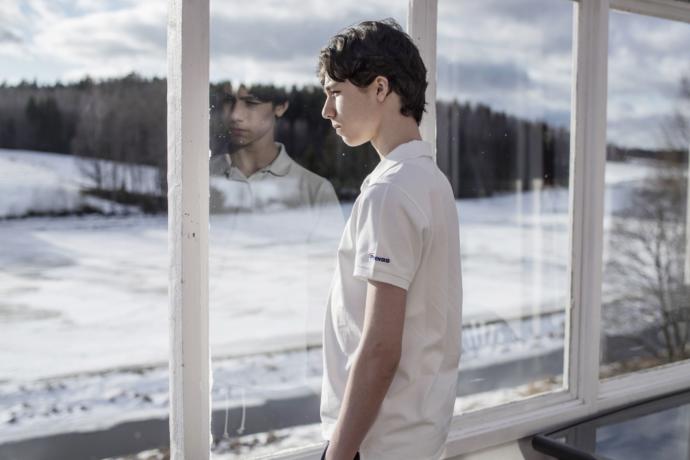
Uppgivenhetssyndrom, or resignation syndrome, is said to exist only in Sweden, and only among refugees. The patients seem to have lost the will to live. “They are like Snow White,” a doctor said. “They just fall away from the world.” Photograph by Magnus Wennman for The New Yorker
Georgi, a Russian refugee who came to Sweden with his family when he was five years old, could talk at length about the virtues of the Volvo. His doctor described him as “the most ‘Swedeified’ in his family.” He was also one of the most popular boys in his class. For his thirteenth birthday, two friends listed some of the qualities that he evoked: energetic, fun, happy all the time, good human being, amazingly kind, awesome at soccer, sly.
Georgi’s father, Soslan, had helped found a pacifist religious sect in North Ossetia, a Russian province that borders Georgia. Soslan said that in 2007 security forces demanded that he disband the sect, which rejected the entanglement of the Russian Orthodox Church with the state, and threatened to kill him if he refused. He fled to Sweden with his wife, Regina, and their two children, and applied for asylum, but his claim was denied, because the Swedish Migration Board said that he hadn’t proved that he would be persecuted if he returned to Russia.
Sweden permits refugees to reapply for asylum, and in 2014, having lived in hiding in central Sweden for six years, the family tried again. They argued that there were now “particularly distressing circumstances,” a provision that allowed the board to consider how deportation will affect a child’s psychological health. “It would be devastating if Georgi were forced to leave his community, his friends, his school, and his life,” the headmaster of Georgi’s school, Rikard Floridan, wrote in a letter to the board. He described Georgi as “an example to all classmates,” a student who spoke in “mature and nuanced language” and showed a “deep gratitude for the school.”
In the summer of 2015, shortly before he entered seventh grade, Georgi learned that the Migration Board had rejected his family’s application again. The news came in a letter, which he translated for his parents, who couldn’t read Swedish.
They appealed the board’s decision, and Georgi tried to focus on school as he waited for more news. Not long afterward, a friend on his floor-hockey team stopped coming to practice. Georgi was distraught when he learned that the teammate, a refugee from Afghanistan, had been deported with his family, “as if they were criminals,” he said. Georgi became sullen and aloof, and he stopped speaking Russian. He said that the words were just sounds, whose meaning he could no longer decipher. He withdrew from his parents, whom he accused of having failed to assimilate. His nine-year-old brother, Savl, acted as the family’s interpreter. “Why haven’t you been learning Swedish?” Georgi said in Swedish to his brother, who translated the words into Russian for their parents.
In December, 2015, the Migration Board rejected their final appeal, and, in a letter, told the family, “You must leave Sweden.” Their deportation to Russia was scheduled for April. Soslan said that to his children Russia “might as well be the moon.” Georgi read the letter silently, dropped it on the floor, went upstairs to his room, and lay down on the bed. He said that his body began to feel as if it were entirely liquid. His limbs felt soft and porous. All he wanted to do was close his eyes. Even swallowing required an effort that he didn’t feel he could muster. He felt a deep pressure in his brain and in his ears. He turned toward the wall and pounded his fist against it. In the morning, he refused to get out of bed or to eat. Savl poured Coca-Cola into a teaspoon and fed Georgi small sips. The soda dribbled down his chin.
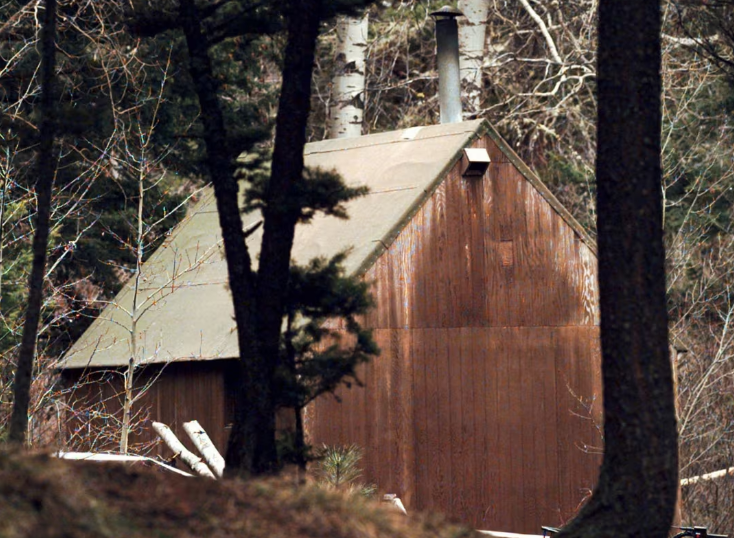
At the recommendation of neighbors, Georgi’s parents called Elisabeth Hultcrantz, an ear-nose-and-throat doctor who volunteers for the charity Doctors of the World. Three days after Georgi took to his bed, Hultcrantz drove to his home, a red wooden cottage with white trim in the farmlands of Garpenberg, a hundred and twenty miles northwest of Stockholm. Georgi was wearing boxers and short athletic socks. He appeared to be asleep. A tulip-patterned blanket had been pulled up to his chin. When Hultcrantz touched him, his eyelids trembled, but he didn’t move. Using a pillow, she propped up his head, but it flopped to the side. “He provides no contact whatsoever,” she wrote.
After a week, Georgi had lost thirteen pounds. Hultcrantz, a professor emeritus at Linköping University, urged the family to take him to the emergency room in Falun, a city forty miles away. He hadn’t eaten for four days and had not spoken a full sentence in a week.
A doctor at the hospital wrote that Georgi “lies completely still on the examination table.” His reflexes were intact and his pulse and blood pressure were normal. The doctor lifted Georgi’s wrists a few inches above his forehead and then dropped them. “They fall down on his face,” she wrote. A nurse noted that he showed “no reaction to caregiving.”
The next day, a doctor inserted a feeding tube through Georgi’s nostril. “He showed no resistance,” Soslan said. “Nothing.” Georgi was given a diagnosis of uppgivenhetssyndrom, or resignation syndrome, an illness that is said to exist only in Sweden, and only among refugees. The patients have no underlying physical or neurological disease, but they seem to have lost the will to live. The Swedish refer to them as de apatiska, the apathetic. “I think it is a form of protection, this coma they are in,” Hultcrantz said. “They are like Snow White. They just fall away from the world.”
 |
| “Exactly how entrenched is your beard?” |
The apathetic children began showing up in Swedish emergency rooms in the early two-thousands. Their parents were convinced that they were dying. Of what, they didn’t know; they worried about cholera or some unknown plague. Soon patients with the condition filled all the beds in Stockholm’s only psychiatric inpatient unit for children, at Karolinska University Hospital. Göran Bodegård, the director of the unit, told me that he felt claustrophobic when he entered the rooms. “An atmosphere of Michelangelo’s ‘Pietà’ lingered around the child,” he said. The blinds were drawn, and the lights were off. The mothers whispered, rarely spoke to their sick children, and stared into the darkness.
By 2005, more than four hundred children, most between the ages of eight and fifteen, had fallen into the condition. In the medical journal Acta Pædiatrica, Bodegård described the typical patient as “totally passive, immobile, lacks tonus, withdrawn, mute, unable to eat and drink, incontinent and not reacting to physical stimuli or pain.” Nearly all the children had emigrated from former Soviet and Yugoslav states, and a disproportionate number were Roma or Uyghur. Sweden has been a haven for refugees since the seventies, accepting more asylum seekers per capita than any other European nation, but the country’s definition of political refugees had recently narrowed. Families fleeing countries that were not at war were often denied asylum.
In an open letter to the Swedish minister of migration, forty-two psychiatrists asserted that the new restrictions on asylum seekers and the time it took the Migration Board to process their applications—children could be in limbo for years—were causing the disease. They accused the government of “systematic public child abuse.” Opinion within the medical community converged on the theory that the illness was a reaction to two traumas: harassment in the children’s home country, and the dread, after acclimating to Swedish society, of returning. Sweden’s leading medical journal, Läkartidningen, devoted dozens of articles, and several poems, to the syndrome. “Your eyes had seen it all / aged with an old man’s weariness without any hope of life in the future,” Mildred Oudin, the chief of child psychiatry in Skövde, in central Sweden, wrote. Magnus Kihlbom, the director of an institute for child psychiatry in Stockholm, proposed in the journal that the disorder represented a kind of willed dying. Kihlbom cited the psychiatrist Bruno Bettelheim, a Holocaust survivor, who wrote that some prisoners in the concentration camps were “so totally exhausted, both physically and emotionally, that they had given the environment total power over them.” They “stopped eating, sat mute and motionless in corners, and expired.”
Swedish news programs broadcast footage of children on stretchers being loaded into airplanes and expelled from the country. Sweden prides itself on its commitment to helping the most vulnerable, and the illness was seen as an affront to the country’s national character. Even the King was alarmed. “It’s terrible, what is happening to these poor children,” he told the press in 2005. (A psychologist tracked down an apathetic boy who had been deported to Serbia and found him, six months later, still unconscious, his skin sallow, in a one-room house with no running water.)
A hundred and sixty thousand Swedes signed a petition to stop the deportations of apathetic children and other asylum seekers. Five of Sweden’s seven political parties demanded amnesty for apathetic patients. On the television program “Mission Investigate,” Gellert Tamas, one of the country’s best-known journalists, reported, “The issue is only a few hours from bringing down the government.” The Swedish Parliament passed a temporary act that gave thirty thousand people whose deportations were pending the right to have the Migration Board review their applications again. The board began allowing apathetic children and their families to stay.
In a hundred-and-thirty-page report on the condition, commissioned by the government and published in 2006, a team of psychologists, political scientists, and sociologists hypothesized that it was a culture-bound syndrome, a psychological illness endemic to a specific society. Every culture possesses what Edward Shorter, a medical historian at the University of Toronto, calls a “ ‘symptom repertoire’—a range of physical symptoms available to the unconscious mind for the physical expression of psychological conflict.” In parts of India, patients are said to suffer from dhat syndrome: they complain of impotence and have the delusion that they are losing their semen. In Nigeria, students who can’t retain information and report feeling a burning sensation in their heads are sometimes given a diagnosis of “brain fag.” The illnesses are reinforced by a local belief that the symptoms are a sign of authentic suffering, worthy of expert attention and care.
The Swedish government’s report proposed that the apathetic children were from “holistic cultures,” where it is “difficult to draw boundaries between the individual’s private sphere and the collective domain.” They were sacrificing themselves for their family by losing consciousness. “Even if no direct encouragement or directive is given,” the report said, “many children raised with holistic thinking may nonetheless act according to the group’s ‘unspoken’ rules.”
The report seemed to ignore the influence of Sweden’s own culture on the illness. When the Swedish government sent doctors and sociologists to visit Kosovo, Serbia, Azerbaijan, Kazakhstan, and Kyrgyzstan, to find out if the illness was a culturally specific way of reacting to trauma, local doctors said that they had never heard of such symptoms.
Georgi’s next-door neighbor, a Russian girl named Revekka, was given a diagnosis of apathy three years before him. She had become ill when she was twelve, after the Migration Board rejected her family’s application for asylum. Ellina Zapolskaia, a friend of both families who lived nearby and had practiced medicine in Russia, told me that, after Georgi’s first day in bed, “I knew it was the same sickness.”
 |
“That’s the one I like best, but everyone else
seems to like the other one.” |
Georgi spent three nights at the hospital in Falun before being sent home with a special supportive mattress. His friends called and texted him repeatedly, but they received no response. Georgi’s teachers called his family to find out why he had been absent for a week. Floridan, the headmaster, said that Georgi’s classmates were in tears when he explained what had happened. He told them, “Georgi has waited such a long time to get an answer about whether he can stay here in Sweden, and he has more or less given up. He finds no meaning in school or to even exist.”
A physiotherapist at the hospital advised Georgi’s parents to turn on the lights in his bedroom every morning, and to immerse him in the daily routine of the household. Georgi was rolled to the dinner table in a wheelchair; a cushioned headrest propped up his head, though his eyes remained closed. He was fed four hundred and fifty millilitres of nutrients five times a day, through a tube.
When Hultcrantz visited Georgi a month after his hospitalization, she noticed that the expression on his face had “smoothed out.” He no longer appeared distressed, as he had in the early days of the illness. She told his parents, “This is more peaceful for him,” but she was guessing.
Hultcrantz, who has treated more than forty children with apathy, empathizes with her patients so viscerally that answers to routine questions can make her cry. Her husband jokes that she treats medicine like a “contact sport.” She spends her days driving long distances through central Sweden, providing medical exams to refugees for free. She believes that people cannot be truly healthy unless they have trygghet, a word that in English translates as “security” but which has a broader meaning in Swedish: trust, a sense of belonging, freedom from danger, anxiety, and fear. The modern Swedish welfare state was built on the idea that it must safeguard trygghet for its citizens, minimizing the risks to which they are exposed. “Security is the most basic foundation of the individual,” the Swedish minister of social affairs explained, in 1967. “Nothing good has ever come out of insecurity.”
In a seventy-six-page guide for treating uppgivenhetssyndrom, published in 2013, the Swedish Board of Health and Welfare advises that a patient will not recover until his family has permission to live in Sweden. “A permanent residency permit is considered by far the most effective ‘treatment,’ ” the manual says. “The turning point will usually be a few months to half a year after the family receives permanent residence.” The guidelines draw on the Israeli sociologist Aaron Antonovsky’s notion of a “sense of coherence.” Mental well-being, Antonovsky theorizes, depends on one’s belief that life is orderly, comprehensible, structured, and predictable. Antonovsky suggests, as Freud did, that psychological illness is born of narrative incoherence, a life story veering off course.
As Hultcrantz sees it, her most important task as a doctor is to be a good writer, constructing a coherent narrative from her patients’ physical symptoms, which she interprets as metaphors for psychic distress. In a letter to the Migration Board, Hultcrantz wrote that Georgi “suddenly fell into a deep sleep when he perceived that his final hope for the future was taken from him,” a description that she recently applied to another patient. “If the boy can get secure residency with his entire family, the prognosis is good and you can expect a full continuous recovery within one year,” she wrote. “If the boy does not have security, he will not wake up in whatever country he is in.”
A chipper, gray-haired grandmother, Hultcrantz seems unaware of her power. She sometimes encourages families to “get their tubing”—the feeding tube—as quickly as possible, in order to emphasize their suffering to the Migration Board. Her iPhone is full of photographs that she has taken of refugee children lying in bed. Their eyes are closed, their faces are pale, and they have an expression of dull tranquillity.
The Canadian philosopher Ian Hacking writes that diagnoses can become “a way to be a person, to experience oneself, to live in society.” Psychological illnesses often adapt to a culture’s preoccupations and fears. In late-nineteenth-century Europe, as women were resisting their social and sexual powerlessness, a new type of madwoman emerged: diagnosed as a hysteric, she was sexually erratic and outrageous, unleashing qualities that a lady was supposed to suppress. In the nineteen-eighties, in the United States, a new illness took root as doctors became increasingly aware of the prevalence of childhood sexual abuse. Thousands of women were given a diagnosis of multiple-personality disorder; they discovered that they had two or more distinct personalities, at least one of which had been abused as a child. Hacking argues that it is irrelevant to ask, “Is it real?” The better question is: “What makes it possible, in such and such a civilization, for this to be a way to be mad?”
No country has responded to refugees, arguably the moral crisis of our era, with greater diligence and conscientiousness than Sweden. The apathetic children embody the country’s worst fantasy of what will become of the most vulnerable if Sweden abandons its values. The children are embedded in a moral and political debate that is central to the country’s identity, complete with heroes (doctors), victims (patients), and villains (those who doubt the victims’ suffering). In an article about the illness that appeared in the newspaper Dagens Nyheter, Karin Johannisson, a Swedish historian, wrote, “Never had the ethics of compassion had such power, fed by vague historical guilt. This was about the whole image of Sweden—a country dripping with wealth but prepared to deport the most defenseless.”
 |
“All my will—I didn’t have it anymore,”
Photo by Magnus Wennman for The New Yorker |
From afar, the country looks like a humanitarian utopia, but for twenty years Swedes have been arguing about the proper limits of their country’s good will. In the past three years, as some three hundred thousand refugees, many from Syria and Afghanistan, have sought asylum, there has been a growing sense that the country can no longer afford to be beneficent. The Sweden Democrats, a party with roots in the neo-Nazi movement, has won the support of eighteen per cent of the population, by claiming that immigration is degrading the country. Within the past two years, Sweden has introduced border controls and new restrictions on asylum seekers; a leading member of Parliament announced the rules while choking back tears.
For nearly two decades, a political question—What should we do about migration?—has played out through the bodies of hundreds of children. The number of new cases of apathy declined in 2006, after the Migration Board took a more lenient approach, but the illness is still being diagnosed in dozens of children. Last year, some sixty children lost the ability to move and to speak. There is now universal consensus that the children are not faking, but no one knows why the illness is particular to Sweden. I spoke with more than twenty Swedish doctors who had either treated apathetic patients or written about them, and none of them had an explanation; most were hesitant to even propose a hypothesis. Björn Axel Johansson, a child psychiatrist at Skåne University Hospital, in southern Sweden, who has treated twelve apathetic children, told me, “I’m not convinced that this is only happening in Sweden. Maybe it’s only being documented and discussed and published in Sweden?”
Thirty-seven of Georgi’s classmates sent him letters. “These few weeks that you haven’t been here have been so god damn empty,” Louise wrote. She said that all she wanted to do was hug him. “You’re the one that makes everyone happy and is friends with everyone,” Oliver wrote. Georgi’s classmates were dismayed that Sweden intended to deport him. “It was always in the back of our minds, but it was like a punch in the jaw when we heard them say it,” Lilla-Lisa told him.
Teachers from Georgi’s school visited once a week and read him novels and excerpts from his textbooks, and his friends visited in groups of two and three, carrying on conversations by his bedside. Although psychiatrists do not know whether apathetic children can process language, they recommend that patients be treated as if they were sentient. Floridan said that he told Georgi, “We are longing for you.” He thought that he could detect Georgi’s eyes moving under the closed lids.
Georgi’s mother, Regina, a beautiful, delicate-featured woman prone to headaches, became withdrawn and depressed. Savl stopped going to school. A doctor from Falun Hospital wrote that Savl was consumed by “fear and anxiety that he will be picked up by the police and deported.”
Although Hultcrantz referred to Georgi’s state as a coma, she acknowledged that the term wasn’t quite accurate. Each time she visited, she rubbed his sternum and applied pressure to his fingernails—tests that elicit responses in comatose patients—but he didn’t move. Then she stroked the sole of one of his feet, a test devised by the neurologist Joseph Babinski as a way to determine whether a patient’s paralysis is organic or hysterical. Georgi curled his big toe, an indication that there was no structural damage to his brain.
In April, four months after Georgi became ill, the family’s deportation was postponed, because his dependence on the feeding tube made flying hazardous. He seemed to be sinking deeper into the condition. Hultcrantz observed that he had begun to drool. At Falun Hospital, a doctor noted that Georgi had “no muscle tone in either the arms or legs,” and that his arm reflexes were “difficult to trigger.” The doctor wrote, “The boy is alive but barely.”
Last fall, Hultcrantz took me to meet two sisters, Roma girls from Kosovo, who were both apathetic. Djeneta, the younger of the two, had been bedridden and unresponsive for two and a half years, since she was twelve. In a letter to the Migration Board, in October, 2015, Hultcrantz warned, “The only thing that can help the whole family get out of their sense of powerlessness is if they can be guaranteed security.” A year later, the family’s application for residency was rejected, and within twenty-four hours Djeneta’s sister, Ibadeta, who was fifteen, lost the ability to walk. Her father, Muharrem, tried to force her to go to school by putting her on the seat of her bicycle and pushing it. By the time they got to the school, Ibadeta was limp. Muharrem carried her home and put her in bed, where she had remained for the past five months.
The family lives in central Sweden, in a brick dormitory that houses refugees. When we visited, the two girls had taken over the only bedroom in the apartment. They lay side by side on twin beds that had been pushed together in the middle of the room. Beside their beds was a package of diapers. Their heads, centered on their pillows, were tilted toward the window. Snow was falling, the first of the season. Djeneta had a feeding tube through her right nostril and Ibadeta through her left. Their long black hair had recently been combed.
At the family’s interview with the Migration Board, in 2014, their mother, Nurije, had explained that in Kosovo her children had been harassed for being Gypsies. “We are Roma and we have no country and we are badly treated,” she said. She told the Migration Board that they couldn’t return to Kosovo, because “there’s no life.” She didn’t have the documentation to substantiate her claims, but her daughters now embodied the sentiment.
Nurije led Hultcrantz into the bedroom, pulled off the girls’ quilts, and undressed them, leaving their blouses draped around their necks. “Oh, Djeneta,” Hultcrantz said, in a maternal tone. She opened Djeneta’s eyelids with her fingers. To my alarm, Djeneta looked straight ahead. It was the sort of stare one would expect from a dead person.
During Georgi’s months in bed, he felt as if he were in a glass box with fragile walls, deep in the ocean.
If he spoke or moved, he thought, it would cause the glass to shatter. “The water would
pour in and kill me,” he said. Photograph by Magnus Wennman for The New Yorker
Hultcrantz shined a flashlight in each of Djeneta’s pupils, and they contracted. “This shows that, physically, she is O.K.,” Hultcrantz told me. “It is just that her brain is in a moth bag,” she said, using a term for the container in which Swedes store their winter clothes.
Hultcrantz walked to the other side of the bed and opened Ibadeta’s eyes, but she couldn’t find the pupils. Her eyes were white, the result of a reflex known as Bell’s phenomenon, in which the eyeball rolls back to protect the cornea. “The condition is not as deep,” Hultcrantz said. She took Ibadeta’s pulse and blood pressure and found that they were normal, unlike her sister’s, whose pulse and blood pressure had lowered during her two years in bed.
Then Hultcrantz asked Muharrem for ice. He couldn’t find any cubes in the freezer, so he returned with a bag of frozen chicken. Hultcrantz placed the chicken on Ibadeta’s bare stomach and tested her pulse and blood pressure again. In a healthy patient, the sudden chill would have spurred fluctuations in the measurements, but Ibadeta’s vital signals remained the same. Throughout the exam, Nurije cried so silently and unobtrusively that no one saw fit to comment.
When Hultcrantz gave Ibadeta a breast exam—one of her patients had developed cancer, which remained undetected during the months that she lay in bed—I began to feel faint. The girls looked uncannily beautiful. Except for a speckling of acne on Ibadeta’s chin, their skin was perfect, and their bodies, just past puberty, looked agile and lithe. Ibadeta breathed a little more deeply after her breasts were touched, but her expression never changed. The hushed reverence with which everyone treated the girls, lying side by side in the same position, reminded me of some sort of pagan ritual. Their illness was so freighted that the principles they embodied seemed to overshadow the particulars of their condition. Hultcrantz took no notes during her examination; she said that the information is always the same.
After the exam, the family served us a plate of Oreos. The girls had a cousin who had become apathetic, and I asked Muharrem and Nurije, through a Romani translator who helped with the interview, if they thought that the illness was contagious.
“No, no, no,” Hultcrantz interrupted, before the translator could relay the question. “They had never been in contact with the cousin when she was sick.”
“But from one sister to the other sister?” I asked. I pointed out that even depression can be contagious.
Hultcrantz refused to let the interpreter translate my question, which she seemed to consider an insinuation that the condition was somehow less real. But Nurije, grasping the gist, answered directly: “She got sick because she saw her sister in this condition.”
Muharrem said that when Ibadeta read the rejection from the Migration Board she started shaking and crying and said, “I will never be able to see my sister recovered.” She had gone to her sister’s doctors’ appointments, translating from Swedish to Romani for her parents, and she had heard the doctors say that a residency permit was the only cure.
In 1942, the American physiologist Walter Cannon described a phenomenon called “voodoo death,” observed in Aboriginal cultures. Condemned to death by a medicine man, often for breaking a religious edict, the victim is so frightened that his physical condition deteriorates rapidly and he dies within days. He fulfills the medicine man’s prognostication. “It is the fatal power of the imagination working through unmitigated terror,” Cannon wrote.
Hultcrantz’s prescriptions also acquire the weight of prophecy. She is humble, selfless, and extraordinarily generous—she often lets asylum seekers stay in her house for months or years—but the story she tells about her patients’ illness is perhaps too compelling; she seems to inadvertently reinforce their symptoms. Like the medicine man, she has the authority to shape people’s beliefs about their own biology. In more contemporary terms, she and other Swedish doctors create the conditions for a nocebo effect: the families expect that unless they are granted residency—the only medicine—their children will waste away.
No apathetic patients are known to have died, but a few have been bedridden for as long as four years. Lars Joelsson, the president of the Swedish Association for Child and Adolescent Psychiatry, told me, “As doctors, we don’t have the tools to treat these patients. Most of the treatment is to be there and see that they don’t die.” He believes that doctors have been tasked with solving a dilemma that is not medical but social and structural, the responsibility of the government. “People think they are coming to the promised land,” he said. “We don’t live up to our high ideals.”
Swedes have an admirable capacity to blame themselves for failures of empathy. But, in the case of the apathetic children, the illness seems to have been exacerbated and enlarged by its moral symbolism. The struggle to cure the disease has also become an endeavor to restore Sweden’s imperilled humanitarian values. The patients have been described in medical papers as if they were superior beings, almost invariably the smartest, most sensitive, and best assimilated children in their families. Prescribing medication has been deemed ineffective, and electroconvulsive therapy is considered unethical. “It’s a way of forcing the children back to a life that they have said they can’t take part of,” Lotta Spangenberg, a Stockholm child psychologist, told me. She sees the illness as a form of communication after words have failed. “This is a way of saying, ‘This is unspeakable,’ ” she said.
 |
| “We made a bit of a mess in Aisle 2.” |
Isolated in a culture that can’t relate to their traumas, refugees have often been the purveyors of unique forms of psychological expression. In the nineteen-eighties, in the United States, healthy refugees from Laos went to bed, cried out in their sleep, and never woke up; doctors concluded that their nightmares had scared them to death. Around the same time, in California, a hundred and fifty Cambodian women, who’d seen family members tortured during the Pol Pot regime, lost the ability to see. The apathetic children embody psychic wounds in a similarly literal way: they feel totally helpless, and they become totally helpless. As the poet D. M. Thomas writes, “The unconscious is a precise and even pedantic symbolist.”
Karl Sallin, a pediatrician at Karolinska University Hospital, who is writing a Ph.D. dissertation on apathy, said that he finds it disturbing that doctors seem content to let children dwell in a coma-like state for months or years, until Sweden grants them residency. “Another way to give the children hope would be to treat them properly and not leave them lying on a bed with a nasal tube for nine months,” he said. “I think it’s an open question if there’s a medical solution to the problem, because no one has really tried.” There is little empirical research on the illness, a necessary step toward devising treatments. “I’ve tried to persuade people to collaborate with me on studies, but there’s been this resistance to look into the brain and acknowledge that there is a biological system at work,” he said. “People have built this sort of belief system around these children, and this is where the residency permit comes in—it’s the symbol in this battle.”
In late May, 2016, Georgi’s family received another letter from the Migration Board. Their neighbor Ellina Zapolskaia translated it. “The Migration Board finds no reason to question what is stated about Georgi’s health,” she read out loud. “He is therefore considered to be in need of a safe and stable environment and living conditions in order to recuperate.” The family was granted permanent residence in Sweden.
Georgi’s parents immediately went upstairs to his bedroom to tell him. He showed no reaction. “He doesn’t listen,” Zapolskaia said. “He’s not there—not anywhere.” For two weeks, Georgi’s brother, parents, and friends tried to get him to absorb the good news. His family took him in his wheelchair to an ice-skating rink, where his classmates were playing hockey, but the fresh air had little noticeable effect. “You have got the positive!” one of his friends kept shouting. Zapolskaia said, “We tried to show him that our mood had changed.”
His parents were confident that his recovery was imminent. According to Björn Axel Johansson, the psychiatrist at Skåne University Hospital, it takes weeks, and sometimes months, for an apathetic patient to grasp that his milieu has changed. “It is in the mother’s voice—her decisiveness, the way she talks to her spouse,” he said. “The subtext is transferred to the sick child. It gives him the courage to slowly look into the future.”
On June 6th, two weeks after the family learned that they could stay in Sweden, Georgi opened his eyes. “It was just a little—a little,” Zapolskaia said. He quickly shut them. “The light was too painful,” Georgi said later. “But I remember that I saw my family.” His body throbbed, as if he had just exercised far beyond his natural capacity.
Georgi’s neighbor Revekka and her family had been granted residence three years earlier, because of Revekka’s illness, and it took her eight months to recuperate. Zapolskaia was not sure that Revekka had ever fully recovered. “Her mind is not normal,” she told me. “She is very slow. She must think before she answers.”
Georgi progressed more rapidly. His mother documented his milestones in one of his school notebooks. Three days after opening his eyes, he “drank some water with a spoon.” The next day, he “ate some ice cream.” The day after, he “stirred his hand.” Four days later, he “made an attempt to turn his body.”
On July 26th, Georgi’s nasal tube, which had been taped to his cheek for seven months, fell out. That day, Hultcrantz visited him and took a photograph. He was wearing shorts and a Diesel T-shirt and sat on a black couch, leaning his head against the wall and looking down, his mouth slack and his gaze unfocussed. His arms appeared leaden, as if they no longer belonged to him. He had just begun to whisper.
His curly brown hair had grown into a furry mop. “Maybe you should cut your hair,” Hultcrantz told him. She ran her hand through his hair, as she often did, but he stiffened. She asked him if she could continue touching him. In a soft voice, he answered, “No.” She interpreted this as a good sign: he was redrawing boundaries around his body.
Like most apathetic children, Georgi regained physical abilities in the reverse order in which he had lost them. He opened his eyes; made eye contact with his family; began to feed himself; started to walk, shakily at first and then more steadily; and finally began to talk in full sentences.
By fall, Georgi was strong enough to return to school. His friends avoided conversations about his illness. “They don’t ask questions, and I try not to think about it myself,” he told me. He tired easily. What had once felt automatic now required deliberation. A few times, he felt as if math problems were exacting too much from his brain, and he excused himself from class. But, within a week, he was joking around with classmates. Floridan, the headmaster, said, “We couldn’t believe what was happening.”
In November, I visited Georgi at his house with Hultcrantz, who hadn’t seen him since he’d returned to school. I was expecting to see an ailing child, but Georgi was warm and solicitous. He had taken four years of English classes and was eager to compare American pizza, candies, cars, and sports with their Swedish counterparts. “When you were younger and in school, did you know there was a country called Sweden?” he asked me. He assumed not, since Sweden is “a chill country, a peaceful country,” he said. It had no wars or revolutions, and the only national holiday he could think of was Cinnamon Bun Day.

The house was airy and bright, with vines strung along the walls and potted plants in the windows. Hultcrantz handed Georgi a survey, with questions containing three statements that articulated varying levels of confidence in oneself and in the world. Hultcrantz told Georgi to check the one that best matched his mood. He usually chose the most optimistic option: “It will go well for me”; “I do not feel alone”; “I can be as good as other children”; “I am satisfied with my appearance.” When he checked a less positive response—“I have a hard time deciding”—he drew an asterisk next to the statement and wrote, “sometimes, usually easy.”
Among doctors who treat apathy, there’s a widely circulated anecdote about a young patient who learned Swedish while she was unconscious. Hultcrantz hoped that Georgi had also been learning while his eyes were closed. But Georgi said that he hadn’t even known that his teachers had been to his house. He used to be a B student. Now he got C’s. “So it’s not very bad,” he said. “It’s in the middle. I am not the worst. Not yet.”
Georgi’s mother, Regina, emerged from the kitchen carrying a dish of lasagna, which she set on a coffee table in the living room. She and her husband seemed slightly in awe of their son, who ate a whole plate of lasagna and three chocolate truffles for dessert, and who was able to communicate in both Swedish and English. He had returned to speaking Russian, too, but Zapolskaia, who ate with us, felt that his facility with the language had deteriorated. She said that the family was “still on their way to getting healthy again.”
Hultcrantz turned to Georgi. “You’re still feeling tired—that’s nothing unusual,” she said. “After some time, you will be completely cured, we know that.” She told him that the slow pace of recovery was “probably related to the fact that it’s not just in the body but in the thoughts as well.” Georgi agreed.
During his months in bed, he said, he had felt as if he were in a glass box with fragile walls, deep in the ocean. If he spoke or moved, he thought, it would create a vibration, which would cause the glass to shatter. “The water would pour in and kill me,” he said.
When we had finished eating, I asked Georgi if he realized that his family had been granted residency because of him. Earnest and respectful, he considered the question as if it had been posed by a teacher. “When I am thinking about it now, I don’t think that I wanted to do this,” he told me. “Not if I start to think about how I felt in the glass cage.”
Hultcrantz seemed to worry that I was directing him down an inappropriate conversational path, and she interrupted to tell him, “If I’m understanding you correctly, you’re saying that, even if you had known this could save your family, you wouldn’t want to go in the cage again.”
“What I mean is, I didn’t want to end up in it,” he told her. “I didn’t want to fall asleep.” He explained that, at first, he had wanted to lie in bed all day, a decision born in part of anger at his parents. He felt that they should have worked harder to convince the board that they belonged in Sweden. “Why would I go to school if I cannot stay here in Sweden and get a job here?” he said. “It was that idea—why am I going to learn something if it doesn’t have meaning in the future?” He added, “The only country I know—the only country where I can have a life—is here in Sweden.”
The protest took on a momentum of its own. “All my will—I didn’t have it anymore,” he said. “It felt like I was deep under water.” He struggled to find language that could adequately capture the experience. “I was just very tired,” he said at one point. “It was not like now—I want to go and run.” At another point, he compared it to eating too much: “You don’t have any appetite.” He didn’t seem satisfied with either description and tried again: “My whole body was like water.”
Georgi’s experience of being trapped in a glass box sounded like a dream to me, but he said that, during the five months that he was in bed, he didn’t dream. “Slowly, after some weeks or a month, I understood that it wasn’t real,” he told me. “The glass wasn’t real. And now—now I understand that it wasn’t real at all. But, at that time, it was very difficult, because every move could kill you. I was living there.” ♦
Rachel Aviv is a staff writer. She won the 2016 Scripps Howard Award for “Your Son Is Deceased,” her story on police shootings, which appeared in the magazine last year.