..
Israel finds 4 Pfizer jabs ‘not good enough’ against Omicron
An Israeli study suggests that an additional booster failed to prevent
a large number of infections

A fourth dose of Pfizer’s coronavirus vaccine showed dwindling effectiveness against the Omicron variant, according to a trial conducted in Israel, with one its lead researchers saying the immunization is simply “not good enough.”
A study involving 154 medical staffers at Sheba Medical Center near Tel Aviv found that a fourth shot gave only marginal protection against the Omicron strain compared to previous mutations.
“We see an increase in antibodies, higher than after the third dose. However, we see many infected with Omicron who received the fourth dose,” said Gili Regev-Yochay, one of the head researchers on the trial, adding that while “the vaccine is excellent against the Alpha and Delta [variants],” for Omicron “it’s not good enough.”
Despite the new findings, Israeli health officials already moved ahead with fourth doses for the elderly, the immunocompromised and medical workers beginning earlier this month, with some 500,000 receiving a second booster on top of an initial two-dose regimen as of Sunday.
Though the trial is still in an early phase and the hospital did not offer specific figures, Regev-Yochay said she made its preliminary conclusions public as boosters are a matter of “high public interest,” according to the Times of Israel. She noted that giving fourth doses to high-risk residents is “probably” still the best approach, but suggested the booster campaign should be limited to an even older age group than the current over-60 guideline.
Both the World Health Organization and the EU’s drug regulator, the European Medicines Agency, have cautioned against the over-use of boosters, though for different reasons. The WHO has called for a more even distribution of vaccine doses around the world, observing that some nations are moving ahead with third and fourth shots before many in poorer countries receive their first. The EMA, meanwhile, pointed to potential adverse effects of booster shots last week, warning that repeated vaccinations in a short period of time could result in “problems with immune response.”
One of the most vaccinated countries in the world, Israel was the first to roll out fourth vaccine doses as it saw a significant spike in coronavirus infections linked to the Omicron strain. Deaths and hospitalizations have only seen a slight uptick in recent months, however, in line with findings suggesting the latest ‘variant of concern’ produces milder symptoms than previous mutations. Despite the misgivings of world health bodies, Chile, Denmark and Hungary have since followed suit in administering fourth shots, while officials in Austria have recommended them on an “off-label” basis for healthcare personnel.

Most Covid jab ‘side effects’ are not caused by vaccines – study
Many people are so worried about Covid vaccine ‘side effects’ they actually feel them
even if they get placebo, new research claims
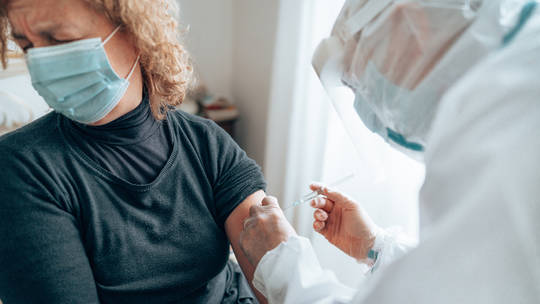
Vast majority of Covid vaccine ‘side effects’ are caused by people's expectations rather than by the vaccine, Harvard Medical School researchers say, after analyzing the reports of more than 45,000 trial participants.
Various “systemic” side effects, such as headaches, tiredness, and joint pain were reported in both halves of the focus group: among those who received various Covid vaccines, as well as those who unknowingly received placebo.
After analyzing the reports, scientists from the Boston-based Beth Israel Deaconess Medical Center came to the conclusion that the so-called “nocebo effect” – unpleasant sensations caused by anxiety or bad expectations – accounted for three quarters of all reported vaccine side effects.
The report, which was published in the JAMA Network Open journal, says that 35% of placebo recipients reported side effects after the first dose and 32% after the second one. Significantly more “adverse events” (AEs) were reported in the vaccine groups, but so called “nocebo responses” accounted for “76% of systemic AEs after the first Covid-19 vaccine dose and 52% after the second dose.”
The scientists note that, although the reasons for vaccination hesitancy are “diverse and complex,” concerns about potential side effects from the Covid-19 vaccines “seem to be a major factor” and “public vaccination programs should consider these high nocebo responses.”
One of the scientists involved in the research, Harvard Medical School professor Ted Kaptchuk, explained the science behind the “nocebo effect.” He pointed out that “nonspecific symptoms,” such as headache and fatigue, are listed in many information booklets as typical side effects of Covid vaccines.
“Evidence suggests that this sort of information may cause people to misattribute common daily background sensations as arising from the vaccine or cause anxiety and worry that make people hyper alert to bodily feelings about adverse events,” Kaptchuk said.
I'm sure that happens a lot, nevertheless, as a conspiracy theorist, I wonder who funded this research, as if I didn't know.

Prisoners claim they got incredibly high doses of Ivermectin as Covid treatment
Inmates say they suffered severe side effects and were subject to “medical experimentation”

Four Arkansas county jail inmates have taken legal action after claiming they were given “incredibly high doses” of horse deworming drug ivermectin as a Covid-19 treatment without their consent.
According to the complaint, filed by the American Civil Liberties Union (ACLU), the prisoners were initially told the drugs consisted of vitamins, antibiotics and steroids. They only became aware of the true composition of the “drug cocktail” in July 2021.
The inmates believe Washington County Detention Center staff “knowingly and intentionally” ignored the Food and Drug Administration’s (FDA) warnings. They said the ivermectin was given “without prior informed consent as to the nature, contents, or potential side effects.”
They accused Dr. Robert Karas, who was responsible for jail healthcare, of administering “incredibly high doses of the drug” that could be dangerous for humans.
According to the complaint, Karas, who for many years “enjoyed a mutually beneficial relationship” with local sheriff Tim Helder (who is also listed as a defendant in the case) had begun “both publicly and privately espousing the virtues of the use of the drug Ivermectin.”
Inmates said they suffered side effects “consistent with the overuse of Ivermectin,” such as vision issues, diarrhea, bloody stools, and stomach pains.
“To add insult to injury, Plaintiffs were subject to the payment of fees for medical examinations they sought after suffering side effects from the Ivermectin treatment,” reads the lawsuit.
The ACLU's Arkansas legal director, Gary Sullivan, said that “no one - including incarcerated individuals - should be deceived and subject to medical experimentation.”
The inmates accused Karas of “conducting research as to [ivermectin's] efficacy against the disease.”
Karas confirmed in September that 254 inmates have been treated for Covid with ivermectin, but denied that he misled them. He said medics were not initially required to discuss drugs with inmates, but that a “more robust informed consent form” was introduced later, AP reported.
Small doses of the controversial ivermectin are approved to treat some conditions in humans, but the FDA issued a warning last year against using the anti-parasite drug as a Covid treatment.
Of course, the FDA is run by Big Pharma, and they don't want competition. Also, if Ivermectin was approved as an anti-Covid-19 vaccine, all the Big Pharma vaxes would have had to go through complete trials rather than getting emergency approval while still in experimental stage.
It's unfortunate Karas was so reckless as to administer incredibly high doses. The trial might actually have done some good.

WHO says ‘no evidence’ for boosting children & teens
World Health Organization says Covid-19 boosters should be priority
for highest-risk populations instead

© AP / The Brattleboro Reformer / Kristopher Radder
There is currently no evidence that Covid-19 booster jabs should be administered to healthy children and adolescents, the WHO’s top scientists said. The organization is still trying to work the appropriate booster schedule.
“The aim is to protect the most vulnerable, to protect those at highest risk of severe disease and dying, those are our elderly population, immunocompromised with underlying conditions and also health care workers,” WHO Chief Scientist Dr. Soumya Swaminathan said at a news briefing on Tuesday, adding that “there’s no evidence right now” for administering them to otherwise healthy children and teens.
The WHO’s Strategic Advisory Group of Experts (SAGE) on Immunization will meet later this week to consider how governments should think about boosters, Swaminathan said.
Dr. Michael Ryan, WHO’s executive director for health emergencies, said the organization hasn’t figured out yet how many doses of the jab people may ultimately need.
“I think people do have a certain fear out there that this booster thing is going to be like every two or three months and everyone’s going to have to go and get a booster. And I don’t think we have the answer to that yet,” Ryan said.
SAGE may eventually redefine how many doses will make up the “primary series” of shots, Ryan added, explaining that most healthy people may need just two, but the elderly or immunocompromised could require three or four.
Last week, the WHO’s Technical Advisory Group on Covid-19 Vaccine Composition (TAG-Co-VAC) said that a vaccination strategy “based on repeated booster doses of the original vaccine composition is unlikely to be appropriate or sustainable,” urging member countries to prioritize primary vaccinations for high-risk groups over universal boosting.
TAG-Co-VAC experts also said that current vaccines focus on reducing severe disease and protecting healthcare systems, while there is an ongoing need for vaccines that prevent infection and transmission of the virus.
=========================================================================================


