"I am the Way, the Truth, and the Life"

Father God, thank you for the love of the truth you have given me. Please bless me with the wisdom, knowledge and discernment needed to always present the truth in an attitude of grace and love. Use this blog and Northwoods Ministries for your glory. Help us all to read and to study Your Word without preconceived notions, but rather, let scripture interpret scripture in the presence of the Holy Spirit. All praise to our Lord and Saviour Jesus Christ.

Please note: All my writings and comments appear in bold italics in this colour
Showing posts with label economic. Show all posts

Sunday, December 12, 2021

Bits and Bites from Around the World > A Hut on the Moon? China to Lead New Economic World Order; Man Climbs Tree to Avoid Covid Shot

..

‘Mystery hut’ spotted on dark side of Moon

6 Dec, 2021 13:15

©  CNSA / Our Space


A Chinese Yutu 2 rover has spotted an odd object on the far side of the Moon, and it’s been described in initial reports by media outlets as a “mystery hut.” Yutu 2 is now poised to take a closer look at it.

The strange cube-shaped object was first spotted by the Chinese lunar expedition in November, China’s science outreach channel Our Space reported. The rover detected the object on the horizon some 262 feet (80 meters) away to the north as it was traversing the Von Kármán crater in the southern hemisphere on the far side of the Moon.

The press office of the China National Space Administration (CNSA) published a photo of the object rising over the horizon against a background of dark skies. Few details can be ascertained from the photo, however, and the nature of the object remains unclear.

The Chinese have expressed a strong interest in investigating this “mystery hut,” and the rover is now expected to spend the next two or three lunar days – the equivalent of two or three months here on Earth – moving towards the object while avoiding the craters that pockmark the far side of the Earth’s satellite.

Yutu 2 made the first-ever landing on the far side of the Moon on January 3, 2019 and has been moving around the 115-mile-wide (186-km-wide) Von Kármán crater ever since. It is part of China’s fourth expedition to the Moon and the second that has involved a rover.

Will Yutu 2 find Obi won in the hut, or is it, perhaps, Putin's summer home?


Prominent US billionaire forecasts new economic world order

10 Dec, 2021 16:55

© Getty Images / jcrosemann


China is winning the economic competition against the United States, according to Ray Dalio, the founder of the world’s largest hedge-fund firm, Bridgewater Associates.

When asked by the BBC on Thursday whether China was beating the US, Dalio said: “Yes, it’s winning.”

“Their growth rate at a slow level is about twice the Western world’s growth rate at a fast level.”

The billionaire also predicted that the Chinese economy will overtake the US in size to become much more powerful.

“[China is] four times the size population-wise [than] the United States. So, if its per capita income was half the size, the [economy] as a whole would be twice the size.

“So yes, that’s the character of the environment where it’s [China is] winning and it has a lot more likelihood of being much larger, stronger in most ways.”

Dalio has been embroiled in controversy over recent comments about China. In an interview with CNBC, the businessman compared Beijing to a “strict parent” while talking about the country’s human rights record. He later said he was misunderstood and that he took China’s human rights record into account when investing there.

=========================================================================================


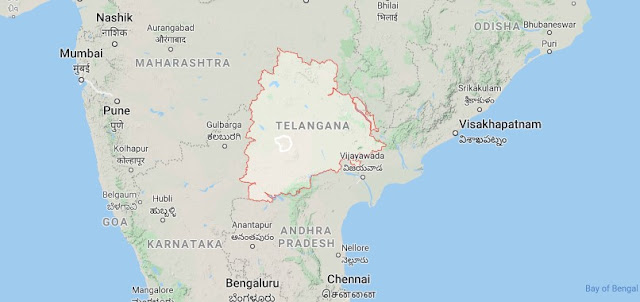
+COVID-19: Telangana man climbs on tree to avoid getting vaccinated


Published:  December 08, 2021 15:27
IANS


Hyderabad: With the health authorities going door to door to expedite COVID-19 vaccination and achieve 100 per cent target in Telangana by the end of December, incidents of vaccine hesitancy are coming to light.

In one such incident in Telangana's Sangareddy district on Tuesday, a man climbed on a tree to avoid vaccination. When the health workers reached the house of Ghousuddin at Rejinthal village in Nyalkal mandal of Sangareddy district, he refused to take the vaccine.

Though Ghousuddin's father Sardar Ali and other family members tried to persuade him to take the jab, the 33-year-old refused to budge. When the locals insisted, the man climbed on a tree. According to eye-witnesses, he sat on the tree for one hour and got down only after the health workers had left the place.

In another incident in Sangareddy town, a group of residents refused to take the vaccine and even tried to attack the health employees who were going door to door to administer the doses. Some people in the Nalsabgadda area raised objection to the visit by the team of health workers and refused to take the vaccine. They entered into an argument with the officials and asked if it was compulsory to take the vaccine.

This led to tension in the area. The health staff informed the police that a man tried to attack them. They also staged a protest demanding action against him. A police officer who rushed there said a case would be registered if the health employees lodge a written complaint. The police officer later succeeded in persuading the residents to take the vaccine.

The health workers are going door to door across the state to ensure 100 per cent vaccination. Since 51 per cent of the eligible people have not taken the second dose despite completing the gap time between two doses, the department is trying to administer the dose by going to their doorsteps.

According to the director of public health, out of 2.77 crore targeted population, 2.58 crore (93 per cent) have taken the first dose. Only 1.37 crore (49 per cent) have taken the second dose.

Of the 33 districts, the percentage of eligible people who have taken the second dose is 40 or less in 16 districts. Kumaram Bheem district has the lowest percentage (16) of people who have taken the second dose. Only 19 per cent have received the second dose in Vikarabad and Jogu Lamba Gadwal districts.


Monday, January 23, 2017

Why the Spy Trade is Such a Booming Industry

Profession is thousands of years old, but motivations behind it remain basically the same

By Brian Stewart, for CBC News

Russian President Vladimir Putin's alleged attempt to meddle in the U.S. election has raised new concerns about global espionage. But, as Brian Stewart explains, there's been a massive surge in spying for years. (Alexander Zemlianichenko/Associated Press)

The alleged Russian plot that targeted the U.S. presidential election has raised concerns we're headed for Cold War levels of spying, but there's actually plenty of evidence the world soared past that point years ago.

In a CBC News documentary that aired four years ago, intelligence experts described new global threats as almost a pandemic of espionage that seems to know no limits.   

It was clear revolutionary forms of spying had emerged, the most powerful of which was the kind of cyberattack skulduggery Russia allegedly used to try to destabilize the Democrats and help Republican Donald Trump win the presidency. 

Sure, Cold War espionage was baffling enough — dubbed "a wilderness of mirrors" by the British — but it was at least more focused on the big power struggle between the U.S. and Soviet Union and far more technologically limited than today's sleuthing free-for-all.

There are now an estimated 120 countries involved in espionage, each trying to infiltrate military, political and economic targets all over the world.

High-tech snooping dramatically increased espionage threats and the quantity of information governments collect. (Kirill Kudryavtsev/AFP/Getty Images)

And those are just the official spy operations. Non-state and corporate spies have become much more active, not to mention rogue cyber warriors who sell their wares as independents and major organized crime and terror groups.

I suggest there are other categories of cyber-spies. Powerful organizations such as might be operating under the UN banner, or for oligarchs like George Soros, the Koch brothers, etc., could well be entering the field of play. Remember, 2 years ago Lord Christopher Moncton overheard a British envoy to the UN Climate Change forum predict the fall of Conservative Prime Ministers from Australia and Canada. They were standing in the way of a global agreement on climate change that would cede powers to the UN to fine or punish countries for failing to meet targets in CO2 reduction. Both PMs were gone within a year. The climate change agreement was seen by Monkton as the first major step into a one-world government.

More threats, bigger budgets  

Globalization naturally helps the growth of espionage by making it easier for covert operators to move around more open societies. At the same time, high-tech internet snooping ensures it's often possible to steal sensitive information without even leaving a secure base. 

These growing threats naturally boost national spy agency budgets. The British MI6 foreign intelligence service is reportedly expanding by 40 per cent over four years, while U.S. spy operations already spend $70 billion a year.

More threats and more information to be analyzed has resulted in budgets hikes for spy agencies like the Central Intelligence Agency. (Reuters)

So the shadow world keeps expanding, but this brings us to the big question: why the global addiction to espionage and its many dark crafts? 

Spying is known as one of the world's oldest professions and the motives behind it have remained consistent over thousands of years: fear, avarice, insatiable curiosity and a desire to undercut real or imagined opponents.    

At the most basic level, spies seek to feed governments with as much information as possible on threats emanating from other powers, as well as intelligence about economic and scientific competitors, and sometimes even antagonistic political groups that might do them harm.

Information overload 

It's often said 90 per cent of all useful intelligence can be had from open public sources, but that secret 10 per cent that can only be obtained through covert means is still gargantuan.

Modern espionage produces information overload. And the fact that the goal is to collect, send and analyze this deluge of data for risks and opportunities as quickly as possible means intelligence operations are only getting bigger.  

And consider how competition works in spying. Governments tend to prefer analysis of secrets from several sources rather than just one, so you have the U.S. with 17 separate intelligence hubs and Russia with a half dozen.

See my next post: U.S., Russia - Long History of Election Interference.


The National Security Agency is one of 17 separate U.S. intelligence groups. (Jason Reed/Reuters)

Historical jitters have also contributed to the insatiable craving for more secrets that motivates leading espionage powers.  

It's no coincidence that the U.S., Russia, China, Israel and Iran, to name just a few, all suffered sneak attacks in war that left them convinced the best defence is an espionage offence and that they can never learn too many secrets.

The U.S., for example, has been exposed for spying on allies like Germany, while Russia has alarmed several governments including Poland, Ukraine, Germany, Sweden and Norway with a surge in espionage and covert interference.

Kremlin's goals

Moscow's methods of political sabotage allegedly include hacking political parties and state agencies, creating fake news stories to stir up xenophobic passion and providing money to far-right parties.

The goal seems to be to sow discord through the Western alliance and destabilize the EU while also trying to ensure an end to sanctions against Moscow.

Putin's goals include disrupting NATO and destabilizing the EU. (Mikhail Klimentyev/AP)

Mark Galeotti, a leading authority on Russian security, says even President Vladimir Putin's most aggressive espionage efforts are primarily motivated by defence.

"Every external operation is first and foremost a domestic one," he wrote in a study for the European Council on Foreign Relations. "This means carrying out operations to prevent 'foreign interference' as the Kremlin sees it, as well as dividing strategic rivals such as the EU."  

Whatever the mindset, the aggression comes at a time when international nerves are already on edge because of political turmoil in the EU, constant concern about terrorism, as well as a potentially unpredictable new era with Trump in charge of the U.S.

U.S. President Donald Trump says he'll make cyberwarfare a 'priority' in the fight against ISIS and other terrorist groups. (Carlos Barria/Reuters)

The fact it's so difficult to track and expose so many cyber threats from Russia and other sources only means we can expect even more of them.   

A new term, "hybrid warfare," is increasingly used in NATO to characterize clandestine and cyberattacks that could target governments, military sites, energy infrastructure like nuclear plants, stock markets and basically entire economies.

In a very rare public warning, MI6 boss Alex Younger recently said the difficulty in dealing with so many global phantoms "should be a concern to all who share democratic values."

"Data and the internet have turned our business on its head."

Canada not immune

No country seems immune to hacking and meddling — certainly not Canada. Top security figures including former CSIS director Richard Fadden have warned that other countries have likely already tried to influence our elections.

Canadian government computers have been hacked, including those at our premier scientific research body, the National Research Council, in 2014. The Harper government described the perpetrator as "a highly sophisticated Chinese state-sponsored actor."

Former CSIS director Richard Fadden says other countries have likely already tried to influence Canadian elections. (Sean Kilpatrick/Canadian Press)

Canada, like all advanced countries, is a target of economic espionage. That's where foreign countries, trade  competitors and cybercrime groups try to steal secrets from key sectors such as aerospace, biotechnology, chemicals and nuclear energy. 

Adding pure greed to the mix of state insecurities makes the global scourge of spying even more difficult to combat, especially when few countries have totally clean hands.

A great many international conferences and studies over years have struggled to find ways to control espionage, especially cyberattacks. Some even argue progress will come only if perpetrators, including the U.S., China and Russia, come to fear retaliation by equally damaging attacks. 

But escalating covert attacks to combat bad behaviour does have a chilling Cold War ring to it, and there's also the risk counterattacks might actually make this espionage pandemic even worse.  

Brian Stewart
Canada and abroad

One of this country's most experienced journalists and foreign correspondents, Brian Stewart is currently a Distinguished Senior Fellow at the Munk School for Global Affairs at the University of Toronto. He also sits on the advisory board of Human Rights Watch Canada. In almost four decades of reporting, he has covered many of the world's conflicts and reported from 10 war zones, from El Salvador to Beirut and Afghanistan.