"I am the Way, the Truth, and the Life"

Father God, thank you for the love of the truth you have given me. Please bless me with the wisdom, knowledge and discernment needed to always present the truth in an attitude of grace and love. Use this blog and Northwoods Ministries for your glory. Help us all to read and to study Your Word without preconceived notions, but rather, let scripture interpret scripture in the presence of the Holy Spirit. All praise to our Lord and Saviour Jesus Christ.

Please note: All my writings and comments appear in bold italics in this colour
Showing posts with label OPEC. Show all posts

Monday, May 4, 2026

Middle East Madness > Hezbollah's biggest tunnel found in Lebanon by IDF; Israel used the Iron Dome in UAE during the Iran war


IDF Discovers and Destroys Hezbollah’s Biggest Tunnel


These burrowing pioneers of Hezbollah, these old moles who dost work i’ th’earth so fast, over several years built a vast tunnel network under southern Lebanon that was in size and scope a virtual underground terrorist city, able to house thousands of terrorists, armed with weapons from Iran, and ready to emerge from those tunnels to ambush or invade. This tunnel network was recently discovered by the IDF near the city of Kantara; it had been built almost entirely under civilian structures in an attempt to make it harder to discover, but the IDF proved equal to the task of locating it, and having unearthed the entire network of tunnels, has now destroyed, or is in the process of destroying, all of them with hundreds of tons of explosives. More on the largest of these tunnels, two kilometers in length and ten kilometers in width, making it the largest one dug by Hezbollah so far, can be found here: 


IDF dismantles largest Hezbollah tunnel network in southern Lebanon

by Yonah Jeremy Bob, Jerusalem Post, April 28, 2026:

The IDF on Tuesday announced it has destroyed the largest Hezbollah tunnel city in all of southern Lebanon, built with significant aid from Iran.

According to the IDF, the network could have housed and provided weapons, communications, and other operational infrastructure for thousands of Radwan Forces elite terrorists in the area.

During its 2024 invasion of Lebanon, the IDF found three tunnel city networks, but this one, near Kantara, was by (far?) the largest.

Some 11 kilometers from the border, in southern Lebanon, Kantara sits roughly parallel to the midpoint between Israeli moshavim Margaliyot and Dovev in Upper Galilee.

The IDF informed that the tunnel was two kilometers long and 10 km. wide; photos show that it had spread out in several different directions under numerous other villages in the area….

What lessons can be drawn from the discovery of these tunnel networks built for Hezbollah with the Islamic Republic of Iran’s help, and of the largest of these tunnels? First, the immensity of the effort by Hezbollah to create a vast tunnel network, at places built at a depth of 25 meters underground, has now been revealed. The biggest tunnel is 2 kilometers long, 10 meters wide, and was big enough to house thousands of terrorists. No other tunnel dug by Hezbollah comes close. Second, the Iranian arms found strewn throughout the tunnel, and the evidence, from how the tunnel was constructed, that Iranians had built part of the tunnel, offered conclusive proof of the close connection between Iran and its proxy Hezbollah, a charge that Hezbollah, in presenting itself a strictly Lebanese group, part of the “resistance” to the Zionists, continues to deny. Third, in the colossal amount of time and effort and expense Hezbollah expended in building these tunnel networks so wide, and so long, and so deep underground, its members seem to me to be clinically insane. Minds that have drunk deep of Islam, I’m afraid, often end up that way.


Israel Deployed Iron Dome to Protect UAE During Iran War


The UAE has become the closest ally of Israel in the Arab world. It is one of four Arab countries to join the Abraham Accords. Israeli businessmen are doing deals in the Emirates, while Emirati businessmen are investing in Israel. The Moses Ben Maimon synagogue has been built in Abu Dhabi for Jewish and Israeli residents, visiting businessmen, and tourists. A Chabad House has opened in Dubai. The UAE and Israel have concluded both a reciprocal visa-free agreement, and a free trade agreement. The UAE has been buying large numbers of weapons from Israel. As of late 2025, the UAE was identified as the secret buyer in a record $2.3 billion defense contract with Israel’s Elbit Systems for advanced aircraft protection systems. This is the largest sale in Elbit Systems’ history. There are plans for the systems to be jointly manufactured in the UAE. Even before that sale, and just after the Abraham Accords had been signed in 2020, the UAE had bought Barak MX air defense systems from Israel Aerospace Industries. Both Elbit and IAI have opened offices in Abu Dhabi. In 2025, an Emirati state weapons contractor was reported to be investing in an Israeli defense supplier, reinforcing the ongoing military-technological cooperation between the UAE and the Jewish state.
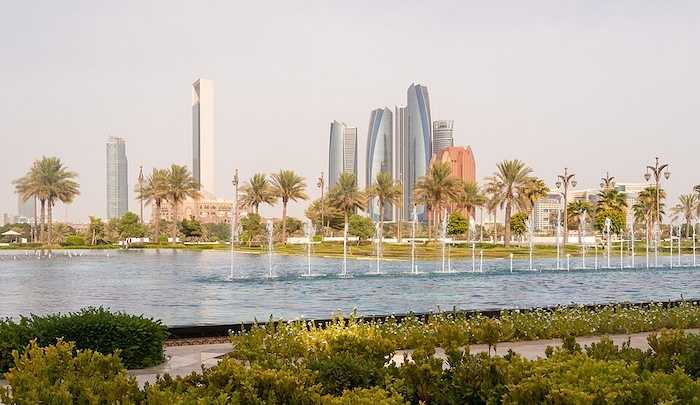
Downtown Abu Dhabi by Matti Blume, Creative Commons Attribution-Share Alike


And now we learn that during the Iran conflict, when Iran launched 550 ballistic missiles and 2,200 drones at the UAE, Israel’s military sent its Iron Dome missile defense system, along with dozens of Israeli soldiers to operate them, to help defend the Emirates. Israel also sent its laser-based Iron Beam missile defense system to the UAE, but apparently in the end, the Emiratis did not use it. More on this remarkable event — Israeli soldiers and weapons defending an Arab state — that shows just how close the relations between Israel and the UAE have become, can be found here: 


Israel sent Iron Dome system, dozens of IDF soldiers to UAE during Iran war

by Yonah Jeremy Bob and Goldie Katz, Jerusalem Post, April 26, 2026:

Israel sent an Iron Dome system and dozens of IDF troops to the United Arab Emirates during Operation Roaring Lion, its recent war with Iran, according to foreign sources.

Multiple Israeli officials have stated that the decision to send the Iron Dome battery and interceptors was made after Prime Minister Benjamin Netanyahu held a phone call with UAE President Mohammed bin Zayed (MBZ).

Dozens of Iranian missiles fired towards the Gulf state were intercepted by the system, according to foreign sources.

This is the first instance of the Iron Dome being utilized operationally outside of the United States or Israel, though Singapore has previously reportedly purchased and received Iron Dome, and Romania is expected to do so as well.

Military, security, and intelligence cooperation between Israel and the UAE has been on the rise since the countries signed the Abraham Accords in September 2020, but reached new heights during the recent Iran war….

In contrast, while Israel and Saudi Arabia both cooperated under a regional umbrella through the US as a conduit on regional air defense, there have been no reports of Israel providing such a system to Riyadh.

The UAE and Saudi Arabia are now supporting different sides in the Sudan, in Yemen, in the Horn of Africa. The UAE’s anger at the dominant role Saudi Arabia plays in OPEC, in setting production quotes for oil, exacerbates their geopolitical rivalry. The UAE finally decided it was being asked to limit its output by too much, and in a stunning development, it has withdrawn from OPEC altogether, and plans to produce as much oil as it can. Now that the UAE has done this, other oil producers, chafing at their own production limits, will now declare their intention — once the Strait of Hormuz is reopened — to produce as much oil as they can. The Saudis have lost control of the once-powerful oligopoly.

The UAE saw how well the Iron Dome performed in intercepting Iranian missiles and drones, and how quickly the Israelis came to their rescue, while none of their fellow Gulf Arabs offered to share any of their anti-missile weaponry. Israel’s intervention, and the spectacle of IDF soldiers firing Israeli Iron Dome missiles on UAE soil to protect the Emiratis, has convinced the UAE that in signing the Abraham Accords, and moving ever closer to Israel in security matters, with a massive purchase — $2.3 billion — of weapons from Elbit Systems, that it made the right choice of ally.

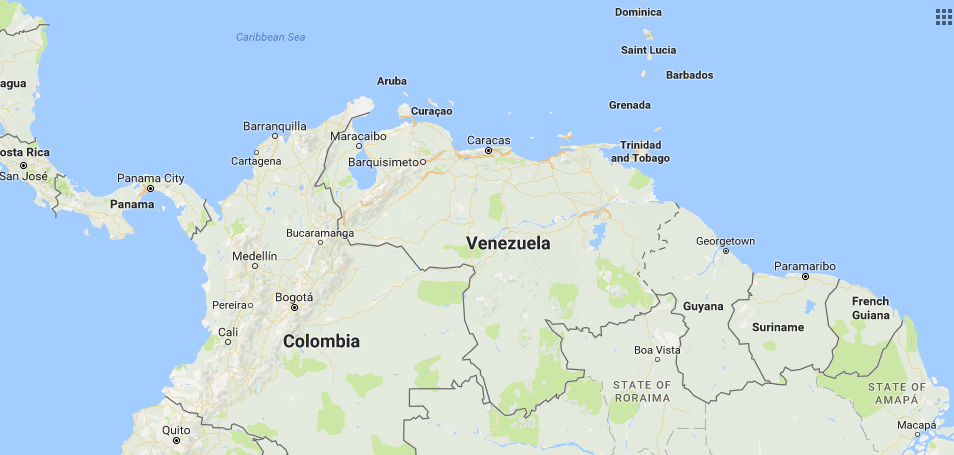
As for the Saudis, they will no longer be the de facto ruler of OPEC; instead, they will be trying, after the UAE’s announced intention to pump as much oil as possible, to keep other OPEC members in line, but for those countries to restrict their own production makes no economic sense. Right now, the UAE’s quota, which OPEC set in 2024, was 3.22 mbd; after having invested $150 billion in new wells, the UAE can now produce 5 mbd, and intends to do just that. At the same time, the world’s largest oil producer, the U.S., with proven reserves constantly growing, is producing at full capacity, of more than 14 million barrels per day. Finally, Venezuela, which has the world’s largest oil reserves but under the regimes of Chavez and Maduro, with their mismanagement, and the crippling American sanctions, saw its production fall to 800,000 to 900,000 barrels a day, when just a few years ago, it produced 3.5 mbd. After the removal of Maduro, American investment in Venezuela’s oil industry will now return, as President Trump has said, and Venezuela will again be producing more than four times what it produces at present.

In addition, there have been significant new oil discoveries in high-growth production areas. These are currently concentrated in South America (Guyana, Brazil, Argentina), Africa (Namibia), and in new, deep shale formations in the United States. The Permian basin in Texas now produces 1.3 mbd. The Bakken shale oil field in North Dakota and Montana, one of the newest shale oil fields, now produces 1 mbd. Major recent finds, which advanced extraction technology has driven, include immense, untapped, and developing fields. Oil deposits that were once deemed too expensive to exploit can now, with the latest extraction methods, be exploited at a suitable profit. And a new entrant into the field is China, that has discovered in just the last four years 225 large and medium-sized oil and gas fields. The world is awash
in oil, and Saudi Arabia has now lost its power to impose production cuts on the other members of OPEC. The UAE has been the first OPEC member to defy the Saudis by resigning from the group. This is likely to lead others to go and do likewise: they will produce as much oil as they can, and not allow OPEC quotas that the Saudis dictate to stop them.

Similarly, the UAE’s public embrace of a security arrangement with Israel, that recently proved so helpful for the country’s defense, saving many Emirati lives, may make several other Arab states more desirous of a similar arrangement with Israel. Morocco, Bahrain, and Oman are three of the countries most likely to make overtures.


Friday, March 9, 2018

IEA Predicts Nightmare Scenario for OPEC

© Mike Stone / Reuters

The US will supply much of the world’s additional oil for the next few years, according to a new report from the International Energy Agency (IEA).

Over the next three years, the US will cover 80 percent of the world’s demand growth, the IEA says in its newly-released Oil 2018 annual report. Canada, Brazil and Norway will cover the remainder, leaving no room for more OPEC supply.

The irony is that the substantial gains in output from shale will only be possible because of the OPEC cuts, which has tightened the market and boosted prices. This fact is not lost on OPEC producers. "If you are a shale oil producer, who brought you back? It was OPEC," the UAE’s oil minister Suhail Al Mazrouei, said at a recent industry conference, according to Bloomberg. "Without OPEC there’d be chaos in the market."

Indeed, the IEA’s new report paints a pretty gloomy picture for OPEC members, who are hoping to phase out their supply cuts after this year. With non-OPEC supply rising quickly, particularly in the US, OPEC may struggle to figure out a way to increase output without pushing down prices, according to the IEA’s analysis.

That could put pressure on the cartel to keep the production cuts in place for longer than they had wanted, although it seems hard to imagine they maintain the production ceilings for another three or four years. Doing so would mean handicapping themselves and ceding even more market share to US shale and other non-OPEC producers. Still, it is unclear how this plays out – returning to full production, even if phased in gradually, presents its own problems, if the IEA’s forecast is accurate.

The IEA sees demand for OPEC oil actually declining in absolute terms over the next few years as it is edged out of the market by non-OPEC supply. OPEC production only grows by 750,000 bpd through 2023 under the energy agency’s forecast, although that also takes into account a 700,000-bpd decline in Venezuela.

The bottom line is that the IEA sees oil demand rising by 6.9 million barrels per day (mb/d) by 2023, with more than half of those increases coming from China and India. Meanwhile, supply grows by about 6.4 mb/d, with a whopping 3.7 mb/d coming from the US, nearly 60 percent of the total global supply increase.

By sector, petrochemicals starts to take on a larger role in driving oil demand, especially as the transportation sector starts to see a greater adoption of electric vehicles. But it isn’t just EVs – abundant oil and cheap natural gas are fueling a surge in petrochemical investments.

Nevertheless, while the IEA sees an explosion of shale output for the next five years or so, beyond that the story is different. The massive cuts to upstream investment since the collapse of oil prices in 2014 will begin to cause supply problems at the beginning of the next decade. Spending levels are only now starting to pick up, but are still at a fraction of pre-2014 levels, which means that there will be a dearth of new, large-scale conventional oil projects in several years’ time. “This is potentially storing up trouble for the future,” the IEA wrote in its report.

Moreover, natural depletion from existing fields essentially wipes out 3 mb/d of supply every year. That, combined with demand growth, means that the oil industry needs to replace “one North Sea each year,” the IEA says. But the industry is no longer spending enough to cover that gap. In 2017, new oil discoveries fell to another record low, with less than 4 billion barrels of oil equivalent found. The lack of new oil in the works is sowing the seeds of supply problems in the 2020s.

“The United States is set to put its stamp on global oil markets for the next five years,” Fatih Birol, the IEA’s Executive Director, said in a statement. “But as we’ve highlighted repeatedly, the weak global investment picture remains a source of concern. More investments will be needed to make up for declining oil fields – the world needs to replace 3 mb/d of declines each year, the equivalent of the North Sea – while also meeting robust demand growth.”

The IEA report will provide a fascinating backdrop to the start of the annual CERAWeek conference in Houston, where industry titans and oil ministers will gather this week. No doubt the aggressive forecast for US shale will provide a lot of fodder for conversation for both shale boosters and anxious OPEC representatives.

Wednesday, April 19, 2017

Venezuelan Protests Against Government Leave Two Students Dead

Meanwhile, the economy is collapsing spectacularly as the government entrenches itself. People are hungry and getting more desperate by the day. Maduro needs to step down and call fair and open elections. What he is doing now is just outright evil.

By Eyanir Chinea and Anggy Polanco | CARACAS/SAN CRISTOBAL, VENEZUELA

Two Venezuelan students died on Wednesday after being shot during protests against unpopular leftist President Nicolas Maduro, increasing turmoil in the volatile nation amid a crippling economic crisis.

Demonstrators clash with riot police during the so-called 'mother of all marches' against Venezuela's President Nicolas Maduro in Caracas, Venezuela April 19, 2017. REUTERS/Carlos Garcia Rawlins

Opposition supporters protested in Caracas and other cities in what they called "the mother of all marches," denouncing Maduro for eroding democracy and plunging the oil-rich economy into chaos.

Crowds swelled to hundreds of thousands, including Maduro supporters who held a counter-demonstration in the capital at the urging of the president, and clashes were reported across the country during the most sustained protests since 2014.

Maduro says that beneath a peaceful facade, the protests are little more than opposition efforts to foment a coup to end socialism in Venezuela. The opposition says he has morphed into a dictator and accuses his government of using armed civilians to spread violence and fear.

The dueling marches drew parallels to the clashes between pro and anti-government protesters in 2002 that triggered a brief coup against late President Hugo Chavez.

Carlos Moreno, 18, a student, was leaving his home to play soccer in Caracas when armed government supporters approached a nearby opposition gathering and fired shots, according to witnesses. He was shot in the head, they said, and three security officials said he later died in a clinic after undergoing surgery.

Later on Wednesday in the opposition hotbed of San Cristobal near the Colombia border, university student Paola Ramirez died after being shot by men pursuing her and her boyfriend, according to relatives and witnesses.

"We were on a motorbike and they were following us, shooting," her boyfriend told Reuters. "I left her on a block where she was going to find her sister and I went to hide the bike. I heard shots and when I arrived she was on the ground. I tried to protect her as much as I could," he added, sobbing in front of her body.

The public prosecutor's office said it was investigating both cases.

The opposition attributed both deaths to groups known as "colectivos," armed government supporters who are frequently accused of involvement in confrontations during protests.

There are few clear ways of determining who belongs to colectivos, who call themselves community groups but the opposition accuses of being violent paramilitary wings of the ruling Socialist Party.

The deaths mean seven people have now been killed during protests in Venezuela this month. The opposition blames the deaths on security forces and alleged paramilitary groups. Over 270 people were arrested during protests on Wednesday, rights group Penal Forum said.

"MADURO OUT!"

Waving the country's red, yellow and blue flags and shouting "No more dictatorship" and "Maduro out," demonstrators clogged a stretch of the main highway in Caracas. Troops fired tear gas in Caracas neighborhoods, San Cristobal, the depressed industrial city of Puerto Ordaz, and the arid northern city of Punto Fijo.

"We have to protest because this country is dying of hunger," said Alexis Mendoza, a 53-year-old administrator marching in the Caracas neighborhood of El Paraiso. "There are a lot of people in the opposition and they are full of courage."

The march followed a fortnight of violent protests triggered by a Supreme Court decision in March to assume the powers of the opposition-led Congress - which it quickly reversed under international pressure.

The court's move nonetheless fueled long-simmering anger over the ruling Socialist Party's handling of the economy. The OPEC country suffers from Soviet-style shortages of food and medicines and triple-digit inflation.

The opposition is demanding early elections, the freeing of jailed politicians, humanitarian aid, and respect for the autonomy of the opposition-led legislature.

The marchers gathered at more than two dozen points around Caracas, although some were stalled by authorities closing around 20 subway stops. Protesters had hoped to converge on the office of the state ombudsman, a guarantor of human rights, but as in previous attempts they were blocked by the National Guard. The protests trailed off with youths throwing rocks squaring off against security forces spraying tear gas.

Maduro has charged that the opposition is trying to relive the 2002 coup against Chavez, his predecessor and mentor, by blocking roads with burning trash and vandalizing public property.

On Wednesday afternoon he addressed a cheering red-shirted crowd in Caracas to declare that a "corrupt and interventionist right-wing" had been defeated.

"Today the people stood by Maduro!" the president said, blasting his rivals as "anti-Christs." "We've triumphed again! Here we are, governing, governing, governing with the people!" he added, before breaking into song.

Analysts say there is less likelihood of a coup against Maduro because Chavez launched a broad purge of the armed forces following his brief ouster.

Nevertheless, there is a limit. 

Some unhappy Venezuelans also steer clear of protests, fearful of violence, cynical that marches can bring about change, or too busy looking for food amid the recession.

Venezuela benefited for years from oil-fueled consumption and many poor citizens rose into the middle class. But the 2014 collapse in oil prices left the government unable to maintain a complex system of subsidies and price controls. Snaking grocery lines are now a common sight and people routinely say they skip meals and cannot find basic medication.

Further spurring outrage was a decision by the national comptroller's office earlier this month to disqualify opposition leader Henrique Capriles from holding office for 15 years, dashing his hopes for the presidency.

The elections council, which is sympathetic to the government, has delayed votes for state governors that were supposed to take place last year.

Demonstrators also gathered on Wednesday in the eastern city of Puerto Ordaz, home to Venezuela's struggling state-run mining companies, and the oil city of Maracaibo.

"I've just graduated ... and what I've got in the bank isn't enough for a bottle of cooking oil," said Gregorio Mendoza, a 23-year-old engineer in Puerto Ordaz. "We're poorer every day."


Poll: Venezuelans say they 'suffer' more than 'thrive'
By Andrew V. Pestano 

A protester wearing a gas mask is seen during clashes with the Venezuelan National Guard in Caracas on April 10. A Gallup poll shows that 13 percent of Venezuelans rated their lives positively, as opposed to 28 percent who said they were "suffering." The remaining 59 percent of Venezuelans are "struggling." Photo by Miguel Gutierrez/EPA

UPI -- A Gallup poll shows that 13 percent of Venezuelans rated their lives positively in 2016, a 44 percent decrease from 2012 -- a year prior to Nicolas Maduro assuming the presidency.

Thirteen percent of Venezuelans said they rated their lives positively enough to be considered "thriving," as opposed to 28 percent who said they were "suffering." The remaining 59 percent of Venezuelans say they are "struggling."

It is the first time since Gallup began conducting the poll in 2006 that more Venezuelans considered themselves to be "suffering" than "thriving."

"The new low in the percentage of Venezuelans whose ratings are thriving comes amid dramatic political and economic upheaval that continues to unfold in Latin America's fifth-largest country," Gallup said in a statement. "Anti-government protests broke out in early April after the increasingly unpopular president and the Supreme Court attempted to strip the nation's congress of its power."

In the same poll, 91 percent of Venezuelans said the country's economy is "getting worse," compared to 5 percent who said the economy is "getting better." In 2012, 22 percent of Venezuelans said the economy was "getting worse," compared to 41 percent who said it was getting better.

The South American country is facing a political, security and economic crisis in which basic goods such as food and medicine are in short supply, unavailable or unaffordable. Venezuela has one of the highest homicide rates in the world.

In the poll, 80 percent of Venezuelans also said there have been times in the past year when they did not have enough money to buy food for themselves or their family, which is on par with Central African Republic's 83 percent and Malawi's 82 percent.

The Gallup poll's results are based on face-to-face interviews conducted from July 7 until Sept. 8 with 1,000 Venezuelans aged 15 and older. The poll has a 4.1 percent margin of error.