"I am the Way, the Truth, and the Life"

Father God, thank you for the love of the truth you have given me. Please bless me with the wisdom, knowledge and discernment needed to always present the truth in an attitude of grace and love. Use this blog and Northwoods Ministries for your glory. Help us all to read and to study Your Word without preconceived notions, but rather, let scripture interpret scripture in the presence of the Holy Spirit. All praise to our Lord and Saviour Jesus Christ.

Please note: All my writings and comments appear in bold italics in this colour
Showing posts with label Virginia. Show all posts

Friday, October 23, 2026

Corruption is Everywhere > Would you believe the Virginia Senate


Powerful Democratic Virginia state Sen. Lucas is accused of leading a marijuana criminal conspiracy

SARAH RANKIN and ALANNA DURKIN RICHER
Updated


NORFOLK, Va. (AP) — Virginia state Sen. L. Louise Lucas, one of the state's most powerful Democrats, was charged Thursday with leading what authorities alleged was a wide-ranging criminal enterprise that acquired and distributed large quantities of marijuana and laundered the proceeds.

Lucas, who has been in elected office for decades, used her political power to insulate the operation from scrutiny, according to an indictment charging her and six other defendants, including several of her relatives. She "put her own financial interests before the people she was elected to serve," said U.S. Attorney General Todd Blanche, who spoke at a news conference with FBI Director Kash Patel.

Lucas surrendered, the Justice Department said. She made a brief appearance in federal court in Norfolk on Thursday afternoon, where she was released on her own recognizance, according to court records. She left the court without addressing journalists who shouted questions her way and went straight into a waiting vehicle.

The charges, including drug trafficking and money laundering, came after the FBI searched Lucas' hometown office and a cannabis shop in which she has a stake in May. At the time of the search, Lucas — who has been a vocal critic of Republican President Donald Trump's administration — characterized it as an attempt to intimidate her.

Lucas says she won't be bullied by the federal government

A statement attributed to Lucas posted on her social media account did not directly address the substance of the charges but said Thursday's actions amounted to the federal government wielding its "full weight" against a great-grandmother.

"I will not be intimidated. I will not be bullied. And I will not back down," Lucas said in the statement. Her attorney at the hearing declined comment outside.

The brash 82-year-old lawmaker has spent decades ascending the ranks of Virginia politics and has served since 1992 in the state Senate, where she's the president pro tempore, overseeing the chamber in the lieutenant governor's absence. More significantly, she leads the powerful Senate finance committee, through which all legislation with any budget impact must flow. She's used the position to kill legislation she opposes.

Justice Department denies politics played a role

The indictment comes as Trump's Justice Department has faced intense scrutiny over investigations and prosecutions against foes of the president that critics have called politically motivated.

Blanche rejected any suggestion politics played a role in Lucas' case, noting the investigation began well before the second Trump administration started in January 2025.

"We don't do political paybacks," Blanche told reporters.

A person familiar with the May search told The Associated Press at the time that the probe was opened during Democratic President Joe Biden's administration. The person spoke on condition of anonymity to discuss a continuing criminal investigation.

FBI alleges a 'criminal marijuana enterprise'

Patel said in a statement that "Lucas and a close-knit group of family members and associates orchestrated a multi-year scheme to enrich their own criminal marijuana enterprise, 'the Lucas Enterprise' — using Lucas' position as Chairwoman of the Senate Finance and Appropriations Committee to insulate the enterprise from criminal scrutiny and influencing legislation to financially benefit themselves."

The indictment describes Lucas as the "leader of the enterprise" who "approved and directed criminal activities," including arranging for the acquisition and distribution of marijuana and supervising the laundering of the proceeds.

The indictment alleges Lucas worked this year with another of the defendants to use her political position to obtain a recreational marijuana license for him, with the understanding that the proceeds from sales under the license would be shared with her to support the "enterprise."

Since 2021, marijuana has been legal to possess in Virginia, and many shops across the state have sold cannabis-derived products. But full recreational sales are not yet underway; legislation enacted earlier this year will allow them beginning in July 2027.

Law enforcement made multiple controlled purchases of marijuana from Lucas' shop, which purported to sell hemp products, in 2024 and 2025, the indictment said.

In addition to drug and money laundering charges, Lucas faces charges of racketeering conspiracy, conspiracy to commit honest services fraud and maintaining a drug-involved premises. An arraignment is scheduled for next month.

Among the other defendants who face a mix of those and other charges are two daughters, Lisa Lucas Burke and Theresa Lucas-Lamb, and a grandson, Ryan Eichelberger. All three also made brief court appearances and were released on their recognizance, according to court records.

Attorneys for Lucas-Lamb and Eichelberger declined comment; Andrew Sacks, who was listed in court records as an attorney for Burke, didn't respond to requests for comment. Attorneys for two other defendants who are not family members declined comment; a third who was also released Thursday had no attorney listed in court records.

Virginia officials react

A forceful advocate of legalizing marijuana, Lucas partnered in opening the shop, The Cannabis Outlet, in 2021. She has publicly spoken about her ownership stake as recently as June, though her most recent financial disclosure forms do not list the business by name.

At the time of the search — when marijuana was recovered at The Cannabis Outlet, according to the indictment — many Democrats spoke up to defend Lucas.

On Thursday, Scott Surovell, the Democratic leader of the state Senate, said in a statement that the indictment contained "serious allegations" but emphasized that "Senator Lucas has the right to defend herself, and she has my full support as she does so." Attorney General Jay Jones, a Democrat who is close with Lucas, said the allegations against her must be tested in a "full and fair" legal process.

House Speaker Don Scott, Lt. Gov. Ghazala Hashmi, and Gov. Abigail Spanberger, all Democrats, echoed those sentiments, with Spanberger adding that the timing of the indictment so close to the midterm election would "further erode" Americans' trust in the Justice Department. Lucas herself is not on the ballot this year.

Ryan McDougle, the Senate Republican leader, said he would not comment while the court proceedings play out.

The senator draws comparisons to Trump

Lucas, who represents a district that includes her hometown of coastal Portsmouth, operates with a sometimes-profane, unapologetic style that's drawn comparisons to Trump.

She amassed a six-figure following on X and national attention, using the social media platform to advocate forcefully for her priorities and to bash her critics, including former GOP Gov. Glenn Youngkin. She's also occasionally blasted members of her own party, including Spanberger, with whom she's had disagreements.

Earlier this year, Lucas helped lead Democrats' ultimately unsuccessful plan to gerrymander the blue-leaning state's congressional districts into a map intended to elect 10 Democrats and only one Republican. Along the way, she posted quips about four GOP members the intended map sought to oust, joking that they soon would be working at McDonald's. She and other Democrats defended the maps as a reasonable response to Trump-backed efforts to boost the GOP's midterm advantage in other states.

Lucas has been in politics for decades

Lucas has notched several historic firsts in her career. According to a biography from the state library, in 1971 she became the Norfolk Naval Shipyard's first female shipfitter, a physically demanding job that involves working on metal assemblies for vessels.

She launched her political career in 1984, when, the biography said, she became the first Black woman elected to the Portsmouth city council.

After Democrats flipped control of the Senate in 2019, her peers elected her to serve as president pro tempore. And in 2024, she was tapped to lead the chamber's budget committee.

___

Rankin reported from Richmond. Associated Press journalists Eric Tucker in Washington and Steve Helber in Norfolk contributed to this report.


Thursday, October 9, 2025

Far Left Madness > Virginia AG candidate wants GOP leader and his family shot


Apparently, sanity and a moral compass are not prerequisites to becoming AG in Virginia.


Virginia Dem AG Candidate Wants GOP Leader and His Children Shot — and It Gets Worse From There


New in PJ Media:

Jay Jones is running for attorney general in Virginia, and he wants you to think that he is the sober, responsible candidate who is standing against those crazy right-wingers. In a pinned tweet on his X account, he calls his opponent, Jason Miyares, an “anti-abortion extremist,” but Jay Jones is a man of action; he is impatient with mere words. In a series of text messages from 2022 that have just surfaced, he fantasizes about the murder of former Virginia House Speaker Todd Gilbert, as well as his wife and children — and like a true leftist, explains chillingly that such murders are the only way to bring about real political change.

As if all that weren’t enough, Jones is now refusing to drop out of the attorney general’s race, and is playing the victim. This is leftist politics, 2025.

National Review revealed the texts Friday, and they’re a blood-curdling look inside the garbage-filled soul of a twenty-first century leftist. Writing to Republican House Delegate Carrie Coyner, Jones wrote about Republican State House leaders: “If those guys die before me/I will go to their funerals to piss on their graves/Send them out awash in something.” To that, Coyner offered a gentle remonstrance, consisting simply of her hate-filled colleague’s name: “Jay Jones.”

Jones was not chastened, and started to get carried away with his fantasy, lumping in the mild-mannered Virginia politician he despised with history’s most notorious mass murderers (capitalization as in the original): “Three people, two bullets/Gilbert, hitler, and pol pot/Gilbert gets two bullets to the head/Spoiler: put Gilbert in the crew with the two worst people you know and he receives both bullets every time.”

To that, Coyner replied: “Jay/Please stop,” and he laughed off his murderous imaginings: “Lol/Ok, ok.” But then Coyner responded with a text that suggested that Jones had said this sort of thing to her before: “It really bothers me when you talk about hurting people or wishing death on them.”

And apparently Jones did indeed indulge his fantasies on other occasions. In a phone conversation with Coyner, “he suggested he wished Gilbert’s wife could watch her own child die in her arms so that Gilbert might reconsider his political views, prompting Coyner to hang up the phone in disgust.” When he then insisted that he was “simply asking questions,” Coyner admonished him in a text: “You were talking about hopping [sic] jennifer [sic] Gilbert’s children would die.”

Jones was unapologetic, and matter-of-factly revealed the bloodlust at the heart of leftism: “Yes, I’ve told you this before. Only when people feel pain personally do they move on policy.” He elaborated: “I mean do I think Todd and Jennifer are evil? And that they’re breeding little fascists? Yes.”

There is more. Read the rest here.

Brainwashed Boomers are ready to kill - Rachel Marsden

============================================================================================

Thursday, October 27, 2016

The True Meaning of Separation of Church and State

Absolutely brilliant article on historical democracy in America

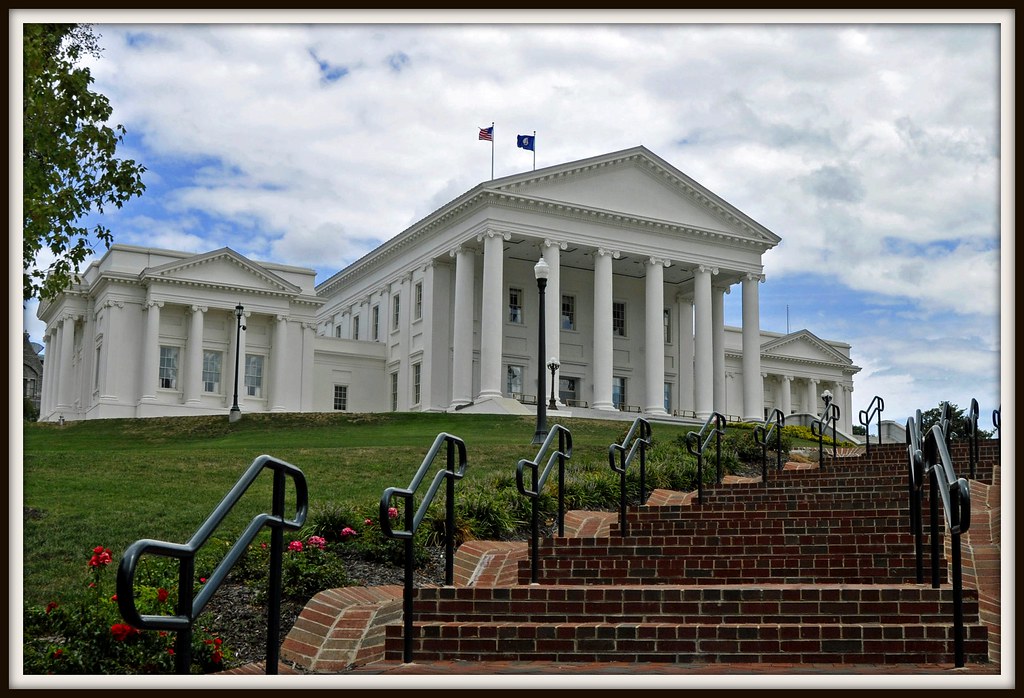
Image result for virginia state house
Virginia State House

Bill Flax ,   CONTRIBUTOR    Forbes
I explore the intersection of economics and culture.  
Opinions expressed by Forbes Contributors are their own.

Our nation was predicated on unalienable rights with governance through family, church and community, each rightfully sovereign within its sphere. Human dignity, legal equality and personal freedom reflect biblical values imparted on Western Civilization, which retains these values in secular form while expunging their Author from public discourse.

Americans are frequently reminded of what the revisionists deem our greatest achievement: “Separation of Church and State.” Crosses are ripped down in parks. Prayer has been banished from schools and the ACLU rampages to remove “under God” from the Pledge of Allegiance. Moreover, “Separation of Church and State” is nowhere found in the Constitution or any other founding legislation. Our forefathers would never countenance the restrictions on religion exacted today.

The phrase “separation of church and state” was initially coined by Baptists striving for religious toleration in Virginia, whose official state religion was then Anglican (Episcopalian). Baptists thought government limitations against religion illegitimate. James Madison and Thomas Jefferson championed their cause.

James Madison
Thomas Jefferson
The preamble in Act Establishing Religious Freedom in Virginia (1786), affirms that “the Author of our Religion gave us our ‘free will.’” And that He “chose not to propagate it by coercions.” This legislation certainly did not diminish religious influence on government for it also provided stiff penalties for conducting business on the Sabbath.

Nor did the Constitution inhibit public displays of faith. At ratification, a majority of the thirteen several and sovereign states maintained official religions. The early Republic welcomed public worship. Church services were held in the U.S. Capitol and Treasury buildings every Sunday. The imagery in many federal buildings remains unmistakably biblical.

The day after the First Amendment’s passage, Congress proclaimed a national day of prayer and thanksgiving. The inaugural Congress was largely comprised by those who drafted the Constitution. It reflects incredible arrogance to reconfigure the Bill of Rights into prohibiting religious displays on public grounds. Hanging the Ten Commandments on the wall of a county courthouse no more mandates religion than judges displaying the banner of their favorite sports team somehow equates to Congress establishing that team as preeminent.

Our forefathers never sought to evict the church from society. They recognized that the several states did not share uniform values. We lived and worshipped differently. The framers were a diverse bunch with wildly divergent opinions on many issues, but eliminating the very foundations of America’s heritage would have horrified them. On few issues was there more unanimity.

Where the French Revolution and its official policy of “De-Christianization” quickly devolved into bloodshed and oppression, here freedom flourished. Our independence was seen as the culmination of a march toward liberty, not a rejection of America’s historical cultural moorings. Our forbears embraced tradition and left local autonomy largely intact.

Schools, courts and the public square were often overtly Christian and had been since their colonial beginnings. Few Americans would have tolerated a coercive central government infringing on their rights to post religious symbols on local schools, courts or anywhere else.

Americans built society from the ground up. Many had fled oppression. The colonies instituted local self-government indigenously to confirm the rights resident in their persons and property. Few would have willingly been dispossessed by Washington of the very freedoms which they had just secured from London.

Alexis de Tocqueville
Here men could and did rise as their efforts merited. Commoners were unshackled from feudal paralysis and freed to find God individually. Both the economy and church thrived. Alexis de Tocqueville observed that Americans intertwined individual liberty with vibrant faith. “It is impossible to make them conceive the one without the other.”

Even non-Christian founders thought religion essential. None would have wished to upend the very basis for education, law or culture. The Northwest Ordinance of 1787 states: “Religion, morality, and knowledge, being necessary to good government and the happiness of mankind, schools and the means of education shall forever be encouraged.”

Americans understood freedom without morality quickly devolves into debauchery. Whether from sincere faith, or, prudence instilling an honest, law-abiding, responsible and hardworking populace, all esteemed biblical morality as the bedrock of self government. George Washington believed, “Religion and morality are indispensable supports” for “it is impossible to rightly govern the world without God and the Bible.”

The phrase “separation between church and state” was reintroduced by former Klansman Hugo Black, historically one of our most liberal Supreme Court judges. In the 1947 Everson v. Board of Education, Justice Black invoked Thomas Jefferson stating, “The First Amendment has erected ‘a wall of separation between church and state.’ . . . that wall must be kept high and impregnable.”

Thomas Jefferson thought differently. The Danbury Baptists wrote to him congratulating his election and objecting to the First Amendment. They thought it implied government dispensed what was not government’s to give. Jefferson agreed.

His reply clearly applied “Separation of Church and State” to the establishment and not to the free exercise of religion. As he expressed, what communities did and how they worshipped were not federal affairs. Jefferson later said the central government was “interdicted from intermeddling with religious institutions.” Such were state matters.

Freedom of religion was partly moral – protecting our most cherished liberty – and partly pragmatic. Religious animosity tears society asunder, particularly when church is affixed to government. With freedom of conscience assured, conflict becomes less likely. The First Amendment was an insightful compromise between church and state, federal and local authorities. The framers desired to avoid the controversies which engulfed Europe.

As James Madison warned in Federalist 10, “The latent causes of faction are thus sown in the nature of man; . . . A zeal for different opinions concerning religion, concerning government, and many other points, . . . ambitiously contending for pre-eminence and power . . . divided mankind into parties, inflamed them with mutual animosity, and rendered them much more disposed to vex and oppress each other than to cooperate for their common good.”

He could have written that yesterday.

Thus the Constitution decreed that Washington had no occasion or authority to interject itself into matters as obviously local as doctrines of faith. Congress was not empowered to establish a church because the framers feared that concentrated power, whether favored religions, standing armies, banking monopolies, or an overarching federal government, invited tyranny.

Church and state were distinct in that the Federal Government could not elevate one denomination over others. Nor could government and its flawed inhabitants usurp divine authority by harnessing politics to the church. Faith is no civil contract, but a personal matter not to be profaned by politics.

State controlled churches frequently exploited this latent power for evil. The Spanish Inquisition didn’t originate in the Vatican, but the Castilian court. It was not of the church, but the king. By Philip II, Spain had the makings of the first police state infused with the ill-gotten moral authority of a tyrannical clergy.

Much of our Bill of Rights was meant to prevent dictatorships such as Cromwell’s, which married church and state in such manner as to mar many of the freedoms our forefathers sought to enshrine.

The framers witnessed the incessant wars of the mother continent and understood official churches and centralized power fomented abuses. Having two or three competing factions spurred struggles between the parties to secure power, but divesting authority to innumerable smaller jurisdictions without the prospect of any gaining control promoted peaceful freedom.

Episcopalians in Virginia would live amicably next to Catholics in Maryland, Quakers in Pennsylvania or Baptists in their midst. None saw cause for contention because there was no threat that others would gain dominion over them or any prospect that they might gain such dominion themselves. Rivalry was unnecessary because “Congress shall make no law respecting an establishment of religion.”

Establishment has been redefined. Limitations on government have been altered into restrictions on religious expression, which clearly violates the amendment’s next clause: “prohibiting the free exercise thereof” and third clause “abridging the freedom of speech.” Meanwhile, Washington publicly imposes politically correct secular religions like worshiping diversity or the environment.

Are our rights inalienable or contrivances from courts? Is government still limited or its power undefined? Is the state answerable to the people or are we but subjects? Do our rights descend from God or derive from man?

America must decide.

Wednesday, December 23, 2015

Virginia to Cancel Concealed Gun Permit Recognition with 25 States

© George Frey / Reuters
The state of Virginia will cease recognizing concealed-carry gun permits from 25 other states, as the state has determined they do not meet the Commonwealth's own standards for receiving a concealed handgun permit.

Virginia Attorney General Mark R. Herring announced the decision on Tuesday, saying that, following "months of research and evaluation" and outreach to other states, Virginia will continue recognizing concealed handgun permits of five of the 30 states that have concealed-carry laws that the Commonwealth previously considered valid within its borders. The new policy will go into effect on February 1, 2016.

Herring said 25 states had policies that didn't meet the standards of Virginia's own concealed-carry laws, which disqualify those receiving court-ordered mental health treatment or those subject to a restraining order, among 18 other restrictions.

“While you are here, you are subject to the commonwealth’s gun laws,” Herring said during a news conference announcing the policy.

The decision means more than 6.3 million non-Virginians who previously could carry concealed guns in the state will not be able to do so come February, according to the Washington Post. More than 400,000 Virginians, meanwhile, will not receive reciprocal recognition of their concealed-carry permits in six states, which require mutual recognition of permits.

The move is an effort by Democratic Governor Terry McAuliffe's administration to take action to combat gun violence in the face of both Virginia's Republican-led legislature and other conservative state legislatures with concealed-carry laws that are less restrictive than Virginia's.

Virginia Republicans and advocates of loose gun laws panned the move as politically-motivated and detrimental to gun rights vested in the US Constitution's Second Amendment.

“This decision is both dangerous and shameful,” said Chris Cox, executive director of the National Rifle Association’s Institute for Legislative Action. “At a time when people are scared and desperately need the ability to defend themselves, Herring has chosen the path of making self-defense harder.”

Virginia Democrats said the new policy is simply enforcement of the state's own gun rules.

“This action is a reflection of the law a conservative Republican legislature has crafted over the years,” said Sen. A. Donald McEachin. “And now, when the attorney general actually follows the law, conservative Republicans are squealing about it.”

Virginia canceled permit recognition with: Alaska, Arizona, Arkansas, Delaware, Florida, Idaho, Indiana, Kansas, Kentucky, Louisiana, Minnesota, Mississippi, Montana, Nebraska, New Mexico, North Dakota, North Carolina, Ohio, Pennsylvania, South Carolina, South Dakota, Tennessee, Washington, Wisconsin, and Wyoming.

Virginia will continue to recognize permits from West Virginia, Michigan, Oklahoma, Texas, and Utah.

The six states that now will not recognize Virginia's concealed-carry permits are: Florida, Louisiana, North Dakota, Pennsylvania, South Carolina, and Wyoming.

In November, Gov. McAuliffe's administration banned firearms in state-owned buildings. The move riled gun-rights advocates like the National Rifle Association, which is headquartered in Virginia. Given the state's "purple" mix of Democrats and Republicans, gun-law expert and UCLA law professor Adam Winkler dubbed Virginia "ground zero" in today's gun debate.

In fact, Democrat McAuliffe was voted into office in 2013 advocating universal background checks in a state previously known for being solidly Republican. McAuliffe amped up his effort to bar guns in state buildings after the August gun murder of two broadcast journalists in Roanoke, Virginia.

“There are many public facilities where people come to perform necessary acts of everyday life where the governor believes we should not wait for a tragedy to occur before we change our policies,” a McAuliffe spokesman said in November.