"I am the Way, the Truth, and the Life"

Father God, thank you for the love of the truth you have given me. Please bless me with the wisdom, knowledge and discernment needed to always present the truth in an attitude of grace and love. Use this blog and Northwoods Ministries for your glory. Help us all to read and to study Your Word without preconceived notions, but rather, let scripture interpret scripture in the presence of the Holy Spirit. All praise to our Lord and Saviour Jesus Christ.

Please note: All my writings and comments appear in bold italics in this colour
Showing posts with label Myanmar. Show all posts

Saturday, September 5, 2026

War on Christianity > Baptist pastor killed by military in Myanmar


Baptist pastor executed by Myanmar military junta amid conflict: watchdog


This aerial photo taken on Oct. 29, 2021, shows smoke and fire in Thantlang, Chin State, where more than 160 buildings were destroyed by shelling from junta military troops, according to local media. | STR/AFP via Getty Images

The Rev. William, a Baptist pastor in Myanmar’s Chin state, has been killed by the country’s military junta, along with a fellow Chin Christian, Nam Ceu, according to international advocacy groups. The pastor had led his congregation for more than 25 years.

The pair had been arrested in May and held by the military since then, according to the U.S.-based International Christian Concern (ICC). The two men were accused of aiding the Hakha Chinland Defense Force, an armed group fighting the junta.

Myanmar, also known as Burma, has been in conflict since a 2021 coup, when the military overturned the second consecutive election victory of the party led by Nobel laureate Aung San Suu Kyi. The takeover widened a decades-long fight between the military and ethnic armed movements, which have long contested government authority along the country’s border regions and demanded autonomy, into a nationwide war. New pro-democracy resistance groups have since allied with established ethnic forces, some of which comprise Christians.

The Rev. William, who did not use a surname, was killed on June 4, and a funeral service was held on Aug. 26 in Chungcung, reports the Maryland-based Burma Research Institute. 

The Rev. William’s church, Chungcung Baptist Church, was looted and burned in October 2021, and the village around it has faced repeated violent raids since the military junta seized power that year. The village consisted of about 300 houses.

William leaves behind a wife and five children. 

“We grieve with his family, his congregation, and our Chin brothers and sisters everywhere. This was an extrajudicial killing, carried out without due process or trial," Rev. Dr. Robin Stoops, Burma Research Institute board chairman and former associate general secretary of American Baptist Churches USA, said in a statement. "But grief demands action. We call on the international community, and especially the United States, to hold those responsible accountable."

Stoops traveled through Chungcung village during a visit before the 2021 military coup.

The conflict has brought airstrikes, shelling, mass displacement and interruptions to humanitarian aid in Chin, Kayah, Kachin, Karen and parts of Shan states, where roughly 2 million Christians make their home.

The military controls only about 14% of the country’s territory.

The killing took place amid attacks on churches carried out by Myanmar’s soldiers.

Troops burned St. Patrick’s Cathedral in Kachin to the ground just ahead of the congregation’s planned Saint Patrick’s Day celebration in March 2025.

The cathedral fire came days after soldiers had already flattened a high school, the priest’s residence and the diocesan offices on the grounds, on Feb. 26 that year. Airstrikes had destroyed Sacred Heart Church in Mindat, Chin state, on Feb. 6. Less than a month later, an airstrike on March 3 destroyed the pastoral center at St. Michael’s Catholic Church, part of the Banmaw Diocese in Kachin.

Rights groups say the strikes on churches, Buddhist monasteries and other worship sites are retaliation against communities suspected of aiding ethnic resistance fighters.

The resistance groups have overrun hundreds of junta outposts, and the military has faced defections and surrenders in its ranks. The advocacy group Humanitarian Aid Relief Trust previously said the offensive brought hope to the pro-democracy movement but triggered a harsh crackdown by local commanders.

Ethnic Burman Buddhists make up most of Myanmar’s population, though the country is also home to a range of ethnic and religious minorities. Between 20% and 30% of ethnic Karen people are Christian, and Christians form a majority in Chin and Kachin states.

Decades of persecution have pushed many to flee Myanmar for neighboring India and Thailand, with some resettling in the United States or Australia, while many others remain in refugee camps near the border facing years of uncertainty.

Chin State, Myanmar


Wednesday, June 24, 2026

Military Madness > Myanmar military murdered at least 700 civilians between August '25 and January '26 - Volker Turk


U.N. report: Myanmar military killed over 700 civilians in 6 months

By Joe Fisher    
U.N. High Commissioner for Human Rights Volker Turk called on the international community to re-engage in support for the people of Myanmar as his office reported Myanmar's military is responsible for more than 700 civilian deaths over a six month period. File Photo by Salvatore Di Nolfi/EPA

June 22 (UPI) -- The United Nations Human Rights Office reported Monday that the Myanmar military is responsible for at least 702 civilian deaths between August and January.

The United Nations published its report on human rights abuses in Myanmar during conflict from the military's announcement of elections through the end of the ensuing voting period. The United Nations notes that foreign actors have continued to supply the military with arms and ammunition, potentially facilitating human rights violations.

Of the deaths it says have been credibly verified, 476 were due to airstrikes. Victims included 224 women and 153 children. More than 500 civilians were killed in attacks from jet fighters, drones, paramotors and gyrocopters.

The highest volumes of civilian deaths spiked between two periods: August through September and December through January.

The absence of international assistance has also played a role, the United Nations said. Access to emergency healthcare declined due to military blockades and cuts to foreign aid.

U.N. Human Rights Chief Volker Turk called on the international community to re-engage in support for the people of Myanmar.

"As if the people of Myanmar have not suffered enough at the hands of the military, they have now seemingly been forgotten by those outside the country," Turk said in a statement. "Funding for localised protection efforts was in many areas the only solace from the suffering caused by constant targeting and indiscriminate attacks by the military. The pullback just compounds the injury."


Friday, May 22, 2026

Corruption is Everywhere > In Myanmar and China, crime families being wiped out by authorities


Myanmar’s Wei family put on trial in latest phase of China’s crackdown on scam compounds

The clan, one of Kokang’s ‘four families’, is accused of a range of crimes including murder, fraud and extortion

         South China Morning Post

Xinlu Liangin Beijing

An alleged Myanmar crime boss and members of his syndicate were put on trial this week in the latest stage of Beijing’s sweeping crackdown on cross-border scam networks.


Wei Huairen, also known as Wai San, faces charges including fraud, murder, extortion and organising illegal border crossings, Chinese state broadcaster CCTV reported on Friday.

Prosecutors allege that from 2019 onwards, the syndicate used the Wei family’s military and political influence in Myanmar’s Kokang region to operate multiple scam compounds that defrauded victims in China of more than 24 billion yuan (US$3.5 billion). Two Chinese citizens are also alleged to have been killed.

The syndicate is also said to have offered armed protection to “investors” who ran telecoms fraud operations from these compounds, according to the report.

Prosecutors also allege that Chen Dawei, Wei’s nephew, was involved in the two murders, among other crimes. Three other suspects, Liao Jingfang, Kang Min and Xiong Hengxing, have also been charged with a range of offences.

The trial at Quanzhou Intermediate People’s Court in China’s southeastern province of Fujian ran from Tuesday to Friday. The court has now adjourned and it is not known when it will deliver its verdicts.

The case is one of Beijing’s last efforts to dismantle the criminal empires that once operated with near-total impunity along the Myanmar border.

The Wei family was one of the infamous “four families” that for years dominated Kokang, a semi-autonomous region in northern Myanmar bordering China’s Yunnan province.

The Wei, Bai, Liu and Ming families controlled the local economy, running operations that included mining, casinos, real estate and – most lucratively – telecoms scam compounds.

These families operated with impunity for years, using private militias and their political connections to run the compounds, where trafficked workers were forced to take part in online fraud schemes.

Those who failed to meet quotas or tried to escape faced beatings, torture and even murder.

The tide turned in late 2023, when the Chinese authorities launched a coordinated campaign with the local authorities to extradite key figures.

The crackdown has so far netted more than 57,000 Chinese nationals suspected of involvement in the scam operations.

Myanmar-based scam centre group members apologise on Chinese television

In March, China’s top court and prosecution authority both highlighted the campaign against the four families in their annual work reports, saying 16 people had been sentenced to death while 39 had been jailed for life or given suspended death sentences.

Earlier in October, CCTV aired a confession by Wei Huairen, adding that the Wei family was different from the other Kokang crime syndicates because its leader directly commanded an army unit, while the others hired militias.
In January, 11 members of the Ming family were executed for crimes including fraud, drug trafficking and murder. Another five were given suspended death sentences by a court in Wenzhou in Zhejiang province.
In November, a court in the southern city of Shenzhen sentenced five members of the Bai family, including patriarch Bai Suocheng and his son Bai Yingcang, to death. The older Bai died in custody before the sentence could be carried out, but the other four were executed in February.

In October, several members of the Liu family were charged by a court in Longyan in Fujian.


Tuesday, October 15, 2024

Myanmar, Cambodia centers for slave-run, industrial scale, online scamming in South Asia


Inside Cambodia's cyber-scam centres,

where workers are victims of human trafficking

Asia / Pacific
From the show
Focus


It’s happened to us all: a message arrives on our phone that looks genuine but turns out to be a scam. The internet has enabled scammers worldwide to find and contact potential victims. In Southeast Asia, the problem has reached alarming proportions and generates billions of dollars. FRANCE 24's William de Tamaris, Aruna Popuri and Justin McCurry report from Cambodia and the Myanmar border. 


Warning: this report contains graphic content.  


In Southeast Asia, hundreds of thousands of people are employed by online scam centres to extract as much money as possible from victims. Mainly based in Cambodia and Myanmar, these cyber-scam hubs generate billions of dollars.

But the employees, too, are victims. They are trafficked by Chinese mafia groups as cheap labour. These workers are tortured, deprived of food and threatened with sexual abuse to force them to work.


Our reporters managed to get to the heart of one scamming operation and speak to some of the people whose lives have been ruined but who managed to escape.


Wednesday, August 2, 2023

Military Madness > France Gunning for #2 Arms Exporter; Suu Kyi gets token pardon for a few charges

..

France may soon overtake Russia as the world’s No. 2 arms exporter


Reports of new deals to sell French arms to India and Qatar are just the latest sign that France’s defence industry is gaining pace. The news comes as Russian arms exports decline in the wake of the war in Ukraine, leading to speculation that France could soon take its place as the world’s second-largest weapons exporter after the United States.

Issued on: 02/08/2023 - 18:56, 5 min
Text by: Gregor THOMPSON

French President Emmanuel Macron and India's Prime Minister Narendra Modi shake hands prior to attending a meeting at the Foreign Affairs ministry in Paris, Friday, July 14, 2023. © Julien de Rosa, AP


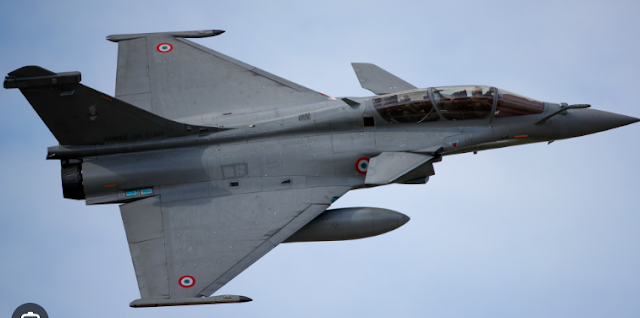
At this year’s Bastille Day military parade on July 14, French President Emmanuel Macron was joined by Indian Prime Minister Narendra Modi. It was also not just French forces on display. On the ground, Macron and his guest of honour watched as the Indian Tri-Services contingent made their way up the Champs-Élysées. In the air, the Indian Air Force performed a fly-past in French-made Dassault Rafale fighter jets.

To anyone closely following the international arms trade, this will not have come as a surprise. The day before, New Dehli gave initial approval for an order of six Scorpène submarines and 26 Rafale jets for the Indian Navy. Two weeks later on July 25, France’s La Tribune newspaper reported Qatar is considering adding another 24 Rafales to their stockpile.

Between 2018 and 2022, France’s share of the global arms trade increased to 11 percent compared with 7.1 percent over the previous four-year period, according to an annual Stockholm International Peace Research Institute (SIPRI) report published in March. In the same period, the Russian share of the international arms trade declined from 22 to 16 percent.

A review of orders late last year and so far in 2023 indicates this pattern is set to continue. “The trends are very clear for France,” said Pieter Wezeman, the author of the SIPRI report.

Even before India’s Rafale order in July, SIPRI’s assessment of outstanding orders for the most valuable weapons systems suggested France was making gains on Russia’s market share. 

“For France, we have a total number of 210 combat aircraft [currently on order] and for Russia we only have 84,” Wezeman said. “These numbers can change, of course, but they do indicate that for sure France will remain a major arms exporter.”
.
The UAE signed a record 14-billion-euro contract for 80 French-made Rafale warplanes and committed billions of euros in other agreements on December 3, 2021. © Ammar Abd Rabbo, AFP


The reasons for the decline in Russian arms sales are varied, although many are linked to the war in Ukraine. Countries naturally aim to diversify their suppliers. But Moscow’s invasion of Ukraine in February 2022 means it is now dedicating more of its arms supplies to the front line, holding on to certain arms systems and focusing on replacing weapons destroyed in battle.

Multiple rounds of international sanctions on Russia may have also affected its ability to secure the materials it needs for arms production, undermining its export capacity. Reports from the front lines in Ukraine have also damaged the reputation of Russia-built armaments.

The war has been “a humbling showcase for Russian military technology”, wrote Cullen Hendrix, an international affairs professor at the University of Denver, in a May contribution to Foreign Policy magazine. “Images of ‘headless’ tanks and reports of high failure rates for Russian missiles may be part wartime propaganda, part reality … Whatever the reasons, the war in Ukraine has not been a particularly compelling advertisement for Russia’s leading-edge military technology."

Some clients have also been disappointed with Russian products in recent years. As the world’s largest arms importer, India has a decades-long relationship with Russian arms suppliers. “India is not particularly happy with what they have received, in technical terms, from Russia,” Wezeman said. “So they have turned to France.”

Political considerations are also important, said Wezeman. “Since the beginning of the war [in Ukraine] India has been reluctant to increase or sustain military relations on a high level” with Moscow.

Moreover, the US “exerts a lot of power” on countries that procure their weapons from Russia, even before the Ukraine war, Wezeman said. Indonesia, for example, abandoned a Russian aircraft purchase in 2021, opting instead for US and French options.

But Russia still holds the lion's share of arms deals in Africa and with countries like Iran and China.


The Rafale: Is France a one-trick pony?


French-built Rafale fighter jets from Dassault Aviation have played a vital role in France’s recent success, says Olivier Gras, general secretary of EuroDéfense-France, a Paris-based association of civil and military officials.

In service as early as 2002, it took until 2015 before the Rafale was first exported. The twin-engine jets are now owned and operated by Greece, Qatar, India and Egypt and are soon expected to land in Croatia, Indonesia and the United Arab Emirates – which ordered 80 Standard F4 Rafales in 2021.

Rafale deliveries and orders globally have reached nearly 500, around half those of its main American competitor, Lockheed Martin’s F-35. 

The more unstable the world is, the easier it is to sell war machines. Is this why France and other European countries are so enthusiastic about keeping the war in Ukraine going? 

There is more on this story at France24


Myanmar's Suu Kyi has some of her prison sentences reduced


Jailed Myanmar civilian leader Aung San Suu Kyi has been pardoned in five criminal cases, although she still faces 14 others, state media said Tuesday.


Issued on: 01/08/2023 - 09:46, 3 min
Text by: NEWS WIRES

Myanmar nationals living in Thailand hold a picture of former civilian leader Aung San Suu Kyi during a protest marking the two-year anniversary of the country's military coup, on February 1, 2023. © Sakchai Lalit, AP


A military coup in February 2021 plunged the Southeast Asian nation into chaos and widespread violence as the military junta launched a bloody crackdown on dissent.

"Chairman of State Administration Council pardoned Daw Aung San Suu Kyi, who was sentenced by the relevant courts under five cases," a state media broadcast said.

The broadcast said the 78-year-old Nobel Peace laureate still faces 14 other cases.

Tuesday's announcement was part of an amnesty of more than 7,000 prisoners to mark Buddhist Lent.

The junta announced on Monday it would extend Myanmar's state of emergency by six months, state media said, which is likely to delay elections promised for August.

Suu Kyi, who has been in detention since 2021, has been sentenced to 33 years in jail for a clutch of charges, including corruption, possession of illegal walkie-talkies and flouting coronavirus restrictions.

"She couldn't be freed completely, although some sentences against her were pardoned. She still has to face 14 cases. Only five cases out of 19 were pardoned," a legal source, speaking on condition of anonymity, said.

Former Myanmar president Win Myint, who was also removed in the 2021 coup, would also be pardoned in two cases, the broadcast said.

The announcement said 125 foreign prisoners would be released and pardoned.

An unspecified number of prisoners facing the death penalty also had their sentences reduced to life imprisonment, it said.

AFP


Wednesday, January 4, 2023

Bits and Bites from around the World > 168 New Geoglyphs in Peru's Nazca; Myanmar Celebrates a White (sort of) Elephant

..

168 mysterious new geoglyphs discovered in Peru’s Nazca Lines


By Brooke Steinberg
December 20, 2022 8:48am  Updated

Scientists Discover 168 Mysterious Nazca Geoglyphs in The Desert Sands of Peru. About 50
of the large-scale drawings are of human-like figures -- with one even resembling Homer Simpson.
Yamagata University


Scientists have discovered 168 new geoglyphs in the soil of Peru’s desert — almost doubling the known instances of ancient Nazca Lines in the area.

Peruvian and Japanese researchers from Yamagata University spent two years scanning the UNESCO World Heritage site on Peru’s southern Pacific coast using aerial photos, drones and field surveys.

The drawings portray humans, camelids, birds, killer whales, felines, snakes and more. About 50 of the large-scale drawings are of human-like figures — with one even resembling Homer Simpson.

While it’s hard to know exactly when the geoglyphs were made, clay pots found near the lines point to a time between 100 B.C. and 300 A.D. — between 2,100 and 1,700 years ago.

Most of the Nazca Lines can only be seen from the air, and have mystified scientists for years. But the recently discovered figures are smaller, averaging between 6 feet and 19 feet in length, and can be seen from the ground, Masato Sakai, a professor from Yamagata University who led the study, told Reuters.

The drawings portray humans, camelids, birds, killer whales, felines, snakes and more.
Yamagata University


“These geoglyphs were created by removing black stones from the surface of the earth to expose a white sandy surface below,” a statement from Yamagata University said.

Some information currently being gathered by the researchers will be analyzed by artificial intelligence programs, which will be able to depict patterns more quickly and effectively than the human eye and inform the lines’ preservation.

By 2019, archaeologists had discovered a total of nearly 200 geoglyphs in the area. These new drawings bring the official number of known Nazca Lines to 358.

While it’s hard to determine exactly when the geoglyphs were made, clay pots found near the lines point to a time
between 100 B.C. and 300 A.D.
Yamagata University


An archaeologist previously told the Guardian that he believed scientists had only found 5% of all the Nazca Lines out there.

The scientists at Yamagata had been granted permission from Peru’s Ministry of Culture to tally as many of the geoglyphs as possible, planning to map out the entire length and width of the desert canvas.

An archeological park to protect the geoglyphs was established in the Aja area near the downtown of Nasca City in 2017.

These new drawings bring the official number of known Nazca Lines to 358.
Yamagata University


“As many as 36 of these geoglyphs were discovered in the Aja area, near the city of Nasca. The discovery of 41 geoglyphs in this area was previously announced by Yamagata University in 2014 and 2015, which led to the creation of an archaeological park in 2017 in collaboration with the Peruvian Ministry of Culture to protect them. With this discovery, a total of 77 geoglyphs are now known to be concentrated in this archaeological park,” the statement from Yamagata University said.

The purpose of the Nazca Lines still remains unknown, according to Nazca Lines research program’s head archaeologist, Jorge Olano. Despite being mysterious, they have been interpreted in many ways, including that they’re meant for gods in the sky or that they’re supposed to reflect the stars for astronomical purposes.


Myanmar military trumpets white elephant as sign of right to rule


Author: AFP|Update: 04.01.2023 08:25
RTL

Myanmar's junta considers a rare white elephant recently born in western Myanmar as an auspicious sign
/ © MYANMAR MILITARY INFORMATION TEAM/AFP/File


Though it is a pariah on the world stage and battling fierce domestic opposition to its rule, Myanmar's junta has found grounds for optimism -– the birth of a rare albino elephant.

Since seizing power, the junta has crushed democracy protests, jailed ousted leader Aung San Suu Kyi and been accused of committing war crimes in its bid to quell dissent.

But the birth of the elephant -- more milky-grey than white -- in western Rahkine state last year is being portrayed by junta-controlled media as fortuitous.

Ancient rulers regarded white elephants as extremely auspicious, and their appearance was taken as a symbol of righteous political power.

The pale pachyderm will feature on a special postage stamp released this week to mark the 75th anniversary of Myanmar's independence from Britain, state media said on Tuesday.

A set of gold commemorative coins bearing the animal's image is also already being cast for the occasion, another report said.


Once feted by Myanmar's former junta, a rare albino elephant now lives in an out of the way compound
in commercial capital Yangon / © AFP


The tusker tot's highest-profile engagement so far was a meeting with junta chief Min Aung Hlaing in October, when the senior general bestowed it a name at a televised ceremony.

"Rattha Nandaka" comes from the ancient Pali words for "country" and "happiness."

To bolster the credentials of its newfound good omen, state media has insisted the beast has an almost impeccable pedigree.

Strange behaviour for a devoutly Buddhist country!

According to the experts quoted, it possesses seven of the eight standard characteristics for an albino elephant, including "pearl-coloured eyes" and a "plantain branch-shaped back".

- 'The Powers of Nature' -


In Myanmar, where astrological charts are drawn at birth and fortune-tellers consulted for both daily and political decisions -- the craze for white elephants goes back hundreds of years.

Traditional chronicles tell of kings in Thailand, Laos and Myanmar -- then known as Burma -- warring to capture the beasts from rivals.

The ruinous cost of keeping them in appropriately lavish style gave rise to the modern expression in which a "white elephant" is a useless, if beautiful, possession.

In superstitious Myanmar, astrological charts are drawn at birth and fortune-tellers consulted
for both daily and political decisions / © AFP/File


One creature inherited by a 19th century Burmese king was waited on by thirty servants and dressed in a "fine red cloth plentifully studded" with rubies and diamonds, according to a visiting British official.

The king, who had usurped his brother, "would gladly hail the capture of a real white elephant in his own day as an assent from the Powers of Nature to his own legitimate royalty," the envoy added.

But the fortunes of the creatures are tied up with the ruler under whom they were captured.

Two elephants, once feted by a former junta, are now confined to a damp, out-of-the-way compound in commercial hub Yangon where they receive few visitors.

"Rattha Nandaka" will spend its days in a special compound for white elephants in military-built capital Naypyidaw.

But with swathes of the country still ravaged by fighting and the junta widely reviled, his birth has been met with public scepticism and scorn.

"It seems like they forgot to put suncream on," one social media user wrote about the baby elephant's more grey than albino appearance.

"Now it's black."

Black or white, another wrote, the baby was "now a prisoner".