"I am the Way, the Truth, and the Life"

Father God, thank you for the love of the truth you have given me. Please bless me with the wisdom, knowledge and discernment needed to always present the truth in an attitude of grace and love. Use this blog and Northwoods Ministries for your glory. Help us all to read and to study Your Word without preconceived notions, but rather, let scripture interpret scripture in the presence of the Holy Spirit. All praise to our Lord and Saviour Jesus Christ.

Please note: All my writings and comments appear in bold italics in this colour
Showing posts with label Maidan. Show all posts

Tuesday, September 16, 2025

Politics in Europe > The Crisis Gripping the G7 - Lukyanov; EU planning "Maidan coup" in Serbia


Fyodor Lukyanov: France is only the front line in a crisis

gripping the G7
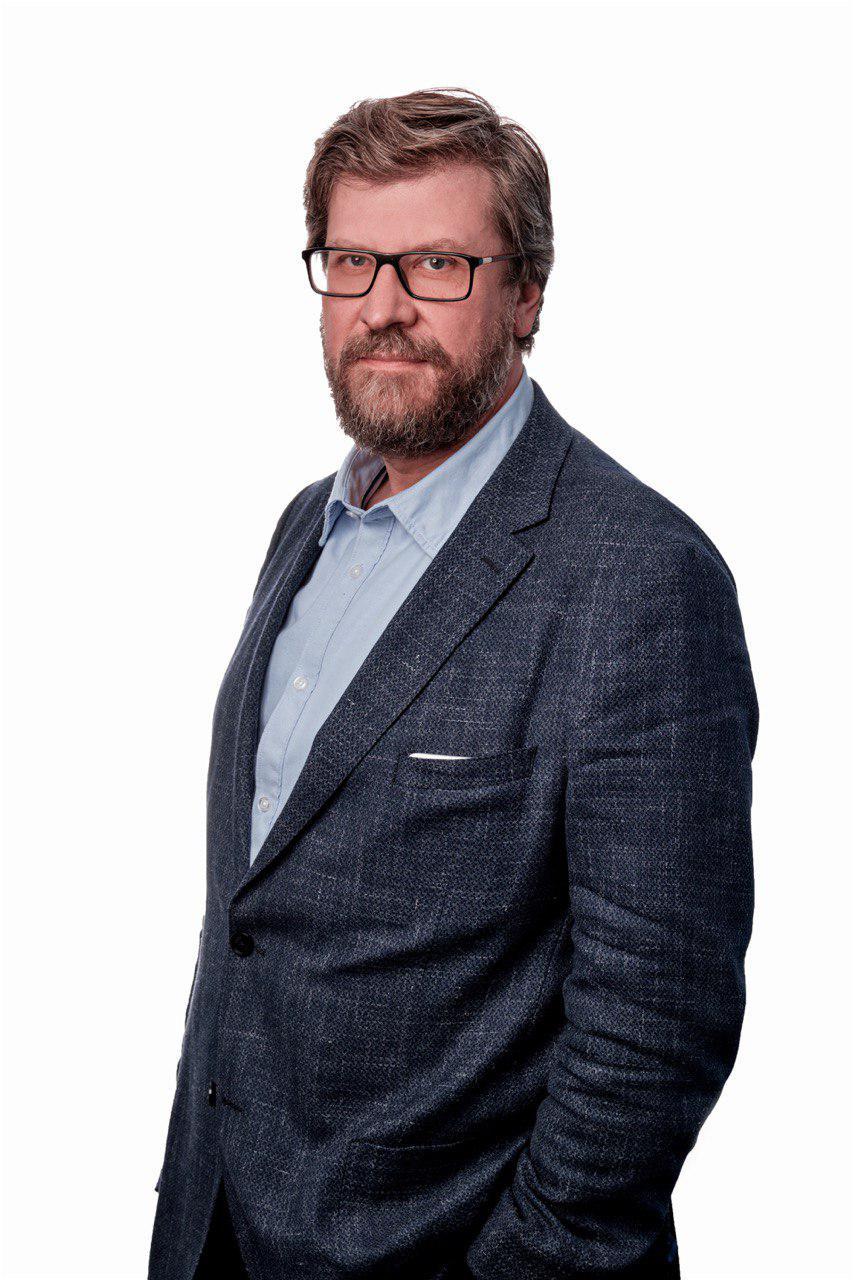
The G7’s political systems are entering a moment of truth
Fyodor Lukyanov: France is only the front line in a crisis gripping the G7


France is once again in crisis. Francois Bayrou’s government failed to win a vote of confidence in the National Assembly and has resigned. President Emmanuel Macron has promised to quickly propose another candidate. But after calling early elections last spring, he created a parliament with no stable majority. Now he must try to form a cabinet for the third time in little more than a year. If he fails, new elections will follow, and this time not even Macron’s usual tricks may save him. Both the far right and the far left have been waiting for this moment, sharpening their teeth for the embattled president for years.

The spectacle in Paris is not unique. It is part of a wider malaise across the political systems of the G7.

In Japan, Prime Minister Shigeru Ishiba long insisted he would not step down. Yet his party’s losses in two parliamentary elections left him no choice. In Britain, a scandal forced the resignation of the deputy prime minister and left the Labour Party floundering at approval levels no better than the discredited Conservatives. Nigel Farage’s Reform Party now leads in the polls. In Germany, Chancellor Friedrich Merz is recording record-low ratings while the anti-establishment Alternative for Germany remains stable at CDU levels.

Italy and Canada are steadier, but barely. Canada’s Liberals were rescued not by their own strength but by Donald Trump. His coarse attacks on Ottawa provided a rally-round-the-flag effect, sparing them a near-certain defeat. The result was continuity in power, though with Mark Carney replacing Justin Trudeau. As for the United States itself, the picture is clear enough: Trump’s supporters face little resistance. His opponents are simply lying low, waiting for better times. 

Each of these cases has local causes, yet together they reveal something larger. For countries with deep democratic traditions, turmoil is not new. They have endured crises before. But the simultaneity of today’s upheavals makes this moment extraordinary. The world is in open unrest, and no major power is insulated. The question is not whether the turbulence will continue, but how well political systems can withstand the waves.

Here there is a crucial difference between the United States and its allies, on the one hand, and the European Union on the other.

The US, Canada, Britain, and Japan remain sovereign states. Their degree of sovereignty can be debated, but their governments retain legitimacy and can act quickly when circumstances demand it. Those decisions may be good or bad, but they are at least their own, and they can change course if the results prove ineffective.

For the EU states, the situation is different. Their sovereignty is deliberately limited by the framework of European integration. In the second half of the 20th century, this was the Union’s great strength: by pooling authority, its members gained leverage they could never have achieved alone. But the same framework now acts as a brake. In a world where speed of decision is vital, Brussels makes it harder, not easier, to act.

Economic interdependence and ideological constraints ensure that problems not only go unsolved but reinforce each other. Worse, there is no vision of how the system might be changed under current institutional rules. As a result, rather than rethink course, leaders try to bulldoze through with even more energy in the same direction. Opposition forces are excluded even when they win elections. And the Ukrainian issue has been turned into the central pillar of EU politics. Should that issue fade, a mass of uncomfortable domestic questions will come to the surface – and Western Europe’s rulers know it.

Manipulation and muddling through remain possible, of course. France and Germany may once again stagger past their current difficulties. But each time it becomes harder, and the gap between society’s demands and the establishment’s interests grows wider. 

This is why the “moment of truth” for EU politics is approaching. No one can predict what follows. The bloc will not return to the pre-integration era. But the political forces cast as outsiders today may soon be the ones defining the new order.

What we are witnessing is not just a crisis in France, or a resignation in Japan, or a reshuffle in Italy. It is a collective crisis of the G7’s political systems. The American led-bloc still has reserves of strength – above all, its sovereign states can still change course when pressed. But the EU, bound by its own rigidities, finds itself caught. Its governments cannot adapt quickly, and its supranational institutions block meaningful change.

The European project was once the most successful political innovation of the Old World. But it has grown stale. The EU’s cumbersome structure is no longer a solution but part of the problem. At a time when the world is shifting fast, the Union is locked into yesterday’s procedures.

This leaves Western Europe with a stark choice. Either it finds a way to reform – to reconcile sovereignty with integration, flexibility with cooperation – or it will continue to stumble forward, ever more divorced from the societies it claims to represent. In that widening gap lies the real danger.

For now, its leaders may suppress alternatives and manage through manipulation. But the longer they do, the greater the eventual reckoning. And when it comes, EU politics won’t be the same again.

===============================================================================================


We know what followed the Maidan Coup in Ukraine - War with Russia. Serbia can expect nothing less.


EU plotting Ukraine-style coup in Serbia – Moscow

The bloc is fueling the protests in order to install a loyal government in the country, 
the SVR has said
EU plotting Ukraine-style coup in Serbia – Moscow


The EU is seeking to orchestrate a Ukraine-style ‘Maidan’ in Serbia by fueling the violent protests that have swept the Balkan country since late last year, Russia’s Foreign Intelligence Service (SVR) has said.

The unrest erupted in Serbia in November 2024 after a roof collapse at the railway station in the city of Novi Sad, killing 16 people. The incident triggered public backlash, with activists accusing the government of corruption and demanding accountability. The list of demands later expanded to holding snap elections and the resignation of President Aleksandar Vucic.

The latter has branded the protesters “terrorists” seeking to “bring down the state” under foreign influence. In response to public pressure, the Serbian authorities also agreed to some concessions, including the resignation of several ministers and the publication of documents related to the Novi Sad canopy collapse.

In a statement on Monday, the SVR said that the unrest is “largely a product of EU subversive activity,” adding that the main goal of Brussels is to bring “a compliant and loyal… leadership to power in one of the largest countries in the Balkans.”

The agency said EU efforts had radicalized youth, pushing them “from peaceful protests to more revolutionary methods of struggle and violence.” It argued, however, that attempts to reproduce a Western-backed “color revolution” in Serbia were faltering due to “patriotic sentiment, the unifying influence of the Orthodox Church, and memories of NATO aggression and the bombing of the country.”

According to the SVR, Brussels plans to exploit the anniversary of the Novi Sad disaster on November 1 to intensify pressure. It claimed EU institutions were “brainwashing” Serbian youth with promises of a “bright European future” while using supposedly independent media outlets as vehicles for influence.

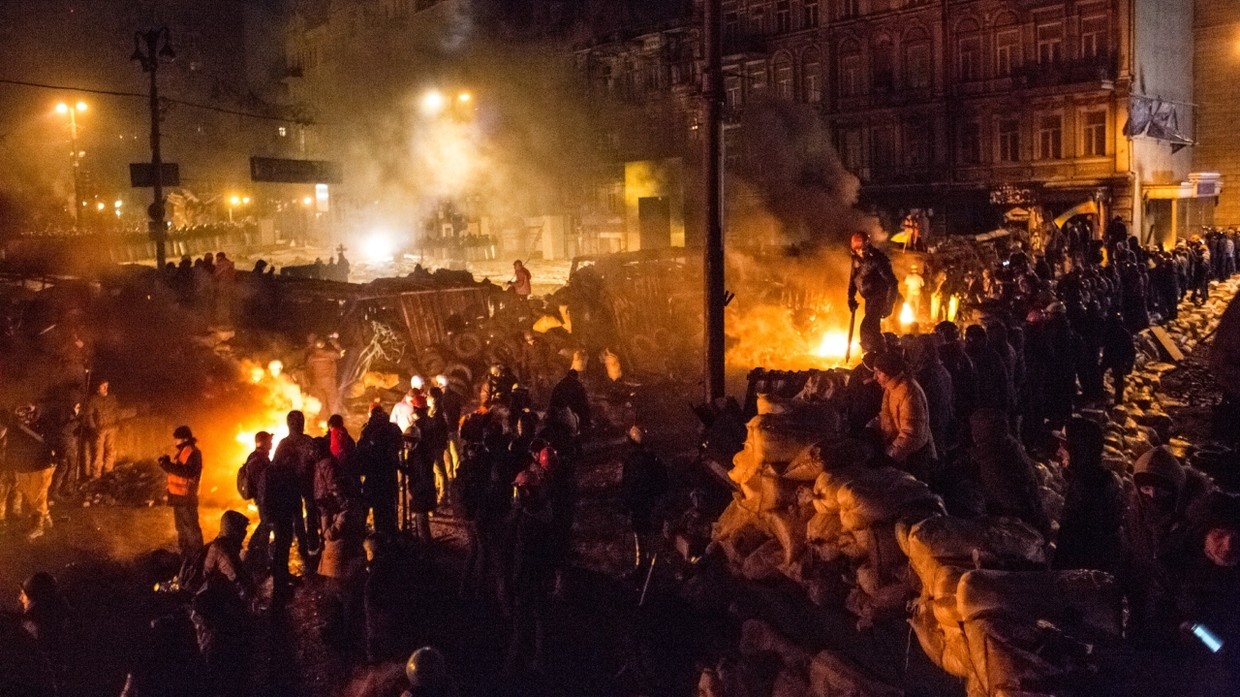
The goal, the SVR said, is to mobilize protesters and stage a “Serbian Maidan,” referring to a series of Western-backed protests in Ukraine in 2013-2014 that resulted in a coup that ousted President Viktor Yanukovich.

EU officials have said they are closely monitoring the situation in Serbia while denouncing what they describe as excessive use of force by law enforcement.


Thursday, January 23, 2025

Politics in Europe > 3 attacks on Democracy in Europe - Slovakia fears Maidan Coup being planned; Romania's Georgescu takes shocking lead in poll; Germans lied to on Ukraine Aid


Slovakia's PM warns of new ‘Maidan’


Slovakia’s Robert Fico has claimed his political rivals are preparing a Ukraine-style coup with help from abroad
That broad's name could be Ursula
EU state’s PM warns of new ‘Maidan’


Slovak Prime Minister Robert Fico has accused the political opposition of preparing a ‘Maidan’ in the country, referring to the violent Western-backed coup in Kiev in 2014 that led to the overthrow of democratically-elected Ukrainian President Viktor Yanukovich.

Speaking at a joint press conference with Hungarian Prime Minister Viktor Orban in Bratislava on Tuesday, Fico based his accusations on a report prepared by the Slovak Information Service (SIS) intelligence agency.

“I cannot disclose the content of the report, but I can say in all seriousness that the opposition is preparing a ‘Maidan’. It is gearing up to thwart the government from exercising its powers and it will do this in cooperation with foreign actors,” he said.

Fico said his opponents have failed to notice that the “global state of affairs has changed significantly,” apparently referring to Donald Trump replacing Joe Biden as US president.

The Slovak prime minister, who has long advocated for a peaceful settlement of the Ukraine conflict and the restoration of ties with Russia, claimed that the pro-Western opposition will try to push his country towards an early election, “based on some type of event, for instance, if security forces took action against protest activities violating the law.”

Fico presented the SIS report earlier on Tuesday during an extraordinary no-confidence vote in parliament called by his political rivals. After the prime minister argued that the document was confidential and should be discussed behind closed doors, the opposition withdrew its no-confidence motion in protest, saying it would stage a new vote soon.

Opposition MPs described the report as “nonsense” and “a clear conspiracy theory,” claiming there was nothing confidential about it as it contained “information anyone can find on Google.”

“We are not the ones preparing a ‘Maidan’, but I have serious concerns that this government is. It would not be difficult for someone to stage a provocation at an otherwise peaceful demonstration, providing an excuse to claim they’re protecting the state… while beginning to detain individuals based on some list,” Christian Democratic Movement (KDH) lawmaker Frantisek Miklosko claimed.

In a Facebook post later in the day, Fico warned his rivals that he would not allow them to hold another no-confidence vote unless they had a parliamentary majority. The ruling coalition in Slovakia holds 76 seats in the legislature, only two more than the opposition.

“If you believe that you submit another motion to oust the government tomorrow and expect me to ask the government and the governing coalition to accommodate your whims, then you are dead wrong,” he stressed.


Frontrunner of EU state’s scrapped presidential election

tops latest poll


Romanian right-wing candidate Calin Georgescu is leading the field ahead of new ballot in May, a new survey suggests
Frontrunner of EU state’s scrapped presidential election tops latest poll


The right-wing frontrunner in November’s first round of Romania’s presidential election that was annulled, has topped the latest opinion poll in the country, ahead of a new ballot scheduled for May. According to the Avangarde survey, Calin Georgescu is expected to actually perform better than during the scrapped election. 

A critic of NATO and the EU and a staunch opponent of sending aid to Ukraine, Georgescu topped the now-annulled first-round vote in November with 22.94%, beating liberal leftist and social democrat candidates. Romania’s Constitutional Court suddenly cancelled the election ahead of the second-round vote, citing intelligence documents alleging ‘irregularities’ in Georgescu’s campaign performance.

The candidate is now projected to get 38% of the vote – against some 23% he secured last time. Georgescu’s approval in the survey is followed by Crin Antonescu, the likely single candidate of the pro-EU coalition government, who is projected to get 25% of the vote, and, with some 17% of respondents favorable, Bucharest Mayor Nicusor Dan, who said he could end up running as an independent.

It remains unclear whether Georgescu would be actually allowed to run for office again in the May polls.

His shock November win caused a political meltdown in Romania, prompting a barrage of assorted allegations against the right-wing hardliner. The 62-year-old, who ran his campaign largely through TikTok, also faced false allegations that his bid was funded by foreign actors, presumably Russia.

None of the claims, however, were backed by any solid evidence, while preliminary findings of an investigation into the election scandal found the campaign “irregularities” were bankrolled by the pro-Western National Liberal Party (PNL).

On Tuesday, The European Court of Human Rights (ECHR) rejected an appeal lodged by Georgescu, who demanded that it overturn the domestic court decision to annul the election results. The ECHR threw out the case altogether, ruling the issue was outside of its remit.

The poll sampled some 1,354 Romanians, representing various social and age groups, and was conducted between January 10 and 16.


Germans ‘being lied to’ on Ukraine aid – Scholz


The chancellor has pushed back against critics who accuse him of blocking a €3 billion assistance package for Kiev
Germans ‘being lied to’ on Ukraine aid – Scholz


German Chancellor Olaf Scholz has accused his critics of deceiving voters about his reluctance to approve a proposed €3 billion ($3.1 billion) assistance package for Kiev. Senior officials have blamed Scholz for delaying the emergency aid, which was proposed by Foreign Minister Annalena Baerbock and Defense Minister Boris Pistorius.

The chancellor has claimed that those backing the deal are not being transparent about how it would be financed. 

“The German people are being lied to” by those who refuse to address how the package would be funded, Scholz claimed in an interview with the Frankfurter Allgemeine Zeitung newspaper on Monday. 

The issue of Ukraine aid is a focal point of political debates ahead of the general election in Germany next month. The Social Democratic Party (SPD) has nominated Scholz as its candidate to form the next government, after Pistorius declined to seek the party’s nomination despite his popularity exceeding the chancellor’s in some polls.

Baerbock, a senior member of the Green Party, complained last week about unnamed officials prioritizing national interests over “responsibility for securing Europe’s peace” to appeal to voters. Her party was part of the ruling coalition which collapsed last year over a conflict with the SPD and the Free Democratic Party (FDP) over spending priorities.

Furthering the war in Ukraine is anything but securing Europe's peace, it is the very opposite.

Friedrich Merz, the chancellorship candidate from the opposition Christian Democrats, has likewise criticized Scholz for not providing more aid to Ukraine. Merz is currently seen as the frontrunner for chancellor, with the Christian Democratic Union/Christian Social Union alliance leading in opinion polls.

Alternative for Germany (AfD), an anti-immigration party, stands out among major political players in its opposition to funding Kiev’s fight against Moscow, and has called for the resumption of purchases of cheap Russian energy to kickstart the ailing German economy. It currently trails the Christian Democrats in the polls, as MPs reportedly mull banning it for allegedly being a threat to German democracy.

Banning it would, of course, be an attack on democracy along with preventing the only way to rescue Germany's economy and cultural heritage from Islamization.

Despite disagreements within the ruling coalition over future Ukraine aid, Germany remains second only to the US among military donors to Kiev, having provided around €11 billion from January 2022 to October 2024, according to the Kiel Institute for the World Economy.

================================================================================================