"I am the Way, the Truth, and the Life"

Father God, thank you for the love of the truth you have given me. Please bless me with the wisdom, knowledge and discernment needed to always present the truth in an attitude of grace and love. Use this blog and Northwoods Ministries for your glory. Help us all to read and to study Your Word without preconceived notions, but rather, let scripture interpret scripture in the presence of the Holy Spirit. All praise to our Lord and Saviour Jesus Christ.

Please note: All my writings and comments appear in bold italics in this colour

Tuesday, May 23, 2017

Islam Evolves into More and More Radical Islam - Watch Indonesia

As I have been saying - 
Islam becomes more legalistic, more radical, more Sharia as time goes on. Indonesia, where more Muslims live than in any other country in the world, is a case in point. Recently, Muslims rail-roaded the Christian mayor of Jakarta right into prison on a trumped-up charge. This week, they are revealing a growing intolerance of gays. This increasingly Sharia-like attitude does not bode well for Christians or any other outliers to Muslim society.

Indonesia police arrest 141 men for 'gay sex party'
By Elizabeth Shim  

Indonesian police officers stand guard as men arrested in a raid are being shown to the media during a press conference at a police station in Jakarta, Indonesia, on Monday. Photo by Aji Putra/EPA
UPI -- More than 100 men were arrested in Indonesia following raids at a men's spa in Jakarta during what police have described as a "gay sex party."

A total of 141 men, including foreign nationals, were detained after the raid at Atlantis Gym and Sauna, a well-known gay entertainment venue, Coconuts Jakarta reported Monday.

Attendees included a British citizen and a Singaporean, the BBC reported.

Homosexuality is not banned in Jakarta, but the men were arrested on charges of violating the city's anti-pornography ordinance, according to reports.

The law on pornography bans live strip shows, and strippers were performing at the site, according to police.

"The first floor has a gym, the second floor had a striptease event with four strippers while people masturbated, and the third floor has a spa where homosexuals can bathe and carry out homosexual acts," said the head of North Jakarta Police's crime investigation unit.

The theme of the party on Sunday night was "The Wild One."

Indonesian officials said they confiscated posters, online invitations, condoms and surveillance camera footage from the event.

The raid comes after police in the city of Surabaya detained 14 people for a "gay party" in a hotel.

The detainees were forced to take HIV tests afterward, according to Coconuts.

Two men were also recently sentenced to public caning for having sex in Aceh province, where anti-gay laws do exist.


Two Indonesian men receive 83 lashings each
for gay sex

By Ed Adamczyk  

A mosque in Banda Aceh, Indonesia, prepares for a public caning of people convicted of violating Sharia law on April 18. On Tuesday, two men wire caned 83 times each for gay sex, the first time gay men have been caned under Sharia law in the province. Photo by Hotli Simunjuntak/EPA

UPI -- Two men received 83 canings each on Tuesday in punishment after vigilantes in Aceh province, Indonesia, caught them engaged in gay sex.

They stood on a stage in front of a mosque in Banda Aceh as several hundred onlookers watched hooded men lash their backs with rattan canes. Their sentence of 85 canings was reduced to 83 because each had spent two months in jail.

While gay sex is not illegal in most of Indonesia, Aceh province adopted ultra-conservative Muslim Sharia law a decade ago. Strict laws against homosexual behavior have been enforced since 2014.

Islam, like sin, is progressive!

The two unidentified men, 20 and 23, were found in bed together in March, when vigilantes burst into their apartment. A Sharia court convicted them of sodomy on May 17. While canings for sex prior to marriage, gambling and alcohol consumption have recently occurred in the province, it is the first time gay men have been caned in Aceh province under Sharia law.

Earlier this month, 14 people were arrested by Indonesian police in Surabaya at an alleged gay party. They could face similar sentences, the BBC reported. On Monday, 141 men were arrested on similar charges for what police described as a gay party in a sauna in Jakarta, the capital; most were released on Tuesday.

The activist group Human Rights Watch had called on Indonesian President Joko Widodo, who has spoken out in favor of LGBT rights, to cancel the Aceh province punishment.

Banda Aceh, Indonesia

Sunday, May 21, 2017

Magnitsky Bill Advances with a Strongly Ukrainian Flavour

Links to Ukrainian diaspora among supporters give Russia opportunity to dismiss the bill
By Evan Dyer, CBC News 

Nataliya Magnitskaya holds a portrait of her son, Russian lawyer Sergei Magnitsky, in November 2009 in Moscow. The Magnitsky Law, a piece of Canadian legislation not yet enacted, is named after the lawyer, who died in a Moscow jail in 2009 after accusing officials of tax fraud. (Alexander Zemlianichenko/Associated Press)

The "Magnitsky Law" is a piece of Canadian legislation, not yet enacted, that seeks to hold governments and individuals to account for human rights abuses.

It's named after Russian businessman Sergei Magnitsky, who died in a Moscow jail in 2009 after accusing officials of tax fraud. It could help to bring sanctions to other rights abusers in other countries.

In late 2012, the United States adopted the so-called Magnitsky Act, which imposes travel bans and financial sanctions on Russian officials and other individuals believed to have been involved in Magnitsky's death.

But there's something about the way the bill is moving forward in Canada that should perhaps give pause to legislators.

Minister of Foreign Affairs Chrystia Freeland is seen on Parliament Hill Thursday. Freeland is a member of Canada's Ukrainian community and among the 13 Canadians sanctioned by Russia for their supposed hostility to the country. (Fred Chartrand/Canadian Press)

Two versions exist: a Commons version written by Conservative James Bezan, and a Senate version written by Raynell Andreychuk. That second version yesterday obtained the support of Canada's Foreign Minister Chrystia Freeland, who says the Trudeau government will help to push it through the House.

What do Bezan, Andreychuk, and Freeland all have in common?

All three are active members of Canada's Ukrainian community. And all three happen to be among the 13 Canadians sanctioned by Russia for their supposed hostility to the country.


Diaspora politics

The situation may allow the Kremlin to tell its citizens that the bill is not really about rights abuses, but rather part of a campaign motivated by ethnic animus towards Russia.

Pro-Kremlin news media and bloggers often portray Canada's Ukrainians as this country's version of Miami Cubans, a community calling the shots of Canada's foreign policy on the one issue that obsesses it.

Russian Foreign Minister Sergey Lavrov is seen in Nicosia, Cyprus, on Thursday. Last year, Lavrov accused the Ottawa of 'blindly following the demands of rabid representatives of the Ukrainian diaspora in Canada.' (Yiannis Kourtoglou/Associated Press)

Last year Russian Foreign Minister Sergey Lavrov accused the Canadian government of "blindly following the demands of rabid representatives of the Ukrainian diaspora in Canada."

Canada's response perhaps did little to defuse that Russian suspicion.

"We will not tolerate from a Russian minister any insult against the community of Ukrainians in Canada," then-Global Affairs Minister Stéphane Dion responded in the House of Commons. "Ukrainian Canadians, we owe so much to them. We will always support them."


Magnitsky Bill not just about Russia

Human rights groups have welcomed the Magnitsky Bill, and it has enjoyed support from Russian dissidents Gary Kasparov and Zhanna Nemtsova, the daughter of murdered opposition leader Boris Nemtsov.

It's also intended to reach far beyond Russia, says MP Bezan.

"This will apply to all countries, whether it's organ-harvesters in China who are falsely imprisoning Falun Gong practitioners to harvest their organs and tissues for sale around the world, whether it's people in the Iranian regime that are denying justice and freedom to their own citizens, or even in the case of Saudi Arabia, where they're targeting people who've tried to speak out against the government, this law has global application."

 "The Russians can say what they want," says Andreychuk. "Ukrainian-Canadians are Canadian citizens. This bill certainly has the support of many Ukrainian-Canadians, but the support that I've received for this bill has not just been from them."

"It isn't going to be centred on Russia, though no doubt there are cases of individuals that this will apply to in Russia."

A government source close to the negotiations around the proposed bill echoed that thinking. "We don't see this bill as being Russia-specific, but rather as providing us with more targeted and modern tools to use sanctions globally in cases involving human rights."


'Should the Canadian Parliament approve this punitive legal act, it would seriously damage relations between our countries, which are not experiencing the best of times already'

- Russian Embassy in Canada


But the Russian Embassy this week issued a "Comment on anti-Russian activities in Canada."

"We are compelled to warn official Ottawa that we consider its strong support for a Canadian version of the U.S. Magnitsky Act, as a means to make unsubstantiated human rights claims against Russia, to be another openly hostile move. Should the Canadian Parliament approve this punitive legal act, it would seriously damage relations between our countries, which are not experiencing the best of times already."


Memories of '30s and '40s still haunt relationship

The Russians also raise wartime abuses by Ukrainians as a way of flagging what it sees as hypocrisy on human rights.

Fraught memories of the Holodomor, the Stalin-induced famine of the 1930s, and of the Second World War, strained the relationship between Canada's Ukrainian diaspora and Russia long before the current Ukrainian conflict.

Pro-Kremlin websites have raised the record of Foreign Affairs minister Chrystia Freeland's grandfather, Michael Chomiak, alleged to have worked for a pro-Nazi newspaper during the war.

The website of the Russian Embassy in Ottawa includes a picture of a stone monument to victims of a massacre by a Ukrainian SS division, some of whose members ended up in Canada. 

Prime Minister Justin Trudeau and his son Xavier arrive at the Holodomor Monument as they visit the museum in Kyiv, Ukraine, in July 2016. (Adrian Wyld/Canadian Press)

Canada ignored a request from Russia to extradite Nazi war crimes suspect Vladimir Katriuk in 2015. Katriuk, accused of murdering Soviet partisans and civilians, died shortly afterwards in Ontario.

David Matas, legal counsel for B'Nai Brith Canada, is also critical of Canada's handling of Katriuk and another suspected SS guard, Wasyl Odynsky.

He wrote in March: "The organized Ukrainian community urged cabinet not to revoke the citizenship of two ethnic Ukrainian individuals, Vladimir Katriuk and Wasyl Odynsky, even though the courts had found against them. The government of Canada acceded to this political pressure, despite the court rulings."

The influence of right-wing Ukrainian diaspora nationalists ("Banderists" as they are called by the Russian media) is played up publicly and is central to public understanding of the current Ukrainian conflict. Because the Kremlin has been able to portray current events in Ukraine through that lens, ordinary Russians have supported the war.


Diaspora politics

Bezan, Andreychuk and Freeland can all fairly claim to have a track record of promoting human rights generally, but the three are also more than casually involved in Russian and Ukrainian affairs, as is apparent at a glance from their social media.

James Bezan's Twitter account shows him meeting in recent days with a Ukrainian parliamentary delegation and Ukraine's ambassador to Canada. Senator Andreychuk's account shows her in Kyiv last month, attending a security forum and "condemning Russian aggression & support 4 Ukrainian sovereignty".

Another shows her posing on the steps of Parliament with Canadian and Ukrainian flags. At the time of writing, eight of Andreychuk's last 10 tweets were about Russia or Ukraine (none of them about the Magnitsky law).

The Magnitsky bill may do good service in the cause of justice. But its proponents' association with Ukrainian causes will inevitably be used in Russia to dismiss it as just another diaspora poke at the bear.

Twitter - James Bezan: Great meeting w/ with my #CPC colleagues, a Ukrainian parliamentary delegation & @AShevch, Ukraine's ambassador to Canada #cdnpoli

Gorbachev Warns of Growing Danger


A group of Americans visiting Russia heard dire warnings from ex-Soviet President Gorbachev that the tensions between the U.S. and Russia are creating a dangerous situation for the world
By Rick Sterling

The former President of the Soviet Union, Mikhail Gorbachev, is 87 years old but still sharp. He told a delegation of 30 Americans in a two-week visit to Russia organized by the Center for Citizen Initiatives, “This is a time to be concerned. We should worry about relations between our two countries. … Things cannot continue as they are.”

President Gorbachev recalled his initial meetings with President Reagan, which came after six years of poor relations and hostility. In the first summit meeting, Reagan issued a long list of accusations against the Soviet Union; Gorbachev responded with his own accusations against the U.S. After that meeting Gorbachev said “He’s not a hawk; he’s a dinosaur” while Reagan said about Gorbachev “He’s a die-hard communist.”

At the next summit meeting, Reagan continued lecturing Gorbachev. After listening for 15 minutes. Gorbachev stopped Reagan saying, “That’s enough. If you want to talk as equals we can go very far. Differences can be bridged. Problems can be resolved. But as equals.”

Reagan asked how the Soviet Union would respond if the United States was at risk because of some kind of natural calamity. When Gorbachev said his people would want to help, not take advantage, the mood changed.

Gorbachev recalled his own friendly experience talking with average Americans. He suggested that perhaps the U.S. needs its own perestroika. He reminded us that it was President John F Kennedy who said, “We need peace but not a Pax Americana ….. not merely peace for Americans but peace for all men and women.”

Gorbachev continued saying, “The current situation is not right. We need to change that. Let us stop provoking each other. Let us stop trying to tear up other countries. …. Our two countries are still central to world peace. We need peace in order to resolve other world problems. One percent of the world controls 90 percent of the wealth. The ruling class is happy with this but things cannot continue as they are. … Budgets smell of gunpowder. … Fear is being cultivated. This is resulting in a new arms race.”

There are many in that one percent who benefit greatly from an arms race. Unfortunately, it seems to be them who are in control of things. There are oligarchs in both countries and in NATO.

Gorbachev asked, “Does the USA want Russia to just submit?” Referring to Russia’s history with invasions by France in the early 1800s and Germany in the 1940s, he explained “This is a country that can never submit…. There will be no winners in a nuclear war.”

The Ukraine Crisis

The 30-member delegation has been having informative meetings with numerous people to gain a better understanding of modern Russia and its relations with the United States and the world. Another especially interesting meeting was held with Vladimir Kozin, member of the Russian Academy of Military Science.

Ukraine’s anti-Russian President Petro Poroshenko speaking to the Atlantic Council in 2014. (Photo credit: Atlantic Council)

Vladimir Kozin is an arms control specialist and member of the Russian Academy of Military Science who has worked on arms control issues since the 1970s. Kozin says that Russians see themselves being encircled by NATO. Of the 16 countries bordering Russia, eight have anti-Russia sentiments. He notes that the U.S. military budget is 12 times greater than that of Russia and increasing.

Kozin said it is a “fairy tale” that Russia interfered in the U.S. election. What is NOT a fairy tale, he said, is that the U.S. has spent a huge amount of money to influence Russian elections in the past and funded 400 Non-Governmental Organizations (or NGOs), which were part of the destabilization campaign in Ukraine leading to the 2014 coup.

Regarding key conflict points emerging from the Ukraine crisis, Kozin noted that Crimea was part of Russia since 1783. He added that the despite the presence of 16,000 Russian troops (who were in Crimea as part of the Sevastopol naval base agreement) and 18,000 Ukrainian troops, the Crimea plebiscite to re-unify with Russia was handled without violence, with huge turnout and overwhelming vote in favor.

As for hostilities in eastern Ukraine, Kozin asked why this fighting has happened just because the largely ethnic Russian population resisted the overthrow of elected President Viktor Yanukovych and demanded some form of autonomy from Kiev.

Vladimir Kozin, member of the Russian Academy of Military Science

If Scotland can consider secession from the United Kingdom and Catalonia from Spain, he argued, what’s wrong with Donbass (eastern Ukraine) wanting more autonomy within Ukraine? Why has Ukrainian President Petro Poroshenko turned to military conflict instead of negotiating with the dissidents in eastern Ukraine?

Kozin believes it is vital to have an arms control summit meeting between Presidents Trump and Putin. He thinks we should work toward the complete elimination of nuclear weapons by 2045. In the meantime, the easiest way to reduce tension and the risk of war would be an agreement on “No First Use of Nuclear Weapons,” he said.

In a sober assessment of Trump’s first 100 days as President, Kozin concluded, “Aggravating these facts of life is the deep degree of mistrust between Washington and Moscow, which the Americans spawned and have continued to nurse. A vicious circle has emerged in the interrelationship between weapons and trust … Clearly such an irrational phenomenon cannot go on indefinitely.”

From both Kozin and Gorbachev the message was clear: We need to do something to restore discussion and stop the slide toward ever greater tension and danger.

Rick Sterling is an investigative journalist who lives in the San Francisco Bay Area. He can be contacted at rsterling1@gmail.com

Saturday, May 20, 2017

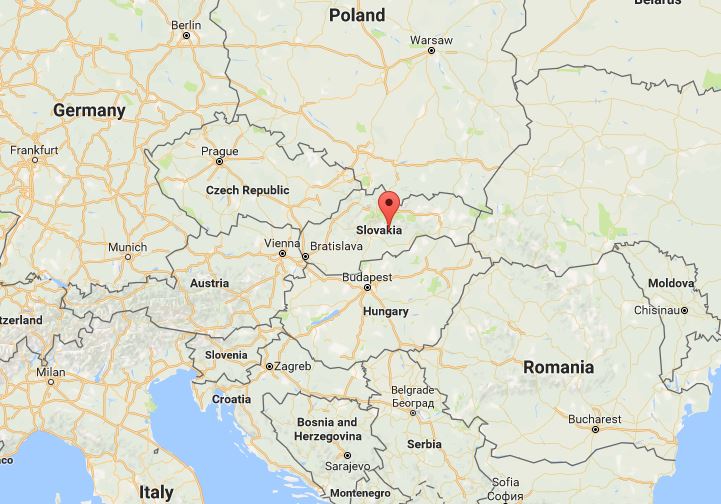
Slovakia May Have Vote to Leave NATO

Could this be the beginning of the end for NATO?
It will not go down without a fight!


Adam Garrie, The Duran

A petition to force a referendum on the issue is gaining traction

An increasing number of Slovaks are opposed to the presence of NATO troops and bases in their country. A petition to withdraw Slovakia from NATO has all ready garnered 150,000 signatures. If a further 250,000 add their names to the petition, the issue of Slovakia withdrawing from NATO will go to an official referendum.

This would be an historic first as no country has democratically voted to leave NATO in the bloc’s history. The only country that has ever partly exited NATO was France when President Charles de Gaulle withdrew from the NATO Military Command Structure in 1966.

Patriotic Slovaks have grown increasingly tired of NATO’s bellicose presence in their country, a country that does not share much of the militant hysteria of its neighbours, including and especially Poland.

Many have also grown tired of NATO troops causing chaos in their country. Such individuals are increasingly seen as unwelcome visitors.

NATO’s recent surge of troops and heavy military equipment into central and eastern Europe is widely seen as a neo-imperial symbol of America’s continued domination of European geo-politics.

Many individuals in country’s like Slovakia are becoming increasingly vocal in their opposition to such moves.

NATO is desperately looking for a reason for its existence since the collapse of communism. The war in the Balkans was extremely convenient for a season but now they are frantically working on a new bogeyman - the old bogeyman, Russia. 

My fear is that when the rest of the world figures out that NATO is obsolete and, in fact, far more dangerous than Russia, another convenient war will break out, only this one may not be as containable.


Friday, May 19, 2017

How the Imprisonment of a Rabbi Two Centuries Ago Holds a Lesson for Today

By Batya Shevach 

“He loveth righteousness and justice; the earth is full of the lovingkindness of Hashem.” 

Psalms 33:5 (The Israel Bible™)

Illustrative (Photo: Shutterstock)

Two-hundred and nineteen years ago, the first rebbe – founder and leader – of the Chabad Hassidic movement in Russia was miraculously released from jail. He credited his liberation to the heavenly merit he earned through collecting charity to support  the poor, widows and orphans living in the Holy Land at that time through his organization Colel Chabad. The repercussions of Rebbe’s imprisonment and release continue to affect the world, and the wellbeing of Jews in Israel even today.

On May 8, 1798, a fabricated complaint against Rabbi Shneur Zalman of Liadi, known as the Alter Rebbe, claimed that the illustrious Torah scholar was in fact an anti-Russian revolutionary. He was accused of sending money to Turkish-controlled Palestine and engaging in subversive activities against the Russian government.

Rabbi Shneur Zalman (Wikimedia Commons)

An investigation of the Rebbe began in August 1798, and the Czar himself took a personal interest in the case. He knew that the Rebbe had over 100,000 followers, with many living in recently occupied Polish territory. If the Alter Rebbe was a true insurgent, he might lead a full blown revolt against the Russian regime.

During the week-long Sukkot holiday (Feast of Tabernacles) of 1798, an armed officer was sent to Liozna to arrest Rabbi Shneur Zalman. The Rebbe heard about the officer, and decided to follow Biblical advice, “Hide yourself for a brief moment.” (Isaiah 26:20). The officer returned to his commanders empty-handed. After contemplating his fate for several hours, the Rebbe decided that if the officer returned, he would surrender himself and leave peaceably.

The officer did come back in the evening of the last day of Sukkot, and the Rebbe was taken away in the “Black Mary” – a carriage reserved by the Czarist regime for transporting the worst criminals. The carriage had no windows and was covered with heavy, black metal panels. It instilled terror in anyone who saw it.

Rabbi Shneur Zalman was held in the fortress of Petropavlovsk, a well-guarded political prison. During the intensive investigation numerous documents were sent back and forth between high ranking government officials. The Rebbe testified orally and in writing about his personal activities and his Biblical teachings. His handwritten testimonies were translated from Hebrew to French, and then into Russian.

The investigators found no incriminating evidence. Disguised as a simple clerk, the Czar visited the Rebbe in prison to see the infamous Jewish leader for himself. The Rebbe immediately stood up in a show of respect. The Czar asked the Rebbe why he stood. “For truly you must be the Czar!” answered the prisoner.

Paul 1 was Czar of Russia in 1798. He was the son of Catherine the Great and possibly her lover.

“Our sages teach us that ‘sovereignty on earth, is similar to the sovereignty of the Heavens.’ As the fear before God is great, so too did I feel an unusual awe when you entered. Such a feeling I never experienced with any of the officials that have come here. Therefore I conclude that you must be the Czar.”

The Czar saw through the lies spread about the Rebbe and decreed that he was certainly no traitor. On Tuesday, the 19th day of the Hebrew month of Kislev (November 16, 1798), 53 days after his arrest, Rabbi Shneur Zalman was cleared of all charges and set free. Furthermore, the Czar ordered the Governor of Lithuania to release the Rebbe’s followers, arrested at the same time.

In the Alter Rebbe’s first letter after his liberation, he attributed his freedom to his acts of sending charity to the poor in the Land of Israel. He wrote to Rabbi Levi Yitzchak of Berditchev: “Who am I, a lowly person as I am, that God has brought me this far and Heaven’s Name was sanctified through me…. But it was God who gave us this privilege by virtue of the Holy Land and its residents, and may He help us at all times to broaden our borders, and extricate us from dire straits.”

“For the poor shall never cease out of the land; therefore I command thee, saying:
‘Thou shalt surely open thy hand unto thy poor and needy brother, in thy land.”
Deuteronomy 15:11 (The Israel Bible™)

Just as the Alter Rebbe did over 200 years ago, Colel Chabad continues its mission to help the Holy Land’s poor and provide assistance to needy residents until today.   Ongoing immigration, difficulty earning a living, and the constant threats of war and terror still cause many in Israel to question where their next meal is coming from.

Rabbi Lipsker, administrator of Colel Chabad, commented, “After the Alter Rebbe’s demise in 1813, each subsequent Rebbe in the chain of the Chabad movement’s leaders diligently oversaw the Colel Chabad activities in Israel. The Alter Rebbe’s initiative ensured the survival of the Holy Land Jews before any other formal organizations cared for them.”

Colel Chabad is the oldest charity organization in Israel, with 24 soup kitchens around the country, holiday food packages for poor families and senior citizens, summer camps and afterschool programs for underprivileged children, wedding and bar mitzvah celebrations arranged for orphans, and special programs for hospitalized children. It’s work continues to be crucial even today.

To donate to Colel Chabad, please visit here.

Pure and undefiled religion in the sight of our God and Father is this: to visit orphans and widows in their distress, and to keep oneself unstained by the world. James 1:27

Sweden Drops Rape Case Against Wikileak's Julian Assange

Caution: somewhat graphic sexual description below

‘I do not forgive or forget’: Assange responds
after Swedish prosecutors drop rape case

© Neil Hall

WikiLeaks founder Julian Assange says he will not “forgive or forget” being “slandered” and “detained” for seven years without charge.

“Detained for 7 years without charge while my children grew up and my name was slandered. I do not forgive or forget,” Assange tweeted.

Assange is due to give a public statement shortly after rape allegations against him were dropped by Swedish prosecutors on Friday.

Swedish prosecutors said as “all options of moving the investigation forward are now exhausted” and “in light of the views expressed by the [Swedish] Supreme Court on the proportionality of remanding someone in absentia” it was no longer “proportional” to maintain Assange’s arrest warrant.

Sweden’s director of public prosecution, Marianne Ny, said: “I don’t want to assign blame and responsibility to any particular person for this. I must note however that the reason for this [investigation ending] is that Julian Assange has kept himself away from us for so long.

Of course, you wouldn't guarantee not to extradite him to America, and it's not like you didn't know where he was. You were attempting to do America's bidding. Your case was very flimsy to begin with charging him for having sex with someone who was naked and in bed with him and with whom he had already had sex several times. 


Breakdown of the rape allegations

The crux of the rape allegations against Assange stem from two sexual encounters and the WikiLeaks’ founder’s reluctance to use condoms during them.

Assange had sex with two women, dubbed ‘AA’ and ‘SW,’ when he was in Sweden in 2010. The two women wanted Assange to get an STI test because they suspected he had unprotected sex with both of them.

The two women went to a police station to ascertain whether they could force Assange to take a HIV test, sparking an investigation that has plagued Assange for seven years.   


‘SW’
Assange had what he described as “consensual” sex with ‘SW’ on August 16, 2010, after meeting her at a talk in Stockholm two days before. The two went to the cinema on the day they met, where they kissed.

“We had consensual sexual intercourse on four or five occasions,” Assange said. “Her words, her expressions and her physical reactions made it clear to me that she encouraged and enjoyed our interactions.”

According to SW’s police interview, after the two had dozed off one night, “she awoke and felt him penetrating her.” She asked if he was wearing a condom and said, “You better don't have HIV.” ‘SW’ texted a friend on August 18 saying, “I was half asleep.”

“He was already inside her and she let him continue,” the police interview reads. “She didn’t have the energy to tell him one more time. She had gone on and on about condoms all night long.”

On August 20, Assange spoke to ‘SW’ who said she was at the hospital and wanted him to meet her there to get tested for STIs, so that she wouldn’t have to worry while she was awaiting for her own results. “HIV, for instance, needs months to show up,” Assange explained.

He told her he couldn’t do that until the next day. “She said that it was normal in Sweden to go to the police to get advice about STDs and that if I didn't come down to the hospital she would go to the police to ask whether I could be forced to get tested.”

After agreeing he would meet her the next day to be tested, Assange was surprised to find out he had later been accused of rape.

According to police records of SW’s phone seen by Assange’s lawyers, ‘SW’ wrote from the police station that she “did not want to put any charges on Julian Assange,” but that the police were “keen on getting their hands on him.”

The next day she wrote she “did not want to accuse” Assange “for anything” and that it was the “police who made up the charges (sic).”


‘AA’
Assange stayed at AA’s home when he was in Stockholm, before he had sex with SW.

The two had sex, which ‘AA’ said was “so fast” and that Assange was rough and impatient. She said she wanted to reach for a condom but Assange wouldn’t let her. She told him she wanted him to wear a condom and then he let her reach for it, and wore it.

However, ‘AA’ said she didn’t see any semen in the condom and suspected Assange had broken it during sex.

Assange stayed with ‘AA’ for a few more nights and he attempted to come on to her again, including one incident where he rubbed against her in the bed they shared, AA’s police interview says, but they had no further sexual relations.

‘AA’ said she went to the police largely to support ‘SW.’

“Anna states that she had consented to have sex with Assange, but that she would not have done so if she had known that he was not wearing a condom,” the police interview reads. “Anna does not desire any contact with a crime victims service, but will get back to us if she feels the need.”

It seems likely that neither woman tested positive for HIV or any other STD, or that would be part of the story. 

It's shameful that you, Sweden, have been so doggedly determined to bring Assange to 'justice' for his 'rape' of a Swedish woman and yet you are daily sacrificing Swedish women and girls to Muslim migrants on the altar of political correctness and stupidity.

Assange’s lawyer Per Samuelsson said his client was now considering suing Sweden.

“It’s not about money but redress,” Samuelson told news agency TT.

He added that Assange would eventually try to move to Ecuador. 

Assange sought political asylum in the Ecuadorian Embassy in London in 2012 and has been living there since, fearing the Swedish investigation would result in him being extradited to the US over leaked military documents and diplomatic cables.

Assange, 45, has always denied the rape allegations made against him.

It remains unclear how Friday’s development will affect Assange’s risk of being extradited to the US if he leaves the embassy and is arrested. The Metropolitan Police in London say they will still arrest Assange over a lesser charge of skipping bail in 2012 when he sought asylum.

Prime Minister Theresa May said any decision about Assange’s arrest or otherwise is an “operational matter” for police.

That's helpful! Great leader!

Thursday, May 18, 2017

‘Total Blackout’: Lawyer Suing DNC for Fraud Speaks out on Lack of Media Coverage

Lee Camp (L), Jared Beck, the attorney leading the lawsuit against the Democratic National Committee (R) 
© Redacted Tonight

The lawyer who filed a class-action lawsuit against the Democratic National Committee and its ex-chair Debbie Wasserman Schultz nearly a year ago says there has been a “mainstream media blackout” of the fraud case stemming from the 2016 primary.

The class action lawsuit against the Democratic National Committee and former chair Congresswoman Debbie Wasserman Schultz (D-Florida) filed in June 2016 alleges that the party showed bias toward Hillary Clinton over Senator Bernie Sanders (I-Vermont) during the 2016 primary. 

Jared Beck, the attorney leading the lawsuit against the Democratic National Committee, went on RT’s “Redacted Tonight” to tell host Lee Camp that while the media covered “every moment” of the trials against OJ Simpson, Casey Anthony and George Zimmerman, the coverage of the DNC lawsuit has been a “total blackout.”

“This seems like an important case, as important as you can get,” Cullin O’Brien, co-counsel on the case, told LifeZette.

Lawyers are accusing Schultz of “intentional, willful, wanton, and malicious” conduct in violating Article 5, Section 4 of the DNC Charter, which states that that the chair must “exercise impartiality and evenhandedness as between the Presidential candidates and campaigns.”

The lawsuit, filed on behalf of 150 donors to the DNC and Sanders, was in response to emails posted by WikiLeaks, which the lawyers say proves that the DNC was working against Sanders from the start. The party is accused of fraud, misrepresentation, unjust enrichment, breach of fiduciary duty and negligence.

“We are bringing fraud claims on behalf of those who paid money to the Bernie Sanders campaign, believing that they were participating in a fair and impartial political process. And that turned out not to be the case as WikiLeaks and Guccifer 2.0 documents show us beyond dispute,” Beck said on Redacted Tonight.

On April 25, the DNC filed its second motion to dismiss the case, arguing that they are under “no contractual obligation” to follow their charter, and have the right to favor one candidate over another.

“It's not a situation where a promise has been made that is an enforceable promise,” DNC lawyer Bruce Spiva argued, according to a transcript from Jam PAC. “We could have voluntarily decided that, ‘Look, we’re gonna go into back rooms like they used to and smoke cigars and pick the candidate that way.’”

On Redacted Tonight, Beck said that if the lawsuit gets past the pending motion to dismiss, the next step will be discovery, where the lawyers will be able to examine other documentary evidence and take depositions and testimony from witnesses under oath.

Beck told Camp that Democrats will not be able to come together while the DNC continues to fight against other members of its own party.

“There can be no reconciliation between the victim and the defendant – the perpetrator of frauds – until there has been justice,” Beck said. “Honestly, if the Democratic party is seeking unity in a bona fide manner, then it also needs – I believe as part of that mission – has to come to terms with the fact that the people that we represent demand and need justice for what happened.”