"For the time will come when they will not endure sound doctrine; but wanting to have their ears tickled, they will accumulate for themselves teachers in accordance to their own desires, and will turn away their ears from the truth and will turn aside to myths." Northwoods is a ministry dedicated to refreshing Christians and challenging them to search for the truth in Christianity, politics, sociology, and science
Xi’s back-to-back meetings with Trump and Putin in Beijing:everything you need to know
China’s leader hosted Trump and Putin on separate occasions over the past week, here’s everything you need to know
The presidents of the United States and Russia visited Beijing on separate trips in May to meet with President Xi Jinping. The South China Morning Post produced extensive coverage of Donald Trump and Vladimir Putin’s summit meetings in Beijing. Here are some of the highlights of our coverage, showing you what happened, what it means, and what’s next. If you would like to see more of our reporting, please considersubscribing.
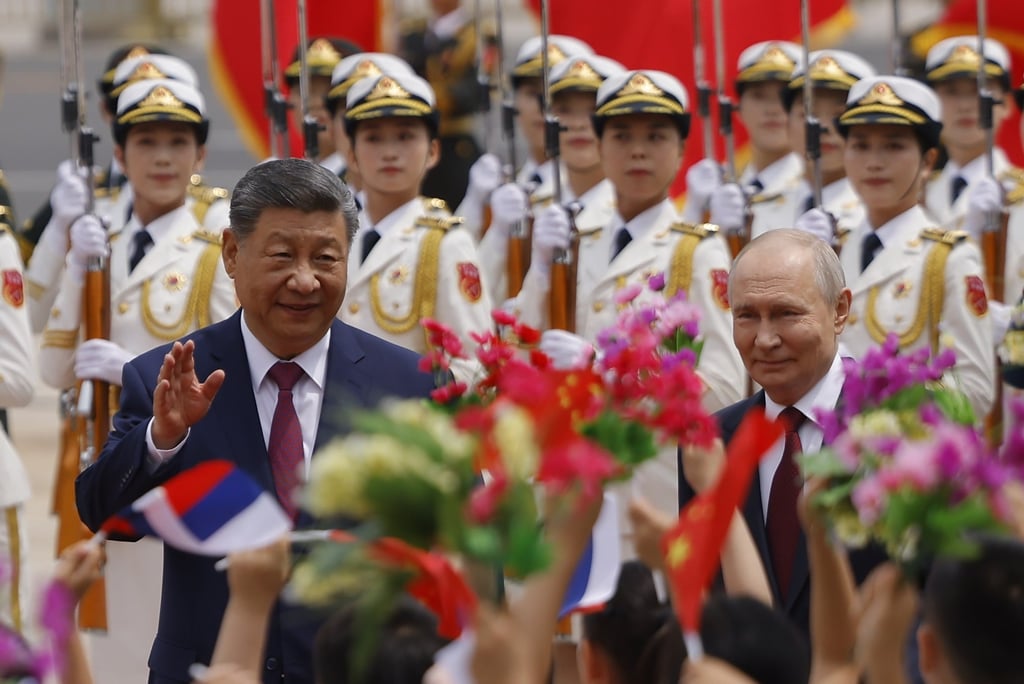
Chinese President Xi Jinping and Russian leader Vladimir Putin attend a welcome ceremony in Beijing on Wednesday. Photo: AP
Putin’s trip to Beijing came only days after US President Donald Trump’s closely watched visit to the Chinese capital, the back-to-back summits highlighting the strong trust between Beijing and Moscow and China’s ability to manage ties with the two major powers.
As energy cooperation tops the summit agenda, back-to-back state visits of Donald Trump and Vladimir Putin could pave the way for emerging “trilateral coordination” between China, Russia and the United States.
As US President Donald Trump landed back in Washington on Friday after his two-day summit in Beijing with Chinese President Xi Jinping, a quick US assessment on one of the most consequential diplomatic visits of Trump’s presidency was: impressive optics, trademark flawless Chinese hosting, but disappointing concrete achievements, according to analysts, industry trade groups and former US officials.
Days after US President Donald Trump’s visit framed around managing risks, Chinese President Xi Jinping and Russian President Vladimir Putin reached a raft of agreements and pledged deeper cooperation as they met in Beijing.
The historic guest villas are situated within the tranquil Diaoyutai Scenic Area in the western suburbs of Beijing. Photo: Shutterstock
When Russian President Vladimir Putin arrived in Beijing on Tuesday evening for a two-day state visit, he once again returned to his “second home” at the Diaoyutai State Guesthouse, a royal garden that has hosted heavyweights including Richard Nixon, Boris Yeltsin and Kim Jong-un.
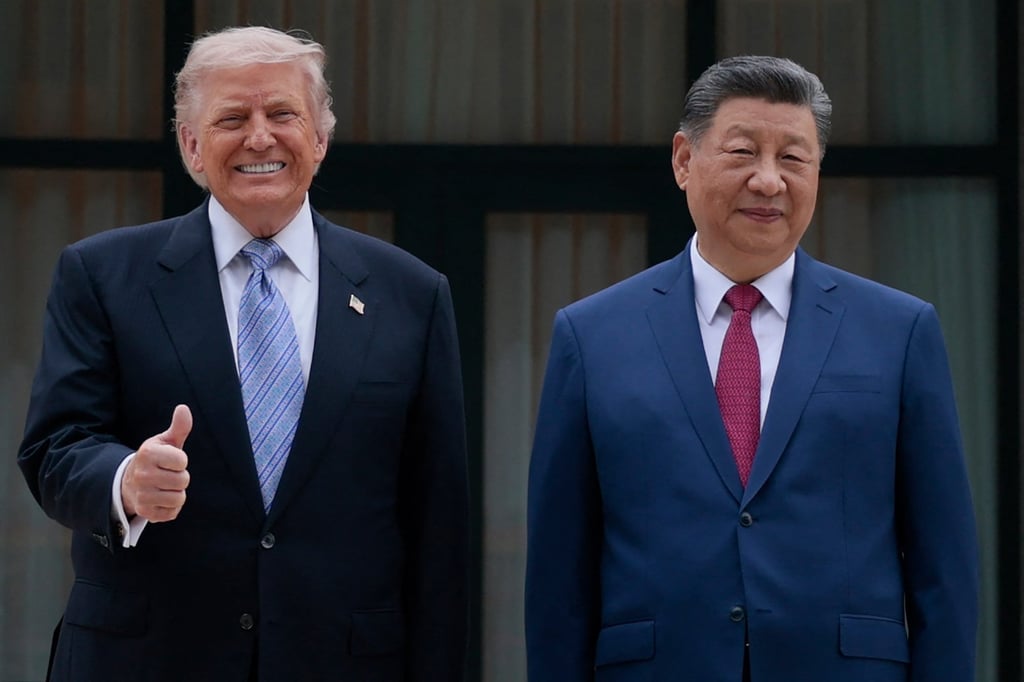
US President Donald Trump poses for photos with President Xi Jinping on Friday in Beijing. Photo: AFP
US President Donald Trump said he has secured “fantastic trade deals” during his high-stakes state visit to Beijing, as he met with his counterpart, President Xi Jinping, for a second day in Beijing.
Chinese President Xi Jinping will pay a state visit to the US this autumn, the first in more than a decade, as the two powers seek stability amid their deepening rivalry.
The alarming figures have just been released, and it turns out that those migrants, a great many of them Muslims from the Middle East, North Africa, and Turkey, now cost German taxpayers 43 billion dollars a year.
Syrian and Iraqi refugees arrive from Turkey to Skala Sykamias, Lesbos island, Greece by Ggia, Creative Commons Attribution-Share Alike 4.0
More on this vertiginous cost can be found here:
$43 Billion Per Year Burden: Migration Costs Hammer German Taxpayers
Germany is facing a staggering migration bill exceeding €40 billion (approximately $43 billion) a year, with critics warning that the true cost of mass immigration is now placing unsustainable pressure on the country’s economy and social systems.
While official figures often highlight federal spending, the full picture is far more alarming. Once regional and municipal costs are included, the total burden rises well beyond €40 billion ($43 billion)—and may approach €50 billion (around $54 billion) annually.
According to a report from Remix News, citing government data and regional reports, the headline federal figure of €24.8 billion ($26.8 billion) significantly understates the real cost borne by taxpayers.
That €24.8 billion ($26.8 billion) represents only federal expenditures. It does not account for the massive additional spending required at the state and local levels.
German states and municipalities are shouldering a large share of the burden. Their combined costs add tens of billions more to the total.
The result is a financial strain that extends across the entire system. Public budgets are being stretched at every level of government.
But the official totals still fail to capture the full impact. Many of the most visible consequences are not included in the headline figures.
Housing markets, for example, are under intense pressure. Rent prices have surged, and affordable housing has become increasingly scarce. Public infrastructure, too, is feeling the strain. Roads are more congested, and local transport systems are facing growing demand.
Healthcare is another major pressure point. Hospitals continue to be overcrowded, and waiting times for treatment are rising.
The financial imbalance within the health system is becoming increasingly evident. The National Association of Statutory Health Insurance Funds has warned of a growing deficit.
A key issue is the gap between contributions and costs. Many recipients of benefits have not paid into the system at the same level….
Let us not forget the increased costs of policing, the justice system and the prison system, all of which have increased substantially since 2015.
Many of these economic migrants receive every sort of benefit that the German state lavishes on welfare recipients, including free or greatly subsidized housing, free medical care, free education including language tuition, family allowances, unemployment benefits without having been employed in Germany, and more.
Support is growing for policies that prioritize economic sustainability and national interests. The issue is reshaping the political landscape.
The mass migration — almost entirely Muslim — that has been going on since 2015, when then-Chancellor Angela Merkel threw open her country’s gates to more than a million mostly Muslim migrants and confidently declared “Wir schaffen das!” — “We Can Do This!” — have harmed both German “economic sustainability” and the country’s “national interests.” Little more than a decade later, it has been conclusively shown that no, the Germans cannot “do this.” They cannot assimilate the millions of Muslims now in their midst. The federal and state governments in Germany are running out of money; the annual bill for immigrant support now comes to the staggering sum of 43 billion dollars. This is unsustainable.
The only immigration policies that make sense are those of the Alternative für Deutschland, the anti-Muslim immigrant party that the redoubtable Alice Weidel leads. The AfD wants to call a complete halt to Muslim immigration, to deport Muslims already in Germany if they have been convicted of committing crimes, and to severely restrict the distribution of welfare benefits, including imposing a mandatory work requirement on welfare recipients.
The AfD party is now leading in all the polls and could win the next election that must be held no later than March 25, 2029. In fact, the election is likely to be held as early as next year, given all the alarm nationwide over Muslim immigration, and how the colossal cost of the cornucopia of benefits it provides those Muslim migrants is eating into the amounts that elderly Germans once could, but can no longer, count on.
Aside from the staggering cost of supporting Muslims in Germany, the government found lots of money to give to Islamic terror organizations in the Middle East, with no strings attached.
Germany supported organization linked to Hamas and Muslim Brotherhood for years without tracking funds
“It is he who has caused those among the people of the book who disbelieved to go forth from their homes to the first exile. You did not think that they would go forth, while they thought that their strongholds would protect them from Allah. But Allah reached them from a place they did not expect, and cast terror in their hearts so that they ruined their houses with their own hands and the hands of the believers. So learn a lesson, O you who have eyes.” (Qur’an 59:2)
Infostand von Islamic Relief Deutschland in Sony-Center in Berlin. Gemeinsame Veranstaltung mit Aktion Deutschland hilft, IslamicReliefDE, Creative Commons Attribution-Share Alike 4.0
Germany supported Hamas-linked organization for years without tracking funds,
Until 2019, the German foreign office supported an aid organization with close ties to Hamas and the Muslim Brotherhood without knowing how the funds were actually being used.
This information appears in a newly released confidential audit by Germany’s Federal Court of Auditors, which the Institute for Secular Law (Institut für Weltanschauungsrecht or IFW) has been trying to obtain for five years.
Until now, unsuccessfully.
The audit concerns state funding for the organization Islamic Relief, purported to have ties to Hamas and the Muslim Brotherhood.
The now-public documents reveal, according to ifw advisory board member Seyran Ateş, “a shocking naivety on the part of the Foreign Office.”
Islamic Relief Germany (IRD) had long been regarded in Germany as a respected Muslim charity organization. Several consecutive German governments, including former chancellor Angela Merkel’s second, third, and fourth cabinets, provided IRD with millions of euros in funding.
IRD was a member of the German aid alliance Aktion Deutschland Hilft, and gained prominent supporters for its “Meals for Orphans” campaign, including former President Christian Wulff and his successor Frank-Walter Steinmeier.
However, in 2019, the Foreign Ministry stopped funding the organization, and, in 2020, IRD’s membership in Aktion Deutschland Hilft was suspended.
On April 15, 2019, the German government noted that both Islamic Relief Germany and its parent organization, Islamic Relief Worldwide, had “significant personnel connections to the Muslim Brotherhood or organizations close to it.”
The government also admitted that since 2014 it had known that “Islamic Relief Worldwide,” including its German branch IRD, was banned in Israel, regarded as “part of the financial system of Hamas and the Muslim Brotherhood movement,” and therefore classified as a “terrorist organization.”…